

The Kaaba stands in Mecca’s heart, drawing millions of faithful worshippers yearly as Islam’s most sacred shrine. This cubic structure, draped in black cloth, represents the Muslim world’s spiritual center and guides the prayer direction for over 1.8 billion Muslims worldwide.
The Kaaba’s importance reaches way beyond its physical presence. Its ancient history traces back to Prophet Ibrahim and the sacred Black Stone sits embedded in its eastern corner. Every element of this holy sanctuary carries deep spiritual meaning. While the mosque around the Kaaba has changed through centuries, this sacred space’s essence remains constant and continues to guide believers in their spiritual experience.
This piece examines the Kaaba’s sacred origins, architectural symbolism and its role in the transformative pilgrimage. Readers will find the deep spiritual heritage of this sacred structure and understand how it shapes Islamic worship today.
The Divine Origins of the Kaaba
The Kaaba’s sacred origins go back to ancient times. People know it as Baytullah (House of God). It serves as the qibla (direction of prayer) for Muslims across the world. Biblical and Islamic scriptures give us fascinating details about its sacred beginnings.
Biblical and Quranic References
The Bible mentions the Kaaba’s location through “Baka Valley,” which lines up with the Quranic name “Bakkah”. This biblical description talks about a sacred place where souls yearn and hearts sing with joy. The place has springs that match today’s Zamzam well. The Quran clearly states its importance in Surah Al-Imran (3:96): “Indeed, the first House of worship established for mankind was that at Bakkah – blessed and guidance for the worlds”.
Ibrahim’s Legacy and Construction
Prophet Ibrahim (Abraham) and his son Ismail (Ishmael) built the Kaaba after receiving divine orders. They made it the first house of worship dedicated to the One God. Miraculous events marked the construction, including the Black Stone’s arrival through the angel Jibreel (Gabriel). The original structure was a simple rectangle without a roof. Father and son worked together to raise the Kaaba’s foundations and prayed: “Our Lord! Accept this service from us”.
Prophetic Connections Through History
The Kaaba’s prophetic heritage runs through generations as the center of monotheistic worship. It was the first qibla during Muhammad’s early ministry before briefly changing to Jerusalem and then coming back to Mecca. Prophet Muhammad cleaned the sanctuary of idols in 630 CE. This restored its original purpose of monotheistic worship and fulfilled Ibrahim’s dream of making the Kaaba a center for worshipping the One God.
The building has seen many reconstructions over time, but its spiritual value stays the same. The Maqām Ibrāhīm (Station of Abraham) is a small stone that people believe has Ibrahim’s footprints. It stands as proof of the Kaaba’s divine origins. This sacred marker reminds pilgrims about the deep spiritual heritage within the Kaaba’s foundations.
Understanding the Sacred Architecture
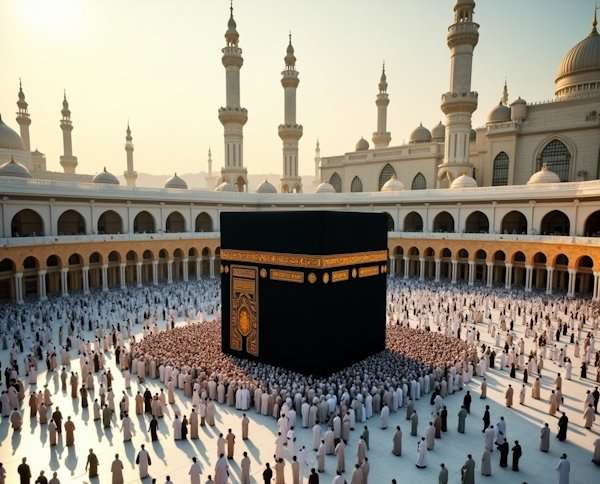
The Kaaba’s architectural magnificence extends beyond its structure into the profound symbolism woven throughout its design. This cuboid structure, rising approximately 15 meters high with sides measuring 12 meters by 10.5 meters, stands as proof of architectural precision.
Symbolic Elements and Their Meanings
The Kaaba’s design features several elements with deep spiritual significance:
- The cubic shape symbolizes stability and perfection that represents divine creation’s unity
- The black cloth covering (Kiswah) shows reverence and majesty through its gold-embroidered Quranic verses
- The marble floor and limestone interior connect the building to earth while reaching skyward
- The golden door, added in 1982, separates worldly and divine spaces
The Black Stone’s Spiritual Significance
The Hajar al-Aswad (Black Stone) sits in an oval silver frame in the eastern corner and marks where the sacred circumambulation ritual begins. Islamic tradition describes it as pure white originally and believes it has absorbed countless pilgrims’ sins through touch and veneration over ages. The Prophet stated that the stone will receive eyes and a tongue on Judgment Day to testify about those who honored it.
Sacred Geometry and Divine Design
Sacred geometry shapes the Kaaba’s architecture where earthly dimensions reflect celestial harmony. The structure stands almost precisely on the tropic of Cancer, creating a unique astronomical alignment during summer solstice. The walls cast no shadows at specific times, which symbolically bridges earth and heaven.
White marble covers the interior walls halfway to the roof, featuring six tablets with sacred inscriptions. This geometric precision and orientation demonstrates Islamic understanding of divine order. Scholars view the Kaaba as an axis mundi – where heaven meets earth.
These architectural elements create what Islamic scholars define as a “sacred space” between material and divine realms. The belief in Bayt-Al-Ma’mur, a celestial house directly above the Kaaba in the fourth sky layer, establishes this connection between earthly worship and heavenly domains.
Learn about Abrahamic religions.
Spiritual Journey to the Heart of Islam
The trip to the Kaaba goes beyond simple physical movement. It represents a deep spiritual odyssey that reshapes millions of pilgrims each year. Over 6.7 million external pilgrims arrived for Umrah in a single year. The sacred sanctuary became their focal point of spiritual enlightenment and personal change.
Personal Transformation Through Pilgrimage
Pilgrimage creates a deep spiritual change that shows itself in several ways:
- Stronger religious consciousness and devotion
- New sense of humility and equality
- Better connection to the global Muslim community
- Deeper understanding of Islamic teachings
- Greater commitment to moral values
The change starts before pilgrims reach Mecca. They ready themselves mentally and spiritually for this sacred trip. Many say their emotional and psychological preparation begins when they decide to perform the pilgrimage.
Connecting with Divine Presence
The tawaf ritual has pilgrims circle the Kaaba seven times counterclockwise. This creates what many describe as an intense spiritual bond. Pilgrims feel overwhelmed with emotion when they first see the sacred structure. The experience surpasses cultural and linguistic barriers and creates what scholars call “a concentrated centre of piety”.
The Day of Arafat marks the peak of spiritual connection. Pilgrims participate in deep contemplation and supplication. This sacred time lets them “think about the life they’ve lived so far, the life they want for the future, and to turn to God with heavy hearts and thoughts”.
Stories of Spiritual Awakening
Countless stories show the pilgrimage’s power to transform. Pilgrims often report a deep sense of unity with fellow believers that surpasses geographical and cultural boundaries. Many call the experience “a masterpiece of co-ordination” where individual paths merge into a shared spiritual trip.
These spiritual changes last well beyond the pilgrimage. Returning pilgrims report lasting shifts in their views and behaviors. They experience more tranquility, stronger religious commitment, and better appreciation for religious unity. The experience creates what many call “a rich inner peace” that shows in values like justice, honesty, respect and empathy.
Modern Pilgrimage Experience
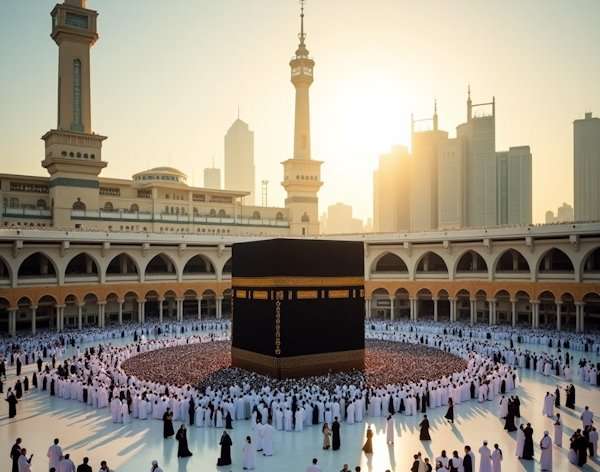
Saudi Arabia welcomes millions of faithful visitors each year to the Kaaba. The pilgrimage experience blends centuries-old traditions with modern amenities. The Kingdom has revolutionized this experience through resilient infrastructure and digital advances. Their goal is to host 15 million international Umrah pilgrims by 2025.
Preparing for the Sacred Journey
A fulfilling experience requires careful preparation that starts well before reaching Mecca. Pilgrims must get permits through their country’s quota system. Many spend years saving money or waiting their turn. The essential preparations are:
- Entering the state of ihram (spiritual purity)
- Getting required vaccinations and health clearances
- Booking approved travel packages
- Learning the prescribed rituals and prayers
- Building physical stamina for the demanding journey
Contemporary Facilities and Services
The sacred essence remains intact while Saudi Arabia has invested billions to modernize the pilgrimage infrastructure. Modern facilities now available are:
- Air-conditioned tents in Mina that create one of the world’s largest temporary cities
- The Haramain high-speed train that links Jeddah Airport to holy sites
- Advanced medical facilities and clinics along pilgrimage routes
- Digital services with e-visas and smart applications
- Modern accommodation options for different budgets
Guiding the Spiritual Experience
Modern conveniences make things easier, yet the spiritual journey remains challenging and profound. Pilgrims move between sacred sites in carefully arranged sequences that test their physical endurance and spiritual resolve. The journey requires travel between Mina, Arafat and Muzdalifah across significant distances while maintaining spiritual focus.
The Supreme Hajj Committee supervises a complete organizational system that ensures smooth coordination between government agencies. This modern management approach helps maintain order without compromising the sanctity of the experience as pilgrims progress through their spiritual journey.
Smart technologies and improved infrastructure continue to enhance the pilgrimage experience. The core essence remains unchanged – a profound spiritual journey to Islam’s holiest site. The Pilgrim Experience Program works hard to give each person “a distinguished spiritual experience they never forget”.
Explore the Madagascar culture.
Preserving the Sacred Heritage
The sacred heritage of the Kaaba demands a delicate balance between ancient traditions and modern conservation techniques. The General Presidency for the Affairs of the Grand Mosque and the Prophet’s Mosque guides these preservation efforts with steadfast dedication.
Traditional Maintenance Practices
Maintaining the Kaaba through centuries requires meticulous care of its structure and the sacred Kiswa (cover). A specialized Saudi team performs daily inspections and regular maintenance tasks precisely. The Kiswa gets a new replacement during the Hajj pilgrimage annually. Religious authorities distribute the old covering among dignitaries and mosques worldwide.
The Bani Shaiba family has served as the Kaaba’s caretakers for 16 centuries and upholds specific traditional practices. They perform the sacred washing ceremony with Zamzam and rose water and perfume the structure’s four walls.
Modern Conservation Efforts
Traditional reverence meets state-of-the-art technology in contemporary preservation. Current initiatives feature:
- Advanced climate control systems within the Masjid al-Haram complex
- Material selection research for heat and humidity-resistant fabrics
- Specialized fabric treatments for environmental protection
- Ultrasonic cleaning technologies for deeper maintenance
The General Authority runs a complete maintenance program that ensures proper arrangement of the Kiswa through periodic adjustments and stabilization efforts. A team of 14 technicians works with quality monitors and health specialists to oversee these preservation efforts.
Balancing Preservation and Access
Conservation and accessibility create unique challenges for management. The authorities have developed strategic solutions that work effectively:
Advanced monitoring systems help maintain structural integrity while millions visit the site. Traditional techniques allow timely repairs when regular inspections detect problems. The preservation strategy emphasizes environmentally responsible methods and educates pilgrims about conservation challenges.
Climate modeling and textile science shape future preservation strategies significantly. Religious authorities collaborate with scientific institutions to develop innovative solutions that honor traditional practices while ensuring long-term preservation. This integration of modern technology with sacred traditions safeguards the Kaaba for generations to come.
Furthermore, traditional African religions.
Appreciate Kaaba in Mecca
The Kaaba stands as evidence of faith’s enduring power that draws millions of believers to its sacred orbit yearly. This remarkable structure connects heaven and earth. Its architecture combines spiritual significance that exceeds time and culture.
Saudi Arabia’s steadfast dedication keeps the Kaaba’s sacred heritage intact while making it available to pilgrims worldwide. This delicate balance will give future generations the opportunity to experience this holy sanctuary’s transformative power.
The Kaaba’s legacy reaches way beyond its physical presence in Mecca. Its architectural elements, rituals performed nearby and countless personal transformations in its shadow make it Islam’s spiritual center. This sacred cube reminds humanity of its divine connection and unites believers in their shared path of faith and devotion.
FAQs
Q1. What is the spiritual significance of the Kaaba in Mecca?
The Kaaba is considered the first House of Worship for mankind, built by Ibrahim and Ismail on Allah’s instructions. It serves as the spiritual center of Islam, the direction of prayer for Muslims worldwide, and a symbol of unity and devotion for believers.
Q2. How does the pilgrimage to the Kaaba transform pilgrims spiritually?
The pilgrimage to the Kaaba often leads to profound personal transformation. Pilgrims report experiencing enhanced religious consciousness, a renewed sense of humility and equality, and a strengthened connection to the global Muslim community. Many describe feeling a deep spiritual awakening and lasting changes in their perspectives and behaviors.
Q3. What are some key architectural features of the Kaaba and their meanings?
The Kaaba’s cubic shape represents stability and perfection. Its black cloth covering (Kiswah) signifies reverence and majesty. The Black Stone (Hajar al-Aswad) in the eastern corner marks the starting point of the sacred circumambulation ritual. The structure’s precise orientation and dimensions are believed to reflect divine design and sacred geometry.
Q4. How is the Kaaba preserved while accommodating millions of visitors?
Preservation of the Kaaba involves a combination of traditional practices and modern conservation efforts. Daily inspections, regular maintenance, and an annual replacement of the Kiswah are carried out. Advanced climate control systems, specialized fabric treatments and ultrasonic cleaning technologies are also employed. Authorities carefully balance preservation needs with accessibility for pilgrims.
Q5. What rituals are associated with visiting the Kaaba?
The primary ritual associated with the Kaaba is the Tawaf, where pilgrims circle it seven times counterclockwise. This is often an emotionally overwhelming experience for many. Pilgrims also engage in deep contemplation and supplication, especially during the Day of Arafat. These rituals are seen as ways of connecting with the divine presence and experiencing spiritual transformation.


Leave A Comment