

Did you know that 79% of Japanese people practice multiple religions at once? This shows how complex Japan’s spiritual scene is. Here, old traditions and new influences have mixed for ages.
Japan’s religious mix is both ancient and modern. It includes Shinto, Japan’s own faith, and Buddhism, brought from abroad. These religions have greatly shaped Japan’s culture, art and daily life. This rich spiritual background still affects Japanese society today, even as it faces new challenges.
In Japan, different beliefs live together, showing how spirituality is part of daily life. As we look at Japan’s main religions, we’ll see how these old traditions have changed. They still play a big role in Japan’s culture today.
Key Takeaways
- 79% of Japanese people practice multiple religions
- Shinto and Buddhism are the two main religions in Japan
- Traditional beliefs significantly influence Japanese culture and society
- Religious practices in Japan often blend ancient customs with modern interpretations
- Japan’s spiritual landscape showcases a unique model of religious coexistence
The Historical Evolution of Religions in Japan

Japan’s religious history spans centuries, influenced by both local and foreign beliefs. This mix of faiths shows the nation’s rich culture and spiritual path.
Pre-historic Religious Practices
In ancient times, Japan believed in spirits of nature and honored their ancestors. These beliefs were the start of Shinto, Japan’s native faith.
The Arrival of Foreign Religious Influences
Buddhism came to Japan in the 6th century CE. It brought new ideas and rituals. Soon, Buddhism got support from the royal family and mixed with local beliefs.
Development of Indigenous Beliefs
As Buddhism grew, Japan’s old beliefs changed. Shinto became a clear faith, blending ancestor worship and nature love. This created a special mix of religions in Japan.
| Period | Major Religious Developments |
|---|---|
| Prehistoric | Animism and ancestor veneration |
| 6th Century CE | Introduction of Buddhism |
| 8th-12th Century | Emergence of Shinto as a structured faith |
| Medieval Era | Syncretism of Shinto and Buddhism |
This complex history has made Japan’s spiritual identity unique. It combines ancient traditions with new ideas, creating a special religious scene.
Shinto: Japan’s Indigenous Faith

Shinto is Japan’s native religion. It deeply influences the country’s culture and spiritual views. This ancient faith is woven into daily life.
Core Beliefs and Practices
Shinto focuses on worshipping kami, divine beings in nature and ancestors. It teaches deep respect for the natural world. People perform rituals to honor kami, seeking blessings and balance in life.
Kami and Natural Worship
Kami live in mountains, trees, rivers, and objects. This belief promotes respect for nature and unity with it. Shinto followers visit sacred natural sites to connect with these divine forces.
The Role of Shrines in Shinto Practice
Shrines and temples are key in Shinto worship. They house kami and are places for rituals and offerings. Torii gates mark the entrance to these sacred spaces, showing the transition from everyday life to the spiritual realm.
| Shrine Element | Significance |
|---|---|
| Torii Gate | Marks sacred boundary |
| Purification Font | Cleanses visitors |
| Main Hall | Houses kami |
Shinto’s impact goes beyond religious practices. It shapes Japanese art, architecture and social norms. Its focus on purity, respect for nature and community harmony remains strong in modern Japan. It keeps ancient traditions alive in a fast-changing world.
More on Shintoism.
Buddhism’s Journey and Transformation in Japanese Society
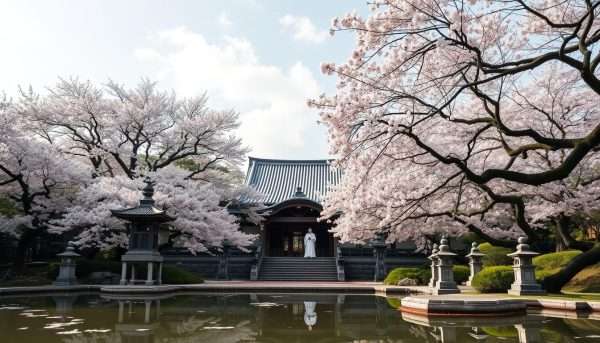
Buddhism came to Japan in the 6th century, changing the country’s religious scene. This ancient philosophy quickly became a part of Japanese culture. It mixed with local beliefs, shaping the culture for centuries.
As Buddhism spread in Japan, different schools emerged. Zen Buddhism, focusing on meditation, became very influential. It influenced Japanese arts like calligraphy and garden design.
Buddhist ideas deeply affected Japanese society. Concepts like karma and reincarnation became key to Japanese views. These ideas influenced literature, art, and politics.
“The mind is everything. What you think you become.” – Buddha
Over time, Buddhism in Japan changed, fitting into local customs. This created a unique form of Buddhism, different from its Indian roots. The table below shows some key differences:
| Aspect | Indian Buddhism | Japanese Buddhism |
|---|---|---|
| Monastic Life | Strict celibacy | Allows married clergy |
| Dietary Practices | Strict vegetarianism | More flexible diet |
| Rituals | Focused on meditation | Includes ancestor worship |
Today, Buddhism remains important in Japanese society. It influences cultural practices, art, and offers spiritual guidance. Buddhism’s journey in Japan shows how religious ideas evolve and impact culture.
Explore the religions in China.
Syncretism Between Shinto and Buddhism
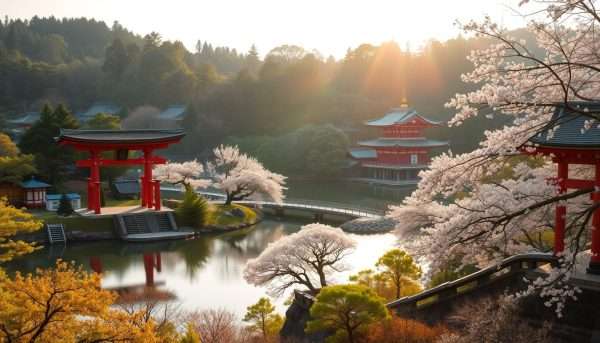
Japan’s religious scene is special, thanks to Shinto and Buddhism mixing together. This mix, called syncretism, has woven a rich spiritual fabric in Japan.
Historical Coexistence
Shinto, Japan’s native faith, and Buddhism, brought from Asia, have lived together for ages. At first, they kept their own ways. But over time, they started to blend their beliefs and customs together.
Shared Traditions and Practices
Shinto and Buddhism’s mix is seen in many parts of Japanese life. Temples and shrines often sit together, and people take part in both traditions’ rituals. For instance, a person might have a Shinto wedding and a Buddhist funeral.
| Aspect | Shinto Influence | Buddhist Influence |
|---|---|---|
| Life Events | Birth celebrations, weddings | Funerals, memorial services |
| Festivals | Matsuri (seasonal festivals) | Obon (ancestor festival) |
| Worship Sites | Shrines | Temples |
Modern Interpretations
Nowadays, many Japanese see Shinto and Buddhism as two sides of the same coin. This mix allows for a flexible, open spiritual practice. It shows Japan’s unique cultural identity. The blending of these traditions keeps changing, fitting into today’s world while keeping ancient wisdom.
Learn about religion in America.
Sacred Spaces: Temples, Shrines, and Religious Architecture
Japan is home to stunning shrines and temples. These places show Japan’s deep spiritual roots and amazing building skills.
Architectural Significance
Japanese shrines and temples have unique designs. Shinto shrines have torii gates and simple wooden buildings. Buddhist temples have detailed carvings and tall pagodas. They use natural materials like wood and stone, blending with their surroundings.
Ritual Spaces and Their Purpose
These spaces are key for religious festivals and daily prayers. Shrines are where Shinto deities, called kami, reside. They offer places for prayers and offerings. Temples are for meditation, chanting, and Buddhist ceremonies. Both are community hubs during big events.
Preservation and Modern Usage
Many old shrines and temples still thrive in Japan today. Efforts to keep them up ensure they remain important for the future. Now, these sites are not just for worship but also draw tourists. They help share culture and understanding.
| Feature | Shinto Shrine | Buddhist Temple |
|---|---|---|
| Main Gate | Torii | Sanmon |
| Main Hall | Honden | Hondo |
| Purification Area | Temizuya | Chozuya |
| Offering Method | Clap hands | Burn incense |
Visit Japan in Autumn.
Major Religious Festivals and Ceremonies
Japan’s religious festivals mix old traditions and new cultural influences. These events highlight the country’s deep spiritual roots. From Shinto rituals to Buddhist celebrations, these festivals are key in Japanese life.
Shinto festivals, called matsuri, celebrate local deities and spirits. The Gion Matsuri in Kyoto is well-known. It showcases elaborate floats and traditional outfits.
Buddhist events, like Obon, honor ancestors. Families come together and visit graves during this time.
Many Japanese festivals blend Shinto and Buddhism. The New Year’s, or Shogatsu, is a great example. People visit shrines and temples to wish for luck in the new year.
The Sapporo Snow Festival is famous worldwide. It features stunning ice sculptures, often with religious themes.
| Festival | Religion | Main Features |
|---|---|---|
| Gion Matsuri | Shinto | Floats, parades, traditional costumes |
| Obon | Buddhist | Ancestor veneration, family reunions |
| Shogatsu | Shinto/Buddhist | Shrine and temple visits, special foods |
| Sapporo Snow Festival | Secular/Religious | Ice sculptures, winter activities |
These festivals keep traditions alive while embracing change. They help shape Japan’s culture and spiritual identity.
Modern Religious Practices and Contemporary Japanese Society
Japan’s religious scene has changed a lot in recent years. The mix of old religions and new society has made a special spiritual place. This change shows how culture and beliefs are evolving.
Secularization Trends
Many Japanese now say they’re not religious but still join in old rituals. This shows how complex spirituality and everyday life are in Japan. For many, religious acts are more cultural than religious.
New Religious Movements
In the 20th century, new religious groups emerged in Japan. They mix old faiths with new ideas. Some have become popular, offering new spiritual paths in a fast-changing world.
Youth Engagement with Traditional Faith
Young Japanese are finding new ways to connect with their spiritual roots. While some leave organized religion, others are making old practices new again. This shows a search for identity and purpose among the young.
| Age Group | Religious Affiliation | Participation in Rituals |
|---|---|---|
| 18-29 | Low | Moderate |
| 30-49 | Moderate | High |
| 50+ | High | Very High |
The changing religious scene in Japan brings both challenges and chances. As society evolves, so does spirituality. This ongoing mix of old and new shapes religions in Japan, affecting culture and beliefs.
Furthermore, the traditional African religions.
Influence of Japanese Religions on Global Spirituality
Japanese religions have made a big impact on the world. Buddhism and Japanese religious philosophy have spread far. They have shaped cultures all over the globe.
Zen Buddhism in Western Culture
Zen Buddhism is becoming popular in the West. It focuses on mindfulness and meditation. These practices are attracting those looking for inner peace.
Zen has also influenced art, literature and business in Western countries. It brings a unique perspective to these fields.
Japanese Religious Philosophy Worldwide
Japanese religious philosophy is now part of global thought. Ideas like wabi-sabi, which values imperfection, inspire designers and artists. It encourages them to see beauty in imperfection.
The concept of harmony with nature, key in Shinto beliefs, is also influencing environmental movements. It encourages people to live in harmony with the environment.
Cultural Exchange and Adaptation
As Japanese religious ideas spread, they adapt to new cultures. This exchange leads to unique spiritual practices. For example, some Christian churches now use Zen meditation techniques.
In turn, Japanese religions evolve as they meet diverse global perspectives. This exchange enriches both cultures.
| Japanese Concept | Global Influence | Areas of Impact |
|---|---|---|
| Zen Meditation | Mindfulness Practices | Health, Business, Education |
| Wabi-Sabi | Aesthetic Philosophy | Art, Design, Architecture |
| Shinto Nature Worship | Environmental Awareness | Conservation, Eco-spirituality |
The spread of Japanese religious ideas shows the power of cultural exchange. It enriches global spirituality. It offers new ways to find meaning and balance in modern life.
Appreciate the Religions in Japan
Religions in Japan have deeply influenced the country’s culture for centuries. Ancient Shinto practices and Buddhism have created a rich mix of traditional beliefs. These beliefs still shape modern Japanese society today.
The unique mix of indigenous and imported faiths makes Japan’s religious scene special. This blend is seen in Shinto shrines and Buddhist temples. Here, rituals and festivals often combine elements from both traditions.
Japan’s ability to blend different religions shows its adaptability. This syncretism has shaped Japan’s identity and sparked global interest in its spirituality.
As Japan evolves, its religions face new challenges and opportunities. Despite secularization, many Japanese find comfort in traditional practices. The rise of new religious movements and the ongoing appeal of old customs highlight spirituality’s enduring role in Japanese culture.
This ongoing mix of old and new ensures that Japan’s religions will continue to evolve. They will inspire future generations, keeping spirituality alive in Japan.








Leave A Comment