

Brunei’s Geography and Status as a Nation
Brunei Darussalam occupies a small portion of Borneo island, with its capital Bandar Seri Begawan situated along the northern coast
Brunei Darussalam is a small sovereign state located on the northern coast of the island of Borneo in Southeast Asia. Covering just 5,765 square kilometers (2,226 square miles), Brunei is roughly the size of Delaware, making it one of the smallest countries in Asia. The nation is geographically unique as it is split into two separate parts by Malaysia’s Sarawak state, with the Temburong district separated from the main western territory where the capital is located.
Despite its small size, Brunei holds significant regional importance due to its substantial oil and natural gas reserves, which have made it one of the wealthiest nations in the world per capita. The country shares land borders exclusively with Malaysia and has a coastline along the South China Sea. About 97% of Brunei’s population lives in the larger western part of the country, which includes the districts of Belait, Tutong and Brunei-Muara, where the capital Bandar Seri Begawan is situated.
As a nation, Brunei operates as an absolute monarchy under the leadership of Sultan Hassanal Bolkiah, who serves as both head of state and government. The country gained its independence from the United Kingdom on January 1, 1984, after being a British protectorate since 1888. Today, Brunei maintains close ties with many nations and is a member of various international organizations, including the United Nations, ASEAN, the Commonwealth of Nations, and the Organisation of Islamic Cooperation.
Brunei’s official religion is Sunni Islam, which influences many aspects of daily life and governance. The country implements a dual legal system that combines English common law with Islamic Sharia law. With a population of approximately 460,000 people, Brunei is ethnically diverse, with Malays constituting the majority (about 65%), followed by Chinese and indigenous groups.
Historical Background of Bandar Seri Begawan
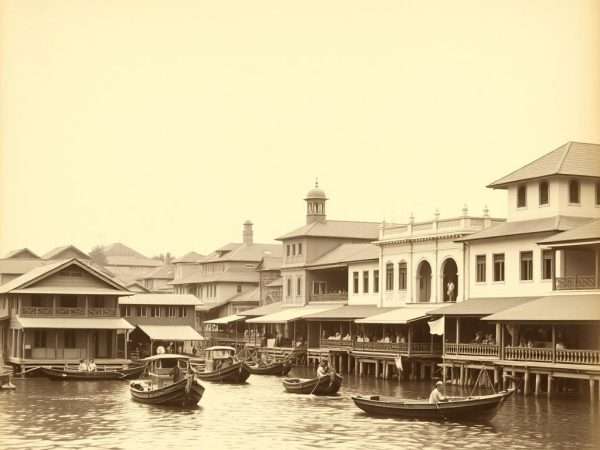
Historical view of Brunei Town (now Bandar Seri Begawan) before it was renamed as the capital of Brunei in 1970
The area now known as Bandar Seri Begawan has a rich history dating back over a thousand years. Originally, the settlement began as part of Kampong Ayer, the famous water village built on stilts along the Brunei River. This water village has been continuously inhabited for centuries and was once the center of the powerful Bruneian Empire that reached its peak during the 15th and 16th centuries.
During the golden age of the Brunei Sultanate under Sultan Bolkiah (1485-1524), the empire controlled much of Borneo and parts of the Philippines. The capital served as a vital trading hub in Southeast Asia, engaging in commerce with China, the Malay Peninsula and other regions. The area was known for trading exotic jungle and sea products including camphor, spices, agarwood and pearls.
The modern history of the capital began to take shape in the late 19th century when Brunei became a British protectorate in 1888. During this period, the city was known as Brunei Town and saw gradual infrastructural developments under British influence, although it remained relatively small and traditional. The Japanese occupation from 1941 to 1945 during World War II resulted in significant destruction of the town, necessitating major reconstruction efforts after the war.
In 1970, the city underwent a significant change when it was officially renamed “Bandar Seri Begawan” in honor of Sultan Omar Ali Saifuddien III, who had abdicated in 1967 but was instrumental in the country’s modernization. The name “Bandar” means “city” or “port” in Malay, while “Seri Begawan” was the title of the Sultan’s father, indicating “blessed one” or “revered lord.”
The discovery of oil and natural gas in the 20th century transformed Brunei’s economy and led to rapid urban development in the capital. Despite this modernization, Bandar Seri Begawan has maintained its cultural heritage, particularly in areas like Kampong Ayer, where traditional stilt houses continue to be preserved alongside modern infrastructure.
Today, Bandar Seri Begawan serves as the political, religious, and economic center of Brunei, reflecting both the country’s traditional Malay-Islamic values and its aspirations as a modern nation. The city’s development continues to be guided by Brunei’s national philosophy of Melayu Islam Beraja (Malay Islamic Monarchy), which emphasizes the importance of Malay culture, Islamic religion, and loyalty to the monarchy.
5 Key Landmarks in the Capital of Brunei
1. Omar Ali Saifuddien Mosque

The magnificent Omar Ali Saifuddien Mosque with its golden dome stands as the most iconic landmark in the capital of Brunei
The Omar Ali Saifuddien Mosque stands as the most iconic landmark in Bandar Seri Begawan and symbolizes Brunei’s deep Islamic faith. Completed in 1958 and named after the 28th Sultan of Brunei (the father of the current Sultan), this architectural masterpiece dominates the city’s skyline with its magnificent golden dome and soaring minarets. The mosque is surrounded by an artificial lagoon that serves as a reflecting pool, creating stunning mirror images of the structure.
The mosque’s interior is equally impressive, featuring Italian marble floors and walls, chandeliers from England, and carpets from Saudi Arabia. The main prayer hall can accommodate up to 3,000 worshippers. In the lagoon sits a replica of a 16th-century royal barge. While non-Muslims can visit outside prayer times, modest dress is required and women are provided with black robes to wear during their visit. The mosque represents the perfect blend of Mughal architecture and Italian design, making it not just a place of worship but also a testament to Brunei’s artistic and cultural achievements.
2. Kampong Ayer (Water Village)
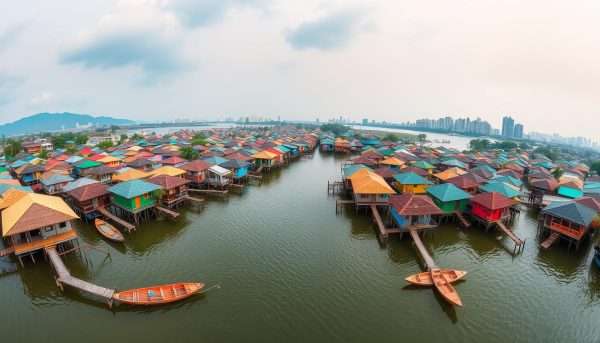
Kampong Ayer, the “Venice of the East,” is home to thousands of residents living in houses built on stilts over the Brunei River
Often referred to as the “Venice of the East,” Kampong Ayer is one of the largest water villages in the world and has been continuously inhabited for over 1,000 years. This remarkable settlement consists of 42 interconnected villages built entirely on stilts over the Brunei River and is home to approximately 30,000 people. Historically, Kampong Ayer was the center of Brunei’s government, economy and culture before land-based development expanded.
What makes Kampong Ayer truly remarkable is that it functions as a complete community with its own schools, mosques, police stations, fire stations and clinics. Residents move between houses via wooden walkways or travel by water taxis called “water taxis” or “flying coffins” by locals due to their speed. The village offers a fascinating glimpse into traditional Bruneian life while adapting to modern conveniences—many homes now have electricity, satellite television, internet access and air conditioning.
Visitors can explore Kampong Ayer by hiring a water taxi from the waterfront in Bandar Seri Begawan. The Kampong Ayer Cultural and Tourism Gallery provides insights into the history and lifestyle of this unique community. Artisans in the village continue traditional crafts such as boat-building and silver-smithing, offering authentic souvenirs for tourists.
3. Royal Regalia Museum
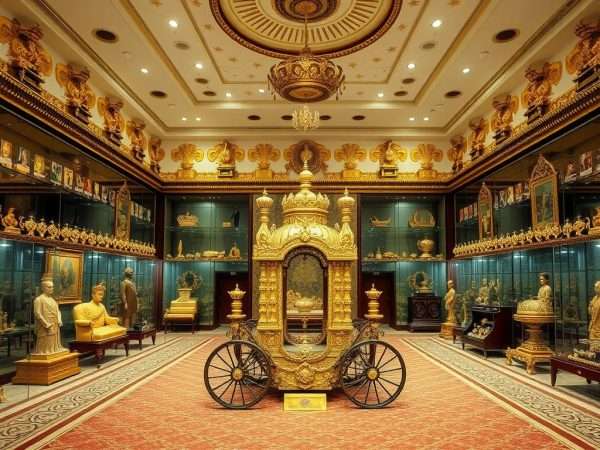
The Royal Regalia Museum houses an impressive collection of royal artifacts, gifts and ceremonial items used by the Sultan of Brunei
The Royal Regalia Museum, located in the heart of Bandar Seri Begawan, houses an impressive collection dedicated to celebrating the life and reign of Sultan Hassanal Bolkiah, the 29th and current Sultan of Brunei. Opened in 1992 to commemorate the Sultan’s Silver Jubilee, this museum offers visitors a glimpse into the extraordinary wealth and ceremonial traditions of Brunei’s monarchy.
The centerpiece of the museum is a magnificent royal chariot that was used during the Sultan’s coronation procession in 1968. Surrounding this are various galleries displaying the Sultan’s full royal regalia, including the crown jewels, ceremonial armaments and traditional royal attire adorned with precious stones and metals. The museum also exhibits numerous gifts presented to the Sultan by world leaders and dignitaries, ranging from intricate models of famous buildings to ornate works of art.
Visitors to the Royal Regalia Museum must remove their shoes before entering and are not permitted to take photographs inside. The museum provides a fascinating insight into Brunei’s monarchy and its ceremonial traditions, reflecting the nation’s deep respect for its royal heritage. The opulence of the displays also serves as a testament to Brunei’s wealth derived from its oil and natural gas resources.
4. Istana Nurul Iman (Palace of the Light of Faith)
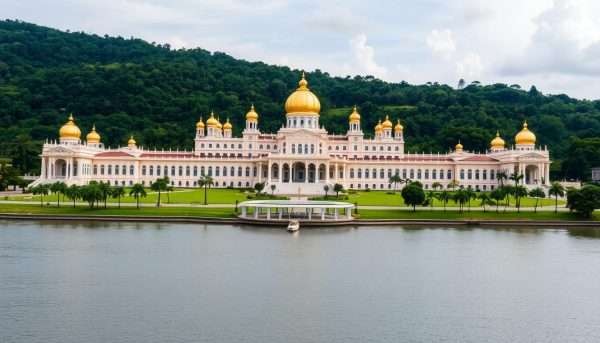
Istana Nurul Iman, the world’s largest residential palace and official residence of the Sultan of Brunei
Istana Nurul Iman (Palace of the Light of Faith) is the official residence of the Sultan of Brunei and holds the Guinness World Record as the largest residential palace in the world. This magnificent structure covers an area of over 200,000 square meters and contains 1,788 rooms, 257 bathrooms and a banquet hall that can accommodate up to 5,000 guests. Built at a cost of approximately $1.4 billion, the palace combines Islamic and Malay architectural elements with modern design.
While the palace is not open to the public for most of the year, it becomes accessible during the three-day Hari Raya Aidilfitri celebration at the end of Ramadan. During this time, the Sultan and his family welcome visitors, including foreign dignitaries and ordinary citizens, who can tour parts of the palace and even receive gifts from the royal family. The rest of the year, visitors can only view the palace from the Brunei River or from designated viewpoints around the city.
The palace features a golden dome, marble exterior and extensive gardens. It houses the Sultan’s private residence, government offices, a mosque that can accommodate 1,500 worshippers and stables for the royal polo ponies. The lavish interior includes gold-plated furnishings, crystal chandeliers and priceless works of art, reflecting the immense wealth of the Brunei monarchy. Even from a distance, Istana Nurul Iman stands as a powerful symbol of Brunei’s prosperity and the central role of the monarchy in the nation’s identity.
5. Brunei Museum and Malay Technology Museum
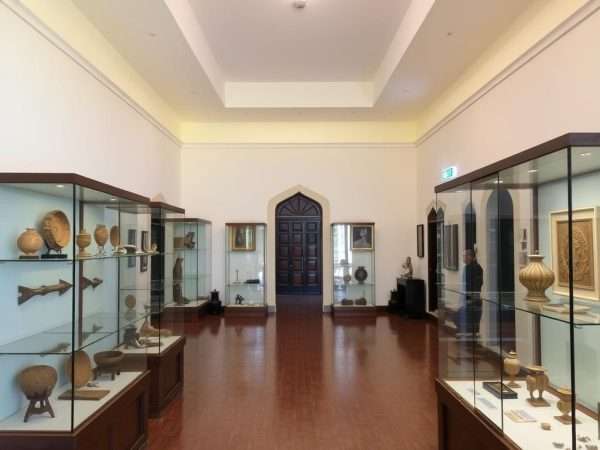
The Brunei Museum houses extensive collections documenting the history and cultural heritage of the capital of Brunei
Located about 4.5 kilometers from the city center in Kota Batu, the Brunei Museum provides a comprehensive overview of the nation’s history, culture and natural resources. Established in 1965 and housed in a modern building since 1972, this national museum features extensive collections of Islamic art, archaeological artifacts, ethnographic displays and natural history exhibits. Of particular interest is the Petroleum Gallery, which documents the discovery and development of oil in Brunei—the resource that transformed the nation’s economy and funded its modern development.
Adjacent to the Brunei Museum is the Malay Technology Museum, which focuses on the traditional technologies and crafts of Brunei’s Malay population. This museum features full-scale reconstructions of traditional Malay houses, water villages and workshops, demonstrating how local people historically adapted to their environment. Exhibits showcase traditional boat-building techniques, fishing methods, metalworking and weaving, providing insights into pre-industrial Bruneian life.
Both museums are situated in a historically significant area—Kota Batu was the site of ancient Brunei’s capital before it moved to its current location. Archaeological excavations in the area have uncovered Chinese ceramics and other artifacts dating back to the 10th-13th centuries, highlighting Brunei’s long history as a trading center. The museums offer visitors a deeper understanding of how Brunei evolved from a traditional Malay sultanate to the modern nation it is today, while preserving its cultural heritage and traditions.
Visit these Singapore tourist attractions.
Cultural Traditions Preserved in the Capital
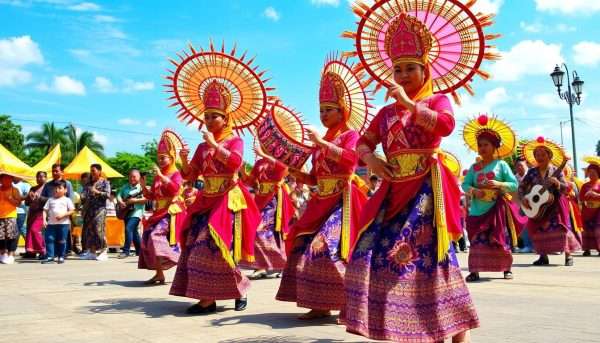
Traditional Bruneian cultural performances featuring colorful costumes and traditional music are regularly held in the capital of Brunei
Bandar Seri Begawan serves as the cultural heart of Brunei, where traditional practices and customs are actively preserved alongside modern development. The capital city maintains a strong commitment to Bruneian cultural heritage through various institutions, events and daily practices that reflect the nation’s Malay-Islamic identity.
Traditional Arts and Crafts
The capital preserves numerous traditional Bruneian crafts, many of which can be observed in Kampong Ayer and at the Arts and Handicrafts Center. These include:
- Songket Weaving – The production of intricately woven cloth with gold or silver threads, traditionally worn during royal ceremonies and special occasions
- Silver and Brasswork – Crafting of ornate ceremonial items, jewelry and household objects using traditional metalworking techniques
- Boat Building – Traditional construction of wooden boats that continue to serve as transportation in Kampong Ayer
- Wood Carving – Intricate carvings featuring Islamic geometric patterns and natural motifs used in architecture and decorative items
The Brunei Arts and Handicrafts Training Center in the capital not only displays these traditional crafts but also offers training programs to ensure these skills are passed down to younger generations.
Religious and Royal Ceremonies
As the seat of both religious and royal authority in Brunei, Bandar Seri Begawan hosts numerous ceremonial events throughout the year that showcase traditional customs:
- Hari Raya Aidilfitri – The celebration marking the end of Ramadan includes the unique tradition of the Sultan opening his palace to the public for three days
- Royal Birthday Celebrations – The Sultan’s birthday in July features traditional processions, performances and displays of royal regalia
- Maulud Nabi – Celebration of the Prophet Muhammad’s birthday includes processions and religious ceremonies at the capital’s main mosques
- Royal Wedding Ceremonies – Elaborate traditional ceremonies that follow ancient Malay royal protocols and customs
Traditional Music and Dance

Musicians performing with traditional Bruneian instruments including the gulingtangan (small bronze gongs) in the capital of Brunei
The capital preserves traditional Bruneian performing arts through regular cultural shows and events. Key traditional forms include:
- Gulingtangan – Traditional ensemble music featuring small bronze gongs arranged in rows, often accompanied by larger gongs (canang) and drums (gendang)
- Adai-Adai – Traditional work songs originally sung by fishermen and now performed during cultural events
- Alai Sembah – A classical royal court dance performed during official ceremonies
- Silat – Traditional Malay martial art that combines self-defense with artistic elements, often demonstrated during cultural festivals
The Brunei Arts and Culture Center in the capital regularly hosts performances of these traditional art forms, while educational institutions include them in their curricula to ensure their preservation.
Traditional Cuisine
Bandar Seri Begawan is home to numerous establishments serving traditional Bruneian cuisine, which reflects the country’s Malay heritage with influences from neighboring regions. Popular traditional dishes found in the capital include:
- Ambuyat – Brunei’s national dish consisting of a starchy, glue-like substance made from sago palm, eaten by twirling it around bamboo forks (chandas) and dipping it in various sauces
- Nasi Katok – A simple but popular dish of rice served with fried chicken and spicy sambal sauce
- Kelupis – Glutinous rice cooked in coconut milk and wrapped in leaves
- Bamboo Chicken – Chicken marinated with local spices and cooked inside bamboo tubes
The Gadong Night Market (Pasar Malam Gadong) in the capital is one of the best places to sample these traditional foods, with numerous stalls offering authentic local cuisine at affordable prices.
Through these various cultural elements, Bandar Seri Begawan maintains its identity as a center of Bruneian heritage while embracing modernization. The careful preservation of these traditions reflects Brunei’s commitment to its cultural roots even as it develops as a contemporary nation.
Governance and Economy: 3 Interesting Facts About Brunei’s Capital
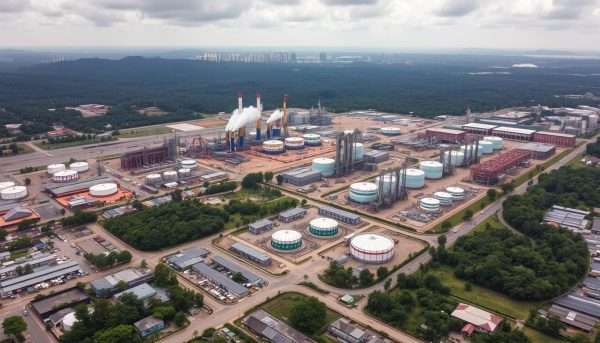
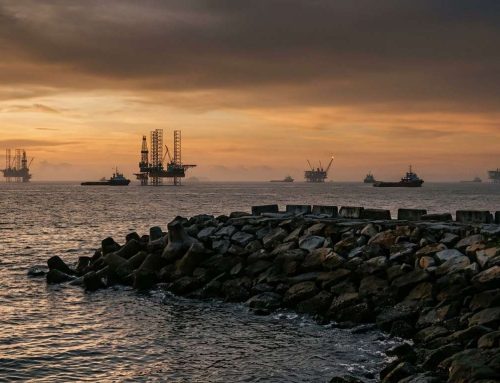
Oil and gas facilities near Bandar Seri Begawan represent the foundation of Brunei’s wealth and economic development
1. Seat of Absolute Monarchy with No Elections
Bandar Seri Begawan serves as the administrative center for one of the world’s few remaining absolute monarchies. The city houses the government ministries and departments that implement the policies of Sultan Hassanal Bolkiah, who has ruled since 1967 and serves simultaneously as Prime Minister, Minister of Defense, Minister of Foreign Affairs and Minister of Finance. What makes Brunei’s governance particularly unique is that despite having a Legislative Council that meets in the capital, Brunei has not held general elections since 1962.
Following an attempted rebellion that year (known as the Brunei Revolt), the Sultan’s father declared a state of emergency that technically remains in effect today. While other monarchies have transitioned to constitutional models, Brunei maintains a system where ultimate authority rests with the Sultan. The government complex in Bandar Seri Begawan reflects this centralized power structure, with ministries designed to implement rather than check the Sultan’s authority. Despite this absolute power, the monarchy enjoys widespread support among citizens, who benefit from extensive welfare programs funded by the country’s oil wealth.
2. One of the World’s Highest GDP Per Capita with No Income Tax
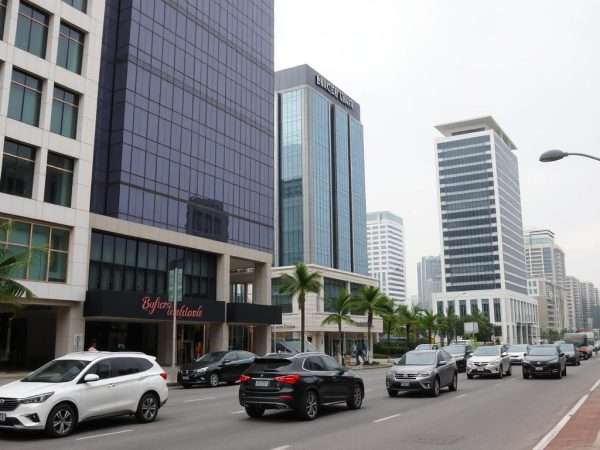
The modern financial district in Bandar Seri Begawan reflects the economic prosperity of the capital of Brunei
Bandar Seri Begawan functions as the economic hub of one of the wealthiest nations in the world on a per capita basis. According to the International Monetary Fund, Brunei ranks among the top 10 countries globally in GDP per capita (PPP), with figures exceeding $85,000. What makes this economic model particularly interesting is that residents of the capital and the entire country pay no personal income tax, no sales tax and no export duties—a rarity in the modern world.
This economic situation stems directly from Brunei’s vast oil and natural gas reserves, with the headquarters of Brunei Shell Petroleum located near the capital. The petroleum sector accounts for over 90% of government revenue and approximately 60% of GDP. The wealth generated from these natural resources has funded extensive development in Bandar Seri Begawan, including modern infrastructure, free education through university level, comprehensive healthcare and housing subsidies. However, this dependence on a single industry has prompted government initiatives based in the capital to diversify the economy, focusing on sectors like Islamic finance, halal product certification, tourism and information technology.
3. A Capital City with No Public Transportation System

The roads of Bandar Seri Begawan are dominated by private vehicles due to the absence of a comprehensive public transportation system in the capital of Brunei
Unlike most capital cities around the world, Bandar Seri Begawan operates without a comprehensive public transportation system. The city has one of the highest car ownership rates globally, with approximately one car for every two residents. This unusual situation stems from a combination of factors: heavily subsidized fuel prices (among the lowest in the world), absence of vehicle taxes, relatively small urban area and the high per capita income that makes car ownership widely accessible.
While there are some public buses and water taxis serving Kampong Ayer, their schedules are irregular and coverage is limited. The government has periodically announced plans to develop better public transportation, but implementation has been slow. This car-centric approach has shaped the city’s development, with wide roads, ample parking and dispersed urban planning that assumes private vehicle ownership. The absence of traffic congestion despite high car ownership is largely due to the city’s relatively small population of around 100,000 people.
This transportation model reflects broader aspects of Brunei’s development approach—leveraging oil wealth to provide direct benefits to citizens (like cheap fuel) rather than developing shared infrastructure systems common in other capitals. However, it also presents challenges for tourists visiting the capital, who often find taxis expensive and difficult to hail on the street, with ride-sharing services like Uber and Grab not widely available.
Travel Tips for Visiting Bandar Seri Begawan

Tourists exploring the waterfront area of Bandar Seri Begawan with water taxis available for visiting Kampong Ayer
Best Time to Visit
The capital of Brunei experiences a tropical climate with warm temperatures year-round and high humidity. The best time to visit Bandar Seri Begawan is during the dry season from January to May when rainfall is less frequent and outdoor exploration is more comfortable. The period from June to December sees more rainfall, though showers are typically brief. If you’re interested in cultural experiences, consider timing your visit during Hari Raya Aidilfitri (the end of Ramadan) when the Sultan opens the palace to visitors or during the Sultan’s birthday celebrations in July when the capital hosts parades and festivities.
Visa and Entry Requirements
Many nationalities, including those from the United States, United Kingdom, European Union countries, Australia and most ASEAN nations, can enter Brunei visa-free for stays of 14-90 days depending on nationality. However, all visitors must have a passport valid for at least six months beyond their arrival date. Before traveling, check the latest requirements through the Brunei Immigration Department website or your country’s embassy. Upon arrival at Brunei International Airport (which is about 11 km from the city center), you’ll need to complete an immigration card and may be asked to show proof of onward travel and sufficient funds for your stay.
Transportation Options
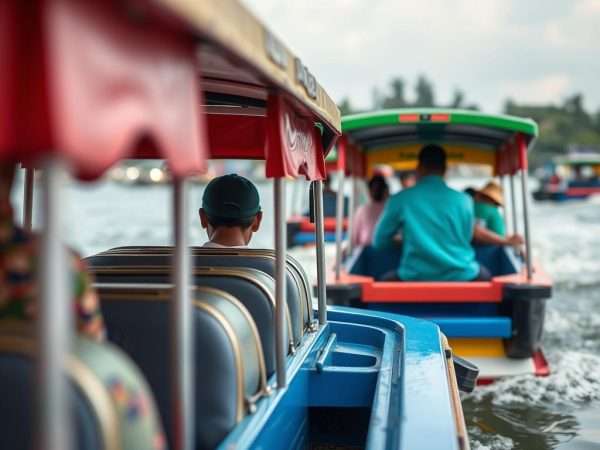
Water taxis, locally known as ‘flying coffins,’ provide an essential transportation service along the Brunei River
Getting around Bandar Seri Begawan can be challenging without a car due to limited public transportation. Here are your main options:
- Taxis – Available but relatively expensive and not easily hailed on streets; it’s better to book through your hotel or use the Dart app (Brunei’s local ride-hailing service)
- Water Taxis – An affordable and authentic way to travel between the mainland and Kampong Ayer or along the Brunei River; negotiate the fare before boarding
- Rental Cars – A good option if you’re comfortable driving on the left side of the road; international driving permits are recognized
- Walking – The central area of Bandar Seri Begawan is compact enough to explore on foot, though the tropical heat can make long walks uncomfortable
- Buses – Limited public bus services exist but schedules are irregular and routes may be difficult for tourists to navigate
Cultural Etiquette and Dress Code
Brunei is a conservative Islamic country, and visitors should respect local customs and traditions, particularly in the capital where many government and religious institutions are located:
- Dress modestly, especially when visiting mosques or government buildings; women should cover shoulders and knees and men should wear long pants
- Remove shoes before entering mosques, homes and some public buildings
- During Ramadan, avoid eating, drinking or smoking in public during daylight hours
- Public displays of affection should be avoided
- Always use your right hand for giving or receiving items
- Ask permission before photographing local people, especially in Kampong Ayer where you’re viewing people’s homes
Accommodation and Dining

Traditional Bruneian cuisine including ambuyat (national dish) available at restaurants throughout the capital of Brunei
Bandar Seri Begawan offers accommodation options ranging from luxury hotels to mid-range and budget choices:
- The Empire Hotel & Country Club – A 5-star luxury resort located about 15 minutes from the city center
- Radisson Hotel – A centrally located 4-star hotel with modern amenities
- The Capital Residence Suites – Serviced apartments suitable for longer stays
- Jubilee Hotel – A mid-range option within walking distance of main attractions
- Brunei Hotel – A comfortable 3-star hotel in the city center
For dining, remember that Brunei is a dry country with no alcohol sold or served. Food options include:
- Gadong Night Market – For authentic local street food at affordable prices
- Aminah Arif Restaurant – Famous for traditional ambuyat
- Kaizen Sushi – Popular Japanese restaurant
- Excapade Sushi – Local chain offering Japanese cuisine
- Piccolo Cafe – Western-style cafe with good coffee and pastries
Money and Banking
The Brunei Dollar (BND) is pegged to the Singapore Dollar (SGD) at a 1:1 ratio and both currencies are accepted in Brunei. Major credit cards are widely accepted in hotels, larger restaurants and shopping centers in Bandar Seri Begawan, but it’s advisable to carry cash for smaller establishments, markets and water taxis. ATMs are readily available throughout the capital. Banking hours are typically 9:00 AM to 3:00 PM Monday to Friday, and 9:00 AM to 11:00 AM on Saturdays.
Plan Your Visit to Bandar Seri Begawan
Discover the unique cultural heritage and modern developments of Brunei’s fascinating capital city. From stunning Islamic architecture to traditional water villages, Bandar Seri Begawan offers visitors a glimpse into a rarely explored corner of Southeast Asia.
Enjoy Bandar Seri Begawan

Sunset view of Bandar Seri Begawan skyline showcasing the harmonious blend of traditional Islamic architecture and modern development
Bandar Seri Begawan stands as a fascinating capital city that embodies Brunei’s unique position in Southeast Asia—a small nation that has leveraged its natural resources to create prosperity while maintaining strong connections to its cultural and religious heritage. The city offers visitors a rare glimpse into a society where traditional Malay-Islamic values coexist with modern development, all under the stable leadership of one of the world’s longest-reigning monarchies.
From the magnificent Omar Ali Saifuddien Mosque to the historic water village of Kampong Ayer, from royal palaces to museums preserving traditional crafts, Bandar Seri Begawan presents a compact but rich cultural landscape. The capital reflects Brunei’s careful balancing act between embracing aspects of globalization while maintaining its distinct national identity centered on the concept of Melayu Islam Beraja (Malay Islamic Monarchy).
While not as widely visited as other Southeast Asian capitals, Bandar Seri Begawan rewards travelers with authentic cultural experiences, stunning architecture and insights into a unique governance and economic model. As Brunei continues to develop and diversify its economy beyond oil and gas, its capital city will likely evolve while continuing to preserve the traditions and values that make it distinctive. For travelers seeking to explore beyond the typical tourist destinations in Southeast Asia, Bandar Seri Begawan offers a welcoming and enriching alternative that showcases a different path to modernization—one that prioritizes cultural preservation alongside economic development.



Leave A Comment