

Jamaica’s wildlife has several formidable animals that visitors should approach with caution. The American Crocodile stands as the island’s largest predator. It grows up to 6 meters (19.5 ft.) and weighs as much as a ton. These impressive reptiles make their home in the Black River basin and along the shorelines of New Hope and Crawford.
Visitors to this tropical paradise should watch out for dangerous animals that pose real threats. The scorpionfish’s spiky fins deliver potent venom, and the forty leg centipede’s bite leads to searing pain and spasms that often need emergency medical care[-4]. The brown recluse spider’s hemotoxin venom enters the bloodstream and can cause swelling, lesions, and in rare cases, death. The Jamaican Boa, though non-venomous, can stretch over 6.5 feet in length[-4] and deserves a respectful distance.
American Crocodile
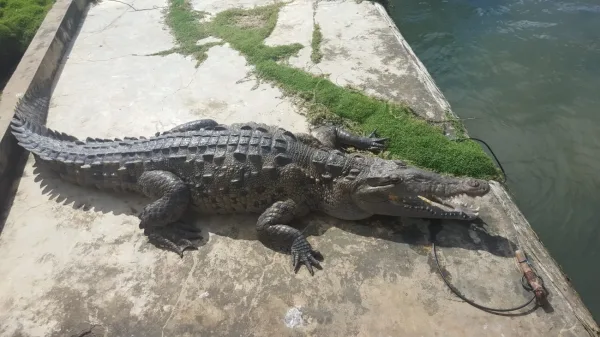
Image Source: Jamaica Information Service
Jamaica has only one crocodile species – the American crocodile (Crocodylus acutus), which has enjoyed protected status since 1971. This ancient reptile’s body shape has barely changed since dinosaurs roamed the earth about 160 million years ago.
American Crocodile identification
A greenish-gray color with a white-yellow underbelly and a narrow triangular snout make the American crocodile distinct. You can spot them by their fourth lower jaw tooth that shows even when their mouth is closed. The males grow much bigger than females and can reach 14-20 feet, while females usually grow between 8-12 feet. Some records show males can reach lengths up to 5 meters (16.5 feet).
These amazing reptiles need external heat sources to control their body temperature. They often bask in the sun with open mouths. Their strong bodies have four short feet, with five toes on the front and four on the back.
American Crocodile habitat in Jamaica
These creatures live mostly along Jamaica’s southern coast from St. Thomas to Westmoreland, and smaller groups exist in Hanover and Trelawny. The Black River, Hellshire mangroves, Falmouth, Montego Bay, and Lucea East River serve as their main habitats.
Brackish waters and coastal mangrove swamps attract these crocodiles, though they might venture inland or head out to sea. Their survival faces serious threats from urbanization, tourism development, and the clearing of wetlands.
American Crocodile danger to humans
The American crocodile ranks fourth among crocodilian species in human attacks, but the numbers are nowhere near as high as more aggressive species. They cause only 1-6 human deaths worldwide each year. Jamaica has recorded 11 attacks in the last decade, including one death in Hellshire in 2018.
Recent attacks have happened at the Minho River, Yallahs River mouth, and Duhaney River in Kingston. These reptiles tend to be shy and try to avoid people whenever possible.
The law takes protection seriously – anyone caught harming or hunting these animals faces fines up to USD 100,000 or 12 months in jail under Jamaica’s Wildlife Protection Act.
Scorpionfish
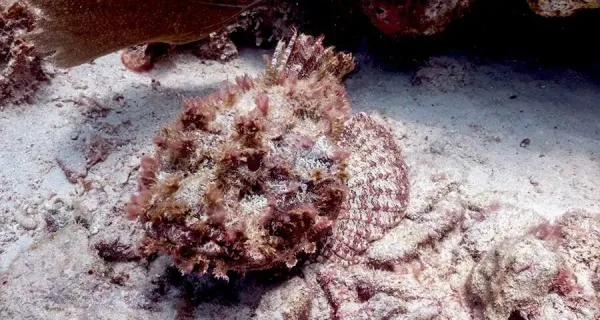
Image Source: Dressel Divers
Scorpionfish stand out as Jamaica’s most deceptive and dangerous animals due to their extraordinary camouflage abilities. These bottom-dwelling marine creatures are part of the Scorpaenidae family that has over 200 known species throughout the world’s oceans.
Scorpionfish identification
These fish measure 7 to 14 inches in length with strong bodies and a continuous dorsal fin that has 12 venomous spines. Their appearance shows dramatic variation – some have dull mottled brown or yellow colors, while others show vibrant red or orange hues. The spotted scorpionfish (Scorpaena plumieri) appears most commonly in Jamaican waters and has distinctive white spots on a black background inside its pectoral fins.
These fish become skilled at deception through their feathery fins and skin flaps that blend perfectly with surrounding coral and rocks. The fish display bright white spots as a warning signal by extending their pectoral fins when they feel threatened.
Scorpionfish habitat in Jamaica
Scorpionfish make their home throughout Jamaica’s coastal waters, especially in shallow coral reef communities and rocky areas. Coral-rich temperate waters provide their preferred environment. These patient predators stay motionless on the ocean floor and wait to ambush their prey.
Night time brings out their hunting instincts. They rest in crevices during daylight hours before they attack unsuspecting prey that swim nearby. Small fish and crustaceans like shrimp and crab make up their main diet.
Scorpionfish danger to humans
Scorpionfish rank among Jamaica’s most venomous animals with potent venom in their dorsal spines that releases on contact. Swimmers often step on these fish or fishermen handle them accidentally.
The effects of a scorpionfish sting include:
- Excruciating pain peaking 30-90 minutes after contact
- Swelling, redness, and tissue damage at the wound site
- Potential systemic symptoms including nausea, vomiting, and difficulty breathing
Hot water immersion of the affected area (42-45°C) for 30-90 minutes helps neutralize the thermolabile venom. People who don’t treat these stings risk secondary infection, dermal necrosis, and chronic neuropathy.
Forty Leg (Giant Centipede)
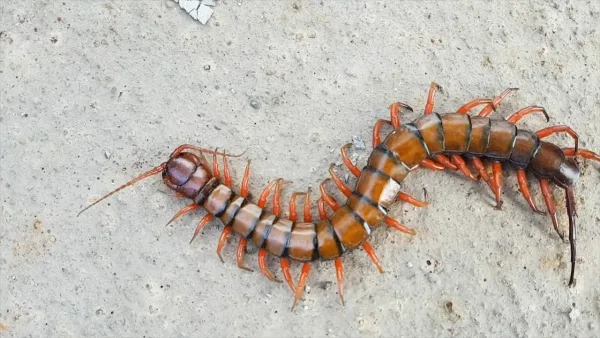
Image Source: YouTube
The formidable “Forty Leg” centipede lurks in dark, damp places throughout Jamaica and presents a painful hazard to unwary visitors. This arthropod, officially known as the Caribbean Giant Centipede (Scolopendra alternans), belongs to the class Chilopoda. It ranks among the island’s most feared invertebrates.
Forty Leg identification
The Caribbean Giant Centipede grows impressively large and can reach up to 30 centimeters (12 inches) in length. Despite their nickname, these creatures don’t actually have forty legs. They have one pair of legs per body segment, with total leg count ranging from 30 to 354. Their elongated bodies show a rounded or flattened head with a pair of antennae. The body typically displays drab coloration that combines shades of brown and red.
The centipede’s most dangerous feature lies in its modified first pair of legs, called forcipules, which serve as venomous pincers. Most species lack eyes, while some have ocelli that can only tell light from dark. These predatory arthropods dart quickly out of darkness with startling speed.
Forty Leg habitat in Jamaica
These centipedes flourish throughout Jamaica and prefer warm, moist environments. They seek shelter in:
- Soil and leaf litter
- Under stones and dead wood
- Inside logs and damp crevices
The Forty Leg needs humid microhabitats because it lacks the waxy cuticle that helps insects retain water. A single centipede covers acres of territory during its nighttime hunting. This extensive range makes human encounters more likely.
Forty Leg danger to humans
The centipede’s venom, delivered through its forcipules, causes intense, burning pain that radiates up a limb. Bite symptoms include:
- Severe pain that lasts 45-60 minutes
- Swelling and redness at the bite site
- Possible fever, weakness, and chills
The bites become especially dangerous for small children and people allergic to bee stings, as they might cause anaphylactic shock. People can treat bites by applying ice to reduce swelling, immersing in warm water (since the venom is heat-labile), and taking over-the-counter pain relievers. Serious reactions need immediate medical attention.
Brown Recluse Spider
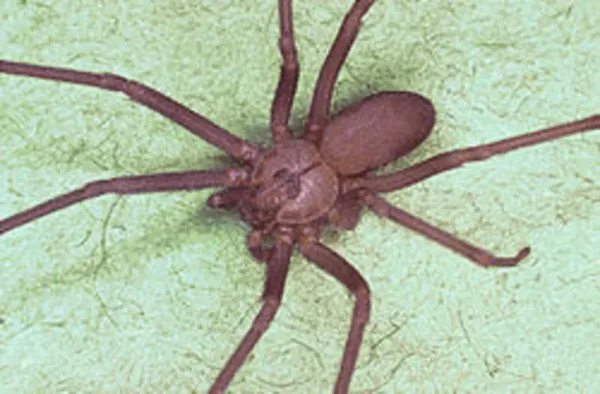
Image Source: HubPages
The brown recluse spider ranks as one of the most dangerous spiders in Jamaica. Arachnologists warn about this creature’s potent necrotic venom. This small but deadly spider belongs to the genus Loxosceles, and Loxosceles reclusa remains the most common species people encounter.
Brown Recluse identification
These spiders have a body length of 6-20 millimeters (0.24-0.79 inches). A dark violin-shaped marking appears on the spider’s cephalothorax, and the “neck” points toward its abdomen. The spider’s eyes set it apart from others. While most spiders have eight eyes, brown recluses have six eyes arranged in three pairs – a key feature that helps identify them.
The spider’s color varies from whitish to dark brown or blackish gray. The legs and abdomen show no stripes or bands, maintaining a uniform color. You won’t find spines on their legs – just fine hairs cover them instead.
Brown Recluse habitat in Jamaica
Brown recluse spiders across Jamaica prefer quiet, hidden spots. These night hunters need warm, dry, and dark places to thrive. Outside, they make their homes under rocks, logs, and tree bark.
These spiders often hide inside buildings in:
- Basements, attics, and garages
- Cardboard boxes and old furniture
- Unworn clothing and shoes
- Cracks, crevices, and spaces between walls
The spider earned its “recluse” name by staying hidden during daylight and hunting at night.
Brown Recluse danger to humans
Brown recluse venom contains sphingomyelinase D, which destroys skin tissue. People usually get bitten when these spiders feel trapped against their skin in clothing or bedding. A tourist learned this the hard way and needed extended hospital care after finding one of these spiders in her Jamaica hotel bed.
Bite effects can vary:
- 90% of victims show minor reactions or small red bumps
- 37% develop dead skin tissue at the bite location
- 14% show whole-body symptoms like fever and nausea
Doctors call this spider’s poisoning “loxoscelism”. Victims might not notice the original symptoms, but painful sores can develop over several days. Anyone bitten should see a doctor right away, especially children who face greater risks.
Pit Bulls

Image Source: The Caribbean Pet
Pit bulls pose a growing threat in Jamaica, unlike the island’s native dangerous wildlife. These human-introduced dogs have sparked public safety debates and legal actions due to several documented attacks.
Pit Bulls identification
Pit bulls are muscular, medium to large-sized dogs with a solid build. Their broad skull features prominent cheek muscles and a wide, deep muzzle. The front view of their head looks like a broad, blunt wedge.
These dogs have distinctive features:
- Eyes that are round to almond-shaped, set low and wide apart in the skull
- High-set ears (sometimes cropped)
- A muscular neck connected to strong shoulders
- A smooth, short coat that sits close to the skin
“Pit bull” doesn’t refer to one specific breed. The term includes several bull-type breeds such as American Staffordshire Terrier, American Pit Bull Terrier, Staffordshire Bull Terrier, and American Bully.
Pit Bulls presence in Jamaica
Pit bull ownership has become a heated topic across Jamaica. Multiple attacks in 2013 led to demands for a complete 25-year ban on pit bulls. The proposed ban would mirror restrictions already in place in Miami-Dade County, Florida.
A local medical doctor raised red flags about pit bull injuries. The doctor pointed out that authorities don’t deal very well with warnings about these dangers. Many tourists and locals remain unaware of the risks these dogs present on the island.
Pit Bulls danger to humans
Pit bull attacks in Jamaica have left people with severe injuries. A particularly shocking case happened in Coopers Hill, St. Andrew, where four pit bulls mauled a teacher for hours. The authorities euthanized three of these dogs afterward.
This incident prompted the Jamaica Teachers’ Association president to demand a ban on pit bull ownership. The president stated: “They should find a way to make them extinct. Private owners should not have those dogs”.
Jamaica’s outdated Dog Liabilities Act from the 1800s doesn’t address dangerous dog management properly. An attorney who needed overseas surgery to prevent hand deformation after a pit bull attack noted that the law only bans importing these dogs, not owning or breeding them.
Jamaican Boa
The Jamaican Boa, Jamaica’s largest native land predator, often gets a bad rap despite its striking appearance. Many people misunderstand this endemic snake, also known as the Yellow Snake.
Jamaican Boa identification
These impressive snakes measure between 4.9-7.2 feet long, and some have reached lengths of 8 feet. The snake’s body shows off a greenish-yellow head and front section with black zigzag crossbars. The colors get darker toward the back until the tail becomes almost black. Sunlight brings out the boa’s stunning iridescent scales that shimmer with blue, green, and purple hues. The males have longer tails and cloacal spurs that look like tiny leg remnants, but females grow bigger in length and width.
Jamaican Boa habitat in Jamaica
These snakes now live in just 9% (about 1,000.6 km²) of Jamaica’s territory. They used to thrive across rural Jamaica and Goat Islands until mongooses arrived in 1872, which caused their numbers to drop sharply. You’ll find them mostly in the Cockpit Country, Blue Mountains, Yallah Mountains, Hellshire Hills, and Portland Bight. These night-loving tree dwellers make their homes in woodlands of all types, from limestone forests to tropical mountain forests and mangroves.
Jamaican Boa danger to humans
The truth is, whatever local fears exist, Jamaican Boas pose almost no risk to humans. They don’t have any venom. Their sharp teeth could leave a mark, but they bite only when scared or surprised. Sadly, many locals kill these snakes on sight because they don’t understand them. In stark comparison to this fear, these constrictors help farmers by eating rats. The species now faces extinction risks mainly because people destroy their habitat and hunt them down.
Jellyfish
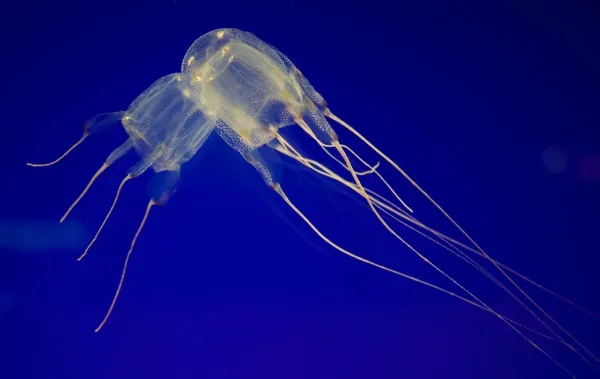
Image Source: Jellyfish Art
Deceptively simple yet dangerous marine animals swim beneath Jamaica’s azure waters. Jellyfish, with their see-through bodies, create unexpected challenges for swimmers and people learning about the island’s coastal areas.
Jellyfish identification
Thimble Jellyfish (Linuche unguiculata) are the most common species in Jamaican waters. These creatures have a flat-topped, straight-sided bell with an orangish-brown color from symbiotic zooxanthellae. They’re about the size of grapefruits or footballs. You might also see Moon Jellyfish with their distinctive four-leaf clover pattern. The more dangerous Sea Wasp (box jellyfish) appears rarely. The Upside-Down Jellyfish lives in mangrove areas and rests with its bell on the seabed while its tentacles point upward.
Jellyfish habitat in Jamaican waters
These creatures usually stay in Jamaica’s deeper waters but can drift toward shores after storms, high winds, or rainfall. Thimble Jellyfish create large swarms (called blooms) near the surface between March and August. Most encounters happen in Montego Bay and Negril, especially during snorkeling or deep-sea diving trips.
Jellyfish danger to humans
Jellyfish stings show up as:
- Sharp burning sensations that last 10-120 minutes
- Red, swollen, irritated skin welts
- Possible itchy rash in affected areas
Thimble Jellyfish larvae can cause “sea bather’s eruption,” a uncomfortable rash when they stick to swimwear and hair. People can treat these stings with vinegar or hot water immersion.
Sea Urchins
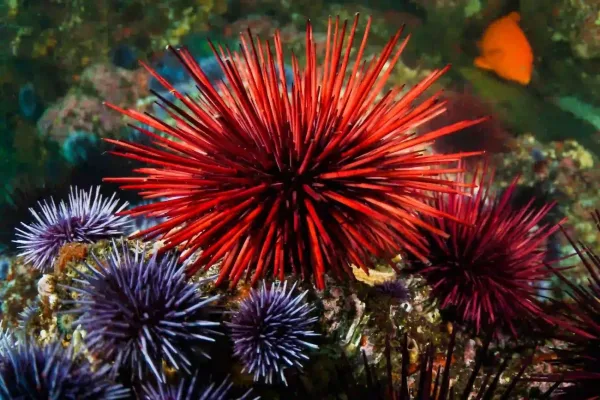
Image Source: WIC News
Sea urchins are crucial to Jamaica’s coral reef ecology, though their spiny bodies pose risks to swimmers. The long-spined sea urchin (Diadema antillarum) stands out as the Caribbean’s key herbivore.
Sea Urchins identification
These round marine creatures have protective spines that extend from their bodies in all directions. The long-spined sea urchin’s calcified spines typically measure 10-12 cm, though some large specimens can reach 30 cm. Their color varies from black to occasional gray or white, and young urchins show distinct black and white patterns. The urchin’s underside contains tiny claw-like pincers called pedicellariae that release venom.
Sea Urchins habitat in Jamaica
Sea urchins thrive in Jamaica’s shallow waters, making their home in coral reefs, rock pools, and seagrass meadows. Their numbers have dropped dramatically over the years. A mysterious disease killed all but one of these creatures across the Caribbean in 1983. NEPA found infected urchins in Portland and Discovery Bay in March 2025. This decline let algae overwhelm corals, and Caribbean coral cover dropped by 50% since the 1970s.
Sea Urchins danger to humans
People often get stung by sea urchins when they step on them in shallow waters. Their spines break off easily inside the body and cause:
- Sharp, intense pain right away
- Blue-black bruised puncture wounds
- Risk of infection without treatment
Medical experts suggest removing spines with tweezers, cleaning with soap and water, and applying antibiotic cream to treat stings.
Stingrays
Stingrays move through Jamaica’s clear waters with grace. These creatures offer a fascinating sight but can be hazardous to swimmers and divers who are learning about the island’s marine life.
Stingrays identification
These marine creatures have flat, disk-shaped bodies that come in various sizes. They range from just a few inches to impressive specimens measuring 6.5 ft in length and weighing up to 800 lbs. Their wing-like fins create a rippling motion as they swim. The Southern stingray (Hypanus americanus) is the most common species in Jamaica’s waters. The Yellow stingray (Urobatis jamaicensis) is smaller and reaches only 26 inches. All stingrays share one dangerous feature: a whip-like tail with one to three venomous barbed spines.
Stingrays habitat in Jamaica
Stingrays prefer shallow sandy or muddy areas along Jamaica’s coastline. Their gray color helps them blend perfectly with their surroundings. These creatures often bury themselves in the sand until only their eyes and spiracles remain visible. Tourists can meet these fascinating creatures at places like Dolphin Cove in Ocho Rios and Montego Bay. These locations offer safe interactions with stingrays under expert guidance.
Stingrays danger to humans
Stingrays are not aggressive by nature and use their venom only as a defense mechanism when they feel threatened. Most injuries happen when swimmers step on these well-camouflaged creatures by accident. A sting causes sharp, intense pain and might lead to headaches, nausea, vomiting, and in rare cases, serious complications. Medical experts suggest placing the affected area in hot water because it helps break down the heat-sensitive toxins.
Tiger Sharks
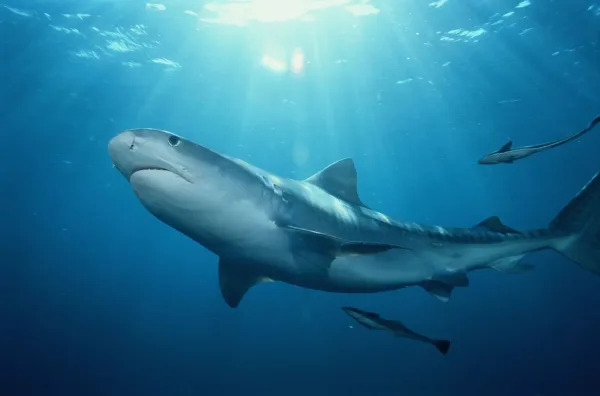
Image Source: ThoughtCo
Tiger sharks rule Jamaica’s coastal waters as fearsome hunters. These apex predators pose real dangers to humans who venture into their territory.
Tiger Sharks identification
These magnificent creatures can stretch beyond 13 feet and tip the scales at 1,400 pounds. Their name comes from dark stripes that cover their bodies in youth. These markings slowly disappear as they age. Their bodies show a blue to light-green hue on top with white bellies.
A tiger shark’s most striking feature is its unique teeth. They point sideways and curve inward. Each tooth has deep notches along its outer edges with saw-like serrations. This design helps them slice through tough prey, especially sea turtle shells.
Tiger Sharks habitat in Jamaica
Tiger sharks thrive in Jamaica’s warm temperate waters. They love shallow coastal spots where fresh water meets the sea because these areas draw plenty of prey. You’ll find these hunters in waters deeper than 10 feet. They move easily between deep offshore waters and areas close to shore.
Tiger Sharks danger to humans
Only great white sharks have caused more fatal attacks on humans. Jamaica has seen its share of tiger shark incidents, particularly involving fishermen. A tiger shark took a 53-year-old fisherman’s arm near Little Bay in 2021. Two years later, another fisherman lost his right arm in a similar attack.
Safety experts say you should avoid swimming alone. They also warn against wearing jewelry or bright clothes that might catch a shark’s attention. The best way to stay safe is to keep your distance. Even normally peaceful sharks can become aggressive without warning.
Fire Coral
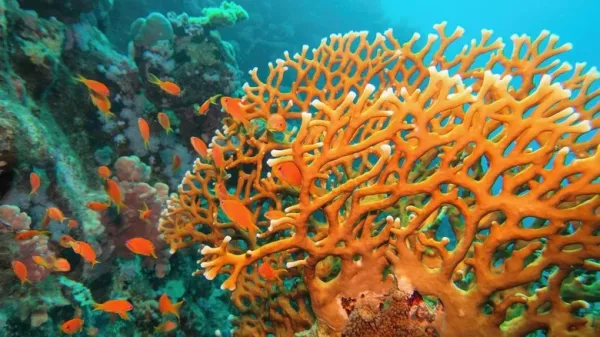
Image Source: Islands
Fire coral stands as one of Jamaica’s most deceptive marine hazards, with its beautiful appearance masking its painful sting. The name “fire coral” misleads many since it’s not actually a coral but belongs to the hydrozoan family. This makes it a closer relative to jellyfish and other stinging creatures.
Fire Coral identification
The creature’s colors range from yellowish-green to brownish-orange, often featuring white tips. Three distinct growth forms characterize these organisms: they branch out with finger-like tips, create thin erect sheets, or encrust existing structures. Their surface looks smooth but contains countless tiny pores filled with clear stinging tentacles. Scientists named them Millepora (“thousand pores”) for this feature. Blade Fire Coral (Millepora complanata), the Caribbean’s most common species, creates intricate blade-like formations that shelter marine life.
Fire Coral habitat in Jamaica
These organisms flourish in Jamaica’s sunny, shallow reefs where they can maximize photosynthesis. Strong currents and warm waters create ideal conditions for fire corals, which live at depths up to 40 meters (131 ft). Fire coral has demonstrated remarkable resilience to environmental challenges like hurricanes and warming waters. Their numbers have slightly increased while other coral species decline.
Fire Coral danger to humans
A fire coral’s sting causes immediate burning pain that can last anywhere from hours to two weeks. Common symptoms include:
- Skin redness, swelling and blistering
- Burning or stinging sensation
- Possible itchy rash with welts
Most stings happen when divers accidentally touch these organisms. Experts recommend treating stings with vinegar or isopropyl alcohol. Fresh water should be avoided as it can trigger more nematocysts and worsen the sting.
Sand Fleas (No-See-Ums)
Jamaica’s beachgoers often confuse the misleadingly named “sand fleas” with actual sand fleas, which are harmless crustaceans. The real culprits behind the bites are no-see-ums or biting midges. These blood-sucking insects are tiny, measuring just 1-3mm, which lets them slip through standard window screens.
Sand Fleas identification
A no-see-um’s size matches the tip of a pencil. These biting midges are members of the Ceratopogonidae family. Only female no-see-ums need human blood protein to develop their eggs. The bites from these insects cause more intense irritation than mosquitoes because they cut into the skin rather than pierce it with a proboscis.
Sand Fleas habitat in Jamaica
These pests make their home in Jamaica’s coastal regions, marshlands, and moisture-rich areas. Water bodies, wet soil, and seashores serve as their breeding grounds. Dawn and dusk see the highest activity of these insects, especially during June and July. Their numbers surge after rainfall or during still air conditions.
Sand Fleas danger to humans
Female no-see-ums inject saliva containing anticoagulants under the skin at the time of biting. This creates blood pools that aid their feeding. The bites demonstrate these symptoms:
- Random clusters of itchy, red welts appear on exposed skin
- Red marks of 1-2 inches develop from swelling
- Individual sensitivity determines reaction duration, which can last up to two weeks
Experts suggest using DEET-based or picaridin repellents and wearing protective clothing to avoid bites.
Manatee
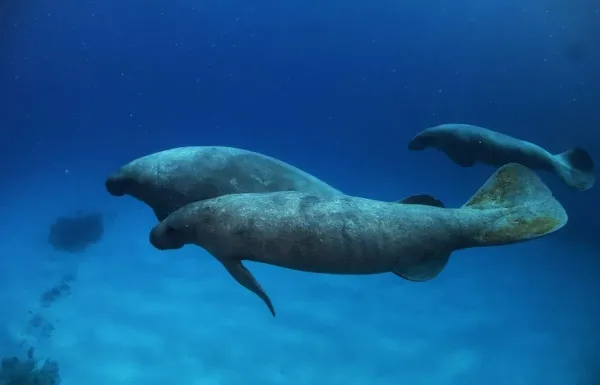
Image Source: Caribbean Journal
Manatees, the gentle giants of Jamaican waters, often surprise tourists with their peaceful nature when they worry about dangerous wildlife. These plant-eating marine mammals stand out from other potentially threatening animals in Jamaica.
Manatee identification
A manatee’s body is large, gray, and oval-shaped, with two small front flippers and a broad, flat tail that helps them swim gracefully. Their distinctive look comes from small, pig-like eyes and soft, folded lips with bristles. Adult manatees grow to 9-10 feet long and weigh around 1,000 pounds. Some manatees are a big deal as it means that they can reach 3,500 pounds—about the same as an SUV. The West Indian manatee (Trichechus manatus) represents the species found across the Caribbean.
Manatee habitat in Jamaica
Manatees live in more than 20 different Caribbean countries. These marine mammals prefer Jamaica’s South Coast, and people often spot them at Canoe Valley in Clarendon. They thrive in shallow coastal waters (1-2 meters deep), salt water bays, brackish estuarine areas, and quiet rivers.
Manatee danger to humans
In stark comparison to their massive size, manatees create no real threat to humans. No one has ever recorded a manatee attack on humans. People should still be careful because these animals’ large size and strong, paddle-like tails might cause injury through accidental contact. Jamaican folklore tells interesting stories about manatees saving drowning people by pushing them to the surface.
Mongoose
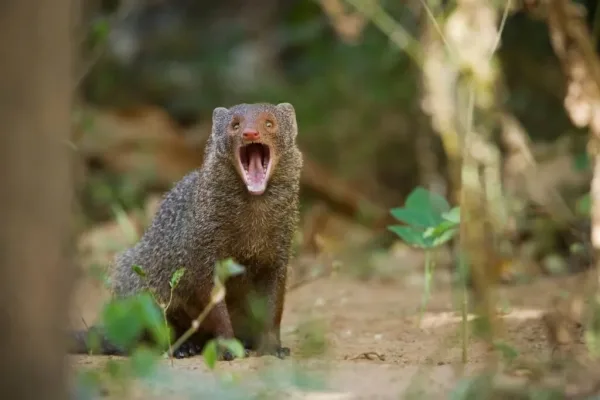
Image Source: Jamaica Observer
The small Indian mongoose (Urva auropunctata) arrived in Jamaica in 1872 and became one of the island’s most troublesome invasive species. People brought these mammals from India at the time to control rats on sugarcane plantations. The species multiplied faster throughout the Caribbean.
Mongoose identification
A slender body with short legs and an elongated head with a pointed muzzle characterizes the small Indian mongoose. Their fur shows variations from pale to dark brown with distinctive golden flecks. Female adults reach 509-578mm in length and weigh an average of 434g. Males grow into larger, more powerful bodies that average 591mm. These creatures have muscular tails that gradually taper toward the tip. Young mongooses stand out because of their unique blue-green eyes that mature into amber/brown.
Mongoose habitat in Jamaica
The mongoose population spread faster across Jamaica after its arrival. We observed them mostly in grasslands and secondary growth rather than dense forests. These daytime hunters adapt well to human-altered environments but prefer dry conditions—their capture rates drop to zero in rainy weather. The species also thrives near human settlements and agricultural areas.
Mongoose danger to humans
These animals rarely show aggression toward people but might bite when cornered or handled. Their bites can transmit bacteria, including Streptococcus pyogenes that leads to severe infections. A documented case shows a woman’s death from streptococcal infection after a mongoose bite. The small Indian mongoose creates additional risks as a major rabies carrier in Puerto Rico. It also transmits the Leptospira bacterium that sickens humans.
Red Scorpion
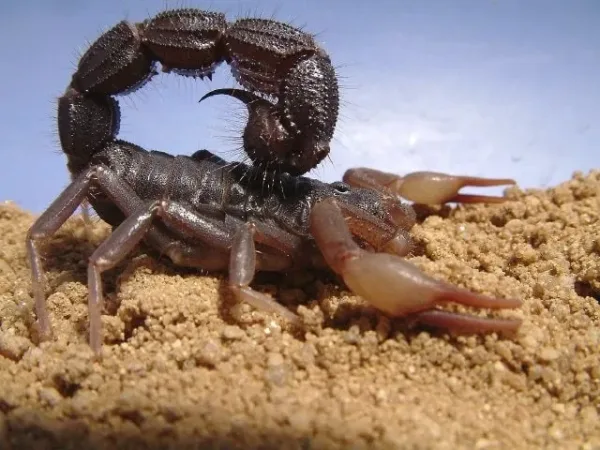
Image Source: Outforia
The Indian red scorpion ranks among the world’s deadliest arachnids due to its potent neurotoxins. Jamaica has scorpions of various types, but visitors need to know the significant differences between local species and more dangerous ones found elsewhere.
Red Scorpion identification
The Indian red scorpion (Hottentotta tamulus) has an orange-red body that measures between 2-3½ inches long. Distinctive dark gray ridges mark its exoskeleton. The scorpion’s body features relatively small pincers and a thick “tail” with a large stinger. Male scorpions have somewhat inflated pedipalps compared to their female counterparts. The scorpion’s color isn’t always bright red – it can range from vibrant orange-red to dull brown. Black light makes it glow fluorescently, just like other scorpions.
Red Scorpion habitat in Jamaica
Good news – “Jamaica does not naturally harbor scorpions with lethal stings”. The deadly Indian red scorpion lives in India, Pakistan, Nepal, and has spread to Sri Lanka. Jamaica’s native scorpions are night hunters that hide during the day in burrows, under rocks, or in wood piles. These local species sometimes enter homes looking for insect prey and can go without food for months.
Red Scorpion danger to humans
The Indian red scorpion’s venom attacks the cardiovascular and respiratory systems with death rates ranging from 8% to 40%. Its neurotoxins disrupt muscle function and particularly affect the heart muscles and diaphragm. Children are at greater risk because the venom moves faster through their smaller bodies. The first symptoms include severe pain, vomiting, sweating, and too much saliva production. Visitors worried about dangerous animals in Jamaica should know the difference between the local, less harmful scorpions and this deadly species.
Comparison Table
| Animal | Size/Dimensions | Primary Habitat in Jamaica | Primary Danger/Threat | Notable Characteristics |
| American Crocodile | 14-20 ft (males), 8-12 ft (females) | Southern coast, Black River basin, Hellshire mangroves | Fatal attacks possible; 11 attacks reported in the last decade | Greenish-gray color with white-yellow underbelly; visible fourth tooth when mouth closed |
| Brown Recluse Spider | 6-20mm body length | Dark, secluded areas; basements, attics, garages | Necrotic venom leads to tissue death; 37% develop skin necrosis | Dark violin-shaped marking on cephalothorax; six eyes in three pairs |
| Fire Coral | N/A | Shallow reefs, depths up to 40m | Immediate burning pain that lasts hours to weeks | Yellowish-green to brownish-orange color; three growth forms: branching, plate-forming, encrusting |
| Forty Leg (Giant Centipede) | Up to 30cm (12 inches) | Warm, moist environments; soil, leaf litter, under stones | Severe pain lasts 45-60 minutes; fever and chills possible | Brown/red coloration; venomous forcipules; lacks waxy cuticle |
| Jamaican Boa | 4.9-7.2 ft (up to 8 ft) | Cockpit Country, Blue Mountains, Hellshire Hills | Non-venomous; rare biting incidents | Greenish-yellow head with black zigzag crossbars; iridescent scales |
| Jellyfish | Grapefruit to football size (Thimble Jellyfish) | Deeper waters; near shore after storms | Burning sensations, skin welts, rash possible | Thimble Jellyfish most common; orangish-brown coloration |
| Manatee | 9-10 ft; up to 3,500 lbs | South Coast, Canoe Valley in Clarendon | No human attacks on record | Large, gray bodies; paddle-like tail; small pig-like eyes |
| Mongoose | 509-578mm (females), 591mm (males) | Grasslands, agricultural zones, human settlements | Rabies and bacteria transmission through bites | Pale to dark brown fur with golden flecks |
| Pit Bulls | Medium to large size | Throughout Jamaica | Several serious attacks reported; one fatal case noted | Broad skull, pronounced cheek muscles, muscular build |
| Red Scorpion | 2-3½ inches | Not native to Jamaica | N/A (Jamaica has no lethal scorpions) | Orange-red body with dark gray ridges |
| Sand Fleas (No-See-Ums) | 1-3mm | Coastal regions, marshlands | Red welts that itch up to two weeks | Only females bite; most active at dawn/dusk |
| Scorpionfish | 7-14 inches | Shallow coral reef communities, rocky areas | Venomous spines cause extreme pain | Expert camouflage ability; 12 venomous dorsal spines |
| Sea Urchins | Spines 10-12cm (up to 30cm) | Coral reefs, rock pools, seagrass meadows | Painful spine punctures can lead to infection | Black coloration; calcified protective spines |
| Stingrays | Up to 6.5 ft; 800 lbs | Shallow sandy/muddy areas | Venomous barbed spine in tail | Flat, disk-shaped bodies; wing-like fins |
| Tiger Sharks | Over 13 ft; up to 1,400 lbs | Shallow coastal areas deeper than 10 ft | Ranks second in fatal shark attacks worldwide | Distinctive dark stripes in youth; specialized serrated teeth |
Appreciate Animals in Jamaica
Jamaica’s lush landscapes and vibrant waters are home to wildlife that just needs respect and awareness from visitors. Many species can be threatening, but all but one of these creatures are misunderstood despite their scary looks. Most wildlife encounters happen when people disturb their natural habitats by accident. Stingrays will sting only if stepped on, while scorionfish use their venomous spines to defend themselves.
You’ll need good knowledge to explore Jamaica’s varied ecosystems safely. Before swimming, hiking, or trying other outdoor activities, visitors should learn about potentially dangerous species in the area. On top of that, it helps to keep your distance from wildlife, especially when you have larger predators like crocodiles and tiger sharks nearby.
Wrong ideas about certain animals often lead to needless deaths of helpful species. In stark comparison to this, the Jamaican Boa helps control rodent populations and rarely threatens humans. Conservation efforts matter just as much as staying safe.
Anyone planning Jamaican adventures should pack the right protective gear. Closed-toe water shoes work well for reef exploration, and insect repellent helps in areas where no-see-ums thrive. Knowledge of first aid for marine injuries will give a big advantage, since treatments differ between stingray, jellyfish, and fire coral encounters.
Jamaica’s natural beauty ranks among its finest treasures. With proper knowledge about the island’s wildlife, visitors can enjoy its stunning ecosystems safely while reducing risks. Of course, showing respect for these amazing creatures and their habitats creates lasting memories in Jamaica’s tropical paradise.
FAQs
Q1. What are some of the most dangerous animals to watch out for in Jamaica? Some of the most dangerous animals in Jamaica include American crocodiles, scorpionfish, tiger sharks, brown recluse spiders, and the giant centipede (locally known as “Forty Leg”). While encounters are rare, it’s important to be aware of their presence and habitats when visiting.
Q2. Are there any venomous snakes in Jamaica? Surprisingly, there are no venomous snakes native to Jamaica. The Jamaican Boa, the largest snake on the island, is non-venomous and generally poses little threat to humans. However, it’s still advisable to maintain a respectful distance from any wildlife encountered.
Q3. What precautions should I take when swimming in Jamaican waters? When swimming in Jamaican waters, be aware of marine life such as jellyfish, stingrays, and sea urchins. Wear water shoes to protect against sea urchin spines and stingray barbs. Also, be cautious of fire coral, which can cause painful burns if touched. Always follow local guidelines and warnings.
Q4. Are shark attacks common in Jamaica? While shark attacks are not common in Jamaica, tiger sharks are present in the waters and can pose a threat. It’s advisable to avoid swimming alone, at dawn or dusk, or in areas known for shark activity. Always follow local safety guidelines and beach warnings.
Q5. What should I do if I encounter a dangerous animal in Jamaica? If you encounter a dangerous animal in Jamaica, the best course of action is to remain calm and slowly back away without disturbing the animal. Do not attempt to touch or provoke wildlife. In case of a bite or sting, seek immediate medical attention. It’s also helpful to familiarize yourself with local emergency services before your trip.


Leave A Comment