
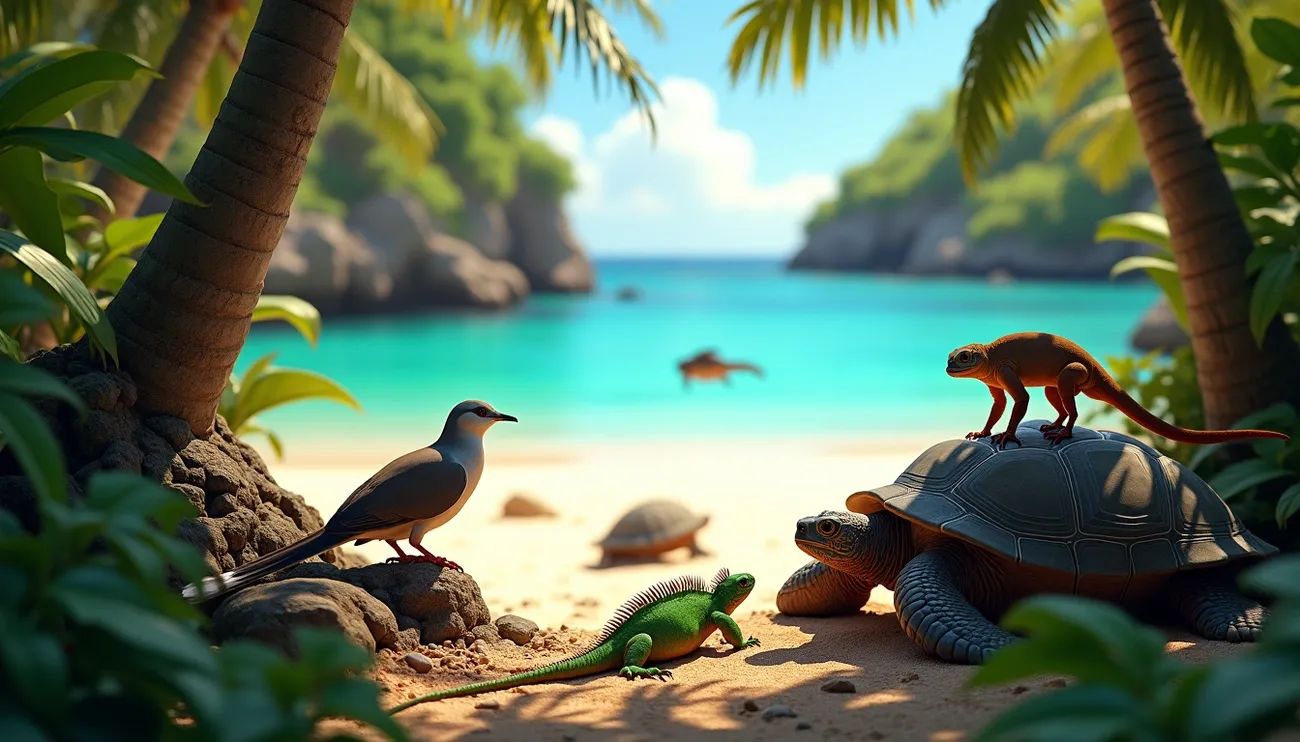
Grenada’s wildlife shows remarkable diversity on just 348.5 square kilometers of land. This Caribbean paradise has 883 confirmed species, making it an ecological wonderland that competes with much larger territories.
This gem of the West Indies sits at the southern tip of the Grenadines island chain and has an amazing variety of wildlife. Grenada’s animal kingdom spans from its national bird – the critically endangered Grenada dove to impressive iguanas stretching up to 2 meters in length. On top of that, it has nearly 200 bird species, and bird watchers can spot up to 9 different hummingbird species across the island. The small nation packs quite a surprise with over 230 marine species, more than a dozen reptiles, and several mammal species calling it home.
The vibrant Grenada Tree Anole and lettuce sea slugs growing up to 8 cm long give us a fascinating peek into Caribbean biodiversity. The sort of thing I love about Grenada’s native wildlife is its variety and uniqueness. But nature enthusiasts should watch out for cane toads – they’re among the most dangerous animals here because of their bufotoxin secretions. The good news is that very few of Grenada’s animals pose any real threat to humans, which makes wildlife exploration both safe and rewarding.
Grenada Dove
The Grenada Dove (Leptotila wellsi) stands at the precipice of extinction. This critically endangered bird ranks among the world’s most threatened species, with fewer than 140 individuals remaining in 2026. People once knew it as the Pea Dove or Well’s Dove, and now it represents one of Grenada’s most endangered wildlife species.
Grenada Dove description
This medium-sized bird stands 28-30 centimeters tall and weighs between 180-250 grams. The dove’s distinctive features include a stout body, cinnamon-brown or olive mantle, white-grayish crown and forehead, and light pinkish-cinnamon breast and neck. Its whitish belly and flanks complement the red skin around its eyes, while a characteristic white shoulder patch sets it apart from other Grenada animals. The bird’s legs and feet show a vibrant reddish-pink coloration.
The Grenada Dove behaves differently from most birds. It prefers walking quietly on the forest floor instead of flying. Male doves claim their territories during breeding season (June-December) by making a distinctive, long, drawn-out “hooooooo” call that echoes through their habitat.
Grenada Dove habitat in Grenada
This species exists nowhere else on Earth and once lived in coastal forests throughout the island, including offshore areas. The dove now survives in just two small pockets: dry forest on the southwest coast (Mt. Hartman Estate area) and on the west coast (Perseverance, Beausejour, and surrounding areas).
These birds thrive in undisturbed areas of dry, coastal scrub-woodland up to 150 meters in elevation. They prefer spots with a closed canopy of leguminous, often thorny trees and shrubs about 3-6 meters high, sparse understory, and exposed soil. The flowering tree Haematoxylum campechianum dominates these areas. Fresh water access is vital for this Grenada native animal, especially during the extended dry season.
Grenada Dove conservation status
The IUCN lists the Grenada Dove as Critically Endangered with numbers declining steadily. Current surveys show only 136-182 mature individuals remain. This Grenada wildlife faces several major threats:
- Habitat loss from residential and commercial development
- Predation by introduced species (mongoose, rats, cats, opossums)
- Hurricane damage (Hurricane Ivan in 2004 reduced their numbers substantially)
- Climate change effects (increased drought, fires, lack of water)
- Low genetic diversity making them vulnerable to disease
The Mt. Hartman National Park and Perseverance Dove Sanctuary became protected areas in 1996. Notwithstanding that, these sanctuaries cover less than 10% of the dove’s remaining range, leaving them highly susceptible to ongoing habitat degradation. Conservation efforts continue through patrols, boundary maintenance, predator control programs, and public awareness campaigns to protect one of Grenada’s most unique animals from extinction.
Mona Monkey

Image Source: Animalia
The Mona monkey (Cercopithecus mona) stands out among Grenada’s wildlife with its expressive face and acrobatic skills. These primates catch everyone’s attention with their blue-gray faces and distinctive fluffy white beards. They have shown remarkable adaptability in their Caribbean home.
Mona Monkey behavior
These monkeys organize themselves into two distinct social groups. They either form all-male groups of two to four individuals (juveniles, subadults, and/or adults) or bisexual groups with 5-32 members. A typical bisexual group has one adult male, one to six adult females, subadult females, and juveniles of both sexes.
The sort of thing I love about these primates is their peaceful nature. Unlike many other primates, they rarely show aggression within their groups and display friendly behavior more often. Males sometimes join bisexual groups – their presence revealed by copulation calls heard along with resident male loud calls.
Communication is a vital part of their social structure. Their vocal repertoire has:
- Moaning sounds and alarm calls that sound like sneezes
- Males make distinctive “boom” and hacking calls to show rank and defend territory
- Warbles and grunts that heterosexual pairs make during copulation
These adaptable Grenadian residents move through the forest canopy with amazing precision as they leap from branch to branch.
Mona Monkey habitat in Grenada
Mona monkeys now thrive in Grenada’s inland forests, especially throughout Grand Etang National Park. The island has no natural predators, yet these monkeys stay alert – a behavior shaped by centuries in African forests where eagles, pythons, leopards, and golden cats once hunted them.
Their population in Grenada reaches thousands, making them the most visible wildlife to visitors learning about the island’s forests. Hikers at Grand Etang often spot these agile creatures moving through the canopy above.
Mona Monkey introduction to Grenada
These monkeys reached Grenada during the peak of the transatlantic slave trade between 1735 and 1779. Ships brought them from their native western Africa, specifically the region from Ghana to Cameroon.
The first written record of monkeys on the island appeared in a travelog about hunting trips in the late 1870s. Most likely, they arrived between the late 1600s and 1807, with the highest probability during the mid-1700s.
The monkeys’ success story is remarkable. Their population started small – maybe even from a single female – yet shows no signs of inbreeding. This points to genetic purging, where harmful traits disappeared as the population grew faster.
Safest Islands in the Caribbean.
Green Iguana
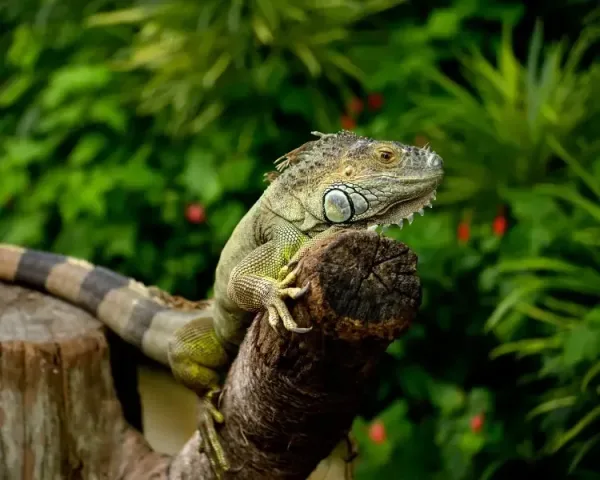
Image Source: Animalia
The green iguana (Iguana iguana) stands out as one of the most impressive reptiles in Grenada’s varied landscapes. These striking creatures bask near waterways and play a vital role in the island’s ecological mixture.
Green Iguana appearance
Green iguanas are among the largest lizards in the Americas. They can grow up to 6.5 feet long, with their tail making up most of this length. Adult males usually weigh around 4 kg (8.8 lb). Females are smaller and weigh between 1.2 to 3 kg. Despite their name, these reptiles show amazing color variety. Grenada’s iguanas come in shades of green, lavender, black, and even reddish-brown.
A row of spines runs along their backs and tails to protect them from predators. Their large, fan-like dewlap sits beneath their throat and helps regulate temperature. It also serves in territorial displays and makes them look more intimidating to rivals. Male iguanas typically grow larger dorsal spines, jowls, and dewlaps than females.
Green Iguana habitat in Grenada
These reptiles thrive in coastal areas and live on all islands around Grenada. They spend most of their time in the tree canopy because they’re tree-dwelling creatures. They only come down to mate, lay eggs, or switch trees. Water bodies attract them since they’re excellent swimmers.
Young iguanas live in the lower parts of the canopy while adults stay higher up. The Tobago Cays Marine Park gives visitors great chances to spot these shy creatures.
Green Iguana unique traits
These iguanas have an amazing escape plan. When danger threatens, they jump from branches up to 40 feet high into the water below. They can even survive big falls onto solid ground.
Their whip-like tails pack a painful punch against predators. If something grabs their tail, they can drop it and grow a new one later. The iguana’s strong jaws with razor-sharp teeth boost their defense even more.
These reptiles have excellent eyesight that helps them spot movement and tell colors apart. This skill helps them find food and avoid predators.
Red-Footed Tortoise
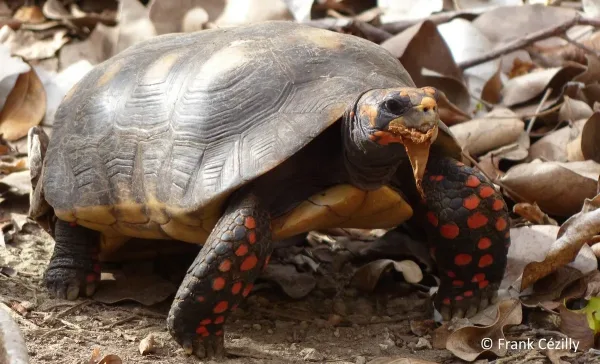
Image Source: Merci Project
The Red-footed tortoise (Chelonoidis carbonarius) brings a splash of color to Grenada’s reptilian family. This medium-sized chelonian catches everyone’s attention with its striking looks and ability to adapt to the island’s changing terrain.
Red-Footed Tortoise characteristics
Red-footed tortoises measure between 30-35 cm in length. Males grow larger than females and show brighter colors. The dark-colored, almost black carapace has a lighter patch at each scute’s center. You’ll notice their plastron (bottom shell) shows tan or yellowish colors.
These tortoises get their name from the bright red scales that cover their limbs, head, and tail. Their small heads have a squared-off profile, and their powerful jaws contain 15-20 fine grooves that look like teeth on each side. Male tortoises have concave plastrons and longer, muscular tails, while females sport short, conical ones.
Red-Footed Tortoise habitat in Grenada
These tortoises make their homes in a variety of environments from savannahs to forest edges. They love the areas where forests meet clearings or spots near waterways. Scientists have found them in four of Grenada’s parishes: St. Andrew, St. George, St. John, and St. Patrick.
The species thrives best when temperatures stay close to 30°C (86°F). They rarely face temperatures below 20°C (68°F) or above 35°C (95°F). Grenada’s tropical climate creates perfect conditions for these creatures to flourish.
Red-Footed Tortoise diet
These remarkable creatures eat just about anything they can find. Their daily menu consists of:
- Fruits (70% during wet season, 40% in dry season)
- Leafy greens and shoots (25% wet season, 16% dry season)
- Flowers (especially during dry season – 23%)
- Animal protein (insects, worms, carrion, occasionally small vertebrates)
The tortoise’s excellent sense of smell helps it find food. They even eat sand, which might help them digest their food better. These creatures search for food in dense forest vegetation and move in spider-web-like patterns around fruit trees.
Best Caribbean Island to Visit.
Grenada Tree Anole
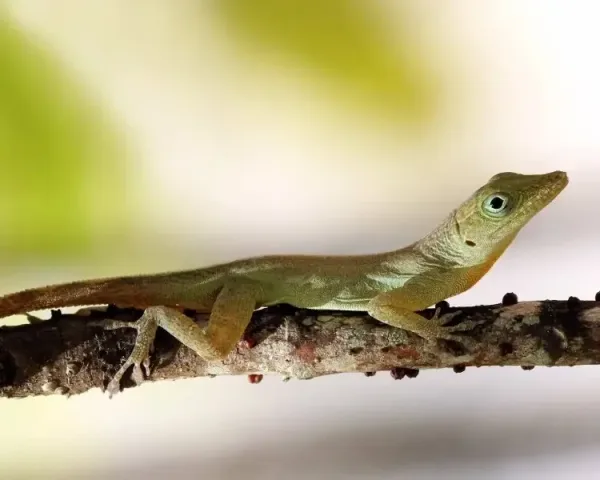
Image Source: Animalia
The Grenada Tree Anole (Anolis richardii) stands as one of the Caribbean’s largest anole species. This remarkable creature adds to Grenada’s rich biodiversity and belongs to the family Dactyloidae, though many people often overlook its striking appearance.
Grenada Tree Anole description
Richard’s anole, as it’s also known, catches attention among Grenada’s animals with its impressive size. These lizards can reach a maximum length of 140 mm from snout to vent. Their total body length stretches up to 34 cm. Males grow significantly larger at around 30 cm, while females reach about 15 cm.
These lizards show various colors including:
- Dark green or brown dorsal (upper) surfaces
- Green-gray to yellow ventral (lower) surfaces
- Orange, yellow, or gray-green dewlaps (throat fans)
Females and young ones stand out with a distinctive yellow or cream-colored stripe along their sides. This feature helps identify their sex and age easily.
Grenada Tree Anole habitat in Grenada
These reptiles call Grenada and the Grenadines islands home, and they’ve made their way to Tobago too. They show remarkable adaptability by thriving in both untouched forests and recovering secondary woodlands.
Studies show A. richardii prefers densely shaded spots. Their numbers can reach about 12,500 per hectare in forests near streams. Larger lizards tend to claim higher perches than their smaller counterparts, creating distinct levels of habitat use.
Grenada Tree Anole behavior
These Grenada residents hunt small insects using two clever strategies. They either wait patiently to ambush their prey or actively search for food.
Temperature control plays a vital role in their daily routine. These lizards move between sunny and shaded areas throughout the day. This smart behavior protects them from natural selection pressures and slows their physiological changes.
The sun guides their daily schedule. You’ll spot them on tree trunks and branches during daylight hours. When danger approaches, they quickly circle to their perch’s opposite side and climb upward to safety.
Lettuce Sea Slug
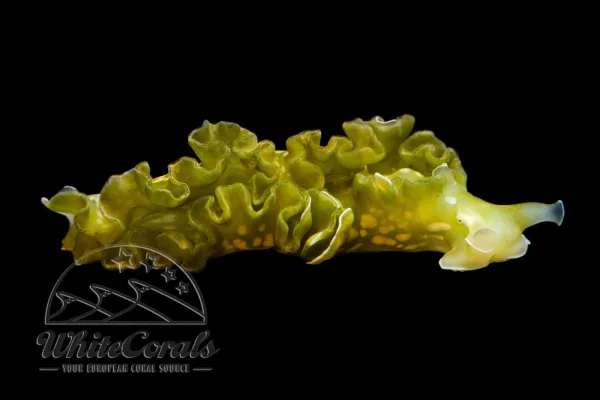
Image Source: Whitecorals.com
The Lettuce Sea Slug (Elysia crispata) stands out as one of the most captivating marine creatures in Grenada’s coastal waters. This sap-sucking marine slug crawls over coral reefs and boulders, adding to Grenada’s rich underwater diversity.
Lettuce Sea Slug appearance
The creature’s name comes from its frilly side appendages (parapodia) that look strikingly similar to curly lettuce varieties like lollo rosso. These marine gastropods usually grow to 5 cm long and 3 cm wide, though some can reach 8 cm in length.
These animals show remarkable color variations:
- Green (most common, giving them their name)
- Blue or very pale blue
- Yellow tints
- Occasional red or yellow lines decorate their bodies
The slug’s elongated visceral mass sits dorsally atop the foot, while the parapodia create that distinctive ruffled, lettuce-like appearance on the dorsal surface. Many people mistake them for plants due to their deceptive leaf-like structure.
Lettuce Sea Slug habitat in Grenada
These creatures thrive in tropical reef areas where waters stay shallow and clear. They make their home at depths between 0.5 to 12 meters and prefer spots rich with algae.
Recent observations challenge previous reports about hiding behavior. These slugs now appear exposed to full sunlight, using their bodies to create shade. This behavior shows how they can physically control light reaching their internal structures.
Lettuce Sea Slug unique traits
The sort of thing I love about these sea slugs is their remarkable ability called kleptoplasty. They extract chloroplasts (the structures responsible for photosynthesis) from consumed green algae and incorporate them into their tissues.
These borrowed chloroplasts keep working inside the slug’s body for up to 40 days, providing photosynthetic energy as a dietary supplement. These amazing creatures can photosynthesize just like plants, turning sunlight into energy. This special adaptation helps them survive long periods without food, which has earned them the nickname “solar-powered sea slugs”.
Leatherback Sea Turtle
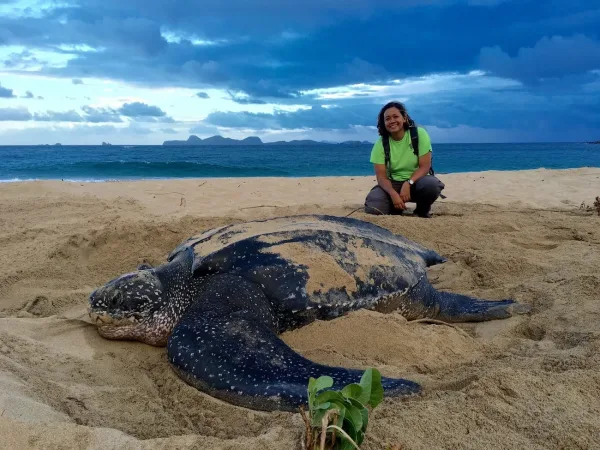
Image Source: Ocean Spirits Leatherback Sea Turtle Volunteer Project, Grenada
The leatherback sea turtle (Dermochelys coriacea) stands as the largest among its kind and makes annual visits to Grenada’s shores during its remarkable migration. These ocean giants play a vital role in Grenada’s marine ecosystem.
Leatherback Sea Turtle size and features
The leatherback differs from other sea turtles with its leathery carapace instead of a hard shell. This massive creature weighs between 500-2,000 pounds and grows 4-8 feet in length. The turtle’s distinctive shell has seven longitudinal ridges and a firm, rubbery skin that looks mostly black with scattered pale spots.
These turtles have paddle-like limbs without claws that let them reach depths of nearly 4,000 feet. This is a big deal as it means that they can dive deeper than most marine mammals. Their bodies generate enough metabolic heat to maintain higher temperatures, which helps them survive in colder waters.
Leatherback Sea Turtle nesting in Grenada
Levera Beach in northern Grenada ranks among the Caribbean’s top five locations for leatherback nesting. These turtles nest from April through July, usually at night. Recent data shows 271 leatherback encounters in one season, with 193 confirmed nests. Female turtles typically lay eggs 4-7 times each season, producing about 120 eggs per clutch.
Leatherback Sea Turtle conservation status
The IUCN lists leatherbacks as globally vulnerable, and several populations face critical endangerment. The species has seen a 40% decline in the last three generations. Egg poaching used to affect more than 90% of nests at some Grenadian sites. The good news is that protection efforts have reduced poaching to about 5% on Levera Beach.
Manicou (Opossum)
The Manicou, Grenada’s name for the common opossum (Didelphis marsupialis insularis), stands out as one of the few mammals on the island. This remarkable nocturnal marsupial has adapted behaviors that help it flourish in Grenada’s varied environments.
Manicou behavior
Manicous live a solitary and nomadic life, staying in one place only while food and water remain abundant. These creatures meet other Manicous just to mate. Male Manicous stay away from each other and become aggressive during encounters. The females, however, prefer to settle in one area. These nocturnal animals emerge from their hiding spots after dark to look for food or potential mates.
Manicou habitat in Grenada
Manicous make their home in environments of all types across Grenada, from thick forests to city areas. The black-eared opossum species that lives in Grenada exists nowhere else but in the eastern Caribbean islands. These animals build their nests with leaves and grasses, and often live in hollow tree trunks, rocky crevices, or empty burrows. They excel at swimming and can move through water at 1 km/h for 10 minutes straight.
Manicou survival traits
The Manicou’s most striking feature is its ability to “play possum” – an automatic response that mimics death. The animal lies still with its eyes closed and tongue hanging out while releasing a foul-smelling fluid from its anal glands. This state lasts anywhere from minutes to six hours. The Manicou’s survival toolkit includes strong resistance to snake venoms, and it climbs exceptionally well using its prehensile tail.
Cane Toad
The Cane Toad (Rhinella marina) ranks among Grenada’s most dangerous species. Its skin secretes bufotoxin that proves lethal to animals and can severely harm or kill humans. These amphibians pose a real danger to Grenada’s wildlife through their powerful defense mechanisms.
Cane Toad toxicity
The Cane Toad’s large parotoid glands, located behind its eyes, produce a milky poison (bufotoxins). Larger toads produce more toxins, making them deadlier. The toad can spray this toxic secretion into an attacker’s eyes if handled roughly, which leads to severe pain and possible medical emergencies. Dogs that come in contact with Cane Toad toxin often show symptoms like excessive salivation, seizures, tachycardia, cardiac arrhythmia, irregular walking patterns, and vomiting.
Cane Toad habitat in Grenada
These stocky amphibians feature short legs with webbed toes but no webbing between their fingers. They thrive in environments of all types across Grenada, from man-made ponds and gardens to drain pipes, debris piles, and spaces under houses. These toads spend most time on dry land but breed in any nearby shallow water. Both adults and tadpoles can survive in highly saline conditions.
Cane Toad’s effect on local wildlife
Cane Toads eat almost anything as nonselective, opportunistic carnivores. Their diet includes invertebrates, vertebrates, and carrion. Urban Cane Toads in Grenada feed on pet food left outside and household waste. Their toxicity extends through all life stages – from eggs to adults – which makes them a serious threat to Grenada’s native animals that try to eat them.
Grenadine Ameiva
The Grenadine Ameiva (Ameiva tobagana) fascinates observers with its electric blue colors as it darts across Grenada’s sun-drenched landscapes. This unique teiid lizard stands out as another remarkable member of the island’s diverse reptile community.
Grenadine Ameiva appearance
A stunning turquoise streak runs down the Ameiva’s tail and sides, which blends into dusty green on its back. The lizard’s flanks show pale speckles, and its skin has a rough, pebbled texture like weathered stone. Male Ameivas show bright green colors with bold mottling, while females have a duller, more dusty appearance. The lizard’s sleek body helps it move fast, so many visitors struggle to spot these medium-sized creatures despite their bright colors.
Grenadine Ameiva habitat in Grenada
These reptiles make their home in lawns, gardens, dry scrub, and rocky slopes—open areas bathed in sunlight where they can warm up and sprint. Each individual claims several hundred square meters as its territory. The Grenadines have no mongooses, which allows these lizards to thrive in gardens and hotel grounds that offer plenty of insects to eat. However, introduced predators like cats might affect their numbers.
Grenadine Ameiva behavior
These Grenada natives stay active during daylight hours, searching for food through leaf litter, under shrubs, and across sun-baked earth. Their menu consists mainly of:
- Insects (grasshoppers, beetles, termites, spiders)
- Occasionally smaller lizards, frogs, and snails
They prefer a solitary life, though their home ranges overlap slightly. Male lizards mark their territory using femoral pores on their hind legs—these secretions play a vital role in both defense and mating behaviors.
Bananaquit
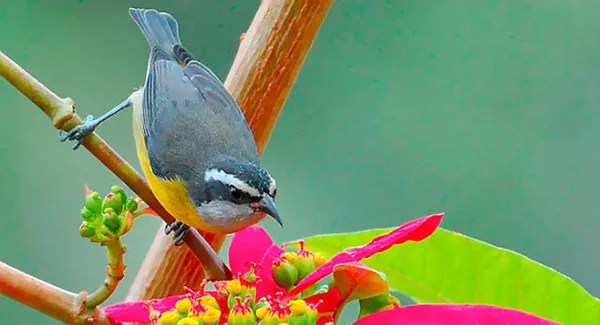
Image Source: Celebrate Urban Birds
The Bananaquit (Coereba flaveola) brings its sweet melodies to Grenada’s rich bird population, earning its nickname “sugar bird.” Grenada’s unique subspecies (Coereba flaveola aterrima) stands out with darker feathers than other Caribbean Bananaquits.
Bananaquit feeding habits
These energetic birds feed on nectar using two distinct methods. They probe flowers with their curved, pointed bills like hummingbirds or pierce flower bases to steal nectar without pollination – a sneaky trick called “nectar robbing”. Unlike hummingbirds, these birds need to perch while feeding and often dangle upside down from branches. Their diet goes beyond just nectar. They tuck into small fruits and ripe bananas, catch insects like flies, beetles, and caterpillars, and snatch up spiders, ants, and bees.
Bananaquit habitat in Grenada
These birds thrive in gardens, shrubby areas, and forest edges where flowers bloom abundantly across Grenada. They stay away from very dry areas and deep rainforests. Most Bananaquits stick to lowlands and rarely venture into high mountain forests.
Bananaquit unique traits
Bananaquits stand out with their curved bills and distinctive raspy, shrill songs that change across regions. Their bold nature around humans makes them notorious opportunists that sometimes raid sugar from outdoor restaurant tables. These adaptable birds feel right at home in human spaces and often become friendly visitors to gardens.
Hawksbill Sea Turtle
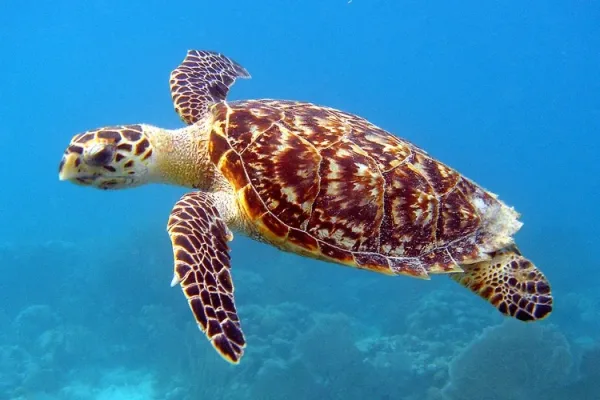
Image Source: NOAA Fisheries
The hawksbill sea turtle (Eretmochelys imbricata) stands out among Grenada’s wildlife with its striking amber, orange, and brown markings. These remarkable marine reptiles are critically endangered and play a crucial role in keeping coral reef ecosystems healthy.
Hawksbill Sea Turtle shell features
The turtle’s shell has overlapping scutes that create a distinctive serrated, saw-like edge. Nature has painted these shells with beautiful patterns of amber, orange, red, yellow, black, and brown. The turtle’s tapered head and V-shaped lower jaw create its characteristic hawk-like appearance. These magnificent creatures reach 2-3 feet in shell length when fully grown and weigh between 100-150 pounds at maturity.
Hawksbill Sea Turtle habitat in Grenada
“Hawksbill Alley” between Saline Island and Bonaparte Rocks hosts the largest concentration of these turtles in Grenada. The waters around Frigate Island, Rose Rock, Large Island, and Bonaparte Rocks show the highest numbers in Carriacou. These amazing creatures thrive in healthy coral reef habitats but also adapt well to rock formations, high energy shoals, and estuaries rich in sponge growth.
Hawksbill Sea Turtle conservation status
The hawksbill population has dropped dramatically, showing an 80% decline over three generations. Coral Cove beach provides a vital nesting ground for these native Grenadian animals. Grenada’s Fisheries Regulations protect these turtles, along with international agreements like CITES and the UN SPAW Convention.
Tropical Mockingbird

Image Source: Animalia
The melodious Tropical Mockingbird (Mimus gilvus) captivates visitors in Grenada with its constant, vibrant song. This medium-sized bird acts as a natural alarm clock on the island and provides a soundtrack to daily life.
Tropical Mockingbird song
The Tropical Mockingbird’s song differs from its northern relative, as it rarely copies other species. Its vast repertoire includes:
- Continuous buzzy and clear whistled syllables
- Hard “chek” or “shahk” calls
- Resonant “pree-ew” sounds
Males can produce over one hundred syllables, which they combine to create their impressive repertoire. Males sing from high perches during breeding season to attract females. While most singing happens in morning hours, these birds continue their songs through the day’s hottest parts and sometimes serenade through the night.
Tropical Mockingbird habitat in Grenada
These birds thrive in open environments like savannas, farmlands, parks, residential areas, and scrublands across Grenada. They stay away from closed forests and mangroves. Studies show their population density remains lower in Grenada compared to nearby Petite Martinique.
Tropical Mockingbird behavior
These bold birds fiercely protect their territory from larger birds and even lizards. They build their nests in shrubs or trees one to ten feet above ground. The birds’ nesting season runs from March through December in Grenada. As omnivorous feeders, they eat insects, arthropods, seeds, berries, and sometimes grab food from unattended plates.
Comparison Table
| Animal Name | Size/Dimensions | Primary Habitat in Grenada | Notable Features | Conservation Status |
| Bananaquit | – | Gardens, shrubby areas, forest edges | Curved, pointed bill; unique melanistic subspecies in Grenada; feeds on nectar | – |
| Cane Toad | – | Gardens, man-made ponds, drain pipes, debris | Makes toxic bufotoxin; large parotoid glands behind eyes; webbed toes | – |
| Grenadine Ameiva | Moderate size | Lawns, gardens, dry scrub, rocky slopes | Turquoise tail and sides; dusty green back; males show brighter colors | – |
| Green Iguana | Up to 6.5 feet long; 4 kg (males), 1.2-3 kg (females) | Coastal areas, near water bodies, tree canopies | Spines along back; fan-like dewlap; shows various color patterns | – |
| Grenada Dove | 28-30 cm tall; 180-250g | Dry forest on southwest and west coast | Cinnamon-brown/olive mantle; white-grayish crown; red skin around eyes | Critically Endangered; <140 individuals remain |
| Grenada Tree Anole | Up to 140 mm (snout to vent); total length up to 34 cm | Pristine and secondary forests, shaded areas | Changes color; females show yellow/cream side stripe | – |
| Hawksbill Sea Turtle | 2-3 feet shell length; 100-150 pounds | Coral reefs, rock formations, high energy shoals | Overlapping scutes; shell shows mottled amber/orange/brown; hawk-like features | Critically Endangered |
| Leatherback Sea Turtle | 4-8 feet long; 500-2,000 pounds | Nests at Levera Beach | Leathery shell; seven long ridges; dives up to 4,000 feet | Vulnerable |
| Lettuce Sea Slug | Up to 8 cm long, 3 cm wide | Tropical reef areas, 0.5-12m depth | Looks like ruffled lettuce; colors vary; uses photosynthesis | – |
| Manicou (Opossum) | – | Forests to urban areas | Shows “playing dead” behavior; resists snake venom; has prehensile tail | – |
| Mona Monkey | – | Inland forests, mainly Grand Etang National Park | Blue-gray face; white beard; lives in groups of 5-32 | – |
| Red-Footed Tortoise | 30-35 cm length | Savannahs, forest edges, waterway areas | Dark shell with light patches; red scales on legs | – |
| Tropical Mockingbird | – | Open areas, savannas, farms, parks | Rich vocal range; uses over 100 sounds; shows territorial behavior | – |
Appreciate Grenada Animals
Grenada is a wildlife paradise with almost 900 species living in just 348.5 square kilometers. This Caribbean jewel has amazing biodiversity in its ecosystems, from dense forests to colorful coral reefs.
These 13 amazing creatures show just a small part of the island’s wildlife wealth. The animals have adapted in unique ways to survive in this tropical home. With fewer than 140 birds left, the Grenada Dove faces extinction. The Lettuce Sea Slug acts like a plant by using sunlight for energy. The Mona Monkey has made the island its home since arriving during the transatlantic slave trade.
The island needs strong protection measures, especially for Hawksbill and Leatherback sea turtles that face threats worldwide. Mt. Hartman National Park and Levera Beach give these vulnerable animals a safe home.
Tourists can see Green Iguanas sunbathing near water, hear Tropical Mockingbirds singing from high branches, or watch bright Grenadine Ameivas running across sunny areas. Most wildlife won’t harm humans, but staying away from animals like the toxic Cane Toad will give a safe wildlife experience.
Grenada shows that rich biodiversity doesn’t need a big territory. The island’s unique wildlife – from its national bird to sea creatures – needs our protection and respect. These natural treasures must survive for future generations to see and value.
FAQs
Q1. What is Grenada’s national bird and why is it significant? The Grenada Dove is the national bird of Grenada and is critically endangered, with fewer than 140 individuals remaining in the wild. It is endemic to Grenada, meaning it exists nowhere else on Earth, making its conservation crucial for biodiversity.
Q2. Are there any dangerous animals visitors should be aware of in Grenada? While most wildlife in Grenada is harmless, visitors should be cautious of the Cane Toad. It secretes a toxic substance called bufotoxin that can be harmful to humans and potentially fatal to pets if ingested.
Q3. What unique marine life can be found in Grenada’s waters? Grenada’s waters are home to fascinating marine life, including the Lettuce Sea Slug, which can perform photosynthesis like plants, and endangered sea turtles such as the Hawksbill and Leatherback, which nest on Grenada’s beaches.
Q4. How did monkeys end up on Grenada? Mona Monkeys were introduced to Grenada during the transatlantic slave trade, likely between 1735 and 1779. Despite their small founding population, they have adapted well and now thrive in Grenada’s inland forests, particularly in Grand Etang National Park.
Q5. What conservation efforts are in place to protect Grenada’s wildlife? Grenada has established protected areas such as Mt. Hartman National Park and Perseverance Dove Sanctuary to safeguard endangered species. Additionally, international treaties and local regulations aim to protect marine life, including sea turtles. Ongoing efforts focus on habitat preservation and public awareness to ensure the survival of Grenada’s unique biodiversity.







Leave A Comment