
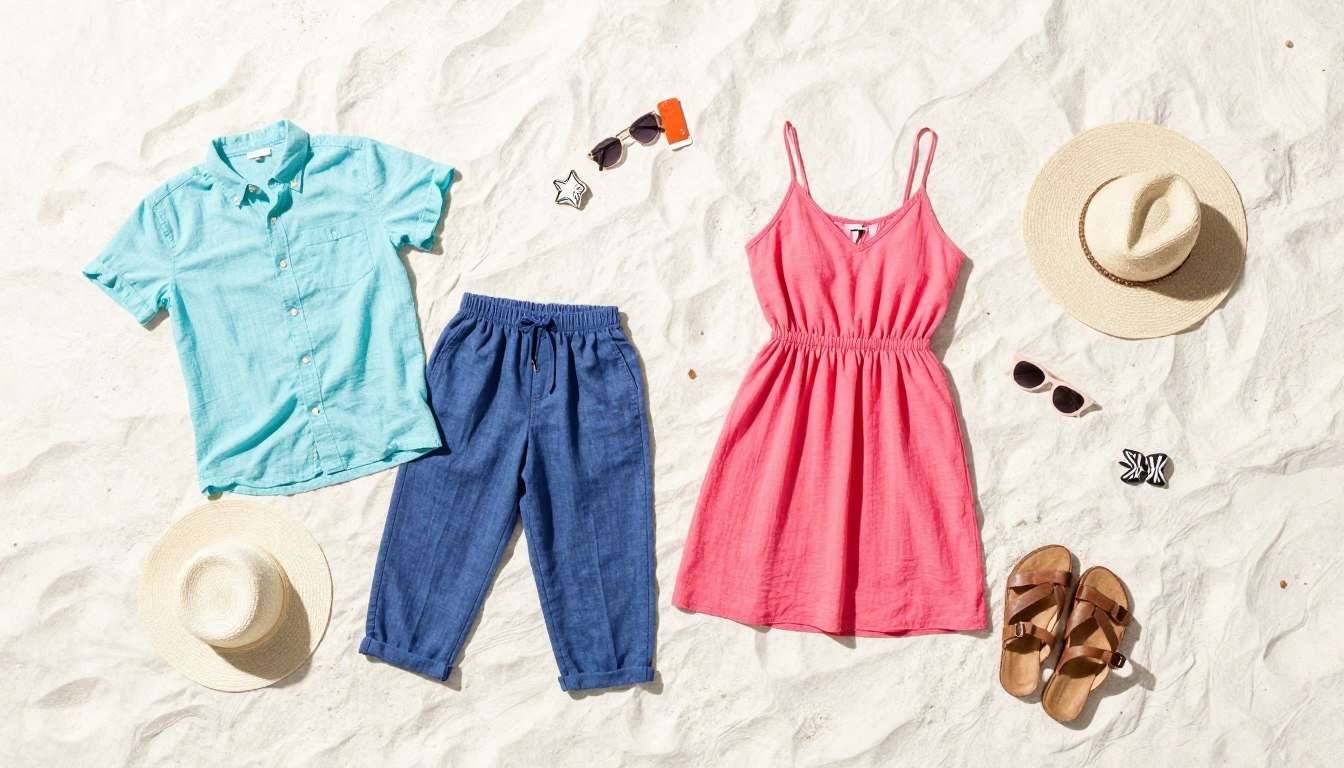
Planning what clothes to wear in Thailand can feel overwhelming. The tropical climate demands breathable fabrics while cultural sites require modest coverage. Getting your packing right means you’ll stay comfortable during humid days and respectful when visiting sacred places.
This guide breaks down exactly what to pack for Thailand. You’ll discover which fabrics keep you cool, what shoes work best, and how to dress appropriately for temples without sacrificing style or comfort.
Whether you’re heading to bustling Bangkok, relaxing on southern beaches, or trekking northern mountains, you’ll find practical clothing recommendations. Let’s ensure your Thailand wardrobe handles every adventure ahead.
Understanding Thailand’s Tropical Climate and What It Means for Your Wardrobe
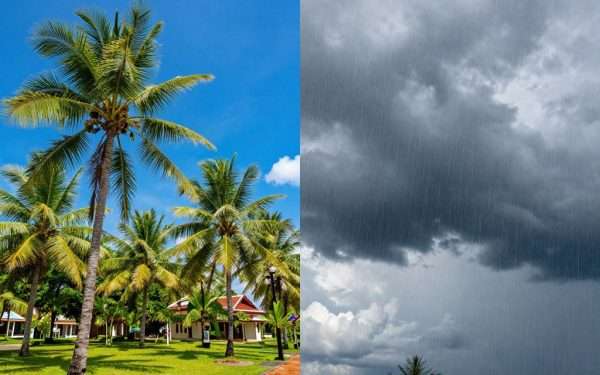
Thailand’s climate shapes every packing decision you’ll make. The country experiences consistently high temperatures throughout the year. Most regions see daytime temperatures between 85-95°F (29-35°C). Humidity levels often reach 70-80%, making the air feel heavier than the actual temperature suggests.
The tropical climate means your skin will be exposed to intense sun and constant moisture. Light, breathable fabrics become essential rather than optional. Heavy materials trap heat and moisture against your body, creating discomfort within minutes of stepping outside.
The Two Main Seasons That Affect Your Packing
Thailand operates on two primary seasons that dramatically impact what clothes to wear in Thailand. The dry season runs from November through April. During these months, you’ll enjoy clear skies and lower humidity levels. Temperatures remain hot but manageable.
The rainy season spans May through October. Heavy downpours arrive suddenly, often lasting 1-2 hours before clearing. The season brings increased humidity and occasional flooding in certain areas. Your clothing choices need to account for quick-drying capabilities during this time.
Regional Climate Variations Worth Knowing
Northern Thailand
Cities like Chiang Mai experience cooler temperatures from November to February. Evening temperatures can drop to 60°F (15°C). You’ll want a light jacket or long-sleeve layer for these cooler days and nights.
Southern Islands and Beaches
Beach destinations maintain consistent heat year-round. The islands see less temperature variation but face different rainy season patterns. Western coasts get rain May-October, while eastern shores see November-January precipitation.
How Heat and Humidity Impact Fabric Choices
The combination of heat and humidity creates a challenging environment for clothing. Synthetic materials often trap moisture and odors. Natural fabrics allow better air circulation and moisture evaporation. Your body needs clothing that works with the climate rather than against it.
Quick-dry fabrics become invaluable during Thailand’s rainy season. Getting caught in a sudden downpour happens frequently. Clothing that dries within hours prevents the musty smell and discomfort of damp garments. This characteristic proves essential for maintaining hygiene during extended travel.
Pro Tip: Pack clothes that serve multiple purposes. A lightweight long-sleeve shirt protects from sun during the day and provides coverage for temple visits. This approach reduces luggage weight while ensuring you’re prepared for various situations.
Best Fabrics for Thailand’s Weather: Stay Cool and Comfortable
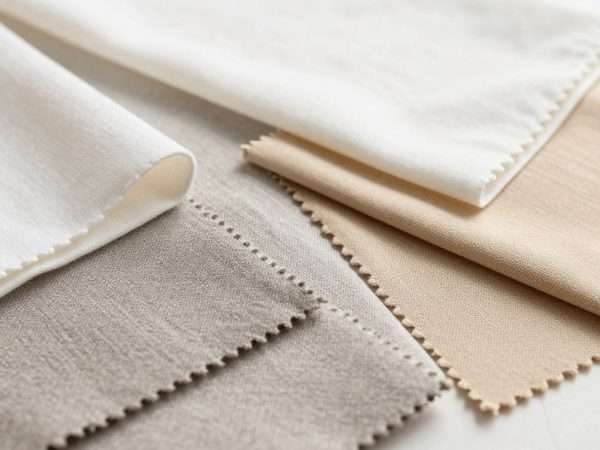
Fabric selection makes the difference between comfortable travel and constant discomfort. The right materials help your body regulate temperature in Thailand’s demanding climate. Understanding fabric properties helps you pack smarter for your trip.
Cotton: The Classic Choice for Tropical Travel
Cotton remains a favorite for Thailand travel. This natural fabric absorbs moisture effectively and allows air to circulate freely. Pure cotton shirts and pants dry reasonably fast after washing or rain exposure.
The main drawback involves wrinkles. Cotton wrinkles easily during packing and wear. Choose cotton-blend fabrics that maintain breathability while resisting wrinkles better than pure cotton options.
Linen: Maximum Breathability for Hot Days
Linen offers superior breathability compared to cotton. The loose weave allows maximum airflow against your skin. This fabric feels lighter and cooler during intense heat. Many travelers prefer linen for beach destinations and city exploration.
Linen wrinkles more than cotton. Embrace the relaxed, slightly rumpled look that linen naturally develops. This casual appearance fits Thailand’s laid-back atmosphere perfectly. The comfort benefits outweigh any wrinkle concerns.
Quick-Dry Synthetics: Practical for Active Travelers
Modern synthetic fabrics offer impressive performance characteristics. Polyester blends and specialized travel fabrics dry remarkably fast. These materials resist wrinkles and maintain their shape throughout your trip.
Quality matters significantly with synthetics. Premium quick-dry fabrics breathe well and resist odors. Lower-quality synthetics trap heat and develop unpleasant smells quickly. Invest in reputable brands for better performance.
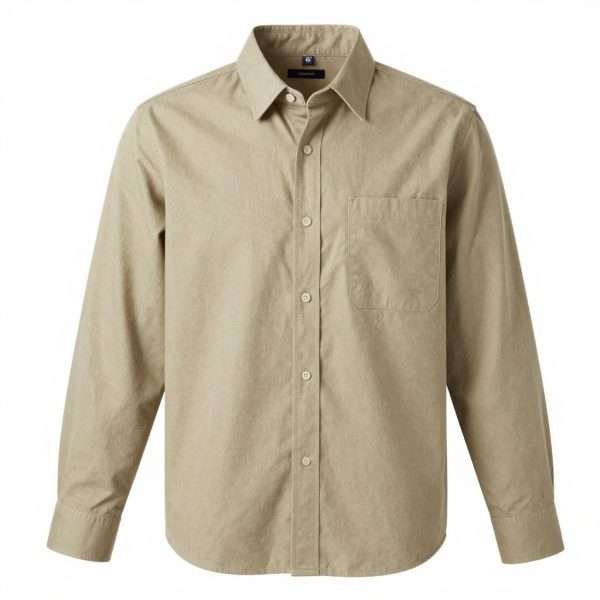
Breathable Cotton Travel Shirts
Lightweight cotton shirts keep you cool during temple visits and city walks. Look for loose fits that promote air circulation. Neutral colors hide sweat better and match with multiple outfits.
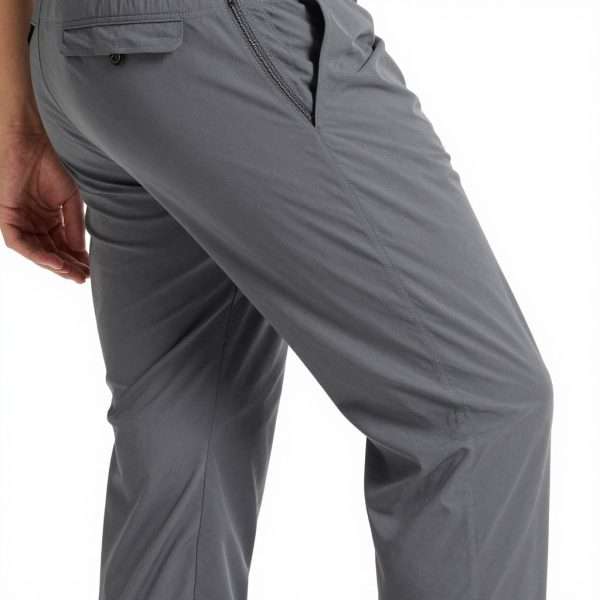
Quick-Dry Travel Pants
These versatile pants dry rapidly after washing or rain exposure. Convertible styles offer shorts and pants in one item. Perfect for travelers moving between different activities throughout the day.
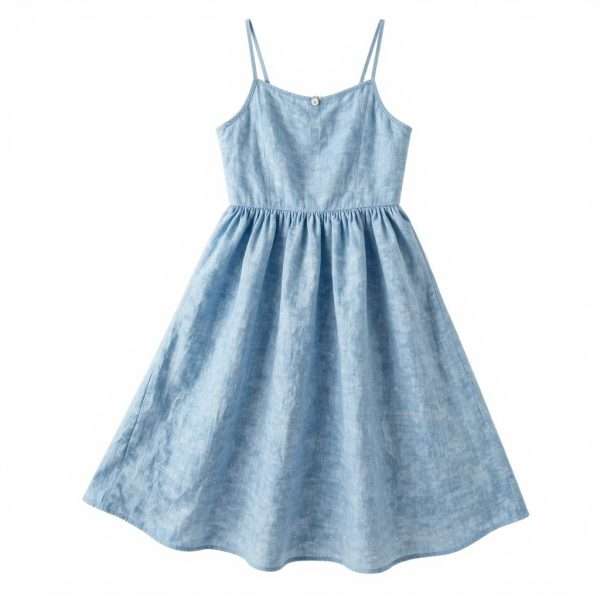
Linen Beach Dresses
Lightweight linen dresses provide maximum comfort for beach days and casual dining. The breathable fabric keeps you cool while offering modest coverage for various settings.
Bamboo Fabric: Eco-Friendly Comfort
Bamboo fabric has gained popularity among conscious travelers. This sustainable material feels incredibly soft against skin. Bamboo naturally resists bacteria growth, keeping clothes fresher between washes.
The fabric drapes beautifully and resists wrinkles moderately well. Bamboo clothing costs more than basic cotton but offers excellent comfort for the price. Consider bamboo options for base layers and everyday shirts.
Fabrics to Avoid in Thailand’s Climate
Heavy Denim
Traditional jeans trap heat and take forever to dry. The thick fabric becomes uncomfortable quickly in tropical humidity. If you want the jean look, choose lightweight denim alternatives designed for warm weather.
Thick Fleece and Wool
These cold-weather materials have no place in Thailand unless you’re trekking in northern mountains during winter months. Even then, a light fleece layer suffices for evening coolness.
Thai Temple Dress Code: Respectful Clothing Guidelines
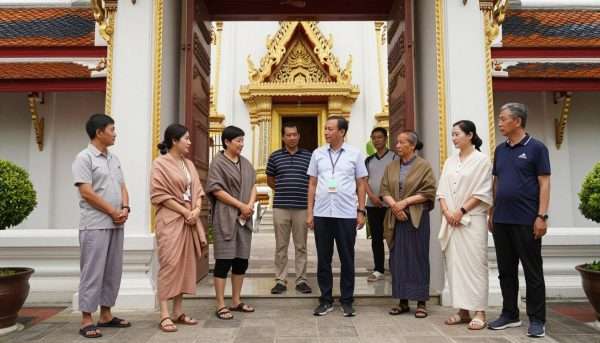
Understanding the Thai dress code for temples prevents embarrassment and shows respect for local culture. Thai temples enforce strict clothing requirements. Guards at major temples turn away improperly dressed visitors regularly.
The basic rule remains simple: cover shoulders and knees. This requirement applies to all genders visiting Buddhist temples and sacred sites. Royal palaces maintain even stricter standards, sometimes requiring long pants and closed-toe shoes.
What Temples Consider Appropriate Attire
Temples accept any clothing that provides adequate coverage. Long pants or skirts that reach below the knee work perfectly. Shirts must cover shoulders completely, eliminating tank tops and sleeveless options. The fabric doesn’t need to be formal, but it should be opaque and non-revealing.
Many temples provide loaner clothing at entrances for improperly dressed visitors. However, these borrowed items often feel uncomfortable and may not fit well. Planning your outfit beforehand ensures a better temple visit experience.
Clothing Items That Work for Temple Visits
Temple-Appropriate Options
- Lightweight long pants in breathable fabric
- Maxi skirts or dresses reaching ankles
- Loose-fitting shirts covering shoulders
- Light cardigans or wraps for coverage
- Closed-toe sandals or comfortable shoes
Items to Avoid at Temples
- Shorts above knee length
- Tank tops or sleeveless shirts
- See-through or tight clothing
- Torn or ripped jeans
- Beachwear or revealing outfits
Smart Strategies for Temple Visits During Hot Days
The heat makes temple dress codes challenging. Carrying a lightweight scarf solves multiple problems. Drape it over shoulders when entering temples, then remove it for walking between sites. This simple solution adds minimal weight to your day bag.
Loose-fitting pants in quick-dry fabric provide comfort and appropriate coverage. The looser fit allows air circulation despite full coverage. Choose light colors that reflect rather than absorb heat for maximum comfort.
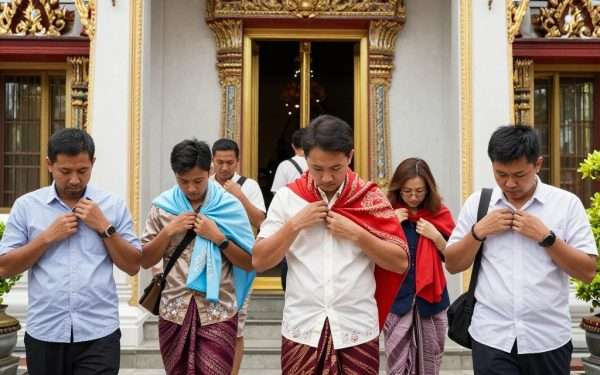
Planning Your Outfit Around Multiple Temple Visits
Days with multiple temple visits require strategic outfit planning. Wear temple-appropriate clothes to wear in Thailand from the start rather than changing repeatedly. This approach saves time and eliminates the need to carry alternative clothing.
Convertible pants offer clever solutions for mixed-activity days. Wear them long for temple visits, then zip off the legs for beach time afterward. This versatility reduces packing requirements while maintaining flexibility.
Footwear Considerations for Thai Temples
All temples require removing shoes before entering building interiors. This practice means you’ll slip shoes on and off repeatedly. Sandals or slip-on shoes work far better than laced footwear for temple days.
Keep shoes clean and in good condition. While temples don’t reject worn footwear, showing respect through well-maintained appearance demonstrates cultural sensitivity. Your shoes will sit outside temple entrances where everyone can see them.
Cultural Note: The Thai people deeply respect their Buddhist traditions. Following temple dress codes shows appreciation for their culture and values. This respect creates positive interactions with locals throughout your trip.
Best Shoes for Thailand: From Beaches to City Streets

Choosing the right shoes dramatically impacts your Thailand experience. You’ll walk extensively through cities, beaches, and temples. The footwear you bring determines whether you explore comfortably or struggle with blisters and sore feet.
Plan to bring 2-3 pair of shoes maximum. This selection covers different activities while keeping luggage weight manageable. Quality matters more than quantity when selecting travel shoes for Thailand.
Walking Sandals: Your Primary Thailand Footwear
Supportive walking sandals serve as the workhorse footwear for Thailand travel. Quality sandals with arch support and adjustable straps handle city walking, temple visits, and casual beach time. They slip on and off easily, which you’ll appreciate during frequent temple visits.
Look for sandals with good traction and quick-drying materials. Leather straps take longer to dry after rain or water exposure. Synthetic materials dry faster and resist water damage better in humid conditions.
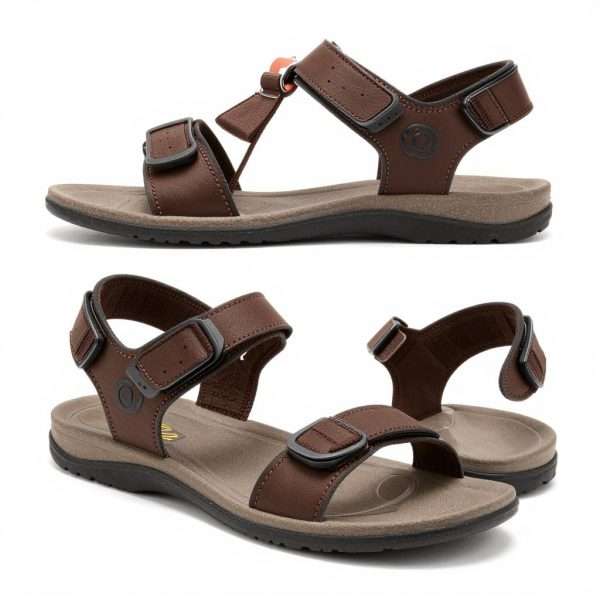
Supportive Walking Sandals
Premium walking sandals with contoured footbeds prevent foot fatigue during long city walks. Adjustable straps ensure secure fit for various activities. These versatile sandals work for most Thailand adventures.
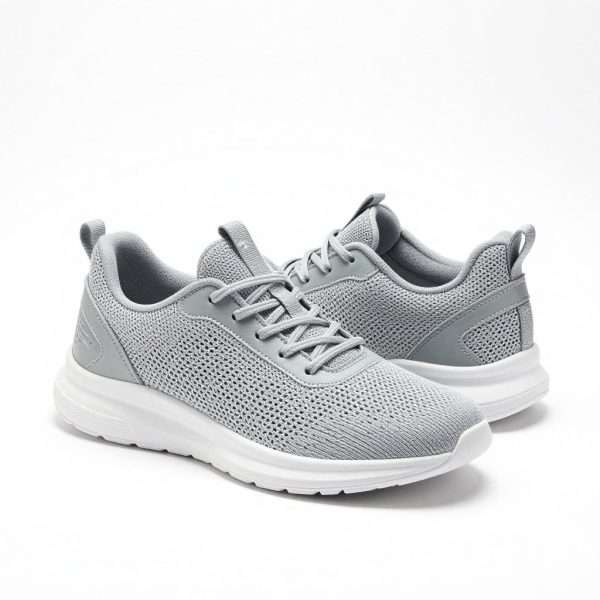
Breathable Walking Sneakers
Lightweight sneakers offer protection for hiking and rough terrain. Mesh construction provides breathability in hot weather. Essential for trekking excursions and adventure activities.
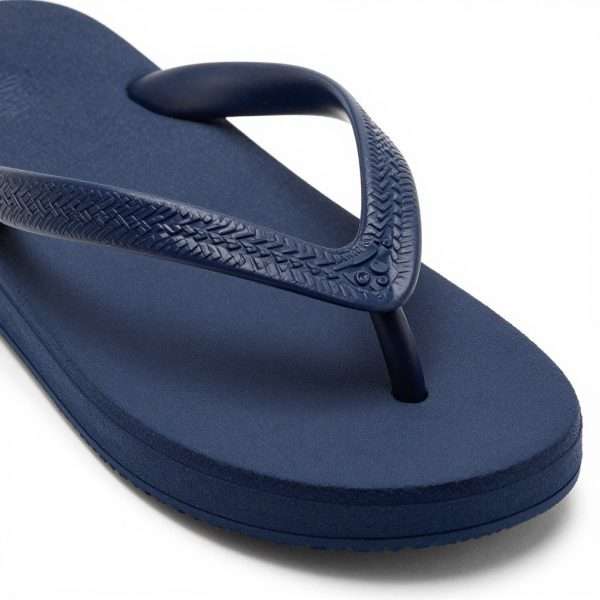
Quality Beach Flip-Flops
Durable flip-flops handle beach days and hotel wear perfectly. Choose quality construction that withstands daily use. Keep a pair for casual moments and poolside relaxation.
When You Need Closed-Toe Shoes
Certain situations call for closed-toe footwear. Hiking trails, jungle treks, and adventure activities require proper protection. Lightweight sneakers or trail shoes provide necessary support without the bulk of heavy hiking boots.
Choose shoes with breathable mesh construction. Your feet will sweat regardless, but breathable materials help moisture escape. Dark colors hide dirt better during extended travel without washing opportunities.
Flip-Flops: The Beach and Hotel Essential
Basic flip-flops serve important purposes beyond beach visits. They work as shower shoes in hostels and budget hotels. Quick trips to convenience stores or hotel lobbies become easier with slip-on footwear by the door.
Invest in quality flip-flops rather than cheap versions. Good construction prevents the common problem of straps breaking at inconvenient times. Thick soles provide cushioning for extended wear around resort areas.
Avoiding Common Footwear Mistakes
New shoes cause blisters and discomfort during travel. Break in all footwear thoroughly before your trip. Walk several miles in new shoes at home to identify any pressure points or problems.
Heavy hiking boots are unnecessary for most Thailand itineraries. The weight and bulk outweigh any benefits unless you’re doing serious mountain trekking. Lightweight trail runners handle most hiking situations encountered by typical travelers.
Important: Bangkok’s sidewalks often feature uneven surfaces and obstacles. Sandals with secure straps prevent trips and falls better than loose flip-flops during city exploration. Save flip-flops for beach and resort wear.
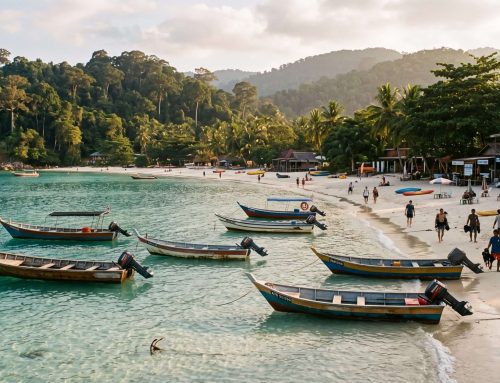
Beach Attire and Swimwear: Thailand’s Island Paradise
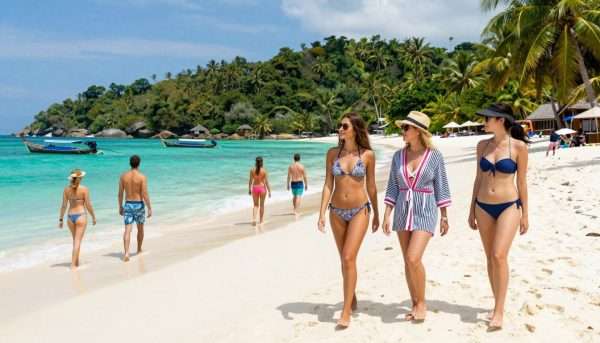
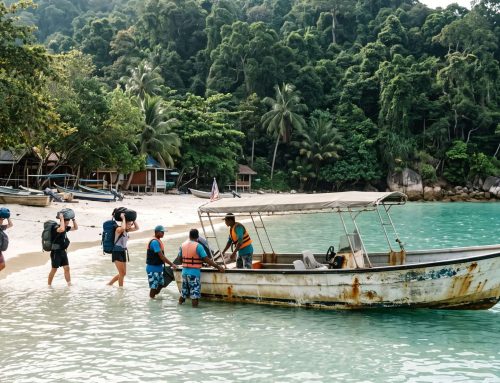
Thailand’s beaches rank among the world’s most beautiful destinations. Crystal-clear waters and white sand beaches attract millions of visitors annually. Packing appropriate beach clothing ensures you enjoy these stunning locations comfortably.
Beach towns and islands maintain more relaxed dress standards than cities. Swimwear and beach attire are perfectly acceptable near coastal areas. However, cover up when leaving the beach zone to respect local customs.
Choosing the Right Swimwear
Bring at least two swimsuits for extended beach time. Having multiple suits allows one to dry while wearing the other. Quick-dry materials prove essential since humidity slows drying time significantly.
Women find one-piece suits or modest bikinis work well throughout Thailand. Men’s board shorts or swim trunks function perfectly for all beach activities. Avoid overly revealing swimwear styles at family-friendly beaches to respect local sensibilities.
Essential Beach Cover-Ups
Never walk through town or dine in restaurants wearing only swimwear. Pack lightweight cover-ups that slip on easily over wet swimsuits. Sarongs, beach dresses, or loose shirts provide quick coverage when moving between beach and other locations.
A versatile sarong solves multiple beach problems. Use it as a beach blanket, towel, dress, or sun protection. This multipurpose item takes minimal bag space while serving numerous functions throughout your trip.
Sun Protection Clothing for Beach Days
Rashguards and UV Shirts
Long-sleeve rashguards provide excellent sun protection during water activities. These specialized shirts block harmful UV rays while remaining comfortable in water. Many travelers prefer rashguards over constantly reapplying sunscreen.
Wide-Brim Hats
A quality sun hat protects your face, neck, and shoulders from intense tropical sun. Choose styles that secure under the chin for windy beach conditions. Packable hats compress flat for travel convenience.
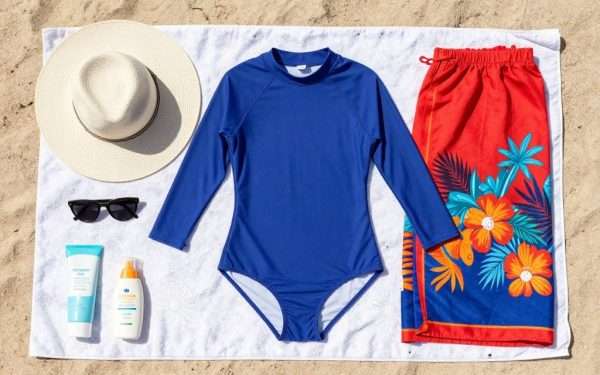
Beachwear That Transitions to Other Activities
Smart packing means choosing beach clothes that work beyond the sand. Board shorts function as regular shorts in casual settings. Beach dresses transition to dinner wear with appropriate accessories and sandals.
Quick-dry shorts handle both beach time and casual city exploration. This versatility reduces the number of clothing items needed. Look for styles that don’t scream “beachwear” for maximum flexibility throughout your trip.
What to Avoid Wearing at Thai Beaches
String bikinis and extremely revealing swimwear attract unwanted attention at Thai beaches. While not illegal, overly provocative swimwear shows disrespect for local culture. Choose modest styles that allow comfortable beach enjoyment without causing offense.
Never wear shoes onto beach sand that you plan to wear elsewhere. Sand gets everywhere and damages shoe interiors. Dedicate one pair of sandals or flip-flops specifically for beach use during your trip.
City Wear: Comfortable Clothes for Urban Thailand
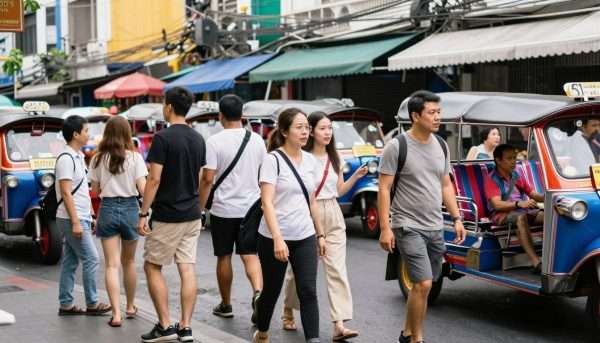
Bangkok and other Thai cities pulse with energy day and night. You’ll walk extensively through markets, malls, and historic districts. City exploration demands practical clothing that keeps you comfortable while looking presentable.
Urban areas maintain higher standards than beach destinations. Locals typically dress more formally in cities. Following their example helps you blend in and receive better treatment at restaurants and shops.
Daytime City Exploration Outfits
Lightweight shorts paired with breathable shirts work well for daytime city walking. Choose shorts that reach mid-thigh or longer. This length keeps you cool while maintaining appropriateness for various venues you’ll encounter.
Women find sundresses or rompers ideal for city days. These one-piece outfits simplify getting dressed while keeping you cool. Choose styles with pockets for securing valuables during crowded market visits.
Air-Conditioned Spaces Require Layer Planning
Thai businesses blast air conditioning to frigid levels. Shopping malls, restaurants, and transportation feel dramatically cooler than outside temperatures. The temperature shock can be jarring after walking in 90-degree heat.
Carry a light cardigan or shawl in your day bag. This extra layer prevents shivering in over-cooled spaces while adding minimal weight. The same item provides temple coverage when needed, serving double duty throughout the day.
Morning Markets
Early morning market visits call for comfortable walking clothes. The air feels slightly cooler, but humidity remains high. Loose cotton shirts and shorts work perfectly. Bring a small bag for purchases and keep valuables secure.
Afternoon Shopping
Mall shopping requires presentable casual wear. Thais dress well for shopping trips. Avoid looking too touristy with appropriate pants or skirts and neat shirts. This effort earns better service from shop staff.
Evening Dining
Nicer restaurants expect smart casual attire. Long pants and collared shirts for men, dresses or nice tops for women work well. Keep one slightly dressier outfit for special dining experiences during your trip.
Footwear for City Walking
Cities demand supportive walking shoes. Your feet will cover miles of pavement daily. Comfortable walking sandals with good arch support prevent the foot pain that ruins travel days.
Bangkok’s streets alternate between smooth pavement and broken sidewalks. Secure footwear prevents trips and falls better than loose flip-flops. Save casual sandals for short hotel-area walks rather than full-day exploration.
Night Market and Street Food Clothing
Evening markets get crowded and messy. Wear clothes you don’t mind getting dirty or stained. Dark colors hide inevitable food splashes better than light fabrics. Comfortable footwear matters more than appearance for these casual evening outings.
Keep your day bag small and secure during market visits. Crowds create opportunities for pickpockets. A crossbody bag worn in front keeps possessions safe while leaving hands free for food and shopping.
Rainy Season Clothing: Staying Dry and Comfortable
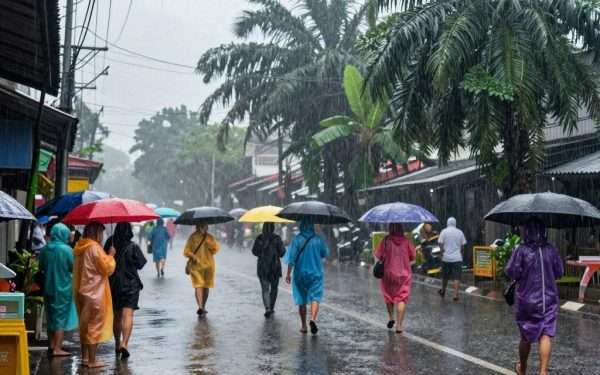
The rainy season brings daily downpours that arrive suddenly and intensely. These storms typically last 1-2 hours before clearing. Your clothing strategy must account for getting wet regularly during these months.
Many travelers avoid the rainy season unnecessarily. This period offers fewer crowds and lower prices. Proper clothing preparation makes rainy season travel enjoyable rather than miserable.
Quick-Dry Fabrics Become Essential
Quick-dry materials prove invaluable during rainy season. Clothes that dry within 2-3 hours prevent the mildew smell that develops in damp fabrics. Synthetic blends and technical fabrics outperform cotton during wet months.
Pack extra quick-dry options during rainy season. Having dry clothes available after unexpected soakings makes the day more comfortable. Lightweight items take minimal luggage space while providing crucial backup options.
Rain Protection Strategies
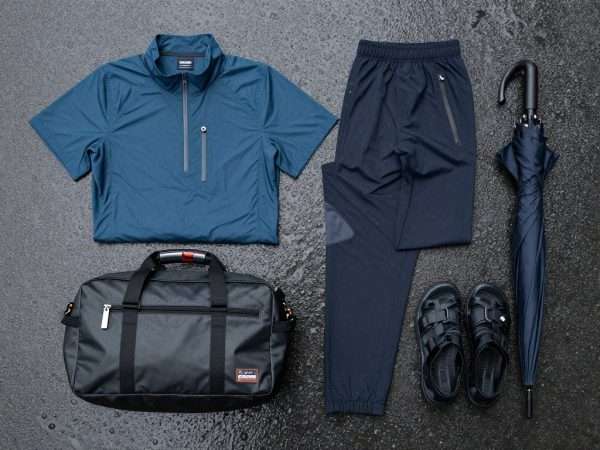
Effective Rain Gear
- Compact travel umbrella for sudden storms
- Lightweight rain jacket in bright color
- Waterproof bag cover for electronics
- Quick-dry pants and shirts
- Sandals that perform well when wet
- Small dry bag for phone and wallet
Less Effective Options
- Heavy rain ponchos that trap heat
- Cotton clothes that stay wet
- Leather shoes that take days to dry
- Large umbrellas difficult to carry
- Waterproof pants too hot for tropics
- Multiple clothing changes per day
Embracing Getting Wet
Sometimes accepting wetness works better than fighting it. Warm rain in tropical climates isn’t particularly uncomfortable. Wearing quick-dry clothes means you’ll be dry again within hours of returning to your accommodation.
Many locals simply accept getting rained on during daily activities. Following their example reduces stress about weather conditions. Focus on protecting electronics rather than staying completely dry during rainy season travel.
Footwear Considerations in Wet Weather
Wet season demands water-friendly footwear. Sandals that drain water work better than shoes that hold moisture. Avoid canvas sneakers that become soggy sponges during monsoon downpours.
Quality water sandals or sport sandals handle rainy season conditions perfectly. These shoes provide traction on wet surfaces while draining water effectively. The secure straps prevent slipping off wet feet during walks.
Protecting Your Belongings
Electronics and documents need protection during rainy season. Waterproof phone cases prevent expensive water damage. Ziplock bags offer budget-friendly protection for passports and important papers.
Pack a small dry bag for valuables during rainy season travel. These lightweight bags protect your phone and wallet even during heavy downpours. The security and peace of mind justify the minimal luggage space required.
Trekking and Adventure Clothing: Outdoor Activity Essentials

Northern Thailand and certain islands offer excellent trekking opportunities. Jungle trails, mountain paths, and adventure activities require specialized clothing beyond typical beach resort wear. Planning appropriate gear ensures safe and comfortable outdoor experiences.
Most travelers don’t need extensive hiking equipment for Thailand. The climate stays warm even in mountainous regions. Focus on lightweight, protective clothing rather than heavy outdoor gear designed for cold climates.
Essential Trekking Clothing Items
Long pants protect legs from scratches, insects, and sun exposure on trails. Lightweight quick-dry pants or convertible zip-off styles work perfectly. The leg coverage prevents bites and scrapes common on jungle trails.
Long-sleeve shirts provide similar protection for arms. Thin, breathable fabrics allow air circulation while blocking insects and branches. Roll sleeves up during hot sections and down when protection becomes necessary.
Layering for Mountain Temperatures
Northern regions experience cooler temperatures, especially during November through February. Evening temperatures can drop to 60°F (15°C) in places like Chiang Mai. A light fleece or jacket handles these cooler periods comfortably.
Don’t overpack warm layers. The temperature drops feel refreshing after lowland heat. One light jacket suffices for most northern Thailand travel unless you’re visiting during unusual cold snaps.
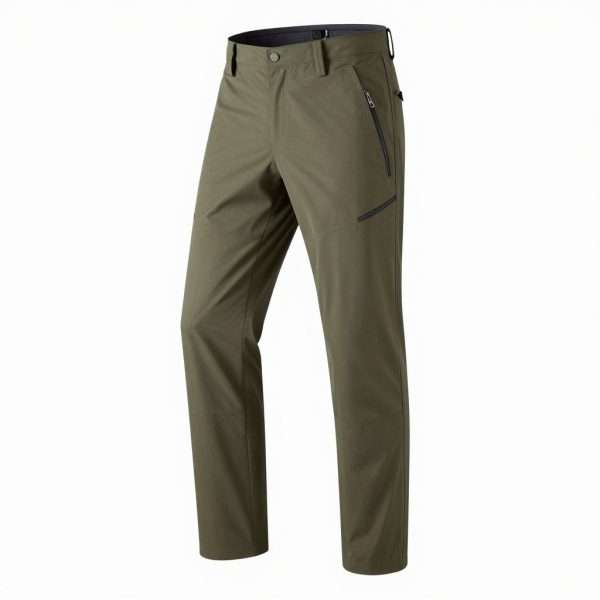
Convertible Trekking Pants
Zip-off pants transition from long pants to shorts instantly. This versatility handles varying trail conditions and temperatures. Multiple pockets secure essentials during outdoor activities.
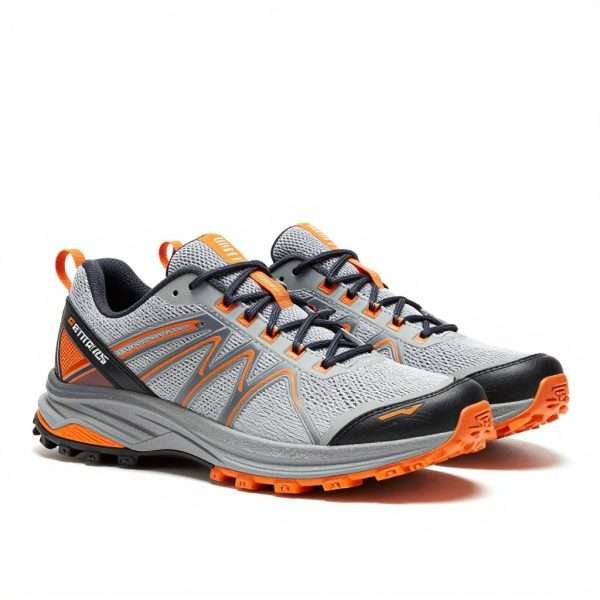
Trail Running Shoes
Lightweight trail shoes provide ankle support and grip for hiking trails. Breathable mesh construction prevents overheating. These versatile shoes work for trekking and casual city wear.
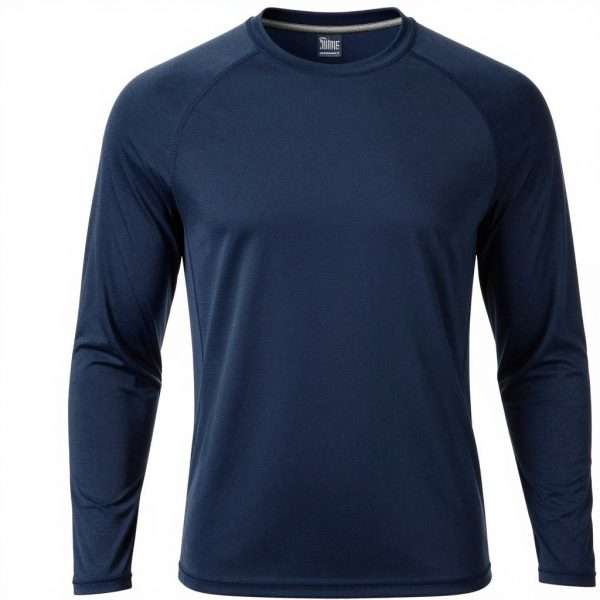
Moisture-Wicking Shirts
Technical shirts pull sweat away from skin during strenuous hikes. UV protection built into fabric prevents sunburn on exposed trails. Long sleeves offer insect protection without overheating.
Footwear for Trekking Activities
Trail shoes or light hiking boots provide necessary support for uneven terrain. Heavy boots prove unnecessary unless tackling serious mountaineering. Modern trail runners offer excellent traction while remaining lightweight and breathable.
Break in trekking footwear thoroughly before your trip. New shoes cause blisters during long hikes. Walk extensively at home to ensure comfortable fit before hitting Thailand’s trails.
Sun Protection During Outdoor Activities
Exposed trails amplify sun exposure significantly. Wide-brim hats protect face and neck from direct sun during long hikes. Choose hats with chin straps to prevent loss during windy conditions.
Sunglasses protect eyes from glare and UV damage. Quality polarized lenses reduce eye strain during all-day outdoor activities. Keep a secure cord or case to prevent loss during active movement.
Packing a Small Day Bag for Adventures
A lightweight daypack carries water, snacks, and extra layers during treks. Choose 15-20 liter capacity for day hikes. The bag should fit comfortably while remaining small enough to avoid excess weight.
Pack a rain cover for your daypack during rainy season. Sudden storms arrive without warning on mountain trails. Protecting electronics and dry clothes prevents miserable situations miles from shelter.
What Not to Wear in Thailand: Common Clothing Mistakes
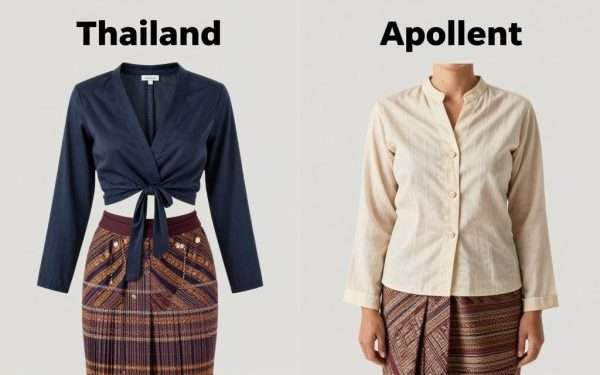
Understanding what not to pack proves as important as knowing what to bring. Certain clothing items cause problems in Thailand’s climate or cultural context. Avoiding these mistakes prevents discomfort and potential embarrassment during your trip.
Overly Revealing Clothing
Thailand maintains conservative values despite its tourism industry. Extremely short shorts, crop tops showing midriffs, and see-through clothing attract unwanted attention. These items also prevent temple entry at sacred sites.
Respect for local culture means dressing modestly outside beach areas. Thai locals rarely wear revealing clothing in public spaces. Following their example creates more positive interactions throughout your journey.
Heavy Denim and Thick Fabrics
Traditional jeans become unbearably hot within minutes of Thailand’s heat. The thick fabric traps moisture and heat against skin. If you prefer the jean look, choose lightweight denim or technical pants that mimic denim appearance.
Avoid thick cotton sweatshirts and hoodies. These items serve no purpose in Thailand’s climate except possibly northern mountains during winter months. The luggage space works better for additional quick-dry options.
Camouflage Patterns
Military camouflage patterns can create legal issues in Thailand. Wearing camo clothing might be mistaken for impersonating military personnel. While enforcement varies, avoiding these patterns eliminates any potential problems.
This restriction extends to all camouflage items including pants, shirts, and accessories. Choose any other pattern or solid color to avoid this particular cultural sensitivity.
Smart Packing Choices
- Lightweight quick-dry materials
- Modest clothing covering shoulders and knees
- Versatile items serving multiple purposes
- Neutral colors hiding dirt and sweat
- Comfortable supportive footwear
- Clothes appropriate for local culture
Items to Leave Home
- Heavy jeans and thick fabrics
- Revealing or provocative clothing
- Excessive formal wear
- New unworn shoes
- Camouflage patterns
- Large quantities of white clothing
Expensive Jewelry and Watches
Valuable jewelry attracts unwanted attention from thieves. Leave expensive pieces at home for security reasons. Thailand’s heat and humidity also damage certain jewelry materials.
Wear simple, inexpensive accessories that you won’t worry about losing. Travel-specific watches and basic jewelry work perfectly for documenting your adventure without the stress of protecting valuables.
All-White Clothing
White clothing shows every speck of dirt and sweat. Thailand’s dusty streets and humid conditions quickly ruin pristine white items. If you love white clothes, bring one outfit for photos and wear practical colors for daily activities.
Light neutral colors like tan, gray, and pastels hide dirt better while still reflecting heat. These practical shades maintain a fresh appearance throughout your trip despite challenging conditions.
Excessive Formal Clothing
Most travelers overpack formal options they never wear. Unless attending specific business meetings or fancy events, one smart casual outfit suffices. Thailand maintains a relaxed atmosphere where casual clothing works for most situations.
The luggage space dedicated to unused formal wear works better for additional comfortable casual options. Pack for the trip you’ll actually have rather than unlikely scenarios.
Smart Packing Tips: Building Your Thailand Wardrobe
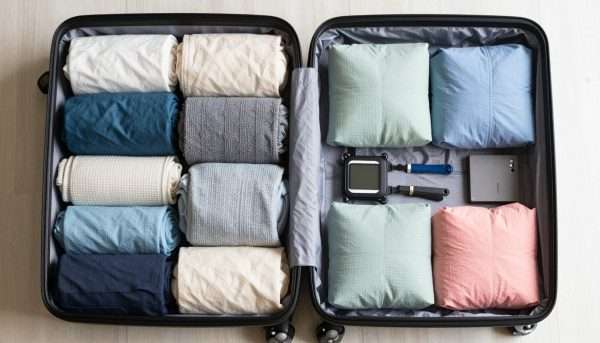
Efficient packing maximizes luggage space while ensuring you have everything needed. A strategic approach to building your Thailand wardrobe prevents both overpacking and missing essentials. Smart planning makes your entire trip more enjoyable.
The Minimalist Packing Philosophy
Pack half the clothes and twice the money. This classic travel advice applies perfectly to Thailand. You’ll find affordable clothing throughout the country if you need additional items. Starting with less means easier mobility and reduced luggage stress.
Most travelers wear the same favorite items repeatedly. Pack those proven comfortable pieces rather than experimental new clothes. Stick with what works in your regular life, adapted for tropical conditions.
Creating a Capsule Wardrobe for Thailand
Choose a simple color scheme where all items coordinate. Neutrals like tan, navy, and gray mix easily while hiding dirt effectively. This approach means every shirt works with every pair of pants or shorts.
A typical week-long trip needs 5-7 shirts, 3-4 bottoms, and 2-3 pair of shoes. Quick-dry fabrics allow washing and wearing within 24 hours. This minimal wardrobe covers all situations while fitting in a carry-on bag.
Essential Thailand Packing List
- 5 quick-dry shirts (mix of short and long sleeve)
- 2 pairs quick-dry pants
- 2 pairs shorts
- 1 light dress or skirt
- Swimwear (2 pieces)
- 7 underwear sets
- Light jacket or cardigan
- Walking sandals
- Sneakers or trail shoes
- Flip-flops
- Sarong or scarf
- Sun hat
- Sunglasses
Packing Organization Tips
Rolling clothes instead of folding saves significant space. Rolled items also wrinkle less than folded ones. This technique allows fitting more into carry-on luggage.
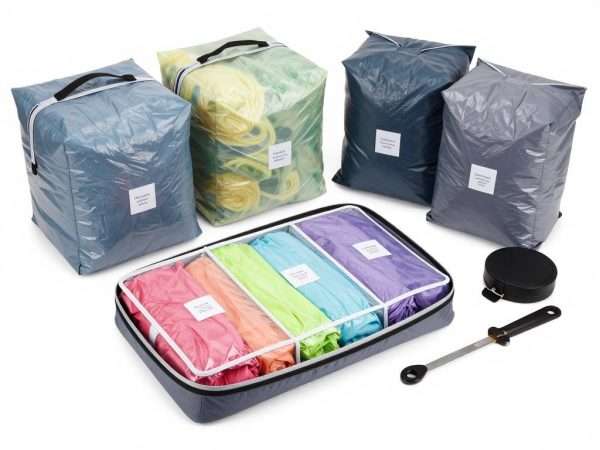
Packing cubes organize different clothing categories. Use separate cubes for tops, bottoms, and undergarments. This system makes finding specific items quick and easy without unpacking everything.
Place shoes at the bottom of your bag along the spine. Fill shoes with socks or small items to maximize space. This placement keeps heavy items centered for better bag balance.
Keep one complete outfit in your day bag during travel. Lost luggage happens occasionally. Having basics available means you can function while tracking down missing bags.
Laundry Strategy During Your Trip
Plan to do laundry during trips longer than one week. Most accommodations offer laundry service at reasonable prices. Quick-dry fabrics mean you can hand-wash items in your room if necessary.
Bring a small amount of travel laundry detergent for hand-washing undergarments. This option provides flexibility between professional laundry services. Your clothes dry overnight in Thailand’s warm climate.
Shopping for Clothes in Thailand
Thailand offers excellent shopping for forgotten or needed items. Markets and malls sell clothing at significantly lower prices than Western countries. This availability means you don’t need to pack for every possible scenario.
Local clothing often fits Asian body types better than Western imports. Sizing runs smaller than US or European standards. Try items on before purchasing to ensure proper fit.
Digital Packing List Benefits
Create a digital packing list on your phone. This reference helps you remember everything without stress. Use the same list for future trips, refining it based on what you actually used.
Check off items as you pack them into your bag. This systematic approach prevents forgetting essentials at home. The list also helps when repacking to return home.
Seasonal Clothing Adjustments: Dry vs Rainy Season
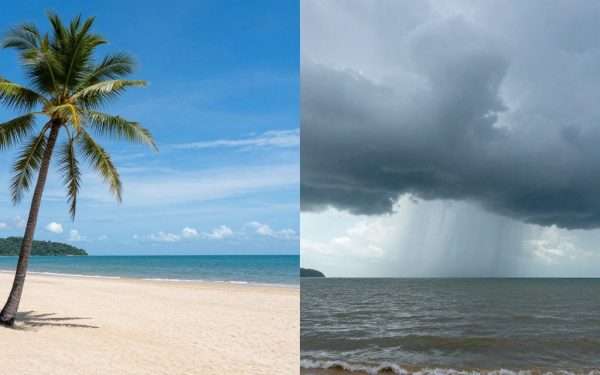
Thailand’s two main seasons require slightly different packing approaches. Understanding these seasonal variations helps you pack appropriately for your specific travel dates. The right preparation ensures comfort regardless of when you visit.
Dry Season Considerations (November-April)
The dry season offers the most pleasant weather conditions. Clear skies and lower humidity make this period ideal for first-time visitors. Temperatures remain hot but feel more manageable without constant moisture in the air.
Pack primarily for heat during dry season visits. Sun protection becomes paramount with extended periods of direct sunlight. Lightweight clothing in breathable fabrics handles the warm days comfortably. Evening temperatures remain pleasant, rarely requiring additional layers except in northern regions.
Rainy Season Adjustments (May-October)
Monsoon season brings daily afternoon rainstorms. These intense downpours last 1-2 hours before clearing. Higher humidity levels make the air feel heavier throughout the day. Your clothing strategy must account for getting wet regularly.
Prioritize quick-dry fabrics during rainy season travel. These materials dry within hours rather than days. Pack an extra set of clothes in case one outfit gets soaked. Waterproof bags protect electronics and important documents from sudden storms.
Peak Dry Season (December-February)
These months offer the coolest temperatures Thailand experiences. Northern regions can feel genuinely cool during evenings. Bring one light layer for these cooler times. Beach destinations maintain warm temperatures throughout this period. This season represents prime tourism time with higher prices and larger crowds.
Shoulder Seasons (March-May, September-November)
Transition periods between seasons bring variable weather. March through May sees the hottest temperatures of the year. September and November mark the shift between rainy and dry seasons. These months offer good value with fewer tourists and lower prices. Weather becomes less predictable during shoulder seasons.
Regional Seasonal Variations
Different regions experience seasons at varying times. Southern islands face different rainy patterns than the mainland. The eastern Gulf coast receives rain during different months than western Andaman beaches.
Research your specific destination’s weather patterns. Koh Samui’s rainy season peaks November-January, opposite the mainland pattern. This variation allows year-round beach travel by choosing appropriate locations.
Hot Season Challenges (March-May)
The hottest months push temperatures above 95°F (35°C) regularly. This intense heat tests even lightweight clothing. Plan indoor activities during peak afternoon heat. Early morning and evening hours offer more comfortable conditions for exploration.
Hydration becomes critical during hot season. Carry a refillable water bottle constantly. Loose, light-colored clothing reflects heat better than dark colors. Frequent breaks in air-conditioned spaces prevent heat exhaustion.
Essential Accessories: Completing Your Thailand Wardrobe
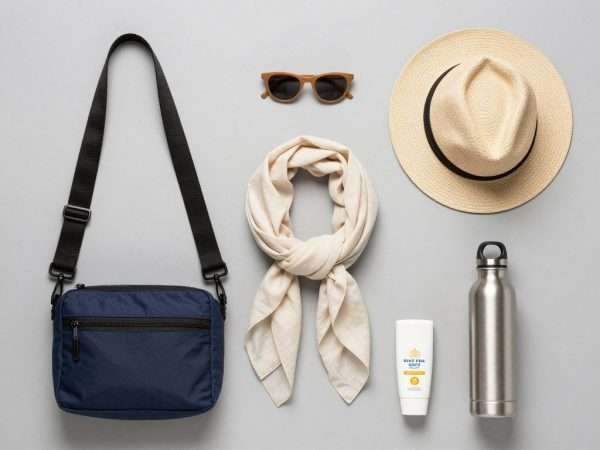
Accessories complete your travel wardrobe while serving important practical functions. The right additions protect you from sun, secure your belongings, and enhance overall comfort. Smart accessory choices make significant impacts on trip enjoyment.
Day Bag Essentials
A versatile day bag carries daily essentials during explorations. Crossbody bags or small backpacks work better than shoulder bags for security. The bag should be large enough for necessities but small enough to avoid becoming burdensome.
Look for water-resistant materials that protect contents during sudden rain. Multiple compartments organize items for easy access. Anti-theft features like locking zippers provide peace of mind in crowded areas.
Sun Protection Accessories
Wide-brim hats provide crucial sun protection for face and neck. Choose packable styles that survive being compressed in luggage. Hats with chin straps prevent loss during windy conditions or adventure activities.
Quality sunglasses protect eyes from intense tropical sun. Polarized lenses reduce glare significantly, especially near water. Keep a secure case or cord to prevent losing sunglasses during active days.
Versatile Scarves and Sarongs
A large scarf or sarong serves numerous purposes throughout your trip. Use it as temple shoulder coverage, beach blanket, light layer in over-air-conditioned spaces, or privacy screen in shared accommodations. This multipurpose item weighs almost nothing while providing remarkable versatility.
Choose lightweight cotton or rayon fabrics that pack small. Bright colors or patterns allow using the scarf as a fashion accessory in photos. The investment of minimal luggage space returns significant practical value.
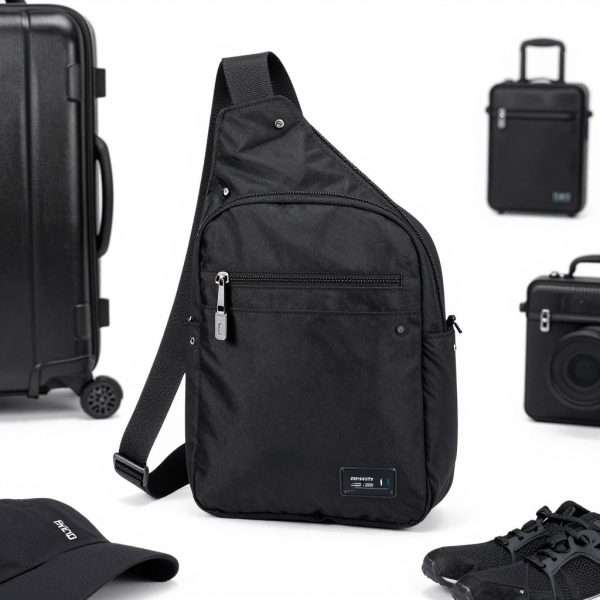
Anti-Theft Day Bag
Secure crossbody bag with locking zippers and slash-resistant straps. Multiple compartments organize essentials efficiently. Water-resistant material protects contents during unexpected rain.
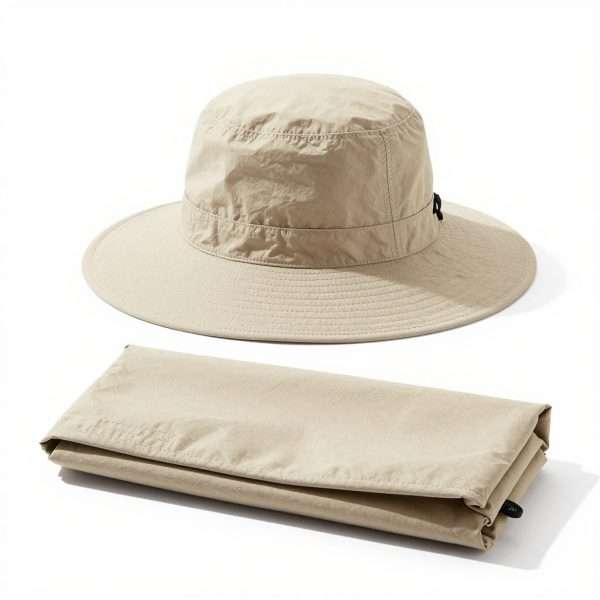
Packable Sun Hat
Wide-brim hat provides excellent sun protection while packing flat. Adjustable chin strap keeps hat secure during windy conditions. Lightweight construction adds minimal luggage weight.
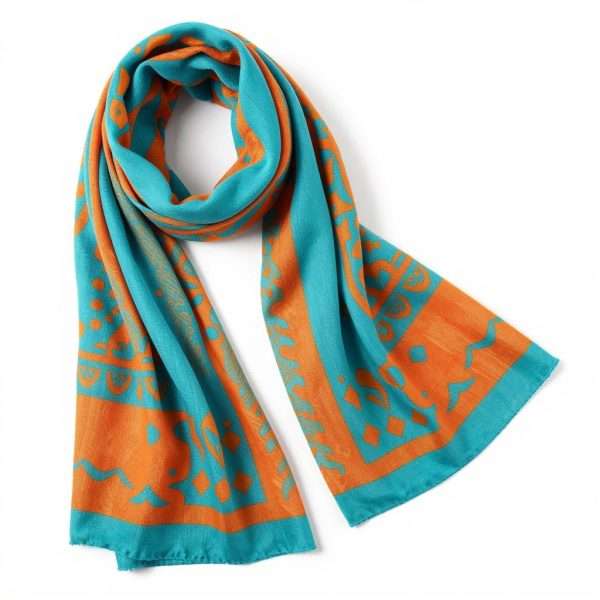
Multipurpose Travel Scarf
Large lightweight scarf serves as temple cover-up, beach blanket, and fashion accessory. Quick-drying fabric handles washing and wearing repeatedly. Vibrant patterns photograph beautifully in travel images.
Practical Daily Carry Items
A refillable water bottle stays with you constantly in Thailand’s heat. Choose insulated bottles that keep water cool for hours. This investment saves money while reducing plastic waste throughout your trip.
Small packable rain jacket or umbrella protects against sudden storms. Compact versions fit easily in day bags without adding significant weight. Having rain protection available prevents being caught unprepared during downpours.
Electronics and Cable Organization
Keep charging cables organized in a small pouch. Thailand uses different electrical outlets than many Western countries. Bring a universal adapter that handles various plug types encountered throughout Southeast Asia.
Portable battery packs ensure your phone stays charged during long exploration days. Choose high-capacity options that recharge phones multiple times. Dead phone batteries eliminate navigation capabilities and photography opportunities.
Shopping for Clothes in Thailand: Local Options and Tips
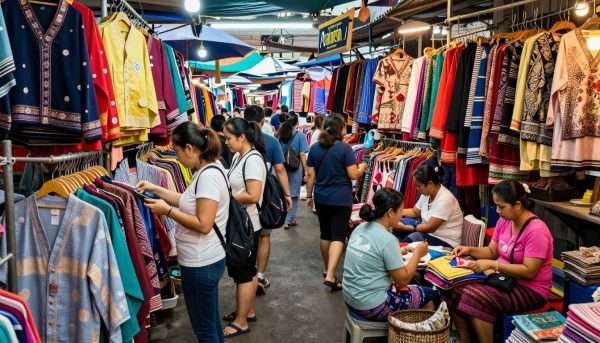
Thailand offers fantastic shopping opportunities for clothing and accessories. Local markets provide bargain prices while malls sell international brands. Buying clothes in Thailand solves forgotten items or adjusts your wardrobe based on actual needs discovered during travel.
Best Places to Shop for Travel Clothing
Night markets throughout Thailand sell affordable casual clothing. Chatuchak Weekend Market in Bangkok offers thousands of vendors with every clothing type imaginable. Prices start remarkably low, with quality varying between stalls.
Shopping malls provide air-conditioned browsing with consistent quality. International chains like Uniqlo and H&M maintain stores in major cities. These familiar options offer reliable sizing and return policies if needed.
Understanding Thai Sizing
Thai sizing runs smaller than Western standards. A Thai large often equals a Western medium or small. Always try clothes on before purchasing. Vendors expect customers to test fit before buying.
Pants lengths typically work better for shorter individuals. Tall travelers struggle finding appropriate lengths in local markets. International brands in malls offer more size variety for different body types.
Bargaining Etiquette at Markets
Bargaining represents expected practice at Thai markets. Start by offering 50-60% of the asking price. Vendors counter with slightly reduced prices. Meet somewhere in the middle through friendly negotiation.
Smile and maintain friendly demeanor during bargaining. Aggressive or rude behavior offends local culture. If you can’t reach agreeable price, politely thank the vendor and walk away. Often they’ll call you back with better offers.
| Shopping Location | Price Range | Quality Level | Best For |
| Night Markets | Very Low | Variable | Casual wear, accessories, bargains |
| Street Vendors | Low | Basic | Simple items, emergency replacements |
| Local Malls | Moderate | Good | Reliable quality, familiar brands |
| International Chains | Moderate | Consistent | Specific needs, known sizing |
| Boutique Shops | Higher | Excellent | Unique items, quality craftsmanship |
Popular Items Worth Buying
Thai fisherman pants offer comfort in tropical heat. These loose-fitting pants provide excellent air circulation and distinctive style. They pack small and work well for both men and women during casual activities.
Lightweight cotton shirts in vibrant patterns make great souvenirs. These items cost less than back home while providing authentic Thai style. Quality varies, so inspect stitching and fabric carefully before purchasing.
What to Avoid Buying
Counterfeit designer items flood markets throughout Thailand. These fake goods often feature poor quality that fails quickly. Legal issues can arise when attempting to bring counterfeit items through customs returning home.
Very cheap items often deteriorate after one wash. While bargains seem appealing, paying slightly more ensures items survive your trip. Focus on quality over rock-bottom prices for items you’ll wear repeatedly.
Your Complete Thailand Packing Checklist
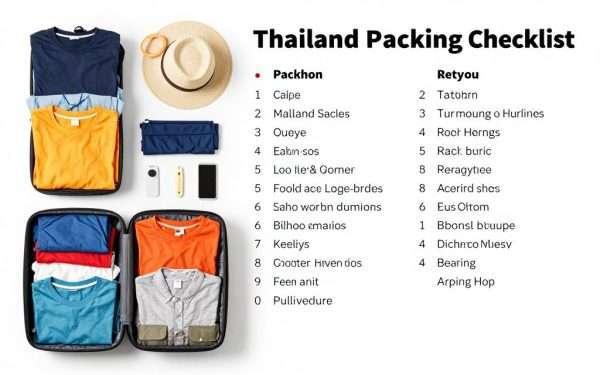
This comprehensive checklist ensures you pack everything needed for comfortable Thailand travel. Adjust quantities based on trip length and planned activities. Use this list as your planning foundation.
Clothing Essentials
Tops
- 5-7 t-shirts or casual shirts
- 2-3 long-sleeve shirts
- 1 light cardigan or jacket
- 1-2 dressier tops for nice dinners
- 2 tank tops or sleeveless shirts
Bottoms
- 2-3 pairs quick-dry pants
- 2-3 pairs shorts
- 1-2 skirts or dresses
- 1 pair convertible pants (optional)
Undergarments and Basics
- 7-10 pairs underwear
- 7-10 pairs socks
- 2-3 bras or support garments
- 2 swimsuits
- 1 set sleepwear
Outerwear
- Light rain jacket
- Sun protection shirt or rashguard
- Cover-up for beach
Footwear
- Primary walking sandals with support
- Sneakers or trail shoes for hiking
- Flip-flops for beach and hotel
- Optional: Water shoes for rocky beaches
Accessories and Add-ons
Sun Protection
- Wide-brim sun hat
- Sunglasses with UV protection
- Reef-safe sunscreen
- Lip balm with SPF
Practical Items
- Day bag or small backpack
- Reusable water bottle
- Quick-dry towel
- Packing cubes
- Laundry detergent packets
Extras
- Versatile scarf or sarong
- Small umbrella
- Waterproof phone case
- Money belt or hidden pouch
Activity-Specific Additions
For Trekking: Add hiking-specific clothing, trail snacks, small first-aid kit, and headlamp. Include insect repellent and extra socks for multi-day treks.
For Beach Focus: Prioritize swimwear, beach cover-ups, snorkeling gear, and multiple pairs of water-friendly sandals. Beach bag and waterproof phone case become essential.
For City Exploration: Include one slightly dressier outfit, comfortable walking shoes with good support, and secure bag for valuables. Add portable phone charger for navigation needs.
Start Your Thailand Adventure Properly Dressed
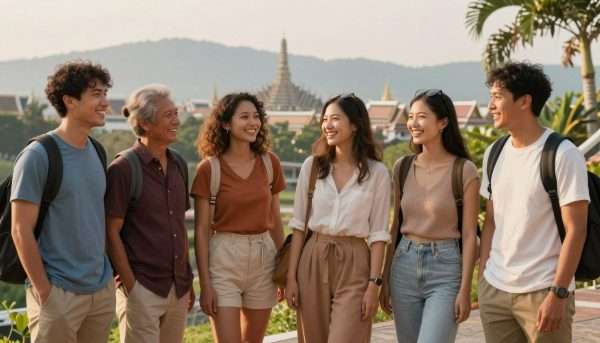
Packing the right clothes to wear in Thailand sets the foundation for comfortable, respectful travel. Your wardrobe choices impact every moment of your journey. The difference between smart packing and random selection becomes obvious within your first day in Thailand’s climate.
Focus on lightweight fabrics that breathe and dry quickly. Respect local culture by covering shoulders and knees at temples. Bring versatile items that serve multiple purposes throughout various activities. These core principles guide successful packing for Thailand travel.
Remember that Thailand offers excellent shopping opportunities. You don’t need to pack for every possible scenario. Forgotten items or wardrobe adjustments happen easily once you arrive. This flexibility removes packing pressure while ensuring you’re prepared for Thailand’s unique conditions.
Your Thailand adventure awaits with proper preparation. The clothes you pack directly influence your comfort and enjoyment throughout the trip. Take time to plan thoughtfully now, then relax and enjoy one of the world’s most beautiful destinations.
Get Your Free Thailand Packing Checklist
Download our comprehensive printable packing guide with detailed checklists for every Thailand travel scenario. This free resource includes weather-specific recommendations, activity-based packing lists, and essential tips to ensure you bring everything you need for your Thailand adventure.




Leave A Comment