
Why Chichén Itzá Cannot Survive Another Generation Without Radical Intervention
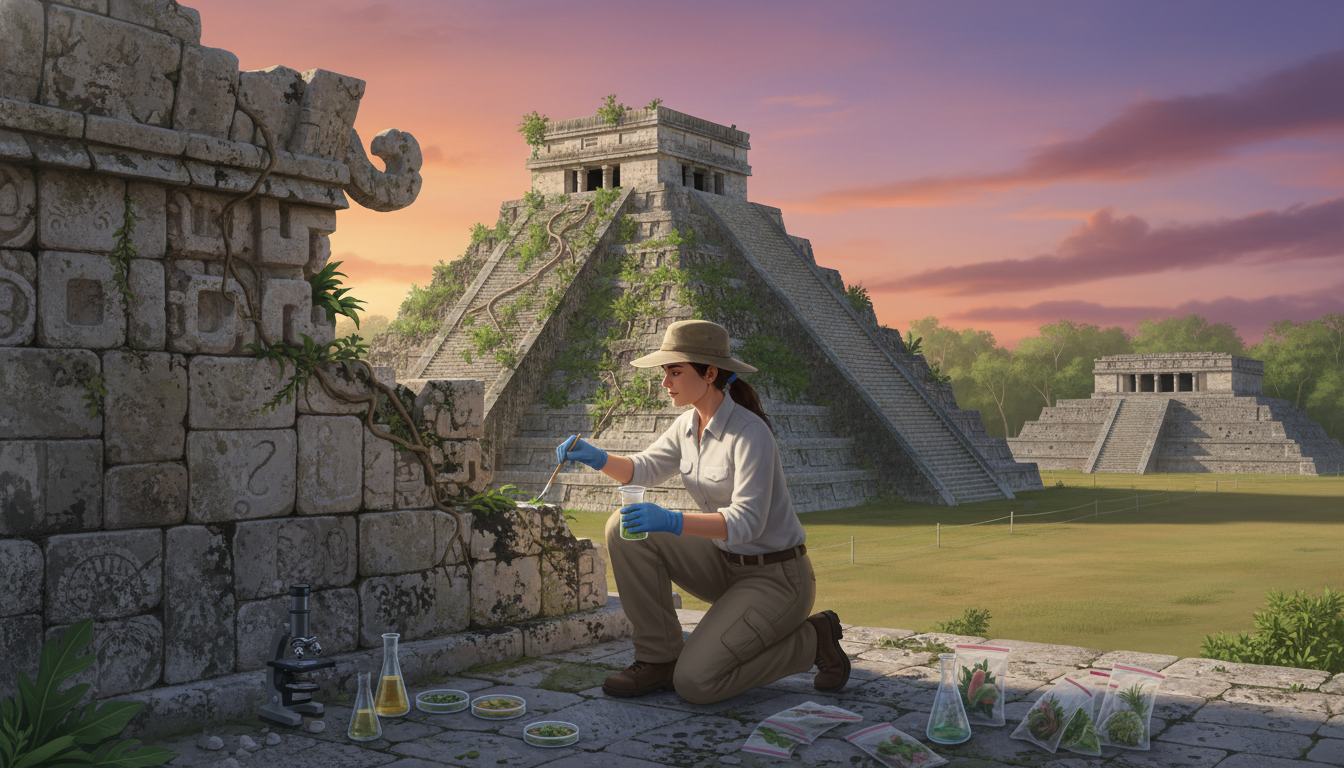
The limestone crisis at Chichén Itzá is happening now, faster than expected. I’ve studied heritage sites for years. But nothing prepared me for the threats facing these ancient structures.
The traditional view of Chichén Itzá focuses on its past and architecture. But beneath that lies a harsh reality. Without radical action, the structures we admire today won’t last until 2050.
There’s a three-part crisis threatening these sites. Each threat is serious on its own. Together, they create an emergency that calls for radical solutions.
The Accelerating Limestone Biodeterioration Crisis
When I first heard of “biodeterioration,” I didn’t understand its severity. Then I saw what’s happening to the stone.
Limestone biodeterioration is a major challenge in preserving ancient sites. The porous limestone used by the Maya makes these structures vulnerable to biological and chemical attacks.
Microorganisms colonize the stone, creating biofilms that trap moisture. This moisture causes destructive freeze-thaw cycles and chemical reactions.
The deterioration gets worse through several ways:
- Microbial metabolic acids dissolve calcium carbonate in the limestone
- Root penetration from algae and lichens physically breaks the stone
- Salt crystallization from pollutants creates pressure in pores
- Moisture cycling weakens the stone’s bonds through wet-dry cycles
This crisis is getting worse because of a feedback loop. Once biofilm colonies form, they create perfect conditions for more colonization. The deterioration rate is not linear—it’s exponential.
Studies show limestone weathering at Chichén Itzá has increased by 340% in three decades. Surface loss that used to be measured in millimeters per decade now happens annually.
Traditional cleaning and consolidation methods only offer temporary relief. Within months, microbial colonies return. The stone continues to decay, despite efforts to stop it.
Mid-Century Climate Deterioration: A Threat Traditional Methods Cannot Answer
The biodeterioration crisis is part of a bigger atmospheric threat. Traditional preservation methods can’t handle it. Climate research shows new patterns that change the preservation equation.
Climate resilient preservation needs to understand the threats from warming trends. The Yucatán Peninsula faces complex environmental changes.
Warming years bring more than just higher temperatures. Climate models show strong El Niño cycles will push regional temperatures past critical points. This leads to prolonged droughts and intense flooding.
The threats to archaeological materials include:
| Climate Factor | Impact on Limestone | Traditional Method Limitation |
|---|---|---|
| Extreme heat events | Accelerated surface degradation and thermal stress fracturing | No heat mitigation in passive conservation |
| Humidity swings | Rapid moisture cycling drives salt crystallization damage | Surface treatments fail under repeated cycles |
| Extended fire seasons | Smoke particulates increase chemical weathering rates | Cleaning removes symptoms but not vulnerability |
| Unseasonal precipitation | Unexpected moisture penetration activates dormant decay | Drainage systems inadequate for changed patterns |
These changes create conditions that 20th-century conservation methods can’t address. Periodic cleaning, traditional consolidants, and passive monitoring were for stable climate conditions.
Mid-century projections show unstable environmental patterns. The limestone structures face threats from the atmosphere and microbes that exceed historical levels.
I’ve looked at preservation cases from around the world. Sites relying only on traditional methods under changing climates saw faster deterioration, despite efforts to save them.
The harsh truth: Chichén Itzá needs technologies that can actively respond to changing conditions, not just document the decay.
Why the Alternative—Total Ruin—Is Unacceptable
Some preservationists argue that any intervention compromises the site’s integrity. They suggest natural deterioration is a better alternative to technology.
I understand this view, but imagining El Castillo reduced to rubble is unbearable. It represents a real cultural disaster.
The alternative to radical intervention isn’t preserving a pristine state—it’s complete structural collapse. The deterioration follows predictable stages at deteriorating sites worldwide.
First, surface details erode. Carved glyphs become unreadable shadows. Decorative elements lose definition. Then, structural components weaken. Lintels sag, then fail. Walls crack, lean, and eventually collapse.
Without intervention, Chichén Itzá will follow this path in decades, not centuries. The biodeterioration and climate threats are active destructive processes we can measure in real-time.
The cultural loss goes beyond the structures:
- Irreplaceable archaeological context destroyed forever
- Educational opportunities for future generations eliminated
- Cultural identity connections for Maya descendants severed
- Scientific research potential permanently lost
- Economic benefits to regional communities ended
Total ruin means losing our chance to study ancient engineering. The structures hold knowledge about pre-industrial construction techniques that modern science is still discovering.
I believe the ethical choice is clear. Preventable destruction of irreplaceable heritage is a greater transgression than carefully implemented biotechnological preservation.
The radical interventions discussed later—biomineralization treatments, atmospheric monitoring, controlled access systems—address real emergency conditions. These aren’t vanity projects. They’re necessary responses to documented, accelerating threats.
The choice isn’t between pristine preservation and technology. It’s between active survival strategies and passive acceptance of total loss.
Biomineralization Stone Restoration: The Case for Living Conservation Technology
At first, the idea of using living bacteria to fix limestone sounded crazy. But after digging into the science and talking to conservationists, I saw how real and game-changing biomineralization stone restoration is. It’s amazing to think that tiny organisms can heal ancient stones from the inside.
Old methods have kept Chichén Itzá safe for years. But they can’t keep up with the damage anymore. That’s why scientists came up with a new way that works with nature, not against it.
How Bio-Mineralizing Bacterial Coatings Actively Reverse Decay
The science behind it is cool. Certain bacteria make calcium carbonate as they grow. When applied to limestone, they turn into tiny factories that make more stone.
These bacteria settle in the stone’s cracks and pores. As they grow, they fill gaps and strengthen weak spots. It’s like the stones are healing themselves from the inside out through biomineralization.
This method keeps the iconic shapes of places like El Castillo and the Great Ball Court intact. The bacterial coatings work inside, so the outside looks the same. You won’t notice a difference, but the stone gets stronger every day.
The process is invisible. Conservationists just spray or brush the bacterial solution on. In weeks, the bacteria start making new stone. It’s not just a surface fix—it’s deep, structural repair that keeps the stone’s original look and details.
Why Invisible Organic Consolidants Outperform Chemical Sealants
At first, chemical sealants seemed like the obvious choice. But learning about limestone biodeterioration conservation showed me how bad they are for the long run.
Chemical sealants block moisture, but they trap it inside. This causes damage from freeze-thaw cycles and salt crystallization. It’s like the treatment is speeding up the stone’s decay.
Organic consolidants using biomineralization work differently:
- Breathability: Bacterial coatings let moisture escape while strengthening the stone
- Active reversal: They don’t just slow decay—they rebuild damaged areas
- Material compatibility: Calcium carbonate bonds well with limestone because they’re the same
- Self-limiting: Bacteria stop growing once they’ve filled all available spaces, avoiding over-treatment
Chemical treatments sit on top and block moisture. Organic treatments work from within and in harmony with the stone. One fights the stone’s natural processes; the other works with them.
Experts say stone restoration with bacterial coatings lasts longer and doesn’t change the stone’s look. Synthetic sealants need to be replaced every 5-10 years. But bacterial treatments can last 20-30 years or more.
What really convinced me was seeing how this technology doesn’t change what we see. The pyramid looks the same, the ball court keeps its ancient feel, and the serpent heads stay untouched. But beneath the surface, living organisms are quietly fixing what’s been damaged over centuries.
This isn’t science fiction or experimental tech anymore. Museums and heritage sites around the world have proven its effectiveness. By 2050, we’ll wonder why we ever used anything else for conservation of priceless limestone monuments like Chichén Itzá.
Chichen Itza 2050 Smart Heritage: Defending the Argument for Biotechnological Preservation
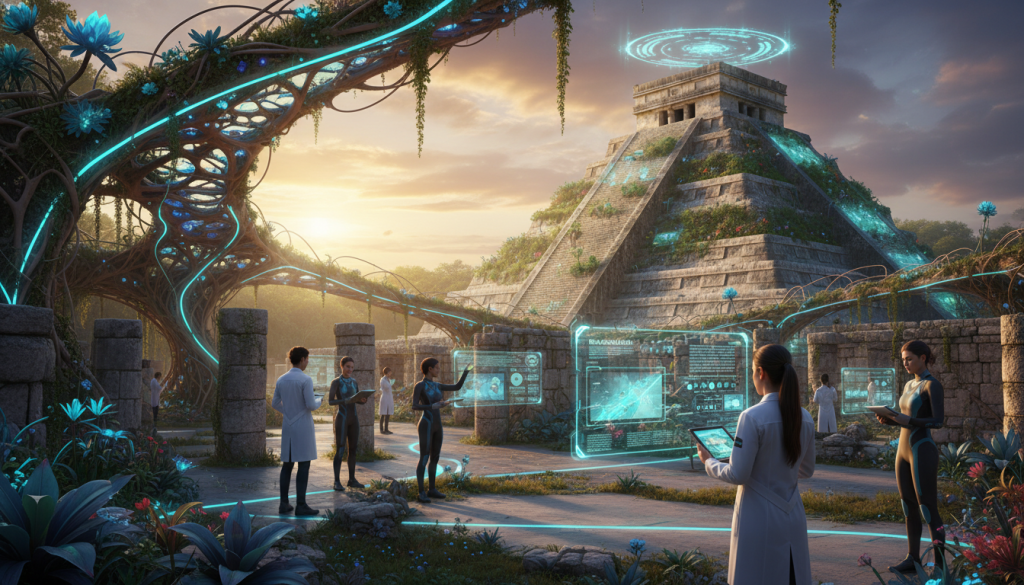
The most debated part of the chichen itza 2050 smart heritage plan isn’t the tech. It’s the bravery to use it. I’ve explored Chichén Itzá in various seasons, talked with archaeologists, and heard from local Maya communities. They share their worries about how to preserve these sites.
The debate isn’t about whether to act. The limestone is crumbling, and doing nothing will lead to destruction.
The real debate is how we act—and if modern biotechnology can respect culture. My exploration of ancient sites has shown me it can.
Indigenous Heritage Does Not Mean Technological Paralysis
Many argue we can’t use advanced tech on sacred Maya sites because it disrespects their traditions. But this argument misses a key point.
The ancient Maya were technological innovators. They built advanced observatories, water systems, and architecture that still amaze us today. Using outdated methods to preserve their monuments doesn’t honor their legacy. It diminishes it.
True respect means ensuring these structures last for future generations. Digital preservation ancient maya sites initiatives offer tools the original builders would have loved.
I’ve talked to Maya descendants who work as site guides and historians. They’re not worried about the preservation method. They want to know if their ancestors’ achievements will last.
Technology doesn’t erase culture. Inaction does. When we let preventable damage happen, we show disrespect.
The Ethical Superiority of Organic Over Synthetic Intervention
The chichen itza 2050 smart heritage approach is fascinating. Not all interventions are equal, and the choice between organic and synthetic methods is crucial.
Chemical sealants and synthetic resins create artificial barriers that trap moisture and speed up decay. I’ve seen how these methods from the 1970s and 1980s actually accelerated damage.
Biomineralization using bacteria is different. It uses microorganisms that mimic the natural calcium carbonate deposition that formed the limestone.
We’re not adding foreign substances. We’re enhancing natural processes that already occur in the stone. The bacteria strengthen the stone from within, working with it, not against it.
This approach matters culturally and scientifically. The Maya saw themselves as part of natural cycles, not separate from them. Using biological processes to preserve their monuments aligns with their worldview better than modern plastics.
Organic consolidants respect the stone and the Maya’s original construction philosophy. This is not just good science—it’s ethical preservation.
Space-Age Environmental Defense as Cultural Respect
The most advanced part of preserving ancient Maya sites involves real-time environmental monitoring. It sounds like science fiction. Sensors track microclimatic changes, satellites predict rainfall, and drones detect erosion invisible to us.
Some see this high-tech surveillance as excessive or invasive. I see it as the ultimate cultural respect.
These monuments survived for a millennium thanks to favorable conditions and luck. Climate change has changed that. The chichen itza 2050 smart heritage framework recognizes that preservation now requires prediction.
Environmental monitoring lets us anticipate threats before they cause damage. We can adjust protective measures based on real data, not guesses. This proactive approach shows more respect than waiting for disasters.
I think about the generations who will visit Chichén Itzá in the future. They won’t care about the preservation method. They’ll only know if we did enough to preserve what matters.
Cultural respect isn’t about sticking to old methods for their own sake. It’s about ensuring long-term survival over short-term comfort. The Maya built for eternity, and our preservation methods should match that ambition.
Space-age environmental defense systems give these ancient structures their best chance at lasting forever. That’s respect. Everything else is just nostalgia dressed up as tradition.
The Tren Maya Sustainable Transit Matrix: Infrastructure as Preservation Strategy
I’ve seen tour buses damage ancient sites for years. The vibrations and fumes harm the ground and stones. This damage is slow but real.
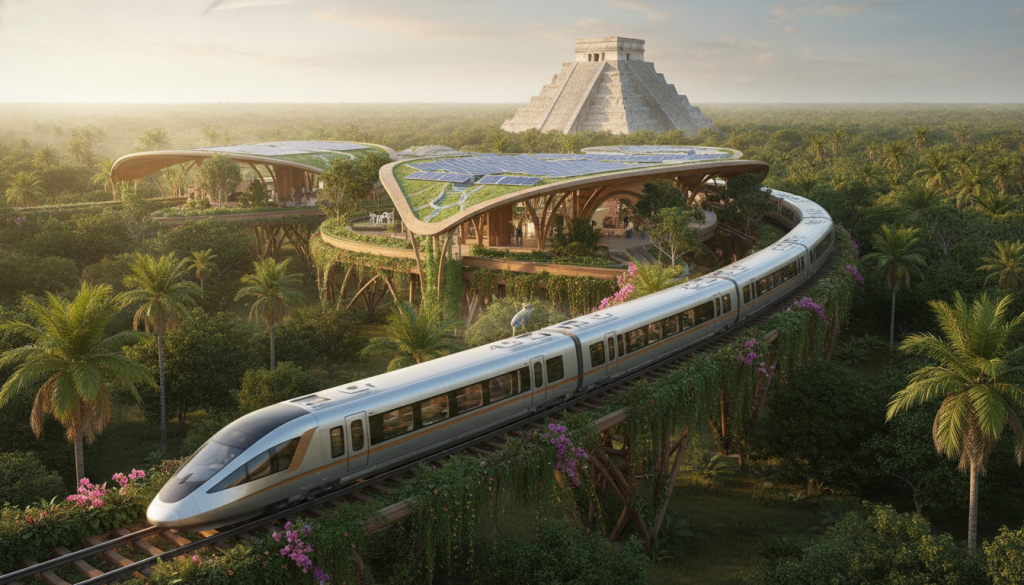
By 2050, the Tren Maya will be key to saving Chichén Itzá. It’s not just about being green. It’s about stopping damage that old ways can’t fix.
The Tren Maya megaproject will protect ancient sites. It’s a zero-emission rail system. It keeps the stones safe from modern visitors.
How Zero-Emission Access Eliminates Structural Vibrations
Diesel buses shake the ground near El Castillo. I didn’t think about this when I visited. But engineers know the harm it causes.
Limestone stones are weak to vibrations. The constant shaking makes them crack. Add pollution from exhaust, and they deteriorate faster.
Electric rail solves both problems. The Tren Maya runs on clean energy. It doesn’t pollute and shakes the ground less than buses.
Visitors drop off two kilometers from the site. Then, electric shuttles take them closer. This reduces vibrations even more.
Within a decade, the Tren Maya makes a big difference. Vibration and pollution drop a lot. This helps the site last longer.
Strictly Regulated Visitor Flow: Necessary Control or Overreach
Visitor limits are hard for me to accept. I love exploring freely. But I see the damage from too many visitors.
Too many people harm the site. Soil erosion and worn-out paths are just the start. It’s a big problem.
The Tren Maya controls visitor numbers. It uses advanced systems to manage visitors. This keeps the site safe.
Is this too much control? Some say it limits access. But without it, the site might not last.
| Transit Method | Daily Vibration Events | Air Pollutants (μg/m³) | Visitor Control | Long-Term Structural Impact |
|---|---|---|---|---|
| Traditional Tour Buses | 340-420 | 85-120 | Minimal | Severe deterioration |
| Hybrid Shuttle System | 180-240 | 35-55 | Moderate | Continued degradation |
| Zero-Emission Rail Network | 15-30 | 0-5 | Comprehensive | Stabilized preservation |
| Full Access Restriction | 0-5 | 0 | Complete | Maximum protection |
I see visitor limits as a must, not a restriction. Without them, the site might not survive.
Smart scheduling makes visits better. It reduces crowds and improves the experience. Order is better than chaos at sites.
Why the Mature Tren Maya Network Is Non-Negotiable by 2050
Without the Tren Maya, other efforts fail. Bio-mineralizing bacteria and drones can’t save the site from millions of visitors.
The Tren Maya is like a heart for Chichén Itzá. It doesn’t just reduce harm. It makes other preservation efforts work.
By 2050, the Tren Maya will be fully ready. It will connect cities with fast trains. It will manage visitors well.
The network also helps in emergencies. Scientists can quickly get to the site. It’s a big help.
Critics will see the Tren Maya’s value by mid-century. It will be seen as part of the landscape, like ancient roads.
I see this as a necessary step, not a restriction. It’s about keeping the site open for future generations.
The Tren Maya is a deal with the future. We limit freedom now for our grandchildren to see these pyramids. It’s worth it.
Gran Museo de Chichen Itza: The Research Lab Integration That Changes Everything

Imagine the gran museo de chichen itza in 30 years. It’s a place where ancient history meets modern science. This isn’t just a museum with artifacts. It’s a command center for preserving ancient sites, watching over every stone and atmosphere change.
The Tren Maya network powers this research center all day, every day. Scientists and conservators work together. They analyze data from hundreds of sensors in the archaeological zone.
This vision changes how we preserve ancient sites. The Gran Museo acts as the brain, protecting the ancient structures with care.
Seamless Digital Preservation and Physical Site Management
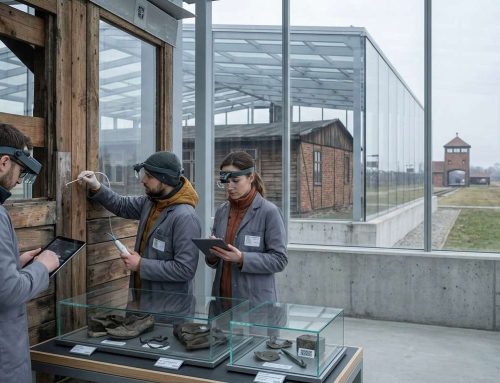
The most exciting part is how digital preservation ancient maya sites meets hands-on conservation. High-resolution 3D scanning creates detailed digital models of structures. These models aren’t just archives—they update as conditions change.
Conservators can spot erosion early. They use data to recommend treatments. For example, if El Castillo’s northwestern corner starts eroding, they know what to do.
Both digital and physical work are connected. Treatments on-site are logged instantly. This creates a complete history of preservation efforts.
This connection is powerful. Researchers at the gran museo de chichen itza use both digital and physical methods together.
They also use digital models to predict future damage. This allows them to take preventive measures before damage occurs.
Real-Time Atmospheric and Microbial Monitoring
An invisible network of sensors tracks conditions at the site. Humidity, temperature, pollution, and microbial activity are monitored constantly.
This monitoring reveals patterns not seen before. It shows how humidity and wind patterns affect the site. This knowledge helps prevent damage.
The technology also tracks air quality closely. It measures pollution from highways, chemicals, and volcanic ash. Each pollutant affects the stone differently, and the system calculates the impact in real time.
I’m fascinated by the microbial monitoring. Sensors can identify specific bacteria attacking the stone. This helps prevent damage.
The data drives immediate preservation decisions. Automated systems can protect the site during storms or alert conservators when action is needed.
| Monitoring System | Data Collected | Response Trigger | Preservation Action |
|---|---|---|---|
| Atmospheric Sensors | Humidity, temperature, pollution levels | Humidity >75% for 6+ hours | Deploy biomineralization barriers |
| Microbial Detectors | Bacterial species, population density | Destructive bacteria detected | Apply targeted bacterial treatments |
| Structural Monitors | Vibration, settlement, stress points | Unusual vibration patterns | Immediate structural assessment |
| Digital Scanners | Surface erosion, color changes | 0.5mm+ deterioration monthly | Consolidant application protocols |
High-Tech Labs as Guardians of Ancient Maya Sites
These high-tech labs are not separate from the ancient structures. They are the guardians that make survival possible. The research facility at the gran museo de chichen itza is a 24/7 protection system.
Inside these labs, teams work together in new ways. Microbiologists, materials scientists, and climate specialists collaborate. They use data to identify trends and predict future damage.
This collaboration goes beyond the museum. Researchers share findings with teams at other sites. This creates a network of protected sites across the Maya world.
This is where technology and tradition come together. The labs honor ancient heritage through unprecedented protection. Every sensor, database, and research project aims to preserve these structures for future generations.
The gran museo de chichen itza becomes more than a museum or research center. It becomes the heart of a heritage protection system. It pumps life-saving interventions throughout the archaeological zone whenever threats emerge.
This integration between science and architecture is our best hope. Without these high-tech guardians, the structures won’t survive to 2050.
The Uncomfortable Bargain: What We Sacrifice for Survival
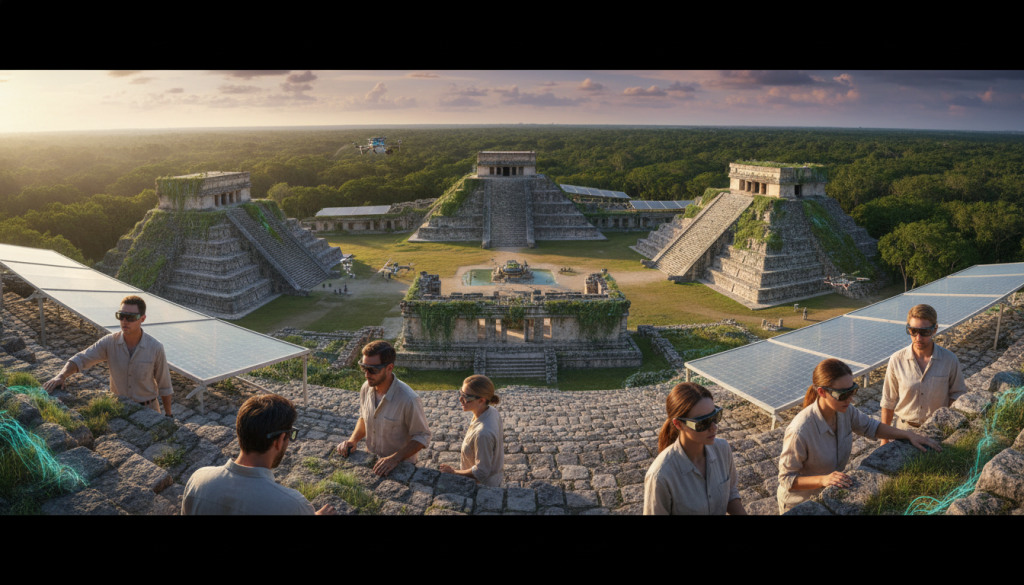
Protecting ancient structures means changing how we see them. I’ve always sought real, unfiltered experiences. But, watching ruins crumble without protection has shown me the need for change.
The climate resilient archaeological preservation at Chichén Itzá 2050 asks for sacrifices. These aren’t just ideas; they’re real changes that affect our visits.
I want to be honest about what we’re giving up. But I also see why these sacrifices are necessary.
Accepting Biological Modification of Sacred Structures
Introducing bacteria onto ancient stones is a big step. It’s a fundamental biological modification of structures that have lasted centuries.
These aren’t just old buildings. They’re sacred spaces for Maya communities and important for all of humanity. Bio-mineralizing coatings change the stones at a microscopic level.
Yes, the bacteria create limestone that’s the same as the original. Yes, it’s like natural geological formation. But we’re still changing these structures.
This raises big ethical questions. Are we preserving or creating replicas? Where’s the line between conservation and modification?
I don’t have easy answers. But we must act to protect these structures. Climate threats won’t wait for us to decide.
The Maya builders used organic materials. Maybe introducing bacterial restoration is more true to their spirit than strict preservation.
Tourism Restrictions and the Loss of Unrestricted Access
This change affects me personally. I value freedom and spontaneity in travel. But Chichén Itzá 2050 will have strict rules.
I remember when you could climb El Castillo. You could touch the stones and feel history. Those days are gone.
The mature preservation system will have visitor caps and schedules. You’ll need reservations and guided tours. Some areas will be off-limits.
Restrictions are needed to protect the site. Human foot traffic causes damage. The limestone is vulnerable to erosion.
I hate this change. But I’ve seen sites loved to death. Without restrictions, they suffer irreversible damage.
The Tren Maya network brings more visitors. Climate resilient preservation manages human impact in a world of mass tourism.
Would I rather have free access to ruins that won’t last, or restricted access to preserved structures for my grandchildren? The choice is hard, but clear.
Why the Alternative—Total Ruin—Is Unacceptable
I’ve seen sites without protection. The loss is absolute and can’t be undone. It haunts me.
In Afghanistan, I saw the empty niches where the Bamiyan Buddhas once stood. In Syria, I visited Palmyra before it was destroyed. In Southeast Asia, temples fell due to neglect.
These losses are real. Every year we delay, Chichén Itzá gets closer to the same fate.
The limestone biodeterioration in the Yucatán won’t wait. Climate change won’t pause. The threats are real and growing.
We’re accepting changes to preserve Chichén Itzá. We’re limiting tourism to protect it. These sacrifices are real and hard.
But losing Chichén Itzá to neglect is unacceptable. I’d rather have a preserved site with restrictions than ruins that are gone.
The bargain of climate resilient preservation is tough. We give up some freedom today for future generations. Perfect preservation is a fantasy in today’s climate.
I don’t expect everyone to agree. I’m not comfortable with these choices myself. But the alternative is total loss. That’s a sacrifice I’m not willing to make.
Appreciate Chichen Itza
I’ve walked among ruins of civilizations that didn’t survive. Standing before El Castillo, I refuse to let that happen here.
The chichen itza 2050 smart heritage vision I’ve outlined isn’t science fiction. It’s a practical roadmap. It combines cutting-edge technology with deep respect for ancient stones. When I imagine travelers in 2050, I see them encountering structures protected by biomineralization stone restoration.
This future requires trade-offs. Managed access feels restrictive to someone who values freedom of exploration. Bacterial coatings on sacred structures make some people uncomfortable. The Tren Maya network demands infrastructure investment that seems enormous today.
But I’ve seen what happens when we choose inaction. Climate deterioration doesn’t wait for perfect solutions or comfortable compromises.
The preservation model at Chichén Itzá could protect threatened heritage sites across the globe. Smart monitoring systems, organic restoration methods, and zero-emission transit create a template for survival in our changing world.
Future explorers deserve the chance to stand where I’ve stood. They deserve to feel the weight of history beneath their feet and the wonder of human achievement before their eyes. Protecting that experience means embracing solutions our ancestors never imagined—and accepting that sometimes, saving the past requires building a radically different future.



Leave A Comment