
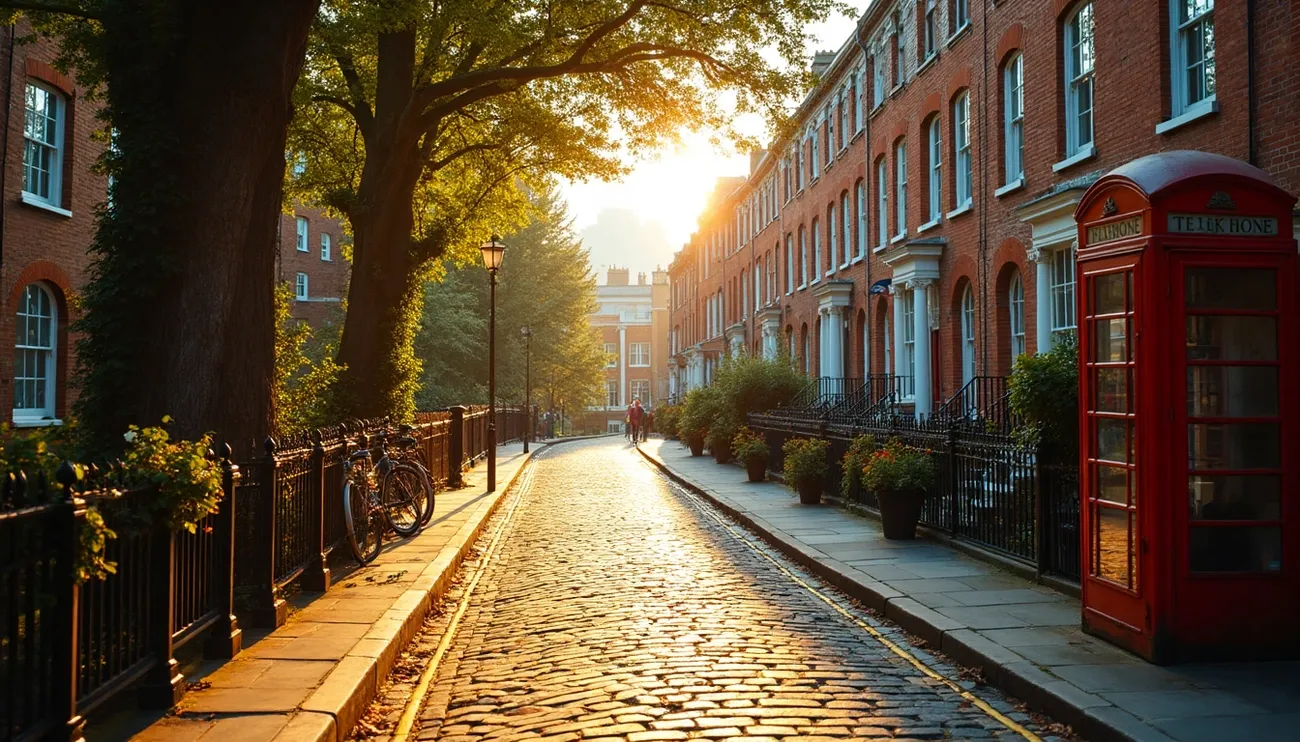
London stretches way beyond the famous Square Mile. Tourists usually flock to Westminster and central attractions, but London has 32 distinct boroughs plus the City of London – a historic district that traces its roots to Roman times in 47 AD.
The lesser-known parts of London buzz with life and character. The City of London boasts 113 scenic trails that adventurous visitors can explore. Richmond upon Thames stands unique as all but one of these boroughs cross the Thames River, with its 38 scenic trails and attractions like Hampton Court Palace. Nature enthusiasts will find Islington and Kingston upon Thames particularly appealing, with their 16 and 23 scenic routes. These numbers barely scratch the surface of London’s cultural depth, from Newham’s multicultural communities to the historic boroughs that shape London’s identity.
Pinner

Image Source: Harrow Online
Pinner, a charming district in northwest London, remains one of the city’s best-kept secrets. This historic settlement sits approximately 12 miles from Charing Cross and gives visitors a rare peek into medieval England that few tourists get to experience.
Pinner History
The story of Pinner goes back more than a thousand years. People first recorded it as “Pinnora” in 1231. The name comes from the River Pinn that runs diagonally through the area, plus “ora” which means hill. Yeoman farmers and laborers made up the early population. The area grew into the largest settlement in Harrow Manor, which belonged to the Archbishop of Canterbury.
St. John the Baptist Church became the center of this historic London neighborhood. Built in the 14th century and rededicated in 1321, the church anchored the community. Pinner managed to keep its countryside feel until the Metropolitan Railway arrived in 1885. This development revolutionized the area from farmland into a suburban community.
Pinner Attractions
The Heath Robinson Museum stands out as a must-visit spot, celebrating the famous cartoonist William Heath Robinson. Pinner Memorial Park, once the gardens of West House, draws nature lovers year-round.
History buffs will love the “Floating Coffin” at St. John the Baptist’s churchyard. This unique stone monument holds a coffin suspended in a triangular frame with mysterious words “I byde my time”. The area showcases beautiful historic buildings too. East End Farm Cottage dates back to the late 15th century and the Grade II listed Elm Park Court shows off stunning 1930s Art Deco design.
Pinner Borough
The London Borough of Harrow splits Pinner into two parts: Pinner and Pinner South. Crime rates here stay nowhere near as high as other Greater London areas. Since 2010, Pinner has been part of the Ruislip, Northwood and Pinner parliamentary constituency.
Why Pinner is a Hidden Gem
The annual fair makes Pinner truly special among London neighborhoods. King Edward III granted permission by Royal Charter in 1336 and this tradition lives on today. Beautiful Tudor and Georgian buildings line the streets, creating a village feel right inside London’s borders.
The High Street feels like stepping into a village from the Home Counties, with timber-framed pubs, restaurants and antique shops. Hidden treasures await around every corner. B&K Salt Beef Bar in nearby Hatch End serves amazing food, and Pinner Cricket Club’s homemade roast dinners bring locals together every weekend.
Crystal Palace

Image Source: House & Garden
Crystal Palace takes its name from a magnificent glass structure that once graced its grounds. This historic district stands as one of London’s most important landmarks. The area sits in south London and gives visitors an amazing mix of history, culture and stunning views.
Crystal Palace History
Sir Joseph Paxton designed a remarkable cast iron and plate glass structure for the Great Exhibition of 1851 in Hyde Park. The exhibition drew more than six million visitors during its six-month run. The public wanted to keep this architectural marvel, so eight businessmen bought the structure and moved it to Sydenham Hill in southeast London in 1852. Queen Victoria opened the redesigned Crystal Palace in 1854 at a ceremony with 40,000 guests. The palace became a hub for exhibitions, concerts, football matches and entertainment. The story ended tragically when fire destroyed the Crystal Palace on the night of November 30-December 1, 1936.
Crystal Palace Attractions
Crystal Palace Park now houses several fascinating features. Life-sized dinosaur sculptures from 1854 still amaze visitors after more than 150 years. The Crystal Palace Museum keeps the legacy alive through unique images, scaled models and ceramic displays. Visitors can explore one of Britain’s largest mazes with a 49-meter diameter (Grade II-listed), a beautifully restored Victorian subway and the Crystal Palace Bowl concert platform. Food lovers flock to the weekly market every Sunday to sample award-winning street food.
Crystal Palace Borough
The area spreads across five London boroughs, with Bromley claiming the largest share. Crystal Palace sits at one of London’s highest points, 367 feet above sea level and offers breathtaking views of central London. Getting there takes less than 30 minutes by train from London Bridge.
Why Crystal Palace is a Hidden Gem
Crystal Palace earned the title of London’s Best Place to Live in 2022, yet tourists rarely venture here. The area blends historic charm with modern appeal. The Triangle serves as Crystal Palace’s commercial heart, lined with antique shops, independent bookstores and trendy cafes. Haynes Market runs Friday through Sunday and draws vintage lovers with its mix of collectibles and antiques. The area’s elevated position creates perfect photo opportunities and spectacular views across London.
Muswell Hill

Image Source: Home Made Blog
Muswell Hill sits proudly on one of north London’s highest points. Visitors can enjoy sweeping panoramic views of the capital from this charming village-like neighborhood. The London Borough of Haringey shows proof of well-preserved Edwardian elegance among London’s cities.
Muswell Hill History
The name “Muswell Hill” comes from a natural spring or “Mossy Well” that people believed had miraculous healing powers. The area’s first records date back to the 12th century. It became important after the Bishop of London gave 64 acres to an order of nuns and built a chapel called “Our Lady of Muswell.” Local legend tells us that Scottish King Malcolm IV drank from the well and was cured of his illness. This made it a popular medieval pilgrimage site. The area stayed mostly rural until the late 19th century, with scattered villas and large gardens dotting the landscape. James Edmondson altered the map in 1895-1896. He created the Broadway shopping parades and elegant residential streets that gave this London neighborhood its Edwardian character we see today.
Muswell Hill Attractions
Alexandra Palace (“Ally Pally”) shines as the district’s crown jewel. The palace opened in 1873 but fire destroyed it just 16 days later. The rebuilt palace has hosted many historic events, from the world’s first television broadcast in 1936 to today’s concerts. Alexandra Park spreads across 196 acres around it, with boating lakes and amazing city views. The Parkland Walk runs along an old railway line and has become London’s longest nature reserve. The Broadway features independent shops in beautiful Edwardian facades. Music fans know Muswell Hill as The Kinks’ childhood home. The band paid tribute to their roots in their album “Muswell Hillbillies.”
Muswell Hill Borough
The area lies between Highgate, East Finchley, and Crouch End, mostly in Haringey with some parts reaching into Barnet. The neighborhood’s charm comes partly from its lack of direct tube connections. Residents use nearby stations and bus routes to get around. In spite of that, this transport quirk has helped keep its unique character intact.
Why Muswell Hill is a Hidden Gem
People often name Muswell Hill among London’s best places to live. The area offers a genuine village feel just miles from central London. Its conservation status protects the architectural beauty, creating an Edwardian London time capsule. Independent shops thrive here with few chain stores around, which promotes a strong community spirit. Visitors can find a real piece of London life that tourist guides rarely mention.
Blackheath

Image Source: Greenwich
Blackheath’s rebellious history spans centuries, making it one of London’s most fascinating neighborhoods. This vast green space sits between two boroughs and combines rich historical importance with charming village character.
Blackheath History
Records from 1166 first mentioned Blackheath as “Blachehedfeld,” which meant “dark or black heath field.” Many people wrongly think the name comes from Black Death burial grounds. The heath has seen its share of major historical events. Wat Tyler gathered 100,000 protesters here in 1381 to fight against poll taxes during the Peasants’ Revolt. Jack Cade brought together 20,000 men in 1450 to stand up against Henry VI’s taxes. The heath saw just one real battle in 1497, when Henry VII’s army defeated Cornish rebels.
The heath wasn’t just about rebellions. Henry IV welcomed the Emperor of Byzantium here in 1400. In 1415, 400 leading citizens dressed in scarlet greeted Henry V after his victory at Agincourt. Henry VIII later built magnificent golden pavilions in 1540 to meet Anne of Cleves.
Blackheath Attractions
At 85.58 hectares (211.5 acres), the heath is one of London’s biggest protected common lands. Visitors can explore:
- All Saints Church – A Grade II listed building from 1857 that stands at the heart of the common
- Ranger’s House – An elegant Georgian villa that houses the Wernher Collection of art
- Blackheath Halls – London’s cultural venue since 1895
- Sunday Farmers’ Market – A weekly gathering of seasonal and artisanal food vendors
Blackheath Borough
The Royal Borough of Greenwich and London Borough of Lewisham share Blackheath. Located 1.5 miles south of Greenwich and 6.4 miles southeast of Charing Cross, its high position offers amazing views of London.
Why Blackheath is a Hidden Gem
Estate agents often talk about Blackheath’s “village-like feel” close to central London. Tranquil Vale, the main street, features independent shops, family businesses and cozy cafes. Tree-lined streets, historic buildings, and active community groups create a neighborhood that feels worlds away from city life. These qualities make Blackheath a true London gem.
Chislehurst

Image Source: Tripadvisor
Chislehurst’s name comes from Saxon words “cisel” (gravel) and “hyrst” (wooded hill), perfectly describing this gravelly woodland area in southeast London. This elegant London district combines countryside charm with rich history and gives visitors something completely different from typical London attractions.
Chislehurst History
A charter from 973 first mentioned Chislehurst, which grew slowly because its soil wasn’t good for farming. The Walsingham family held this royal manor through medieval times. Everything changed when the railway arrived in 1865. Emperor Napoleon III chose Camden Place as his home in 1871, making Chislehurst a popular spot for London’s wealthy residents. The Emperor’s death there in 1873 left a lasting French influence that you can still see in street names like Imperial Way. The next fifty years saw a building boom with beautiful Victorian mansions and Arts and Crafts style houses popping up everywhere.
Chislehurst Attractions
Chislehurst Caves stands out as the town’s crown jewel – a 22-mile network of man-made tunnels running beneath the town. These chalk and flint mines later became:
- Storage for munitions during World War I
- A safe haven for over 15,000 people during the Blitz
- A music venue where Pink Floyd, Jimi Hendrix, and David Bowie performed
Chislehurst Commons includes 180 acres of protected woodland, grassland, heathland and ponds. Nature lovers will enjoy Scadbury Park Nature Reserve’s peaceful woodland. Camden Place, now Chislehurst Golf Club, still shows off its historic French interiors.
Chislehurst Borough
The London Borough of Bromley houses Chislehurst, just a 30-minute train ride from central London. This mostly residential area has kept its character through conservation efforts. Since 1971, 596.4 hectares have become protected conservation areas. The village atmosphere still thrives, especially around the common.
Why Chislehurst is a Hidden Gem
Chislehurst’s special character comes from its unique mix of buildings and commons at its heart – you won’t find anything like it anywhere else in Greater London. The area stays popular with wealthy residents who want quick city access without giving up countryside peace. Visitors can explore both history and nature, all within easy reach of central London.
Crouch End

Image Source: Wikipedia, the free encyclopedia
Crouch End stands out as a creative enclave in London with its rich artistic heritage and village-like charm. Musicians, writers, and performers flock to this captivating district’s leafy streets. The area sits at the intersection of several ancient routes and has built a distinctive community just 4.6 miles north of Charing Cross.
Crouch End History
The area’s name comes from the Latin word “crux,” which refers to a wooden cross that once marked the spot where the Clock Tower now stands. Records first mention it as “Crouche End” in 1465. The area kept its rural character until the 1880s. Everything changed when railway stations opened on Crouch Hill and Crouch End Hill in 1867-68. This sparked extensive Victorian and Edwardian development. The Imperial Property Development Company bought large plots of land and sold them to builders who created the distinctive architecture we see today.
Crouch End Attractions
The neighborhood’s most recognizable landmark is its Clock Tower, designed by Frederick Knight and built in 1895. The modernistic Hornsey Town Hall (1933-35), a Grade II* listed building, sits nearby and will become a hotel and arts center by 2024. The Crouch End Hippodrome started as the Queen’s Opera House in 1897 and later became a popular music hall in 1907. Now it serves as a gym. Movie lovers can enjoy screenings at both the Arthouse and Picturehouse.
Crouch End Borough
The London Borough of Haringey has included Crouch End since 1965. Harringay, Hornsey, Muswell Hill, Wood Green, Stroud Green, Archway and Highgate surround the area. The absence of a tube station has helped Crouch End keep its unique character.
Why Crouch End is a Hidden Gem
Crouch End’s creative spirit shines through its residents—about 40% work in creative industries. The area has deep connections to famous bands like the Kinks, Pink Floyd and Eurythmics. The Church Studios has hosted recording sessions that brought many celebrated artists here. Time Out calls it “a little urban village”, and rightfully so. Independent shops, cafes, and green spaces give visitors an authentic London experience away from the usual tourist spots.
Walthamstow Village

Image Source: Time Out
Walthamstow Village sits quietly in East London, engaging visitors with its time-capsule charm that stands in stark contrast to London’s typical urban landscape. This oldest part of Walthamstow takes people back in time while providing modern comforts.
Walthamstow Village History
The village, once called Church End, served as Walthamstow’s administrative hub before becoming the scenic retreat we see today. The London Borough of Waltham Forest designated it as a Conservation Area in 1967 and later added another Conservation Area on nearby Orford Road. St. Mary’s Church stands at its core, dating back to the 12th century and possibly built where an older Saxon church once stood. Church Lane showcases numerous historical monuments and brasses, with the oldest one dating to 1436.
Walthamstow Village Attractions
Several historical buildings make this neighborhood special:
- The Ancient House – a 15th-century timber-framed hall house restored in 1934 and 2002, showing original wattle and daub construction behind glass
- Vestry House Museum – built in 1730 as a workhouse, then became a police station before turning into a museum in 1931
- Monoux and Squires Almshouses – from the 16th and 18th centuries respectively
Orford Road, the old path leading to St. Mary’s, now buzzes with small restaurants, cafés and local shops. Eat 17, named after Walthamstow’s E17 postcode, stands out by using local ingredients and bread from its own bakery.
Walthamstow Village Borough
The London Borough of Waltham Forest houses this gem of a neighborhood. The Sunday Times Best Places to Live guide for 2025 named the broader Walthamstow area London’s best place to live.
Why Walthamstow Village is a Hidden Gem
This unique London neighborhood features a pedestrian street where independent shops sell vintage items, plants and art, creating a distinctly European feel. Beautiful timber-framed buildings from the 12th century add to its unique character. The relaxed atmosphere brings locals together and helps visitors feel part of authentic London life. Walthamstow Village provides an unmatched blend where history and community join together. It offers a perfect escape from central London’s tourist spots while staying available to curious explorers.
Stoke Newington

Image Source: Wikipedia
Stoke Newington in northeast London has come a long way from its post-World War II decline. This vibrant multicultural hub now brings together Muslim, Turkish, Jewish, Irish, Asian and Afro-Caribbean communities. Locals lovingly call it “Stokey,” and the area’s unique character made architectural historian Nikolaus Pevsner question if it was even part of London.
Stoke Newington History
The Domesday Book of 1086 first mentioned this area as Neutone, which was part of the Ossulstone hundred in Middlesex. Quaker and nonconformist families made this place their home during the 17th century. Their numbers grew so much that by the mid-19th century, it became “the largest concentration of Quakers in London“. The neighborhood thrived during Victorian and Edwardian periods until World War II’s Blitz caused significant damage. Recent gentrification and redevelopment have shaped it into the distinctive district we see today.
Stoke Newington Attractions
Abney Park Cemetery ranks among London’s finest Victorian cemeteries. It serves as the final resting place for many 19th-century nonconformist ministers, including William Booth who founded the Salvation Army. Clissold Park delights visitors with its small menagerie, aviary and Clissold Mansion—a Grade II listed building from the 1790s. Church Street keeps its village charm alive with independent shops, pubs, cafes and bars. The locals take pride in this character through their “See you in Stokey” campaign, which started in 2022.
Stoke Newington Borough
The area used to govern itself until 1965, when it joined Hackney and Shoreditch to create the London Borough of Hackney. Stoke Newington Central ward’s 2011 census paints a picture of diversity: 63.1% White, 16.6% Black and 9.9% Asian residents. The religious makeup shows 33.8% Christian, 11.1% Muslim and 3.2% Jewish populations.
Why Stoke Newington is a Hidden Gem
This neighborhood stands out among London’s districts because of its independent spirit. Church Street proves this with its impressive mix of independent businesses—only 10% belong to chains. Visitors get to experience real London neighborhood life instead of typical high street shops. The combination of historic buildings, green spaces and strong community spirit creates what Time Out calls “authentic and creative vibes” in this fascinating part of London.
Sydenham

Image Source: Foxtons
Sydenham’s rise among London districts tells a remarkable story. The area’s medicinal waters once drew royalty to its streets. Today, this vibrant southeast London neighborhood combines rich history with modern appeal in its tree-lined streets.
Sydenham History
The story begins with a small settlement called Shippenham. Here, locals grazed their animals and collected wood from the surrounding forest. The area became famous when London’s elite—including King George III—came to drink Sydenham’s healing spa waters. The area stayed quiet until 1809 when the first canal opened. The railway arrived in 1839. A defining moment came in 1854 when the Crystal Palace moved from Hyde Park to Sydenham. This move turned the area into a fashionable Victorian hotspot. The magnificent glass building, built for the Great Exhibition of 1851, drew crowds until fire destroyed it in 1936.
Sydenham Attractions
Sydenham now boasts beautiful green spaces like Sydenham Wells Park, Mayow Park and Alexandra Recreation Ground. Sydenham Hill Wood stands out as a Local Nature Reserve and part of the ancient Great North Wood. This woodland houses more than 200 species of trees, plants, rare fungi, butterflies and woodland mammals. You can still see pieces of the old Nunhead to Crystal Palace railway here. The area’s cultural scene thrives with the Bridge House Theater and Sydenham Arts Festival. The festival brings music, theater, dance, art and film to life. Food lovers flock to places like Millennium Tandoori, which Evening Standard readers named Britain’s Best Takeaway in 2013.
Sydenham Borough
Most of Sydenham sits within Lewisham borough. The area’s transport links shine with three stations: Sydenham, Sydenham Hill and Lower Sydenham. These offer quick routes to central London. Trains reach London Bridge in 20 minutes. Sydenham Hill connects to Victoria in under 15 minutes. The Overground service now links the area straight to Docklands and Shoreditch.
Why Sydenham is a Hidden Gem
Sydenham creates a perfect balance between suburban peace and city convenience. Tree-lined streets, quality schools, and independent shops make it ideal for anyone who wants London living with a suburban touch. The monthly Sydenham Market brings local traders together. Independent spots like Kirkdale Bookshop host exhibitions and readings regularly. Sydenham gives you a cheaper option than its prominent neighbors while keeping its unique charm.
Sahara Desert tourist attractions.
Barnes

Image Source: Evening Standard
Barnes sits peacefully enclosed by a horseshoe bend of the River Thames, creating an idyllic pocket of tranquility among London’s cities. This picturesque southwest London suburb provides a perfect escape from urban bustle while staying easily accessible to London’s central districts.
Barnes History
The Domesday Book of 1086 first recorded Barnes as “Berne”. King Athelstan gifted the area to St Paul’s Cathedral’s canons around 925. Barnes grew steadily through medieval times and St Mary’s Church became 900 years old between 1100 and 1150. Archbishop Stephen Langton made a distinguished visit in 1215 to reconsecrate the church after sealing Magna Carta. Barnes also became home to prominent historical figures. Elizabeth I’s spymaster Sir Francis Walsingham lived at Barn Elms manor, from where “the order to execute Mary Queen of Scots was dispatched”.
Barnes Attractions
Barnes’ heart lies in its village center, which showcases a charming mix of independent shops, cafes and restaurants in historic buildings. The Bull’s Head pub, 200 years old from the 1800s and one of Britain’s oldest jazz venues, overlooks the Thames. Nature lovers can explore Barnes Common’s 250 acres of woodland, sports fields and wildlife habitats. The London Wetland Center, transformed from four disused Victorian reservoirs, serves as a peaceful sanctuary to otters, water voles and rare birds.
Barnes Borough
The London Borough of Richmond upon Thames includes Barnes, which enjoys semi-rural seclusion while staying connected through Barnes and Barnes Bridge railway stations. Trains reach Waterloo in 22 minutes. London’s oldest riverside housing stands on The Terrace, with construction dating back to 1720.
Why Barnes is a Hidden Gem
Barnes captures a quintessentially English country village atmosphere just six miles from central London. The community comes together regularly to organize duck racing, farmers’ markets and seasonal fairs. A village green with its duck pond stands as the focal point of community life. Local independent food stores, including The Real Cheese Shop and Barnes Fish Shop, help create an authentic neighborhood experience.
Highgate

Image Source: London Perfect
Highgate fascinates visitors with its perfect blend of haunting Victorian splendor and village-like tranquility from one of London’s highest points. This upscale district hugs Hampstead Heath’s eastern side and provides an escape from city life just 4.5 miles north-northwest of Charing Cross.
Highgate History
The name Highgate comes from the tollgate on the main road from London to the north, where this gateway settlement developed. The area remained a distinct village outside London until late Victorian times. Wealthy residents were drawn to this elevated position above the city’s smog. The poet Samuel Taylor Coleridge moved to the area in 1823 to break his opium habit. His home at Moreton House on South Grove became a destination for artists and intellectuals.
Highgate Attractions
Highgate Cemetery stands as the neighborhood’s most famous landmark. This cemetery became part of the “Magnificent Seven” cemeteries around London in 1839 and houses over 170,000 people in 52,000 graves. Victorian architecture creates an atmospheric setting with the Egyptian Avenue and Circle of Lebanon’s impressive Cedar of Lebanon tree. Karl Marx, George Eliot and musician George Michael rest here among others.
Holly Village showcases London’s most stunning group of homes with its Gothic entrance “straight out of a fairy tale.” St. Michael’s Church opened in 1832 and stands higher than any other London church, despite looking much older. Historic pubs like The Flask and The Wrestlers (dating back to 1547) serve drinks in cozy settings. The Wrestlers still performs the bizarre “Swearing on the Horns” ceremony occasionally.
Highgate Borough
The area spans three London boroughs: Camden, Islington, and Haringey. Its position at 98 meters above sea level creates spectacular London views, making it one of the city’s most expensive suburbs.
Why Highgate is a Hidden Gem
Highgate’s charm ended up in its preserved green spaces and historical architecture. Waterlow Park became public property in 1889 and features beautiful gardens, ponds and Lauderdale House, a cultural center from 1582. The area’s literary and scientific heritage lives on through the Highgate Literary & Scientific Institution, established in 1839. This neighborhood gives visitors an authentic taste of London’s past near spectacular natural areas.
Rotherhithe

Image Source: en.wikipedia.org
Rotherhithe stands out as one of London’s hidden treasures with its rich maritime heritage. This Thames-side peninsula offers visitors an amazing mix of nautical history and modern development, yet remains overlooked by many.
Rotherhithe History
The name Rotherhithe comes from Anglo-Saxon Hrȳðer-hȳð, which means “landing-place for cattle.” Records first mentioned it around 1105 as “Rederheia”. The area thrived as a port with Elizabethan shipyards and managed to keep working docks until the 1970s. The 1980s brought major changes that turned old warehouses into homes. Rotherhithe plays a special role in American history – it’s where the Mayflower began its journey in July 1620, carrying the Pilgrim Fathers to America. The ship’s captain, Christopher Jones, passed away soon after coming back in 1621. His unmarked grave lies in St Mary’s Church.
Rotherhithe Attractions
The district showcases several unique landmarks:
- Brunel Museum – Celebrates the groundbreaking Thames Tunnel between Rotherhithe and Wapping, the world’s first underwater tunnel
- St. Mary’s Church – A 12th-century church that stands proud in old Rotherhithe village
- The Mayflower Pub – A historic treasure that claims to be where the Pilgrim Fathers’ ship first moored
- Surrey Docks Farm – A working city farm where visitors can meet goats, sheep, pigs and donkeys for free
- Stave Hill Ecological Park – A nature reserve with diverse grassland, woodland and wetland habitats
Rotherhithe Borough
The London Borough of Southwark includes Rotherhithe as part of its Docklands area. The ‘Canada Water Masterplan’ project will add 3,500 new homes and community spaces. People can easily reach the district through three stations: Rotherhithe, Surrey Quays (both on the London Overground’s Windrush line) and Canada Water (served by both Overground and Jubilee line).
Why Rotherhithe is a Hidden Gem
Rotherhithe’s charm comes from its village-like atmosphere right next to central London. Cobblestone streets and charming historic pubs create a unique character. The area preserves its history through features like the statues of Dr. Alfred and Ada Salter, local heroes who helped improve social welfare in the early 20th century. Visitors looking for real-life London experiences beyond tourist hotspots will find Rotherhithe perfect. It blends maritime heritage with modern comforts in a setting full of character.
Eltham

Image Source: Greenwich
Eltham stands as a remarkable fusion of medieval grandeur and Art Deco elegance, creating a historical contrast rarely seen in London’s districts. This architectural gem sits in southeast London and gives visitors an extraordinary window into both Tudor royal history and 1930s sophistication.
Eltham History
The Domesday Book first mentioned the Eltham estate, which became King Edward II’s property in 1305. The palace grew into one of England’s most beloved royal residences, thanks in part to its vast 1,000-acre deer park. Young Henry VIII spent his childhood here, and the court would celebrate Christmas with grand festivities. The palace’s fortunes declined in the 17th century. Colonel Nathaniel Rich bought it from Parliament in 1651 and tore down many structures. A new chapter began in 1933 when millionaires Stephen and Virginia Courtauld signed a 99-year Crown lease and saved the palace from ruin.
Eltham Attractions
The spectacular Great Hall stands as the last medieval remnant, showcasing Edward IV’s magnificent hammer-beam roof built over five centuries ago. The Courtaulds’ 1930s Art Deco addition has these stunning features:
- A bright entrance hall with its domed roof and walls showcasing decorated wood veneer marquetry
- Peter Malacrida’s dining room design featuring maple veneer walls and an aluminum leaf ceiling
- A luxurious bathroom adorned with gold mosaic and onyx
The grounds stretch across 19 acres of stunning gardens with rock formations, pools, cascades and a moat crossed by London’s oldest working bridge.
Eltham Borough
The Royal Borough of Greenwich houses this gem, which keeps its countryside charm despite its suburban London location. Adult tickets cost £15 while children pay £9, and English Heritage members can visit without charge.
Why Eltham is a Hidden Gem
Eltham’s exceptional blend of architecture sets it apart – its medieval great hall connects to what experts call a “masterpiece of modern design”. The tranquil gardens and woodland create an atmosphere that feels more like countryside than suburban London. This rich tapestry of history, from medieval royalty to 20th-century socialites, makes Eltham a unique London neighborhood experience.
Brockley

Image Source: en.wikipedia.org
Brockley stands out as a cultural gem among London neighborhoods with its thriving arts scene and village-like charm. This southeast London area blends green spaces, community spirit and creative heritage that stems from its past as an agricultural hamlet.
Brockley History
The name Brockley comes from “Broca’s woodland clearing,” which refers to badgers (“broc” in Old English) or possibly “Brook by a wood”. The area started as part of Kent and had a small Premonstratensian monastery built in the late 12th century before moving to Sussex in 1208. Brockley gained fame for its market gardens that produced huge Victoria rhubarb fertilized by “night soil” from London. The post-World War II era saw many houses split up to welcome the African-Caribbean community in the 1950s and 1960s. Artists from nearby Goldsmiths College started moving into unused houses in the mid-1960s, which began the area’s transformation. The Brockley Society formed in 1974, the same year North Brockley became a Conservation Area to protect its unique character.
Brockley Attractions
The Rivoli Ballroom, a Grade II listed building, transformed from a cinema to a dance hall in 1951. Its distinctive interior has drawn filmmakers and hosted shows by The White Stripes and Florence + the Machine. Nature lovers can explore Brockley and Ladywell Cemeteries (opened 1858), which now serve as a nature reserve. Hilly Fields park survived development plans in the 1880s and 1890s thanks to the Commons Preservation Society and now hosts the popular Hilly Fields Midsummer Fayre. Saturday brings the award-winning Brockley Market alive with seasonal produce and quality food.
Brockley Borough
Brockley sits in the London Borough of Lewisham between New Cross, Lewisham, and East Dulwich. The neighborhood keeps its community spirit away from central London’s rush. House prices average £640,108—less than London’s typical £701,822—making it relatively affordable.
Why Brockley is a Hidden Gem
Brockley’s artistic soul sets it apart. Street art brightens the area, while the annual Brockley Max performing arts festival and Brockley Street Art Festival (since 2015) showcase local talent. Local businesses thrive here, including the highly-rated Brockley’s Rock fish and chip shop. The Overground connection added in 2010 makes getting here easy while the area keeps its unique flavor.
Tooting

Image Source: CN Traveler
Tooting has earned its reputation as one of south London’s most authentic neighborhoods thanks to its vibrant multicultural character. The district offers visitors a unique experience away from regular tourist spots. Lonely Planet recognized Tooting’s distinctive appeal by naming it one of the world’s “coolest” neighborhoods in 2017.
Tooting History
The settlement of Tooting dates back to pre-Saxon times, with its name rooted in Anglo-Saxon origins. The name likely refers to the people of Tota, possibly a local chieftain or comes from an old meaning of the verb to tout, “to look out”. The Romans built Stane Street connecting London to Chichester through Tooting, and today’s High Street follows this ancient path. The Domesday Book of 1086 first recorded the area as Totinges. Haimo the Sheriff held Tooting Graveney from Chertsey Abbey, while the Abbey of Hellouin Bec in Normandy owned Tooting Bec.
Tooting Attractions
Two historic markets stand at Tooting’s core – Tooting Market and Broadway Market. These bustling spaces house street food vendors, independent businesses and specialty shops. Tooting Bec Common welcomes visitors with its beautiful green space, tennis courts, café and duck pond. Next door, Tooting Bec Lido holds the title of UK’s largest freshwater swimming pool at 100 yards long. Food lovers head to the area’s South Asian restaurants along the “land of the curry mile,” where spots like Lahore Karahi serve authentic Pakistani dishes. The stunning former Granada cinema, now a Gala Bingo hall, remains an architectural gem that once hosted Frank Sinatra, The Beatles and The Rolling Stones.
Tooting Borough
The London Borough of Wandsworth includes Tooting, which boasts excellent transport links. Two Northern Line tube stations (Tooting Bec and Tooting Broadway), an overground railway station and several bus routes serve the area. Recent years have brought changes through gentrification, yet Tooting keeps its unique character.
Why Tooting is a Hidden Gem
Tooting’s cultural diversity makes it special. The 2011 census showed a population that is 47% White or White British, 28.8% Asian or Asian British and 15.5% Black or Black British. This rich mix of cultures creates an amazing food scene with South Indian dosas, Pakistani curries, and award-winning fish and chips. Local coffee shops like Juliet’s and MUD give people alternatives to chain stores. The neighborhood blends its heritage, including a 145-million-year-old fossilized tree trunk, with modern attractions like The Big London Bake baking competition.
Comparison Table
| Location | Borough | Historical Significance | Main Attractions | Notable Features | Transport/Distance |
|---|---|---|---|---|---|
| Pinner | Harrow | Records date back to 1231; largest settlement in Manor of Harrow | Heath Robinson Museum, St. John the Baptist Church, Pinner Memorial Park | Annual fair since 1336; Tudor and Georgian architecture | 12 miles from Charing Cross |
| Crystal Palace | Bromley | Site of Great Exhibition structure (1851-1936) | Crystal Palace Park, Dinosaur sculptures, Victorian maze | London’s highest points at 367 feet | 30 mins from London Bridge |
| Muswell Hill | Haringey | Medieval pilgrimage site with healing well | Alexandra Palace, Alexandra Park, Parkland Walk | Edwardian architecture stands preserved; city views stretch panoramically | No direct tube connection |
| Blackheath | Greenwich/Lewisham | Royal ceremonies and historical rebellions took place here | All Saints Church, Ranger’s House, Blackheath Halls | Protected commons span 85.58 hectares | 1.5 miles from Greenwich |
| Chislehurst | Bromley | Mentioned first in 973; Napoleon III chose it for exile | Chislehurst Caves, Scadbury Park, Camden Place | Man-made tunnels stretch 22 miles | 30 mins from central London |
| Crouch End | Haringey | Latin word ‘crux’ (cross) gives its name | Clock Tower, Hornsey Town Hall, Church Studios | Creative industries employ 40% residents | 4.6 miles from Charing Cross |
| Walthamstow Village | Waltham Forest | Walthamstow’s oldest section; Conservation Area since 1967 | Ancient House, Vestry House Museum, St. Mary’s Church | Timber-framed buildings from 15th century | Not mentioned |
| Stoke Newington | Hackney | 19th century London’s largest Quaker community | Abney Park Cemetery, Clissold Park | Church Street features only 10% chain stores | Not mentioned |
| Sydenham | Lewisham | King George III visited this former spa town | Sydenham Wells Park, Sydenham Hill Wood | Ancient Great North Wood remains here | 20 mins to London Bridge |
| Barnes | Richmond upon Thames | Domesday Book (1086) mentions this area | London Wetland Center, The Bull’s Head pub | Duck pond adorns village green | 22 mins to Waterloo |
| Highgate | Camden/Islington/Haringey | Historic tollgate marked this settlement | Highgate Cemetery, Holly Village, St. Michael’s Church | Elevation reaches 98 meters | 4.5 miles from Charing Cross |
| Rotherhithe | Southwark | Mayflower departed from here (1620) | Brunel Museum, St. Mary’s Church, Surrey Docks Farm | Riverside location showcases maritime heritage | Three stations serve area |
| Eltham | Greenwich | Henry VIII spent childhood in medieval royal palace | Eltham Palace, Great Hall, 19 acres of gardens | Medieval meets Art Deco architecture | Not mentioned |
| Brockley | Lewisham | Market gardens once flourished here | Rivoli Ballroom, Hilly Fields park, Brockley Market | Artists thrive here; Conservation Area since 1974 | Not mentioned |
| Tooting | Wandsworth | Roman road hosted pre-Saxon settlement | Tooting Markets, Tooting Bec Lido, Tooting Bec Common | Curry mile fame; multicultural food scene thrives | Two Northern Line stations |
Enjoy the Cities in London
London goes way beyond Westminster and central tourist spots. These 15 hidden neighborhoods show a richer and more authentic side of this amazing city. Each area has its own unique character – from Pinner’s medieval charm to Crystal Palace’s Victorian heritage and Tooting’s multicultural energy.
These quiet spots give you a great chance to avoid tourist crowds and find London’s true spirit. History meets modern life here to create experiences you won’t get anywhere else. The Gothic beauty of Highgate Cemetery stands in stark contrast to Walthamstow Village’s timber-framed cottages. Chislehurst Caves offer underground adventures right beneath the suburban streets.
Getting to these hidden spots is easy despite their quiet nature. Most areas are just 20-30 minutes from central London, yet they feel worlds apart. Barnes is a perfect example – it’s a classic English village with a duck pond and local shops, just minutes from Waterloo Station.
Food lovers should head to Tooting’s famous curry houses or Sydenham’s award-winning restaurants. Crouch End’s creative community and Brockley’s street art scene are perfect for art enthusiasts. History fans can trace royal footsteps through Eltham Palace or follow the Mayflower’s path from Rotherhithe.
London’s boroughs hold countless treasures for curious travelers who explore beyond the usual spots. Anyone looking for real London experiences should put these 15 neighborhoods at the top of their list. Their unique buildings, green spaces, local businesses and strong community spirit show London as locals know it – diverse, rich in history and always fascinating.
FAQs
Q1. What are some hidden gems to visit in London away from typical tourist spots?
Some lesser-known areas worth exploring include Highgate West Cemetery for its spectacular Victorian architecture, the riverside walk between Richmond and Teddington for scenic views and the Horniman Museum in south London for its ethnographic collection and beautiful gardens.
Q2. Which London neighborhood is known for its artistic community?
Crouch End stands out for its thriving arts scene, with approximately 40% of residents working in creative industries. It has connections to famous bands and offers a village-like atmosphere with independent shops and cafes.
Q3. Where can I experience London’s multicultural food scene?
Tooting is renowned for its diverse culinary offerings, particularly its “land of the curry mile” featuring authentic South Asian cuisine. The area’s two historic markets also showcase a variety of street food vendors and specialty shops.
Q4. Is there a London neighborhood that feels like a countryside village?
Barnes, located in southwest London, maintains a quintessential English country village atmosphere despite being just six miles from central London. It features a village green with a duck pond and numerous independent food stores.
Q5. Which area in London has an interesting blend of historical periods?
Eltham offers a unique juxtaposition of medieval grandeur and Art Deco elegance. It features a medieval Great Hall connected to a 1930s extension, providing visitors with a glimpse into both Tudor history and 20th-century sophistication.


Leave A Comment