
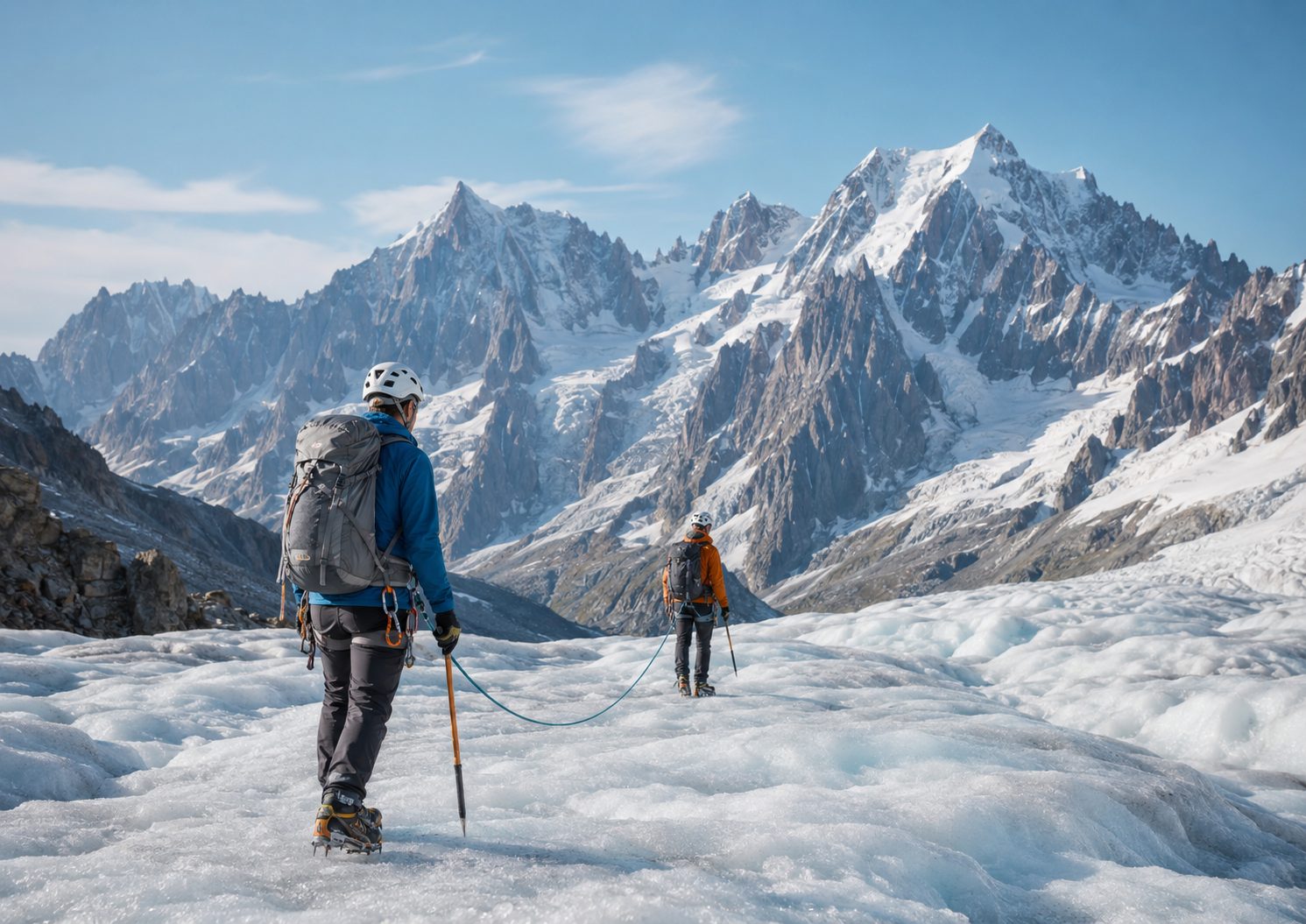
Glacier climbing in Chamonix starts where ordinary mountain sightseeing stops. From the valley, the ice can look still and decorative. Up close, it is textured, shifting, and requires constant small decisions. A first-time alpine traveler is not just walking toward a view. They are learning how a living mountain surface feels.
The Chamonix valley sits beneath the Mont Blanc massif, a landscape where hiking routes, glaciers, cable cars, and technical climbing routes all share the same area. That overlap is what makes the destination so exciting and so easy to misunderstand. A walker researching the Tour du Mont Blanc itinerary may already expect altitude, weather changes, and long days. Glacier terrain adds another layer. A Journal of Alpine Research overview of glacier tourism in the Alps notes how glaciers have long shaped visitor experiences, while also being dynamic places affected by environmental change. That is the key insight for travelers: a glacier is not a fixed attraction. It is terrain that must be read.
What Glacier Climbing Looks Like in Chamonix
A helpful way to understand this difference is to look at people who work in the alpine world every day. Team Ignition’s feature on climbing expert Fay Manners describes a British alpinist based in the Chamonix region of France, close to Mont Blanc and surrounded by terrain suited to technical climbing and steep ski mountaineering. That context matters because glacier climbing requires footwork, rope awareness, balance, patience, and the ability to stay attentive to the surface under you.
A beginner may first notice the equipment: crampons biting into ice, an axe placed with care, a harness, a helmet, and a rope managed by someone experienced. The deeper lesson is quieter. You learn that every movement has a reason. You step because the ice allows it, not because the view invites it. In that sense, climbing expert Fay Manners gives first-time alpine travelers a clear human reference for moving from admiration to understanding.
To see that idea in motion, the Team Ignition Show episode “I Learned How to Climb a Glacier” follows Selema Masekela into the French Alps with Fay as she explains the foundations of alpinism and introduces him to ice climbing in the Chamonix valley.
Curiosity becomes concentration. The ice axe stops looking like a prop and becomes a point of contact. Where you place your feet becomes central to staying composed. That is often the first surprise of glacier and ice climbing: confidence comes from technique, guidance, and calm repetition, rather than raw strength.
The Traveler’s Shift from Trail to Ice
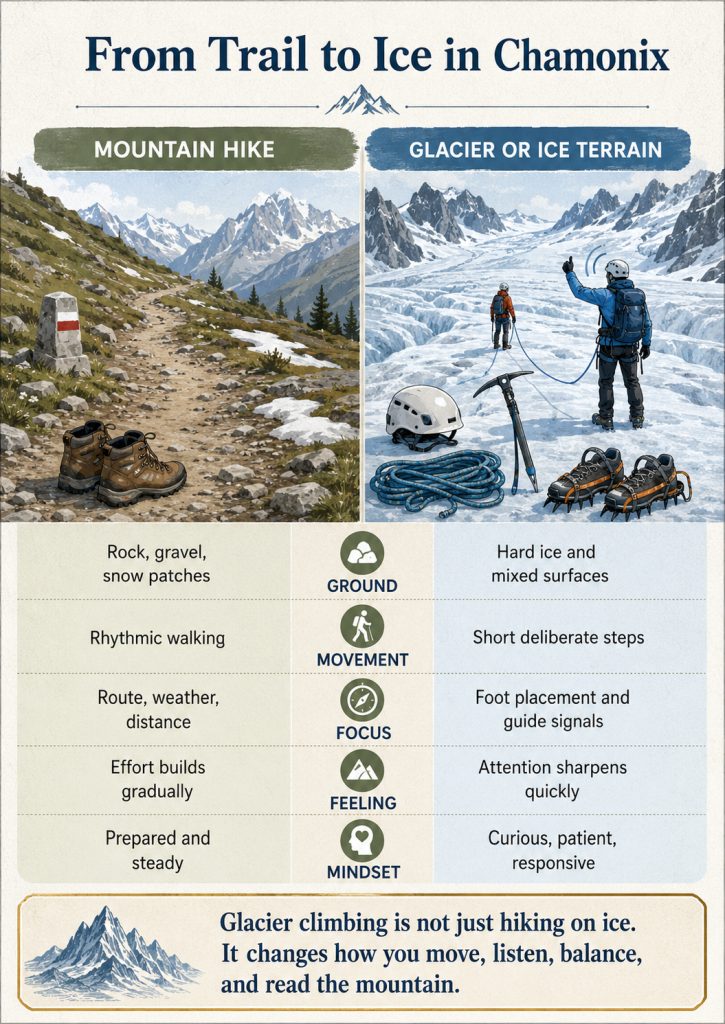
A scenic trail asks you to manage distance. Glacier climbing asks you to manage texture, exposure, and attention. Even on beginner-friendly terrain, the pace can feel slower than expected because the mountain is no longer only something you move through. It becomes something you negotiate.
| Travel element | On a mountain hike | On glacier or ice terrain |
| Ground feel | Soil, rock, gravel, or snow patches | Hard ice, soft snow, brittle sections, or mixed surfaces |
| Movement style | Rhythmic walking with pauses | Short, deliberate steps with constant feedback |
| Main awareness | Route, weather, distance, energy | Foot placement, rope position, ice quality, guide signals |
| Emotional rhythm | Effort builds gradually | Focus can sharpen quickly, even near the start |
That contrast matters because many visitors arrive fit for the trail, yet unfamiliar with ice as a moving, changeable surface beneath their boots.
This is why Chamonix works so well as a way to understand glacier climbing. The valley gives travelers dramatic access to high mountains, but the experience still depends on humility. A guided session on the glacier can help you understand why someone might spend years learning ice, rock, snow, and weather.
What First-Time Alpine Travelers Should Notice
The most valuable preparation is not memorizing techniques from home. It is arriving with the right expectations. Glacier climbing is physical, but it is also observational. Notice how a guide checks the surface. Notice how often the rope, feet, and body position are discussed before height becomes the main subject. Notice how cold, sound, and exposure change your sense of time.
Chamonix can also recalibrate what “adventure travel” means. It does not have to mean chasing the hardest route. It can mean choosing an experience where the landscape teaches you something precise. The traveler who steps onto ice with a qualified guide may leave with a sharper eye for mountains everywhere.
That is the appeal of glacier climbing for first-time alpine travelers. It turns a famous view into a felt experience. The Mont Blanc massif becomes more than a backdrop, and Chamonix becomes more than a base town. You come away with the memory of careful steps, cold air, and the moment the ice stopped being distant scenery. For many travelers, that sense of scale is what makes mountain journeys last, a point echoed by research on awe as a powerful emotion in sustainable tourism experiences.







Leave A Comment