
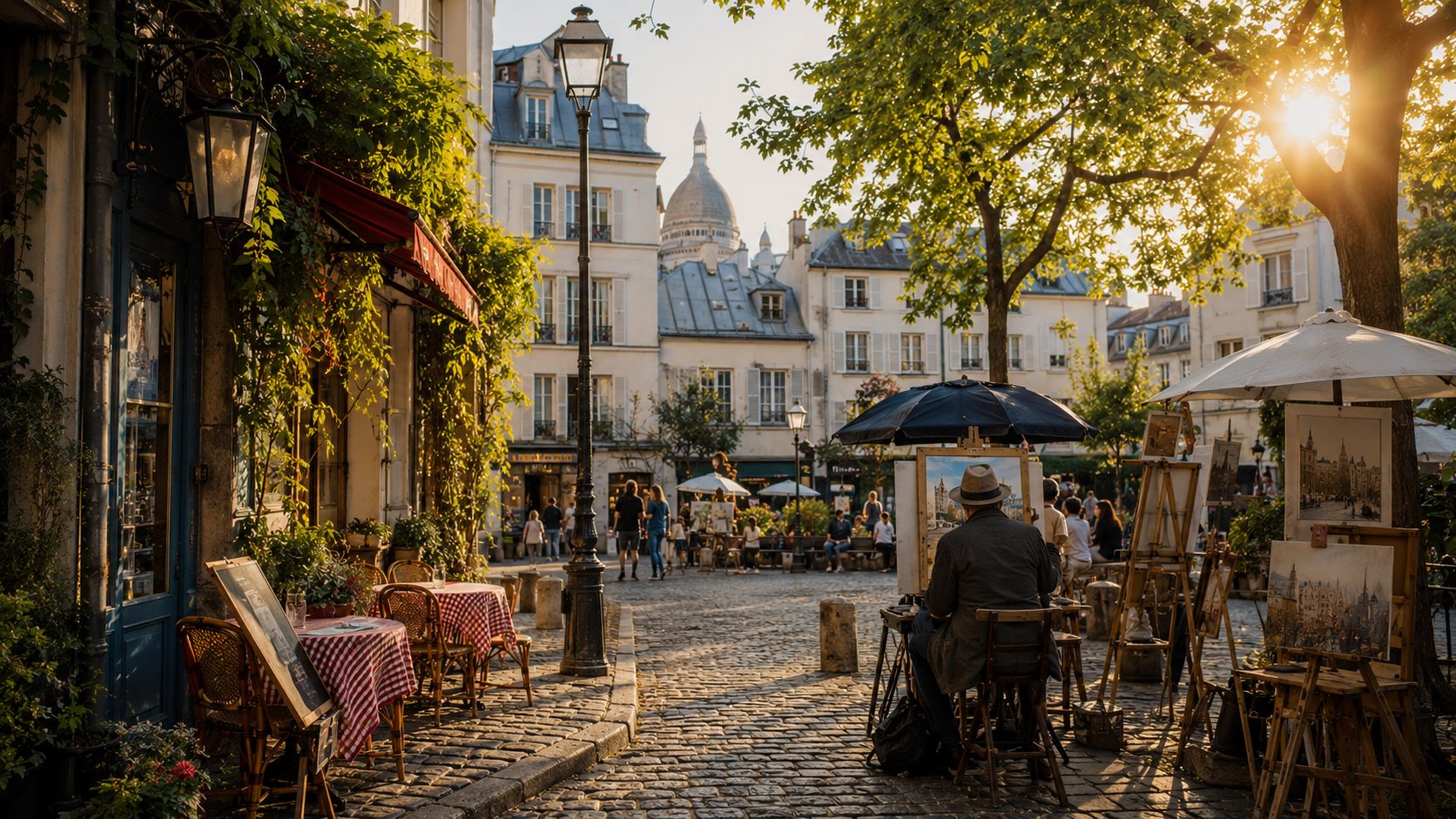
Montmartre is a historic neighbourhood in the north of Paris, set on a hill in the 18th arrondissement. It is best known for the Basilica of Sacré-Cœur, wide views over the city, steep staircases, artists’ squares and old streets that still feel different from the grand boulevards of central Paris.
For many visitors, Montmartre is one of the most memorable parts of the city. It has the things people often imagine when they think of Paris: café terraces, narrow lanes, street artists, music, rooftops and beautiful viewpoints. But it also has a deeper history. Before becoming part of Paris, Montmartre was a village. Later, it became a place of windmills, vineyards, cabarets, cheap artists’ studios, political stories and bohemian life.
That mix is what makes the neighbourhood so interesting. You can come here simply for the view from Sacré-Cœur and a walk through pretty streets, and it will still be worth it. But Montmartre becomes much richer when you understand how all its layers fit together: the village on the hill, the artistic legends, the cabaret culture, the quiet corners and the famous places that still deserve attention when seen in the right way.
To enjoy Montmartre properly, it helps to treat it not as a quick photo stop, but as a neighbourhood with many possible stories.
Start with Sacré-Cœur, But Don’t Stop There
The Basilica of Sacré-Cœur is the place most people associate with Montmartre. It sits at the top of the hill and offers one of the most recognisable views over Paris. On a clear day, standing on the steps and looking over the rooftops is still one of the simplest and most beautiful experiences in the city.
It is worth arriving early if you can. The morning is usually calmer, the light is softer, and the area around the basilica feels less crowded. Later in the day, especially in the high season, this part of Montmartre can become very busy.
But Sacré-Cœur should be the beginning of the walk, not the whole experience. The basilica gives you the view. The streets around it give you the neighbourhood.
If you only climb the hill, take a few photos and walk through Place du Tertre, you will see the most obvious Montmartre. It is not a bad version, but it is a very small one. The better experience begins when you move away from the busiest route and start noticing how much history sits behind the postcard image.
If you want the area to feel less like a fixed checklist and more like a place with its own rhythm, a bespoke Montmartre tour personalised around your interests can help you focus on the version of Montmartre that speaks to you most: artistic, romantic, musical, historical, family-friendly, or simply quieter and more atmospheric.
Find the Village on the Hill
One of the best things about Montmartre is that parts of it still feel like a village. This is not just a romantic idea. Montmartre was once outside Paris, and even after becoming part of the city, it kept a different character.
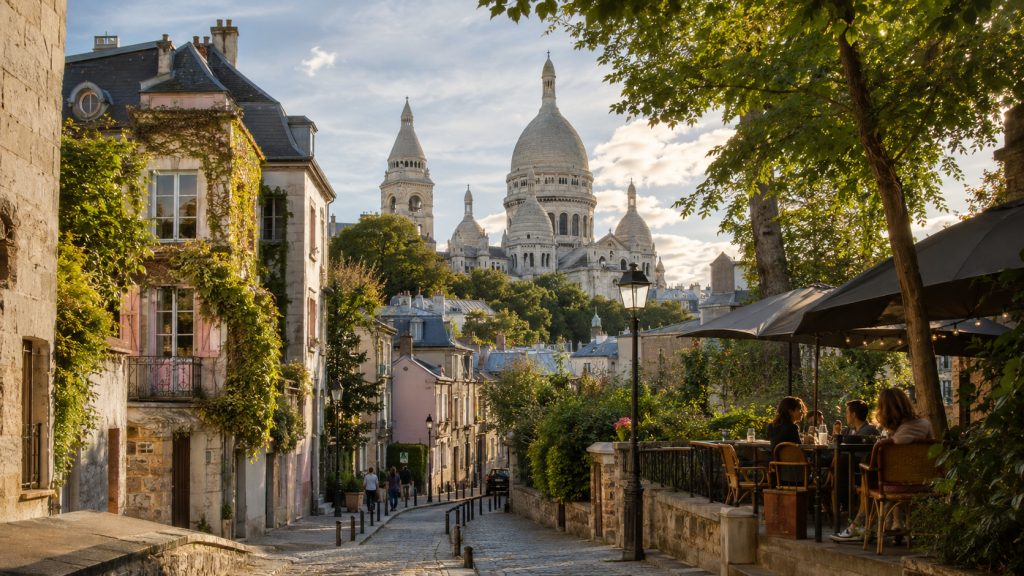
You can feel this most clearly in the smaller streets. Rue Cortot, Rue de l’Abreuvoir and Rue des Saules show a softer side of the neighbourhood: old houses, ivy, staircases, little bends in the road and sudden views between buildings. These streets are still popular, but they feel different from the wide, formal avenues many visitors expect from Paris.
This is the Montmartre that rewards slowing down. Not everything has to be a major monument. Sometimes the best part of the walk is a quiet façade, a small square, a garden wall, or the sense that Paris has briefly turned into a hillside village.
Without context, these streets are simply pretty. With context, they become much more interesting. They speak of artists, workers, singers, shopkeepers, cabaret performers and all the earlier lives of the hill.
Follow the Artists Beyond Place du Tertre
Place du Tertre is the most famous artists’ square in Montmartre. You will find portrait painters, easels, café tables and plenty of visitors. It is lively and photogenic, but it can also feel very commercial.
The real artistic history of Montmartre is much bigger than this square.
In the late nineteenth and early twentieth centuries, Montmartre attracted artists because it was cheaper and freer than central Paris. It was not the polished, elegant Montmartre people often imagine today. It was rougher, less respectable and full of people trying to survive, experiment and make something new.
Picasso, Modigliani, Toulouse-Lautrec, Utrillo and Suzanne Valadon are all connected with the area. The Bateau-Lavoir, once a modest building of artists’ studios, became one of the symbolic places of modern art. It was not glamorous in the way people might expect. That is part of what makes the story more human.
Montmartre’s artistic identity did not come only from beautiful views and charming streets. It came from cheap rooms, cafés, friendships, arguments, nightlife, ambition and the freedom of being slightly outside the official centre of Paris.
Once you know this, the neighbourhood feels different. You stop looking only for pretty corners and begin to see the tension between myth and reality.
Cabarets, Chanson and the Wilder Side of Montmartre
Montmartre is not only about painters. It is also about cabaret, music and performance.
The Moulin Rouge, at the foot of the hill in Pigalle, is the most famous symbol of this world. Even if you do not go inside, it is part of the wider Montmartre story: red lights, Belle Époque posters, dancers, nightlife and the Paris people have imagined through films, books and songs.
Higher up the hill, Au Lapin Agile carries a different kind of atmosphere. This historic cabaret is linked with artists, writers, singers and the bohemian culture of Montmartre. It reminds us that the neighbourhood was not only painted. It was sung, performed, joked about and lived in.
This is why Montmartre can be read in so many ways. One person may come for the romance. Another may be more interested in cabaret culture or working-class history. Someone else may want to understand how a once-rural, inexpensive area became one of the most recognisable images of Paris.
These stories overlap. That is what gives Montmartre its depth.
Notice the Small Details
Some of Montmartre’s best moments are easy to miss if you are only moving from one famous stop to another.
There is Clos Montmartre, the small vineyard that feels almost surprising in such a famous part of Paris. There are references to old windmills, a reminder of the time when the hill was connected not only with cafés and artists, but also with rural work. There is the Wall of Love, popular but still charming if you see it at a quieter moment. There are staircases that make you feel the geography of the hill in your legs.
Place Dalida, with its view down Rue de l’Abreuvoir, is another good example. Many people stop for a photo, but it also opens the door to stories of French chanson, fame and the way Paris remembers its cultural icons.
These smaller details matter because they change the texture of the walk. They help Montmartre feel less like a list of places and more like a neighbourhood with memory.
Why One Montmartre Route Does Not Fit Everyone
Montmartre is a good example of why the same neighbourhood can create very different experiences.
For an art lover, the walk may focus on studios, painters, cafés and the birth of modern art. For a couple, it may lean into atmosphere, views, quiet corners and old Paris stories. For a family, it may need a more varied rhythm, with shorter explanations and details children can notice. For repeat visitors, it may be better to avoid the most obvious route and look at the neighbourhood through less familiar stories.
The streets may be the same, but the experience should not always be.
This is also where working with a boutique travel agency can make a real difference. The value is not only in booking a guide. It is in shaping the route, pace and focus around the people taking the walk, so that the neighbourhood does not feel like a product pulled from a shelf.
A good Montmartre walk should not try to include every possible story in one short visit. That usually leads to too many facts and not enough feeling. It should choose a thread and follow it well.
The best route is not necessarily the one with the longest list of stops. It is the one that makes the neighbourhood come alive for you.
Practical Tips for Visiting Montmartre
Go early if you want a calmer experience around Sacré-Cœur. The area becomes much busier later in the day, especially in good weather.
Wear comfortable shoes. Montmartre is a hill, and the charm of the neighbourhood comes with stairs, slopes and uneven streets.
Do not spend all your time at Place du Tertre. It is famous, but it is only one small part of the area.
Leave time to wander. Some of the best parts of Montmartre are between the major stops, not only at them.
Think about what interests you before you go. Art, cabaret, photography, village streets, romantic views, music and local stories can all create very different walks.
If you are travelling with children or older relatives, be realistic about the hill. A shorter, better-paced route is much more enjoyable than trying to cover everything.
Avoid treating Montmartre as something to “finish” quickly. It is much better when you give it time.
Montmartre Is More Than Its Famous View
The view from Sacré-Cœur is beautiful, but it is not the whole reason to visit Montmartre.
The real pleasure of the neighbourhood is in the mixture: sacred and playful, artistic and commercial, quiet and crowded, polished and rough around the edges. It is a place where Paris becomes a village, a stage, a studio, a memory and a myth, sometimes all within the same few streets.
The postcard version is easy to find.
The better version takes a little more attention.











Leave A Comment