

Historical Facts About Chichen Itza
Aerial view of the ancient Mayan city of Chichen Itza.
The Origins and Timeline of Chichen Itza
Chichen Itza was established around 600 AD during the Classic Period of Mesoamerican chronology. The city reached its peak between 800-1200 AD, when it became one of the largest and most powerful cities in the Maya world. Archaeological evidence suggests that Chichen Itza was built in multiple phases, with different architectural styles reflecting various cultural influences throughout its history.
- Name Origin: “Chichen Itza” translates to “At the mouth of the well of the Itza” in the Mayan language, referring to the sacred cenote (natural sinkhole) that was central to the city’s religious practices.
- Population: At its height, Chichen Itza was home to an estimated 50,000 people, making it one of the largest Maya cities.
- Cultural Blend: The site shows evidence of both Maya and Toltec influences, suggesting a multicultural population or strong trade connections.
- Abandonment: By the 1400s, Chichen Itza had been largely abandoned as a major center, though it remained a pilgrimage site for centuries afterward.
Explore More Mayan History
Want to dive deeper into the fascinating world of ancient Maya civilization? Download our free comprehensive guide to the most significant Mayan archaeological sites.
Architectural Marvels of Chichen Itza
El Castillo (Temple of Kukulkan)

El Castillo (Temple of Kukulkan), the iconic pyramid at Chichen Itza.
The most iconic structure at Chichen Itza is undoubtedly El Castillo, also known as the Temple of Kukulkan. This step pyramid stands approximately 30 meters (98 feet) tall and features a series of square terraces with staircases on each of its four sides. The architectural precision of El Castillo reveals the Maya’s advanced mathematical and astronomical knowledge.
- Calendar Design: El Castillo functions as a physical representation of the Maya calendar, with 365 steps (91 on each of the four sides, plus the top platform) corresponding to the days of the year.
- Hidden Pyramid: In 1931, archaeologists discovered that El Castillo was actually built over an earlier, smaller pyramid. More recently, researchers found evidence of a third, even older structure inside.
- Acoustic Engineering: When you clap near the base of the pyramid, the sound echoes back as a chirp that resembles the call of the quetzal bird, sacred to the Maya. This acoustic phenomenon is believed to be an intentional design feature.
The Great Ball Court

The Great Ball Court where ancient Maya played their sacred ballgame.
Chichen Itza boasts the largest ball court in ancient Mesoamerica. Measuring 168 meters (551 feet) long and 70 meters (230 feet) wide, this massive structure hosted the sacred Mesoamerican ballgame that was far more than just sport—it had deep religious and political significance.
- Acoustic Marvel: The ball court has remarkable acoustic properties—a whisper from one end can be heard clearly at the other, 545 feet away.
- Sacrificial Purpose: Carvings on the walls depict the beheading of a player, suggesting the game may have ended in human sacrifice.
- Stone Rings: Players had to pass a heavy rubber ball through stone rings mounted 6 meters (20 feet) high on the walls without using their hands or feet—an incredibly difficult feat.
Temple of the Warriors
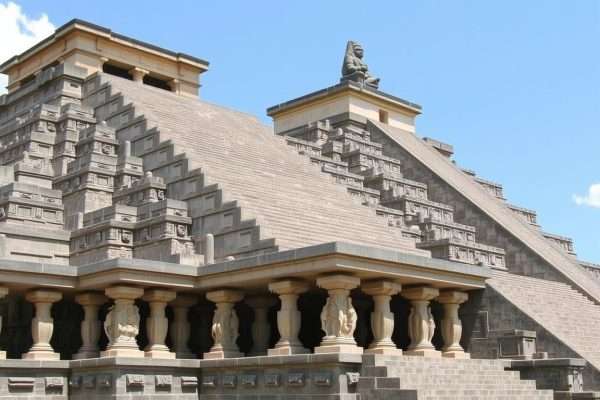
The Temple of the Warriors with its impressive columns and Chac Mool statue.
The Temple of the Warriors is another impressive structure at Chichen Itza. This large stepped pyramid is surrounded by hundreds of carved columns depicting warriors. At the top of the temple sits a Chac Mool statue—a reclining figure holding a plate on its stomach, believed to have been used for ceremonial offerings.
Group of a Thousand Columns
Adjacent to the Temple of the Warriors stands the Group of a Thousand Columns, which likely supported an extensive roof system. These columns are carved with images of warriors and were once brightly painted.
El Caracol (The Observatory)
This unusual round building served as an astronomical observatory. Its windows align with important celestial events, including the movements of Venus, which held special significance in Maya cosmology.
Cultural Secrets and Symbolic Wonders
The Serpent Shadow Phenomenon

The serpent shadow effect visible during the spring and autumn equinoxes.
Perhaps the most famous Chichen Itza fact involves an incredible solar phenomenon. During the spring and autumn equinoxes (March 20-21 and September 22-23), the late afternoon sun casts a series of triangular shadows on the northern staircase of El Castillo. These shadows create the illusion of a serpent slithering down the pyramid, connecting with the stone serpent head at the base.
This phenomenon demonstrates the Maya’s precise astronomical knowledge and their ability to incorporate it into architectural design. The serpent represents Kukulkan (or Quetzalcoatl), the feathered serpent deity, appearing to descend from the heavens to the earth, blessing the land with fertility.
“The precision with which the Maya aligned their structures to celestial events reveals a civilization with profound astronomical knowledge and a deep connection between their architecture, religion and understanding of the cosmos.”
Sacred Cenote and Sacrificial Practices

The Sacred Cenote where Maya made offerings to the rain god Chaac.
The Sacred Cenote at Chichen Itza is a large natural sinkhole that measures approximately 60 meters (197 feet) in diameter and 30 meters (98 feet) deep. This natural well was central to Maya religious practices and gave the city its name. Archaeological explorations of the cenote have revealed numerous artifacts and human remains, providing evidence of ritual sacrifices.
- Precious Offerings: Gold, jade, copper, and other valuable items were thrown into the cenote as offerings to the gods, particularly during times of drought.
- Human Sacrifice: Skeletal remains of men, women and children have been recovered from the cenote, suggesting human sacrifice was practiced here.
- Survival Myth: According to some accounts, individuals who survived being thrown into the cenote were believed to have received special messages from the gods and were treated as oracles.
Planning to Visit Chichen Itza?
Get our exclusive visitor’s guide with insider tips on the best times to visit, photography spots and how to avoid the crowds at this incredible World Wonder.
Astronomical Knowledge and Mathematical Precision

El Caracol (The Observatory) used by Maya astronomers to track celestial movements.
The Maya were exceptional astronomers who carefully tracked the movements of the sun, moon, planets and stars. Their observations were not merely scientific—they formed the foundation of Maya religious beliefs and agricultural practices. Chichen Itza’s structures incorporate this astronomical knowledge in remarkable ways.
Venus Alignments
The Maya were particularly fascinated by Venus, which they associated with war and sacrifice. Several structures at Chichen Itza, including El Caracol, have windows and doorways aligned with the rising and setting points of Venus throughout its cycle.
Mathematical Precision
The layout of Chichen Itza demonstrates the Maya’s advanced mathematical knowledge. The positioning of major structures follows precise geometric relationships and incorporates the Maya’s understanding of sacred numbers.
Did You Know? The Maya developed a sophisticated calendar system that was more accurate than the European calendar in use when the Spanish arrived. Their Long Count calendar could track time over vast periods, with cycles spanning millions of years.
Recent Discoveries at Chichen Itza
Hidden Cenote Beneath El Castillo

Scientific visualization of the cenote discovered beneath El Castillo in 2015.
In 2015, archaeologists made a stunning discovery: a previously unknown cenote lies beneath El Castillo pyramid. Using electrical resistivity imaging, researchers found a large water-filled cavity approximately 20 meters (65 feet) deep. This finding suggests that the Maya may have purposely built their most important temple over this water source, perhaps believing it connected to the underworld.
The Balamku Cave System
In 2019, archaeologists announced the discovery of a cave system called Balamku (“Jaguar God”) containing over 150 ritual objects that had remained untouched for more than 1,000 years. The cave had been sealed and forgotten until its recent rediscovery, providing an unprecedented glimpse into Maya ritual practices.
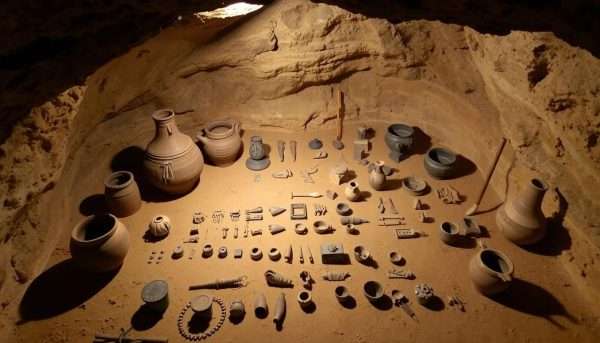
Artifacts discovered in the Balamku cave system, untouched for over 1,000 years.
Elite Residential Complex
Recent excavations have uncovered an elite residential area at Chichen Itza, providing new insights into how the city’s ruling class lived. These discoveries are helping archaeologists better understand the social structure and daily life in this ancient Maya capital.
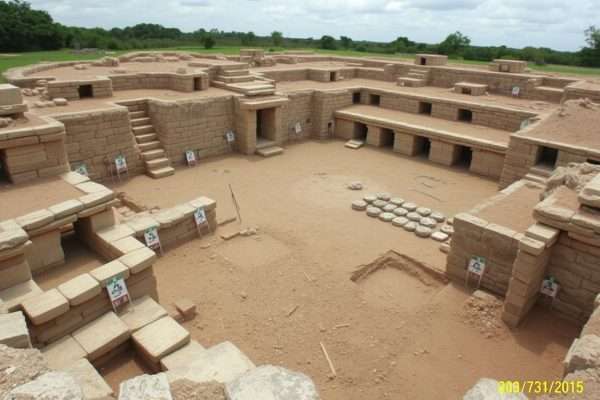
Recently excavated elite residential complex revealing new insights into Maya social structure.
Essential Visitor Tips for Chichen Itza
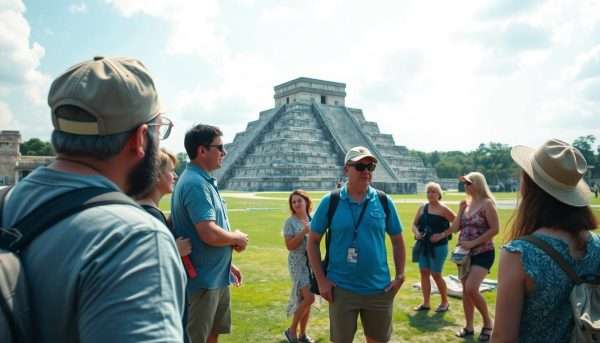
Visitors exploring Chichen Itza with a knowledgeable guide.
Best Time to Visit
Time of Day
Arrive early (around 8 AM when the site opens) to avoid both crowds and the intense midday heat. The site is less crowded in the late afternoon, but you’ll have less time to explore before closing.
Time of Year
The best months to visit are November through March when temperatures are milder. If you want to witness the serpent shadow effect, plan your visit during the spring or autumn equinox, but be prepared for extremely large crowds.
Practical Information
| Information | Details |
| Opening Hours | 8:00 AM to 5:00 PM daily |
| Entrance Fee | Approximately $25 USD (two separate tickets required) |
| Guided Tours | Available in multiple languages; highly recommended |
| Facilities | Restrooms, restaurants, and souvenir shops available |
| Distance from Cancun | Approximately 2.5 hours by car |
Essential Tips
- Stay Hydrated: Bring plenty of water as the site offers little shade and temperatures can be extremely hot.
- Sun Protection: Wear a hat, sunglasses, and sunscreen to protect yourself from the intense Yucatan sun.
- Comfortable Footwear: The site is large and requires significant walking on uneven surfaces.
- Hire a Guide: To truly appreciate the history and significance of Chichen Itza, consider hiring a knowledgeable guide who can explain the details you might otherwise miss.
- Photography: Tripods require a special permit. The best lighting for photography is typically in the early morning or late afternoon.

Map of Chichen Itza showing the layout of major structures and recommended visitor route.
Nearby Attractions
While Chichen Itza is undoubtedly the highlight of the region, several other fascinating sites are worth visiting if you have extra time:
Ik Kil Cenote
Located just 3 km from Chichen Itza, this stunning cenote offers a refreshing swimming opportunity after exploring the archaeological site.
Valladolid
This charming colonial town is about 40 minutes from Chichen Itza and makes for a pleasant stop with its colorful buildings and authentic Yucatecan cuisine.
Ek Balam
Less crowded than Chichen Itza, this archaeological site features well-preserved structures and one of the few pyramids in the region that visitors can still climb. Learn more about Ek Balam here.
Ready to Experience Chichen Itza?
Download our complete Yucatan Peninsula travel guide featuring detailed itineraries that include Chichen Itza and other amazing Mayan ruins in the region.
The Enduring Legacy of Chichen Itza

El Castillo at sunset, a testament to the enduring legacy of Maya civilization.
Chichen Itza stands as a testament to the remarkable achievements of Maya civilization. From its precise astronomical alignments to its stunning architectural innovations, this ancient city continues to inspire awe and wonder more than a millennium after its construction. As one of the most visited archaeological sites in Mexico, it plays a crucial role in helping us understand and appreciate the sophisticated cultures that flourished in the Americas long before European contact.
The ongoing archaeological work at Chichen Itza continues to reveal new insights into Maya civilization, reminding us that there is still much to learn about this fascinating culture. By preserving and studying sites like Chichen Itza, we ensure that the knowledge, achievements and legacy of the Maya will continue to enrich our understanding of human history for generations to come.
When was Chichen Itza built?
Chichen Itza was built in phases, with construction beginning around 600 AD during the Classic Period. The city reached its height between 800-1200 AD, when most of the major structures we see today were built or expanded.
Why is Chichen Itza famous?
Chichen Itza is famous for its well-preserved Mayan ruins, particularly El Castillo pyramid, its astronomical alignments, the Great Ball Court and cultural significance. It was named a UNESCO World Heritage Site in 1988 and selected as one of the New Seven Wonders of the World in 2007.
Can visitors climb the pyramids at Chichen Itza?
No, climbing the pyramids and structures at Chichen Itza has been prohibited since 2006 for both safety reasons and to preserve the archaeological site. Visitors can still walk around the structures and appreciate them from ground level.
Explore More Ancient Wonders
Interested in discovering more fascinating archaeological sites? Share your comments below.


Leave A Comment