
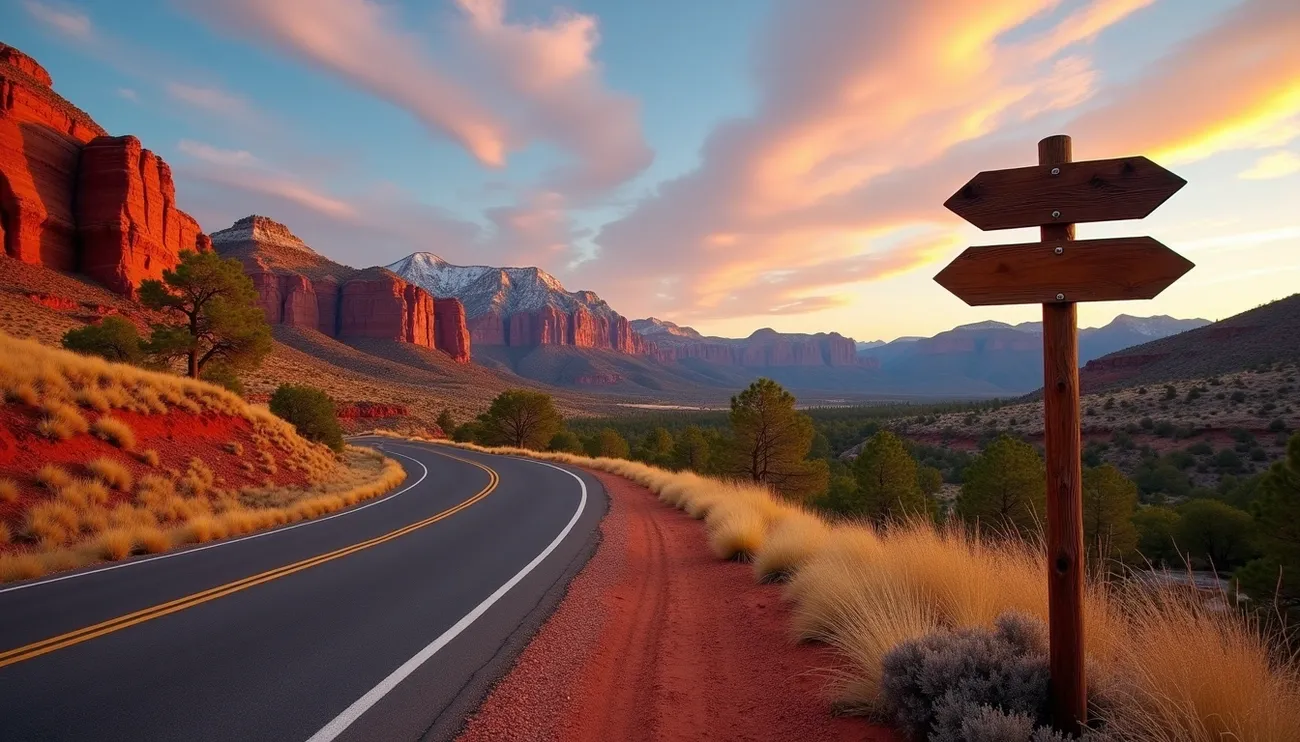
Day trips from Albuquerque open access to some of North America’s most remarkable destinations, including Acoma Sky City, one of the longest-inhabited cities dating back to 1150. Travelers can head over to White Sands National Park and experience the world’s largest gypsum dunefield spanning 275 square miles. They can visit UNESCO World Heritage Sites or find ancient cliff dwellings and lava landscapes. The best day trips from Albuquerque range from cultural experiences in Santa Fe, just an hour’s drive away, to natural wonders such as Carlsbad Caverns and the 13.7-mile-wide Valles Caldera. This piece covers 17 expert-tested road trips from Albuquerque that showcase New Mexico’s diverse attractions.
Santa Fe: Art, Culture, and Historic Plaza

Image Source: TOURISM Santa Fe
Located 64 miles north of Albuquerque, Santa Fe ranks among the best day trips from Albuquerque New Mexico for its blend of artistic heritage and Spanish colonial architecture. The drive takes about 1 hour via Interstate 25. The Rail Runner train connects Downtown Albuquerque Rail Runner Station to Santa Fe Depot Station for $6-9 as an alternative, with departures every 3 hours and a trip time of 1 hour 44 minutes.
Distance from Albuquerque
The straight-line distance measures 58 miles, though the driving route via I-25 extends to 64 miles. Most travelers complete the drive in 1 hour 3 minutes without stops. The scenic route provides views of New Mexico’s high desert landscape along the way.
Top Attractions in Santa Fe
The Santa Fe Plaza has been the cultural hub since the city’s founding in 1610. This National Historic Landmark hosts the Palace of the Governors, the oldest public building in the United States. The Cathedral Basilica of St. Francis of Assisi occupies a site where Franciscan friars built the first church in 1610, later rebuilt in 1714 after the Pueblo Revolt. The Georgia O’Keeffe Museum celebrates the 20th-century artist’s connection to Northern New Mexico. Museum Hill has four museums in close proximity: the Museum of Spanish Colonial Art, Museum of Indian Arts and Culture, and Wheelwright Museum of the American Indian. Canyon Road has over 100 art galleries and artist studios.
Activities to Enjoy
Santa Fe Indian Market in August draws 150,000 visitors annually as the world’s largest Indigenous art market. Other major events include Spanish Market in July, Santa Fe Opera Festival running June through August, and Santa Fe Fiesta in September. The New Mexico Museum of Art, opened in 1917, displays Pueblo-Revival architecture.
Best Time to Visit
September through November provides the best conditions for road trips from Albuquerque to Santa Fe, with temperatures ranging from the high 20s to high 70s. Fall brings fewer crowds and lower hotel rates compared to summer peak season when accommodations book up to a year in advance for popular events.
Taos Pueblo: UNESCO World Heritage Site
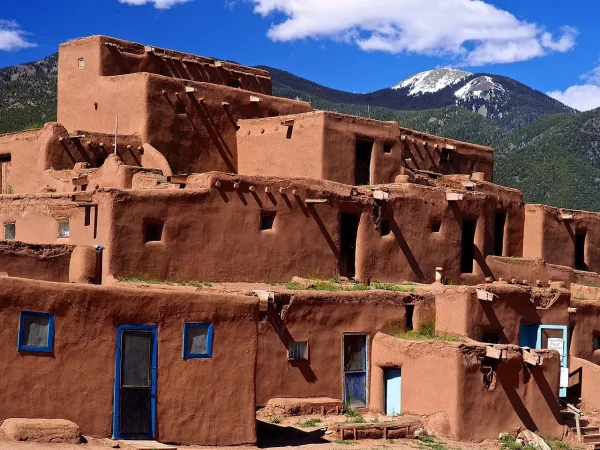
Image Source: National Park Service
The multi-storied adobe buildings at Taos Pueblo represent one of the most important places to visit near Albuquerque, recognized as both a UNESCO World Heritage Site since 1992 and a National Historic Landmark. The pueblo stands 135 miles from Albuquerque. The drive takes about 2.5 hours via I-25 north to Santa Fe, then US-285 toward Española, followed by NM-68 to Taos.
Distance from Albuquerque
The driving route covers 135 miles, whereas the straight-line distance measures 112 miles. This road trip from Albuquerque passes through Santa Fe and continues north into the Sangre de Cristo Mountain range. The pueblo sits just one mile north of downtown Taos.
What to See at Taos Pueblo
Two main adobe structures, Hlauuma (North House) and Hlaukwima (South House), have been continuously inhabited for over 1,000 years. The walls measure 70 centimeters thick at the bottom and taper to 35 centimeters at the top. Residents refinish the exterior walls with fresh adobe plaster during a village ceremony each year. The ruins of San Geronimo de Taos church stand within the cemetery boundaries, marked by rubble mounds and a bell tower.
Cultural Experiences
Guided tours run every 20-30 minutes and begin at 9:00 AM. Volunteer tribal members lead these tours and share stories about the community’s history and traditions. These guides are college students who rely on visitor gratuities rather than hourly wages. Tours last 20-30 minutes and cover important areas within the village.
Practical Visitor Tips
Taos Pueblo operates Sunday through Saturday from 9:00 AM to 4:00 PM. Admission costs $25 for adults and $22 for seniors, students and military personnel. Children 10 and under enter free. The pueblo closes to all visitors until April 20, 2026, for annual community observance. Photography inside San Geronimo Chapel is prohibited. Visitors cannot photograph tribal members without permission. Commercial photography requires prior approval and additional fees.
White Sands National Park: Gypsum Wonderland
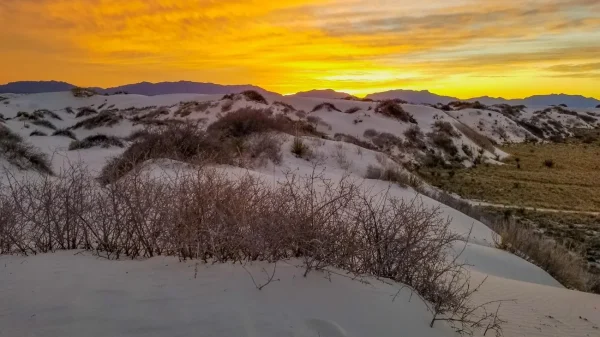
Image Source: National Park Service
White Sands National Park rises from the Tularosa Basin and stands out among New Mexico day trips as home to the world’s largest gypsum dunefield. The park sits 225 miles south of Albuquerque and requires about 3 hours and 51 minutes of driving.
Distance from Albuquerque
The route from Albuquerque to White Sands measures 224 miles. The park is located 16 miles southwest of Alamogordo. Visitors should use GPS coordinates 32° 46′ 45″ North, 106° 10′ 19″ West or the physical address at 19955 Highway 70 West. Typing “White Sands” may direct to White Sands Missile Range instead. The park entrance sits off Highway US-70 between mile markers 199 and 200.
Learning the Dunes
Gypsum sand dunes have engulfed the desert landscape and created wave-like formations across the basin. The dunefield formed through a unique geological process. Rainfall and snowmelt from the surrounding San Andres and Sacramento Mountains dissolve gypsum layers and wash minerals to the basin floor at Lake Lucero. Dissolved minerals recrystallize into selenite crystals when water evaporates. Some crystals grow as large as bicycle tires. Wind breaks these brittle crystals into the fine gypsum sand that forms the dunes.
Activities and Recreation
Families and adults enjoy sledding down the soft dunes. Waxed plastic snow saucers are available to purchase at the gift shop. Popular sledding locations include the Roadrunner Picnic Area with 40-foot dunes and Alkali Flat Trailhead. The 16-mile round-trip Dunes Drive offers access to hiking trails. These include the 5-mile Alkali Flat Trail and the 1-mile Dune Life Nature Trail. The park features 62 sheltered picnic tables with grills.
Entry Fees and Timing
Entrance costs $25 per vehicle or $15 per person and is valid seven consecutive days. Annual passes cost $45. The park operates daily year-round except Thanksgiving and Christmas Day. Hours vary by season. The park closes for up to three hours during missile testing on adjacent White Sands Missile Range.
Bandelier National Monument: Ancient Cliff Dwellings

Image Source: National Park Service
Bandelier National Monument protects over 33,000 acres of canyon and mesa country featuring dwellings carved into volcanic tuff cliffs and standing masonry walls. The Ancestral Pueblo people inhabited this area from around 1150 CE to 1550 CE. They cultivated corn, beans and squash in mesa top fields before relocating to pueblos along the Rio Grande. The monument preserves ancestral and traditional lands of at least 23 tribal nations.
Distance from Albuquerque
The monument sits 106 miles northwest of Albuquerque and requires about 2 hours of driving. The route follows I-25 north for 45 miles, exits onto US 599 or continues to 84/285, merges onto NM 502 toward Los Alamos, then bears right onto NM 4 toward White Rock for 12 miles. Seasonal shuttles run from mid-May to mid-October and depart every 30 minutes starting at 10:30 AM from the Frey Trail parking lot.
Learning about the Ancestral Puebloan Sites
Frijoles Canyon contains petroglyphs, kivas and dwellings constructed from rock structures on the canyon floor and cavates carved into the volcanic tuff walls. The circular Tyuonyi Pueblo once stood one to three stories tall. Ceiling-beam fragments were dated between 1383 and 1466. Long House stretches along the canyon wall, whereas Talus House offers a reconstructed example of ancient architecture. Wooden ladders provide access into the small human-carved alcoves throughout the canyon.
Hiking Trails
The monument features over 70 miles of trails that connect into adjacent Santa Fe National Forest lands. The Pueblo Loop Trail extends 1.4 miles through the Big Kiva, Tyuonyi, Talus House and Long House. It takes 45 minutes to one hour. Alcove House Trail adds 0.5 miles to reach a dwelling 140 feet above the canyon floor via four wooden ladders. The Falls Trail descends 700 feet over 2.5 miles to waterfalls near the Rio Grande.
Visitor Information
The monument operates dawn to dusk daily except Christmas Day and during heavy snow emergencies. The Visitor Center opens 9 AM to 5 PM. Entrance passes cost $25 per vehicle and remain valid for seven consecutive days. Juniper Family Campground remains open year-round, though loops may reduce in winter.
Valles Caldera National Preserve: Volcanic Landscape
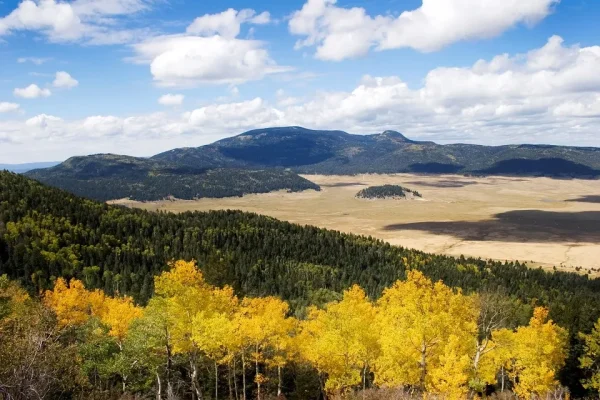
Image Source: National Park Service
Formed by massive volcanic eruptions over a million years ago, Valles Caldera National Preserve covers 89,000 acres inside a volcanic crater measuring 12 to 15 miles in diameter. The preserve represents one of the best examples of a resurgent caldera and has an active geothermal system with hot springs.
Distance from Albuquerque
The preserve sits about 90 minutes north of Albuquerque. Driving time from the intersection of I-25 and I-40 takes around 2 hours. The route follows I-25 North to Highway 550, turns onto NM-4 toward Jemez Pueblo and Jemez Springs, then continues 22 miles up NM-4 from Jemez Springs. The main entrance appears at Mile Marker 39.2 on NM-4.
Wildlife Viewing Opportunities
Valles Caldera hosts the second largest elk population in New Mexico. The preserve is home to Gunnison prairie dogs, coyotes, black bears, mountain bluebirds, bald and golden eagles, and red-tailed hawks. Early morning and evening hours provide optimal viewing times. Spotting scopes installed at different heights at the Entrance Station include special filters for visitors with red-green color blindness.
Outdoor Activities
Hiking, mountain biking, horseback riding, fishing, and cross-country skiing are permitted throughout the preserve. Ranger-led programs run from June 1 to October 1 and include morning and afternoon hikes plus bi-monthly night sky programs. Backcountry vehicle access operates May 15 to November 15.
Access and Facilities
Pedestrian pass-through gates allow access from dawn to dusk daily. Motor vehicles enter from 9 AM to 5 PM, extended to 8 AM to 6 PM from Memorial Day to Labor Day. The preserve closes to vehicles on Thanksgiving and Christmas. The Volcano Discovery Center, located 4 miles down the entrance road, features an immersive volcanic eruption simulation every hour on the half-hour. No entrance fee applies.
Jemez Springs: Hot Springs and Red Rocks
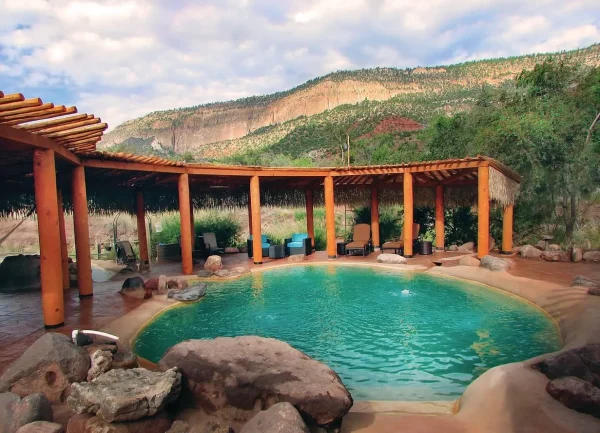
Image Source: Jemez Springs
Nestled in a mountain valley along the Jemez Mountain Trail National Scenic Byway, Jemez Springs offers therapeutic mineral waters sourced from beneath the volcanic landscape. The village earned All-America City recognition in 1995 and gives you access to both commercial and primitive soaking options.
Distance from Albuquerque
Jemez Springs sits 59 miles from Albuquerque and takes about one hour of driving. The route follows I-25 north to Bernalillo, then branches onto Highway 550 before continuing straight north. The scenic byway passes through red rock formations and volcanic features along the approach.
Natural Hot Springs
Spence Hot Springs, located seven miles north of the village, stays at temperatures around 95 degrees. The Forest Service manages this primitive spring on public land. You can reach it via a short trail from a large parking lot on Highway 4. McCauley Warm Springs needs a 3.8-mile loop hike from Battleship Rock picnic area. Two warm pools sit in a high mountain meadow. Both locations open from sunrise to sunset for day-use only, and bathing suits are required.
Scenic Attractions
Red Rock Trails offers a 1.5-mile self-guided hike through Walatowa Red Rocks and slot canyon landscapes. These red rock formations give traditional Jemez pottery’s distinctive reddish hue. Hiking permits cost $12 per person, while guided tours run $20 per person.
Where to Soak
Jemez Hot Springs operates four outdoor therapeutic mineral water pools kept at 98-105 degrees Fahrenheit. Rates start at $25 for one hour or $50 for two hours, with walk-ins only on a first-come basis. The village-owned Jemez Springs Bath House, a State Historical Site over 100 years old, offers soaks starting at $12 for 25 minutes.
Acoma Sky City Pueblo: Ancient Mesa Community
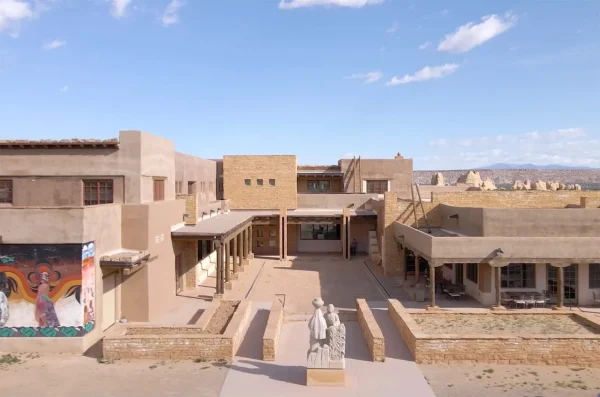
Image Source: skycityacoma.org
Perched atop a 367-foot sandstone mesa, Acoma Sky City stands as one of the oldest continuously inhabited communities in North America, dating back nearly 1,000 years. This ancient pueblo offers visitors a chance to walk through living history where about 20 full-time residents maintain traditional ways among 250 adobe buildings.
Distance from Albuquerque
The pueblo sits 64 miles west of Albuquerque and takes about 1 hour 10 minutes to reach. Travelers take I-40 West for 55 miles to Exit 108 toward Paraje/Casa Blanca, turn left on State Route 23 for 12 miles, then right onto Indian Service Road 38 to reach Sky City Cultural Center & Haak’u Museum.
Guided Tours and Cultural Center
Tribal members lead walking tours that depart at 10:30 AM, 12:30 PM, and 2:30 PM. Each tour lasts 1 hour 15 minutes and covers about three-quarters of a mile. Tours begin with a shuttle ride to the mesa top and visit the historic pueblo village and San Esteban del Rey Mission. The cultural center operates Friday through Monday from 10:00 AM to 4:00 PM. It remains closed Tuesday through Thursday.
Photography and Shopping
Cameras are not permitted during feast days or Christmas events. Local artisans sell traditional Acoma pottery and crafts during tours.
Admission Details
Adult tickets cost $25, children $17, and military or seniors $22. Groups of 10 or more must make tour reservations by calling 800-747-0181.
Spiritual retreats in New Mexico.
El Malpais National Monument: Lava Landscapes
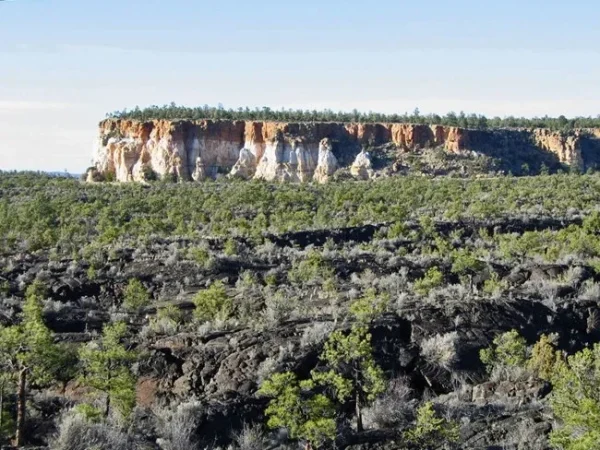
Image Source: National Park Service
Volcanic badlands define El Malpais National Monument, where lava flows and cinder cones create a stark landscape unlike anywhere else among the best day trips from Albuquerque. The monument protects 114,000 acres of volcanic features, including vast lava tube systems and the Zuni-Bandera volcanic field, the second largest volcanic field in the Basin and Range Province.
Distance from Albuquerque
El Malpais sits 72 miles west of Albuquerque and takes about 1.5 hours to reach by car. The visitor center operates at Exit 85 off Interstate 40 from 9:00 AM to 5:00 PM each day.
Lava Tubes and Flows
Free caving permits grant access to undeveloped wilderness caves with no permanent trails, steps, or lights. Giant Ice Cave features temporary ice columns several feet high during winter and spring. You can reach it via a 1.2-mile round trip over rugged lava flows. Lava Bomb cave showcases a spectacular skylight created when a volcanic projectile crashed into a lava tube. Safety gear including helmets and gloves is recommended to explore caves.
Hiking Opportunities
The Big Tubes Trail extends about two miles in a figure-8 configuration. El Calderon Trail offers a 5.6-mile loop. Sandstone Bluffs Overlook provides panoramic views of volcanic features.
Park Access Points
Highway 117 at Exit 89 travels along the eastern boundary, whereas Highway 53 at Exit 81 accesses western areas. Big Tubes Area requires driving 4.5 miles down County Road 42. High-clearance and four-wheel-drive vehicles are recommended.
Bosque del Apache: Wildlife Refuge Paradise
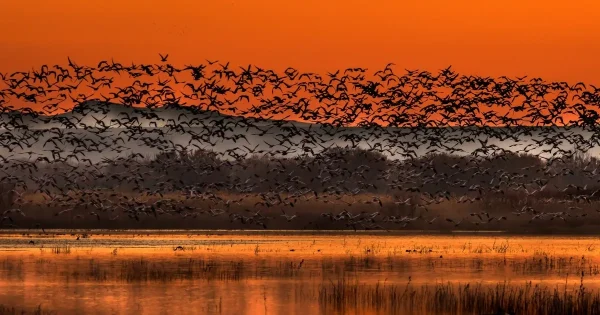
Image Source: U.S. Fish and Wildlife Service
Bosque del Apache National Wildlife Refuge sits between the Chupadera and San Pascual Mountains and delivers a concentrated wildlife experience in North America. The 57,331-acre refuge functions as a winter stopover site for tens of thousands of migrating cranes, geese and ducks.
Distance from Albuquerque
The refuge sits 95 miles south of Albuquerque. The drive takes 1 hour 34 minutes. Travelers from Albuquerque Airport take I-25 south to Exit 139, turn east on US 380 for a quarter mile to San Antonio’s flashing signal and head south on NM 1 for nine miles.
Bird Watching
Over 340 species of birds inhabit the refuge. Sandhill cranes and snow geese are signature species. The 12-mile auto tour loop provides access to viewing areas. The Flight Deck offers prime spots to observe bald eagles perched on tall snags. Dawn flyouts and evening fly-ins reveal synchronized movements as thousands of birds lift off from roosting areas.
Festival of the Cranes
The 37th Annual Festival of the Cranes runs December 2-5, 2026. The festival includes 85 to 90 events such as photography workshops, ranger talks and guided tours.
Best Visiting Seasons
Peak concentrations occur November through February. December and January are recommended for optimal crane viewing. The refuge operates one hour before sunrise until one hour past sunset daily.
Breaking Bad filming locations.
Carlsbad Caverns National Park: Underground Wonders
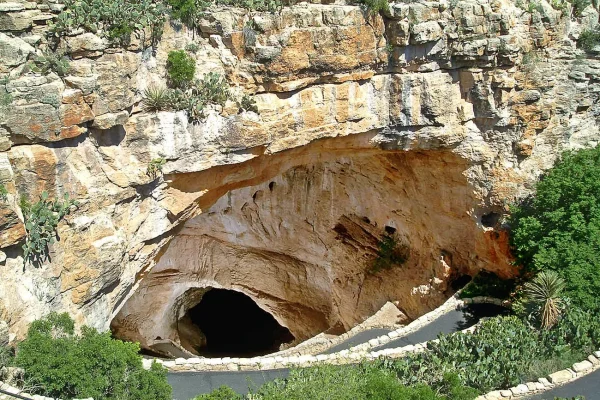
Image Source: National Park Service
Descending 750 feet below the earth’s surface, Carlsbad Caverns National Park ranks among the most extraordinary places to visit near Albuquerque. The park sits 304 miles southeast of Albuquerque and is the farthest destination on this list of road trips from Albuquerque.
Distance from Albuquerque
The drive covers 303 miles and requires 6 hours 14 minutes. Travelers access the park by turning north from US Highway 62/180 at White’s City, 20 miles southwest of Carlsbad.
Cave Tours and Trails
Two self-guided routes give access to the caverns. The Big Room Trail spans 1.25 miles and takes 1.5 hours on average. The Natural Entrance Trail covers the same distance but descends 750 feet, equivalent to a 75-story building. Cave temperature remains constant at 56 degrees with 90% humidity throughout the year.
Bat Flight Program
Brazilian free-tailed bats exit the cavern each night from April through October during free ranger programs. The colony fluctuates between 200,000 and 500,000 bats and swells to over one million during migration. Individual bats reach speeds of 25 mph. August through September are a great way to get peak viewing when baby bats join evening flights.
Ticket Requirements
Timed entry reservations cost $1 per person and can be purchased 30 days in advance. Entrance passes must be purchased separately at the visitor center upon arrival. Children 15 and under enter free but require reservations.
Madrid: Quirky Artist Village
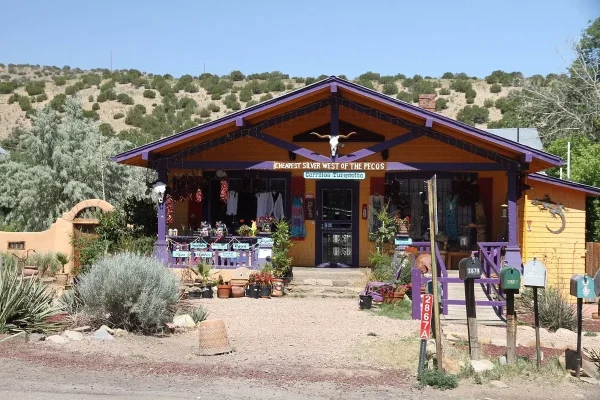
Image Source: Tripadvisor
Once a coal mining ghost town, Madrid transformed into an eccentric artist community where corporate chains are prohibited by landowner association bylaws. This former mining settlement sits 46 miles from Albuquerque and requires about 58 minutes of driving along the Turquoise Trail.
Distance from Albuquerque
The drive covers 46.4 miles via the scenic Highway 14 route. Public transportation connects Madrid to Albuquerque through a combination of bus and Rail Runner train. The journey takes 2 hours 38 minutes.
Art Galleries and Shops
More than 40 galleries and shops occupy colorful wooden row houses that line Main Street. Local artists own and operate establishments such as Indigo Gallery, Gypsy Gem and Calliope Art. Texas Monthly compared the town to a New Mexico version of Marfa. The village served as the filming location for Wild Hogs. Maggie’s Diner was built for the movie and now operates as a gift shop.
Local Dining
Mine Shaft Tavern operates as a historic roadhouse with live music every weekend and seats over 150 people. The tavern’s Mad Chile Burger won Santa Fe’s Green Chile Cheeseburger Smackdown competition. Other dining options include Refinery 14 and Java Junction.
Events and Festivals
Annual CrawDaddy Blues Fest features Louisiana and Texas foods with fresh crawfish from Beaumont, Texas. The festival presents music on three stages. Madrid also hosts its Film Festival and Fourth of July celebrations.
Common accidents in New Mexico.
Turquoise Trail: Scenic Byway Adventure
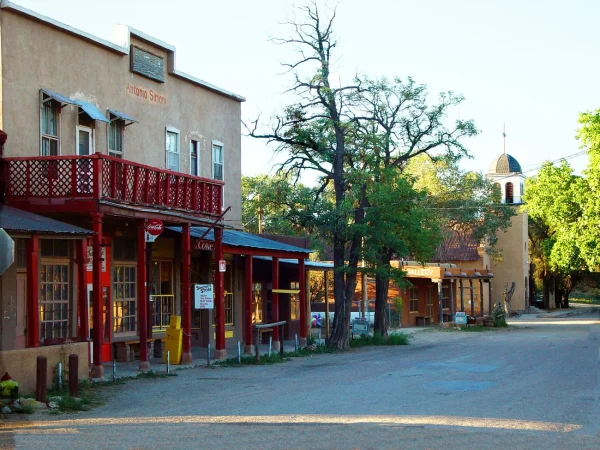
Image Source: New Mexico Tourism Department
Named for centuries of turquoise mining in the region, the Turquoise Trail National Scenic Byway connects Albuquerque and Santa Fe through historic mining towns and volcanic landscapes. Highway 14 runs parallel to I-25 and offers travelers an alternative route rich with artistic communities and natural attractions.
Distance from Albuquerque
The byway extends about 50 miles from Albuquerque to Santa Fe. Driving time takes just over one hour without stops. Most visitors allocate three to five hours for a leisurely exploration. The route begins in Tijeras, located 18 miles east of Albuquerque.
Route Highlights
Sandia Crest reaches 10,678 feet elevation and provides panoramic views of Albuquerque and the Rio Grande Valley. The scenic byway weaves through piñon-dotted hills and volcanic outcrops. Spring wildflowers and October cottonwoods add seasonal color.
Towns Along the Way
Cerrillos served as a major mining hub by the 1880s and supported 21 saloons and four hotels with gold and silver production. Golden, 1825 old, marked the first gold rush west of the Mississippi. The San Francisco Catholic Church built in 1830 remains Golden’s primary structure.
Stops and Attractions
Tinkertown Museum displays hand-carved miniature figures and Western memorabilia collected over 40 years. Cerrillos Hills State Park features five miles of trails through 1,100 years of mining history. Casa Grande Mining Museum in Cerrillos showcases the region’s turquoise heritage.
Chaco Culture National Historical Park: Ancestral Puebloan Ruins
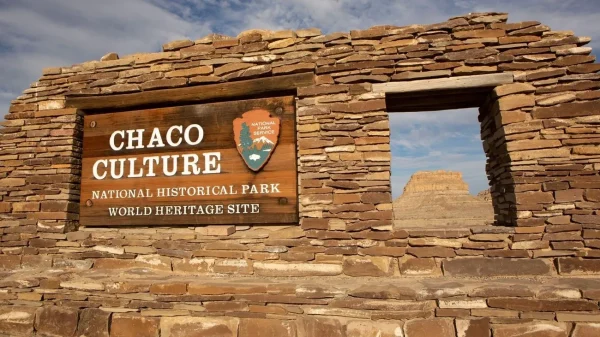
Image Source: Chaco Culture National Historical Park (U.S. National Park …
A UNESCO World Heritage Site, Chaco Culture National Historical Park preserves the most sophisticated pre-Columbian architectural complex in the Southwest. Ancestral Puebloans built monumental structures here between the mid-9th and early 13th centuries.
Distance from Albuquerque
The park sits approximately 150 miles from Albuquerque. The drive takes 3 to 3.5 hours. The route follows I-25 North for 17.5 miles to US-550 North near Bernalillo and continues to mile marker 112.5 where travelers turn onto CR 7900.
Archeological Sites
Pueblo Bonito serves as the most important site. This D-shaped complex rises four stories high and contains over 650 rooms. Construction occurred between AD 850 and AD 1150, and this 0.6-mile trail takes 45 minutes to an hour. Chetro Ketl covers more than 3 acres with 450-550 rooms. Casa Rinconada showcases the largest excavated great kiva. Una Vida remains largely unexcavated and preserves its natural state.
Canyon Loop Drive
The 9-mile paved loop connects major sites and begins at the visitor center. Pueblo Bonito appears 4.5 miles from the visitor center, followed by other structures accessible via short trails.
Road Conditions and Directions
The final 13 miles consist of rough dirt road from the northern route. The last 4.5 miles prove challenging. GPS devices are unreliable in this area. Clay-based soil becomes impassable during rain.
Petroglyph National Monument: Ancient Rock Art
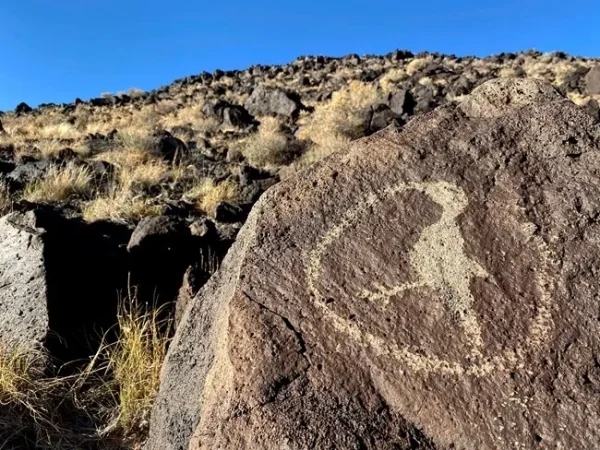
Image Source: National Park Service
Protecting one of the largest petroglyph sites in North America, this monument features more than 20,000 images carved into volcanic rocks. Native Americans and Spanish settlers created the petroglyphs between 400 and 700 years ago. The site stretches 17 miles along Albuquerque’s West Mesa and ranks among the best road trips for visitors seeking ancient rock art.
Distance from Albuquerque
The visitor center sits at 6510 Western Trail NW on the west side of Albuquerque. Travelers take the Unser Boulevard exit off Interstate 40 and head north 3 miles to Western Trail. Petroglyph viewing trails require driving 1 to 6.5 miles from the visitor center.
Trail Options
Four hiking trails range from one to four miles roundtrip. Difficulty varies from easy to moderately strenuous. The information center provides trail guides. The Rinconada Canyon trail extends 2.2 miles, while Piedras Marcadas offers a 1.8-mile experience.
Petroglyph Viewing Areas
Boca Negra Canyon opens daily 8:30 AM to 4:30 PM and features three paved trails displaying 100 petroglyphs. Rinconada Canyon parking operates 8:00 AM to 5:00 PM daily and showcases 200-300 carvings. Piedras Marcadas Canyon provides access to 300-500 petroglyphs from sunrise to sunset.
Visitor Center Information
The visitor center operates 8:30 AM to 4:30 PM daily. It closes on Thanksgiving, December 25th, and January 1st. No petroglyph viewing trails exist at the visitor center location. Staff provide trail recommendations based on timeframe and difficulty priorities.
Salinas Pueblo Missions National Monument: Spanish Colonial History
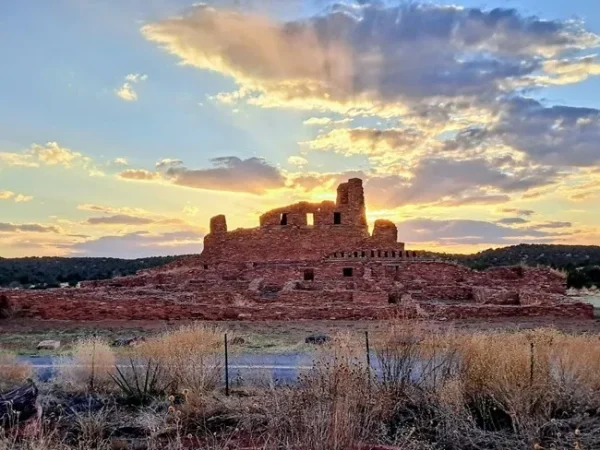
Image Source: National Park Service
Three separate mission complexes spread across central New Mexico preserve the joining of Spanish colonial ambitions and Puebloan resilience among New Mexico day trips. Salinas Pueblo Missions National Monument includes Quarai and Abó, along with Gran Quivira. Each contains 17th century Spanish missions and American Indian pueblos.
Distance from Albuquerque
The monument headquarters in Mountainair sits 93 miles from Albuquerque and requires 2 hours 12 minutes of driving. Travelers take I-25 south from Albuquerque to Belen, then NM 47 diagonally to US 60 and continue east 21 miles to Mountainair. Abó lies 9 miles west on US 60 from headquarters. Gran Quivira sits 26 miles south on NM 55, and Quarai 8 miles north on NM 55.
Three Mission Sites
Abó represents the oldest pueblo at the monument. The Tompiro people used this land for 1,000 years. Quarai features the greatest volume of mission ruins architecture at a single unit. Gran Quivira, originally Las Humanas, stands as the largest Jumano pueblo and the only location with two distinct colonial-era mission complexes.
Historical Significance
Drought and famine during the 1660s and 1670s killed 450 people at Gran Quivira alone. Apache raids and cultural conflict under Spanish rule weakened the pueblos and led to abandonment by 1678.
Learning about the Ruins
National Park Service rangers provide information at the three ruins and park headquarters.
Very Large Array: Radio Astronomy Observatory

Image Source: National Radio Astronomy Observatory
Twenty-seven massive radio telescope antennas arranged in a Y-shaped configuration create the Karl G. Jansky Very Large Array, one of the world’s premier astronomical observatories. Each antenna weighs 230 tons and stands as proof of modern radio astronomy research.
Distance from Albuquerque
The facility sits 50 miles west of Socorro and requires a two-hour drive from Albuquerque. Travelers follow I-25 south to Socorro, then continue west on US Route 60 to reach the Plains of San Agustin.
Self-Guided Tours
A self-guided walking tour extends 0.5 miles, with half the distance covered on unpaved gravel paths. The route features a Radio Sundial and Whisper Dish Gallery before reaching the base of one working antenna. An observation deck atop the control building’s exterior staircase provides array views.
Scientific Exhibits
The Visitor Center operates daily from 9am to 4pm. It shows a 23-minute documentary narrated by Jodie Foster that explains radio astronomy and interferometry. Interactive exhibits detail how the 230-ton antennas move along railroad tracks and process data through supercomputers. A gift shop stocks astronomy-themed merchandise.
Photography Opportunities
Astrophotography workshops run periodically and offer rare nighttime access to photograph the antennas under dark desert skies. These sessions cost $100 per person. They include instruction on camera settings and composition techniques.
Truth or Consequences: Hot Springs Town
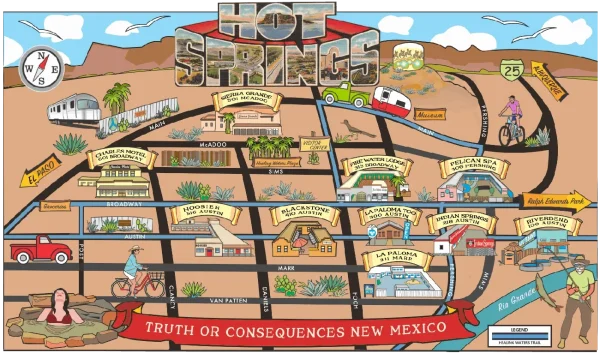
Image Source: Sierra County, New Mexico Sierra County New Mexico
This town traded its original name for a radio show’s title back in 1950. It became Truth or Consequences when emcee Ralph Edwards challenged a community to match his program’s name. Locals call it T or C. The town preserves geothermal springs that have been flowing for 50 million years.
Distance from Albuquerque
Truth or Consequences sits 150 miles south of Albuquerque. You can drive there in 2 hours and 10 minutes via Interstate 25. This makes it one of the better road trips from Albuquerque. Socorro provides a convenient stopping point along the route.
Hot Spring Resorts
More than 10 hotels and bathhouses pump mineral-rich waters into pools throughout town. Riverbend Hot Springs provides both private and communal tubs perched on Rio Grande banks. Hourly soaking passes are available for non-guests. Blackstone Hotsprings features rooms themed after vintage TV shows like The Lone Ranger and The Jetsons. Fire Water Lodge maintains motor-court style lodgings with en-suite mineral water tubs. Hot Springs Glamp Camp offers three outdoor tubs and special dome house accommodations.
Spaceport America Visitor Center
Spaceport America operates a free visitor center on North Broadway Street, 20 miles southeast of town. Tours showcase the Gateway to Space Building and flight operations center.
Local Attractions
Broadway hosts antique shops, art galleries and restaurants. The second Saturday monthly Art Hop explores galleries in the Hot Springs District. Geronimo Springs Museum displays Mimbres pottery and regional ranching history.
Comparison Table
| Destination | Distance from Albuquerque | Drive Time | Main Attraction Type | Notable Features | Entry Fee/Cost | Operating Hours |
| Santa Fe: Art, Culture, and Historic Plaza | 64 miles | 1 hour | Cultural/Historical | Santa Fe Plaza, Georgia O’Keeffe Museum, Canyon Road galleries, Cathedral Basilica | – | – |
| Taos Pueblo: UNESCO World Heritage Site | 135 miles | 2.5 hours | Cultural/Historical | UNESCO World Heritage Site, 1,000-year-old adobe structures, guided tours | $25 adults, $22 seniors/students/military, free for children 10 and under | Sunday-Saturday, 9:00 AM – 4:00 PM |
| White Sands National Park: Gypsum Wonderland | 225 miles | 3 hours 51 minutes | Natural | World’s largest gypsum dunefield (275 square miles), sledding, 16-mile Dunes Drive | $25 per vehicle or $15 per person (7-day pass), $45 annual pass | Daily year-round except Thanksgiving and Christmas |
| Bandelier National Monument: Ancient Cliff Dwellings | 106 miles | 2 hours | Historical/Natural | Ancestral Puebloan cliff dwellings, 70+ miles of trails, Frijoles Canyon | $25 per vehicle (7-day pass) | Dawn to dusk daily except Christmas |
| Valles Caldera National Preserve: Volcanic Landscape | Approx. 90 minutes | 2 hours | Natural | 89,000-acre volcanic crater (12-15 miles diameter), elk viewing, geothermal features | No entrance fee at this time | Dawn to dusk (vehicles: 9 AM – 5 PM, extended Memorial Day – Labor Day) |
| Jemez Springs: Hot Springs and Red Rocks | 59 miles | 1 hour | Natural/Recreation | Natural hot springs, Spence Hot Springs, Red Rock Trails, historic bathhouse | Hot springs: $25-50 (Jemez Hot Springs), $12+ (Bath House); Red Rock Trails: $12 per person | Varies by location |
| Acoma Sky City Pueblo: Ancient Mesa Community | 64 miles | 1 hour 10 minutes | Cultural/Historical | 1,000-year-old mesa-top pueblo, 367-foot sandstone mesa, San Esteban del Rey Mission | $25 adults, $17 children, $22 military/seniors | Friday-Monday, 10:00 AM – 4:00 PM |
| El Malpais National Monument: Lava Landscapes | 72 miles | 1.5 hours | Natural/Geological | 114,000 acres of volcanic features, lava tubes, Giant Ice Cave, cinder cones | Free (caving permits required) | Visitor center: 9:00 AM – 5:00 PM daily |
| Bosque del Apache: Wildlife Refuge Paradise | 95 miles | 1 hour 34 minutes | Natural/Wildlife | 57,331-acre refuge, 340+ bird species, sandhill cranes, snow geese, 12-mile auto tour | – | One hour before sunrise to one hour past sunset |
| Carlsbad Caverns National Park: Underground Wonders | 304 miles | 6 hours 14 minutes | Natural/Geological | 750-foot deep caverns, Big Room Trail, bat flight programs (April-October) | $1 timed entry reservation + separate entrance pass | – |
| Madrid: Quirky Artist Village | 46 miles | 58 minutes | Cultural/Arts | 40+ galleries and shops, Mine Shaft Tavern, former coal mining ghost town | Free to visit | Varies by establishment |
| Turquoise Trail: Scenic Byway Adventure | 50 miles | 1+ hour (3-5 hours recommended) | Scenic Drive | Highway 14 scenic byway, historic mining towns, Sandia Crest (10,678 ft), Tinkertown Museum | Varies by attraction | – |
| Chaco Culture National Historical Park: Ancestral Puebloan Ruins | 150 miles | 3-3.5 hours | Historical/Archeological | UNESCO World Heritage Site, Pueblo Bonito (650+ rooms), 9-mile canyon loop drive | – | – |
| Petroglyph National Monument: Ancient Rock Art | West side of Albuquerque | Varies (within city) | Historical/Cultural | 20,000+ petroglyphs, four hiking trails (1-4 miles), Boca Negra Canyon | – | Visitor center: 8:30 AM – 4:30 PM; trails vary |
| Salinas Pueblo Missions National Monument: Spanish Colonial History | 93 miles (to Mountainair HQ) | 2 hours 12 minutes | Historical | Three mission sites (Quarai, Abó, Gran Quivira), 17th-century Spanish missions | – | – |
| Very Large Array: Radio Astronomy Observatory | 50 miles west of Socorro | 2 hours | Scientific/Educational | 27 radio telescope antennas (230 tons each), self-guided 0.5-mile tour, visitor center | Free; astrophotography workshops: $100 | Visitor center: 9:00 AM – 4:00 PM daily |
| Truth or Consequences: Hot Springs Town | 150 miles | 2 hours 10 minutes | Recreation/Cultural | 10+ hot spring resorts, 50-million-year-old geothermal springs, Spaceport America nearby | Varies by resort (hourly passes available) | Varies by establishment |
Enjoy Day Trips From Albuquerque
New Mexico’s diverse landscape offers remarkable variety for travelers seeking day trips from Albuquerque. Visitors can choose from UNESCO World Heritage Sites, ancient cliff dwellings, volcanic landscapes and natural hot springs within just a few hours’ drive. Some destinations require only an hour of travel. Others just need full-day commitments spanning six hours each way.
To cite an instance, those short on time can explore Petroglyph National Monument or Madrid. Adventure seekers might tackle the trip to Carlsbad Caverns or White Sands. Each destination delivers experiences that showcase the region’s rich cultural heritage and stunning natural beauty.
FAQs
Q1. What are some of the best day trips to take from Albuquerque? Popular day trips include Santa Fe for art and culture (1 hour away), Taos Pueblo UNESCO World Heritage Site (2.5 hours), White Sands National Park with its gypsum dunes (3.5 hours), Bandelier National Monument’s cliff dwellings (2 hours), and the quirky artist village of Madrid (under 1 hour). Each destination offers unique experiences ranging from ancient pueblos to natural wonders.
Q2. Which small towns near Albuquerque are worth visiting? Charming small towns include Jemez Springs, known for natural hot springs and red rock landscapes; Madrid, a former ghost town turned artist community with 40+ galleries; and Truth or Consequences, featuring geothermal springs that have flowed for 50 million years. The Turquoise Trail also passes through historic mining towns like Cerrillos and Golden.
Q3. What can I see at Petroglyph National Monument? Petroglyph National Monument protects over 20,000 ancient rock carvings created 400-700 years ago by Native Americans and Spanish settlers. Located on Albuquerque’s west side, it features four hiking trails ranging from 1-4 miles. Boca Negra Canyon displays 100 petroglyphs on paved trails, while Rinconada Canyon showcases 200-300 carvings.
Q4. How far is White Sands National Park from Albuquerque and what makes it special? White Sands National Park is located 225 miles south of Albuquerque, approximately 3 hours and 51 minutes by car. It features the world’s largest gypsum dunefield spanning 275 square miles. Visitors can sled down the soft white dunes, hike various trails including the 5-mile Alkali Flat Trail, and explore the unique landscape created by crystallized gypsum sand.
Q5. What are some unique attractions near Albuquerque that most people don’t know about? Hidden gems include the Very Large Array radio telescope observatory (2 hours away) with 27 massive antennas, Valles Caldera National Preserve featuring an 89,000-acre volcanic crater, El Malpais National Monument’s lava tubes and ice caves, and Salinas Pueblo Missions with three 17th-century Spanish mission ruins. Bosque del Apache Wildlife Refuge offers spectacular bird watching with over 340 species.


Leave A Comment