
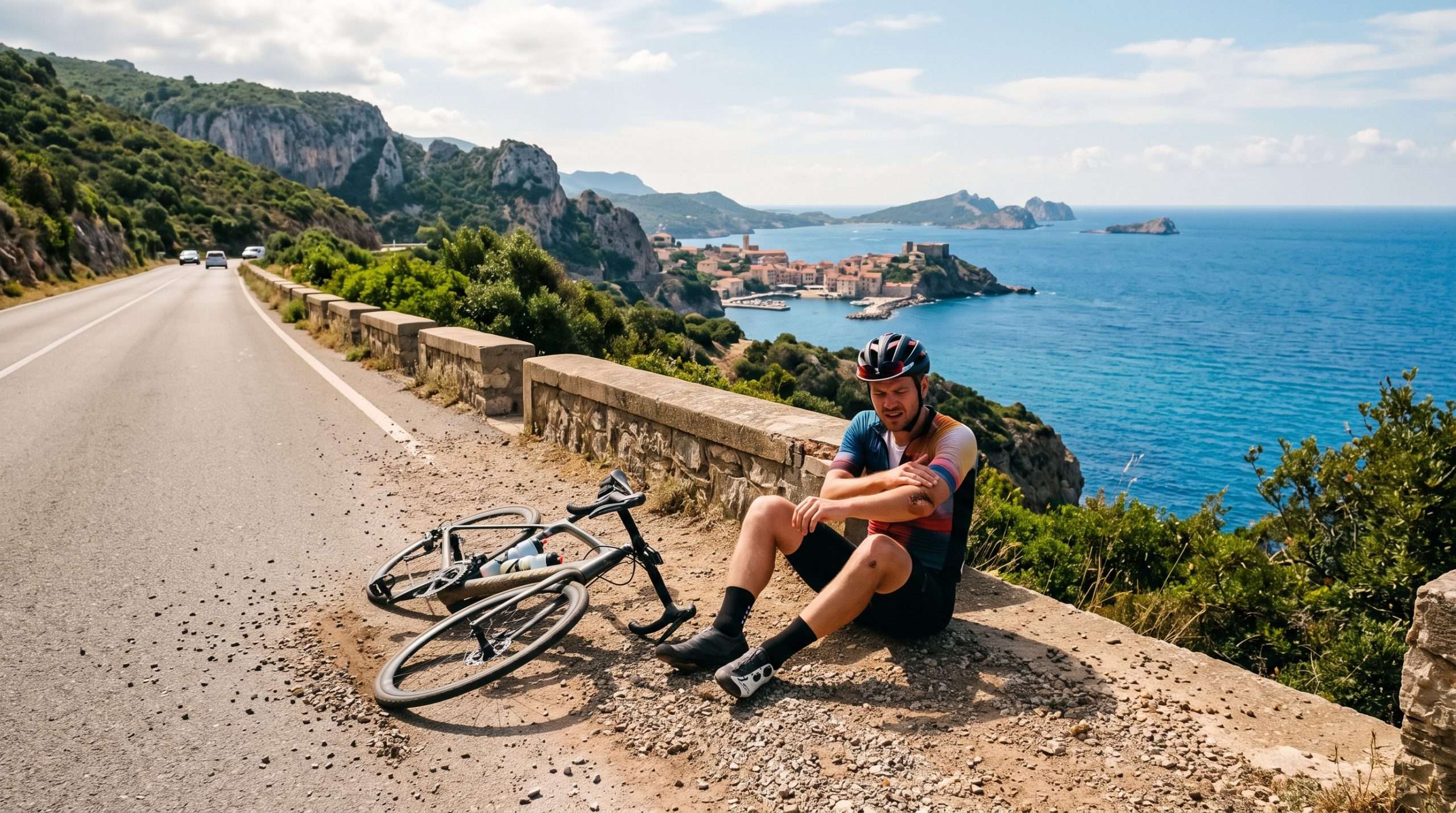
You rented the bike for a week to see San Jose the slow way: the Guadalupe River Trail in the morning, a loop through the Rose Garden neighborhood, a long ride out toward the hills with a stop for tacos on the way back. Four days in, you’re in a bike lane on a wide downtown street when a car turns right across it without signaling. You go over the bars. The driver is apologetic. A stranger helps you to the curb. Your knee is swelling, your wrist won’t bend, and the rental bike’s front wheel is bent into a shape that will not be cheap to explain.
Then the harder part begins. You’re hurt in a city where you don’t live, with a rental agreement in one pocket and a hotel key in the other, unsure whether to go to a hospital, call your insurer, or call the rental company first. Cycling injuries on vacation combine the stress of a crash with the logistics of being far from home. Here’s what actually happens next, and how to handle it so a bad afternoon doesn’t become a bad year.
Cyclists Remain Vulnerable on Urban Roads
The risk cyclists face from motor vehicles is well established. According to the National Highway Traffic Safety Administration, 1,103 bicyclists were killed in traffic crashes in the United States in 2024, deaths were highest from July through October, and roughly three-quarters of them occurred in urban areas.
Summer and early fall are peak vacation months, and cities are where visitors ride. The overlap is exactly where a traveler is most likely to be hurt.
At the Scene: What to Do Right Away
Pain and embarrassment push many riders to wave it off and ride on. Don’t. In the first minutes:
- Get out of the roadway if you can move safely
- Call 911; ask for police and, if you’re hurt, paramedics
- Give the police a clear, factual account so it appears in the report
- Photograph the vehicle, its plate, the driver’s license and insurance card, the bike, the road, and your injuries
- Collect names and numbers from every witness
- Don’t argue about fault or accept blame; adrenaline makes people say things they regret
A police report from the city where the crash happened is the single most useful document you’ll have once you’re home.
Get Medical Care Locally
Cycling injuries are often worse than they first appear. Fractures, concussions, and internal injuries can be masked by adrenaline, and road rash can become infected. Visit an urgent care or emergency room the same day, explain that you were hit while cycling, and ask for copies of every record and image before you leave.
Once home, see your own doctor and keep treating without gaps; a break in care is something insurers use to argue the injury wasn’t serious.
Sort Out the Rental Bike
A damaged rental adds a layer of worry. Handle it in this order:
- Photograph the damage before anyone moves or repairs the bike
- Notify the rental company promptly and in writing
- Read the rental agreement for damage terms; many include a deductible or optional coverage
- Don’t authorize repairs or pay for replacement until the crash claim is clear, since the at-fault driver’s insurer may be responsible for the bike
- Keep the damaged bike, or at least the photos, as evidence
Rental companies deal with this regularly; a calm, documented approach usually goes smoothly.
Dealing With Insurance From Far Away
Several policies may come into play: the driver’s auto insurance, your own auto policy if you have one with medical or uninsured motorist coverage, your health insurance, and any travel insurance. With the driver’s insurer:
- Don’t give a recorded statement
- Don’t accept an early offer before your injuries are fully understood
- Keep every call logged with names and dates
Travel insurance may cover medical costs, trip interruption, and even transport home. Check the policy before you leave the city.
Why Local Legal Help Makes Sense
Because the law of the place where the crash happened governs the claim, advice from someone who practices there is far more useful than advice from home. If you’ve been hit while riding in the city, speaking with a bicycle accident lawyer in San Jose before you fly out lets evidence be preserved while it still exists and keeps you from managing a local claim from several states away.
The attorneys at Habbas & Associates, who maintain their main office in the city and take calls 24/7 for free consultations, advise riders to tell police exactly what happened, document injuries and treatment, and hold off on repairing a damaged bike until the case is resolved, and they handle the fault investigation and insurer communication so the injured visitor can go home and heal. Whoever you consult, confirm they routinely work with out-of-state clients and how they’ll keep you updated after you’ve left.
California Law for Injured Cyclists
A few California rules shape what happens next:
- Three-foot passing law: drivers must give cyclists at least three feet of clearance when overtaking; a driver who turned across a bike lane without yielding has likely violated the Vehicle Code
- Bike lane and lane-position rules: cyclists slower than traffic must use a bike lane where one exists, but may leave it to pass, turn left, or avoid hazards, and may take the full lane when it’s too narrow to share safely
- Helmets: required only for riders under 18, so an adult riding without one is not automatically at fault, though insurers may still raise it
- Pure comparative negligence: an injured cyclist can recover even if partly at fault, with the award reduced by their share of responsibility
- Deadlines: personal injury claims generally must be filed within two years, and claims against a city or other public entity require a formal claim within six months
Knowing these makes it harder for an insurer to shift blame onto a visitor who was riding legally.
Keep Records Once You’re Home
The claim will follow you home, so keep it organized:
- All medical records and bills from both cities
- Receipts for extra hotel nights, transport, and medical supplies
- Proof of missed work and lost vacation days
- The police report number and the rental company’s claim reference
- A short journal of symptoms and recovery
These documents turn a stressful memory into a clear, provable account.
Conclusion
If you get injured while cycling on vacation, what happens next depends largely on the first day: calling the police and getting a report, getting medical care locally and keeping the records, documenting the rental bike before anyone touches it, handling insurers cautiously, and getting advice from a lawyer where the crash happened before you leave.
With more than a thousand cyclists killed on U.S. roads each year and most of those crashes in cities during the busiest travel months, visiting riders face real risk, but California’s laws protect cyclists who ride legally, and a well-documented claim can cover the medical bills, the bike, and the vacation that was cut short. Handle the afternoon well, and the rest of the trip, and the year, stays yours.











Leave A Comment