
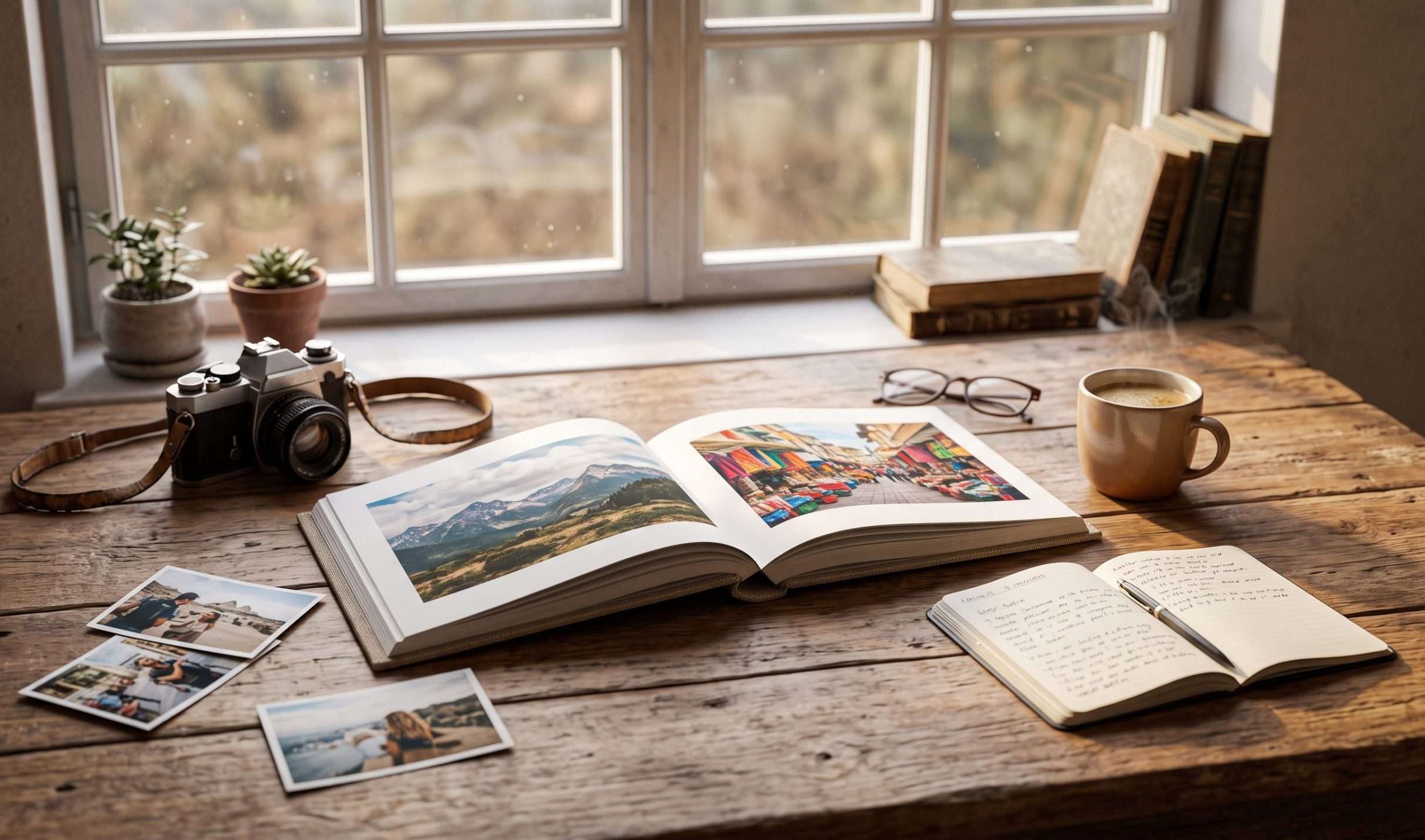
Travel photos are easy to take and surprisingly easy to forget. You return home with hundreds of images, share a few on social media, and promise yourself you will organize the rest later.
Months pass, storage fills up, and those meaningful moments become buried between screenshots and everyday snapshots.
Your travel photographs deserve better. They are more than digital files – they hold stories about where you went, who joined you, what surprised you, and how you felt. Giving those images a physical or thoughtfully organized home helps turn a collection of pictures into a lasting record of your life.
Your Camera Roll Is Not a Memory Archive
A phone camera roll is designed for convenience, not reflection. It stores images in chronological order, but it does little to explain why a moment mattered or how one experience connected to the next.
This becomes especially clear after a long trip. You may have 20 photos of the same sunset, several blurry restaurant pictures, and dozens of landmarks mixed with train tickets, maps, and random screenshots. Finding the best images later can feel like work.
There is also the risk of losing them. Phones break, cloud accounts become inaccessible, and files can disappear during device upgrades. Cloud storage is useful, but it should not be the only place where irreplaceable travel memories live.
Travel Photos Help Preserve the Full Story
Memory is selective. Over time, you may remember the major sights but forget the smaller details that gave the journey its character.
A photograph can bring back the color of a market, the view from a hotel window, or the meal you ordered without knowing exactly what it was. These ordinary scenes often become more meaningful than the polished landmark photos because they reflect what the trip actually felt like.
Organizing your images also encourages you to add context. A simple caption with a place, date, or short story can preserve details that might otherwise disappear. Years later, that information helps you and others understand the moment rather than simply look at it.
Printed Photos Create a Different Experience
Digital images are usually viewed quickly. You swipe, zoom, and move on within seconds.
Printed photographs invite a slower, more focused kind of attention.
A framed print can return you to a favorite place every time you enter a room. A carefully made travel photo book can guide you through an entire journey in a clear, meaningful sequence.
Instead of searching through thousands of files, you can sit down and experience the story from beginning to end.
Physical photos also create shared experiences. Friends and family can gather around an album, ask questions, and hear the stories behind the images. That interaction is difficult to reproduce when everyone is leaning over a small phone screen.
Travel Photography Shows How You Have Changed
Travel photos do not only document destinations. They also reveal personal growth.
Look back at pictures from a trip you took five or ten years ago, and you may notice more than different clothes or hairstyles. You might remember how nervous you felt traveling alone, how exciting a new culture seemed, or how a friendship developed during the journey.
These images can become markers of important life stages. A first international trip, a family holiday, a honeymoon, or a long-awaited return to a childhood destination may represent a major transition. Preserving those photographs gives you a visible record of how your interests, relationships, and confidence have evolved.
A Curated Collection Is More Valuable Than Thousands of Files
Keeping every image can make the best ones harder to appreciate. Curation is not about deleting the reality of your trip. It is about choosing photographs that communicate the experience clearly.
Start by removing accidental shots, obvious duplicates, and images that are too blurry to be useful. Then look for photographs that represent different parts of the journey, such as:
- Wide views that establish the location
- Portraits of the people who traveled with you
- Street scenes and everyday details
- Food, signs, tickets, and local objects
- Candid moments that capture genuine emotion
- Images connected to a memorable story
The strongest collection will usually include a mix of beautiful photographs and imperfect but meaningful ones. A technically excellent landscape may show where you were, while a slightly crooked café photo may remind you of the funniest conversation of the trip. Both have value.
Add Context While the Details Are Fresh
Do not wait years to label your travel images. Even basic information can become difficult to recall sooner than expected.
Record the destination, approximate date, names of people, and any short memory connected to the image. You do not need to write long diary entries. A sentence such as “We found this beach after taking the wrong bus” gives the photograph a story and makes it much more personal.
Ways to Bring Travel Photos Into Everyday Life
Not every travel photograph needs to become a large wall print. The right format depends on the image, your space, and how you want to revisit the memory.
Albums work well for complete trips because they allow you to arrange photos in a natural order.
Framed prints are better for a small number of standout images. You can also create a rotating display, using the same frames while changing the photographs after each journey.
Postcards, calendars, and small desk prints offer practical alternatives. These formats are especially useful when you want to share memories as gifts without creating a full album. A carefully chosen travel image can feel more personal than a generic souvenir.
Digital organization still matters, even if you print your favorites. Create clearly named folders, back them up in at least two places, and keep original files when possible. Physical and digital storage should support each other rather than compete.
How to Start Organizing Your Travel Photos
The hardest part is often beginning. A large, disorganized camera roll can make the task feel bigger than it is.
Choose one trip rather than trying to sort your entire photo library. Set aside 20 to 30 minutes, mark your favorite images, and move them into a separate folder. On another day, narrow that group down and decide which photographs you want to print, frame, or place in an album.
Working in short sessions helps you make clearer decisions. It also turns photo organization into an enjoyable way to revisit the journey instead of another demanding household task.
Conclusion: Give Your Travel Memories a Lasting Home
Travel photos capture experiences that cannot be repeated in exactly the same way. Places change, people grow older, and small details fade from memory. Leaving those images buried in a camera roll makes them easy to overlook and vulnerable to loss.
Choose one past trip and rescue its best photographs today. Organize the files, add a few captions, and select a format that lets you see and share them regularly. Your pictures already hold the story – giving them a place beyond your phone ensures that story remains part of your life.












Leave A Comment