
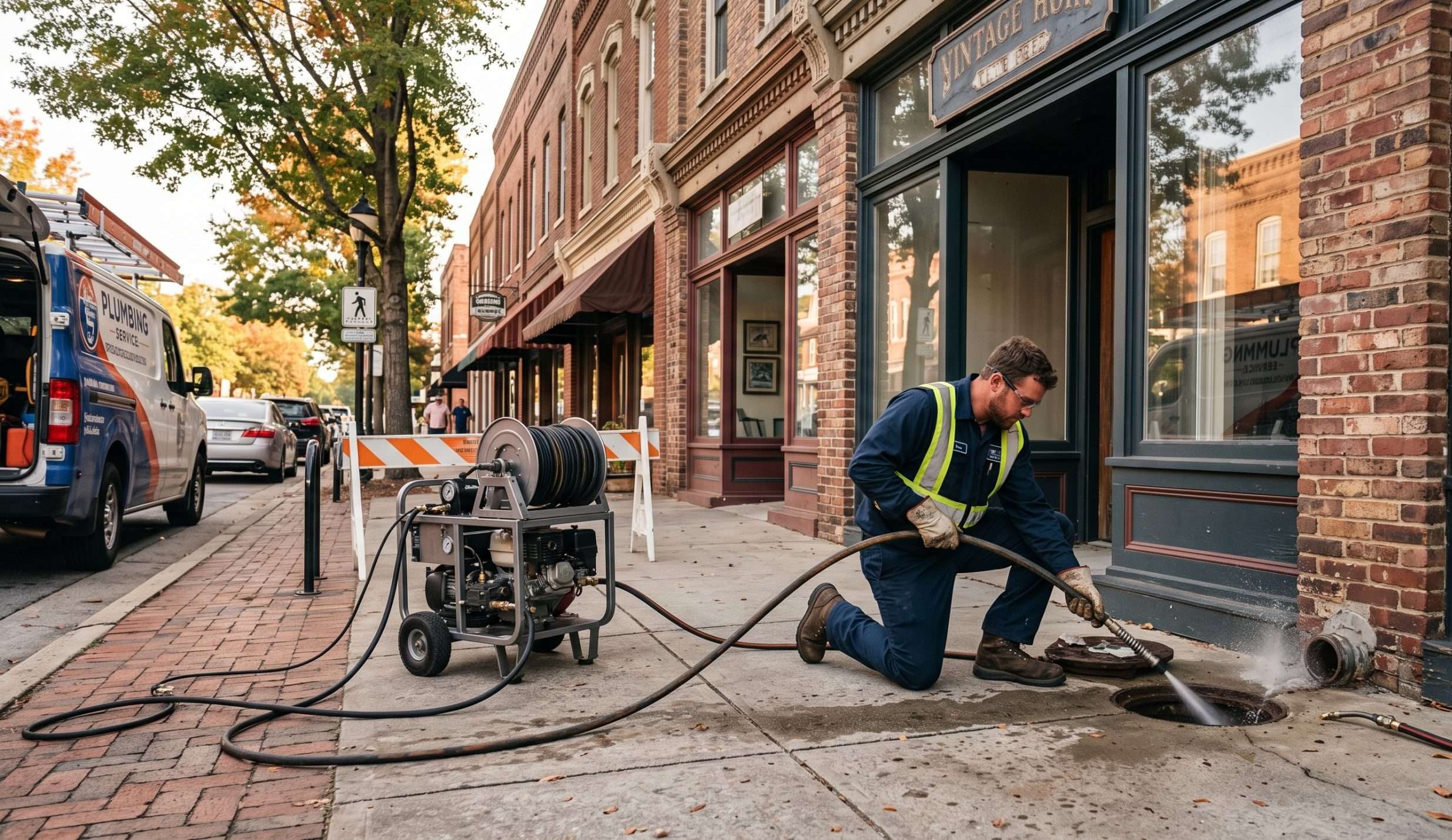
Residents and property owners in historic downtown Norcross often face a troubling situation: persistent drain clogs in buildings that have stood for generations. Many of these properties retain their original plumbing infrastructure, with cast iron or clay pipes that predate modern materials. When water backs up in a century-old building, the immediate temptation is to reach for a chemical drain cleaner. However, the unique characteristics of historic plumbing demand a more thoughtful approach to maintenance. Choosing the safest and most effective method is not just about clearing a clog—it’s about preserving the value and integrity of these heritage structures for years to come. In comparing chemical drain cleaners and professional hydro jetting, the right solution will balance immediate results with long-term protection for Norcross’s irreplaceable pipes.
Unique Plumbing Challenges in Historic Downtown Norcross Properties
Older buildings in Norcross often feature plumbing systems with materials like cast iron, clay, or even Orangeburg fiber pipes. These materials, while robust in their era, are now known to corrode, crack, or collapse under stress. Unlike modern PVC, these vintage pipes are more vulnerable to abrasive cleaning methods and sudden pressure changes. A practical example is a 1920s shopfront on Main Street, where the original cast iron drain lines have developed scale buildup and mineral deposits over decades. Attempting to clear such lines with aggressive tools or chemicals risks accelerating the deterioration of the pipe walls.
Another factor is the presence of outdated pipe joints and connections, which may not form watertight seals by today’s standards. Even minor leaks can lead to water damage behind historic plaster or under hardwood floors. Building owners are often surprised to find that even routine drain clog issues can reveal hidden weaknesses in these old systems. Local codes and preservation guidelines may also restrict certain repair techniques, making proactive, low-impact maintenance even more important.
Understanding the types of plumbing materials commonly found in historic buildings is essential before attempting any drain cleaning. This knowledge allows property owners and service providers to select methods that minimize risk to the unique infrastructure in downtown Norcross.
Hidden Risks of Using Chemical Drain Cleaners on Aging Pipes
Chemical drain cleaners, widely available at hardware stores, use caustic substances to dissolve hair, grease, and organic blockages. While these products offer convenience, their harsh formulas can react negatively with older pipes. For example, sodium hydroxide in many commercial products not only attacks clogs but also corrodes the interior surfaces of cast iron and clay pipes. Over time, repeated use can thin pipe walls, leading to leaks or even sudden breaks that require expensive repairs.
Many property owners are not aware that chemical reactions can also generate excessive heat within a confined section of pipe, especially where water flow is limited. In a historic Norcross building, this can crack brittle clay joints or cause old soldered connections to fail. Chemical residue may remain trapped in low-flow sections, causing extended exposure and further weakening pipes. The environmental impact is another concern, as runoff from flushed chemicals can enter local waterways and affect the surrounding ecosystem.
Guides on safe disposal of chemical cleaners emphasize the importance of protecting both plumbing and the broader environment. For buildings with aging infrastructure, avoiding these products is often the wisest course.
How Professional Hydro Jetting Safely Restores Vintage Drain Lines
Professional hydro jetting uses high-pressure water streams to dislodge pipe blockages and scour away buildup inside the line. Unlike chemical cleaners, this technique does not introduce corrosive agents into the plumbing system. A skilled technician can adjust the water pressure to safely clean cast iron, clay, or other vintage materials without causing physical damage. For example, in a historic Norcross home with original drain lines partially clogged by decades of soap scum and scale, hydro jetting can restore full flow without harming the pipe structure.
During a hydro jetting service, specialized nozzles are inserted into the drain, directing water jets at specific angles to break apart obstructions while flushing debris out of the system. This method is particularly effective at removing roots and mineral deposits that chemical cleaners cannot resolve. Because no residues remain, there is also no risk of residual chemicals harming the pipes or surrounding soil. The process can be completed without excavation, preserving both the plumbing and the historic features of the property.
Property managers looking for Drain Cleaning in Norcross often rely on this approach for regular maintenance. This type of service helps safeguard vintage plumbing systems over time.
Making the Right Plumbing Maintenance Choice for Heritage Buildings
Choosing the right maintenance method for historic properties requires weighing immediate convenience against long-term preservation. Chemical drain cleaners may appear to offer a quick fix, but they introduce cumulative risks that can compromise the very infrastructure that makes these buildings unique. Hydro jetting, when performed by a provider experienced with older plumbing, offers a safer and more sustainable solution for professional Drain Cleaning in Norcross.
Owners of heritage buildings should request a plumbing inspection before any major cleaning procedure. This assessment can identify pipe materials, existing weaknesses, and the safest cleaning approach. For properties under preservation guidelines, hydro jetting can often be completed with minimal disruption to historic finishes and building materials, aligning with conservation best practices.
Ultimately, maintaining original plumbing is not just about clearing blockages—it’s about protecting the story and character embedded in Norcross’s historic downtown. Consulting with providers who understand both modern techniques and heritage requirements ensures the right balance between functionality and preservation.
Conclusion
Requesting a professional inspection and choosing hydro jetting over chemical cleaners is the most reliable way to preserve the plumbing in historic downtown Norcross properties. For any maintenance decision, prioritize methods that respect both the age of the system and the value of the building’s heritage. This approach keeps drains flowing while safeguarding the character that sets these properties apart.











Leave A Comment