
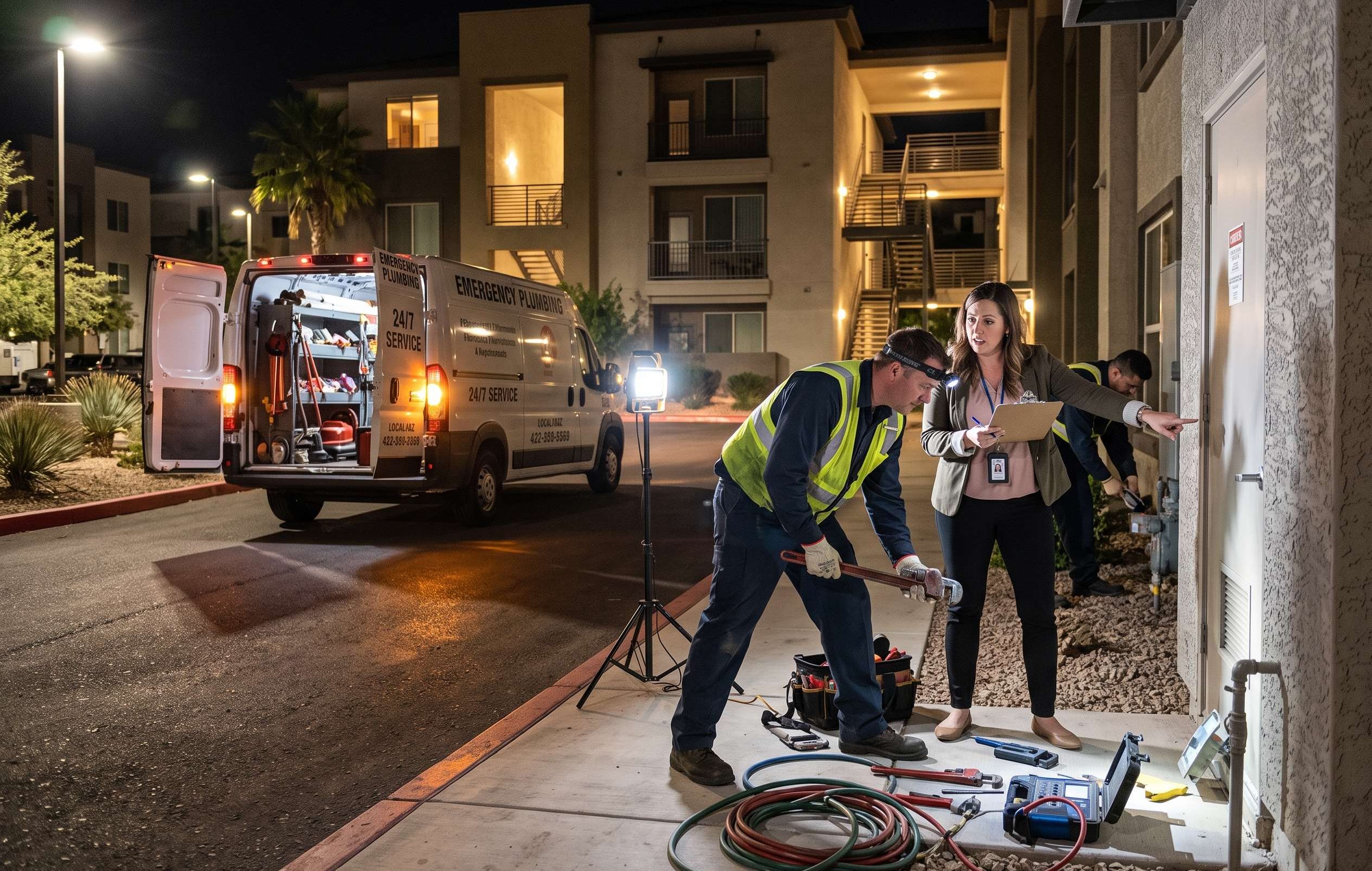
A burst pipe in a Glendale apartment building at 2 a.m. can quickly escalate from a minor inconvenience to a major crisis for both tenants and property managers. Water pouring through ceilings or flooding common areas not only disrupts residents’ routines but also threatens building infrastructure and increases repair costs. Residential property managers are often the first line of response, tasked with coordinating fast, effective solutions in the middle of the night. Knowing exactly how to dispatch an emergency plumber and what steps to take can make the difference between minor repairs and extensive, costly damage. Understanding local plumbing challenges, setting up efficient dispatch protocols, and establishing relationships with trustworthy contractors ensures crises are handled with minimal disruption and liability.
Glendale Residential Property Management Plumbing Challenges
In Glendale, older multi-family properties frequently experience issues like corroded galvanized pipes and aging shut-off valves that may not function during a plumbing emergency. For property managers, identifying which units or common areas are most susceptible to leaks or floods is a key part of preventive care. Seasonal temperature swings, especially in the summer, can strain plumbing systems and increase the risk of pipe bursts or slab leaks. Reviewing common plumbing hazards in apartment complexes helps managers prioritize regular inspections of high-risk components such as water heaters and main supply lines.
Another common challenge is locating unit-specific shut-off valves when every minute counts. Many older buildings lack clear labeling or access to these valves, causing delays in stopping water flow during an emergency. Managers should maintain updated maps of plumbing infrastructure and ensure staff are trained to find and operate these shut-offs quickly.
Finally, tenant communication barriers can slow response times. Language differences or after-hours availability mean that emergency calls may not always provide clear information. Implementing a standardized intake script for after-hours contacts helps gather the right details, so the dispatched plumber arrives prepared.
Immediate After Hours Emergency Plumber Dispatch Protocols
The first step in any after-hours plumbing emergency is confirming the severity of the issue. Property managers should instruct on-site staff or tenants to immediately shut off water at the nearest accessible valve if safe to do so. Documenting the problem with photos or videos can help plumbers assess the situation remotely before arrival. Establishing a clear sequence for after-hours dispatch—such as contacting a 24/7 answering service or using an emergency call tree—shortens wait times and reduces confusion.
When a manager is ready to request help, having a pre-approved list of local providers is critical. For example, using an Emergency Plumber in Glendale ensures the dispatcher understands the city’s building types and typical plumbing layouts. This type of resource can mobilize a technician familiar with Glendale’s residential properties, minimizing diagnostic delays. The service’s rapid response capability offers property managers a dependable escalation path for serious incidents.
After dispatching, managers should remain available for updates or further instructions. Coordinating access for the plumber—such as unlocking mechanical rooms or notifying tenants—prevents wasted trips and ensures work can begin on arrival.
Vetting Reliable Glendale Plumbing Contractors for Apartments
For property managers, having vetted contractors on call is essential for prompt emergency response. An important criterion is checking that the plumbing company holds a valid Arizona contractor’s license, which indicates compliance with state standards for training and insurance. Verifying experience specifically with multi-unit dwellings helps ensure the contractor understands the unique plumbing systems and logistical challenges found in apartments and condominiums.
Requesting references from other Glendale property managers can reveal how a contractor handles after-hours emergencies, tenant interactions, and follow-up repairs. Some companies offer service agreements that outline response times, availability, and pricing for after-hours calls. Reviewing these agreements helps managers avoid unexpected costs and ensures expectations are clear before an emergency occurs.
It’s also helpful to confirm whether the contractor stocks critical replacement parts for aging infrastructure common in Glendale, such as older shut-off valves or copper piping. A contractor prepared with the right parts can often resolve emergencies in a single visit, reducing disruption for residents. Reviewing a contractor’s emergency response procedures sets clear expectations for performance and accountability.
Mitigating Water Damage Risks in Multi Family Properties
Water damage can spread rapidly in apartments, affecting multiple units and common spaces. For Glendale property managers, proactive steps start with regular inspections and maintenance of main shut-off valves, water heaters, and visible piping in utility areas. Installing water leak detectors in high-risk locations provides early warnings that can reduce overall impact.
When an emergency occurs, managers should take immediate steps to limit water migration—placing barriers, moving tenant belongings, and extracting standing water where possible while awaiting professional help. Coordinating with restoration vendors in advance ensures that cleanup can begin as soon as repairs are underway, preventing secondary issues like mold growth.
Documenting all actions taken during an incident is valuable for both insurance claims and future risk assessments. Keeping a log of response times, communications, and repairs performed allows property managers to refine protocols and demonstrate due diligence in the event of disputes or liability questions.
Conclusion
Establishing a clear after-hours response plan, supported by reliable plumbing contractors and proactive property inspections, empowers Glendale residential property managers to respond swiftly and confidently to any emergency. Begin by mapping your building’s shut-off valves, updating your emergency contact list, and reviewing contractor agreements to ensure you’re ready before the next call comes in.











Leave A Comment