

Did you know winter in Antelope Canyon can be very cold? It turns this Arizona wonder into a magical place. This makes it a special journey through nature’s most stunning sculptures during the quietest time of the year.
Winter in Antelope Canyon is a unique experience. It’s different from the busy summer months. The Navajo-owned slot canyon is a perfect spot for photographers and adventurers. They come here to see its beauty in a new way.
The warm sandstone and cool winter light create a magical scene. This mix of elements is perfect for quiet journeys and amazing photos. The lower sun in winter makes the canyon’s colors, like reds and oranges, stand out in a special way.
Winter means fewer people, so you can have a closer experience with the canyon. The cool air and calm setting are great for connecting with nature. The Antelope Canyon winter landscape is a rare chance to see this amazing place in peace.
Key Takeaways
- Winter transforms Antelope Canyon into a serene wonderland
- Cooler temperatures create unique lighting conditions
- Fewer visitors allow for a more intimate canyon experience
- Winter offers enhanced photography opportunities
- The canyon’s colors appear more vibrant in winter light
- Soft winter light is ideal for long-exposure photography
- Guided tours typically last 1-1.5 hours year-round
Understanding Antelope Canyon in Winter
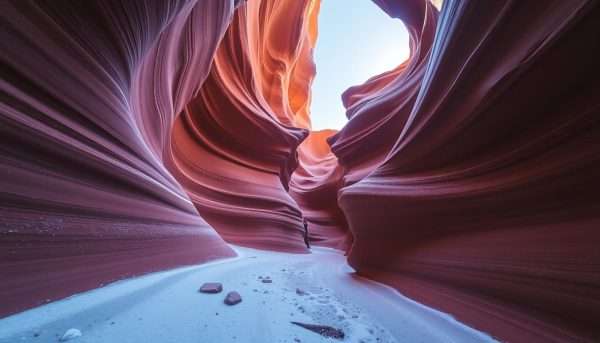
Winter at Antelope Canyon is truly magical. The air is crisp and the light is softer. It’s perfect for exploring and taking photos. Let’s explore what makes winter here so special.
Winter Weather Conditions and Temperature
Winter in Antelope Canyon is mild and comfy. Temperatures are between 40 to 60 degrees Fahrenheit. Snow is rare, with only two to three rainy days a month. This makes visiting the canyon a joy without the summer heat.
Best Times for Winter Visits
From October to March, winter offers a quieter visit. January is a great time, with better rates and fewer people. The canyon walls show beautiful colors, making it great for photos.
Winter Access and Tour Availability
Tours are available all winter, but you need a reservation with a Navajo guide. Upper Antelope Canyon is easier to get to. Lower Antelope Canyon has stairs and ladders. Tours last up to two hours, including parking and travel. Prices are from $40 to $90, based on the canyon and tour.
| Canyon Section | Tour Duration | Price Range |
|---|---|---|
| Upper Antelope Canyon | 90 minutes | $50 – $90 |
| Lower Antelope Canyon | 60 minutes | $40 – $80 |
Winter in Antelope Canyon is peaceful and mild. It’s perfect for photography and those who love quiet adventures.
The Magic of Winter Photography at Antelope Canyon
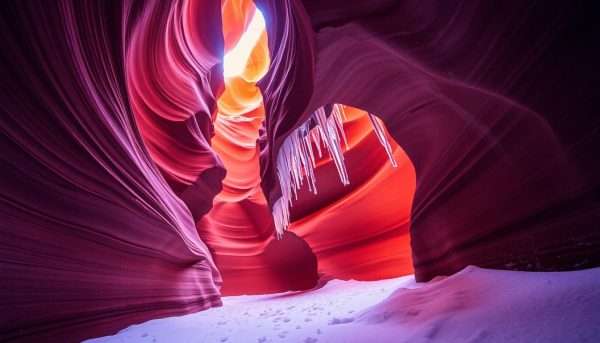
Winter photography at Antelope Canyon is truly special. The soft light and long shadows create amazing contrasts. This makes the canyon’s depth and texture stand out. Plus, the quiet atmosphere lets you get creative without the crowds.
Capturing Winter Light and Shadows
Winter light in Antelope Canyon is a dream for photographers. The low sun angle adds warm tones to the canyon walls, making their colors pop. The best times for dramatic shots are early morning or late afternoon. Even without direct light rays, the diffused light reveals the rock formations’ subtle details.
Photography Equipment for Winter Shoots
For great winter photography at Antelope Canyon, bring the right gear:
- Wide-angle lenses to capture the canyon’s scope
- Tripod for steady long-exposure shots
- Weather-resistant camera bag
- Dust blower for lens cleaning
- Second camera for handheld shots
Professional Tips for Winter Photography
To get the most out of your Antelope Canyon winter photography:
- Set ISO between 200 and 400 for faster exposures in low light
- Use multiple exposures to account for people walking into shots
- Develop a good relationship with your Navajo guide for the best experience
- Consider editing tools like Photoshop’s ‘Content Aware Fill’ to remove unwanted elements
Winter photography at Antelope Canyon needs patience and creativity. The unique lighting conditions and fewer crowds let you see the canyon’s beauty in a new way. With the right preparation and techniques, you’ll take home truly magical photos.
Winter Tour Options and Booking Information

Antelope Canyon winter tours are special. You get to see this natural wonder with fewer people around. Upper Antelope Canyon is easy to walk, about 100 yards. Lower Antelope Canyon is longer, about 600 yards underground.
Both offer amazing winter views and great photo spots.
It’s important to book your tour early, even in winter. The best time for Lower Antelope Canyon tours is between 10:15 am and 1:15 pm. This is when the winter light is most magical. Antelope Canyon winter tours last 1 to 1.5 hours. You’ll have plenty of time to enjoy the canyon’s beauty.
Photography lovers can join special winter tours. These tours give you more time and expert tips for amazing photos. The winter light and rock formations make for incredible pictures.
| Tour Type | Duration | Group Size | Age Requirement |
|---|---|---|---|
| Standard Winter Tour | 1-1.5 hours | Varies | All ages |
| Small Group Tour | Full day | Max 14 people | 7+ years |
| Private Tour | Full day | 6+ guests | 5+ years |
| Photography Tour | 2-3 hours | Limited | Varies |
Winter tours have extra perks. Some places offer deals that include Antelope Canyon and other spots like Horseshoe Bend or Lake Powell. These packages save you time and money, giving you a full Arizona winter experience.
Experience a Phoenix to Antelope Canyon road trip.
Preparing for Your Winter Canyon Adventure
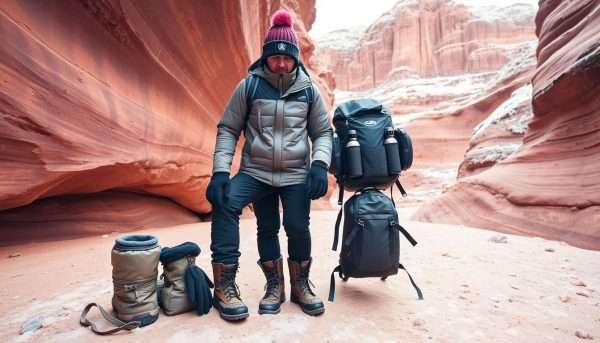
Planning a winter trip to Antelope Canyon needs careful thought. The cold weather and special conditions require the right gear and safety tips for hiking in winter.
Essential Winter Gear and Clothing
Layering is crucial when packing for winter. Page, Arizona’s nights can be as cold as 27°F to 31°F in January. Wear warm jackets, gloves, hats, and sturdy shoes with good grip. The canyon’s daily temperatures in January are between 42°F and 46°F.
Safety Considerations
Always check the weather forecast before you go. While flash floods are rare in winter, knowing the conditions is important. The canyon gets about 25 days of sunshine in January, but weather can change quickly. Tours last 1.5 hours, so dress for the weather.
Transportation and Parking
Plan your trip with these driving times to Antelope Canyon:
- South Rim of Grand Canyon: 2.3 hours / 132 miles
- St. George: 2.8 hours / 161 miles
- Sedona/Flagstaff: 2.8 hours / 160 miles
- Las Vegas: 4.5 hours / 280 miles
Winter parking is easier because of fewer visitors. Arrive early to find a spot near the canyon. Book your tour in advance to avoid stress and get your preferred date.
Read about driving to the Grand Canyon from Vegas.
Unique Winter Scenery and Natural Phenomena
Antelope Canyon turns into a magical wonderland in winter. The cool air and soft light make it a place of enchantment. It draws in both visitors and photographers.
Winter Light Patterns
The low winter sun creates long shadows in the canyon. These shadows paint the walls with ever-changing patterns. The cool air makes the light even more special.
Rock Formation Visibility
Winter brings clear skies and fewer people. This means you can see the canyon’s rock formations better. The Upper Canyon shows off its details and the Lower Canyon reveals its beauty without distractions.
Winter Color Variations
The canyon’s colors change in winter. The walls turn into deep reds and oranges. Snow adds a magical touch to these colors, creating a rare sight.
“Antelope Canyon in winter is a photographer’s dream. The interplay of light, shadow and rich colors creates a constantly changing visual spectacle throughout the day.”
While light beams are rare in winter, the quiet and beauty make up for it. From November to February, you can enjoy peaceful tours. It’s a great time to see Antelope Canyon’s raw beauty.
Advantages of Visiting Antelope Canyon in Winter
Winter turns Antelope Canyon into a magical wonderland. It offers unique experiences for visitors. The Antelope Canyon winter solstice is special, with dramatic light effects that photographers love to capture.
Smaller Crowds and Intimate Experience
Winter means fewer visitors at Antelope Canyon. It becomes a peaceful retreat. With fewer tourists, you can explore the canyon’s beauty at your own pace.
This quieter atmosphere lets you enjoy the canyon’s stunning formations. You won’t feel rushed like in peak seasons.
Winter Pricing and Deals
Winter offers attractive pricing for budget-conscious travelers. Many tour operators have special winter rates. This makes it an affordable time to visit this natural wonder.
These deals often include extended tour durations or smaller group sizes. They enhance your overall experience.
Enhanced Photography Opportunities
Winter light makes Antelope Canyon a photographer’s dream. The low sun angle during the winter solstice produces soft, warm hues. These highlight the canyon’s textures beautifully.
With fewer people around, you can take long-exposure shots without interruptions. This lets you capture the canyon’s ethereal beauty in stunning detail.
| Winter Visit Advantages | Details |
|---|---|
| Crowd Levels | Significantly lower than peak seasons |
| Tour Prices | Often discounted with added benefits |
| Photography | Unique lighting, less interference |
| Canyon Experience | More intimate and peaceful |
Explore the stunning flower fields of California.
Enjoy Your Road Trip
Antelope Canyon in winter has a special charm that draws in visitors. It’s less crowded and cooler, making it a peaceful spot from December to February. This time of year offers a close-up look at the stunning rock formations and unique lighting.
The soft winter light makes the canyon’s scenes magical, bringing out colors and textures. Photographers will love this season, with its special shadows and light beams. To get the best shots, bring a tripod and try different angles.
When visiting Antelope Canyon in winter, be well-prepared. Wear warm clothes because it can get very cold. Also, book guided tours early, especially during holidays. These tours help you see the canyon’s geology and cultural importance.
Winter visits to Antelope Canyon need some planning, but they’re worth it. The calm atmosphere, unique lighting, and close experience make it a memorable trip. By following the Navajo Nation’s rules and enjoying the season’s special moments, you’ll find Antelope Canyon’s winter magic.






Leave A Comment