
Tripadvisor lists 572 sights and attractions in Lisbon. Tourists love visiting the UNESCO-listed Jerónimos Monastery and the iconic Belém Tower. Yet the city has many hidden historical treasures waiting for visitors to find them.
The 170-foot Monument to the Discoveries and the busy São Jorge Castle are popular spots. But Lisbon’s lesser-known historical landmarks tell equally fascinating stories about the city’s past. These hidden spots let you explore Portugal’s capital authentically, far from the crowds that gather at the famous yellow Tram 28 or the Rua Augusta Arch.
This piece shows you 17 secret landmarks that capture Lisbon’s true heritage. Most guidebooks might skip these places, but they deserve as much attention as their famous counterparts.
Palácio dos Marqueses de Fronteira
The Palácio dos Marqueses de Fronteira, one of Portugal’s hidden gems, sits peacefully in Lisbon’s quiet Benfica neighborhood. This remarkable palace stands just 20 minutes from downtown and gives visitors a rare peek into Portuguese aristocratic life away from busy tourist spots.
The Hidden Baroque Masterpiece
Built around 1670, this magnificent palace showcases pristine 17th-century palatial architecture. What started as a simple hunting lodge and summer retreat grew into an elegant residence that highlights Portugal’s artistic brilliance. The palace deserves more attention than it gets, as tourist numbers remain low compared to central Lisbon’s attractions. A striking red main building stands out against cobalt blue walls, creating a stunning visual display across its 13-acre grounds.
Historical Significance of the Palace
Dom João de Mascarenhas, the first Marquis of Fronteira, commissioned this palace to celebrate his loyalty during the Portuguese Restoration War against Spain. The devastating 1755 Lisbon earthquake destroyed the family’s downtown home, which led them to expand this property into their main residence. The palace feels uniquely authentic because the original Marquis’s descendants still call it home today, making it different from typical museums.
The Stunning Tile Panels and Gardens
Portugal’s largest collection of 17th-century azulejos sits within these walls, preserved exactly where they were first installed. The Room of Battles amazes visitors with its blue-and-white tile panels that show eight key battles from the Portuguese Restoration War, created between 1669-1673 using eyewitness accounts. The formal gardens feature the spectacular Lake of Knights, where blue-and-white tiles depict Mascarenhas family members riding horses. Visitors can see Portuguese monarchs’ busts in the Kings Gallery, while the Liberal Arts Terrace displays beautiful panels showing poetry and the seven classical arts.
How to Visit This Lesser-Known Gem
The palace offers guided tours Monday through Saturday in English, French, Spanish and Portuguese for €17. Garden visits cost €7, and audio guides are available for €3 more. Getting there is easy – take the metro to Jardim Zoológico station on the blue line, then catch bus 770 to the palace entrance. The gardens welcome visitors from 10am to 6pm, with final entry at 5:30pm.
Jardim da Estrela
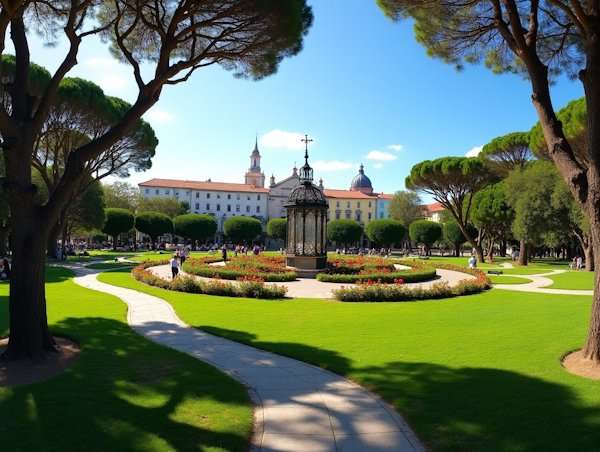
The Jardim da Estrela, with its official name Jardim Guerra Junqueiro, sits across from the imposing Basilica da Estrela. This beloved green space offers a peaceful retreat from Lisbon’s busy tourist routes and welcomes visitors to a lush oasis spanning approximately five hectares.
A Local’s Alternative to Tourist Parks
Portuguese families fill this verdant sanctuary on weekends. They enjoy picnics while their children learn to ride bikes and yoga enthusiasts stretch on the lawns. The garden gives visitors an authentic peek into everyday Lisbon life, away from the crowded downtown attractions. Local games unfold as skateboarding teenagers show off their tricks and couples find comfort on the many benches throughout the grounds. Visitors can enjoy the park from 7am until midnight daily.
Historical Rise of the Garden
Lisbon’s governor António Bernardo da Costa Cabral foresaw the garden as “a place for Lisbon residents to enjoy” in 1842. Political instability and money problems delayed construction, but the park opened its gates to the public in 1852. Queen Maria II’s frequent visits with her children made the garden a favorite spot among Lisbon’s elite. The garden once housed a caged lion for over 70 years. Today, only ducks, swans and other waterfowl swim in its ponds.
Notable Monuments and Structures
An elegant wrought-iron bandstand from 1884 stands as the garden’s centerpiece. The structure moved from Avenida da Liberdade to its current spot in 1936. The space showcases remarkable sculptures like “O Despertar” by Simões de Almeida and “Guardadora de Patos” (Keeper of the Ducks), which brings a beloved fairy tale character to life. Exotic trees thrive here, including jacarandas, dragon trees, araucarias and a massive banyan tree.
Cultural Events at Jardim da Estrela
The garden buzzes with cultural activities year-round. Local artisans display their work at monthly craft markets. Summer evenings come alive with jazz concerts, and performers regularly take the bandstand stage. Electronic music events and specialized festivals have turned this historical Lisbon landmark into a vibrant cultural hub.
Chafariz do Rato
The Chafariz do Rato stands quietly between Rua do Salitre and Rua da Escola at Praça do Rato. This baroque fountain has become one of the most overlooked historical landmarks in Lisbon’s mixture of monuments. The city’s historical relationship with water comes alive through this fountain, which underwent restoration recently.
The Forgotten Fountain of Lisbon
Architect Carlos Mardel built the Chafariz do Rato in 1794, creating a most important yet often bypassed landmark in Lisbon’s historical world. The fountain sits next to Palácio Palmela and served as the primary water source for this area of Lisbon, which had no water supply until modern infrastructure came along. Local residents relied on it as a vital lifeline for decades before it deteriorated. EPAL (Empresa das Águas Livres de Portugal) recognized its status as a National Monument and completed a full restoration project in 2021.
Architectural Details and Symbolism
Lioz stone forms the fountain’s classic baroque lines – a distinctive Portuguese limestone from Lisbon’s region known for its beige color, irregular background and thin grain with visible fossils. The elegant design shows a sophisticated composition with a main tank and decorative frame around the fountain face. An aedicule crowns the structure, while the main fountain display sits below with a cornice adorned by three vases. Water flows from spouts into two small semicircular basins and a rectangular basin with rounded corners collects water from two more spouts at ground level. This arrangement showcases 18th-century public works’ architectural sophistication.
Historical Importance in Lisbon’s Water System
The Chafariz do Rato earned its place in history as the first fountain connected to the impressive Águas Livres Aqueduct system. Hungarian architect Carlos Mardel’s magnificent Mãe d’Água reservoir, designed in 1746, supplied its water. The fountain created an essential social gathering space, like other public fountains in Lisbon. The upper zone welcomed the general population while animals used the lower section. These fountains revolutionized Lisbon’s social and economic activity centers. A historian notes, “The importance that a chafariz had in the population’s life and in the city’s organization is undeniable… They appeared precisely to satisfy the need for access to water”. These fountains remain vital to Lisbon’s visual identity and cultural heritage today, despite no longer serving their original purpose.
Campo de Santana
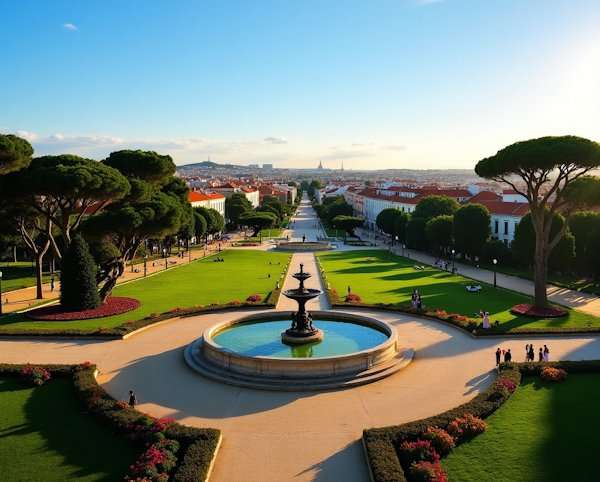
Campo de Santana sits in central Lisbon, a captivating park rich with history that many visitors miss. Local people know it as Campo Mártires da Pátria (Field of the Martyrs of the Homeland), a peaceful green space that reveals the city’s complex past.
The Garden of Romantic Secrets
This 2.6 hectare sanctuary provides a peaceful retreat from Lisbon’s busy streets. Beautiful tree-lined paths and plenty of benches create a romantic setting where people can watch city life pass by. Century-old trees display their pink blossoms that add charm to the garden year-round. Tourists seeking authentic experiences and locals needing a quiet moment find this park a perfect escape.
Historical Significance
The area has served many purposes as Lisbon evolved through time. The space started as a 14th-century poor house and quarantine facility for beggars and sick people. The site became a 16th-century slaughterhouse. Bull-fighting events took place here from 1831 to 1889. The 19th century saw the space turn into a vegetable market and fairground. Feira da Ladra, Lisbon’s flea market, operated here from 1835 to 1882 before moving elsewhere. The garden’s name honors eleven people who fought alongside General Gomes Freire de Andrade and died here in 1817.
Unique Flora and Fauna
The park stands out among Lisbon’s historic sites thanks to its unusual residents. Farm animals like chickens, roosters, ducks and geese roam freely here. These animals create a “bucolic quality in the middle of the city”. Peaceful ponds dot the landscape where waterfowl swim quietly. This blend of city and country elements creates an unmatched experience among Lisbon’s parks.
Local Traditions and Events
The southern end features an impressive monument to Dr. José Tomás de Sousa Martins (1843-1897), a respected doctor who promoted healthcare for poor patients. A 10-meter tall bronze statue, built in 1879, stands in front of today’s Faculty of Medical Sciences. People still leave flowers and plaques at the statue’s base to thank the doctor for “curing” their loved ones. A small café plays classical music, including Tchaikovsky, which sets a refined mood for visitors enjoying their drinks.
Miradouro Panorâmico de Monsanto
The UFO-like Panorâmico de Monsanto sits at the top of Monsanto Forest Park. This unusual landmark gives visitors amazing city views and a chance to explore urban ruins.
The Abandoned Viewpoint
The concrete giant officially reopened to the public in 2017 after sitting empty for years. Before that, only urban explorers and graffiti artists could get inside. City authorities have now made it safe by clearing dangerous debris but kept its raw, dystopian feel. Anyone can explore all five floors from 9am to 7pm without paying an entrance fee.
History of the Former Restaurant
Architect Chaves da Costa designed the building, and construction started in 1964. The work finished three years later. This circular building opened in 1968 as a fancy restaurant that only Lisbon’s elite could visit. The venue lasted just two years as a restaurant. It went through several changes after that – becoming a bingo hall, nightclub, film company office and finally a warehouse. By 2001, everyone had left it empty.
Street Art Transformation
The empty building became a perfect canvas for street artists. You’ll find artwork everywhere – on walls, staircases and hallways. The art ranges from basic tags to detailed commissioned pieces. Walking through these colorful hallways feels surreal, especially with the contrast between bright murals and crumbling walls.
Breathtaking Views of Lisbon
The best part is still the amazing 360-degree view of Lisbon. The third floor gives you maybe the best view in the city. Lisbon’s skyline looks stunning from up here, and the Aqueduto das Águas Livres looks particularly impressive. What used to be a restaurant only rich people could visit now gives everyone a chance to see these incredible views.
Cemitério dos Prazeres
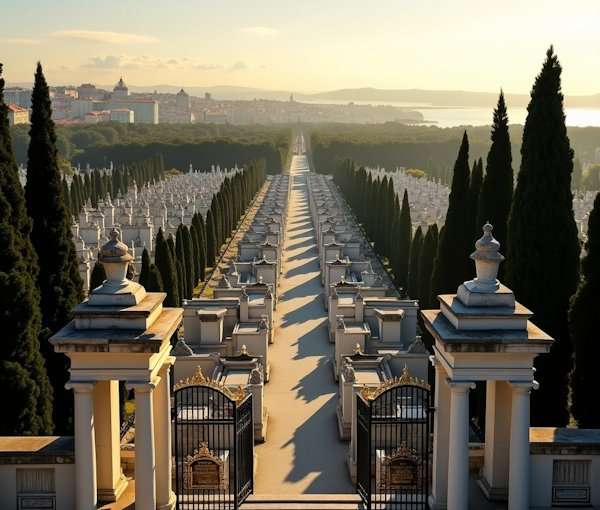
The elegant Cemitério dos Prazeres gives visitors a unique look into Lisbon’s past through its ornate funerary art and famous residents. This remarkable landmark sits in the Estrela parish of western Lisbon. The cemetery is 190 years old, built in 1833 after a devastating cholera outbreak created the need for new burial grounds.
The Cemetery of Pleasures
The name translates to “Cemetery of Pleasures,” but there’s an interesting story behind it. The cemetery got its name from Quinta dos Prazeres, a 16th-century estate that once stood here. People called it the Cemitério Ocidental de Lisboa (Western Cemetery of Lisbon), and we used it to serve the western, aristocratic side of the city. The cemetery became the final resting place for Lisbon’s elite families. These families hired famous architects and artists to build extraordinary memorials.
Notable Residents and Tombs
Many Portuguese luminaries rest here, including Prime Ministers, Presidents, literary figures, musicians and artists. The cemetery’s famous residents include Maria de Lourdes Pintasilgo (108th Prime Minister), Mário Soares (25th President), fado singer Carlos do Carmo and painter José Malhoa. Some well-known figures were buried here temporarily. Fernando Pessoa’s remains moved to Jerónimos Monastery and Amália Rodrigues (Queen of Fado) now rests in the National Pantheon.
Architectural Highlights
The cemetery has only mausoleums, and many look like small buildings, churches or castles. Europe’s largest private mausoleum, which belongs to the Dukes of Palmela, stands here. Visitors can see amazing sculptures and spooky decorative elements like skulls and crossbones throughout the grounds. The cemetery’s layout looks like a small town with narrow lanes that wind up and down, creating a parallel city within Lisbon.
Cultural Significance
Prazeres ranks among the world’s most beautiful cemeteries and serves as an open-air museum that shows off Lisbon’s artistic heritage. A museum opened in the auxiliary buildings in 2001, displaying funeral-related artifacts. The grounds have the largest collection of cypress trees on the Iberian Peninsula, which creates a peaceful atmosphere. Visitors can catch spectacular views of the Alcântara Valley and the 25 de Abril Bridge from certain spots. This hidden landmark deserves a visit.
Must visit landmarks in Portugal.
Palácio Beau-Séjour
A remarkable architectural gem lies hidden in Lisbon’s São Domingos de Benfica district. The Palácio Beau-Séjour stands quietly among the city’s famous attractions. Its elegant façade showcases distinctive blue azulejos, making it one of Lisbon’s most remarkable yet overlooked historical landmarks.
The Hidden Palace in Benfica
This palatial summer residence stretches across an impressive 8,000 square meters of land along Estrada de Benfica between numbers 368 and 372. The French name “Beau-Séjour” translates to “beautiful stay” and reflects its purpose as a peaceful retreat from city life. The palace’s design embraces horizontal lines, spatial symmetry, and transparency that emerged from the rural structure of Ribeira de Alcântara’s valley and Monsanto hill. The romantic garden earned the nickname “Jardim-Biscoito” from locals who admired its untamed, nature-focused design. This garden creates a peaceful space between the building and the busy road.
Historical Evolution and Ownership
The estate’s story begins as Quinta das Louras until Viscountess of Regaleira, D. Ermelinda Allen de Almeida acquired it in 1849. The property changed hands in 1859 when the Viscountess’s niece sold it to António José Leite Guimarães, the Baron of Glória. The Baron had built his fortune in Rio de Janeiro. He launched major renovations that included adding the elaborate azulejo tiles that now define the façade. The core team often shares stories about the Baron’s spirit that still roams the premises, moving books and creating mysterious sounds.
Architectural Features
The palace displays the artistic brilliance of the three Bordalo Pinheiro brothers. Francisco Vilaça painted magnificent ceiling canvases in Renaissance style, while Columbano’s masterpiece “O Carnaval de Veneza” adorns the Golden Hall. The dining room features an L-shaped panel with floral patterns by Maria Augusta. A stunning ceramic panel by Rafael Bordalo Pinheiro from the Fábrica de Faianças in Caldas da Rainha completes the room. The exterior blends simple elegance with Art Nouveau elements and Moorish features.
Current Cultural Significance
The palace underwent a complete renovation from 1989 to 1992. Today, it houses the Gabinete de Estudos Olisiponenses (GEO), Lisbon’s municipal agency that studies the city’s heritage. The restoration team brought the gardens back to their original glory using historical photographs. They created a miniature Romantic landscape with an irregular reflecting pool and a small navigable island connected by metal bridges. The palace stands as a prime example of Portuguese art from the Romantic to naturalist period and gives visitors a window into Lisbon’s aristocratic history.
Mãe d’Água das Amoreiras
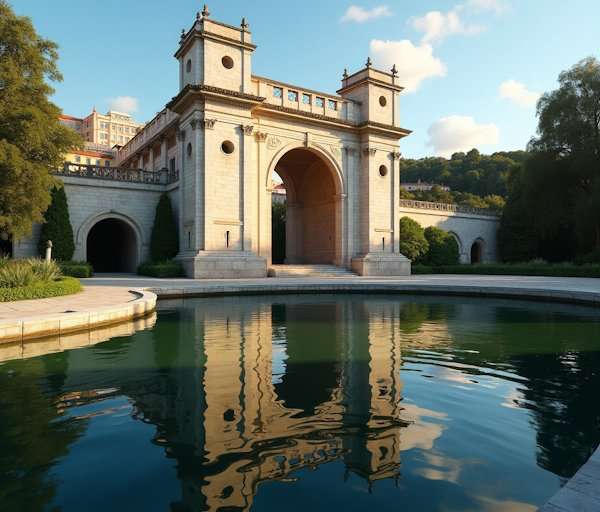
The monumental Mãe d’Água das Amoreiras Reservoir stands at the end of the Águas Livres Aqueduct. Hungarian architect Carlos Mardel designed this remarkable water temple in 1746. Today, it remains one of Lisbon’s most captivating yet undiscovered historical treasures.
The Water Temple of Lisbon
This magnificent reservoir earned its nickname “temple of water” by receiving and distributing water from the Águas Livres Aqueduct to the city. The name “Mother of Water” perfectly captures its essential role in Lisbon’s growth. The structure served more than just its practical purpose – it became a venue for social gatherings, including the wedding celebration of Dom Luís I of Portugal and Dona Maria Pia of Savoy. The reservoir earned its status as a National Monument in 1910, and its cathedral-like interior still creates a peaceful, meditative atmosphere that amazes visitors.
Engineering Marvel of the 18th Century
Carlos Mardel started the construction in 1746 but didn’t live to see its completion, as he died in 1763. Architect Reinaldo Manuel dos Santos took over the project in 1771 and made several changes to the original plans. The massive undertaking faced many delays but finally reached completion in 1834 during Queen Maria II’s reign. The reservoir’s water tank shows the ambitious nature of 18th-century engineering – it measures 7.5 meters deep and holds about 5,500 cubic meters of water.
Architectural Highlights
The interior reveals a stunning church-like hall where visitors can see:
- A dolphin’s mouth spouting water onto a cascade built from stones brought from the Águas Livres Aqueduct springs
- Four strong rectangular pillars that replaced Mardel’s original Tuscan columns now support a vaulted cupola ceiling
- Classical façades with small doors and windows that contrast with nearby buildings, plus decorative gargoyles in the cornice
Cultural Events and Exhibitions
The reservoir now belongs to Lisbon’s Water Museum (Museu da Água) and buzzes with cultural activities year-round. Artists transform the space with immersive exhibitions that project their work across walls and ceilings. Visitors can take guided tours to learn about the history of this hydraulic marvel or head up to the spectacular rooftop terrace for panoramic views of Lisbon. This architectural gem has evolved from a vital water source into a vibrant cultural hub that connects today’s Lisboetas with their city’s innovative heritage.
Jardim do Torel
Jardim do Torel sits hidden on one of Lisbon’s seven hills. This peaceful escape offers panoramic vistas that most tourists haven’t found yet. The enchanting garden stands as one of Lisbon’s last hideaways and gives spectacular views of Baixa, Avenida da Liberdade and the Tagus River from high above.
The Secret Garden with City Views
Most Lisboetas know this place exists, but few have visited this quiet retreat. The garden creates an almost sacred atmosphere as you walk through its main entrance. You’ll find carefully manicured grounds where locals relax in the sun on comfortable chaise-longue-style seating. The views over western Lisbon will take your breath away, especially when the city lights start to twinkle below at sunset.
Historical Background
The wealthy Dutch Thorel family owned this estate and built their palace here in 1750. The garden’s name still honors their legacy. The grounds remained private property through the 18th and 19th centuries until the Lisbon City Council took ownership in January 1928. People gained access to this once-exclusive aristocratic retreat when the park opened in June 1930.
Unique Features and Attractions
The garden shows off its distinctive two-level design. Shady trees and lush grass fill the upper section with magnificent city views. A staircase takes you to the lower terrace where you’ll find a café with an esplanade – perfect for sunset watching. An 18th-century mermaid statue stands in a fountain between these levels. The fountain becomes a swimming pool in summer, giving Lisboetas a unique urban beach experience to beat the heat.
Local Events and Activities
Summer brings vibrant cultural events to Jardim do Torel, including DJ performances from 17:00-21:00. The garden also hosts regular yoga classes focused on stress relief. Families will love the lower level’s playground and small library. Getting here is easy – just take Lisbon’s oldest cable car, the historic Lavra funicular, which stops near the garden entrance.
Take a Sporting Lisbon stadium tour.
Convento dos Cardaes

A simple white wall in Bairro Alto’s heart hides one of Lisbon’s most authentic religious landmarks – the Convento dos Cardaes. Many historical landmarks show off their importance with grand facades, but this 17th-century convent keeps a modest exterior that masks its beautiful treasures inside.
The Convent Hidden in Plain Sight
The bustling streets near São Pedro de Alcântara viewpoint lead to this convent with an austere exterior that holds extraordinary riches. Founded in 1681 by D. Luísa de Távora, who lived and ended up buried here, this religious complex shows a stark contrast between its strong, fortress-like exterior and the rich decorative elements inside. The convent stands as a perfect snapshot of Lisbon’s architecture before the Great Earthquake of 1755.
Religious and Historical Significance
The convent first housed 21 nuns from the Order of Discalced Carmelites who followed strict rules that limited their contact with the outside world. The building went to the Nossa Senhora Consoladora dos Aflitos Association after Religious Orders ended and the last Carmelite nun died in 1876. Dominican nuns now keep the convent running as a cultural treasure and home for about 35 women with special needs. This unique mix of museum, active religious institution, and charitable home sets Cardaes apart from other Lisbon historical sites.
Architectural Features and Baroque Tiles
Amazing artistic treasures fill the convent, including Dutch tile panels that Jan van Oort signed in 1692—these are the only signed works by this Amsterdam tile artist. These beautiful azulejos tell St. Teresa of Avila’s story. The church also features a remarkable altarpiece from 1693, which many call one of Lisbon’s finest examples of gilded wood carving. Eight paintings with golden frames add to the interior’s beauty, creating that classic Portuguese baroque blend of gilt and blue-and-white tile panels.
Visiting Information
The convent welcomes visitors Wednesday through Monday from 10am to 1pm and 2pm to 5pm (last entry at 4:30pm). Adult tickets cost €7, seniors and students pay €5, and children aged 6-12 enter for €3, while family tickets go for €17. Guides give tours in Portuguese, English and French. Your visit helps support the community of women who call this living convent their home.
Palácio da Mitra
Palácio da Mitra, once a summer getaway for Lisbon’s religious elite, stands forgotten in Santo Antão do Tojal parish. This remarkable palace shows how some of Lisbon’s most important historical landmarks stay hidden from regular tourist routes.
The Archbishop’s Forgotten Palace
The Palace of the Archbishops served as home to Lisbon’s Archbishops and later its Patriarchs. Archbishop Fernando de Vasconcelos built the original structure around 1554. He also built the nearby Matriz Church of Santo Antão do Tojal. The palace replaced a simple 13th-century house that belonged to Lisbon’s Mitra. Unlike popular tourist spots, this palace keeps its historical charm while getting nowhere near as many visitors.
Historical Significance
The palace went through a major transformation in the 18th century. The first Patriarch of Lisbon, D. Tomás de Almeida, ordered its reconstruction in Baroque style in 1730. This renovation showed the era’s changing architectural preferences. The building served many purposes over time. It became a meeting place for prevented deputies in 1915. Casa do Gaiato used its facilities in the 20th century. Lisbon City Council bought the palace in 1930. It housed the Museum of Lisbon from 1940 to 1972.
Architectural Elements
Italian architect António Canevari designed this magnificent U-shaped building. He worked on it until 1732. The Italian-style front displays three Carrara marble statues. These represent Saint Bruno of Cologne, Queen Santa Isabel and the Immaculate Conception. The palace’s interior showcases extraordinary 18th-century Portuguese azulejos in blue and white. These tiles feature rich themes including seasons, countryside scenes, hunting scenes, mythological figures, and kitchen motifs. The complex includes a square, church, gardens, palace-fountain and an aqueduct that feeds a Baroque fountain.
Current Use and Accessibility
The palace holds the status of Monument of Public Interest and opens occasionally for special events. Lisbon Council rents this venue out. Wedding ceremonies cost €354.41. Organizations like Lisbonweek sometimes offer guided tours to reveal the palace’s hidden stories. These 90-minute tours cost €12 for adults and €6 for children. They give rare access to this usually closed landmark.
Chafariz da Esperança
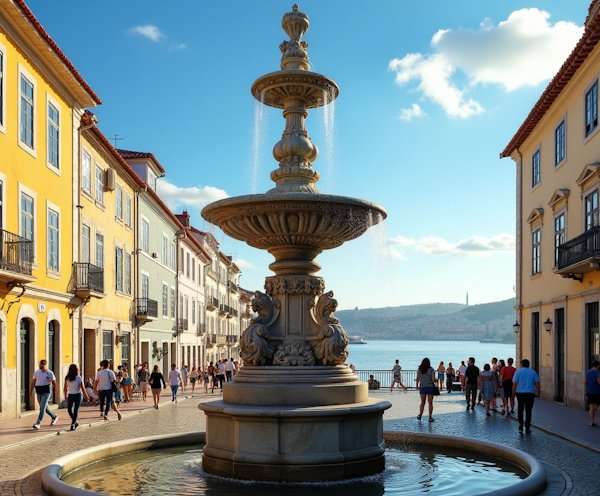
The Chafariz da Esperança stands out as evidence of Lisbon’s architectural heritage and historical water management system. This elegant fountain sits next to an iconic building that now houses Hermitage Castelo Casa Chafariz.
The Hope Fountain’s Hidden History
Miguel Blasco built this fountain in 1768 based on Carlos Mardel’s design. It became part of the Águas Livres system that revolutionized Lisbon’s water infrastructure after 1748. The Senate of Lisbon bought land from the Franciscan convent of Our Lady of Hope to build this water source. The fountain served the community for generations and earned National Monument status in 1910. This recognition highlighted its exceptional representation of Pombaline period architecture.
Architectural Details
The Chafariz da Esperança showcases a sophisticated design with two distinct levels and separate water tanks. Its structure has a portico with two lateral staircases that create an impressive façade. The fountain’s unique dual-tank system sets it apart – the upper level served people while the lower tank was for livestock. This practical arrangement showed early awareness of public health and hygiene.
Role in Lisbon’s Water System
The Chafariz da Esperança ranks among Lisbon’s finest public fountains and played a vital role in the city’s historical water distribution network. Lisbon depended on roughly 6 public fountains and 1200 private ones before modern plumbing. These water outlets became essential hubs of social and economic activity. People gathered at these fountains daily, making them the city’s social lifelines.
Local Legends and Stories
The fountain created a vibrant social space where community life thrived. Though it no longer provides water, this landmark shapes Lisbon’s cityscape and holds deep cultural meaning. Lisbon Municipality manages the fountain today, preserving its original appearance. Modern visitors can still appreciate this historical monument that played a vital part in Lisbon’s daily life.
Quinta dos Azulejos
A stunning architectural masterpiece covered in Portugal’s famous ceramic art sits quietly in Lisbon’s northern district. Quinta dos Azulejos stands as a rare treasure that most locals haven’t seen. This place showcases exceptional traditional craftsmanship away from the usual tourist spots.
The Hidden Tile Paradise
This garden sanctuary truly deserves to be called a “hidden gem” in Lisbon. Quinta dos Azulejos remains a secret to most visitors. High walls protect this peaceful oasis where jasmine scents fill the air. Unlike the city’s popular spots, you’ll rarely find crowds here. Visitors can enjoy its artistic beauty in peaceful solitude.
Historical Background
António Colaço Torres built this estate in the late 18th century. It stands out as an unusual architectural achievement, even during Portugal’s golden age of decorative tiles. The garden’s design follows Moorish tradition with an inward-looking layout that creates a protected central courtyard. This former country garden has become one of Portugal’s finest examples of tile artistry while keeping its original charm.
Notable Tile Collections
This landmark stands out among Lisbon’s historical sites because its tilework exceeds mere decoration. Ceramic tiles at Quinta dos Azulejos cover every architectural element. The tiles wrap around pillars, columns, arches, benches and walkways to create an immersive artistic experience. These stunning panels show scenes of chivalry, hunting expeditions and religious imagery. Vibrant blues, whites, and yellows follow each Rococo curve perfectly.
How to Visit This Private Treasure
Colégio Manuel Bernardes, a small school, owns and preserves this cultural heritage now. You can visit for free, but you need permission first. Just go to the main entrance gate during school hours and ask staff for a visitor’s pass. You’ll find this remarkable place at Paco do Lumiar on Rua Esquerda. It’s worth exploring beyond the usual tourist spots to discover this hidden treasure.
Igreja de São Domingos

A church stands in downtown Lisbon that has endured more calamities than any other religious building in the city. Igreja de São Domingos, first dedicated in 1241, stands as one of Lisbon’s most resilient historical landmarks. Its dramatic past remains etched into its walls.
The Church That Survived Disasters
Igreja de São Domingos has overcome extraordinary challenges in its nearly 800-year history that would have destroyed lesser buildings. The church suffered heavy damage in the 1531 earthquake and faced almost complete destruction during the catastrophic 1755 Lisbon earthquake that devastated the city. The reconstruction started right away but took until 1807 to complete. A devastating fire ravaged the interior in 1959. It destroyed many valuable paintings and statues and burned for six hours before being extinguished. The church opened its doors again in 1994, with restoration work that carefully preserved many of the fire’s marks.
Historical Significance and Tragedies
The church served as the venue for royal weddings before the modern Portuguese republic’s establishment in 1910. This former center of the Inquisition saw Jesuit missionary Gabriel Malagrida’s execution for alleged treason in 1761. The building hosted many important historical events through centuries, including conspiracies for Portugal’s 1640 Restoration War, as well as fairs and markets.
Unique Atmosphere and Architecture
This landmark stands out among Lisbon’s historical sites because of its haunting interior. São Domingos proudly displays its battle scars – burnt columns, blackened walls, and cracked marble create an atmosphere of solemn reverence. The choice to keep these fire damages visible turned what could have been a disaster into the church’s most distinctive feature.
Jewish History Connection
The church’s darkest chapter unfolded in 1506, when São Domingos became ground zero for a horrific massacre. A disagreement about a supposed miracle inside the church sparked three days of violence against Lisbon’s Jewish population, claiming thousands of lives. Today, a Star of David monument stands outside the church to honor these victims, next to an olive tree that symbolizes peace.
Palácio Pimenta
The Palácio Pimenta, once a royal gift of love, now stands as a keeper of Lisbon’s urban memories. This building serves as the main campus of the Museum of Lisbon, yet many visitors miss this historical treasure when they visit the capital.
The Hidden Museum of Lisbon
The museum sits in Campo Grande and has been the main branch of Lisbon’s City Museum since 1979. Away from downtown’s busy attractions, visitors can enjoy a quiet space to learn about the city’s development through time. The carefully curated exhibits tell the story of Lisbon’s urban, social, economic and symbolic growth.
Historical Background of the Palace
King João V ordered the palace’s construction in 1734 as a summer retreat for his mistress, a nun from the Monastery of São Dinis in Odivelas. The palace changed hands through Portuguese aristocracy over the years. Its name comes from Manuel Joaquim Pimenta de Carvalho, who owned it at one point. The museum moved several times before settling here in 1979. It started at City Hall, then moved through Carmo Convent, Mitra Palace and Galveias Palace.
Notable Collections and Exhibits
The permanent exhibitions follow a timeline from prehistoric Lisbon through Roman and Moorish periods, medieval times, the Age of Discovery and the wealthy pre-earthquake 18th century. Visitors can see ancient artifacts that date back 300,000 years. A detailed model shows Lisbon before the devastating 1755 earthquake. Beautiful tile art adorns the palace, with original panels that decorate a grand staircase and five rooms. The old kitchen holds the most unique panel – it shows a black woman cleaning fish, which rarely appeared in art beyond traditional blue and white colors.
Gardens and Surroundings
The palace grounds feature three distinct areas: a large lawn with lilies, a small woodland with cypress and cork oaks and a classic boxwood garden. Ceramic creatures by sculptor Rafael Bordalo Pinheiro hide in hedges and stick to walls throughout these spaces. Peacocks roam freely among these artistic elements, adding to the gardens’ charm. A relaxed kiosk café welcomes visitors who want to rest while they explore this hidden gem in Lisbon.
Aqueduto das Águas Livres (Hidden Sections)

A complex network of tunnels lies beneath Lisbon’s bustling streets, creating the hidden heart of the Águas Livres Aqueduct system. Tourists snap photos of the towering arches across Alcântara Valley, yet most don’t realize these visible parts show just a glimpse of this remarkable 18th-century engineering feat.
Beyond the Famous Arches
The aqueduct system stretches way beyond its iconic arches and creates a network of nearly 58 kilometers. This big hydraulic system has the main 14km section running from Belas to the Mãe d’Água Reservoir, along with many secondary sections that carry water from about 60 different sources. The network still stands largely intact today, though it stopped operating in 1967.
Secret Underground Galleries
Five mostly underground galleries ran about 12 kilometers under Lisbon’s streets and distributed water throughout the city. The Loreto Gallery remains the most available of these underground passages. Built in 1746, this 2,835-meter underground channel carried water from the Mãe d’Água Reservoir through a winding path. It started at Register House on Rua das Amoreiras, went through Largo do Rato, Rua da Escola Politécnica, and several other streets before reaching its end at Largo de São Carlos.
Hidden Access Points
The Water Museum now hosts guided tours that let people explore these hidden sections. Visitors can discover two fascinating underground routes: one from the Patriarcal Reservoir to São Pedro de Alcântara belvedere and another from the reservoir to Rua do Século. Most explorers find a surprising side of Lisbon here – quiet underground paths where water once flowed silently to the fountains above.
Historical Significance in Lisbon’s Development
This groundbreaking system changed Lisbon’s urban landscape during its operational years. The city depended on roughly six public fountains and 1,200 private ones before modern plumbing arrived. The underground network supplied water to vital places like the Royal Press House, Public Promenade, Misericórdia charity and Carmo Municipal Guard Barracks. This engineering marvel played a significant role in Lisbon’s growth during the 18th century and survived the devastating 1755 earthquake that destroyed much of the city.
Jardim Botânico da Ajuda
Away from Lisbon’s busy tourist paths sits a horticultural treasure that’s older than any other botanical garden in Portugal. The Jardim Botânico da Ajuda spans 3.8 hectares on two south-facing terraces and gives visitors a stunning view of the mighty Tagus River.
Portugal’s First Botanical Garden
This green haven dates back to 1768, making it Portugal’s very first botanical garden. Italian botanist Domingos Vandelli came from Padua at King Joseph I’s request to design this scientific garden. The garden served as a learning space for royal princes. What started as a royal classroom soon became a living showcase of plant diversity. Its creation came right after the devastating 1755 earthquake that leveled most of Lisbon, when royal properties moved to safer locations.
Historical Significance
The garden’s 250-year journey has seen remarkable changes. Late 18th century expeditions to Portuguese colonies in Africa, Asia and the Americas brought the collection to about 5,000 species, all arranged by Linnaeus’ Systema Sexuale classification. The garden’s story had its ups and downs – sometimes thriving with diverse species, other times struggling during wars and economic hardships. The royal family owned it until 1910, before it passed to the Instituto Superior de Agronomia (Higher Institute for Agronomy).
Rare Plant Collections
Today, the garden showcases more than 1,600 labeled plant taxa, with some incredible old specimens:
- A 400-year-old Dracaena draco (Dragon Tree) brought from Cape Verde in the 18th century[642]
- Stunning Ficus microcarpa and Ficus macrophylla specimens
- Remarkable Schotia afra and Ocotea foetens trees
The garden also features King D. Luís I’s historic orchids, which Finnish experts are now restoring. A growing collection of cacti and xerophytic plants fills the greenhouses.
Terraces and Views of the Tagus
The garden’s unique two-level design makes it stand out as a Lisbon landmark. Visitors can take in spectacular river views while walking among plants grouped by their geographical origins. King José’s ponds sit on the upper level next to a tree garden full of tropical flora. The lower level shows off a baroque box garden with its central pond, nurseries, and herbs. This split-level layout and its amazing views make the garden one of Lisbon’s hidden historical gems.
Comparison Table
| Landmark | Year Established | Location/District | Current Use | Notable Features | Access/Visiting Info |
|---|---|---|---|---|---|
| Palácio dos Marqueses de Fronteira | 1670 | Benfica | Private residence & museum | Portugal’s largest 17th-century azulejo collection; Room of Battles; Lake of Knights | Mon-Sat; €17 guided tours; €7 gardens only |
| Jardim da Estrela | 1852 | Estrela | Public park | Wrought-iron bandstand from 1884; Duck ponds; Playground | Daily 7am-midnight; Free entry |
| Chafariz do Rato | 1794 | Praça do Rato | Historical monument | Baroque design; Lioz stone construction; Restored in 2021 | Public access |
| Campo de Santana | 1833 | Central Lisbon | Public park | Farm animals; Historic trees; Dr. Sousa Martins monument | Free public access |
| Miradouro Panorâmico de Monsanto | 1968 | Monsanto Forest Park | Public viewpoint | Street art; 360-degree city views; Former luxury restaurant | 9am-7pm daily; Free entry |
| Cemitério dos Prazeres | 1833 | Estrela | Active cemetery & museum | Europe’s largest private mausoleum; Cypress trees; Notable residents | Museum opened in 2001; Houses funeral artifacts |
| Palácio Beau-Séjour | 1849 | São Domingos de Benfica | Municipal research center (GEO) | Art Nouveau elements; Romantic garden; Bordalo Pinheiro artwork | N/A |
| Mãe d’Água das Amoreiras | 1834 | Amoreiras | Water museum | Cathedral-like interior; 5,500m³ water tank; Rooftop terrace | Cultural events & exhibitions venue |
| Jardim do Torel | 1930 | N/A | Public garden | Two-level design; Summer swimming pool; City views | You can reach via Lavra funicular |
| Convento dos Cardaes | 1681 | Bairro Alto | Active convent & museum | Dutch tile panels from 1692; Baroque altarpiece from 1693 | Wed-Mon 10am-5pm; €7 entry |
| Palácio da Mitra | 1554 | Santo Antão do Tojal | Event venue | Italian-style façade; 18th-century azulejos; Baroque fountain | Book for special events; €354.41 for weddings |
| Chafariz da Esperança | 1768 | N/A | Historical monument | Dual-level water tanks; Pombaline architecture | National Monument status; Public access |
| Quinta dos Azulejos | Late 18th century | Paco do Lumiar | School property | Extensive tile coverage; Moorish garden design | Visit with school staff permission |
| Igreja de São Domingos | 1241 | Downtown | Active church | Fire-damaged interior; Jewish memorial; Royal wedding venue | Public access |
| Palácio Pimenta | 1734 | Campo Grande | Museum of Lisbon | Permanent exhibitions; Historic tile panels; Peacock gardens | N/A |
| Aqueduto das Águas Livres (Hidden) | N/A | Underground Lisbon | Historical infrastructure | 58km total network; 5 underground galleries | Tour guides available |
| Jardim Botânico da Ajuda | 1768 | Ajuda | Botanical garden | 1,600+ plant taxa; Two-tiered design; 400-year-old Dragon Tree | N/A |
Enjoy the Landmarks in Lisbon
Seventeen hidden landmarks serve as quiet witnesses to Lisbon’s rich array of history and give visitors authentic experiences away from crowded tourist spots. The city’s palace gardens, ancient fountains, hidden viewpoints and sacred spaces tell powerful stories of Portugal’s capital through years of change.
These sites are hundreds of years old but remain active parts of modern Lisbon. The city’s museum now occupies Palácio Pimenta and Convento dos Cardaes still runs its charitable work. Restored Chafariz fountains showcase the engineering feats of the past, while botanical gardens protect rare species that future generations will enjoy.
Of course, these quiet landmarks give curious travelers fresh views of Lisbon’s heritage. Visitors can find beautiful azulejos at Quinta dos Azulejos, take in sweeping views from Jardim do Torel, or walk through underground aqueduct passages that once brought water to the city.
These hidden gems show how Lisbon’s historical influence reaches way beyond famous spots like Belém Tower or São Jorge Castle. The landmarks’ preserved architecture, well-kept gardens and living institutions keep sharing their stories with adventurous visitors who step away from typical tourist routes.
FAQs
Q1. What is the oldest hidden landmark in Lisbon mentioned in this article?
The oldest hidden landmark mentioned is Igreja de São Domingos, which was first dedicated in 1241. This church has survived numerous disasters throughout its nearly 800-year history, including earthquakes and fires.
Q2. Which of these landmarks offers the best panoramic view of Lisbon?
The Miradouro Panorâmico de Monsanto offers a spectacular 360-degree view of Lisbon. This former luxury restaurant turned public viewpoint is located in Monsanto Forest Park and provides breathtaking vistas of the city skyline.
Q3. Are there any hidden landmarks in Lisbon that are still actively used for their original purpose?
Yes, several landmarks still serve their original purposes. For example, Convento dos Cardaes remains an active convent while also functioning as a museum. Similarly, Cemitério dos Prazeres is still an active cemetery in addition to housing a museum of funeral artifacts.
Q4. Which hidden landmark in Lisbon is known for its extensive tile work?
Quinta dos Azulejos is renowned for its extraordinary tile work. This late 18th-century estate features ceramic tiles covering nearly every architectural element, including pillars, arches and walkways, creating a 360-degree artistic experience.
Q5. Is there a hidden landmark in Lisbon related to the city’s water history?
Yes, the Mãe d’Água das Amoreiras Reservoir is a significant landmark related to Lisbon’s water history. Built in the 18th century, this “water temple” was a crucial part of the city’s water distribution system and now serves as a water museum hosting cultural events and exhibitions.




Leave A Comment