
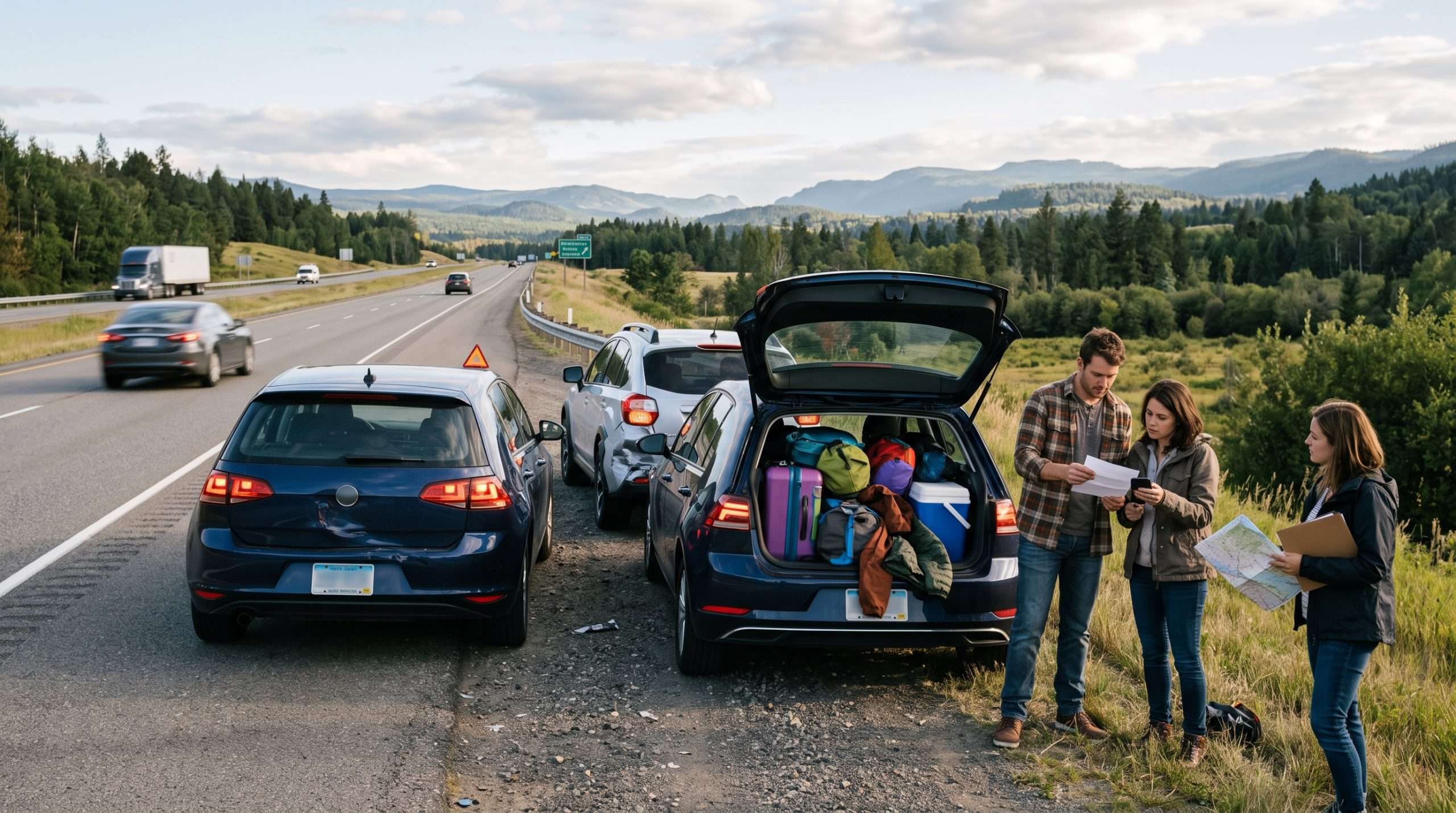
You’re three days into a Pacific Northwest road trip, heading north on I-5 through Everett, Washington, toward the ferry and the islands, when traffic stops faster than the SUV behind you does. The crash isn’t catastrophic, but your neck hurts, the rental’s rear end is crumpled, and the other driver’s insurance card is from a company you’ve never heard of. Your own insurer is two time zones away. Your hotel is in another city. And you have a dawning realization that you know how a car accident works at home, and almost nothing about how one works here.
Out-of-state crashes add a layer of confusion to an already stressful event. Which state’s laws apply? Whose insurance pays? Can you deal with any of it after you’ve gone home? The answers are more manageable than they seem, once you know the basics. Here’s what travelers should understand after a car accident far from home.
Washington’s Roads Carry Real Risk
The state is a popular road-trip destination, and its crash numbers reflect heavy traffic. According to the Washington Traffic Safety Commission, 731 people were killed in traffic crashes in Washington in 2024, a 9.6 percent decrease from 2023’s 33-year high but still 36 percent above 2019, with impairment involved in 48 percent of deaths and speeding in 34 percent.
Visitors share those roads with the same impaired and speeding drivers, and they’re often less familiar with the routes, the weather, and the rules.
The Crash State’s Law Applies
The most important thing a traveler should know is that the law of the place where the crash happened, not the law of your home state, generally governs the claim. That affects:
- How fault is divided between drivers
- What types of damages can be recovered
- How long you have to file a claim
- Whether the state uses a fault or no-fault insurance system
- What the other driver was required to carry in insurance
A traveler from a no-fault state who crashes in a fault state, or vice versa, can be surprised by the difference. Getting advice from someone who practices where the crash occurred is the simplest way to avoid guessing.
At the Scene: Do the Same Things, More Carefully
The roadside steps are the same as at home, but they matter more when you’ll be leaving:
- Call 911 and request a police report; get the report number before you leave
- Photograph vehicles, plates, damage, the road, signs, and injuries
- Exchange names, contacts, and insurance details with every driver
- Collect witness names and numbers
- Note the exact location, including the highway, exit, and direction of travel
- Say nothing about fault
Once you’re home, that police report and those photos are your only connection to the scene.
Get Medical Care Before You Travel On
Adrenaline and the desire to keep the trip going lead many travelers to skip the doctor. Don’t. See an urgent care or emergency room the same day, mention the crash, and get copies of every record before leaving town.
Continue care with your own doctor once home. A gap between the crash and the first medical visit is one of the first things an insurer will point to.
Handle the Rental Car Properly
If you were driving a rental:
- Notify the rental company promptly and in writing
- Photograph all damage before the car is moved or repaired
- Review the rental agreement and any coverage you bought or that your credit card provides
- Don’t pay for repairs until it’s clear whether the at-fault driver’s insurer is responsible
- Keep all paperwork, including the loss damage waiver terms
Rental damage claims are common, and a documented, prompt response usually resolves them without drama.
Dealing With Insurers From Another State
Several insurers may be involved: the other driver’s, your own, the rental company’s, and possibly your health or travel insurer. A few rules protect travelers:
- Report the crash to your own insurer as required by your policy
- Don’t give a recorded statement to the other driver’s insurer
- Don’t accept an early settlement before you understand your injuries
- Keep a log of every call, name, and date
- Ask your own insurer whether your policy’s medical payments, uninsured motorist, or PIP coverage applies to an out-of-state crash; it usually does
Distance makes insurers more inclined to hope you’ll settle quickly and go away. Documentation and patience counter that.
Why Local Legal Help Makes the Difference
Because the crash state’s law governs and the evidence is local, representation where the accident happened is far more practical than trying to manage a claim from home. Travelers hurt on the highway through the city often retain a car accident attorney Everett residents also turn to, so that evidence is preserved, insurers are handled under the right state’s rules, and the case can proceed while the traveler recovers hundreds of miles away.
Park Chenaur Injury Lawyers, with offices in the city and two others in the region, handles out-of-area clients routinely, offers free consultations around the clock, works on a no-fee-unless-you-recover basis, and provides service in English, Spanish, Vietnamese, Russian, and Korean, which matters for visitors from across the country and abroad.
Whichever firm you call, ask how they communicate with clients who’ve gone home and whether they can handle the case through to trial if the insurer won’t be reasonable.
Washington Law Every Traveler Should Know
For a crash in the state, these rules shape the claim:
- Fault-based system: Washington is not a no-fault state, so the at-fault driver’s liability insurance is the primary source of recovery
- Pure comparative negligence: an injured person can recover even if mostly at fault, with the award reduced by their percentage of responsibility
- Statute of limitations: personal injury claims generally must be filed within three years of the crash
- Reporting requirement: a collision involving injury, death, or property damage over a threshold amount must be reported to law enforcement, and a written report may be required if police did not respond
- Minimum insurance: Washington requires drivers to carry liability coverage, but the minimums are modest, which is why uninsured and underinsured motorist coverage on your own policy matters
- Personal injury protection: PIP coverage is optional in Washington and, if you carry it on your own policy, generally pays medical expenses regardless of fault, including for out-of-state residents in many cases
Knowing these before the trip turns a confusing roadside into a manageable process.
Keep Records After You’re Home
The claim will outlast the vacation. Keep:
- All medical records and bills from both states
- The police report number and the rental company’s claim reference
- Receipts for extra lodging, transport, and trip changes
- Proof of missed work
- A short journal of symptoms and recovery
Organized records make a long-distance claim far easier for everyone handling it.
Conclusion
Out-of-state travelers should know after a car accident that the crash state’s law governs the claim, that the roadside steps and same-day medical care matter even more when you’ll be leaving, that rental cars and multiple insurers need prompt, documented handling, and that a local attorney where the crash happened is the practical way to protect a claim from hundreds of miles away.
With more than 700 people killed on Washington’s roads in a single year and nearly half of those deaths involving impairment, visitors face the same risks as residents without the same familiarity. Understand the basics before the trip, and the stop on I-5 becomes a problem that gets handled, not one that follows you home.







Leave A Comment