

Ancient Mayan jaguar carving representing the sacred connection between animals and spiritual realms
Animals in Mayan Mythology and Religion
The Maya pantheon featured numerous deities with animal attributes, reflecting the belief that animals possessed divine qualities. These sacred creatures weren’t simply representations but embodiments of cosmic forces that governed the universe. Understanding these animal deities provides insight into how the Maya interpreted their world and their place within it.
Major Animal Deities
The Maya recognized powerful animal gods that controlled various aspects of life and death. The Jaguar God of the Underworld (Xbalanque) ruled the night and the realm of the dead. The Vision Serpent served as a conduit for communication between worlds, often depicted emerging from ceremonial bloodletting rituals. The Howler Monkey Gods represented arts and scribes, believed to be the patrons of creativity and knowledge.

The Vision Serpent, a powerful deity that connected the earthly and spiritual realms
Nahuals: Animal Spirit Companions
The Maya believed in nahuals, animal spirit companions that connected to humans from birth. These spiritual counterparts shared a person’s consciousness and fate. Powerful rulers and shamans could transform into their nahual animal, gaining its attributes and powers. This belief reinforced the intimate connection between humans and the animal kingdom, blurring the boundaries between species.

Mayan artwork showing a shaman’s transformation into his jaguar nahual
The Three Cosmic Realms and Their Animal Guardians
The Maya worldview divided the cosmos into three interconnected realms, each associated with specific animals. The celestial realm (sky) was represented by birds, particularly eagles and quetzals. The earthly realm was home to creatures like jaguars and deer. The underworld (Xibalba) was guarded by jaguars, dogs, and bats. Animals that could traverse multiple realms, like the serpent, held special significance as mediators between worlds.

Animals in Mayan Symbolism and Iconography
Animals dominated Mayan artistic expression, appearing in everything from monumental architecture to delicate pottery. These representations weren’t merely decorative but carried deep symbolic meaning that communicated complex ideas about power, divinity, and cosmic order.
The Jaguar: Power and Kingship
The jaguar (balam in Mayan language) symbolized royal power, nocturnal strength, and fertility. As the largest predator in Mesoamerica, it represented authority and dominance. Maya kings often incorporated jaguar imagery into their regalia, adopting titles like “Jaguar Paw” to associate themselves with this powerful creature. The jaguar’s ability to see in darkness connected it to the night sun and the underworld journey.
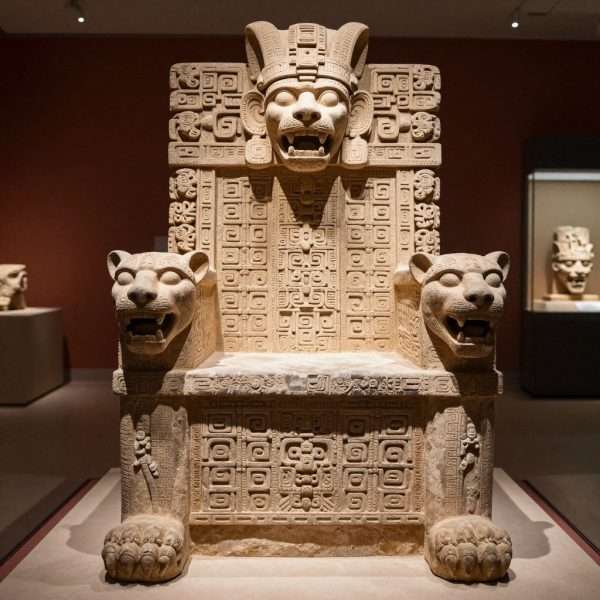
Jaguar throne representing royal power in Mayan culture
The Serpent: Renewal and Portals
Serpents represented transformation, renewal, and the connection between realms. Their ability to shed skin symbolized rebirth and regeneration. In Mayan architecture, serpent imagery often marked entrances to sacred spaces, serving as symbolic portals between worlds. The feathered serpent deity Kukulkan (known as Quetzalcoatl to the Aztecs) embodied the union of earth (serpent) and sky (feathers).

Serpent staircase at Chichen Itza, designed to create a descending serpent shadow during equinox
The Quetzal: Divinity and Freedom
The resplendent quetzal bird symbolized freedom, beauty, and wealth. Its iridescent green tail feathers were more valuable than gold in Mayan society, reserved for royal and religious regalia. The quetzal represented the breath of the gods and was associated with Kukulkan. Legend holds that the bird’s red breast came from the blood of fallen Mayan warriors, making it a symbol of sacrifice and nobility.

Ceremonial headdress featuring the sacred quetzal feathers
The Bat: Death and Sacrifice
Bats were associated with death, sacrifice, and the underworld. The Maya god Camazotz (“death bat”) was a fearsome deity who resided in Xibalba. Bats’ nocturnal nature and cave habitats connected them to darkness and the underworld. In the Popol Vuh, the Maya creation story, a bat deity decapitates one of the hero twins, symbolizing the necessary sacrifice for rebirth and creation.

Camazotz, the bat god associated with death and sacrifice
The Dog: Guide to the Underworld
Dogs held a special place in Mayan afterlife beliefs. The Xoloitzcuintle (a hairless dog breed) was believed to guide the souls of the deceased through the dangerous journey to Xibalba. Archaeological evidence shows dogs were often buried with their owners to serve as guides in the afterlife. The dog’s loyalty made it a powerful symbol of faithful companionship beyond death.

Ceramic figure of a Xoloitzcuintle dog found in a Mayan burial
Animals in Mayan Codices and Stelae
The surviving Mayan codices (Dresden, Madrid, Paris, and Grolier) contain numerous animal depictions that served as both hieroglyphic elements and symbolic imagery. These manuscripts reveal how animals were integrated into calendrical systems, astronomical observations, and religious rituals. Similarly, stone stelae erected at major ceremonial centers featured animal imagery that proclaimed royal lineage and divine connection, often showing rulers with their animal counterparts.

Page from the Dresden Codex showing animal glyphs and their astronomical associations
Animals in Mayan Daily Life and Cosmovision
Beyond their symbolic and religious significance, animals played crucial practical roles in Mayan society. The Maya’s deep understanding of animal behavior informed their agricultural practices, hunting techniques, and medicinal knowledge, creating a holistic relationship with the natural world.
Bees and Sacred Honey
The stingless Melipona bee was highly revered by the Maya, who practiced sophisticated beekeeping. Honey was used as food, medicine, and in the production of balché, a sacred fermented drink used in religious ceremonies. The bee god Ah Muzen Cab appears in the Madrid Codex, highlighting the spiritual importance of these insects. Beekeeping practices were passed down through generations and continue in some Maya communities today.

Traditional Mayan stingless bee hives still used in some communities today
Deer: Hunting and Sustenance
Deer were essential food sources and featured prominently in hunting rituals. The Maya performed ceremonies before hunts to honor the deer’s spirit and ensure successful hunting. Deer bones and antlers were crafted into tools and ritual objects. In Maya art, deer are often associated with fertility and abundance. The deer dance (K’iche’) remains an important cultural tradition in contemporary Maya communities.
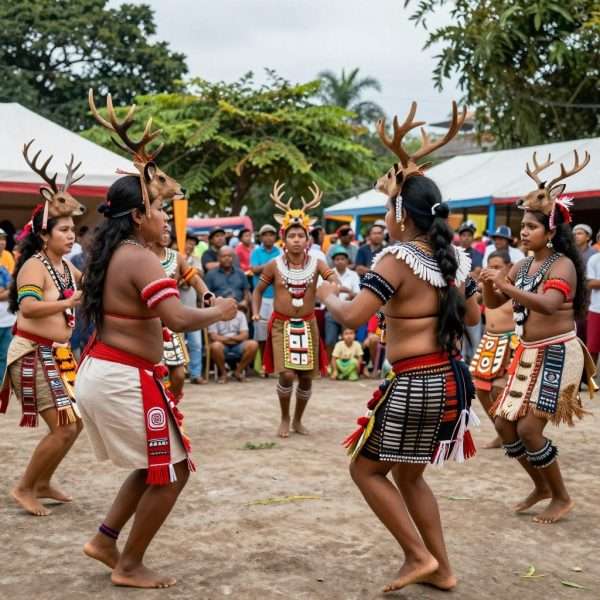
Contemporary Mayan deer dance ceremony showing cultural continuity
Turtles: Earth Carapace
Turtles symbolized the earth’s surface in Maya cosmology. Creation myths describe the world forming on the back of a giant turtle. Archaeological findings at sites like Copán feature turtle imagery representing the earth. The turtle’s shell, with its 13 sections, aligned with the Maya’s 13 heavens concept. Turtles were also practical food sources in coastal and riverine Maya communities.

Turtle carving from Copán representing the earth in Mayan cosmology
Animals in the Mayan Calendar
The Tzolk’in, the 260-day sacred calendar, incorporated animal day signs that influenced a person’s destiny. These included Manik’ (deer), Oc (dog), Men (eagle), Ix (jaguar), Tzʼikin (bird), and Chaak (rain/storm with serpent attributes). A person’s birth date determined their animal association and predicted character traits and life path. This calendar system reflects how deeply animals were integrated into the Maya understanding of time and fate.

The Tzolk’in calendar with animal day signs that determined a person’s destiny
Medicinal Uses of Animals
The Maya developed sophisticated medical knowledge that incorporated animal parts and behaviors. Jaguar fat was used to treat respiratory ailments, while deer antler was ground for bone healing. Snake venom was carefully extracted for pain management. These practices were documented in medical texts and passed through generations of healers. Some traditional animal-based remedies continue in modern Maya communities, though many practices have been lost to time.

Contemporary Mayan healer preserving ancient knowledge of animal medicine
Mayan Ecological Knowledge Through Animal Observation
The Maya developed sophisticated ecological understanding by observing animal behavior. This knowledge informed their agricultural practices, weather prediction, and sustainable resource management, demonstrating an advanced environmental awareness that modern science is only beginning to appreciate.
Weather Prediction
The Maya observed animal behavior to predict weather patterns. Frogs’ croaking signaled coming rain, while certain bird migrations indicated seasonal changes. This knowledge was crucial for agricultural planning and preparation for extreme weather events. The Maya recorded these animal-weather connections in their codices, creating a systematic approach to meteorological prediction based on natural indicators.

Mayan glyph depicting frogs as predictors of rain
Sustainable Hunting Practices
The Maya developed hunting regulations based on animal breeding cycles. They established protected areas where hunting was forbidden during certain seasons, allowing animal populations to recover. These conservation practices were enforced through religious taboos and community standards. Evidence suggests these sustainable approaches helped maintain biodiversity in Maya territories despite dense human populations.

Mayan artwork depicting ritualized hunting practices that promoted sustainability
Contemporary Significance of Mayan Animal Symbolism
The ancient Maya’s relationship with animals continues to influence modern Maya communities and broader cultural expressions. These enduring connections demonstrate the resilience of Maya worldviews despite centuries of colonization and cultural pressure.
Cultural Continuity
Many contemporary Maya communities maintain traditional ceremonies involving animal symbolism. The Deer Dance in Guatemala and the Jaguar Dance in Yucatán preserve ancient connections between humans and animal spirits. These practices strengthen cultural identity and provide continuity with ancestral knowledge, serving as living links to pre-Columbian traditions.

Contemporary Maya ceremony preserving ancient animal symbolism
Environmental Activism
Maya communities often lead conservation efforts to protect endangered species that hold cultural significance. Initiatives to preserve jaguar habitats and restore quetzal populations draw on traditional reverence for these animals. Maya environmental activists combine ancestral knowledge with modern conservation science, creating effective approaches to biodiversity protection.

Maya community members leading jaguar conservation efforts
Artistic Expression
Contemporary Maya artists incorporate traditional animal symbolism into modern art forms. From textiles featuring ancient animal motifs to murals that reinterpret classic Maya iconography, these creative expressions maintain cultural continuity while addressing current social and environmental concerns. This artistic revival helps educate younger generations about their cultural heritage.

Contemporary Maya textile art featuring traditional animal symbolism
Conclusion: The Enduring Legacy of Mayan Animal Symbolism
The Maya’s intricate relationship with animals reveals a sophisticated understanding of both the natural world and the cosmic order. By observing and venerating animals, the Maya created a worldview where the boundaries between humans, animals, and deities were fluid and interconnected. This perspective fostered a deep ecological awareness and spiritual connection to the environment that continues to offer valuable insights today.
The rich animal symbolism in Maya art, religion, and daily practices demonstrates how this ancient civilization recognized the profound wisdom embodied in the natural world. As we face modern environmental challenges, the Maya’s reverence for animals reminds us of the importance of respecting and protecting the creatures with whom we share our planet.

The enduring legacy of Mayan animal symbolism continues to influence contemporary culture
Deepen Your Understanding of Mayan Culture
Want to explore more about the fascinating world of Mayan animals and symbolism? Download our comprehensive guide “Sacred Creatures: A Complete Guide to Animals in Mayan Culture” featuring detailed illustrations, mythological stories, and insights from Maya scholars.













Leave A Comment