
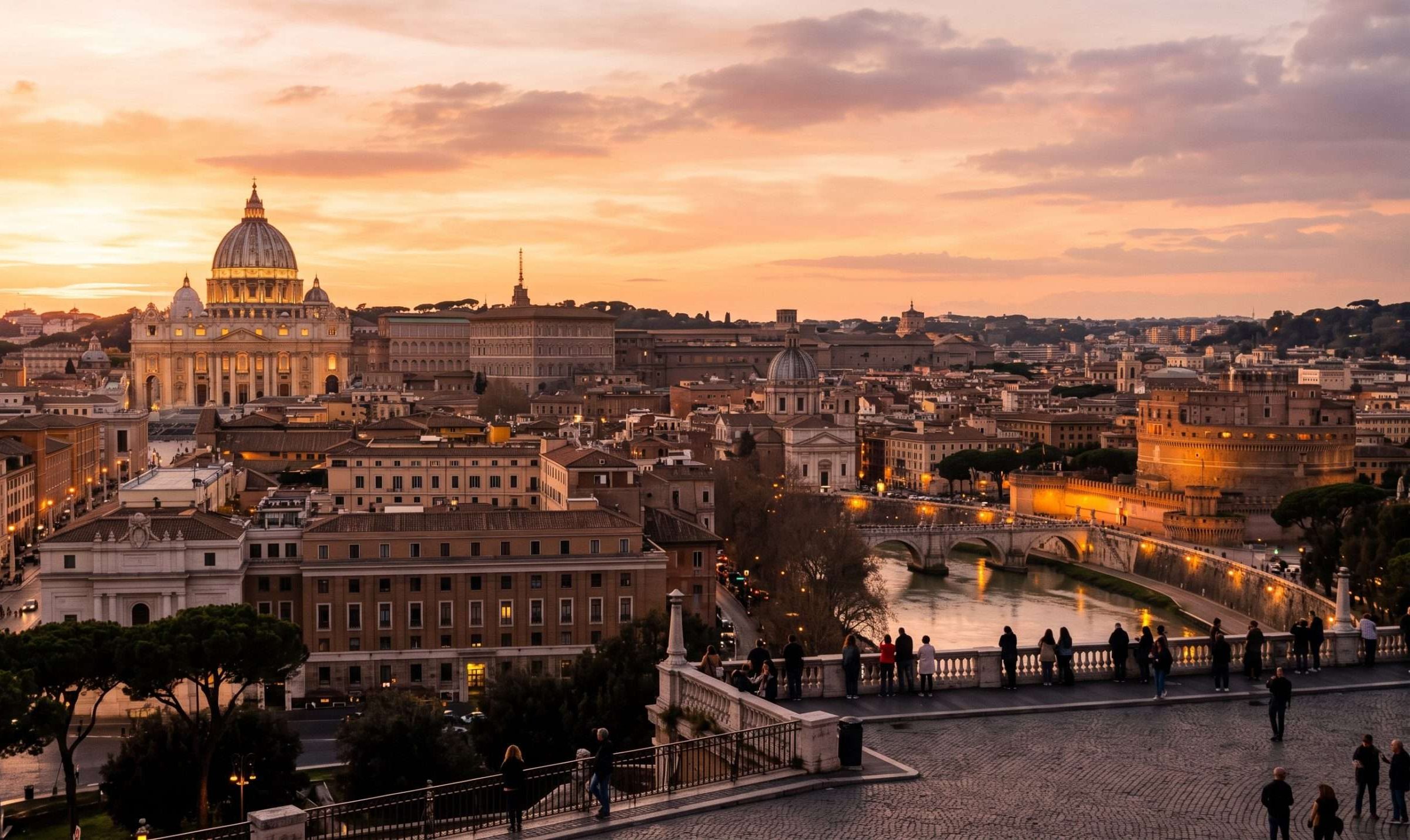
Rome does not ease you in gently. Within an hour of arriving, you might find yourself standing next to a 2,000-year-old column while someone on a Vespa nearly clips your elbow and a barista hands you an espresso that costs less than the water you bought at the airport. The city runs on contrasts like this, and knowing what to expect ahead of time will save you from spending your first day disoriented instead of delighted.
The Layout Is Smaller Than You Think
Central Rome is walkable in a way that surprises most first-time visitors. The distance from the Trevi Fountain to the Pantheon is about a 10-minute stroll, and the Spanish Steps sit roughly 15 minutes from both. Many people book hotels far from the center assuming they’ll need to commute, then realize they could have stayed within a short walk of everything.
That said, cobblestones are unforgiving on wheeled luggage and ill-fitting shoes. Streets in the historic center are narrow, uneven, and often closed to cars, which makes walking pleasant but requires footwear you can trust for several miles a day. Pack accordingly, because Rome will expose any shoe that looked better in a store than it feels on stone.
Lines Are Longer Than You’d Guess
The Colosseum, Vatican Museums, and Borghese Gallery all draw crowds that can mean waits of one to three hours during peak season, which runs roughly April through October. Timed-entry tickets purchased in advance are not optional if you want to avoid standing in the sun for half a morning. Even in shoulder months, popular sites fill their daily entry slots days ahead.
If skipping lines matters to you, consider booking guided experiences rather than general admission tickets. A well-run Colosseum tour typically includes a dedicated entrance and a guide who explains the arena’s history in a way that plaques never quite manage, turning a pile of ancient stone into something you actually understand. Group sizes and quality vary widely, so read reviews rather than booking the cheapest option you find.
Meals Follow Their Own Schedule
Restaurants in Rome do not serve dinner at 5 p.m., and many kitchens do not open until 7:30 or 8. Showing up hungry at 6 will mean settling for a tourist-trap spot near a major sight instead of the trattoria three blocks away that only locals seem to know about. Lunch, by contrast, tends to run from around 12:30 to 2:30, with many smaller restaurants closing entirely in the afternoon.
Coffee culture also runs on unspoken rules. Cappuccino is considered a morning drink, rarely ordered after 11 a.m., and espresso is meant to be consumed standing at the counter rather than lingering over for an hour. Sitting at a table, even for the same drink, often costs more than standing at the bar, and that price difference is usually posted somewhere on the menu.
Some Neighborhoods Reward Getting Lost
Trastevere, across the river from the main historic center, has narrow lanes, ivy-covered buildings, and a nightlife scene that feels distinctly different from the monument-heavy areas near the Colosseum. Testaccio, once Rome’s slaughterhouse district, is now known for some of the city’s best traditional cooking and a produce market worth wandering through even if you’re not buying anything. Both neighborhoods reward aimless walking more than a strict itinerary.
Monti, tucked behind the Colosseum, offers a quieter alternative with vintage shops and wine bars that don’t feel staged for tourists. None of these areas require a car or even much planning. A loose sense of direction and a willingness to turn down an unmarked street will usually serve you better than a rigid checklist.
Money and Payment Habits Differ From Home
Many smaller restaurants, cafes, and shops still prefer cash, and some post a minimum purchase amount for card payments. Withdrawing euros from an ATM tied to a major bank typically offers a better exchange rate than currency exchange counters at the airport. Tipping is not expected the way it is in the United States; rounding up a bill or leaving a few extra euros for good service is standard, and a coperto, or cover charge, often appears on the check automatically.
Public transit uses a ticket system based on time rather than distance, with a standard ticket valid for 100 minutes across buses, trams, and the metro. Buy tickets before boarding at tobacco shops or station machines, since Rome’s honor system comes with real fines for people caught without a validated ticket.
Plan Loosely, Not Precisely
The most useful mindset for a first trip to Rome is one that allows for detours. Build a short list of must-see sites, book timed tickets for the two or three that matter most, and leave the rest of each day open enough to follow a good smell down an alley or sit in a piazza longer than planned. Rome rewards travelers who treat their itinerary as a rough sketch rather than a contract, and some of the best moments tend to happen in the gaps between the things you planned to do.









Leave A Comment