
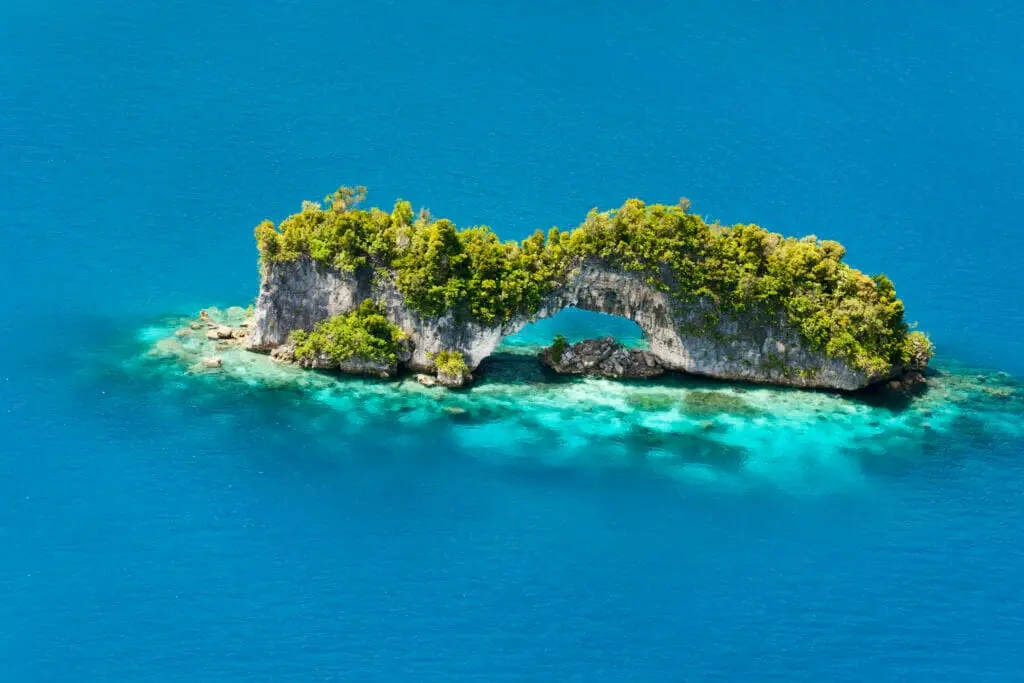
Travelers find it easier to figure out what to do in Palau once they learn about this archipelago of about 340 jungle-clad limestone islands scattered across the western Pacific. Just 18,000 people call this tiny nation home, yet it hosts some of Earth’s richest marine ecosystems. Dive sites here rank among the world’s top five year after year. Palau tourism centers around extraordinary Palau activities, from snorkeling with millions of stingless jellyfish to kayaking through hidden lagoons. Pristine waters, WWII history, and unique tourist attractions in Palau make the question less about is Palau worth visiting and more about how many days to spend at these Palau tourist spots.
Scuba Diving at Blue Corner and World-Class Dive Sites
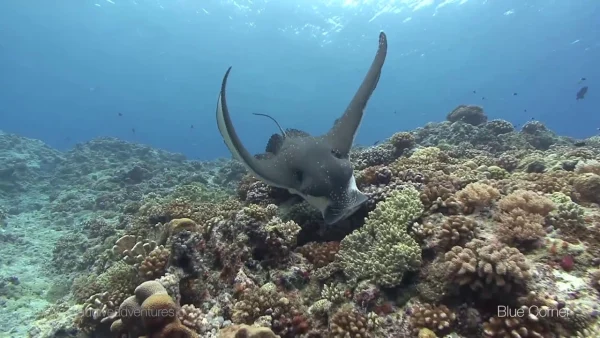
Image Source: YouTube
What Makes Palau Diving Special
Blue Corner stands as maybe the most celebrated dive site in Palau, consistently ranked among the top dive locations worldwide. Three strong Pacific currents meet here and create nutrient-rich conditions that support over 1,500 fish species and more than 700 coral species. This exceptional biodiversity stems from Palau’s 2009 designation as the world’s first shark sanctuary. The sanctuary protects 135 Western Pacific shark species across an area the size of France.
Strong tidal currents distinguish Palau diving from other destinations. Water visibility ranges from 15-20 meters during July through September and extends to 40 meters during peak season. These currents force plankton-rich waters over reef plateaus and attract massive aggregations of gray reef sharks, white-tip reef sharks, and pelagic hunters like tuna and mackerel.
Best Dive Sites to Explore
Blue Corner sits 26 kilometers southwest of Koror at depths from 8 to 30 meters. Divers use reef hooks to anchor into the current-swept plateau. Schools of barracuda, snappers, and jacks spiral overhead alongside dozens of patrolling gray reef sharks. The site often pairs with Blue Holes, where caverns at 22-30 meters create swim-throughs that shafts of sunlight light up.
German Channel functions as a cleaning station between December and March when manta rays gather in large numbers. The channel’s mouth has coral slopes where eagle rays, gray reef sharks, and jawfish congregate. Ulong Channel offers gentler conditions with its 13-meter sandy floor suitable for less experienced divers and drops to only 20 meters at the northern end.
Big Drop Off descends 285 meters to the seabed and has walls covered in gorgonian fans, leather corals, and purple soft corals. Divers spot nurse sharks, leopard sharks, and nudibranchs along this vertical landscape.
Dive Operators and Pricing
Sam’s Tours operates daily trips that depart at 8:30 a.m. from Koror, with most sites located 45 minutes away. The operation has three tank dives per day and returns around 3-4 p.m., with hotel pickup and unlimited shore dives at Sam’s Macro Wall.
Palau Dive Adventures offers packages ranging from single days to week-long programs. Five-day packages include 14 dives and two Peleliu dives. Single boat dives cost $55-70 when booked with local operators.
Tips for Scuba Diving in Palau
Advanced Open Water certification is required for Blue Corner due to unpredictable currents and depths reaching 30 meters. Reef hooks are mandatory equipment at current-swept sites and allow divers to anchor without damaging coral. Water temperatures hover between 26-29°C, making 3mm shorties adequate thermal protection. November through May delivers optimal conditions with calmer seas and visibility exceeding 30 meters.
Snorkel with Stingless Jellyfish in Jellyfish Lake

Image Source: Palau Dive Adventures
About Jellyfish Lake
Ongeim’l Tketau sits hidden on Eil Malk Island within the Rock Islands Southern Lagoon. The world knows it as Jellyfish Lake. Rising seas flooded ancient limestone valleys thousands of years ago and created this marine lake. It stands as one of approximately 70 similar formations scattered throughout the Rock Islands. The lake stays connected to the ocean through subterranean fissures and tunnels. Isolation over millennia has produced conditions where most species couldn’t survive.
Two jellyfish species adapted to this unique environment: golden jellyfish (Mastigias papua etpisoni) and moon jellyfish (Aurelia sp.). The golden jellyfish evolved to lose their stinging capability and instead farm symbiotic algae within their tissues to sustain themselves. This subspecies exists nowhere else on Earth. These jellyfish migrate horizontally through the lake each day and follow sunlight to maximize photosynthesis for their algae partners.
Current Status and Best Time to Visit
Golden jellyfish populations declined to fewer than 5,600 individuals in 2025, down from historical peaks exceeding 5 million. Moon jellyfish maintain healthy numbers despite this decline. The lake closed between 2016-2018 due to previous population crashes but reopened after natural recovery. Climate patterns and elevated water temperatures continue affecting the delicate ecosystem.
Palau’s dry season runs from December through April and offers optimal visiting conditions, with calmer seas and clearer visibility. Morning hours between 9-11 a.m. provide the best jellyfish concentrations as they cluster while following the sun.
What to Expect During Your Visit
You’ll need a 45-minute boat ride from Koror to Eil Malk Island, then a 15-minute walk through jungle trails to the water. Visitors enter from a wooden platform and spend 30-45 minutes floating in calm, warm water. The experience stays surreal even with reduced golden jellyfish numbers as moon jellyfish and remaining golden specimens drift past and create an otherworldly atmosphere.
Scuba diving is prohibited since bubbles harm jellyfish and the lake contains hydrogen sulfide at depths beyond 15 meters.
Jellyfish Lake Permit and Costs
The Jellyfish Lake permit costs USD 100 per person (ages 6 and above) and stays valid for 5 days. The standard Rock Islands permit without Jellyfish Lake access costs USD 50 and covers 10 days. Rangers check permits during visits, so keep documentation available.
Best beach resorts in Philippines.
Kayak and Snorkel Through the Rock Islands
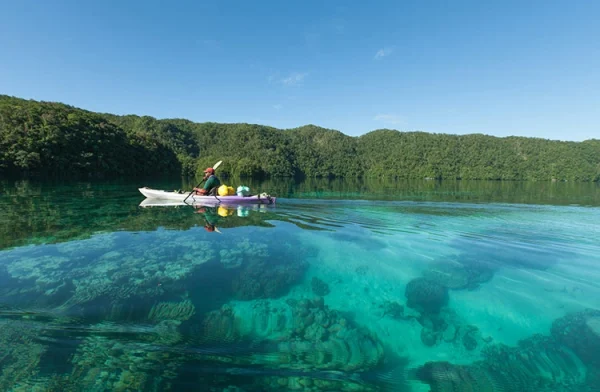
Image Source: World Nomads
Why the Rock Islands are a Must-Visit
The UNESCO-listed Rock Islands Southern Lagoon forms a maze of over 300 jungle-cloaked limestone formations that rise from crystal-clear waters. These mushroom-shaped islands harbor extraordinary marine biodiversity. The waters support over 400 hard coral species and 300 soft coral types, representing the highest coral diversity in Micronesia. The archipelago hosts more than 1,500 fish species among 52 marine lakes, more than any other site on the planet. Scientists note that Palau’s reefs demonstrate surprising resilience to climate change-induced bleaching and maintain health while coral ecosystems elsewhere decline.
Kayaking Experience and Routes
Expeditions through the Rock Islands range from half-day paddles to 10-day camping adventures. Paddlers traverse mangrove tunnels, some submerged and requiring contortionist-like maneuvering to access hidden saltwater lakes surrounded by undisturbed coral gardens. The Milky Way Lagoon route offers calm paddling over turquoise waters. Long Lake features currents that carry kayaks beneath mangrove canopies to nurseries for baby eagle rays and turtles. Multi-day expeditions require paddling stretches of one hour or more. Some days involve up to five hours of kayaking. Support boats accompany most tours and allow paddlers to rest when needed.
Snorkeling Spots in the Rock Islands
Blue Devil Gardens at Risong Bay showcases schools of blue devil damselfish that shimmer between corals. Einstein’s Garden features proliferations of giant lobophyllia brain corals. Cemetery Reef contains diverse schools of fish and coral formations that are well-preserved. Clam City Beach provides shore snorkeling access to reefs teeming with giant clams, anemonefish, gobies and wrasses. Snorkelers can explore a WWII Zero fighter plane that rests in shallow waters, now covered with marine life.
Tour Operators and Pricing
Day kayaking tours cost USD 114. Afternoon snorkeling adventures with two spots run USD 114. Full-day Rock Islands tours include kayaking, snorkeling and equipment, and range from USD 125 to USD 220. Multi-day camping expeditions through operators like Paddling Palau span 3-10 days and include guides, kayaks and camping gear. The Rock Islands permit costs USD 50 for 10 days, or USD 100 when including Jellyfish Lake access for 5 days.
Experience the Milky Way Lagoon’s Natural Spa
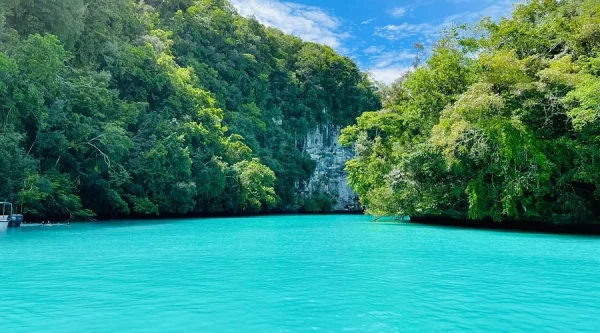
Image Source: Tripadvisor
What is the Milky Way Lagoon
Palau’s Rock Islands consist of 445 limestone islets, and one pocket of seawater among them turns chalky white. The lagoon earned its name not from the galaxy but from the water’s color itself. Calcium carbonate mud blankets the shallow floor and creates a surreal turquoise-white gradient. No road, dock, or sign marks this location. Boats guide themselves between mushroom-shaped islands, cut engines, and anchor in shallow water that hovers around 29-30°C year-round.
The White Mud Beauty Treatment
Guides free-dive to the bottom and scoop handfuls of white limestone sediment. They surface to distribute it among visitors. Locals attribute skin-softening properties to the calcium-rich mud and claim it makes bathers look ten years younger. The ritual follows a predictable pattern. Passengers slide into warm water and slather mud on exposed skin until a pale gray-white layer covers them. They wait 5-10 minutes for it to dry under Palau’s equatorial sun. The mud hardens with a cement-like consistency before visitors rinse by sinking back into the lagoon. One guide suggested the mud was so valued that someone from Japan attempted stealing large quantities to sell for USD 500.
How to Visit the Milky Way
Day trips depart from Koror’s main pier around 8:30 a.m. The 45-minute boat ride passes through the German Channel. Morning departures avoid afternoon rain and provide calm water for photos. Visitors spend 20-40 minutes at the lagoon itself. Bring reef-safe sunscreen, a waterproof camera, and dry bags for electronics. The site offers zero infrastructure: no fresh water rinse, restrooms, or built structures.
Best Tours and Prices
Full Rock Islands circuits combine Milky Way, Jellyfish Lake, Long Beach and snorkeling. They run 5-7 hours and cost USD 100-130 per person from Koror. Tours departing at 9 a.m. fill first. The Rock Islands permit costs USD 50 per person and remains valid for 10 days. The Jellyfish Lake permit runs USD 100 and stays valid for 5 days.
Take a Scenic Flight Over the 70 Islands
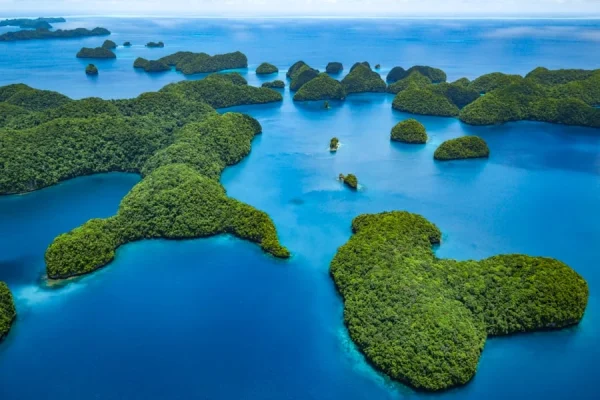
Image Source: The World Travel Guy
Overview of Scenic Flight Experience
Small propeller aircraft lift off from Koror Airport with doors removed. This provides unobstructed views and photography opportunities over Palau’s archipelago. Pacific Mission Aviation and Smile Air operate Cessna-type planes with one front seat and two rear positions. The setup creates an intimate flight atmosphere. Safety briefings precede each departure. Passengers must wear flotation devices throughout the trip. A safety bar spans the open doorway and secures passengers while allowing cameras to capture the limestone formations below. Flights cruise at approximately 300 meters altitude. This eliminates decompression concerns for divers planning underwater excursions the same day.
Pilots provide headsets with two-way communication. They narrate landmarks and point out notable features during the circuit. Morning departures between 7:30-8:30 a.m. provide the clearest weather conditions. Afternoon flights risk encountering Palau’s frequent rain.
What You’ll See from Above
The iconic 70 Islands formation appears as dense clusters of mushroom-shaped limestone outcrops. This landmark features on postcards throughout Palau. Routes pass over the turquoise basin of Jellyfish Lake, the white-bottomed Milky Way Lagoon and the deep blue waters marking Blue Corner’s reef plateau. German Channel cuts through the barrier reef as a distinct waterway. Countless smaller reefs, sandbars and hidden lagoons reveal patterns invisible from sea level.
Flight Operators and Routes
Pacific Mission Aviation offers two options: a 25-minute circuit at USD 160 per person or a 40-minute extended route at USD 200 per person. Both require a minimum of three passengers. Parties of two face minimum totals of USD 480 and USD 600 respectively.
Smile Air structures three courses: A Course covers Koror and nearby islands in 25 minutes for USD 170. B Course extends to 40 minutes for USD 220 with broader Rock Islands coverage. C Course spans 55 minutes at USD 295 and includes Peleliu Island with southern marine areas.
Scenic Flight Costs and Booking Tips
Credit card payments incur a 3.5% surcharge. American Express is not accepted. Both operators provide complimentary hotel pickup within 25 kilometers of Koror and impose no cancelation fees. This allows flexible rescheduling during inclement weather. Book several days ahead, as flights sell out during peak tourism periods.
Hike to Ngardmau Waterfall
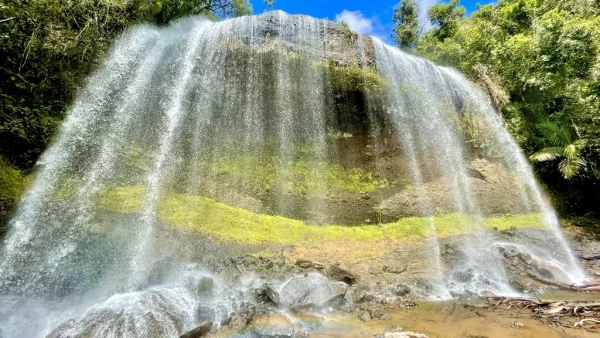
Image Source: Palauritc.com
About Ngardmau Waterfall
Babeldaob Island harbors Palau’s tallest waterfall, where water plunges 30 meters down moss-covered cliffs into a natural swimming pool. Local legend attributes the formation to a giant eel that fell into eternal sleep. Its body formed the winding river and its head created the cascade. The waterfall sits in Ngardmau State on western Babeldaob, about 60 minutes by car from Koror via the Japan-Palau Friendship Bridge.
The Hike and What to Expect
The trail stretches 1.6 kilometers one way through dense jungle. Hikers descend via concrete stairs before the path flattens into muddy tracks. Tree roots function as both handrails and obstacles. Gravity assists the 20-30 minute descent, but the return climb requires 40-50 minutes. Halfway down, a stream crossing demands wading through ankle-to-knee-deep water depending on recent rainfall. A guide wire strung between trees helps maintain balance during the thigh-deep river passage. Flip-flops prove inadequate. Closed-toe water shoes with grip handle the slick terrain. The shaded canopy maintains humidity near saturation at 30°C.
Swimming and Activities at the Falls
The waterfall bursts through a narrow gorge and creates constant mist that settles on skin and equipment[262]. The plunge pool offers fresh, clear water deep enough for swimming. Temperatures feel cool enough to restore you after the humid descent. Moss-covered boulders and tropical greenery frame the cascade. Most visitors spend 20-40 minutes floating in the pool before facing the upward climb.
Entry Fees and Best Time to Visit
The Ngardmau Eco Theme Park charges USD 10 per person at the trailhead. November through April delivers firmer trail conditions during Palau’s dry season[262]. Morning visits between 8-10 a.m. provide cooler temperatures and better footing after overnight dry spells. Heavy rain transforms the waterfall into a roaring column but creates treacherous mud and elevated stream crossings.
Explore Peleliu Island’s WWII History
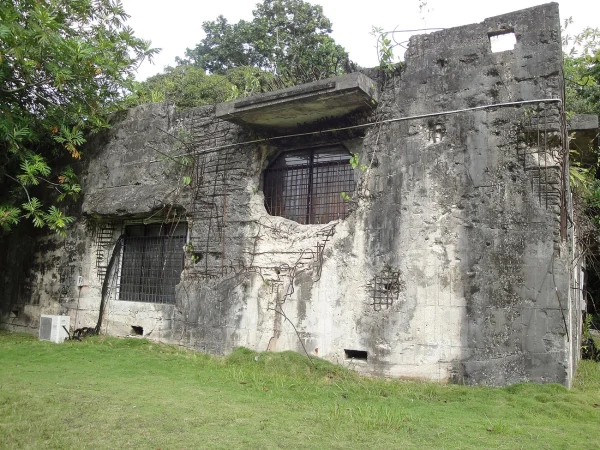
Image Source: Discover Palau
Historical Significance of Peleliu
Operation Stalemate II unfolded from September 15 to November 27, 1944. U.S. Marines stormed Peleliu’s southwestern beaches and expected a four-day campaign. Colonel Kunio Nakagawa transformed the island into a defensive fortress centered on Umurbrogol Mountain, known as Bloody Nose Ridge. There, 500 natural caves formed interlocking honeycomb positions. The battle inflicted 9,600 American casualties with 1,600 killed, while 10,900 Japanese defenders perished. The 1st Marine Regiment alone suffered 70% casualties in six days. The operation remains controversial from a strategic standpoint since the island held negligible value and the airfield played no role of importance in the final war year.
Most Important WWII Sites to Visit
Umurbrogol’s jagged limestone ridges still bear shell-cratered ground where the fiercest fighting occurred. The Thousand Man Cave system reveals Japanese command positions with preserved slots and graffiti. Rusting tanks sit scattered throughout the island alongside Zero fighter plane wrecks and artillery pieces. Japanese headquarters buildings stand where vegetation has reclaimed concrete bunkers. The airfield runway stretches half-swallowed by grass and banyans. Pillboxes hide in the surrounding jungle. White and Orange beach landing sectors remain peaceful, edged by reef and mangroves. Bunkers mark where amphibious assaults began.
Tour Options and Guides
Sam’s Tours operates full-day land tours that depart Koror by boat. Professional guides specialize in Peleliu’s battle history. Half-day options combine two-tank dives at Peleliu’s reefs with afternoon historical tours. Both include lunch, permits, hotel transfers and boat transport. Peleliu Adventures offers visits to battle sites, the WWII museum and memorials with local guides.
Peleliu Entry Fees and Safety Tips
Boat transfers from Koror run about USD 30 round trip. They depart at 8 a.m. with final returns at 3 p.m.. Unexploded ordnance from WWII exists throughout Peleliu, particularly in caves and remote areas. Follow all warnings and exercise caution when you hike or explore bunkers.
Visit the Badrulchau Stone Monoliths
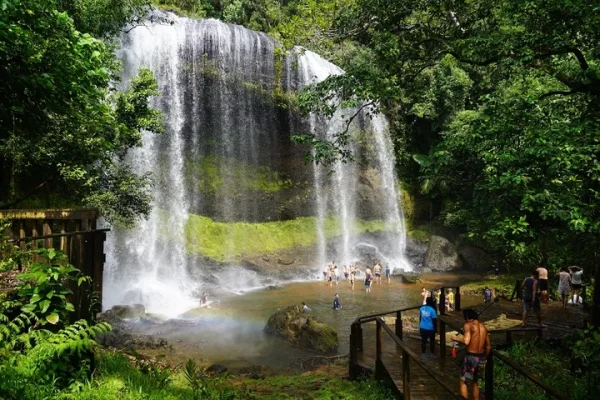
Image Source: Mindtrip
About the Ancient Stone Pillars
Babeldaob’s northernmost point hosts 52 basalt megaliths arranged in two rows on hillside slopes within Ngarchelong State. Construction dates to approximately 161 CE, archeologists estimate. This makes Badrulchau possibly the largest and oldest archeological site in Palau. Some stones feature crude facial carvings that centuries of exposure have weathered. Individual megaliths weigh up to five tons and required substantial effort to transport and position.
The Mystery and Legends
The monoliths likely served as foundation pillars for a bai, a traditional Palauan meeting house. Legend says that gods constructed these supports to house a celestial structure capable of holding thousands. There’s another tale that attributes the site to Portuguese shipwreck survivors who settled on Babeldaob. The most captivating origin story involves gods working in darkness until Medechii Belau created a rooster from burnt coconut husk. The rooster’s crow heralded dawn and forced the gods to abandon their incomplete work.
How to Get There
The site sits about 60 kilometers north of Koror and requires 1.5 hours via the ring road through Route 1 and Route 2. Drivers head north on Route 1 for 30 minutes from Ngeruangel, turn left onto Route 2, then continue 10 minutes and follow directional signs.
Entry Fees and Visiting Tips
Entry costs between USD 5-10 per person. Morning or late afternoon visits provide the best lighting to photograph the site. The quiet hilltop location offers panoramic coastal views. Allocate 20-30 minutes to explore.
Discover Palauan Culture at Airai Bai
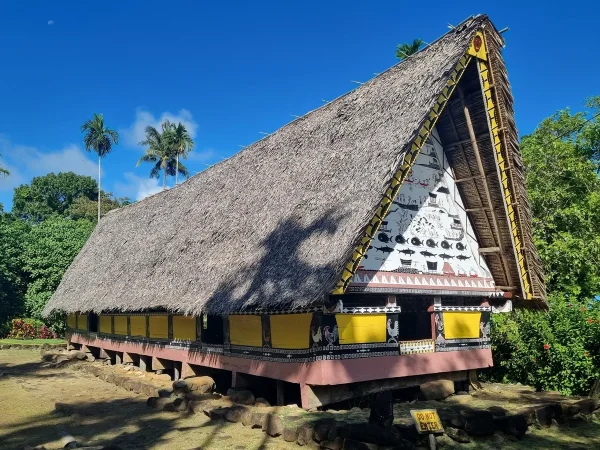
Image Source: Mindtrip
What is a Bai (Chief’s Meeting House)
Airai State preserves Palau’s last traditional-style bai, a structure measuring 68 by 20 feet and rising 40 feet at its peak. Built around 1890, this meeting house has endured at least 180 years and survived intervillage wars and natural disasters. The building features local hardwood construction on stone platforms, with facades depicting Palauan legends through symbolic motifs including roosters, money birds, tridachna shells, and sharks. Listed on the National Register of Historic Places in 1976, the bai functions as a council house for ten male chiefs representing different clans.
Cultural Performances and Experiences
Airai tours take visitors through three landmarks: the bai, the war canoe Kabekel, and Chades er a Mechorei—a traditional causeway that marks the historical boundary between Palau’s paramount chiefs. Traditional dance performances showcase village culture, while buffet meals prepared by village women use farm-to-table and sea-to-table methods.
Learning About Matriarchal Society
Palau functions as a matriarchal society where lineage and titles pass through the mother’s side. Women control family finances and determine fiduciary responsibilities at community gatherings.
Tour Options and Costs
Tours run 10am-11am (cultural heritage only), 10am-1pm (including traditional lunch), or 5pm-9pm (dinner show with dance performance). The dinner experience costs USD 155 per person with a 10-person maximum.
Snorkel with Sharks and Turtles at Top Palau Tourist Spots
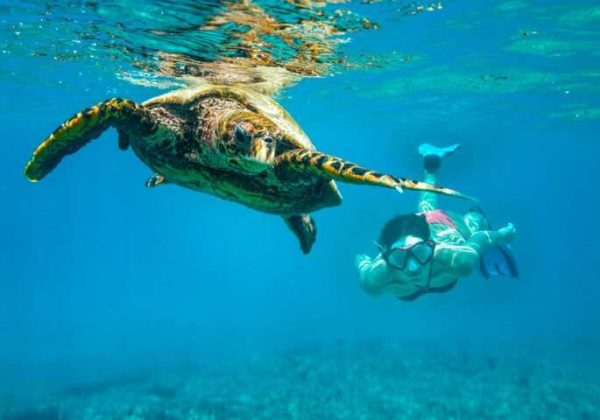
Image Source: Wilderness Travel
Best Snorkeling Sites in Palau
Palau ranks among the planet’s premier snorkeling destinations, with over 1,500 fish species inhabiting waters around the Rock Islands. Nikko Bay features crystal-clear conditions and large Napoleon wrasse, with anthias and blue chromis clustering around reef patches you can reach from shore. Big Blue Drop Off along Ngemelis Island provides sheer vertical walls where snorkelers drift among the same marine concentrations that draw divers to Blue Corner. Peleliu’s fringing reefs showcase dense coral formations with giant clams and sea squirts, while Turtle Cove combines blue holes and vertical drop-offs with current-swept corners where shy reef sharks patrol.
Marine Life You’ll Encounter
Snorkelers encounter blacktip and whitetip reef sharks on a daily basis, among green and hawksbill turtles. Gray reef sharks patrol channels and ridges. Napoleon wrasse, bumphead parrotfish and schools of pyramid butterflyfish populate outer reefs. Manta rays appear at cleaning stations, especially German Channel between December and March. The 450 hard coral species create habitats for nudibranchs, pajama cardinalfish and mandarin fish.
Snorkeling vs Diving in Palau
Snorkeling provides access to Palau’s biodiversity without certification requirements or decompression concerns. Shallow reefs begin in just a few meters of water, whereas diving reaches depths beyond recreational limits. Both activities reveal comparable marine life, though divers access deeper walls and stronger current sites.
Recommended Tour Operators
Oceanic Society naturalists lead snorkeling expeditions supporting the Micronesian Shark Foundation. Wilderness Travel and Apex Expeditions operate multi-day snorkeling safaris.
Famous tourist spots in the Philippines.
Learn Palau’s Story at Belau National Museum
What the Museum Covers
Belau National Museum is 69 years old and functions as Micronesia’s oldest museum that operates continuously. The collection contains over 1,000 objects relating to Palauan historical, anthropological and biological heritage. Visitors see life-size canoes suspended from ceilings, wooden carvings and photographic archives that document colonial periods. The museum’s library houses more than 5,000 books on local history and traditions. The museum relocated to its current permanent facility in 2005 after decades in a former Japanese Administration Weather Bureau building.
Historical Exhibits and Artifacts
Separate sections chronicle colonial influences under Spanish (1885-1899), German, Japanese (1914-1945) and American administrations. Japanese-era exhibits feature photographs, artifacts and testimonies from residents who lived through the 31-year occupation at the time Koror became the Micronesian capital. Natural history displays showcase regional fauna that includes saltwater crocodiles, dugongs and endemic bird species. Outdoor grounds feature a reconstructed bai (traditional meeting house) built using traditional methods in the early 1990s after the original burned in 1979.
Museum Hours and Entry Fees
Non-resident adults pay USD 10. Children cost USD 5. Monday through Friday hours run 9:00 a.m. to 5:00 p.m., Saturdays 10:00 a.m. to 5:00 p.m. and Sundays 1:00 p.m. to 5:00 p.m.. The museum sits uphill from Palau Community College. Follow directional signs past Koror Elementary School.
Why This Museum Matters
The museum provides context to understand Palau’s matriarchal society, colonial transformations and cultural resilience before you visit Palau tourist spots. Its age and archival depth make it a key Palau activity to learn the nation’s complex history.
Swim at Long Beach and Hidden Beaches
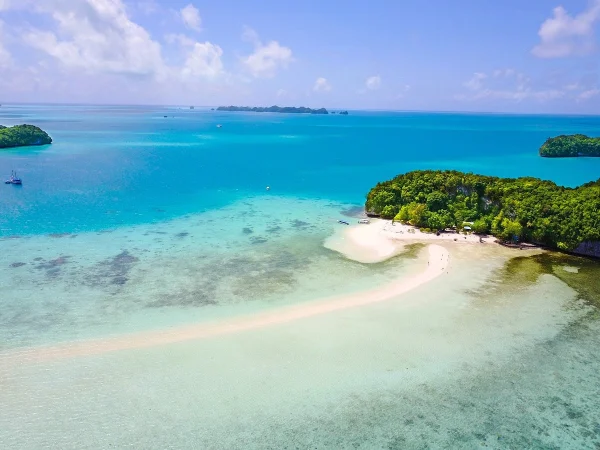
Image Source: Tripadvisor
About Long Beach
Long Beach functions as a tidal sandbar within the Rock Islands Southern Lagoon. You can reach it only by boat from Koror. This formation appears and disappears based on tidal cycles, unlike permanent shorelines. The sandbar reveals clean white sand and glassy turquoise water that creates photogenic conditions when exposed. Swimming remains pleasant but shallow and tide-dependent. There is zero surf. Water temperatures hover around 30-32°C during dry months. The beach becomes a waist-deep ribbon of sand stretching between islands at low tide. It functions as a natural boardwalk. Visitors spot shorebirds feeding in shallow flats there.
How to Access Palau’s Beaches
All beach access requires boat transport from Koror. No roads connect these locations. Tours depart around 8:30 a.m. Long Beach is positioned about 45 minutes away. You must time visits with low tide to experience the full sandbar exposure.
Best Beaches for Swimming and Relaxation
December through March offers optimal conditions with clearer waters and predictable weather. The off-peak season from May to October delivers fewer crowds despite less predictable conditions. Palau’s geographic isolation gives pristine waters and diverse coastal ecosystems.
Beach Permits and Costs
The Palau Pristine Paradise Environmental Fee costs USD 100 per person.
Explore Marine Conservation Projects
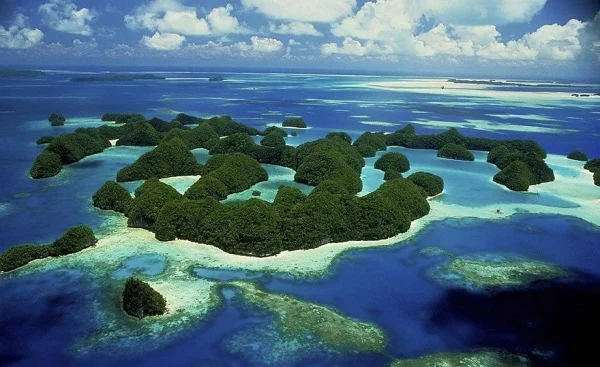
Image Source: Marine Conservation Institute
Palau’s Environmental Commitment
Conservation defines Palau’s identity. The nation created the world’s first shark sanctuary in 2009, now 16 years old, protecting 135 species in waters the size of France. The Palau National Marine Sanctuary, enacted in 2015 and effective January 1, 2020, protects 80% of the exclusive economic zone in a no-take area spanning 475,077 km². This sanctuary houses 800 marine vertebrate species and includes hawksbill and leatherback turtles, both critically endangered. The Palau Pledge has been stamped in visitor passports since 2017. Almost 6,000 signatures were received within the first two weeks.
Fish and Coral Breeding Centers
The Palau International Coral Reef Center operates a selective breeding program targeting heat-tolerant coral strains. Approximately 1,600 selectively bred corals have been outplanted onto reefs as of September 2025. The Great Barrier Reef Foundation funds this work to verify whether these specimens can thrive against climate-induced bleaching.
Conservation Tours Available
Oceanic Society guides hands-on scuba diving and snorkeling expeditions that survey shark populations and coral reef health.
How Palau Tourism Supports Sustainability
Tourism accounts for approximately 31% of Palau’s GDP and 38% of jobs in the private sector. Palau has been cooperating with Sustainable Travel International since 2020 to become the world’s first carbon-neutral tourism destination. Voluntary carbon offset contributions are projected to generate USD 1.00 million annually.
Comparison Table
| Activity | Location | Cost/Price Range | Duration | Best Time to Visit | Main Features |
| Scuba Diving at Blue Corner and World-Class Dive Sites | 26 km southwest of Koror, depths 8-30m | $55-70 per single dive; 5-day packages with 14 dives available | Full day (depart 8:30am, return 3-4pm) | November-May (optimal visibility 30m+) | 1,500+ fish species, 700+ coral species, gray reef sharks, manta rays at German Channel (Dec-Mar) |
| Snorkel with Stingless Jellyfish at Jellyfish Lake | Eil Malk Island, Rock Islands Southern Lagoon | $100 permit (valid 5 days, ages 6+) | 45-min boat ride + 15-min jungle walk + 30-45 min swimming | December-April (dry season); 9-11am for best concentrations | Golden jellyfish (unique subspecies) and moon jellyfish; population currently at 5,600 (down from 5 million) |
| Kayak and Snorkel Through the Rock Islands | Rock Islands Southern Lagoon (300+ islands) | Day tours: $114-220; Multi-day: 3-10 day expeditions available | Half-day to 10-day camping adventures | – | 400+ hard coral species, 300+ soft coral types, 1,500 fish species, mangrove tunnels, WWII Zero plane wreck |
| Experience the Milky Way Lagoon’s Natural Spa | Among 445 limestone islets in Rock Islands | $100-130 per person (full Rock Islands circuit) | 20-40 minutes at lagoon; full tour 5-7 hours | Morning departures (9am); November-April | White calcium carbonate mud treatment, turquoise-white water, 29-30°C water temperature |
| Take a Scenic Flight Over the 70 Islands | Departs from Koror Airport | $160-295 per person (25-55 min flights); 3-person minimum | 25-55 minutes depending on route | Morning (7:30-8:30am) for clearest weather | Aerial views of 70 Islands, Jellyfish Lake, Milky Way, Blue Corner and German Channel; doors removed to allow photography |
| Hike to Ngardmau Waterfall | Ngardmau State, western Babeldaob (60 min from Koror) | $10 per person entry | 20-30 min descent, 40-50 min return climb; 1.6km one way | November-April (dry season); 8-10am | 30-meter waterfall, natural swimming pool, stream crossing and jungle trail |
| Head Over to Peleliu Island’s WWII History | Peleliu Island | ~$30 boat transfer round trip; tour costs vary | Full day or half-day options | – | Battle of Peleliu sites (Sept-Nov 1944), Bloody Nose Ridge, Thousand Man Cave, tanks, Zero wrecks and airfield bunkers |
| Visit the Badrulchau Stone Monoliths | Ngarchelong State, northern Babeldaob (60km from Koror) | $5-10 per person | 20-30 minutes | Morning or late afternoon (optimal lighting) | 52 basalt megaliths dating to ~161 CE, up to 5 tons each, facial carvings and panoramic coastal views |
| Find Palauan Culture at Airai Bai | Airai State | $155 per person (dinner show); other tour options available | 1-4 hours (10am-11am, 10am-1pm, or 5pm-9pm) | – | Traditional bai (68×20 ft, built ~1890), cultural performances, traditional meals, war canoe Kabekel and matriarchal society insights |
| Snorkel with Sharks and Turtles at Top Palau Tourist Spots | Rock Islands, Nikko Bay, Peleliu, Turtle Cove | Tour costs vary by operator | – | December-March (manta rays at German Channel) | 1,500+ fish species, 450 hard coral species, blacktip/whitetip reef sharks, green/hawksbill turtles, Napoleon wrasse and manta rays |
| Learn Palau’s Story at Belau National Museum | Koror (uphill from Palau Community College) | $10 adults, $5 children (non-residents) | – | Mon-Fri 9am-5pm, Sat 10am-5pm, Sun 1pm-5pm | Founded in 1955 (oldest in Micronesia), 1,000+ objects, 5,000+ books, colonial history exhibits and traditional bai reconstruction |
| Swim at Long Beach and Hidden Beaches | Rock Islands Southern Lagoon (45 min from Koror) | $100 Pristine Paradise Environmental Fee | Tide-dependent; tours depart ~8:30am | December-March (optimal); low tide for full sandbar exposure | Tidal sandbar, white sand, 30-32°C water, shallow swimming; boat access only |
| Learn About Marine Conservation Projects | Palau National Marine Sanctuary (80% of EEZ) | Voluntary carbon offset contributions (~$1M annually) | – | – | World’s first shark sanctuary (2009), 475,077 km² no-take zone, 800 marine vertebrate species, 1,600 selectively bred corals outplanted and Palau Pledge program |
Notes:
- Rock Islands permit: $50 (valid 10 days) or $100 with Jellyfish Lake access (valid 5 days)
- All prices in USD
- Many activities require boat transport from Koror
- Blue Corner diving requires Advanced Open Water certification
Enjoy Things to do in Palau
Palau’s 340 limestone islands deliver experiences well beyond typical tropical destinations. The nation’s commitment to conservation, showed through its trailblazing shark sanctuary and marine protection zones, will give these underwater ecosystems the vibrancy future visitors need. WWII history sites and ancient cultural landmarks provide depth beyond beach activities. Travelers should allocate at least 5-7 days to experience both marine adventures and cultural immersion properly. The Rock Islands permit system supports eco-friendly tourism while granting access to world-class dive sites and hidden lagoons. These natural phenomena exist nowhere else on Earth.
FAQs
Q1. How many days should I plan to spend in Palau? Most travelers should allocate 5-7 days to properly experience Palau’s highlights. This timeframe allows enough time to explore world-class dive sites, kayak through the Rock Islands, visit Jellyfish Lake, experience cultural attractions, and enjoy some relaxation without feeling rushed. If you’re primarily interested in diving, you might want to extend your stay to 10 days to fully explore the numerous exceptional dive sites.
Q2. What is Palau most famous for? Palau is renowned for its extraordinary marine biodiversity and world-class scuba diving, particularly at sites like Blue Corner. The destination is home to over 1,500 fish species and 700 coral species. Palau also gained fame as the world’s first shark sanctuary and for unique attractions like Jellyfish Lake, where visitors can swim with millions of stingless jellyfish. The Rock Islands’ stunning limestone formations and pristine waters further contribute to Palau’s reputation as a premier tropical destination.
Q3. When is the best time to visit Palau? The optimal time to visit Palau is during the dry season from November through April. During these months, the weather is more predictable with sunny days and occasional showers, and the waters are calm and clear—ideal for snorkeling and diving. Visibility can exceed 30 meters during this period. December through March is particularly good for seeing manta rays at German Channel cleaning stations.
Q4. Is Palau an expensive destination for tourists? Yes, Palau is generally considered an expensive destination. Diving costs around $55-70 per single dive, scenic flights range from $160-295, and most activities require boat transport and permits. The Rock Islands permit costs $50 for 10 days, or $100 if including Jellyfish Lake access. Additionally, there’s a $100 Pristine Paradise Environmental Fee. Accommodation, food, and tours also tend to be pricier compared to other tropical destinations due to the remote location and limited infrastructure.
Q5. What activities do locals in Palau enjoy for fun? Local Palauans typically spend weekdays working, with many employed by the government. On weekends, they focus on family and cultural activities including attending funerals, house parties at bars, and first birth ceremonies. When not fulfilling cultural obligations, locals enjoy fishing, having barbecues with family and friends, working in taro patches, and taking trips to the Rock Islands. Sports activities like volleyball, basketball, and softball are also popular recreational pursuits among different age groups.


Leave A Comment