

Al-Khazneh (the Treasury) at Petra, the most iconic structure of the Nabataean civilization
Origins and Geographical Extent
The origins of the Nabataeans remain somewhat mysterious, though most historians believe they were an Arab people who gradually settled in the region. Ancient Greek and Roman writers, including Josephus, frequently referred to them as Arabs. Their influence at its peak stretched from modern-day Yemen to Damascus and from western Iraq into the Sinai Desert.
The first definitive historical mention of the Nabataeans dates to 312/311 BC, when they successfully defended themselves against an attack by Antigonus I’s officer during the Third War of the Diadochi. By the 1st century BC, they had developed a powerful kingdom centered around a loosely controlled trading network that brought considerable wealth and influence across the ancient world.

The geographical extent of the Nabataean Kingdom at its height, showing major cities and trade routes
Petra: The Rose City
The crown jewel of Nabataean civilization was undoubtedly Petra, their capital city ingeniously hidden within a narrow canyon in present-day Jordan. Known to the Nabataeans as Raqmu, this city was accessed through a narrow gorge called the Siq, which stretches over 1200 meters long and is flanked by 100-meter-high canyon walls. This natural defensive feature protected the city while allowing the Nabataeans to control access to their capital.
Petra’s location was strategically brilliant, positioned at the crossroads of several important trade routes connecting Arabia, Egypt, Syria and the Mediterranean. The city flourished between the 1st century BC and the 1st century AD, becoming a cosmopolitan center with an estimated population of 20,000 at its peak.

The Siq, the narrow entrance canyon leading to Petra
Architectural Innovations of the Nabataeans
The Nabataeans were master builders who combined influences from Egyptian, Greek and Roman styles with their own unique aesthetic. Their most impressive achievements were their rock-cut monuments and sophisticated water management systems, both of which demonstrated remarkable engineering skill.
Rock-Cut Architecture
The most visible legacy of Nabataean civilization is their spectacular rock-cut architecture. Rather than building structures from the ground up, Nabataean craftsmen carved elaborate facades directly into the sandstone cliffs. These monuments showcase a distinctive blend of Hellenistic and Middle Eastern influences, creating a unique architectural style.

Ad-Deir (the Monastery) in Petra, one of the largest monuments carved by Nabataean craftsmen
Recent archaeological research has identified distinct “schools” or workshops of Nabataean stonemasons. Inscriptions at Hegra (modern Mada’in Saleh in Saudi Arabia) reveal that master craftsmen like ‘Abd’obodat and ‘Aftah led teams that developed recognizable styles. These craftsmen negotiated costs with clients and adapted designs based on the financial resources available, creating a range of tombs from simple to elaborate.

Qasr al-Farīd, the largest tomb in Mada’in Salih (Hegra)

Detail of intricate carvings showing Hellenistic influences in Nabataean architecture
Water Management Systems
Perhaps the most impressive engineering achievement of the Nabataean civilization was their sophisticated water management system. Living in an arid environment with annual rainfall of less than 15 cm, the Nabataeans developed innovative techniques to collect, store and distribute water.

Reconstructed diagram of the Nabataean water management system in Petra
Their water collection systems included:
- Terraced dams that captured rainwater runoff from the surrounding mountains
- Cisterns carved into the rock to store water for dry periods
- Ceramic pipes that distributed water throughout the city
- Settling basins that removed silt and purified water
- Hidden reservoirs in the desert that supported their caravan routes
Recent archaeological discoveries have revealed that the Nabataeans implemented a city-wide water conservation policy. They constructed over 200 cisterns throughout Petra and created an artificial oasis in the desert. This system was so effective that it supported a population of thousands in an otherwise uninhabitable environment.
Explore Nabataean Engineering Up Close
Want to see how the Nabataeans mastered water in the desert? Our interactive 3D model shows their complete water management system in action.
Trade Networks and Economic Strategies
The foundation of Nabataean wealth and power was their extensive trade network. Positioned at the crossroads of major trade routes between Arabia, Egypt, Mesopotamia and the Mediterranean, the Nabataeans became skilled middlemen in the lucrative spice and incense trade.
The Incense Route
The Nabataeans controlled key segments of the famous Incense Route, which transported valuable aromatics from southern Arabia to Mediterranean markets. Frankincense and myrrh, harvested from trees in modern-day Yemen and Oman, were among the most precious commodities in the ancient world, used in religious ceremonies, funerals and as luxury goods.
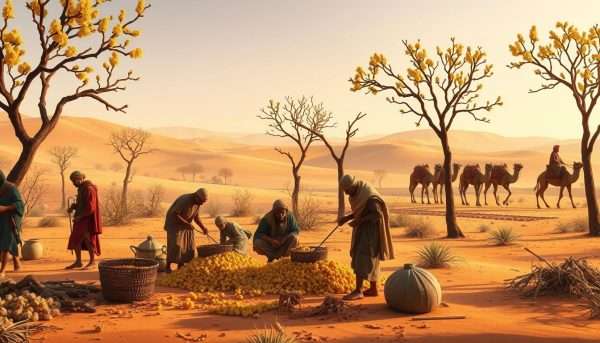
Harvesting frankincense resin, one of the most valuable commodities transported by Nabataean merchants
Archaeological evidence shows that the Nabataeans established a network of caravanserais (rest stops) and hidden water cisterns along their trade routes. These strategic outposts allowed their caravans to travel through hostile territories without relying on local water sources, giving them a significant competitive advantage.
Maritime Trade
While commonly associated with desert caravans, recent research indicates the Nabataeans were also active in maritime trade. They established port facilities at Aila (modern Aqaba) and operated trading vessels in the Red Sea. Archaeological findings suggest they had connections to ports along the Arabian Peninsula and possibly as far as India.
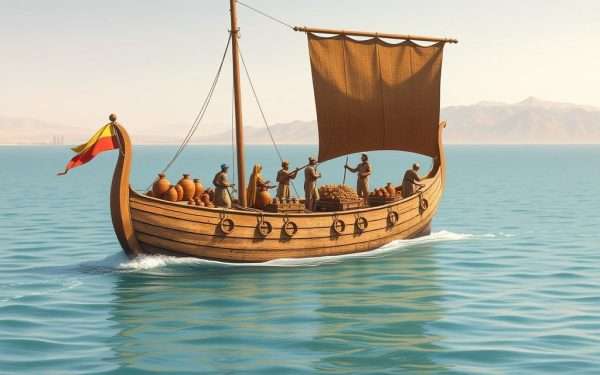
Reconstruction of a Nabataean trading vessel based on archaeological evidence
Economic Strategies
The Nabataeans employed several sophisticated economic strategies that contributed to their success:
Monopolistic Practices
They worked to establish control over key trade goods, particularly frankincense and myrrh. Historical sources indicate they charged premiums as high as 25% on goods they transported, creating enormous wealth.
Diversification
Beyond luxury goods, they traded in practical commodities like bitumen from the Dead Sea (used for waterproofing ships), copper, iron, sugar, medicines, ivory and textiles.
Cultural Adaptability
The Nabataeans maintained their distinct identity while adapting to the customs and languages of their trading partners. They used Aramaic for commercial purposes while speaking Arabic among themselves.
Information Control
They deliberately spread misinformation about their trade routes and sources of goods. Ancient historians noted that the Nabataeans created elaborate tales to hide their trade secrets.

Nabataean coins showing their economic prosperity and cultural influences
Discover Ancient Trade Routes
Follow in the footsteps of Nabataean merchants with our detailed map of ancient trade routes across the Middle East.
Cultural Achievements and Religious Practices
Despite their economic focus, the Nabataeans developed a rich cultural identity that blended indigenous traditions with influences from neighboring civilizations. Their religious practices, art, and social structures reveal a sophisticated society that valued both tradition and innovation.
Religious Beliefs
The Nabataeans practiced a form of polytheism centered around a pantheon of deities. Their principal god was Dushara, associated with mountains and the heavens. His consort was Al-‘Uzzá, a powerful goddess figure. Other important deities included Allat, Manat, and various imported gods from neighboring cultures.

Nabataean betyl (sacred stone) representing the god Dushara
A distinctive feature of early Nabataean religion was their representation of deities as abstract stone blocks or betyls rather than anthropomorphic figures. This practice gradually changed under Hellenistic influence, with later Nabataean art depicting gods in human form.
Archaeological excavations at Petra have uncovered several important religious sites, including:
- The Temple of Winged Lions, possibly dedicated to Al-‘Uzzá
- The Great Temple, a massive complex combining religious and civic functions
- The Qasr al-Bint, the main temple dedicated to Dushara
- High Places of Sacrifice on mountaintops surrounding the city
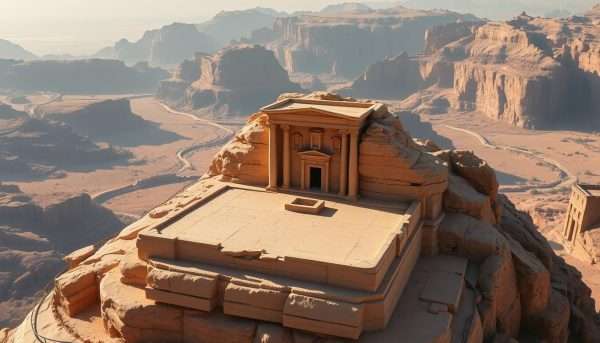
The High Place of Sacrifice in Petra, a Nabataean religious site
Language and Writing
The Nabataeans spoke an early form of Arabic but used Aramaic (the lingua franca of the region) for official inscriptions and commercial purposes. The Nabataean alphabet, derived from Aramaic script, is particularly significant as it later evolved into the Arabic alphabet used today.

Nabataean inscription showing their distinctive script that later evolved into Arabic
Social Structure and Gender Roles
Recent archaeological research has revealed surprising aspects of Nabataean social organization. Unlike many contemporary societies, Nabataean women appear to have enjoyed significant legal rights and social status.
Evidence from inscriptions shows that Nabataean women could:
- Own and manage property independently
- Initiate divorce proceedings
- Participate in religious ceremonies
- Inherit property directly
Nabataean queens were depicted on coins, sometimes independently and sometimes alongside their king, suggesting they held political importance. This relatively egalitarian approach to gender stands out among ancient Middle Eastern societies.
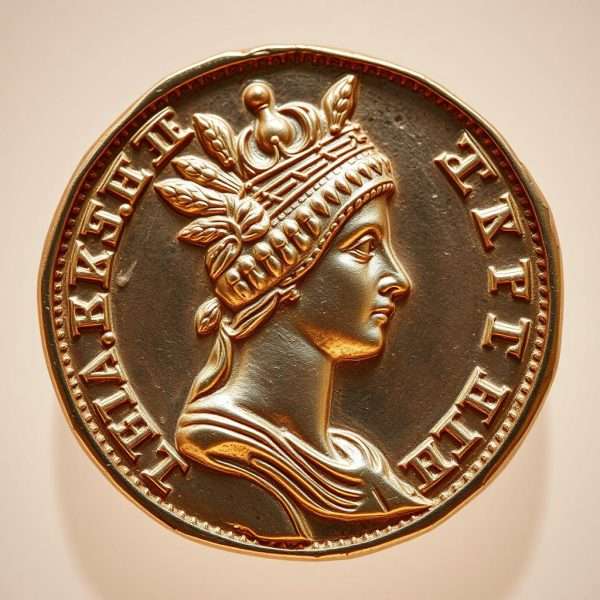
Nabataean coin showing a queen, demonstrating the status of royal women
Decline of the Nabataean Kingdom and Lasting Legacy
The independent Nabataean kingdom came to an end in 106 AD when the Roman Emperor Trajan annexed it into the Roman province of Arabia Petraea. The traditional view holds that this annexation was peaceful, occurring after the death of the last Nabataean king, Rabbel II Soter.
Theories of Decline
Several factors contributed to the decline of Nabataean power:
Shifting Trade Routes
The development of maritime routes through the Red Sea reduced the importance of the overland routes controlled by the Nabataeans. Roman Egypt’s direct sea trade with India bypassed Nabataean middlemen.
Roman Expansion
As Rome consolidated power in the eastern Mediterranean, the Nabataeans were gradually encircled. They became a client kingdom paying tribute to Rome before formal annexation.
Internal Factors
Some evidence suggests internal political instability or succession issues following the death of Rabbel II may have facilitated Roman takeover.
Natural Disasters
Archaeological evidence indicates earthquakes damaged Petra in the 1st century AD, potentially weakening Nabataean infrastructure.
Recent research by Paolo Cimadomo at the University of Haifa challenges the narrative of peaceful annexation. Analysis of Safaitic inscriptions suggests violent resistance by the Nabataeans, with one inscription mentioning “the year of the struggle between the Romans and the Nabataeans” and another noting a Nabataean king defeating Roman soldiers.

Roman modifications to Nabataean structures in Petra following annexation
Post-Kingdom Period
After Roman annexation, the Nabataeans did not simply disappear. They continued to maintain their cultural identity for centuries:
- By the 3rd century, they had shifted from writing in Aramaic to Greek
- By the 5th century, most Nabataeans had converted to Christianity
- Their lands were eventually divided between Byzantine vassals
- Their architectural and water management knowledge influenced subsequent civilizations
Rediscovery and Modern Significance
The Nabataean civilization faded from Western awareness until 1812, when Swiss explorer Johannes L. Burckhardt rediscovered Petra. Since then, archaeological work has steadily revealed the extent and sophistication of Nabataean achievements.

Modern archaeological excavations at Petra revealing new insights about Nabataean civilization
Recent archaeological discoveries include:
- The Petra Scrolls – carbonized papyri from the 6th century providing insights into legal practices
- A massive swimming pool complex discovered in 2016, challenging perceptions of water use in the desert city
- Evidence of sophisticated urban planning with paved streets and advanced sewage systems
- Underwater discoveries of a submerged Nabataean temple in Puteoli, Italy, confirming their far-reaching trade connections
The legacy of the Nabataean civilization continues to influence the modern Middle East. Their architectural techniques, water management systems and cultural contributions remain relevant to contemporary challenges in arid regions. UNESCO recognized Petra as a World Heritage Site in 1985, and it was named one of the New Seven Wonders of the World in 2007.

Petra by night, illuminated by candles, showing the continuing cultural significance of Nabataean sites
Conclusion: The Enduring Mystery of the Nabataeans
The Nabataean civilization stands as one of history’s most remarkable examples of human adaptation to challenging environments. From their ingenious water management systems to their spectacular rock-cut architecture, the Nabataeans demonstrated extraordinary technical skill and cultural sophistication.
Yet despite these achievements, much about the Nabataeans remains mysterious. Their deliberate secrecy about trade routes, their limited written records, and the abrupt end of their kingdom leave many questions unanswered. This air of mystery only adds to their fascination, making the Nabataean civilization a compelling subject for ongoing archaeological research.
As we continue to uncover new evidence about this remarkable civilization, we gain not only insights into the ancient past but also valuable lessons about sustainability, cultural exchange and human ingenuity that remain relevant today. The story of the Nabataeans—masters of water, trade, and stone—deserves to be more widely known and celebrated as one of humanity’s great achievements.
Stay Updated on Archaeological Discoveries
Join our newsletter to receive the latest updates on Nabataean archaeological findings and research.
Further Reading and Resources
For those interested in exploring the Nabataean civilization in greater depth, the following resources provide valuable information:
- Taylor, Jane (2001). Petra and the Lost Kingdom of the Nabataeans. London: I.B. Tauris.
- Healey, John F. (2001). The Religion of the Nabataeans: A Conspectus. Leiden: Brill.
- Graf, David F. (2019). Rome and the Arabian Frontier: From the Nabataeans to the Saracens. Routledge.
- Alpass, Peter (2013). The Religious Life of Nabataea. Brill.
- Gibson, Dan (2022). Let The Stones Speak. Available at nabataea.net

Modern visitors exploring the ancient Nabataean city of Petra













Leave A Comment