
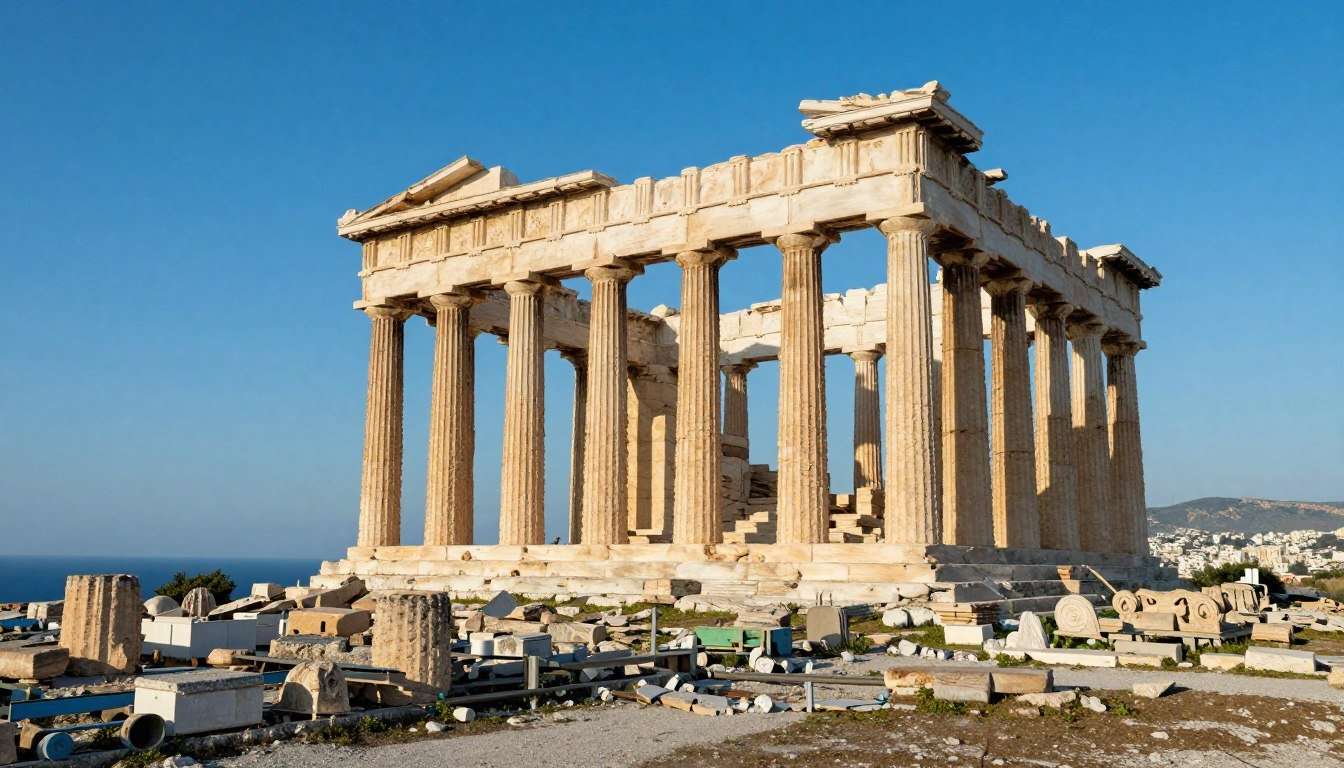
Understanding these ancient sites enriches our appreciation for human achievement across millennia. The ruins stand as testament to Greek ingenuity in architecture, art, and urban planning. Today, millions of visitors journey to Greece each year to witness these wonders of the ancient world firsthand.
Plan Your Perfect Greek Ruins Journey
Discover the ancient wonders of Greece with expert guidance. Our travel specialists create personalized itineraries that bring history to life, ensuring you experience the most significant archaeological sites with comfort and insight.
The Acropolis and Parthenon: Crown Jewel of Ancient Athens
The Acropolis rises above the modern city of Athens as the ultimate symbol of ancient Greek achievement. This sacred hill hosts the most famous Greek ruins in the world. The site dominated the ancient city landscape and continues to command attention today.
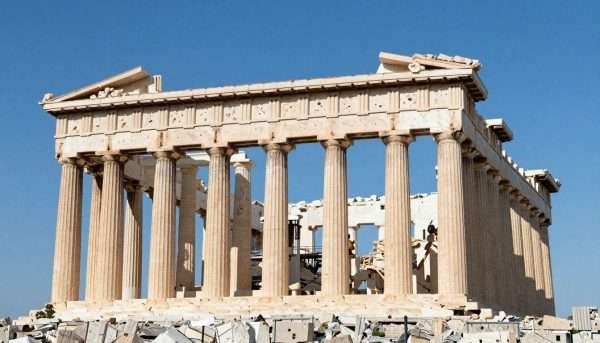
The Parthenon stands as the centerpiece of the Acropolis. Built between 447 and 432 BCE, this temple honored Athena, the patron goddess of Athens. The structure represents the pinnacle of classical Greek architecture and showcases the Doric order at its finest.
Architectural Brilliance of the Parthenon
The builders of the Parthenon employed remarkable engineering techniques. The temple features subtle curves in its design that create optical perfection. Columns lean slightly inward while the base curves upward imperceptibly. These refinements demonstrate the advanced mathematical understanding of ancient Greek architects.
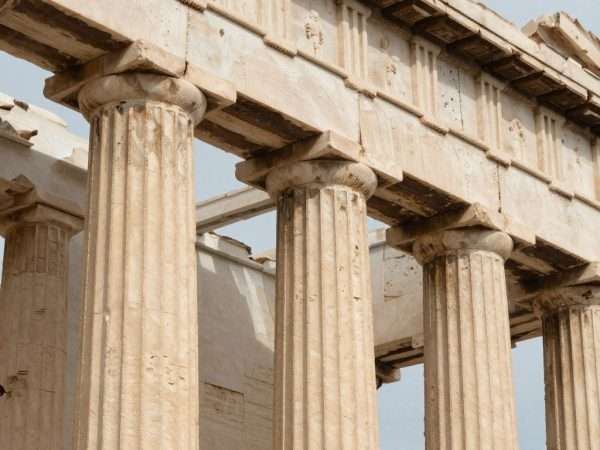
The Parthenon originally housed a massive statue of Athena crafted from gold and ivory. The temple measured 228 feet long and 101 feet wide. Forty-six outer columns surrounded the inner chamber, each standing 34 feet tall.
Marble from Mount Pentelicus gave the Parthenon its distinctive golden hue. This material has weathered centuries remarkably well. The intricate sculptures that once adorned the temple told stories of Greek mythology and Athenian military victories.
Temple of Athena Nike
The Temple of Athena Nike graces the southwestern corner of the Acropolis. This smaller temple celebrated Athenian military victories. Built around 420 BCE, it showcases the Ionic architectural order with elegant columns and delicate proportions.
The temple once held a wooden statue of Nike without wings. Athenians believed removing the wings would prevent victory from leaving their city. The frieze depicted battle scenes and assemblies of gods, demonstrating the artistic mastery of the period.
The Erechtheion and Its Caryatids
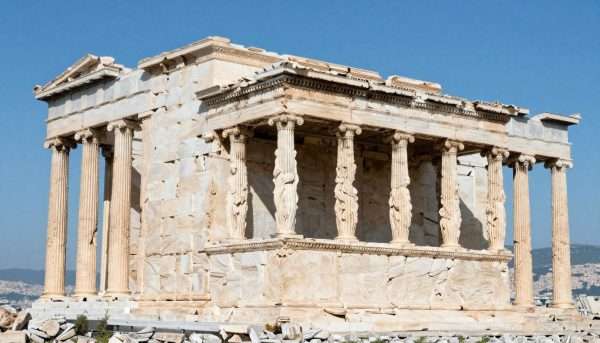
The Erechtheion stands as one of the most complex ancient Greek buildings. Construction occurred between 421 and 406 BCE on the north side of the Acropolis. The temple honored both Athena and Poseidon, reflecting a sacred contest between the two deities.
The famous Porch of the Caryatids features six female figures serving as columns. These sculpted maidens support the roof with grace and strength. Five original Caryatids now reside in the Acropolis Museum, while one remains in the British Museum.
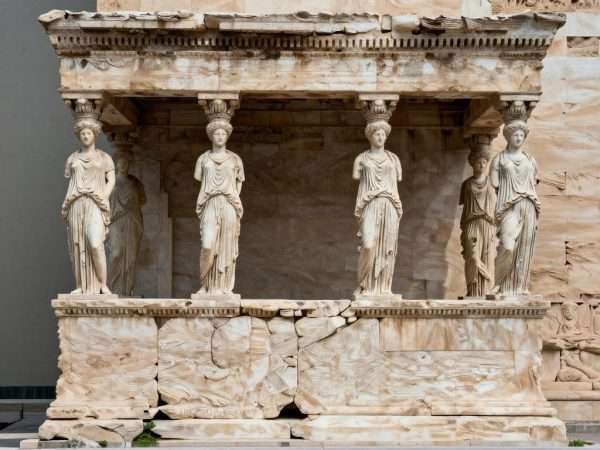
The Acropolis Museum
The Acropolis Museum opened in 2009 at the base of the sacred hill. This modern facility houses thousands of artifacts found on the Acropolis. The museum’s glass floors reveal ongoing archaeological excavations beneath the building.
The Parthenon Gallery occupies the top floor with the same dimensions as the ancient temple. Visitors can view original sculptures and friezes in their proper architectural context. The museum displays over 4,000 objects spanning the Bronze Age through Roman and Byzantine Greece.
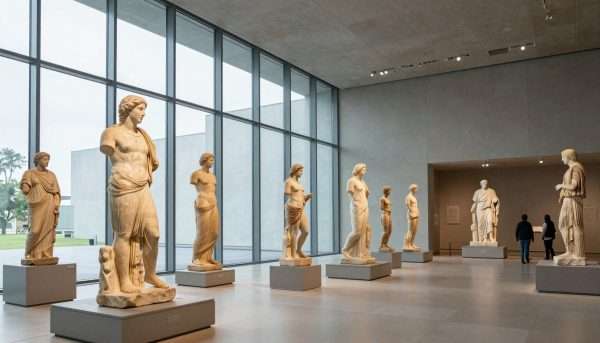
The Acropolis represents more than individual buildings. The site embodies the cultural and political achievements of ancient Athens. During the 5th century BCE, Athens flourished as a center of art, philosophy, and democratic governance.
A good deal of this history is now mapped out for modern researchers. People who want to study these locations can use an online resource at https://chronosatlas.org/. The platform keeps a directory of ancient sites, ranging from prehistoric stone tombs to abandoned cities, which readers can browse and locate on a map. Its entries are tied to recognized references such as the Pleiades gazetteer of ancient places and UNESCO’s World Heritage records. This can make it easier to picture how different settlements related to one another over the centuries.
Best Time to Visit
Early morning or late afternoon visits offer cooler temperatures and better lighting for photography. The site opens at 8:00 AM, and arriving at opening time helps avoid crowds.
What to Bring
Comfortable walking shoes with good grip are essential. The marble surfaces can be slippery. Bring water, sunscreen, and a hat for sun protection.
Combined Tickets
A special ticket grants access to the Acropolis plus six other ancient sites in Athens. This pass offers excellent value for history enthusiasts and remains valid for five days.
Delphi: The Sacred Center of the Ancient World
Delphi served as the spiritual heart of ancient Greece. Perched on the slopes of Mount Parnassus, this archaeological site housed the most famous oracle in the ancient world. Greeks traveled from across the Mediterranean to seek prophecies from the Oracle of Apollo.
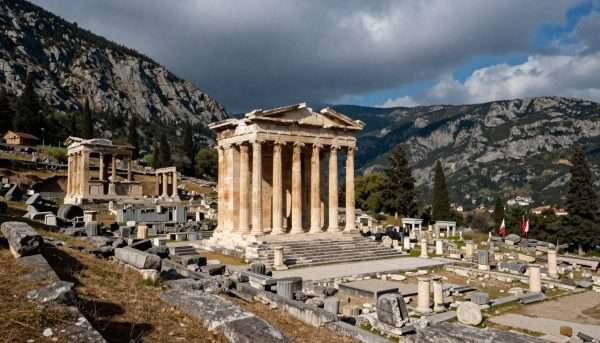
The sanctuary of Apollo dominated the site. Construction began in the 7th century BCE and continued for centuries. The temple housed the Pythia, a priestess who delivered cryptic prophecies while in a trance-like state.
The Temple of Apollo
The Temple of Apollo stood as the centerpiece of Delphi. The current ruins date from the 4th century BCE, representing the fourth iteration of the structure. Previous temples suffered destruction from fire and earthquake.
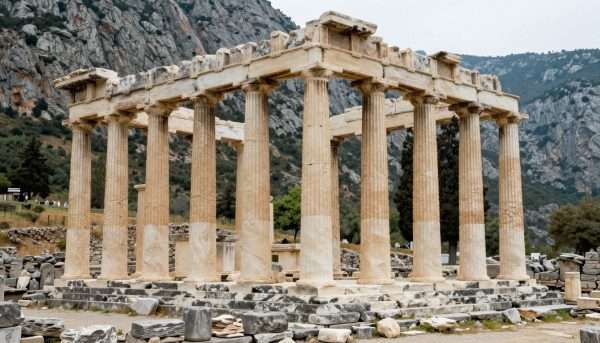
Six columns remain standing today, providing a glimpse of the temple’s former grandeur. The structure measured 197 feet long and 75 feet wide. Inscriptions carved into the temple included famous maxims such as “Know Thyself” and “Nothing in Excess.”
The Ancient Theater and Stadium
The Theater of Delphi sits above the Temple of Apollo on the mountainside. Built in the 4th century BCE, it seated 5,000 spectators. The theater hosted musical competitions during the Pythian Games, which rivaled the Olympic Games in importance.
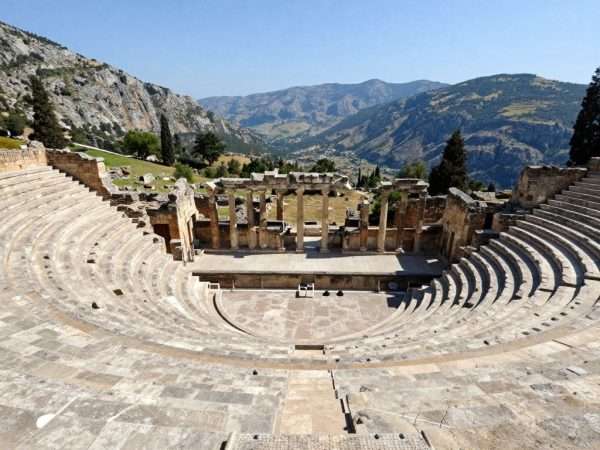
The stadium occupies the highest point of the sanctuary. Athletes competed here every four years during the Pythian Games. The track measures 177 meters long and could accommodate 6,500 spectators on stone benches.
Winners received crowns of laurel leaves rather than monetary prizes. Victory at Delphi brought immense prestige and honor to athletes and their home cities.
The Tholos and Athena Pronaia Sanctuary
The Tholos remains one of the most photographed ancient ruins in Greece. This circular building featured twenty Doric columns on the exterior and ten Corinthian columns inside. Built around 380 BCE, its purpose remains mysterious to scholars.
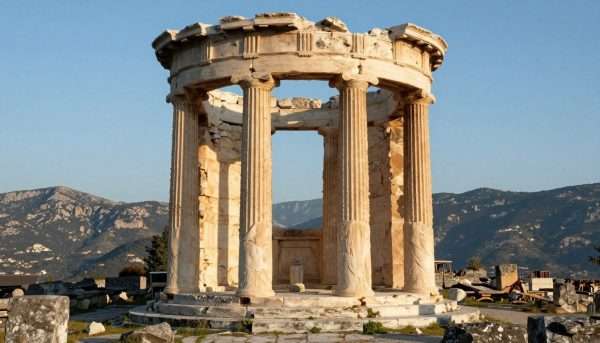
Three columns stand reconstructed today, giving visitors a sense of the structure’s elegant proportions. The Tholos sat within the Sanctuary of Athena Pronaia, located below the main sanctuary. This area served as a welcoming space for pilgrims approaching Delphi.
The Delphi Archaeological Museum
The museum adjacent to the archaeological site houses extraordinary treasures. The collection includes the famous Charioteer of Delphi, one of the finest surviving bronze statues from ancient Greece. Created around 475 BCE, this life-sized figure demonstrates remarkable artistic skill.
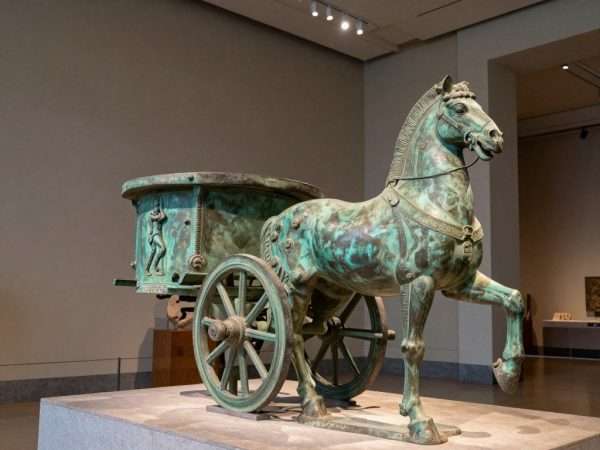
The museum also displays the Sphinx of Naxos, elegant kouros statues, and intricate friezes from various treasuries. These artifacts illuminate the wealth and artistic achievements of ancient Greek city-states that maintained buildings at Delphi.
Historical Significance of Delphi
Delphi functioned as a pan-Hellenic sanctuary where all Greeks could gather. City-states built treasuries to house their offerings to Apollo. The site fostered a sense of shared Greek identity despite frequent warfare between cities.
The oracle influenced major political and military decisions throughout the ancient world. Leaders consulted the Pythia before founding colonies, declaring war, or implementing new laws. The prophecies, though often ambiguous, carried enormous authority.
“Delphi was considered the navel of the earth, the center where heaven and earth met. The oracle’s influence extended far beyond religious matters into every aspect of Greek life.”
The sanctuary accumulated vast wealth through offerings and consultation fees. Gold, silver, and precious objects filled the treasuries. This wealth made Delphi a target for raiders, though its sacred status provided some protection.
Experience Delphi with Expert Guides
Reserve your spot on our archaeological tours led by professional historians and archaeologists. Small group sizes ensure personalized attention and in-depth exploration of Greece’s most significant ancient sites.
Ancient Olympia: Birthplace of the Olympic Games
Ancient Olympia holds a special place in world history as the site where the Olympic Games began. Located in the western Peloponnese, this sanctuary honored Zeus, king of the gods. The site attracted athletes and spectators from across the Greek world every four years.
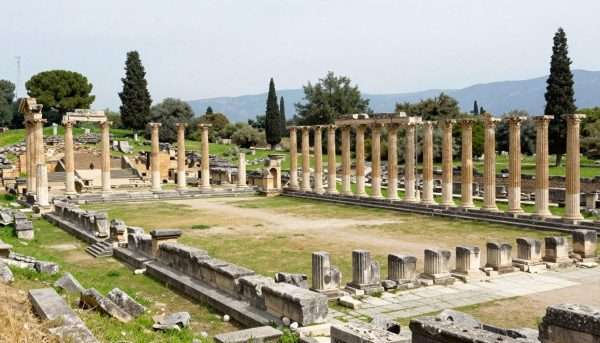
The first recorded Olympic Games took place in 776 BCE. Competition continued for nearly twelve centuries until the Roman emperor Theodosius I banned the games in 393 CE. The modern Olympic Games, revived in 1896, draw inspiration from this ancient tradition.
The Temple of Zeus
The Temple of Zeus dominated the sacred precinct at Olympia. Built between 470 and 456 BCE, it ranked among the largest temples in ancient Greece. The structure measured 210 feet long and 91 feet wide.

Inside the temple stood one of the Seven Wonders of the Ancient World. The statue of Zeus, created by the sculptor Phidias, towered 42 feet high. The god sat on an elaborate throne, crafted from gold, ivory, ebony, and precious stones.
The statue depicted Zeus holding a figure of Nike in his right hand and a scepter topped with an eagle in his left. Despite its fame, the statue was eventually destroyed, likely in the 5th century CE. Only ancient descriptions and depictions on coins preserve its memory.
The Ancient Stadium
The stadium at Olympia hosted the athletic competitions. The track measured one stade in length, approximately 600 feet. This measurement gave the stadium its name and became a standard unit of distance in the ancient world.
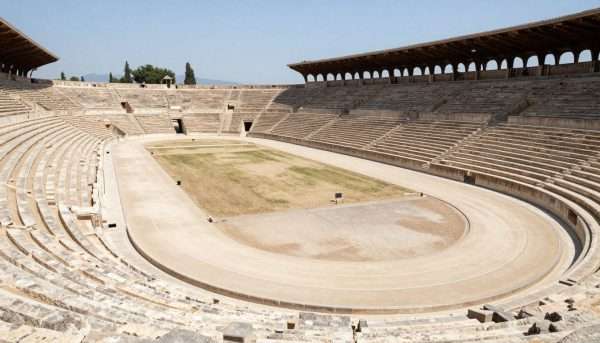
Earthen embankments provided seating for up to 45,000 spectators. A stone starting line with grooves for runners’ feet remains visible today. Athletes competed naked, a practice that emphasized physical perfection and equality among participants.
The Palaestra and Gymnasium
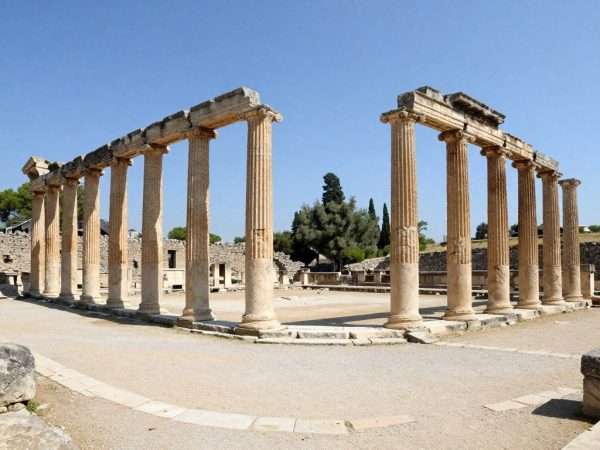
Athletes trained at the palaestra and gymnasium before competitions. The palaestra, a square courtyard surrounded by columns, served as a wrestling school. Sand covered the ground where athletes practiced combat sports.
The gymnasium provided space for running and javelin practice. This larger facility featured covered tracks for training during bad weather. Athletes spent months at Olympia preparing for the games under the supervision of trainers.
The Olympic truce, declared before each games, allowed athletes safe passage through hostile territories. This tradition emphasized the games’ importance in promoting peace among Greek city-states.
The Archaeological Museum of Olympia
The museum houses extraordinary sculptures and artifacts from the site. The pediment sculptures from the Temple of Zeus rank among the finest examples of classical Greek art. These marble masterpieces depict the chariot race between Pelops and Oinomaos and the battle between Lapiths and Centaurs.

The museum also displays the Hermes of Praxiteles, an original work by one of ancient Greece’s greatest sculptors. This marble statue shows the god Hermes holding the infant Dionysus. The sculpture exemplifies the grace and naturalism of 4th-century BCE Greek art.
Bronze tools, weapons, and offerings recovered from the site demonstrate the technological sophistication of ancient Greeks. Pottery fragments and inscriptions provide insights into daily life and religious practices at the sanctuary.
Events of the Ancient Olympic Games
The ancient Olympic Games featured various athletic competitions. The stadion, a sprint of one stade, was the original and most prestigious event. Other running events included the diaulos (two stades) and the dolichos (24 stades).
Combat Sports
- Wrestling (pale) – Fighters competed until one contestant submitted
- Boxing (pygme) – Athletes wrapped leather thongs around their hands
- Pankration – A brutal combination of boxing and wrestling with few rules
Equestrian Events
- Chariot racing – Four-horse chariots competed in the hippodrome
- Horse racing – Riders competed bareback on a course of 1,200 meters
- Mule cart racing – A later addition that proved less popular
The pentathlon tested all-around athletic ability. Competitors participated in five events: discus throw, javelin throw, long jump, running, and wrestling. Victory required winning three of the five competitions.
Winners received olive wreaths cut from the sacred tree near the Temple of Zeus. Though the prizes held no monetary value, Olympic victors gained fame and honor. Their home cities often rewarded them with money, tax exemptions, and free meals for life.
Modern Connection: The Olympic flame for modern games is still lit at ancient Olympia using a parabolic mirror to focus sunlight. This ceremony connects contemporary athletes to their ancient predecessors and emphasizes the games’ Greek heritage.
Mycenae: Gateway to Bronze Age Greece
Ancient Mycenae reveals the power and sophistication of Bronze Age civilization in Greece. This fortified palace complex dominated the region from approximately 1600 to 1100 BCE. The site gives its name to an entire period of Greek history: the Mycenaean Age.
Mycenae controlled trade routes between southern and northern Greece. The city accumulated enormous wealth, evidenced by the golden treasures discovered in royal tombs. These finds revolutionized understanding of prehistoric Greece.
The Lion Gate
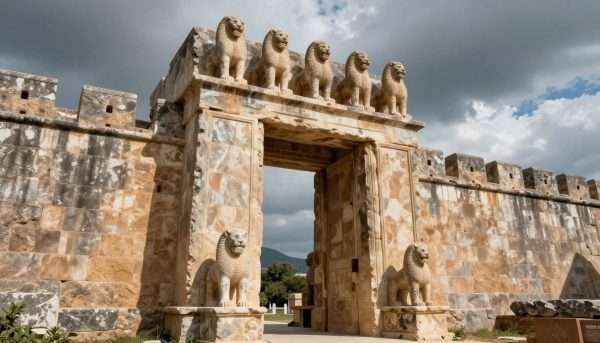
The Lion Gate serves as the main entrance to the citadel. Built around 1250 BCE, it stands as the only monumental sculpture surviving from Bronze Age Greece. Two lionesses flank a central pillar in relief above the gateway.
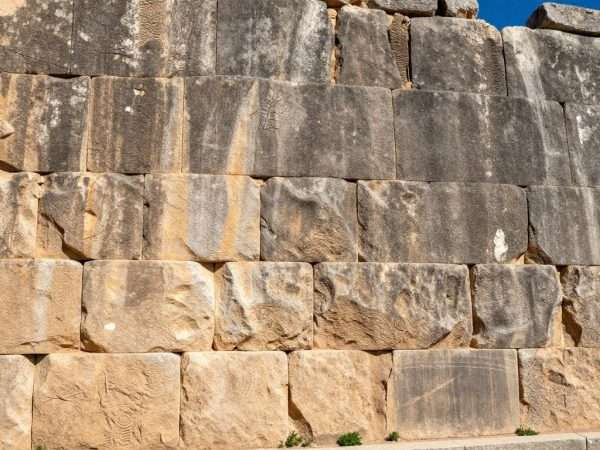
The massive stones forming the gate exemplify Cyclopean masonry. Later Greeks believed only the mythical Cyclopes could have moved such enormous blocks. The defensive walls surrounding Mycenae incorporate similar construction, creating an imposing fortification.
The Palace Complex
The palace sat at the highest point of the citadel. Though largely destroyed, remaining foundations reveal a sophisticated megaron-style structure. The great hall featured a central hearth surrounded by four columns supporting the roof.
Frescoes once decorated the palace walls with scenes of battles, processions, and daily life. The palace also housed administrative areas with Linear B tablets. These clay records provide the earliest evidence of written Greek language.
Grave Circle A and Royal Tombs
Grave Circle A lies just inside the Lion Gate. Heinrich Schliemann excavated this area in 1876, discovering shaft graves containing the bodies of Mycenaean royalty. The graves yielded spectacular golden artifacts, including the famous Mask of Agamemnon.

The Treasury of Atreus, also called the Tomb of Agamemnon, represents the pinnacle of Mycenaean tomb architecture. This beehive-shaped tholos tomb stands 43 feet tall and 48 feet in diameter. The burial chamber was already robbed in antiquity, but its construction impresses visitors today.
Archaeological Discoveries
Schliemann’s excavations at Mycenae proved the historical basis for Homer’s epics. The discovery of wealthy burials and palatial architecture confirmed that a powerful civilization existed in Greece during the Bronze Age. These findings transformed scholarly understanding of Greek prehistory.
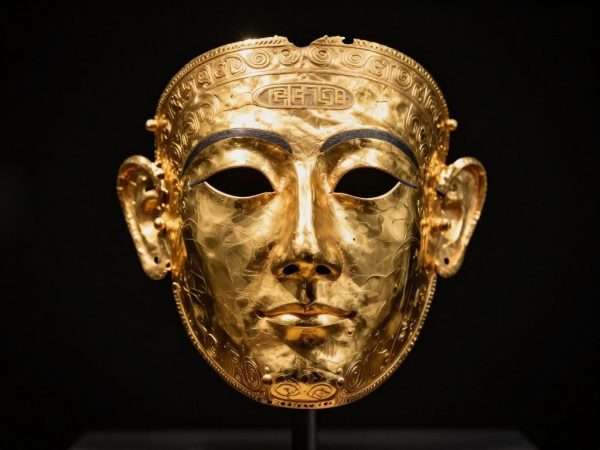
The golden masks, jewelry, and weapons found in the shaft graves demonstrate advanced metalworking skills. Artisans created intricate designs using techniques like repoussé and granulation. These objects reflect both wealth and artistic achievement.
Pottery fragments and imported goods reveal extensive trade networks. Mycenaeans maintained contacts with Egypt, the Near East, and across the Mediterranean. This exchange of goods and ideas influenced the development of Greek civilization.
The Fall of Mycenae
Around 1200 BCE, Mycenaean civilization collapsed. The exact causes remain debated among scholars. Possibilities include invasion, internal conflict, natural disasters, or a combination of factors. The palace at Mycenae burned, and the city declined rapidly.
This collapse ushered in the Greek Dark Ages, a period of reduced literacy and cultural activity. However, Mycenaean traditions influenced later Greek culture. Homeric epics preserved memories of this Bronze Age world through oral tradition.
“Mycenae, rich in gold, was the center of power in Bronze Age Greece. Its monumental architecture and wealthy burials reveal a society of warrior-kings who controlled trade and commanded resources across the Aegean.”
Knossos: The Minoan Palace of Crete
The Palace of Knossos on Crete represents the height of Minoan civilization. This vast complex predates classical Greek culture by over a thousand years. The site flourished between 2000 and 1400 BCE, making it one of the oldest centers of European civilization.
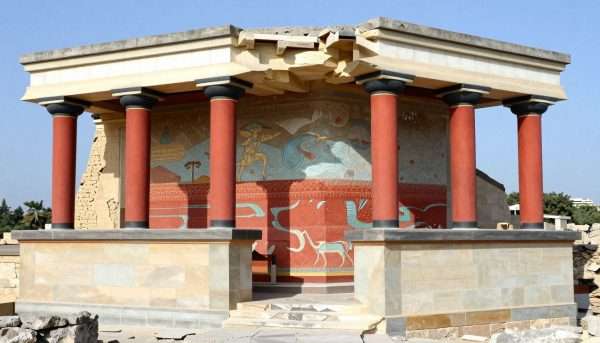
British archaeologist Arthur Evans excavated and controversially reconstructed portions of the palace in the early 20th century. His work brought international attention to Minoan civilization. The reconstructions, while debated by scholars, help visitors visualize the palace’s original appearance.
The Central Court and Palace Layout
The palace covered approximately 20,000 square meters. A large central court served as the focus for ceremonial activities. Multiple stories of rooms, storerooms, and workshops surrounded this open space.
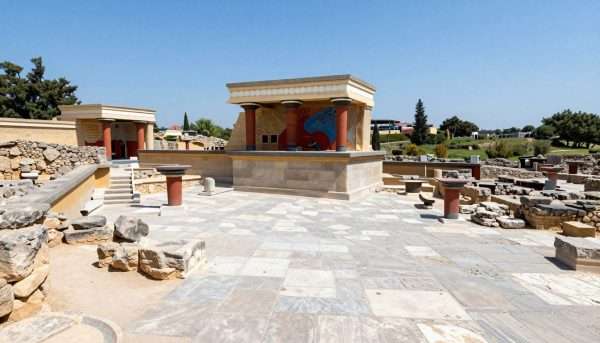
The complex labyrinthine layout may have inspired the Greek myth of the Minotaur’s labyrinth. Corridors, staircases, and rooms interconnect in seemingly random patterns. This design reflected both practical needs and ceremonial functions.
Architectural Innovations
Minoan architects developed sophisticated building techniques. Light wells brought natural illumination to interior rooms. A drainage system managed water and waste with remarkable efficiency. The palace even featured indoor plumbing with terracotta pipes.
Distinctive downward-tapering columns painted red characterize Minoan architecture. These columns, made from cypress wood, supported upper floors. The shape differs markedly from later Greek columns that taper upward.
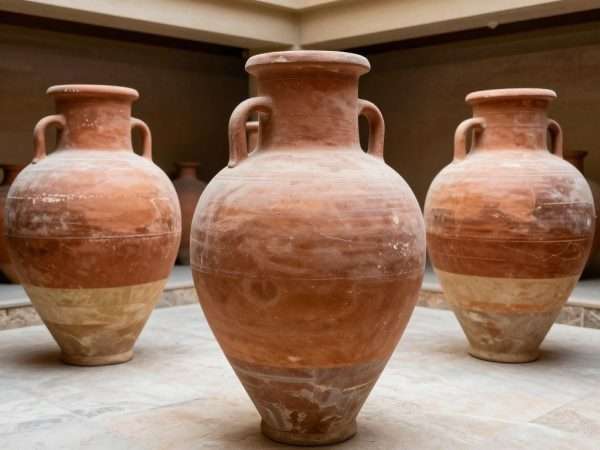
Storerooms held enormous clay jars called pithoi. These containers stored olive oil, wine, grain, and other commodities. The quantity of storage suggests centralized economic control and considerable wealth.
Minoan Frescoes and Art
Vibrant frescoes decorated palace walls throughout Knossos. These paintings depict religious ceremonies, athletic events, and scenes from nature. The famous “Bull-Leaping Fresco” shows young acrobats vaulting over charging bulls.
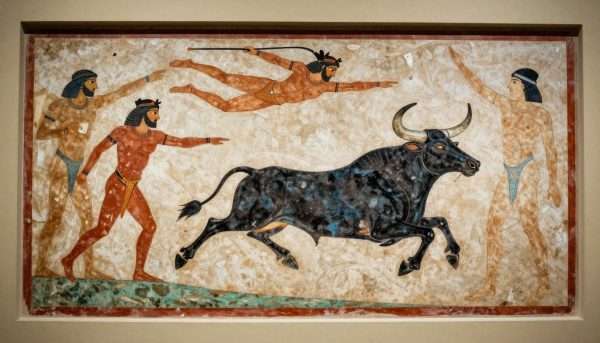
Other notable frescoes include the “Prince of the Lilies” and the “Dolphin Fresco” from the queen’s chambers. These artworks reveal a sophisticated aesthetic sensibility. The Minoans favored naturalistic representations and bright colors.
The “Snake Goddess” figurines found at Knossos provide insight into Minoan religion. These terracotta statues depict priestesses or goddesses holding snakes. Such artifacts suggest the importance of female deities in Minoan culture.
Minoan Civilization and Society
The Minoans developed one of the earliest writing systems in Europe. Linear A script appears on clay tablets and pottery, though scholars have not yet deciphered it. A later script, Linear B, represents an early form of Greek used by Mycenaeans who later controlled Crete.
Trade formed the foundation of Minoan prosperity. The civilization maintained maritime connections throughout the eastern Mediterranean. Minoan pottery, metalwork, and other goods have been found in Egypt, the Levant, and across the Aegean Sea.
Religious Practices
Minoans worshipped in caves, mountain peaks, and palace shrines. Bull imagery played a central role in religious iconography. Female deities appear to have been particularly important.
Economic System
Palace centers controlled production and distribution of goods. Scribes kept detailed records on clay tablets. Specialized craftspeople produced luxury items for trade and palace use.
Cultural Influence
Minoan art and architecture influenced later Greek culture. Mycenaeans adopted Minoan writing and religious practices. The civilization’s legacy shaped the development of Greek civilization.
The Mystery of Minoan Decline
Around 1450 BCE, most Minoan palaces were destroyed. Knossos survived but came under Mycenaean control. Scholars debate whether volcanic eruption, earthquake, invasion, or internal strife caused the collapse.
The eruption of Thera (modern Santorini) around 1600 BCE may have weakened Minoan power. This massive volcanic explosion devastated Aegean settlements. However, Minoan civilization continued for over a century after this event.
Visiting Tip: The Heraklion Archaeological Museum houses the finest collection of Minoan artifacts. Plan to visit both Knossos and the museum for a complete understanding of this fascinating civilization. The museum displays original frescoes, pottery, and the famous Snake Goddess figurines.
Epidaurus: The Ancient Theater and Sanctuary of Healing
The archaeological site of Epidaurus combines remarkable architecture with ancient medicine. Located in the northeastern Peloponnese, this sanctuary honored Asclepius, the god of healing. Sick people traveled from across Greece seeking cures at this sacred place.
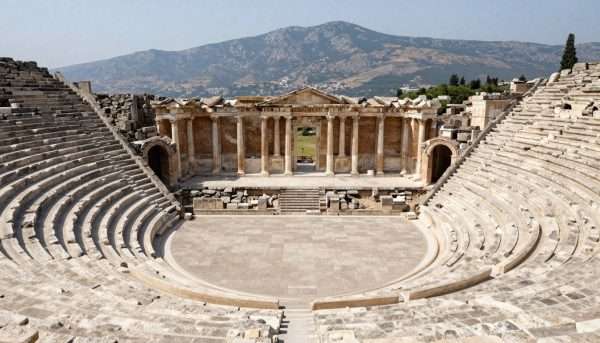
The Theater of Epidaurus represents the finest example of classical Greek theater design. Built in the 4th century BCE by the architect Polykleitos the Younger, it demonstrates extraordinary acoustic engineering. Even today, actors performing without amplification can be heard perfectly in the highest seats.
Architectural Excellence of the Theater
The theater seats approximately 14,000 spectators in 55 tiers of limestone benches. The semicircular design follows precise geometric principles. Each row curves slightly, and the angle of inclination provides excellent sightlines from every seat.
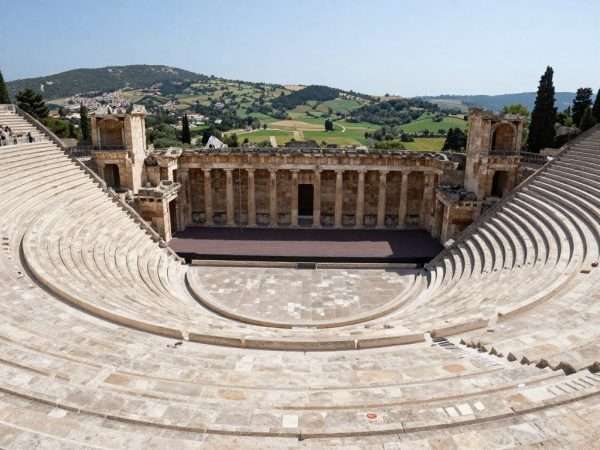
The orchestra, a circular performance area, measures 20 meters in diameter. A single stone at the center marks the focal point where sound radiates outward. The theater’s exceptional acoustics result from careful attention to geometry and materials.
Modern performances continue at the theater during summer festivals. Audiences can experience ancient Greek drama in its original setting. This living connection to the past makes Epidaurus unique among ancient sites.
The Sanctuary of Asclepius
The healing sanctuary predates the theater by several centuries. Patients believed Asclepius would visit them in dreams and provide cures. Treatment combined religious ritual with practical medical care.
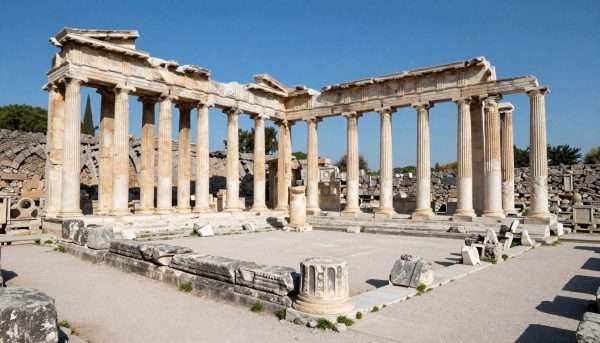
The abaton, a sleeping hall, provided space where patients spent the night awaiting divine healing. Priests interpreted dreams and prescribed treatments. The sanctuary also employed doctors who used medicinal herbs, diet, exercise, and therapeutic baths.
The Tholos and Other Buildings
The mysterious tholos, or round building, stands as an architectural masterpiece. Built in 360-330 BCE, it featured elaborate decoration with Corinthian columns. The building’s circular foundation contained an underground labyrinth, whose purpose remains unknown.
Theories suggest the tholos served as a sacred space for secret rituals or housed sacred snakes associated with Asclepius. The building’s sophisticated design and costly materials indicate its importance to the sanctuary.
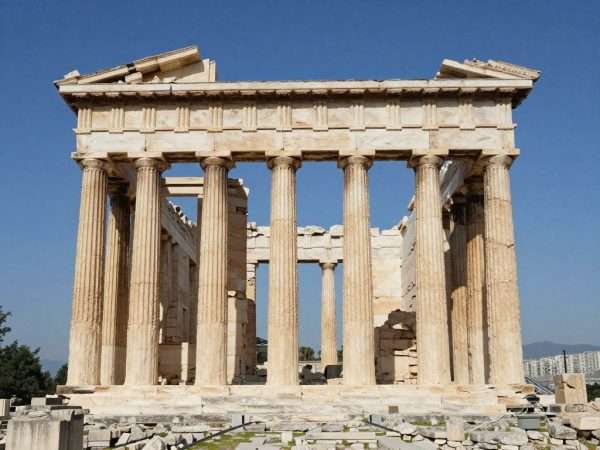
A stadium hosted athletic competitions during festivals honoring Asclepius. The games included running races and other contests. These activities complemented the sanctuary’s healing mission by promoting physical fitness and health.
Medical Practices at Epidaurus
Inscriptions found at the site describe miraculous cures. These records, called iamata, served as testimonials promoting the sanctuary’s effectiveness. While supernatural elements dominate the accounts, they also reveal actual medical treatments.
Ancient Medicine: The sanctuary at Epidaurus represented an early form of holistic healthcare. Treatment addressed physical, mental, and spiritual dimensions of illness. This approach influenced the development of Greek medicine and the Hippocratic tradition.
The symbol of Asclepius, a staff with a single snake coiled around it, remains the emblem of medicine today. This connection demonstrates the lasting influence of ancient Greek healing practices on modern medical culture.
Questions about visiting Greek archaeological sites? Our travel specialists are here to help.
Other Remarkable Ancient Greek Ruins
Beyond the most famous sites, Greece contains hundreds of archaeological locations. Each offers unique insights into ancient Greek civilization. These ruins span different periods and regions, revealing the diversity of Greek culture.
The Ancient City of Corinth
Ancient Corinth controlled the narrow isthmus connecting central Greece to the Peloponnese. This strategic location made it one of the wealthiest cities in ancient times. The city dominated maritime trade between the Aegean and Ionian seas.
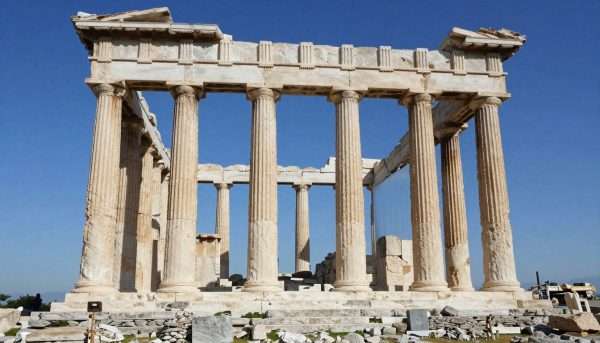
Seven standing columns of the Temple of Apollo survive from the 6th century BCE. These massive Doric columns represent some of the oldest stone architecture in Greece. The temple dominated the ancient city’s skyline.
Acrocorinth, a fortress on a steep mountain above the ancient city, offered refuge during attacks. The location provided spectacular views and defensive advantages. Multiple civilizations fortified this position throughout history.
Rhodes: The Acropolis of Lindos
The island of Rhodes holds exceptional archaeological treasures. The Acropolis of Lindos sits dramatically atop a coastal cliff. White columns of the Temple of Athena Lindia crown the hilltop, visible from far out to sea.
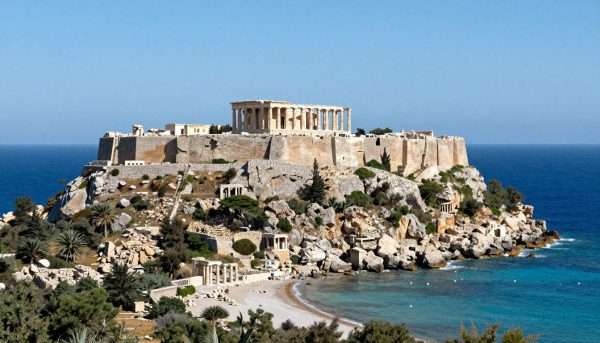
The sanctuary dates to the 10th century BCE, though current remains are later. A monumental staircase leads to the propylon, an elaborate entrance gateway. The Hellenistic period stoa, or covered colonnade, surrounds part of the sanctuary.
Below the acropolis, the ancient theater overlooks the harbor. The location combines natural beauty with archaeological significance. Visitors experience history while enjoying breathtaking views of the Aegean Sea.
Delos: Sacred Island Sanctuary
The tiny island of Delos served as one of the most sacred places in ancient Greece. According to mythology, Apollo and Artemis were born here. The island became a major religious center and thriving commercial port.
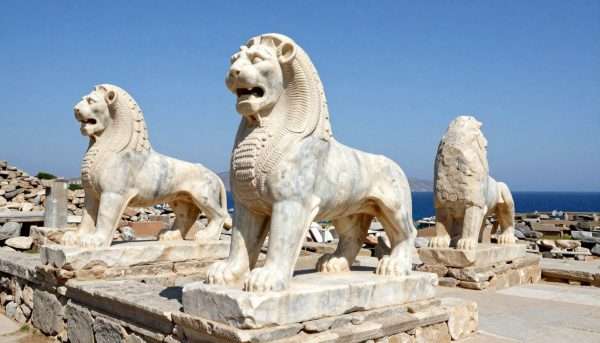
The Terrace of the Lions features marble statues originally numbering nine or more. These archaic sculptures guarded the Sacred Lake. Five lions remain today, weathered but still impressive after 2,600 years.
Extensive residential quarters reveal daily life in antiquity. Well-preserved mosaics decorate floors of wealthy homes. These intricate designs demonstrate the prosperity that trade brought to the island.
Vergina: The Royal Tombs of Macedon
The ancient city of Vergina in northern Greece yielded one of archaeology’s greatest discoveries. In 1977, archaeologists uncovered intact royal tombs beneath a massive burial mound. One tomb likely belongs to Philip II, father of Alexander the Great.
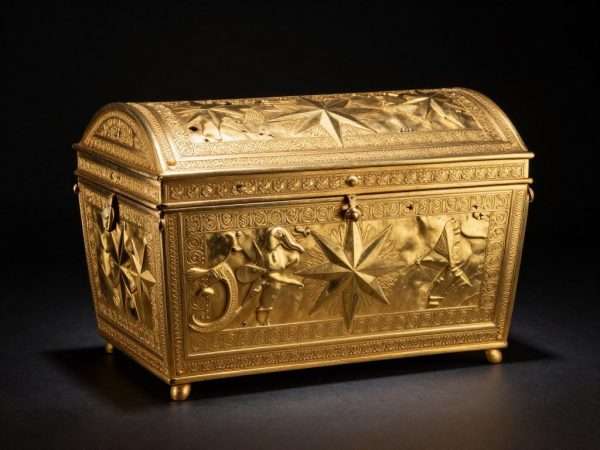
A magnificent golden larnax (burial chest) decorated with the Macedonian star contained cremated remains. Golden wreaths, armor, and weapons accompanied the burial. These treasures demonstrate the wealth and power of Macedonian royalty.
The museum built over the tombs allows visitors to view the burial chambers in situ. Frescoes on tomb walls represent rare examples of ancient Greek painting. The site connects visitors directly to the time of Alexander the Great.
Meteora: Monasteries Among Ancient Rocks
While not ancient Greek ruins in the classical sense, Meteora deserves mention for its extraordinary setting. Byzantine monasteries perch atop towering rock pillars. These formations have spiritual significance dating to ancient times.
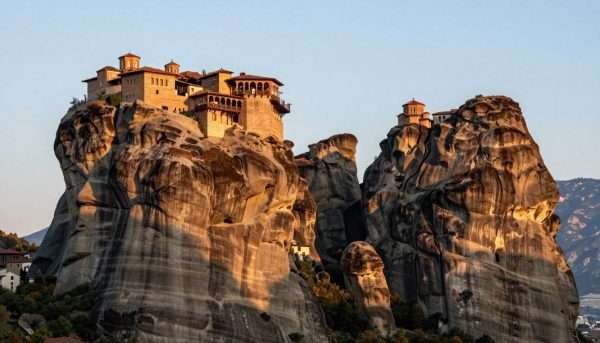
The area held religious importance long before Christianity. Ancient Greeks considered the rocks sacred. Hermits occupied caves here as early as the 9th century CE. The current monasteries date from the 14th to 16th centuries.
Six monasteries remain active today, housing small monastic communities. Visitors can tour several monasteries and view Byzantine frescoes and icons. The combination of natural wonder and human achievement creates an unforgettable experience.
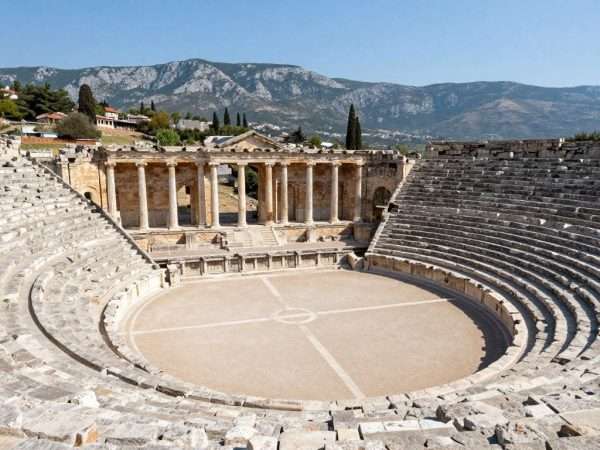
Ancient Messene
This remarkably well-preserved ancient city in the Peloponnese features an impressive stadium, theater, and temple complex. The defensive walls stretch for miles around the site.
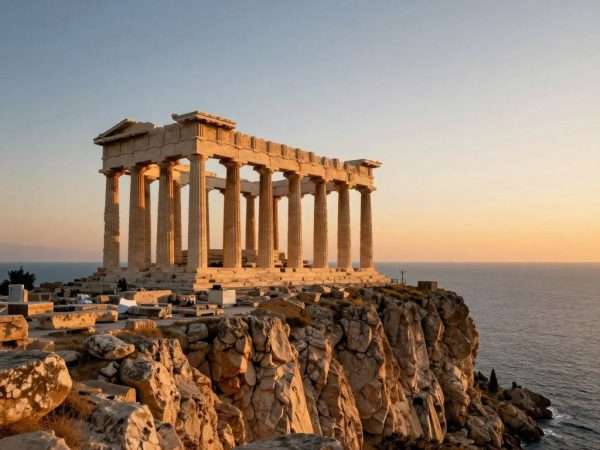
Cape Sounion
The Temple of Poseidon crowns a promontory overlooking the Aegean Sea. This 5th-century BCE temple offers spectacular sunset views and connections to Greek mythology.
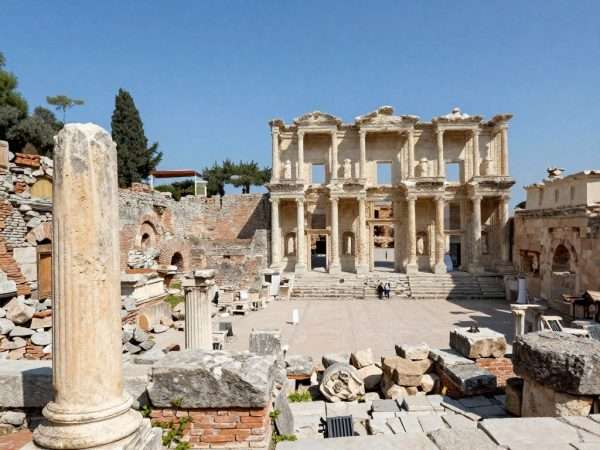
Philippi
Founded by Philip II of Macedon, this city played crucial roles in Greek, Roman, and early Christian history. The site includes a theater, forum, and early Christian basilicas.
Understanding Ancient Greek Architecture and Design
Ancient Greek architecture established principles that influenced Western building design for millennia. The classical orders, proportional systems, and construction techniques developed in ancient Greece continue to inspire architects today. Understanding these fundamentals enhances appreciation of the ruins.
The Three Classical Orders
Greek architecture evolved three distinct column styles known as orders. Each order has characteristic proportions and decorative elements. The orders appeared during different periods and served different aesthetic purposes.

Doric Order
The Doric order represents the earliest and simplest style. Doric columns have no base and rest directly on the stylobate. The shaft features shallow vertical grooves called flutes. The capital consists of a simple cushion shape topped by a square abacus.
The Parthenon exemplifies the Doric order at its most refined. Doric temples typically appear massive and powerful. This order predominated in mainland Greece and western colonies.
Ionic Order
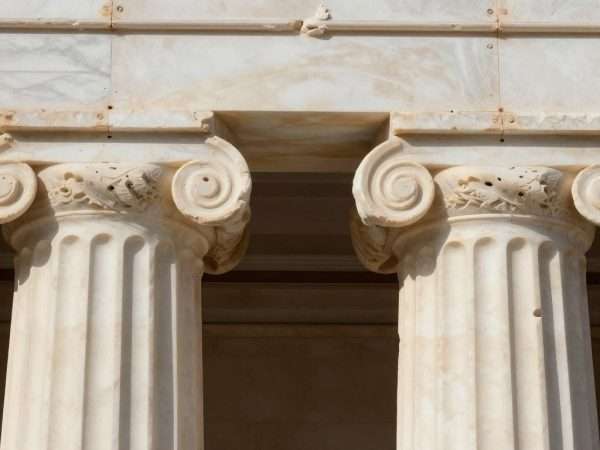
The Ionic order developed in Ionia, the Greek settlements in Asia Minor. Ionic columns are more slender than Doric and rest on bases. The distinctive capital features paired spiral scrolls called volutes.
The Erechtheion on the Acropolis showcases Ionic architecture. This order conveys elegance and sophistication. Ionic temples often appear lighter and more decorative than Doric structures.
Corinthian Order
The Corinthian order emerged latest, during the classical period. It resembles the Ionic order but features an ornate capital decorated with acanthus leaves. The elaborate design made Corinthian columns the most decorative of the three orders.
The Temple of Olympian Zeus in Athens employed Corinthian columns. Romans particularly favored this order. The style became increasingly popular during the Hellenistic period and Roman era.
Construction Techniques and Materials
Greek builders developed sophisticated construction methods. They cut limestone and marble blocks with bronze tools, achieving remarkable precision. Blocks fit together so tightly that mortar was unnecessary in many cases.
Iron clamps and dowels connected architectural elements. Workers poured molten lead around these metal pieces to secure them. This technique created strong joints that allowed buildings to withstand earthquakes.
Columns consisted of multiple cylindrical sections called drums. Builders stacked these drums and secured them with wooden or metal dowels. This modular construction simplified both building and repairs.
Optical Refinements
Greek architects employed subtle adjustments to achieve visual perfection. These refinements counteracted optical illusions that would make perfectly straight lines appear curved or irregular.
Entasis
Column shafts bulge slightly in the middle, creating a gentle convex curve. This entasis prevents columns from appearing thin or concave from a distance. The technique requires precise calculation and execution.
Curvature
The stylobate and entablature curve upward imperceptibly at the center. Without this adjustment, these elements would appear to sag. The curve is so subtle that it’s barely visible to the naked eye.
Corner columns are slightly thicker and placed closer to their neighbors. This adjustment compensates for the bright sky background that would otherwise make corner columns appear thinner. Such attention to visual perception demonstrates remarkable sophistication.
Color in Ancient Architecture
Modern viewers see Greek temples as white marble structures. In reality, ancient Greeks painted their buildings with bright colors. Reds, blues, and gold highlighted architectural details and sculptures.
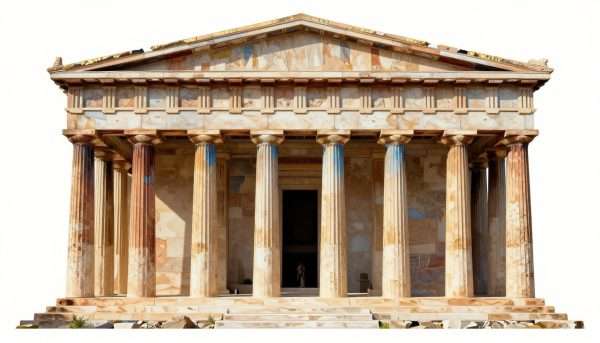
Paint protected marble from weathering and enhanced visual impact. Traces of pigment remain on some sculptures and architectural elements. Modern analysis using technology reveals the original color schemes.
The misconception of pure white temples arose during the Renaissance. Artists and architects of that period saw weathered ruins without paint. They assumed white marble represented the Greek ideal, influencing Western architecture for centuries.
Temple Plans and Sacred Spaces
Greek temples followed standard plans with variations. The naos, or cella, housed the cult statue. A peristyle of columns surrounded the central chamber. The entrance typically faced east toward the rising sun.
Temple in Antis
- Simplest temple type
- Columns between wall extensions
- Small structures for minor deities
- Limited surrounding colonnade
Prostyle Temple
- Free-standing columns across front
- Four to six columns typical
- More monumental appearance
- Temple of Athena Nike example
Peripteral Temple
- Columns completely surround cella
- Most common classical temple type
- The Parthenon exemplifies this plan
- Created processional pathway
Larger temples included a pronaos (front porch) and opisthodomos (rear chamber). The opisthodomos often served as a treasury. Some temples featured an adyton, an inner sanctum accessible only to priests.
Greek Ruins and Their Contributions to World Civilization
The ancient Greek ruins represent far more than impressive architecture. These sites embody intellectual, artistic, and political achievements that fundamentally shaped Western civilization. Understanding what happened at these locations reveals the Greek legacy that continues today.
Birthplace of Democracy
The Athenian Agora, located northwest of the Acropolis, served as the center of democratic government. Citizens gathered here to debate laws and policies. The ruins of the Agora include the reconstructed Stoa of Attalos and the well-preserved Temple of Hephaestus.
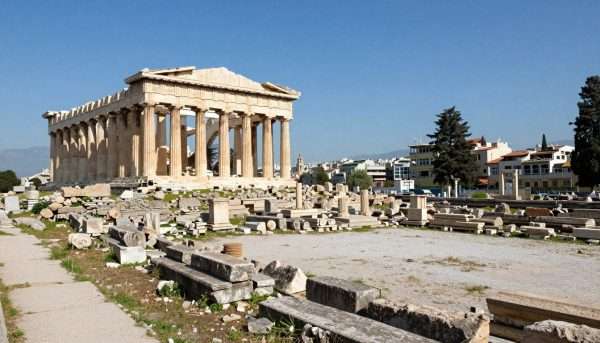
Democratic principles developed in Athens influenced modern political systems. The concept of citizen participation in government originated here. Ancient Athens established practices like voting, public debate, and rule of law.
The Pnyx hill near the Agora hosted the ekklesia, the democratic assembly. Up to 6,000 citizens could gather on this hillside to vote on important matters. Every citizen had the right to speak and propose legislation.
Philosophy and Intellectual Achievement
Ancient Greek philosophers walked among the ruins we visit today. Socrates, Plato, and Aristotle developed systems of thought that remain relevant. Their questions about ethics, politics, and the nature of reality continue to engage thinkers.
Plato founded his Academy in Athens around 387 BCE. This institution became the model for universities worldwide. Students studied mathematics, philosophy, and science in a systematic curriculum.
Aristotle established the Lyceum, another influential school in Athens. His approach emphasized observation and classification of natural phenomena. This methodology laid groundwork for scientific inquiry.
The Library of Alexandria, though in Egypt, was founded by Greeks and housed works from across the Greek world. This institution preserved and transmitted knowledge through centuries. Its loss represents one of history’s great tragedies.

Advances in Science and Mathematics
Greek thinkers made fundamental contributions to mathematics and science. Pythagoras developed theories about numbers and geometry. Euclid’s Elements remained the standard geometry textbook for over two thousand years.
Archimedes discovered principles of mechanics and hydraulics. His innovations included the Archimedes screw for raising water and war machines defending Syracuse. Hippocrates established medicine as a rational discipline separate from religion.
Astronomy
Greek astronomers calculated Earth’s circumference with remarkable accuracy. They tracked planetary movements and predicted eclipses. These observations influenced navigation and calendar development.
Engineering
Ancient Greeks built aqueducts, harbors, and tunnels using advanced engineering. The Tunnel of Eupalinos on Samos demonstrated sophisticated surveying techniques. These projects required complex mathematics and planning.
Medicine
The Hippocratic Corpus established medical ethics and systematic observation. Doctors took oaths promising to benefit patients and avoid harm. These principles still guide medical practice today.
Theater and Literary Arts
Greek theater developed from religious festivals honoring Dionysus. Playwrights like Aeschylus, Sophocles, and Euripides created tragedies exploring human nature and fate. These works established dramatic conventions used ever since.
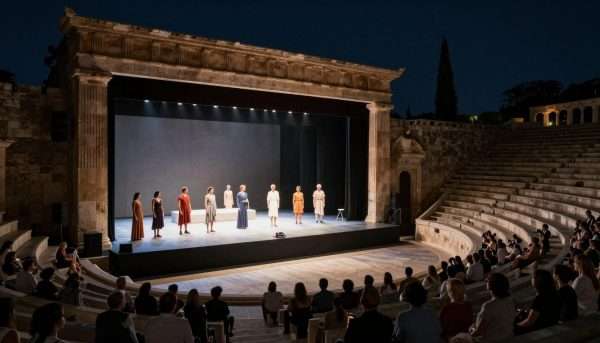
Aristophanes pioneered comedy, satirizing contemporary politics and society. His plays provide insights into daily life in ancient Athens. The freedom to criticize leaders through art reflected democratic values.
Homer’s epic poems, the Iliad and Odyssey, influenced all subsequent Western literature. These works established narrative techniques and archetypal characters. Ancient Greeks memorized and recited these poems as cultural touchstones.
Art and Aesthetic Principles
Greek artists developed principles of proportion and beauty that defined Western aesthetics. The concept of the Golden Ratio appeared in architecture and sculpture. Classical Greek art emphasized naturalism, balance, and ideal human form.
Sculptors like Phidias and Praxiteles created masterworks copied throughout the ancient world. Their techniques for depicting human anatomy and movement influenced artists for centuries. Most original bronze sculptures were lost, but Roman marble copies preserve these achievements.
Cultural Legacy: The ruins we visit today housed communities that fundamentally shaped how we think about government, philosophy, science, and art. Walking through these sites connects us to the origins of Western intellectual tradition.
Sports and Athletic Competition
The Olympic Games celebrated physical excellence and promoted peace among Greek city-states. Athletes trained for years to compete. Victory brought honor to individuals and their cities.
Greek ideals about physical fitness and competition continue in modern sports. The revival of the Olympic Games in 1896 drew directly on ancient traditions. The emphasis on fair play and athletic achievement reflects Greek values.
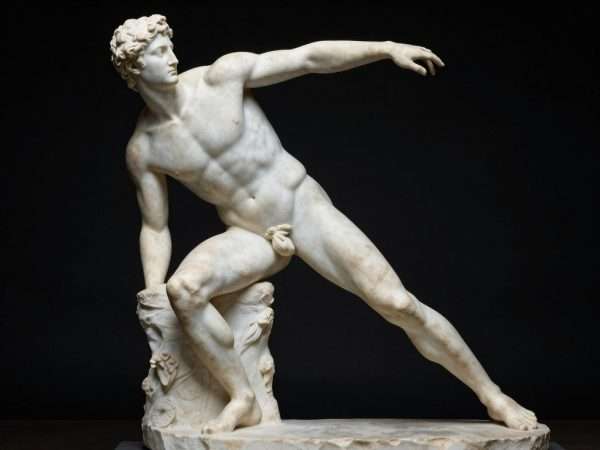
Gymnasiums served as centers for physical and intellectual education. Young men trained their bodies while also studying philosophy and rhetoric. This holistic approach to education influenced later educational systems.
The Panathenaic Games in Athens featured athletic competitions alongside artistic contests. Poets, musicians, and artists competed for recognition. This integration of physical and intellectual achievement characterized Greek culture.
Preservation and Conservation of Greek Archaeological Sites
Protecting Greek ruins presents enormous challenges. These ancient structures have survived earthquakes, wars, and weathering for thousands of years. Modern conservation efforts employ science and technology to preserve sites for future generations.
Natural Threats to Ancient Ruins
Environmental factors constantly threaten archaeological sites. Rain, wind, and temperature fluctuations cause stone to crack and erode. Salt from the sea air accelerates deterioration of marble and limestone.
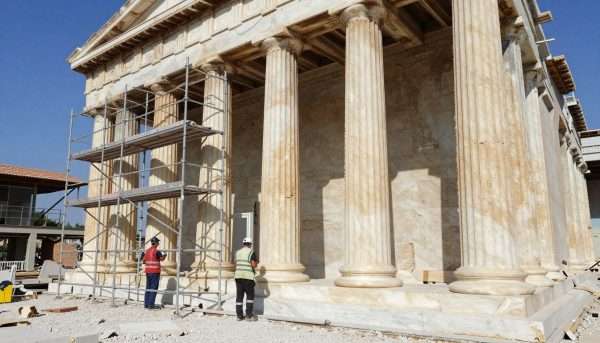
Earthquakes pose particular danger to standing structures. Greece sits in a seismically active zone, experiencing frequent tremors. Ancient builders used techniques to resist earthquakes, but many structures have still suffered damage over centuries.
Vegetation growth can damage ruins. Plant roots work between stones, forcing them apart. However, removing vegetation must be done carefully to avoid destabilizing structures.
Human Impact and Tourism
Millions of visitors each year create wear on ancient sites. Foot traffic polishes marble surfaces and erodes pathways. Touching stones transfers oils and acids that accelerate deterioration.
Site managers implement measures to reduce visitor impact. Roped pathways guide tourists away from fragile areas. Some sites limit daily visitor numbers during peak season.
Past restoration efforts sometimes caused harm. Early archaeologists used inappropriate materials and techniques. Modern conservation removes problematic repairs and uses methods compatible with ancient materials.
Air Pollution Effects
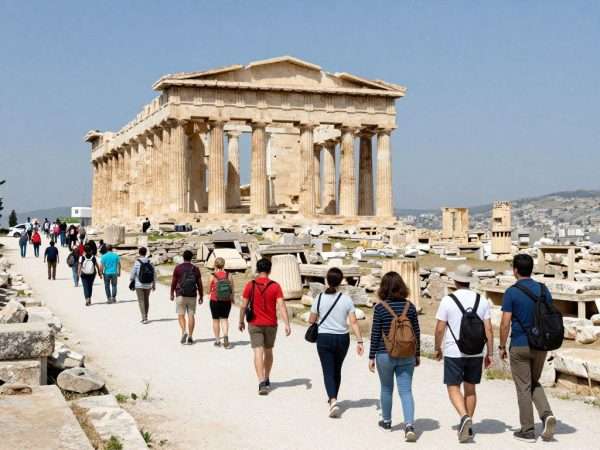
Urban pollution severely affects monuments in Athens and other cities. Acid rain dissolves marble surfaces, damaging fine details on sculptures and architecture. Particulate matter from vehicle emissions creates black crusts on stone.
The Acropolis suffered particularly severe pollution damage in the 20th century. Conservation projects have removed damaged stone and installed protective barriers. Some original sculptures have been moved to museums and replaced with copies.
Modern Conservation Techniques
Conservators use advanced technology to preserve ancient ruins. Laser scanning creates precise 3D models of structures. These digital records preserve information even if physical monuments deteriorate further.
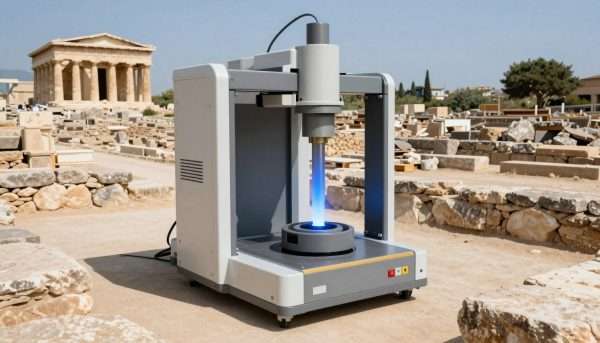
Chemical treatments protect stone from weathering. Consolidants strengthen deteriorated material. Water-repellent coatings prevent moisture penetration while allowing stone to breathe.
Structural reinforcement stabilizes damaged buildings. Titanium rods replace ancient iron clamps that have rusted and cracked stone. These modern materials resist corrosion while providing necessary support.
The Acropolis Restoration Project
The Acropolis restoration project represents one of the most ambitious conservation efforts worldwide. Work began in 1975 and continues today. The project addresses centuries of damage and inappropriate repairs.
Conservation Achievements
- Removed damaging iron clamps installed in earlier restorations
- Restored original ancient blocks to proper positions
- Stabilized structures using modern engineering techniques
- Created detailed documentation of every stone
- Trained new generation of specialized conservators
Ongoing Challenges
- Work proceeds slowly due to complexity and precision required
- High costs necessitate ongoing funding efforts
- Scaffolding and equipment affect visitor experience
- Some damage proved irreversible
- Climate change creates new preservation challenges
International Cooperation
Preserving Greek cultural heritage requires international collaboration. UNESCO designates important sites as World Heritage locations. This status brings international attention and funding support.
Foreign institutions partner with Greek authorities on conservation projects. Archaeologists and conservators from around the world contribute expertise. These collaborations advance preservation science while protecting irreplaceable monuments.
Supporting Preservation: Visitors contribute to conservation by respecting site rules, staying on designated paths, and not touching ancient structures. Admission fees fund ongoing preservation work. Some sites accept donations specifically for conservation projects.
Future of Archaeological Preservation
Climate change poses new threats to archaeological sites. Rising temperatures, changing precipitation patterns, and extreme weather events accelerate deterioration. Conservators must adapt strategies to address these challenges.
Digital preservation creates virtual records of sites. Photogrammetry and 3D modeling capture current conditions in minute detail. These technologies enable virtual visits and provide data for future restoration efforts.
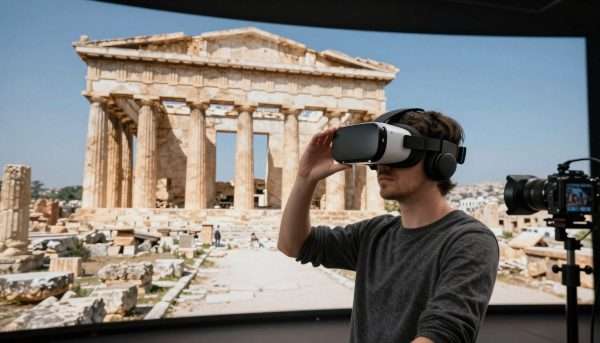
Education programs teach local communities about their heritage. When people understand the value of archaeological sites, they become advocates for preservation. This grassroots support proves essential for long-term protection.
Planning a trip focused on Greek archaeological sites? Speak with our heritage travel experts who specialize in historical and cultural tours.
Planning Your Visit to Greek Ruins
Visiting archaeological sites in Greece requires planning to maximize your experience. Understanding practical considerations helps you make the most of your time exploring these ancient wonders. The right preparation enhances both enjoyment and learning.
Best Times to Visit
Timing your visit affects your experience significantly. Summer brings peak tourism and intense heat. Temperatures at archaeological sites can exceed 100°F with little shade. Early morning or late afternoon visits during summer months offer more comfortable conditions.
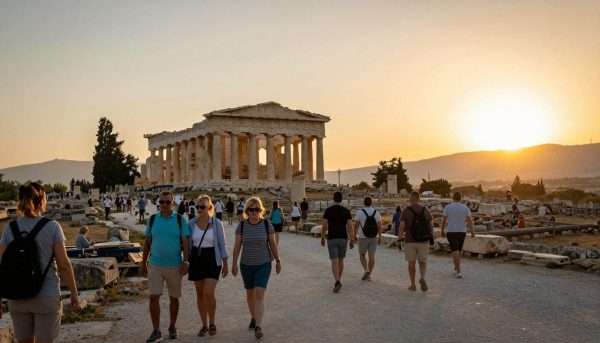
Spring (April-May) and fall (September-October) provide ideal weather for exploration. Temperatures remain moderate, and sites are less crowded. Spring brings wildflowers blooming among the ruins, adding natural beauty to the ancient stones.
Winter visits offer solitude and dramatically reduced crowds. However, some sites have reduced hours, and weather can be unpredictable. Rain makes marble surfaces slippery and dangerous.
Essential Items to Bring
Proper preparation makes archaeological site visits more comfortable. Sturdy walking shoes with good traction prove essential. Ancient paths and stairs can be uneven and slippery. Avoid sandals or shoes with smooth soles.
Sun Protection
- Wide-brimmed hat or cap
- High SPF sunscreen
- Sunglasses with UV protection
- Light, long-sleeved clothing
Comfort Items
- Reusable water bottle (1-2 liters)
- Small backpack for belongings
- Snacks for energy
- Camera with extra battery
Many sites lack facilities, so plan accordingly. Bring tissues and hand sanitizer. Some sites have minimal or no shade, making sun protection critical. Dehydration poses a real danger during summer visits.
Guided Tours vs. Independent Exploration
Both guided tours and independent visits have advantages. Knowledgeable guides provide historical context and point out details you might miss. They bring ancient sites to life with stories and explanations.
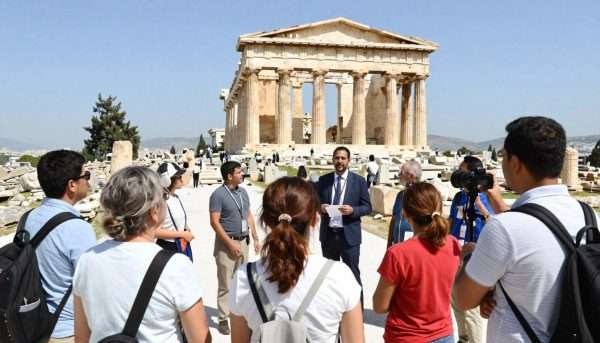
Independent exploration allows you to set your own pace. You can spend more time at features that interest you and skip areas that don’t. Audio guides offer a middle ground, providing information while maintaining flexibility.
Consider hiring guides at major sites like the Acropolis, Delphi, and Olympia. Their expertise significantly enhances understanding. For smaller sites, good guidebooks or apps may suffice.
Photography Tips
Ancient ruins offer spectacular photography opportunities. Early morning and late afternoon provide the best light. The golden hour before sunset creates warm tones that enhance marble and stone.
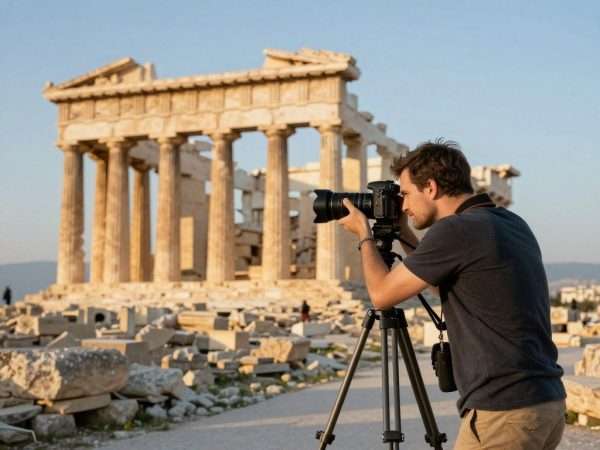
Include people in some shots to provide scale. Ancient structures appear more impressive when viewers can judge their size. Look for interesting angles and perspectives rather than standard frontal views.
Respect photography rules at each site. Flash photography is often prohibited as it can damage ancient pigments. Tripods may require special permission. Always check site regulations before your visit.
Combination Tickets and Passes
Athens offers combination tickets covering multiple sites. The multi-site ticket includes the Acropolis, Ancient Agora, Roman Agora, Hadrian’s Library, Kerameikos, Temple of Olympian Zeus, and Aristotle’s Lyceum. This pass remains valid for five days and offers significant savings.
Many archaeological sites offer reduced admission for students, seniors, and EU citizens. Bring valid identification to qualify for discounts. Some sites offer free admission on specific days throughout the year.
Accessibility Considerations
Many ancient sites present accessibility challenges. Uneven terrain, stairs, and slopes make wheelchair access difficult or impossible. The Acropolis has installed some ramps and an elevator, improving accessibility.
Important: Contact sites in advance if you have mobility concerns. Some locations offer alternative routes or assistance. Certain areas may remain inaccessible despite best efforts to accommodate all visitors.
Respecting Archaeological Sites
Visitors play a crucial role in preserving ancient ruins. Never touch ancient structures, sculptures, or decorative elements. Oils from skin accelerate deterioration of stone and metal surfaces.
Do These Things
- Stay on marked paths and walkways
- Follow all posted rules and regulations
- Dispose of trash in designated receptacles
- Keep voices at respectful levels
- Report any damage you observe to authorities
Avoid These Actions
- Climbing on ruins or ancient structures
- Removing stones, pottery shards, or any artifacts
- Eating or drinking near monuments
- Flying drones without proper permits
- Creating graffiti or defacing surfaces
Nearby Accommodations and Logistics
Major archaeological sites have nearby towns with accommodations. Athens offers hotels at every price point, from budget hostels to luxury properties. Booking in advance, especially during high season, ensures better rates and availability.
Smaller sites may require day trips from larger cities. Rent a car for maximum flexibility when visiting multiple locations. Public buses serve many archaeological sites but may have limited schedules.
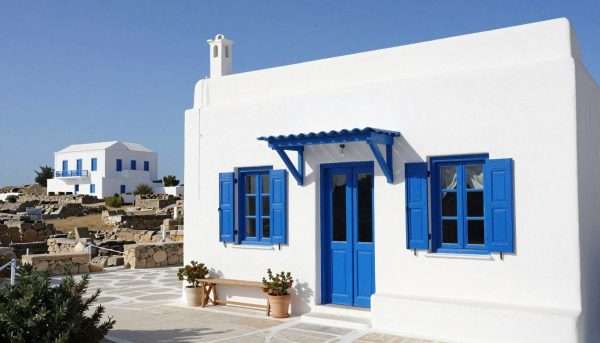
Consider staying in towns like Nafplio for exploring Peloponnese sites. The island of Crete requires several days to visit major Minoan locations. Planning your itinerary around logical geographic clusters saves time and transportation costs.
Cultural Context and Etiquette
Understanding Greek culture enriches your visit. Learn a few basic Greek phrases. Locals appreciate efforts to speak their language, even if just “thank you” (efharisto) and “please” (parakalo).
Dress codes apply at some religious sites, though most archaeological ruins have no restrictions. Modest dress shows respect when visiting sites with religious significance. Cover shoulders and knees when appropriate.
Greeks take pride in their ancient heritage. Show respect for this cultural legacy through your behavior at sites. Your appreciation and care contribute to preserving these monuments for future generations.
The Enduring Legacy of Greek Ruins
Greek ruins stand as monuments to human achievement across millennia. These ancient sites connect us to the people who established foundations of Western civilization. Walking among weathered columns and time-worn stones, we touch history directly.
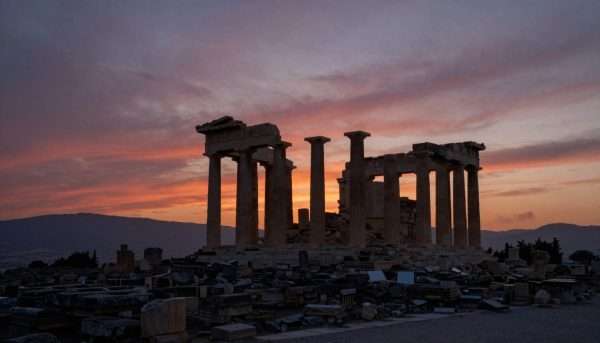
The contributions of ancient Greece extend far beyond impressive architecture. Greek innovations in democracy, philosophy, science, and art continue shaping modern society. The ruins remind us that civilizations rise and fall, but ideas endure.
Every archaeological site tells unique stories. The Acropolis speaks of democratic ideals and artistic achievement. Olympia celebrates athletic excellence and peaceful competition. Delphi reveals the spiritual life that guided ancient decisions. Each location offers insights into different aspects of Greek civilization.
Preservation of these sites ensures future generations can experience this tangible connection to the past. The work of archaeologists and conservators protects irreplaceable cultural heritage. As visitors, we share responsibility for safeguarding these treasures.
Greece offers countless opportunities to explore ancient history. From famous monuments to lesser-known sites, each visit deepens understanding of our shared human story. The ruins inspire wonder and remind us of the remarkable achievements possible when human creativity and ambition combine.
Whether you seek historical knowledge, architectural beauty, or spiritual connection, Greek archaeological sites deliver profound experiences. These ancient places continue to educate, inspire, and amaze all who visit them. The journey through Greek ruins becomes a journey through the foundations of Western civilization itself.
Begin Your Greek Ruins Adventure Today
Transform your interest in ancient history into an unforgettable journey. Our expert travel planners create customized itineraries featuring the most significant archaeological sites in Greece, complete with professional guides, comfortable accommodations, and seamless logistics. Whether you dream of watching sunset from the Acropolis or walking the ancient Olympic stadium, we make it happen.
Start Planning: The best time to plan your Greek archaeological adventure is now. Peak season accommodations near major sites book months in advance. Contact our specialists today to secure your preferred travel dates and create a journey that brings ancient Greece to life.







Leave A Comment