
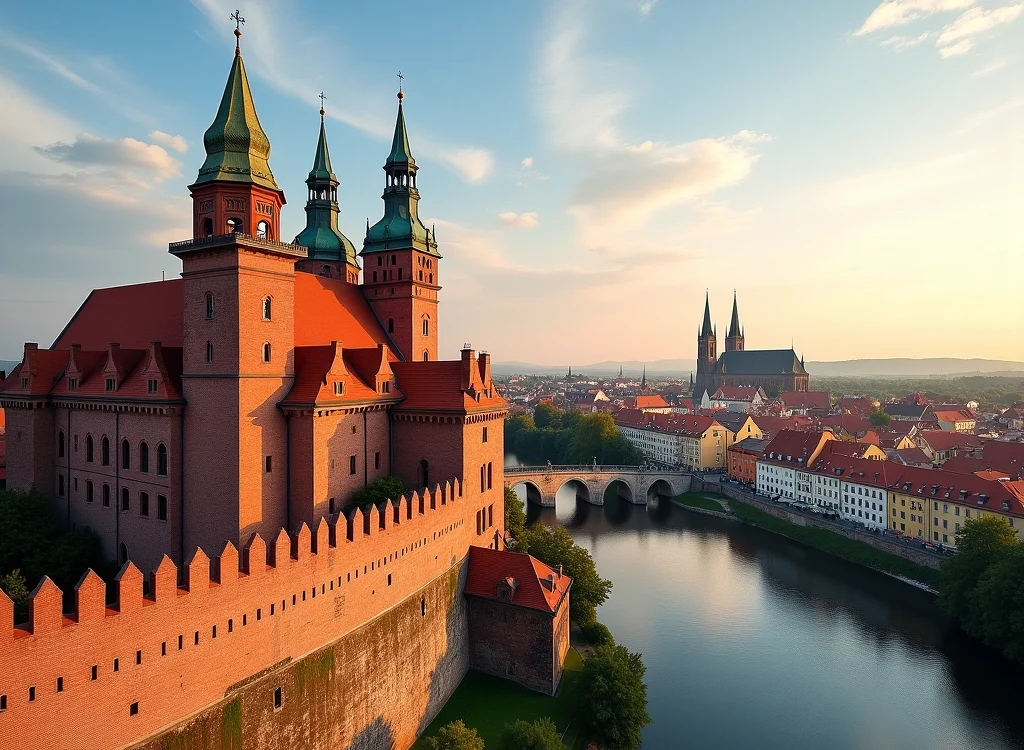
Man made landmarks in Poland include the world’s largest castle by land area and a salt mine once compared to the Egyptian pyramids. Poland’s architectural heritage reflects centuries of royal history and medieval defense systems. Post-war reconstruction added another layer to this rich tapestry. Travelers visiting major landmarks in Poland will find everything from Gothic cathedrals and Renaissance town halls to Soviet-era monuments and solemn wartime memorials. This piece covers 15 famous man made landmarks in Poland that showcase the nation’s resilience and cultural richness. Each site provides historical context for visitors planning their 2026 trip.
Wawel Castle, Krakow
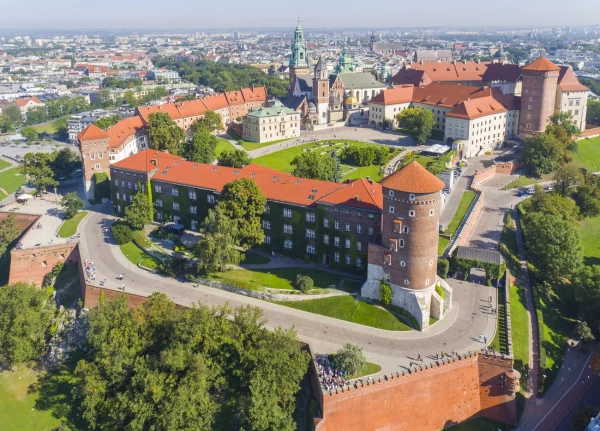
Image Source: Zamek Królewski na Wawelu
Historical Significance of Wawel Castle
Wawel served as Poland’s political and cultural heart from the 11th through the 16th century, when the capital relocated to Warsaw. Polish monarchs were crowned and buried within this fortified complex atop a limestone outcrop overlooking the Vistula River. The site drew over 3.47 million visitors in 2025 and became the most visited art museum in Poland and the 14th most visited art museum in the world. King Casimir I the Restorer built the earliest residence in the 11th century. King Casimir III the Great later expanded it into a Gothic fortress. Fire destroyed the structure in 1499, and King Sigismund I the Old commissioned a Renaissance palace that stands today. The palace was completed within 30 years.
What to See Inside Wawel Castle
The museum operates five separate exhibitions. Each exhibition requires an individual ticket. The State Rooms display 16th-century Flemish tapestries and Italian paintings where kings held court. Royal Private Apartments reveal the monarch’s daily living quarters. The Crown Treasury houses the Szczerbiec coronation sword, while the Armory contains winged hussar armor and medieval weaponry. The Dragon’s Den descends through a limestone cave and exits at a fire-breathing dragon statue on the riverbank. The Oriental Art exhibition presents the largest collection of Ottoman tents in Europe.
Visiting Hours and Ticket Prices
Opening hours vary seasonally. Summer season runs 9:30am to 5:00pm Tuesday through Sunday. Monday offers limited exhibitions from 9:30am to 1:00pm. Winter hours contract to 9:30am to 4:00pm. State Rooms cost 49 złoty regular admission, while Crown Treasury runs 35 złoty. Dragon’s Den entrance is 12 złoty, purchased at machines near the cave.
Best Time to Visit Wawel Castle
April through May and September through October provide optimal conditions with mild weather and better slot availability. Slots release only about a month before visit dates. You must book immediately when dates enter the window. Tuesday through Thursday are calmest. First morning slots experience lightest crowds before tour groups arrive mid-morning.
Wieliczka Salt Mine
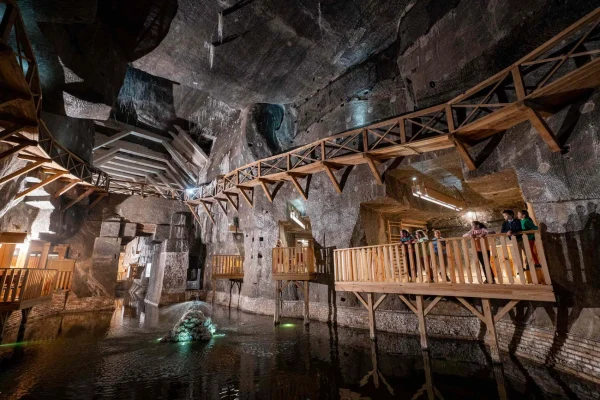
Image Source: The “Wieliczka” Salt Mine
Historical Background of Wieliczka Salt Mine
This underground labyrinth sits 15 kilometers southeast of Krakow. Operations began in the 13th century after miners found gray rock salt beneath Wieliczka. Salt mining continued for over 700 years. Commercial extraction ceased in 1996. The mine earned UNESCO World Heritage Site designation in 1978 and became one of the first twelve sites on that list, along with the Galápagos Islands. The extensive tunnel network stretches 287 kilometers across nine levels and reaches depths of 327 meters. Salt production from this site contributed substantially to medieval Poland’s wealth. Salt represented one of Europe’s most valuable commodities and was formerly referred to as “white gold”.
Key Features of the Underground Tour
The Tourist Route descends 380 steps through wooden staircases. Visitors explore 3.5 kilometers of passages at 135 meters below the surface. The route traverses 20 chambers that feature salt sculptures, underground lakes and historic mining equipment. St. Kinga’s Chapel stands as the crown jewel. Workers carved it from 20,000 tons of salt over 67 years between 1896 and 1963. The chapel spans 54 meters in length. Salt chandeliers illuminate biblical bas-reliefs. Tours last approximately 2 to 3 hours. The mine maintains a constant temperature of 17 to 18 degrees Celsius throughout the year. The return trip uses a mining elevator rather than climbing stairs.
How to Get to Wieliczka Salt Mine
Suburban trains depart Krakow Główny station every 30 minutes. They reach Wieliczka Rynek-Kopalnia station in 25 to 35 minutes. Bus 304 operates from Dworzec Główny Zachód stop near Galeria Krakowska and completes the trip in 35 to 40 minutes. Hosted tours include hotel pickup and skip-the-line access.
Entry Fees and Tour Options
Standard Tourist Route tickets cost 130 to 156 PLN for adults. Reduced rates of 112 to 130 PLN apply to students and children. Polish-language tours run 103 PLN regular and 82 PLN reduced. Opening hours vary seasonally. April through October hours are 7:30am to 7:30pm. November through March hours are 8:00am to 5:00pm. Advance booking proves essential during peak season.
Malbork Castle
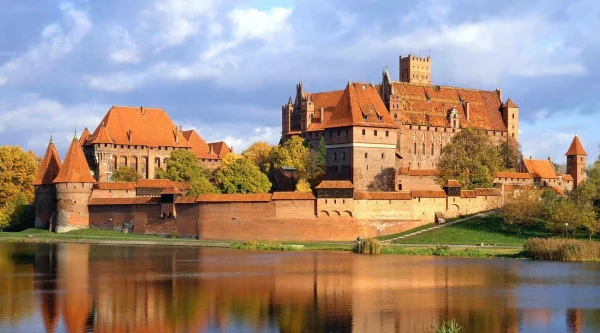
Image Source: Visit Malbork
History of the Teutonic Knights at Malbork
The Teutonic Order built this fortress between 1274 and 1406 after conquering Old Prussia. The goal was to strengthen control after the 1274 suppression of the Great Prussian Uprising. Grand Master headquarters relocated from Venice to Marienburg in 1309. A frontier convent became the capital of a monastic state. The castle served as the seat of Grand Masters until 1457. Polish forces captured it after the Order’s defeat at the Battle of Grunwald in 1410. Therefore, it became a Polish royal residence for over 300 years until 1772. The Polish Admiralty occupied it from 1568 and a Royal Mint founded in 1584.
Architectural Features of Malbork Castle
Malbork holds the title of largest castle in the world measured by land area. It spans 21 hectares. The outermost walls enclose four times the area of Windsor Castle. The fortress has three separate divisions: the High, Middle and Lower Castles. Multiple dry moats and towers separate them. Approximately 15 million bricks make up the structure. It represents the largest brick complex in Europe. The Grand Master’s Palace and Great Refectory stand as Gothic architecture masterpieces within the Middle Castle. The High Castle features the Church of the Virgin Mary and a unique Dansker latrine tower.
Visitor Information and Opening Hours
The castle operates 9:00am to 8:00pm. The Historical Route requires last entry at 4:30pm. Standard tickets cost 80 PLN and reduced tickets 60 PLN. Audio guides in multiple languages accompany all tickets. Three routes exist: Historical Castle Route covers both major fortresses, Castle Grounds Route limits access to outdoor areas, and Castle Monastery Route.
Getting to Malbork from Gdansk
IC trains complete the journey in 32 minutes. Regio trains take 39 to 55 minutes. The castle sits 20 minutes away on foot from Malbork station.
Wilanow Palace, Warsaw
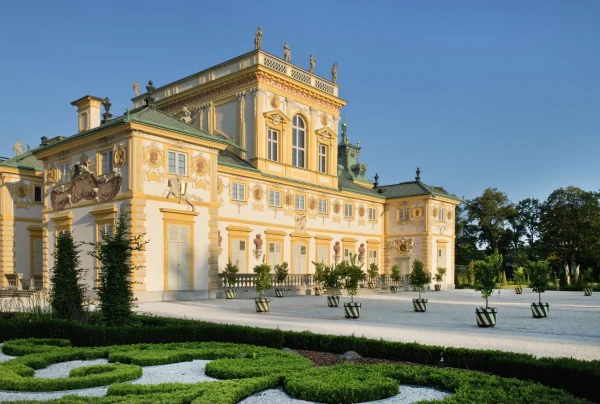
Image Source: Wilanow-palac.pl
Royal History of Wilanow Palace
King Jan III Sobieski commissioned this Baroque residence between 1677 and 1696. He created a summer retreat that survived Poland’s partitions and both World Wars. The museum was established in 1805 and receives around 3 million visitors annually. It ranks among the most visited palaces worldwide. Sobieski died in 1696, and ownership passed through prominent magnate families including the Sieniawskis, Czartoryskis, Lubomirskis, Potockis and Branickis. Stanisław Kostka Potocki opened one of Poland’s first public museums within the palace in 1805. The museum displayed his equestrian portrait by Jacques-Louis David from 1781.
Palace Architecture and Gardens
Architect Augustyn Wincenty Locci designed the structure. He merged European art with Polish building traditions. The architecture represents the characteristic Baroque suburban residence built entre cour et jardin between the entrance court and garden. Construction progressed in stages. A Polish manor house with four alcove towers emerged between 1677 and 1680. Two gallery wings with towers were added from 1681 to 1688. The Italian Baroque garden surrounded the palace in semicircular form at first. Izabela Lubomirska transformed neighboring territories into a jardin anglo-chinois in 1784. She followed Szymon Bogumił Zug’s design.
Visiting Times and Admission Fees
The palace operates Thursday through Tuesday from 10:00am to 4:00pm with last entrance at 3:00pm. Wednesday hours extend until 6:00pm. Regular palace tickets cost 70 złoty, reduced tickets 35 złoty. Park and courtyard access runs 9:00am to 9:00pm. Thursdays offer free admission with limited palace tickets available first-come, first-served.
Transportation to Wilanow Palace
The palace sits approximately 10 kilometers south of central Warsaw at the southern terminus of the historic Royal Route. Bus lines 116 and 180 serve the Wilanów stop from Old Town and require about 35 minutes.
Warsaw Rising Museum
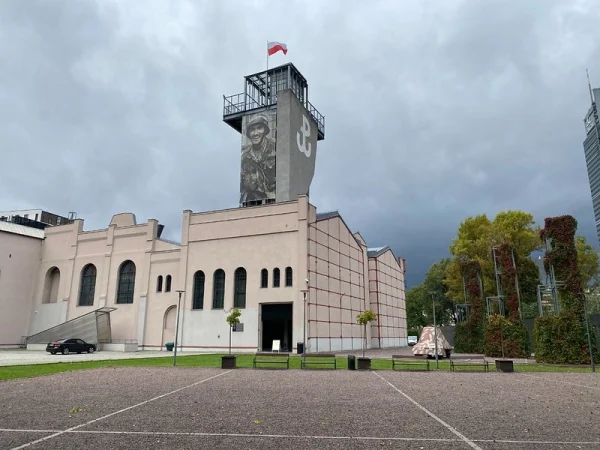
Image Source: Warsaw Visit
The Warsaw Uprising Story
The Polish underground resistance launched the Warsaw Uprising on August 1, 1944. It lasted 63 days until October 2, 1944. The Home Army attempted to liberate Warsaw from German occupation during World War II, but German forces crushed the rebellion. Approximately 16,000 Polish resistance members died, with between 150,000 and 200,000 civilian casualties. Germans destroyed around 85% of Warsaw after the capitulation. The museum opened July 31, 2004, marking the 60th anniversary of the outbreak.
Museum Exhibits and Interactive Displays
The exhibition is housed in a former tram power station in the Wola district. It spans over 3,000 square meters and contains 800 items and approximately 1,500 photographs. Visitors follow a chronological path through the 63-day uprising across multiple floors. The “little insurgent” room commemorates child participants. Kino Palladium screens original 1944 footage from insurgent filmographers. Sewer replicas on the mezzanine and basement allow visitors to experience underground movement through German-held territory. A full-size B-24 Liberator occupies the hangar and represents Allied airdrops. The 3D film “City of Ruins” presents aerial footage of destroyed Warsaw from 1945. Freedom Park displays the Kubuś armored car replica manufactured by insurgents, alongside a memorial wall that lists thousands of fallen fighters.
Location and How to Reach
The museum sits at Grzybowska 79 in the Czyste neighborhood, about one mile west of the city center. Busses 105 and 109 stop at Muzeum Powstania Warszawskiego. Metro line M2 reaches Rondo Daszynskiego station and requires a 10-minute walk. Trams 7, 9, and 22 serve Rondo Daszynskiego.
Ticket Prices and Opening Hours
Normal admission costs 35 PLN, with discounted tickets at 30 PLN. Audio guides rent at 13 PLN. Entry is free on Thursdays. The museum operates Monday, Wednesday and Friday from 8:00am to 6:00pm. It closes Tuesdays. Weekend hours run 10:00am to 6:00pm.
Krakow Cloth Hall (Sukiennice)
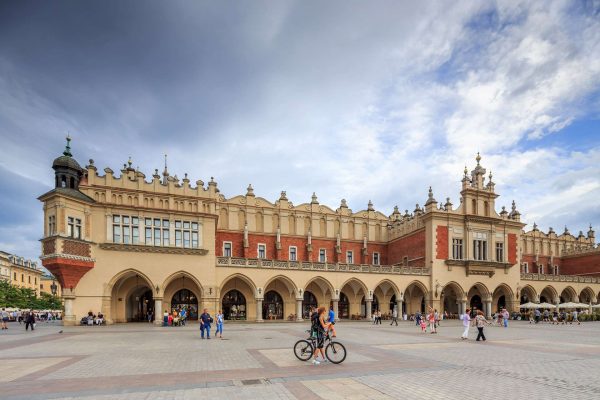
Image Source: Kraków Travel
Medieval Market History
Permanent market stalls received protective covering in the early 14th century when Krakow functioned as a trade hub in eastern Europe. The original structure consisted of two rows of stone stalls that formed a street through the market square center. The hall reached its golden age during the 15th century and became a source of exotic imports from the east including spices, silk and leather, while Krakow exported textiles, lead, and salt from Wieliczka. A devastating fire in 1555 destroyed much of the structure. Architects rebuilt it in Renaissance style with decorative parapets and grotesque gargoyles designed by Italian sculptor Santi Gucci. The 19th-century renovation supervised by architect Tomasz Pryliński added arcaded galleries and transformed the upper trading floor into exhibition space.
Shopping and Galleries Today
The ground floor maintains its commercial function with wooden stalls offering amber jewelry, embroidered blouses and wood carvings. The Sukiennice Museum division of the National Museum occupies the upper floor and houses the largest permanent exhibit of 19th-century Polish painting and sculpture across four exhibition halls. The Gallery of 19th-Century Polish Art opened October 7, 1879 and received upgrades in 2010 with modern lighting and multimedia facilities. Notable works include Jan Matejko’s Prussian Homage and Henryk Siemiradzki’s Nero’s Torches.
Location in Main Market Square
The Cloth Hall occupies the center of Main Market Square in Krakow’s Old Town. Bus and tram routes serving the historic district make it available.
Best Time to Explore Cloth Hall
Morning hours before mid-day provide quieter browsing opportunities at ground floor stalls. The upper museum offers climate-controlled viewing whatever the season.
Wawel Cathedral, Krakow
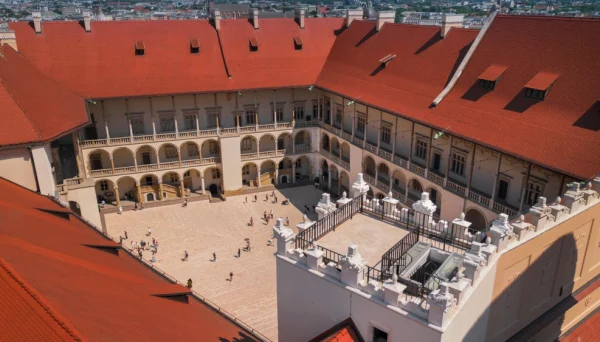
Image Source: Zamek Królewski na Wawelu
Religious and Royal Significance
Archcathedral Basilica of Saint Stanislaus and Saint Wenceslaus stands nearly 1,000 years old on Wawel Hill. The cathedral has been the coronation church for Polish monarchs since January 20, 1320, when King Władysław the Short broke tradition with Gniezno Archcathedral. Poland’s national sanctuary where Polish statehood and faith join is what this cathedral represents. Crypts beneath hold tombs of kings including John III Sobieski and his consort Marie Casimire, among national heroes such as Tadeusz Kościuszko and Józef Piłsudski. Poets Adam Mickiewicz and Juliusz Słowacki rest in the National Poets’ Crypt, and the structure has become a Polish Pantheon.
Interior Features and Chapels
Four pillars support a black marble canopy at the main altar. A silver coffin containing relics of St. Stanislaus sits beneath it and was created between 1669 and 1671. Bartolommeo Berrecci built Sigismund’s Chapel between 1517 and 1533. The chapel represents the purest Renaissance architecture outside Italy with its gilded dome and houses tombs of King Sigismund I the Old and King Sigismund II Augustus. The Sigismund Bell weighs nearly 13 tons and rings only during occasions of national importance from the Sigismund Tower.
Cathedral Visiting Hours
Operations run 9:00am to 5:00pm Monday through Saturday from April through October, with Sunday access from 12:30pm to 5:00pm. Hours contract to 9:00am to 4:00pm weekdays and 12:30pm to 4:00pm Sundays from November through March. The Cathedral Museum closes Sundays.
Ticket Information and Tours
Admission costs 26 złoty if you have a standard ticket and 18 złoty for concessions. Group rates drop to 23 złoty per person. Audio guides rent for 15 złoty regular or 11 złoty concession. The guides cover cathedral features, Royal Tombs and Cathedral Museum in approximately 70 minutes.
Palace of Culture and Science, Warsaw
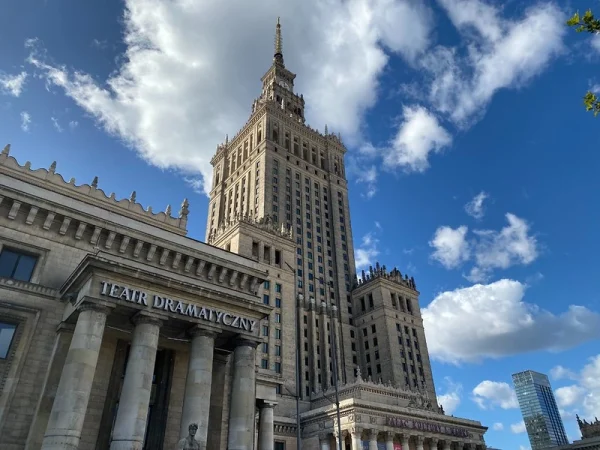
Image Source: Warsaw Visit
Soviet Era History
Construction began May 1, 1952 and concluded July 21, 1955, as Stalin’s gift to Poland. Soviet architect Lev Rudnev designed the structure inspired by Moscow State University and collaborated with Polish architects after studying Renaissance architecture in Kraków and Zamość. The project involved 3,500 to 5,000 Soviet workers and 4,000 Polish workers, with 16 fatalities during construction. The tower stands 237 meters tall and is Poland’s second tallest building after Varso Tower. The complex contains 3,288 rooms across 42 floors. Despite its controversial origins, the palace received monument status in February 2007.
Observation Deck Views
The viewing terrace sits on the 30th floor at 114 meters height and offers 360-degree panoramic views of Warsaw. Elevators reach the observation level in 19 seconds. The terrace operates 10:00am to 8:00pm and provides views that stretch to the National Stadium and Praga district eastward.
Cultural Venues Inside
Four theaters (Studio, Dramatyczny, Lalka, 6th Floor), two museums (Technology and Evolution), and an eight-screen cinema occupy the building. Congress Hall accommodates 3,000 guests and has hosted everything from Communist Party meetings to Rolling Stones concerts. A marble swimming pool and multiple academic institutions function within the complex.
Getting to Palace of Culture
The central train station sits behind the building, with Śródmieście station adjacent. Metro M1 line serves Centrum station, while numerous busses and trams stop at Centrum.
Krakow Barbican
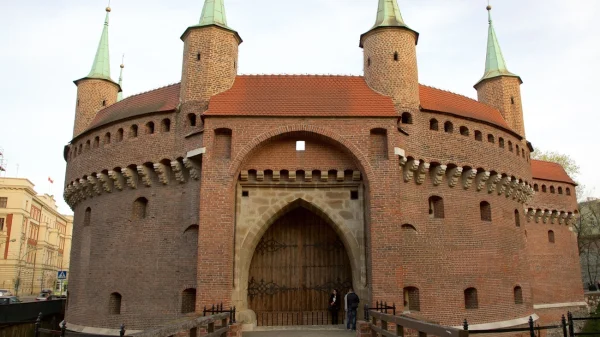
Image Source: Expedia
Medieval Defense System
King John I Albert ordered construction in 1498-1499 after Poland’s defeat at the Battle of Cosmin Forest. He wanted protection against Wallachian, Tatar and Turkish threats. The fortified outpost connected to St. Florian’s Gate through a passage called the “neck” and formed Krakow’s northern entrance. This gateway marked the beginning of the Royal Route. Coronation processions and foreign diplomats entered the city here. The structure earned the title “Gate of Glory” for its ceremonial significance. Krakow lacked natural barriers such as swamps or rivers. Defensive walls were essential. The Barbican successfully repelled attacks. It defended against Austrian forces led by Maximilian III in 1587 and during 1655 and 1657 sieges.
Architectural Features of the Barbican
This cylindrical brick fortress measures 24.4 to 25 meters in diameter with walls 3 meters thick. Seven watchtowers provided strategic positions for archers. 130 embrasures allowed defenders to target attackers from multiple angles. A 30-meter-wide moat originally surrounded the structure. Direct assault was nearly impossible. Gothic portcullis and hot oil traps protected the frontal gate. The design followed Arabic rather than European defensive strategy and featured an inner courtyard. Ladders between turrets provided the only access.
Combined Tour with Florian Gate
The Defensive Route operates April through October. It connects three sites: the Barbican, medieval wall sections and Celestat. Combined tickets provide access to all locations through the Museum of Krakow.
Entrance Fees and Opening Times
The Barbican opens Tuesday through Sunday from 10:00am to 4:00pm. Normal tickets cost 22 PLN, reduced tickets 16 PLN and family tickets 44 PLN. Guided tours for groups run 280 PLN plus admission.
St. Mary’s Basilica, Krakow
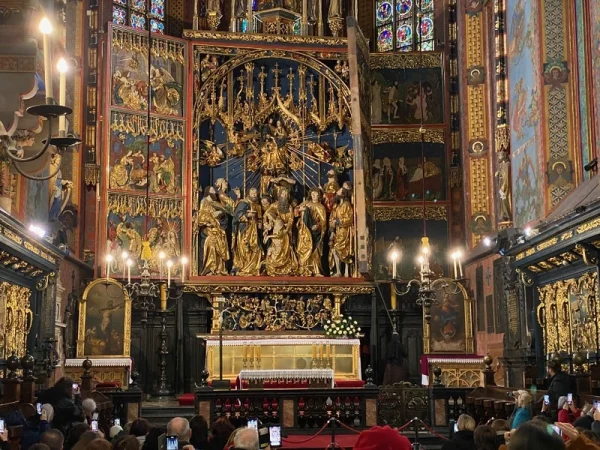
Image Source: Visit Krakow
Gothic Architecture and Design
St. Mary’s Basilica ranks as Kraków’s second most important church after Wawel Cathedral. Construction started in the late 13th century on foundations of a former Romanesque church and consecration occurred around 1320. The asymmetrical twin towers create one of Krakow’s most recognizable features. The taller North Tower serves as the city’s watchtower. Brick Gothic architecture defines the exterior. The interior features a deep blue ceiling scattered with golden stars that Jan Matejko designed. Stanisław Wyspiański and Józef Mehoffer created stunning stained glass windows that flood the space with jewel-toned light.
Famous Wooden Altar
German sculptor Veit Stoss carved the altarpiece between 1477 and 1489. He created the largest Gothic altarpiece in the world at 13 meters high and 11 meters wide. The pentaptych contains over 200 carved figures. The largest exceeds 3 meters in height. Each figure was carved from lime tree trunks. Oak and larch wood form other structural elements. The central scene depicts the Dormition of the Virgin Mary surrounded by twelve Apostles.
Climbing the Tower for City Views
The North Tower requires ascending 239 steep, narrow steps through a medieval staircase. Tours occur every 25 minutes from 11:05am to 5:30pm. Groups are limited to 15 people. The climb provides panoramic views over Main Market Square, the Cloth Hall and Old Town.
Visiting Schedule and Donations
The Bugle Tower operates Tuesday through Saturday from 11:00am to 5:30pm. Sunday hours run from 1:00pm to 5:30pm. Regular tickets cost 20 PLN and reduced tickets run 15 PLN. Children under 7 cannot enter due to safety concerns. Tickets sell only at the visitor center on Mariacki Square on the day of visit. No advance reservations are available.
Florian Gate, Krakow
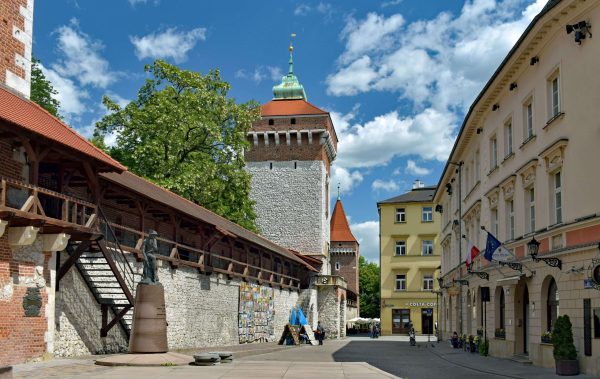
Image Source: Wikipedia
History as City Defense
First written records reference St. Florian’s Gate in 1307, though Prince Leszek II the Black granted permission for stone fortifications in 1285 after the devastating 1241 Tatar attack. The gate served as the main entrance among eight portals protecting Krakow’s Old Town. It marked the beginning of the Royal Route where monarchs and foreign envoys processed toward Wawel Castle. The structure stands 34.5 meters tall. The upper section was known as the Furriers’ Tower during medieval times when that guild defended this wall segment. A Baroque metal helmet constructed in 1660 and renovated in 1694 crowns the limestone and brick construction.
Current Preservation Status
St. Florian’s Gate remains the only surviving gate among Krakow’s eight medieval gates after 19th-century demolitions. Emperor Francis II ordered wall removal between 1810 and 1814, but Professor Feliks Radwański convinced authorities the walls protected residents from northern winds. Prince Władysław Czartoryski later established a family chapel inside and secured further preservation. Authorities lowered the street level by 1.5 meters rather than demolish the gate to accommodate passage when trams arrived in 1901.
Walking Tour of Old City Walls
The Historical Museum of Krakow manages the Defensive Route connecting the gate, Barbican and Celestat through preserved wall sections. Combined tickets grant access to all three fortification sites.
Tour Duration and Access
Tours operate April through October from 10:30am to 6:00pm and require about 30 minutes. The gate remains closed November through March.
Poznan Old Town Hall
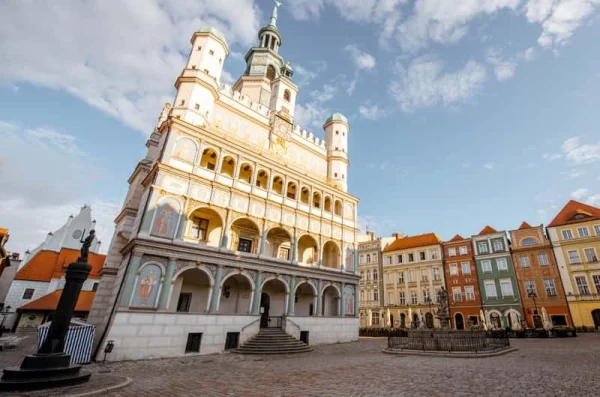
Image Source: GetYourGuide
Renaissance Architecture
Italian architect Giovanni Baptista Quadro from Lugano transformed the structure during mid-16th century reconstruction. Quadro heightened the building and extended it westward by 11 meters, with works completed by 1560. The east façade features a three-story arcaded loggia topped with three steeples. The central steeple houses a clock with a small metal door beneath it. Frescoes adorning the loggia offer Latin warnings to judges, while medallions depict figures from ancient history including Spartacus, Homer, and Archimedes. Female figures in the ground floor arcades represent virtues such as Justice and Faith.
Famous Mechanical Goats Display
Master Bartłomiej Wolff from Gubin constructed the mechanical goats during the 16th century. The metal door swings open at noon each day and two goats wheel onto a platform and butt heads twelve times. Legend claims a cook burned roast deer for dignitaries, then stole two goats as replacement. The goats escaped to the tower where their head-butting amused townspeople and officials installed the mechanical display. The original goats that performed from 1911 to 1992 now reside in the museum collection.
Poznan Historical Museum Inside
The Town Hall Museum of Poznań History opened in 1954, receiving its current name in 2020. Gothic cellars built between the 13th and 14th centuries feature keystones holding the Przemyslids’ coat of arms with an inscription that indicates construction commenced around 1300. The ground floor courtroom contains a window overlooking the torture chamber, where executioner’s tools and the original medieval pillory remain. Historical records reveal 35 criminals had their ears removed at this pillory during the 16th century. The museum displays artifacts representing pivotal moments from the 10th to mid-16th century among 40,000 items.
Getting to Market Square
The Old Market Square sits 10 to 15 minutes on foot from Poznań Główny station. Follow signs for Stary Rynek to reach this famous man made landmark in Poland.
Auschwitz-Birkenau Memorial
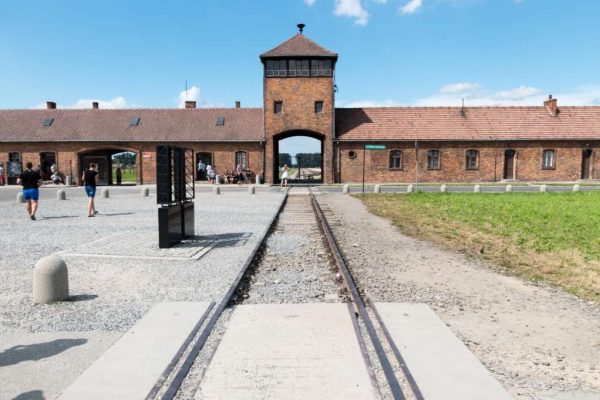
Image Source: CIPDH
Historical Context and Importance
Auschwitz-Birkenau stands as the most infamous Nazi concentration and extermination camp. You’ll find it in Oświęcim, approximately 70 kilometers west of Kraków. The SS set up Auschwitz in spring 1940 as a concentration camp to hold Polish political prisoners. The first transport arrived June 14, 1940. The camp began operating as a killing center at Auschwitz-Birkenau in March 1942. Germans killed approximately 1.1 million people from across Europe at Auschwitz. This number has one million Jews, 70,000-75,000 Poles, about 21,000 Roma, and more than 14,000 Soviet prisoners of war. Soviet troops liberated approximately 7,000 prisoners on January 27, 1945. We now commemorate this date as International Holocaust Remembrance Day.
Guided Tour Experience
The standard guided tour lasts approximately three-and-a-half hours. Visitors should allocate a minimum of 90 minutes at the Auschwitz I site and the same at Auschwitz II-Birkenau. This allows you to properly experience the grounds and exhibitions. You must visit both parts to understand the place that became the symbol of the Holocaust. A free museum shuttle transfers visitors between sites located 3.5 kilometers apart.
How to Visit from Krakow
Admission to the grounds remains free of charge. You must make reservations online at visit.auschwitz.org. Tours from Kraków have transport, entry arrangements and guided visits that cover both camps. Busses from Lajkonik company arrive at the Museum from Kraków. Trains reach Oświęcim station approximately 1,500 meters from the entrance. The Museum operates year-round except January 1, December 25 and Easter Sunday. Seasonal hours vary from 7:30am-2:00pm in December to 7:30am-7:00pm in summer months.
Respectful Visitor Guidelines
Visitors must behave with due solemnity and respect. Dress in a manner befitting a place of this nature. You can take photographs without flash, except in the room with victims’ hair and Block 11 basements. Backpacks cannot exceed dimensions of 35x25x15 cm. Security screening has bag checks and metal detectors.
Warsaw Old Town
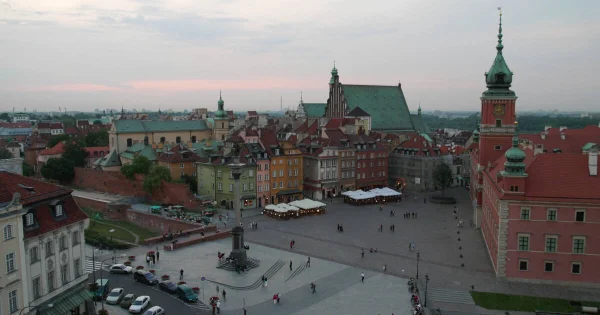
Image Source: UNESCO World Heritage Center
Post-War Reconstruction Story
Nazi troops destroyed more than 85% of Warsaw’s historic center during the Warsaw Uprising in August 1944. After the war, citizens launched a five-year reconstruction campaign that resulted in careful restoration of the Old Town. Architects used Bernardo Bellotto’s 18th-century paintings as important sources, though artistic embellishment sometimes transferred to reconstructed buildings. UNESCO designated Warsaw’s Old Town a World Heritage Site in 1980 as an outstanding example of near-total reconstruction spanning the 13th to 20th century.
Main Attractions in Old Town
Market Square forms the heart and is surrounded by carefully reconstructed 17th and 18th-century buildings with the Warsaw Mermaid sculpture at center. St. John’s Cathedral dates to the 14th century. It was rebuilt after WWII to reflect medieval appearance. Castle Square features the Royal Castle and Sigismund’s Column erected in 1644. The Barbican was built in 1540 and represents remnants of defensive walls reconstructed in the 1950s.
Warsaw Museum and Bell Tower Views
St. Anne’s Church bell tower provides panoramic city views from 147 steps. The observation terrace costs 10 zloty and operates 10:00am to 9:00pm. Views include Castle Square and the Vistula River.
Walking Through the Historic District
Narrow streets display colorful facades with ornate doorways and painted exteriors. Each building appears distinct and was reconstructed from wartime rubble with such precision that UNESCO recognized it as a global symbol of resilience.
Centennial Hall, Wroclaw
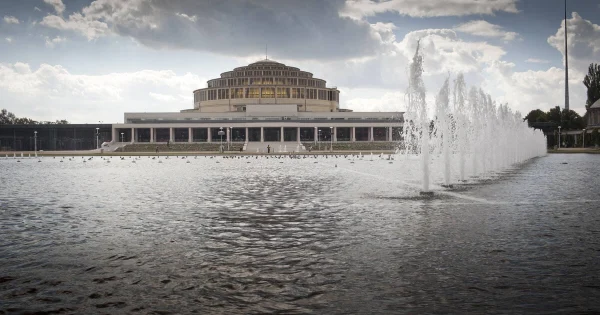
Image Source: UNESCO World Heritage Center
Modernist Architecture Significance
Architect Max Berg designed Centennial Hall between 1911 and 1913 and created a milestone in reinforced concrete architecture. The symmetrical quatrefoil ground plan features a massive circular central space covered by a ribbed dome topped with a lantern. The dome measures 42 meters high and 65 meters in diameter and accommodates up to 10,000 people. This represented the largest reinforced concrete dome ever constructed when it was completed, years ahead of modernist manifestos from Le Corbusier and Mies van der Rohe.
UNESCO World Heritage Status
UNESCO inscribed the complex in 2006 and recognized it as a groundbreaking achievement in early 20th-century engineering. The hall occupies an important position in the progress of reinforcement methods used in architecture. The Exhibition Grounds constitute an integral spatial whole together with Hans Poelzig’s Four Domes Pavilion and the concrete pergola.
Surrounding Park and Pergola
Szczytnicki Park surrounds the complex near the Great Island between the Odra River and its canals. The pergola encircles an artificial pond and hosts multimedia fountain shows during warmer months where water dances to music with colored lights. The Japanese Garden provides another attraction within walking distance.
Visiting Information and Events
The Visitor Center operates Thursday through Sunday from 10:00am to 6:00pm. Entry costs 30 PLN and includes VR experiences and tribune views of the dome interior. The hall hosts concerts, exhibitions and sports competitions throughout the year, though interior accessibility varies based on scheduled events.
Comparison Table
| Landmark | Location | Construction Date/Period | UNESCO World Heritage Site | Admission Price | Opening Hours | Key Features |
| Wawel Castle | Krakow | 11th-16th century (current Renaissance palace completed 1499-1530) | – | State Rooms: 49 PLN; Crown Treasury: 35 PLN; Dragon’s Den: 12 PLN | Summer: 9:30am-5:00pm Tue-Sun; Winter: 9:30am-4:00pm | Most visited art museum in Poland (3.47M visitors in 2025); Royal residence; Dragon’s Den cave |
| Wieliczka Salt Mine | 15 km southeast of Krakow | 13th century (operations ceased 1996) | Yes (1978 – one of first 12 sites) | 130-156 PLN (adults); 112-130 PLN (students/children) | Apr-Oct: 7:30am-7:30pm; Nov-Mar: 8:00am-5:00pm | 287 km of tunnels; St. Kinga’s Chapel carved from 20,000 tons of salt; 135m depth |
| Malbork Castle | Malbork | 1274-1406 | – | 80 PLN (standard); 60 PLN (reduced) | 9:00am-8:00pm (last entry 4:30pm) | Largest castle in world by land area (21 hectares); 15 million bricks; Teutonic Order headquarters |
| Wilanow Palace | Warsaw (10 km south of center) | 1677-1696 | – | 70 PLN (regular); 35 PLN (reduced); Free on Thursdays | Thu-Tue: 10:00am-4:00pm; Wed: 10:00am-6:00pm | 3 million annual visitors; Baroque residence of King Jan III Sobieski; Museum since 1805 |
| Warsaw Rising Museum | Warsaw (Wola district) | Museum opened 2004 (commemorates 1944 uprising) | – | 35 PLN (normal); 30 PLN (reduced); Free on Thursdays | Mon/Wed/Fri: 8:00am-6:00pm; Weekends: 10:00am-6:00pm; Closed Tuesdays | 3,000 sq meters; 800 items; Full-size B-24 Liberator; Sewer replicas |
| Krakow Cloth Hall | Krakow (Main Market Square center) | 14th century (rebuilt 1555 in Renaissance style) | – | Ground floor: free; Upper gallery: – | – | Largest permanent exhibit of 19th-century Polish painting; Ground floor market stalls |
| Wawel Cathedral | Krakow (Wawel Hill) | Nearly 1,000 years old | – | 26 PLN (individuals); 18 PLN (concessions) | Apr-Oct: 9:00am-5:00pm; Nov-Mar: 9:00am-4:00pm | Coronation church since 1320; Royal crypts; Sigismund Bell (13 tons); Sigismund’s Chapel |
| Palace of Culture and Science | Warsaw (central) | 1952-1955 | – | – (observation deck operates) | Observation deck: 10:00am-8:00pm | 237m tall; Poland’s 2nd tallest building; 3,288 rooms; 42 floors; Stalin’s gift to Poland |
| Krakow Barbican | Krakow (northern entrance) | 1498-1499 | – | 22 PLN (normal); 16 PLN (reduced); 44 PLN (family) | Apr-Oct: Tue-Sun 10:00am-4:00pm | 24.4-25m diameter; 3m thick walls; 7 watchtowers; 130 embrasures |
| St. Mary’s Basilica | Krakow (Main Market Square) | Late 13th century (consecrated c.1320) | – | Tower: 20 PLN (regular); 15 PLN (reduced) | Tower: Tue-Sat 11:00am-5:30pm; Sun 1:00pm-5:30pm | Largest Gothic altarpiece in world (13m x 11m); Veit Stoss altar (1477-1489); 239 tower steps |
| Florian Gate | Krakow (Old Town entrance) | First recorded 1307 (permission granted 1285) | – | Combined ticket with Barbican and walls | Apr-Oct: 10:30am-6:00pm; Closed Nov-Mar | 34.5m tall; Only surviving gate of 8 original medieval gates; Beginning of Royal Route |
| Poznan Old Town Hall | Poznan (Old Market Square) | Mid-16th century reconstruction (completed 1560) | – | – | – | Mechanical goats display at noon daily; Renaissance architecture by Giovanni Baptista Quadro; Museum with 40,000 items |
| Auschwitz-Birkenau Memorial | Oświęcim (70 km west of Krakow) | 1940-1945 (camp operation) | – | Free (reservation required) | Seasonal: 7:30am-2:00pm (Dec) to 7:30am-7:00pm (summer) | 1.1 million killed; Liberated Jan 27, 1945; Two sites 3.5 km apart; 3.5-hour guided tour |
| Warsaw Old Town | Warsaw | 13th-20th century (reconstructed 1945-1950) | Yes (1980) | Free to walk; St. Anne’s tower: 10 PLN | St. Anne’s tower: 10:00am-9:00pm | 85% destroyed in WWII; Reconstructed using Bellotto’s paintings; Market Square with Warsaw Mermaid |
| Centennial Hall | Wroclaw (Szczytnicki Park) | 1911-1913 | Yes (2006) | 30 PLN (has VR and tribune views) | Visitor Center: Thu-Sun 10:00am-6:00pm | Largest reinforced concrete dome at completion (65m diameter, 42m high); Capacity: 10,000 people |
Appreciate Landmarks in Poland
Poland’s architectural treasures span nearly a millennium of history, from medieval fortresses to sobering wartime memorials. Not every landmark on this list will appeal to each traveler in the same way, and that’s acceptable. Some visitors gravitate toward royal palaces and Gothic cathedrals. Others find deeper meaning at sites that commemorate Poland’s resilience through occupation and reconstruction. The nation’s UNESCO-recognized monuments stand among lesser-known gems, and each contributes to Poland’s compelling narrative. Planning a 2026 itinerary around these 15 landmarks provides travelers with remarkable opportunities. They can witness how Polish culture and determination shaped Central European history across centuries of triumph and tragedy.
FAQs
Q1. What is the most famous landmark in Poland? Wawel Castle in Krakow stands as Poland’s most famous landmark, attracting over 3.47 million visitors in 2025, making it the most visited art museum in Poland. This royal residence served as the political and cultural heart of Poland from the 11th through 16th centuries and houses the Crown Treasury, State Rooms, and the iconic Dragon’s Den cave.
Q2. Which Polish landmarks have UNESCO World Heritage status? Several Polish landmarks hold UNESCO World Heritage designation, including Wieliczka Salt Mine (inscribed in 1978 as one of the first twelve sites worldwide), Warsaw Old Town (recognized in 1980 for its remarkable post-war reconstruction), and Centennial Hall in Wroclaw (added in 2006 for its pioneering reinforced concrete architecture).
Q3. What is the largest castle in the world by land area? Malbork Castle holds the title of the largest castle in the world measured by land area, spanning 21 hectares. Built by the Teutonic Knights between 1274 and 1406, this massive fortress contains approximately 15 million bricks and served as the Grand Master’s headquarters until 1457.
Q4. How long does it take to visit Wieliczka Salt Mine? A complete tour of Wieliczka Salt Mine takes approximately 2 to 3 hours. The Tourist Route covers 3.5 kilometers of passages at 135 meters below the surface, descending 380 steps through 20 chambers including the stunning St. Kinga’s Chapel carved entirely from salt.
Q5. What makes Warsaw Old Town unique among world heritage sites? Warsaw Old Town is unique as an outstanding example of near-total reconstruction, with over 85% destroyed during World War II and meticulously rebuilt between 1945 and 1950. Architects used 18th-century paintings by Bernardo Bellotto as essential sources, making it a global symbol of resilience and earning UNESCO recognition in 1980.








Leave A Comment