

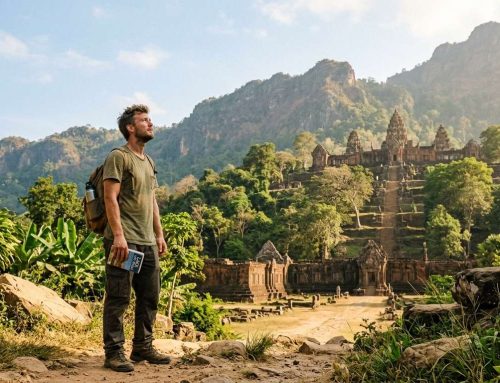
I still remember my first sunrise near Siem Reap. Mist rose from the moat, while stone towers caught the first light. On a 900-year-old causeway, I felt awe and recognition. The Khmer engineers who built Angkor understood what modern cities still seek to learn.
They mastered water as infrastructure, ritual, and survival all at once. The West Baray, a massive reservoir carved by hand, still holds water today. That kind of staying power is the whole point of this piece.
This is my vision for the Siem Reap Angkor future 2050, based on real research rather than official policy. I believe this 1,000-square-kilometer heritage landscape could become a global model. It could become a carbon-neutral sanctuary, reborn through ancient hydraulic genius.
The stakes reach far beyond one region. The IPCC projects 2.5 billion more people will live in cities by mid-century. Up to 90 percent of that growth will be packed into Asia and Africa. More than a billion people in low-lying cities will face coastal flood risk in coming decades.
Ancient societies treated water differently from us. Researcher Philip James Piluris notes that Minoans, Egyptians, and Mesopotamians saw water as sacred and civic, not merely engineered. The poet Pindar put it simply: “Water is best.” I think he understood what cities worldwide are now rediscovering.
Key Takeaways
- Ancient reservoirs and moats could form the backbone of a true net-zero city rebirth.
- The West Baray and similar structures prove centuries of durable water management.
- The IPCC projects 2.5 billion new urban residents worldwide, mostly in Asia and Africa.
- Over a billion people in low-lying cities may face coastal flood risk in coming decades.
- Ancient civilizations like the Minoans and Egyptians treated water as sacred, not just functional.
- Modern climate engineers are studying Khmer hydraulic systems as models for resilience.
- This vision blends medieval engineering with space-age sustainability goals for a living heritage site.
1. Siem Reap Angkor Future 2050: A Global Masterclass in Hydraulic Revival
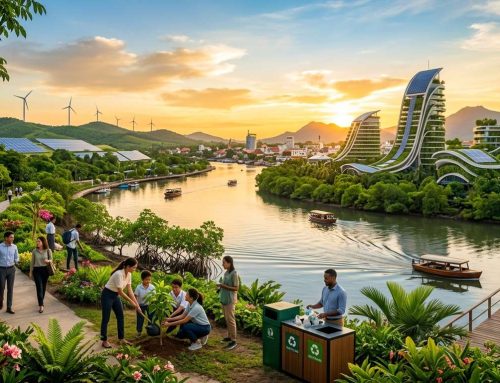
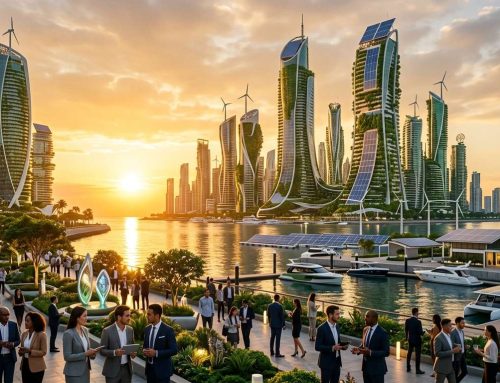
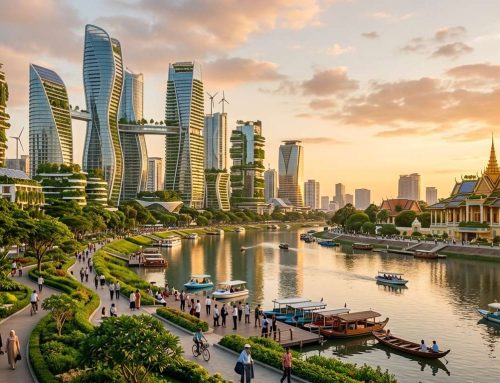
Something remarkable is brewing beneath Angkor’s stone towers: a plan that could reshape ancient city protection. I’ve traveled through plenty of heritage sites, but none has attempted anything close to what’s unfolding here. The vision for Siem Reap Angkor future 2050 turns an entire 1,000-square-kilometer landscape into a living laboratory for climate resilience.
It is not a temple patch; it reimagines how an ancient city can breathe, drain, and power itself, fossil-free.
From Ruins to Resilience: Scaling a 1,000-Square-Kilometer Carbon-Neutral Sanctuary
Angkor’s original builders thought in vast water networks, not single structures. The 2050 plan borrows that same mindset.
Engineers link restoration projects into one hydraulic system across temples, forests, and rice paddies. Every reservoir, canal, and causeway joins a carbon-neutral grid built to outlast monsoons battering these stones for nine centuries.
It’s heritage conservation at a scale I’ve never witnessed anywhere else on my travels.
Why the World Should Be Watching Siem Reap’s Transformation
Cities everywhere face the climate pressures squeezing Siem Reap: rising heat, erratic rainfall, and crumbling infrastructure.
“Urbanisation offers a time-limited opportunity to work toward widespread and transformational adaptation and climate resilient development.”
Connecting social, ecological, and grey infrastructure boosts adaptive capacity, and Siem Reap puts theory into action.
Planners are proving that ancient wisdom and modern engineering can share one blueprint. That’s a lesson worth watching worldwide.
2. Non-Invasive Mineral Masonry Glazes: Guarding Angkor Wat and Bayon’s Stone Memory
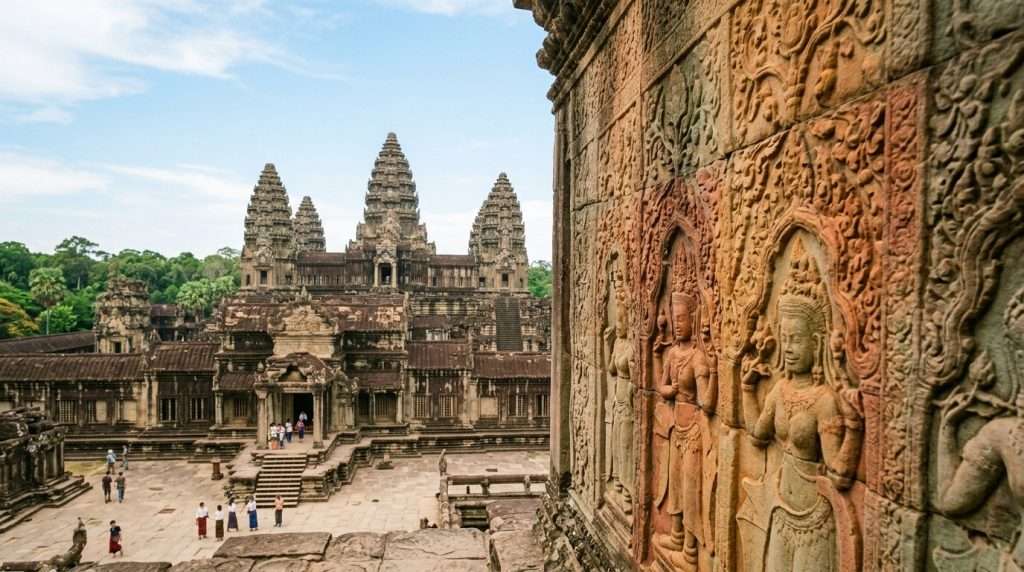
I never thought about building materials until I learned how Angkor Wat survives monsoon seasons without crumbling into the jungle. The answer is not concrete patches or modern sealants spread across ancient stone. It is non invasive mineral masonry glazes built to protect 12th-century sandstone without changing its look or breath.
These glazes matter because Angkor’s temples are more than old buildings. They record Khmer craftsmanship that has survived nine centuries of rain, war, and jungle overgrowth. Any fix that traps moisture or removes texture could erase history faster than weather.
Breathable Nano-Mineral Coatings Against Monsoon Weathering
Picture a raincoat that still lets you sweat. That is what these nano-mineral coatings do for sandstone.
Cambodia’s monsoon season sends months of hard rain onto temple walls never designed for today’s climate extremes. Water entering sandstone pores expands and contracts with heat, slowly breaking stone from the inside out.
Nano-mineral coatings work at a microscopic level. They fill tiny surface gaps with particles that block liquid water but let trapped moisture and vapor escape. Sandstone keeps breathing, while rain stays out.
Conservation teams apply these mineral glazes in thin layers, nearly invisible when dry. No plastic sheen covers the 900-year-old carvings. The glaze quietly works storm after storm.
Halting Stone Spalling and Lichen Pitting Without Erasing Sacred Patina
Two problems worried me most after I understood how exposed this stone really is: spalling and lichen pitting.
Spalling occurs when water trapped inside sandstone expands and pops the surface layer away. Entire carved faces at Bayon have lost detail this way over the centuries.
Lichen pitting differs but causes similar damage. Living organisms colonize damp stone and slowly eat into carved reliefs. They widen cracks and blur features that once showed Khmer kings and daily temple life.
Non invasive mineral masonry glazes tackle both threats without changing how the temples look. By keeping surfaces dry enough to discourage lichen while letting stone breathe, these coatings slow decay. They do so without bleaching away the weathered, golden-brown patina that makes Angkor feel genuinely ancient.
Conservation isn’t about making a 900-year-old temple look new again. It’s about making sure it still looks like itself in another 900 years.
That distinction matters when visitors run their hands along a 12th-century wall. They feel history instead of a fresh coat of paint.
| Treatment Approach | Moisture Handling | Effect on Patina | Typical Longevity |
|---|---|---|---|
| Cement-Based Sealants | Traps moisture inside stone | Often erases natural weathering | 5-10 years before cracking |
| Untreated Sandstone | Fully exposed to rain and humidity | Patina intact, rapid spalling | Ongoing deterioration |
| Non Invasive Mineral Masonry Glazes | Blocks rain, allows vapor escape | Preserves sacred patina | Decades, with periodic reapplication |
3. The West Baray Hydrologic Matrix: Engineering Beneath the Moats
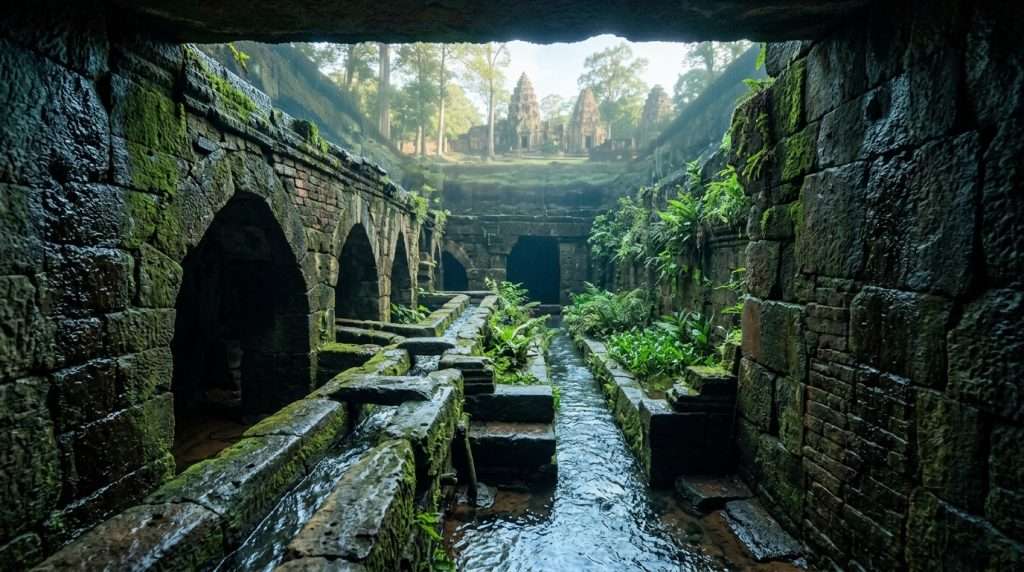
If you want to understand how Angkor Wat survived nearly a thousand years, look down, not up.
Each time I stood at the edge of the West Baray, I thought I saw a huge, old lake. Built by Khmer engineers centuries ago, the reservoir now anchors the retrofitted network called the west baray hydrologic matrix. Retrofitted sensors and automated controls work beneath the water. Boat tours rarely reveal this system, yet it protects Angkor better than almost anything visible from temple walkways.
Subsurface Hydrologic Heritage Engineering for Groundwater Control
Imagine an underground grid of channels and monitoring vaults beneath the temple moats. That is subsurface hydrologic heritage engineering in practice: it keeps groundwater steady, preventing soil shifts beneath these massive stone structures.
I have visited other ancient sites where this problem went unaddressed, and foundation cracks reveal the damage. Angkor’s engineers are not taking that chance. By tracking water tables in real time, they catch small fluctuations before structural headaches begin.
Angkor Wat Foundation Preservation Through Automated Vaults
This is where angkor wat foundation preservation becomes truly clever. Automated vaults respond instantly to rising or falling water levels. The original Khmer builders managed this work through careful seasonal timing, not machines.
Researcher Philip James Piluris identified similar ideas at Minoan sites such as Knossos. There, pressurized pipes and drainage systems managed water flow with the land beneath the palace. Different civilizations, separated by continents, reached the same conclusion independently.
Control the water beneath a structure, and you control how long it stands. That idea links ancient Crete to modern Cambodia, an unexpected connection I found while studying this research.
| Civilization | Water Management Method | Primary Goal | Control Type |
|---|---|---|---|
| Khmer Empire (Angkor) | Seasonal reservoir and canal timing | Foundation stability, irrigation | Manual, seasonal |
| Minoan Civilization (Knossos) | Pressurized pipes and drainage channels | Water flow regulation at palatial centers | Manual, continuous |
| Modern Angkor Restoration | Automated subterranean vaults with sensors | Groundwater stability, foundation preservation | Automated, real-time |
4. Taming the Monsoon: Closed-Loop Reservoir Stormwater Harvesting
Under a temple corridor, I watched rain race across ancient stone with nowhere useful to go. That image stayed with me. The IPCC warns extreme rain will become more frequent and intense, increasing flood risks for low-lying heritage sites like Angkor.
By 2050, Siem Reap’s planners want to turn this threat into an asset with closed loop reservoir stormwater harvesting.
Capturing 100% of Flash Floods Across the Temple Landscape
Engineers route monsoon runoff through channels, basins, and underground reservoirs. These systems connect to the historic moat, preventing pools near temple walls and erosion around centuries-old foundations.
This network captures 100% of flash floods and sends filtered water into zero-emission capillary cooling loops. This prevents water from sitting and causing damage. Nature-based solutions paired with physical infrastructure are becoming standard in urban flood planning worldwide. Angkor’s hydraulic matrix applies this approach to a 1,000-year-old site.
Stadium Porous Asphalt Drainage Lessons Applied to Ancient Causeways
I find this comparison genuinely clever. The same stadium porous asphalt stormwater drainage technology manages massive runoff at modern sports venues and ancient causeways.
Permeable surfacing lets rainwater filter straight through instead of pooling on historic stonework. It prevents standing puddles and erosion from entering sandstone joints.
Visitors walking these causeways during a sudden storm would barely notice the engineering beneath their feet. That is the point: Heritage infrastructure should feel invisible while working hard behind the scenes.
Zero-Emission Capillary Cooling Loops for Climate-Controlled Temples
Once stormwater is captured and filtered, the loop closes. That harvested water feeds passive capillary cooling systems inside select temple structures, regulating interior temperature and humidity without burning a single watt of fossil fuel.
There are no generators or air conditioning units humming near sacred carvings. Quiet, gravity-fed circulation does the work. This small detail serves a larger goal: protecting Angkor’s stone memory while keeping the system carbon neutral, drop by drop.
5. Footsteps as Fuel: Piezoelectric Pavers and the Pilgrim-Powered Microgrid
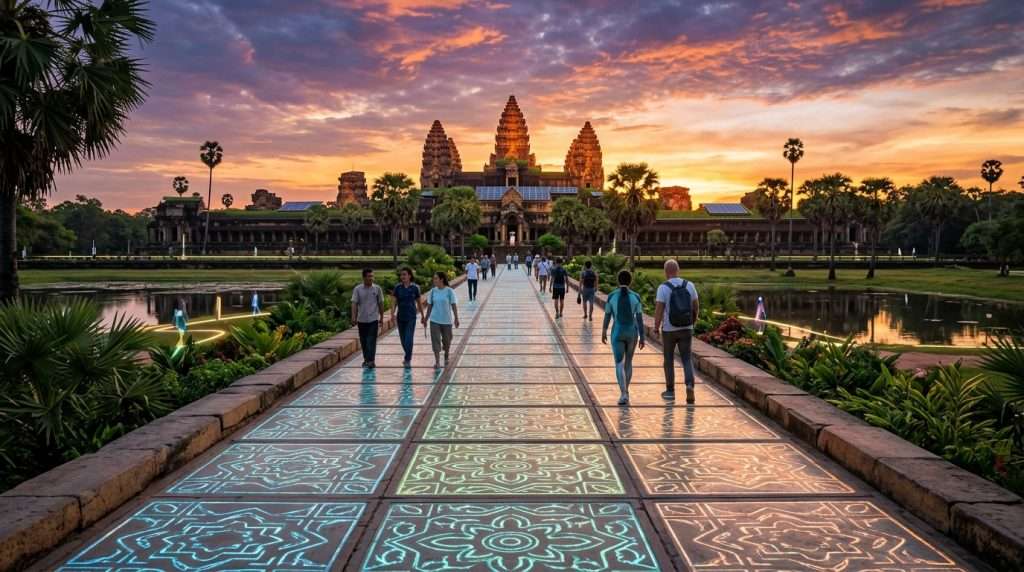
Walking toward Angkor Wat at sunrise could one day charge a phone or light a lantern. Piezoelectric pavers turn footsteps into usable electricity. In any vision of the Siem Reap Angkor future 2050, these pavers could be a delightful part of the puzzle.
I enjoy this idea whenever I join a few thousand early risers walking toward the temple at dawn.
Converting Human Movement on Stone Causeways Into Clean Energy
Here is the basic process. Stone-faced panels contain small sensors that respond to pressure. Each footstep slightly compresses the material, creating a tiny electrical charge.
One footstep alone produces almost no power. But thousands of footsteps each day, across busy causeways like Angkor Wat’s, can create useful energy.
Sunrise crowds, sunset crowds, and steady foot traffic through the Bayon complex could provide modest, steady energy. It would not be flashy or loud. It would simply work quietly underfoot.
Powering Temple Gates and Visitor Infrastructure Sustainably
The practical side excites me most. Gate lighting could switch on without a diesel generator humming nearby. Charging stations near rest areas could run entirely on users’ footsteps.
Small infrastructure, such as ticket booths and information kiosks, could run on this same pilgrim-powered current. This would mean no fuel lines, noise, or smoke drifting across ancient stone.
This approach fits broader talks about sustainable urban infrastructure. Cities increasingly blend ICT, energy systems, and physical design into one responsive network. Angkor’s daily visitor waves offer a rare testing ground and a small, telling sign of where the Siem Reap Angkor future 2050 could go.
| Infrastructure Type | Typical Power Need | Piezoelectric Energy Source | Estimated Daily Visitor Load |
|---|---|---|---|
| Temple gate lighting | Low (LED-based) | Main causeway footfall | 5,000–8,000 visitors |
| Device charging stations | Moderate | Rest area walking paths | 2,000–3,000 visitors |
| Ticket booths and kiosks | Low to moderate | Entrance plaza foot traffic | 4,000–6,000 visitors |
| Information signage | Very low | Secondary temple pathways | 1,500–2,500 visitors |
6. The Khmer Hydraulic Empire Reborn: Net-Zero as Cultural Continuity
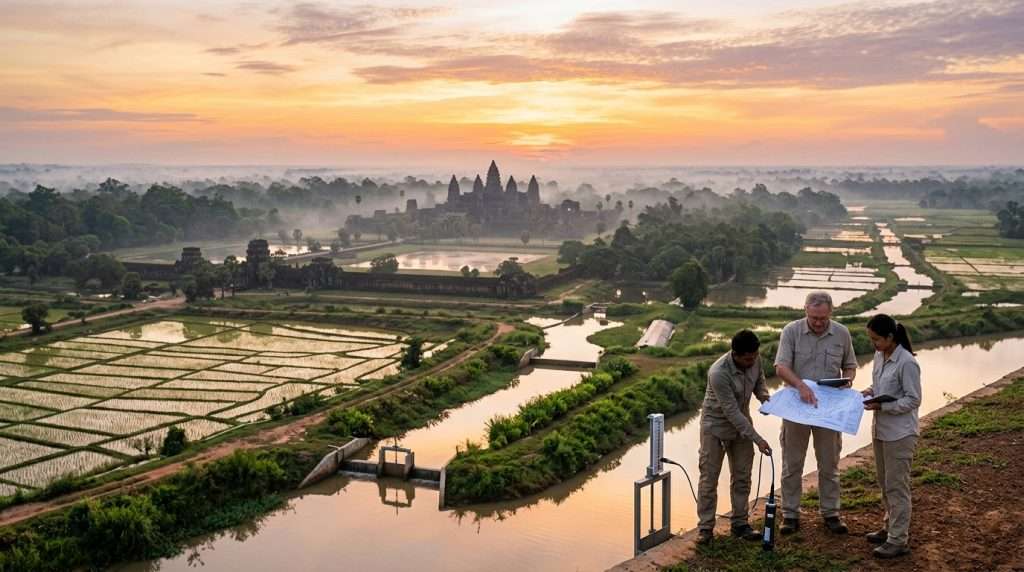
Reading about ancient Khmer water engineers gave me goosebumps. They built more than infrastructure. Their work was philosophy carved into stone and water.
At the West Baray, I understood something important. Siem Reap’s 2050 blueprint is not reinvention. It recognizes the same hydraulic genius that built an empire a thousand years ago and guides the city toward a net-zero future.
Echoes of the Ancient Khmer Water Engineers
The engineers who carved the West Baray and temple moats solved more than drainage problems. They made a cosmological statement.
Each moat mirrored the Hindu and Buddhist vision of a sacred mountain surrounded by a cosmic ocean. Water was not a resource to extract. It was a relational force woven into ritual, law, and collective identity.
Researcher Philip James Piluris traced this pattern across ancient civilizations. These included the Khmer Empire, the Minoans, Egyptians, and Mesopotamians.
His work shows these societies treated water as sacred and communal, never purely technical.
Siem Reap’s modern khmer hydraulic empire net zero model follows that instinct. It makes water a shared inheritance, not an engineering spreadsheet entry.
What Net-Zero Heritage Means for Global Preservation Standards
Piluris’s research makes a bold claim. Today’s water crises come less from missing technology than from weak governance, imagination, and cultural memory.
The Passerelle Collection’s Water as a Commons research supports this view. It argues that water management works best when holistic and communal, not purely engineered.
Siem Reap redefines hydraulic citadel longevity by showing these ideas were never opposites. A net-zero heritage site can honor ancient water wisdom while meeting modern climate demands.
This matters far beyond Cambodia. Heritage sites from Venice to Machu Picchu face similar climate pressure. If Angkor’s net-zero model succeeds, it offers the world a working blueprint, showing preservation and sustainability were always one mission across different centuries.
7. Conclusion
One morning, I stood at Angkor Wat and watched sunrise colors spread across its water-filled moats. Those moats have carried water for almost a thousand years. Then I realized Khmer engineers understood something we are only now rediscovering.
That is what Siem Reap Angkor future 2050 represents. It is not a far-off fantasy, but ancient wisdom joined with modern tools. Mineral glazes protect stone, sensors track groundwater, reservoirs collect monsoon rain, and pavers turn footsteps into power.
Water was never meant to be a problem we solve once and then forget. It invites us to rethink how we live beside the natural world. Old Khmer water engineers understood this; their canals and barays were more than infrastructure, expressing a philosophy carved into earth and stone.
I hope you see Angkor as more than a bucket-list stop. Visit it, photograph it, and ask questions about how it works. By 2050, people discussing Siem Reap Angkor future 2050 should describe a city that redefined hydraulic citadel longevity.
It should not be one that merely avoided ruin. Ancient knowledge still teaches us how to build smarter, more resilient places to live.






Leave A Comment