

I still remember my first sail into this bay. Limestone towers rose like sleeping giants, making me feel small in the best possible way.
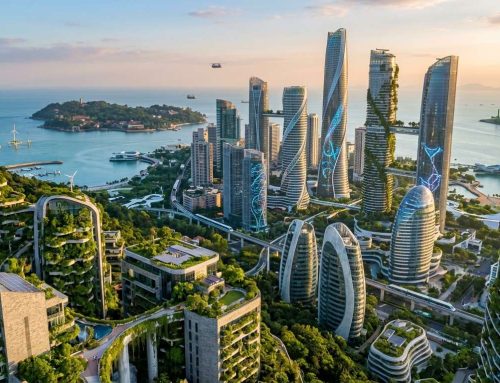
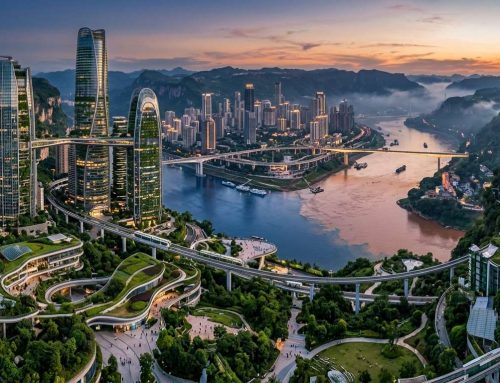
Now picture the Ha Long future 2050. The towers still stand, wrapped in mist and legend, while something unseen hums below.
I call it the Dragon Engine. It is my name for a hidden climate technology network protecting this UNESCO treasure from rising seas and fierce typhoons.
Tidal gates hold back storm surges. Cooling loops regulate the water. Kinetic walkways turn footsteps into power. None of it looks like engineering at all.
That is the quiet magic of this place: ancient rock and modern science working together, so the bay can thrive without losing its soul.
This story shows how a coastal city built a carbon-neutral sanctuary around one of the world’s most fragile wonders. It is a blueprint for the Ha Long future 2050, wherever you call home.
Key Takeaways
- Hạ Long Bay is engineered to reach net-zero emissions while protecting its ancient karst towers.
- Tidal surge gates near Cửa Lục shield the coastline from intensifying Gulf of Tonkin storms.
- Kinetic walkways along the Bãi Cháy promenade convert visitor footsteps into usable energy.
- Breathable nano-mineral consolidants help preserve limestone structures without sealing natural processes.
- The bay’s design blends centuries-old geology with cutting-edge civil engineering solutions.
- This approach offers a practical model for other coastal heritage sites facing climate threats.
1. Ha Long Future 2050: A Global Blueprint for Marine-Geological Resilience
When coastal city planners choose research sites, northern Vietnam often replaces Venice or the Maldives. They now study the Ha Long future 2050 vision there.
I’ve chased coastlines across six continents, and most UNESCO marine sites struggle under their own fame. Overtourism cracks the limestone, while warming water bleaches reefs. Hạ Long’s future changed direction, and the Ha Long future 2050 model now brings engineers for firsthand study.
What struck me most during my visits was not concrete seawalls or towering barriers. It was the opposite. Resilience here means working with karst towers, tides, and seawater instead of fighting them.
By 2050, this bay stands as a carbon-neutral sanctuary, protecting limestone pillars and its coastal city as the population grows. That achievement matters for a UNESCO World Heritage site welcoming millions of visitors yearly.
Other inland regions have spent decades battling desertification and soil loss with mixed results. Hạ Long faced rising seas pressing against ancient rock. Its engineering answers had to be marine-specific, built from scratch rather than borrowed from dry-land playbooks.
That originality makes the Hạ Long future 2050 vision worth studying. Delegations from Jakarta, Venice, and the Philippines have already toured the bay. They take notes on how a living heritage site can grow without losing its soul.
The sections ahead explain these systems, starting with how engineers protect 1,969 karst pillars from the slow bite of salt and storms.
2. Shielding the 1,969 Karst Pillars and Sửng Sốt Cavern from Salt Erosion

I still remember a stalactite’s cool, damp touch inside Sửng Sốt Cavern years ago. My guide warned me not to touch it, but I could not resist. The rock felt soft, almost alive, and strangely fragile after forming over thousands of years.
That memory stayed with me. Salt air from Ha Long Bay does more than create dramatic photos. It slowly eats limestone, one grain at a time, across 1,969 karst pillars and delicate cave formations.
By 2050, conservationists had found a quiet, careful approach to protect this landscape. It used no concrete shells or glossy coatings and worked with the rock, not over it. This approach sits at the heart of modern Ha Long Bay karst preservation.
2.1 Breathable Nano-Silica Consolidants and Bio-Pitting Prevention
Here is the simple version. Nano-silica consolidants are tiny particles that soak into the stone’s surface. They bond with limestone inside, strengthening weak spots without sealing the rock shut.
That last part matters because limestone needs to breathe. Trapped moisture speeds up decay. These consolidants let water vapor pass while blocking salt crystals that cause rock spalling, small, flaky fractures that wear away pillar surfaces.
Tourists rarely notice another threat called bio-pitting. Algae, bacteria, and fungi colonize damp rock, slowly dissolving tiny pits into its surface. A microscopic barrier discourages this growth without harsh chemicals that could kill marine life or change the rock’s natural look.
I think of it as giving the stone a stronger immune system instead of hiding it under a mask.
2.2 Non-Invasive Mineral Masonry Glazes for Natural Stone Patina
After stabilizing the stone, the next step protects its visible patina. This weathered, golden-gray color took centuries to develop on Ha Long’s limestone. No one wanted to erase it with a shiny, artificial finish.
This is where non invasive mineral masonry glazes come in. These glazes use natural mineral compounds matching the existing stone chemistry. Thin, breathable layers shield the surface from salt spray without creating a plastic-looking shell.
The results are subtle by design. Stand before a treated pillar, and you would never guess it had been touched. That is the whole point.
| Conservation Method | How It Works | Visual Impact | Longevity |
|---|---|---|---|
| Traditional concrete patching | Fills cracks with synthetic material | Visible, often mismatched color | 5–10 years before cracking |
| Sealant coatings (older methods) | Creates a waterproof layer on surface | Glossy, unnatural sheen | Traps moisture, accelerates decay |
| Nano-silica consolidants | Penetrates and strengthens stone internally | Invisible, preserves texture | Decades, with breathable protection |
| Mineral masonry glazes | Thin mineral layer matches natural patina | Seamless, true-to-stone finish | Long-term, low maintenance |
Walking through Ha Long Bay today, I see every pillar differently because these treatments exist. The bay still looks wild and untouched. It simply has quiet help staying that way.
3. Cửa Lục Strait’s Tidal Defense Architecture

I’ve pedaled through many rainstorms, but nothing prepared me for my first typhoon warning on Vietnam’s northern coast. Sirens sounded, shops boarded their fronts, and locals just knew what to do while I checked my phone for signal. That memory stayed with me and drew me to Hạ Long’s plan for the Cửa Lục Strait.
This narrow waterway separates Hạ Long City from Cẩm Phả and bears seasonal storm surges every year. Instead of fighting the sea with heavy concrete, engineers designed a system that bends with the water.
3.1 Automated Tidal Surge Barriers Against Typhoon Storm Surges
The system’s heart is the cua luc tidal barrier network. Picture gates built into the strait’s floor, lying flat and invisible on normal days. When storm sensors detect rising pressure and typhoon winds, the gates rise automatically, without manual cranks or last-minute scrambling.
These barriers can absorb 100% of seasonal typhoon storm surges without blocking the strait’s natural tidal flow. That matters to me as a traveler who has seen coastal towns use lifeless concrete channels to stop floods.
Boats can still pass, fish can still migrate, and water can still breathe between storms. The gates activate only when needed, then retract after danger passes.
“The climate crisis is a race we are losing, but it is a race we can win.”
That line stayed with me while I researched this project. Hạ Long’s tidal barrier offers a small, practical answer to that larger race. It shows coastal cities can protect themselves while preserving what makes a place beautiful.
3.2 Subterranean Retention Vaults and Closed-Loop Reservoir Stormwater Harvesting
Below street level, a second defense layer remains hidden from most visitors. Subterranean retention vaults wait underground to catch overflow when surge water or heavy rain exceeds capacity.
This is where closed loop reservoir stormwater harvesting begins. Instead of sending excess water back into the bay untreated, the system captures and filters debris and salt. Then it stores the water for later use.
Think of it as a city-sized rain barrel, but the water does not simply sit there. It gets recycled for irrigation and cooling systems, or returned to the bay after cleaning.
I find this part genuinely practical. Instead of treating storm surge as pure disaster, the design treats it as a resource waiting to be managed. For Hạ Long Bay, fresh water and marine health are closely linked. This closed-loop approach feels less like engineering and more like common sense.
Together, surface barriers and underground vaults create a full-circle defense system. One stops water before it causes damage. The other ensures anything that gets through does not go to waste. If you plan a visit during typhoon season, this infrastructure is worth knowing before booking your trip.
4. Zero-Emission Cooling: Turning Seawater into Energy Efficiency
On a rooftop in Hạ Long, I felt the ocean might be the city’s best engineer. The bay is more than scenery; it is a working system. It cools towers below with constant, renewable cooling, something air conditioners cannot provide for free.
By 2050, Hạ Long’s skyline runs on a different kind of logic. Buildings pull heat straight from the sea instead of fighting it with machines. There are no compressors or refrigerants, only water doing what it has always done.
4.1 Filtered Seawater Capillary Cooling Loops for Coastal Towers
The system works like a quiet magic trick. Seawater enters, then filters remove salt and sediment. Thin capillary tubes inside walls and ceilings carry the water through each building.
As water moves, it absorbs heat and carries it away before rooms feel warm.
I remembered old stilt houses near Vietnam’s coast from my childhood. They needed no electricity: raised floors moved air underneath, while thin walls breathed with wind. This system borrows that patience, scaling it with modern filtration and precise engineering.
Here’s what makes the loop so effective for coastal towers:
- Zero emissions — no fossil fuels or electric compressors involved
- Passive operation — capillary action moves the water without pumps running constantly
- Lower maintenance — fewer mechanical parts means fewer things to break
- Climate resilience — performance stays steady even during Hạ Long’s humid summers
| Feature | Traditional HVAC | Seawater Capillary Cooling |
|---|---|---|
| Energy Source | Grid electricity | Passive seawater circulation |
| Emissions | Indirect carbon output | Zero direct emissions |
| Noise Level | Audible compressor hum | Virtually silent |
| Maintenance Frequency | Frequent filter and unit servicing | Periodic filtration checks only |
4.2 Subsurface Hydrologic Heritage Engineering as a Design Philosophy
Cooling towers are only half the story. Hạ Long’s larger rebuilding idea is called subsurface hydrologic heritage engineering. It’s a long name for a simple rule: build with the water table, not against it.
Hạ Long sits on fragile limestone karst, which holds water unlike concrete. Underground channels, aquifers, and natural drainage paths have shaped this landscape for thousands of years. Local engineers protect this hidden hydrology instead of paving over it.
Before construction starts, engineers map each foundation against existing water flow. Buildings may shift a few meters to avoid blocking a natural channel. The work is slower, but subsurface hydrologic heritage engineering helps the bay’s geology outlast construction.
As a traveler, I care more about why a place feels the way it does than its photos. From outside, Hạ Long’s cooling towers might look futuristic. Underground, they follow rules set by limestone and groundwater before concrete arrived.
5. Bãi Cháy Promenade: Where Footsteps Power the Future

When I first walked along Bãi Cháy promenade, I never imagined its pavement could produce power. I remember grilled squid, street vendors, and sunsets that turned the bay gold. Later, I learned this walkway supported Ha Long future 2050 planning, joining tourism with energy innovation.
Returning today feels familiar but different. The promenade still buzzes, while clever technology works quietly beneath the tiles.
5.1 Piezoelectric Pavers and Microgrid Power Generation
Beneath the walkway, engineers installed piezoelectric pavers, which turn footsteps into small bursts of electricity. Thousands of visitors cross daily, and each step adds a tiny charge.
The energy flows into a local microgrid that powers streetlights, charging stations, and small waterfront kiosks. Tourists may snap sunset photos without knowing their steps help light the night.
It is a simple idea with a big payoff: human movement joins the clean energy equation without fuel.
5.2 Electric Vessel Berths and Cruise Pier Electrification
That energy idea reaches the water, too. Along Bãi Cháy, cruise piers now offer electric vessel berths instead of the diesel hookups I remember.
Boats dock, plug in, and recharge quietly instead of idling their engines. Diesel fumes no longer drift across the harbor at dawn. Engine rumble no longer disturbs the calm morning light over the karst pillars.
“Quiet, invisible energy capture is becoming the backbone of modern coastal tourism infrastructure.”
On the pier, I notice the silence first: electric engines hum instead of roar. After years of seeking authentic, slow-paced journeys, I find that silence worth savoring. This quiet change makes the Ha Long future 2050 vision feel real.
6. Beyond the Bay: Quảng Ninh’s Net-Zero Coastal Smart City Ambitions

Karst towers fill the postcards, but the real transformation may be happening miles inland. I spent an afternoon driving through Hạ Long City’s newer districts. Glass towers, solar canopies, and spotless streets looked unlike a heritage-site neighbor.
Then I understood: Quảng Ninh was protecting more than one bay. It aims to become a quang ninh net zero coastal smart city, extending net-zero goals from shorelines to industrial zones. Nothing remains isolated now, including a UNESCO World Heritage Site.
6.1 Stadium-Style Porous Asphalt Stormwater Drainage Citywide
During a rainy afternoon walk, I saw that streets no longer flooded as they once did. A local engineer explained: stadium porous asphalt stormwater drainage, once used only for sports fields, now runs beneath city blocks.
Porous surfaces let rain filter through pavement instead of pooling during monsoon downpours. Runoff pollution falls before reaching the bay, and streets remain walkable during heavy storms. I found this stadium engineering oddly satisfying because it protects ancient limestone.
This table compares the shift with older infrastructure:
| Feature | Traditional Asphalt | Stadium-Style Porous Asphalt |
|---|---|---|
| Water Absorption | Minimal, causes surface pooling | High, water filters through instantly |
| Flood Risk During Monsoon | Frequent street flooding | Significantly reduced |
| Runoff Pollution to Bay | High sediment and oil runoff | Filtered before reaching waterways |
| Maintenance Frequency | Regular resurfacing needed | Less frequent, longer lifespan |
6.2 Integrating Heritage Preservation with Urban Growth
Progress means little if new construction crowds out what makes Hạ Long special. The city planners I spoke with described strict buffer zones around karst viewpoints and limited heights near the shoreline.
Locals spoke honestly about the tension between growth and preservation. Quảng Ninh seems determined to show they can coexist without one swallowing the other.
“You can’t build a smart city on top of a dead landscape. The bay has to stay alive, or none of this technology means anything.”
From a hillside, I saw new towers beside old pillars and understood the balance better than any brochure. This city grows without forgetting why people first loved it.
7. An Opinion on the Risks and Realities of Engineering Nature
I’ve passed many “climate-proof” projects that failed during their first serious storm. Seawalls crack, barriers jam, and promises fade after one bad season. Promises outlast their builders by exactly one bad season.
When I consider everything planned for Ha Long future 2050, I feel excited but doubtful. I am not attacking the project. I admire what Hạ Long is attempting.
I have traveled enough coastlines to know nature rarely follows human timelines. That tension is worth sitting with, not smoothing over.
7.1 Can Technology Outpace Climate Acceleration?
Nano-silica consolidants look impressive on paper. Tidal surge barriers look unstoppable in renderings. But climate change ignores blueprints.
Typhoons are getting stronger. Sea levels rise faster each decade than in the last. No one fully answers this question: can these systems adapt as quickly as the changing ocean?
I have no clear answer. Honestly, no one working on coastal defense does.
Engineering can slow decay. It can’t stop time. The best any coastal city can hope for is buying decades, not centuries.
Still, trying matters. Doing nothing guarantees failure. Hạ Long’s gamble gives the bay a chance that most heritage sites never receive.
7.2 Lessons for Other UNESCO Heritage Coastal Cities
Venice has spent billions on its MOSE flood barriers. Maintenance costs keep climbing, while engineers debate their long-term durability. The Philippines’ limestone islands near Palawan face similar erosion threats, but have fewer resources.
Hạ Long offers a different lesson. It combines cutting-edge materials science with centuries-old karst knowledge, rather than replacing one with the other.
| Heritage Site | Primary Threat | Core Strategy | Key Lesson for Others |
|---|---|---|---|
| Hạ Long Bay, Vietnam | Salt erosion, typhoon surges | Nano-silica consolidants, tidal barriers | Blend heritage science with modern climate tech |
| Venice, Italy | Chronic flooding, subsidence | MOSE mobile barrier system | High-cost fixes need realistic maintenance budgets |
| Palawan, Philippines | Karst erosion, tourism pressure | Limited local conservation efforts | Early investment beats reactive repair |
No single blueprint suits every coastline. But if Hạ Long future 2050 gets even half of this right, it will save more than a bay.
It will show that heritage and innovation can share the same shoreline. In its own quiet way, Hạ Long redefines seascape longevity for places that thought their clock had run out.
8. Conclusion
I remember my first boat ride into the bay, where karst towers rose from the water like a dream. I did not know what worked beneath the surface to protect that view for decades.
That is the real story of Ha Long future 2050. It is not about machines overpowering nature, but about listening to rock and respecting the tides. Seawater does much of the heavy lifting.
Tidal barriers and piezoelectric walkways share one goal: keeping the bay breathing naturally, but smarter.
Hạ Long shows what a long-lasting seascape can be. It proves a heritage site can stay alive without losing its authentic character. It can do both when future builders remain patient and humble before lessons from water and stone.
If you ever sail into this bay, slow down. Look beyond the postcard view. Notice details many visitors miss: quiet engineering in cliffsides and seams joining old stone with new technology.
That’s where the real Ha Long future 2050 story lives, and it deserves your own eyes.














Leave A Comment