
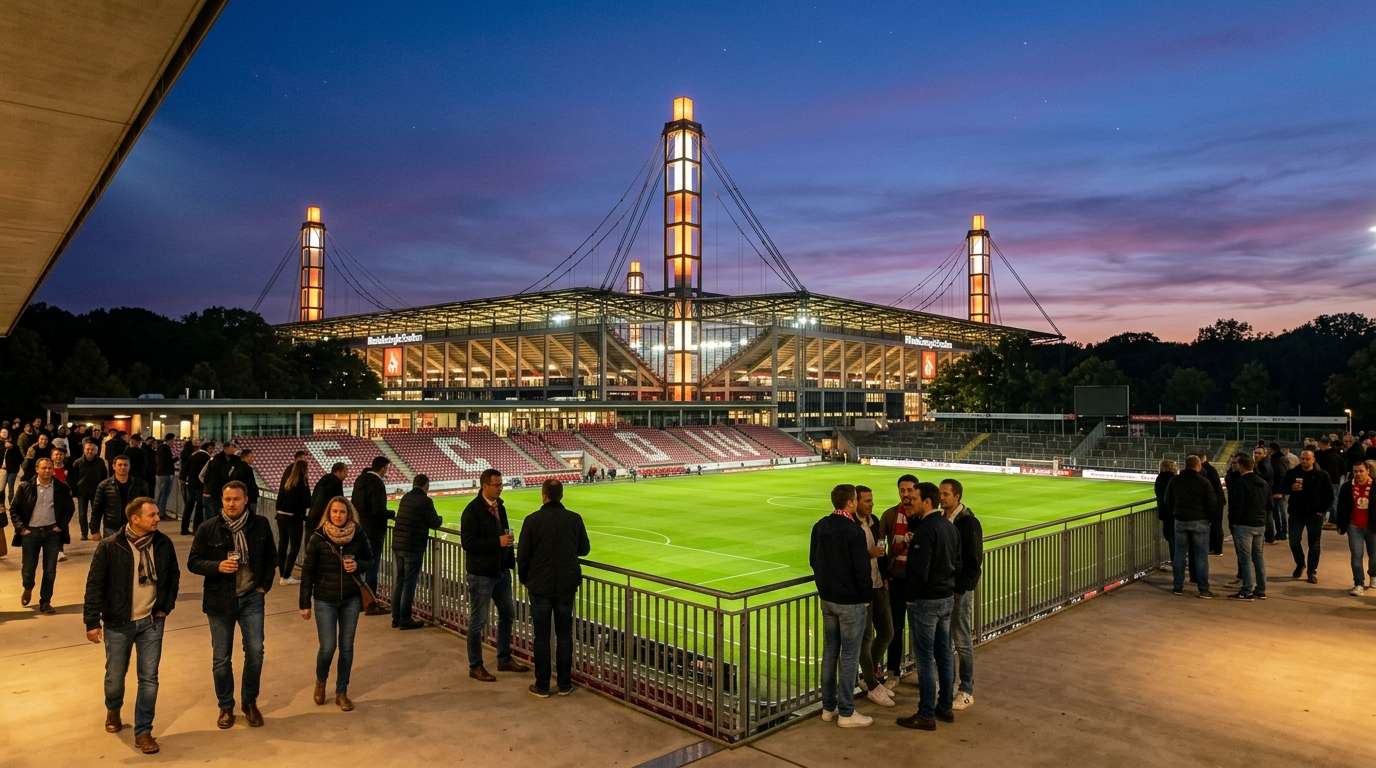
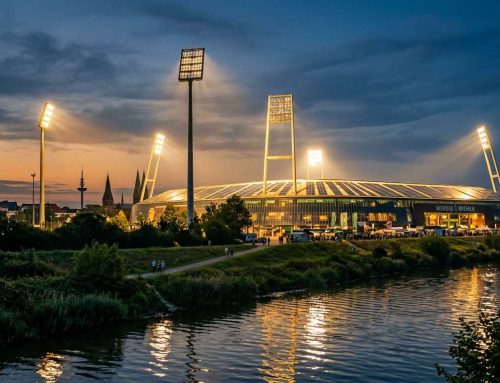
Picture four glowing pylons, each 72 meters tall, lighting the night sky over Müngersdorf: this is a what-if vision of a carbon-negative Cologne arena. I stood outside the RheinEnergieStadion at dusk once, and the corner lights looked like four candles around a giant bowl.
I write about travel on the ground, so a stadium is a strange subject for me. But football grounds are where a city shows its voice, and this one holds about 50,000 fans of 1. FC Köln. I wanted to imagine how it could run on its own power by 2050.
Here is the plan: the real stadium today, the pylons and roof, the water and fans, a visit, and the lesson. This is imagination, built on real technology tests, and not an announced project. To imagine 2050, I first need to look at what the stadium is today.
Key Takeaways
- This 2050 rebuild is a what-if idea, not an official plan.
- The stadium holds about 50,000 fans and sits in a tight residential area.
- Glowing pylons and a cable-suspended roof could make power and protect the steel.
- Rainwater vaults and fan-powered plates could add water reuse and a small energy boost.
- Retrofitting keeps the atmosphere but cannot add many seats.
- The best visit is a home match or a quiet morning for photos.
RheinEnergieStadion Future 2050: Where the Real Stadium Stands Today
No official master plan to 2050 exists for the stadium. What exists is a lease, a long wish list and a lot of real limits on the site.
The ground was once called Müngersdorfer Stadion and stands where two earlier Müngersdorf stadiums stood. The lease between the City of Cologne, Kölner Sportstätten GmbH and 1. FC Köln runs until June 30, 2034 after a 10-year extension, so real decisions come well before 2050.
No official plan reaches 2050. The lease ends in 2034, so the big choices will come long before.
The lease changes depending on whether the club plays in the first or second Bundesliga. It also adds a new hospitality area called Club 78 and turns office space into loge areas.
The football club has long wanted to grow from about 50,000 to about 70,000 seats, since over 45,000 fans wait for season tickets. A feasibility study drew in experts on structural engineering, planning law, noise protection and economic viability. Here is what stands in the way:
- A tight residential neighborhood around the stadium
- A protected green belt next to the site
- Noise protection rules, with residents who have threatened legal action
- Ticket demand far above supply
That is why rebuilding smarter inside the current footprint makes a logical what-if. The RheinEnergieStadion seating plan matters here. The RheinEnergieStadion capacity of about 50,000 is a match-day figure, and the RheinEnergieStadion capacity for a concert differs because a concert layout changes the field and the stands.
So what could this place look like if it stayed and became its own power plant?
How the Pylons and Cable-Suspended Roof Could Power the Stadium
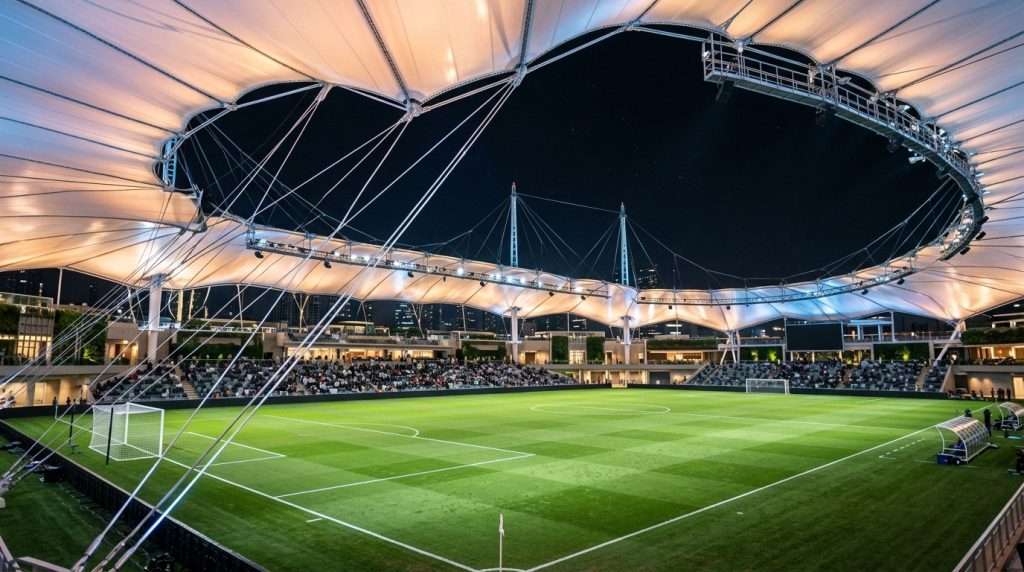
Imagine a roof that works like a quiet power station: the cable-suspended roof could make solar power and still let soft light reach the grass. In this vision, the four luminous corner pylons and the roof do the work together.
The pylons stand 72 meters tall. Each surface would do two jobs, which is the heart of the idea. No performance figures exist for any of this, since these are imagined, near-future technologies.
Nano-mineral glazes that keep the pylons glowing
Tall steel fights rain, wind and city grime every day. Corrosion eats the metal, and dirt dulls the glow.
Breathable nano-mineral glazes would protect the structural steel and keep the nighttime glow across the Rhineland. Breathable matters because moisture can leave, so the steel dries out instead of rusting under a sealed skin.
Photographers care because the glow is the stadium’s signature. For RheinEnergieStadion photos, the pylons look best at dusk and in blue hour, when the sky is deep blue.
Bio-photovoltaic membranes across the roof
Translucent bio-photovoltaic membranes would cover the cable-suspended roof. They pass soft light down to the hybrid pitch while they collect energy, so one surface does two jobs.
| Feature | Conventional roof | Imagined membrane roof |
|---|---|---|
| Light for the pitch | Fixed shade or open gaps | Soft, filtered light |
| Energy function | None | Makes solar power |
| Material feel | Hard panels | Light, translucent skin |
| Look at night | Dark outline | Gentle glow |
A caveat: shading can still stress natural grass. That is why a hybrid pitch is used.
The roof and pylons handle the sky, but what happens below ground and in the stands?
Rainwater Vaults and a Roaring Südkurve as Energy Sources
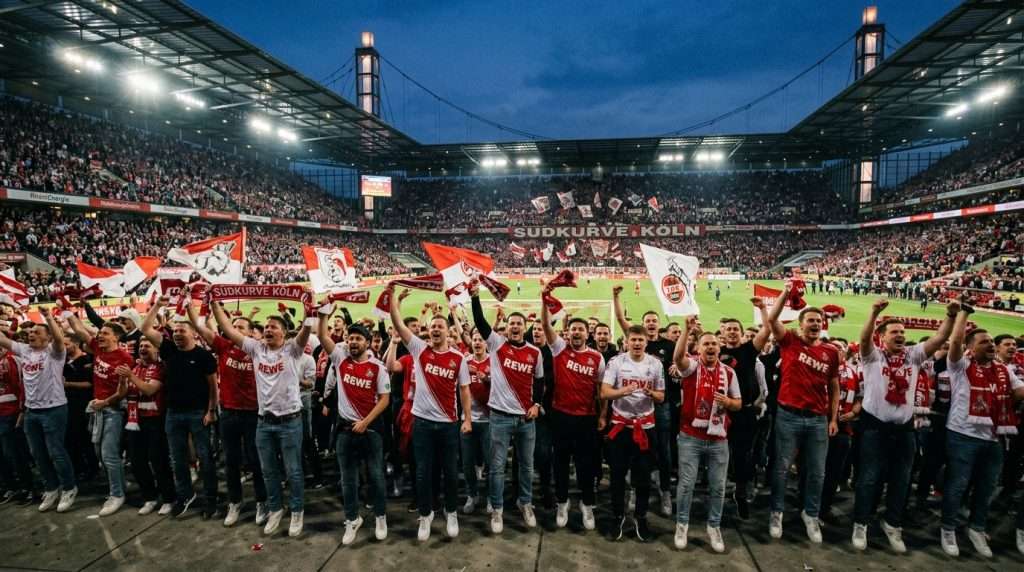
Picture the Südkurve jumping on a match day while rain drains quietly beneath the grass. In this vision, water and crowd motion both feed the stadium.
The Südkurve is the vocal end of the ground. Under it and the parkland, two imagined systems would work.
Hydrologic vaults under Müngersdorf parkland
Subterranean hydrologic vaults would capture 100% of storm runoff from the Müngersdorf parkland. The setting makes capture sensible, since a big green area sheds a lot of rain.
Filtered water would drive zero-emission closed-loop cooling through club facilities. A closed loop reuses the same filtered water again and again, so none is wasted, like an off-grid campsite that recycles every cup.
Piezoelectric plates beneath the Südkurve
A piezoelectric plate is a flat panel that turns pressure, like a stomp or a jump, into a small electric current. Under the vocal Südkurve, these plates would turn fan jumping into microgrid power.
Imagine thousands of fans bouncing at once, and every landing feeding the local grid. Honestly, crowd power is a small boost, not the main supply.
So what would all this mean for someone actually visiting?
Why a Cologne Retrofit Would Matter Beyond the Rhineland
The lesson is about keeping character while changing the engine. Retrofitting means keeping the existing stadium and upgrading how it works, and it protects the atmosphere travelers come for.
Many cities with aging grounds weigh demolition against renewal. Even real-estate firms now set long climate goals: Art-Invest Real Estate’s 2024 sustainability report states a goal of greenhouse-gas neutrality by 2045, with smart meters and efficiency work.
A retrofit cannot add many seats on a tight site. It solves energy and comfort, not the ticket waiting list, and demand stays far above supply.
Compare it with a new stadium outside the city center. A new site offers easier road access and more room, but it loses heritage and the old crowd’s habits. Cost risk is also higher with a fresh build, while a retrofit grows in smaller, safer steps.
What is the coolest soccer stadium? It is often the one with the loudest crowd and the most character, not the newest.
A stadium’s soul lives in its crowd. Change the engine, and keep the voice.
That brings me to how a visitor can see the stadium now.
Visiting RheinEnergieStadion Today: A Practical Guide
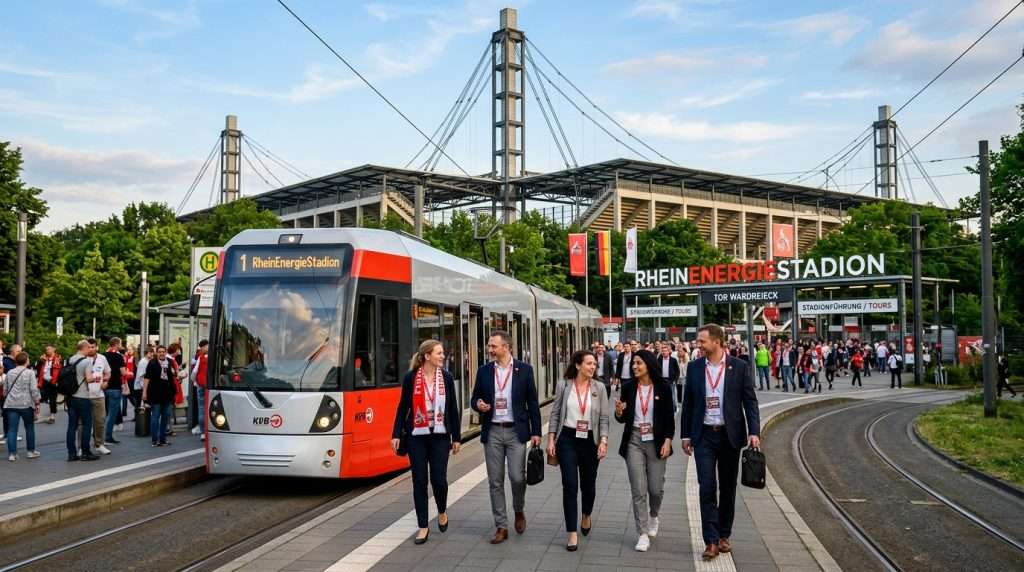
The best time to see the stadium is a match day for atmosphere or a quiet morning for photos. Home matches of 1. FC Köln are held in the Bundesliga.
Stadium tours are part of the club’s plans. Check with the club or Kölner Sportstätten GmbH for current details. Here are five checks before you go:
- Pick a match day or a quiet day
- Bring a rain jacket
- Plan pylon shots for dusk
- Reach Müngersdorf by light rail or tram
- Confirm a Cologne football stadium tour with the club
RheinEnergieStadion weather is typically mild, with cool, damp winters and warm summers. Pack layers, and keep rain gear handy in the cool seasons.
Home matches fill up quickly given the ticket demand, so a match day trip needs planning ahead. Do not show up hoping for a seat.
With the tips set, there is one last thought to share.
Conclusion
When I return, I will watch the pylons first, then listen to the Südkurve. Old grounds can become power plants without losing their soul, and that is the idea I keep carrying home.
The real stadium’s biggest challenges are space and neighbors, not technology. The tools are being tested, but the land around the ground is fixed.
So plan a Cologne trip around a home match, and bring a camera for the pylons at dusk. Your next step is a trip to Müngersdorf.



Leave A Comment