
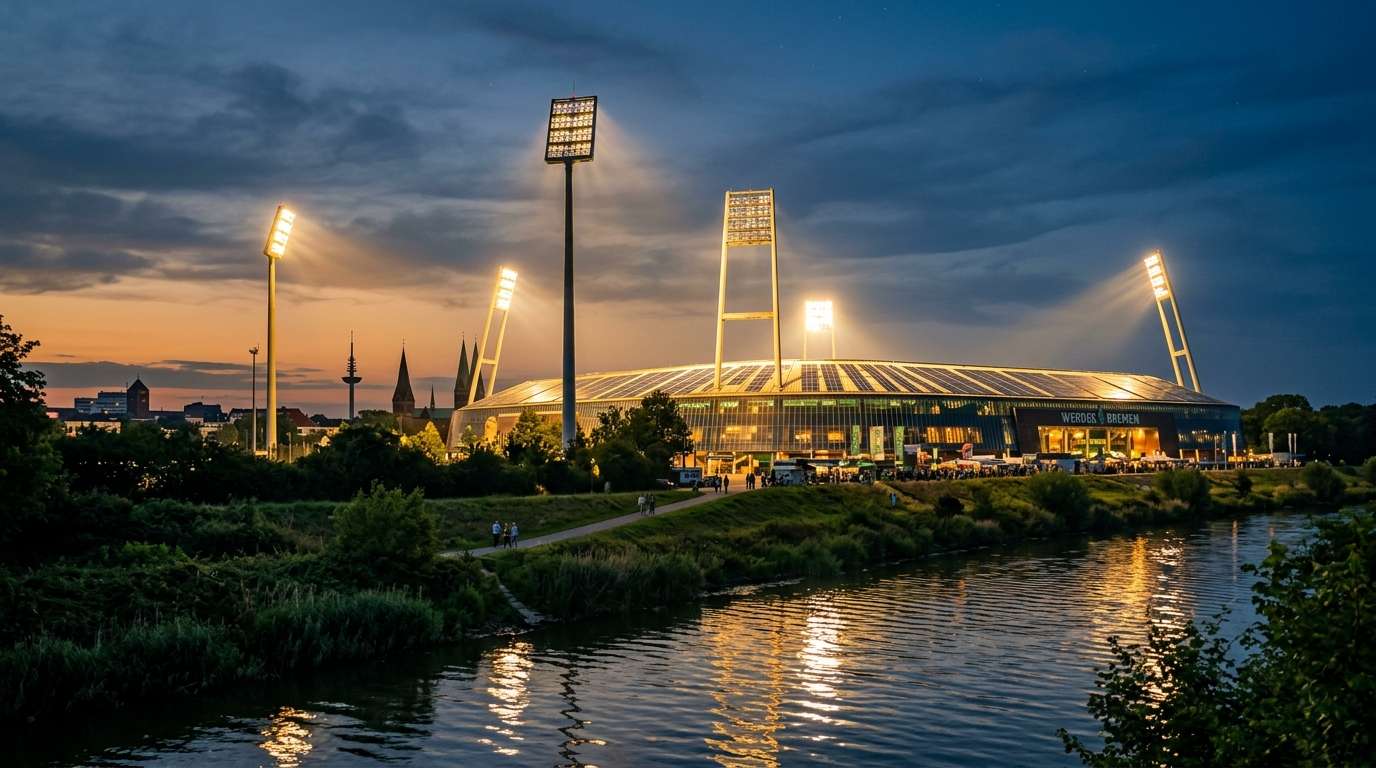
I stood on the Weser dyke and watched the floodlight masts rise over the water. How could the Weserstadion Bremen future 2050 turn tide surges, sunlight and a bouncing Ostkurve into clean power? That question pulled me in.
The ground turns 100 on 17 October 2026, and that is my reason to look ahead. Werder Bremen’s home holds 42,100 seats for domestic matches, and the Weser bends right around it. I love places shaped by rivers, so this one feels like a gift to a traveler.
One honest line first: 2050 here is a vision, built from where the ground stands today. It is not a confirmed project of the club or the city. I will start with what the ground is now, then walk into the picture I imagined.
Key Takeaways
- The Weserstadion turns 100 on 17 October 2026.
- It holds about 42,100 seats and stays on its riverside site.
- The 2050 idea is a vision, not an official plan.
- Breathable glazes could protect the concrete and the four masts.
- Bio-photovoltaic panels and hydrologic vaults could power and protect the ground.
- Piezoelectric plates in the Ostkurve could turn jumping into power.
Where the Weserstadion Stands After 100 Years
The ground is 100 years old and still sits in its original riverside spot. It opened on 17 October 1926 as the ABTS-Kampfbahn. Here is how its story runs, for the club and the fans.
The stadium has changed names, but the place has not moved. Werder Bremen has used it as its exclusive home since 1934.
| Date | Event | Detail |
|---|---|---|
| 17 October 1926 | Opening | Opened as the ABTS-Kampfbahn |
| 1934 | Exclusive home | Werder Bremen’s only home ground |
| 2019-2024 | Name change | Called Wohninvest Weserstadion, July 2019 to June 2024 |
| 26 September 2026 | Legends match | Werder won 4-3 against Real Madrid legends |
| 17 October 2026 | Centenary match | Against SC Paderborn, 15:30 kickoff |
Papastathopoulos, Rosenberg, Charisteas and Diego scored in that legends win. It was a fine birthday warm-up.
The ground stays near 42,100 seats and stays on the river. Upgrades, not a rebuild, shape its future.
A plan to grow to 50,000 seats was dropped over cost, local zoning and parking limits. The club keeps its inner-city site rather than moving out. The four floodlight masts are meant to stay too.
So the real question is simple. How do you keep a ground beside a tidal river safe and clean for decades?
Weserstadion Bremen Future 2050: Built to Live With the Tide
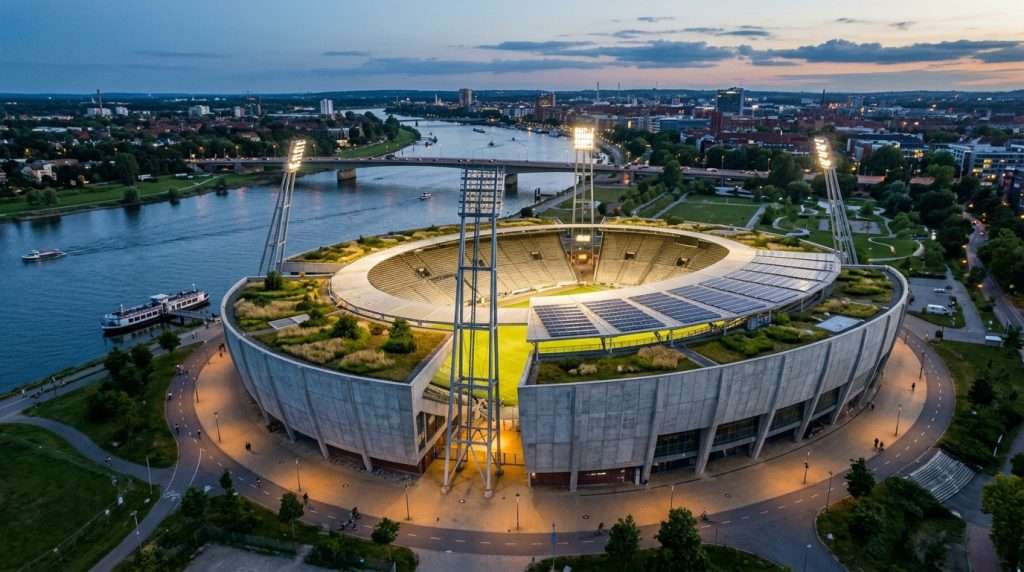
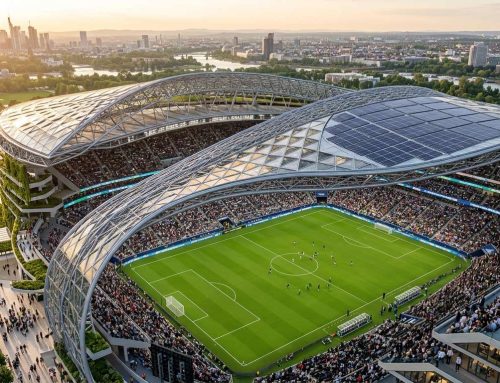
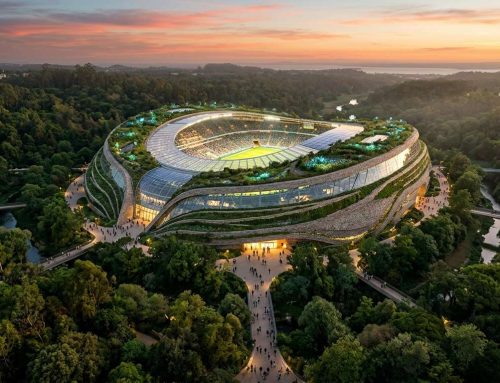
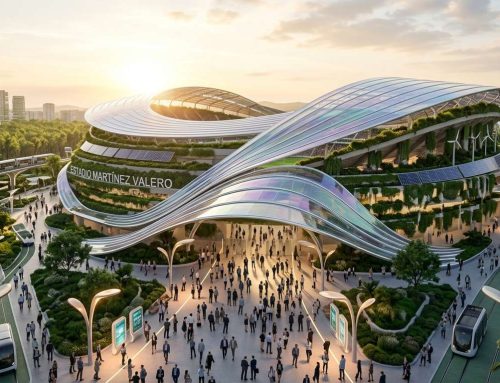
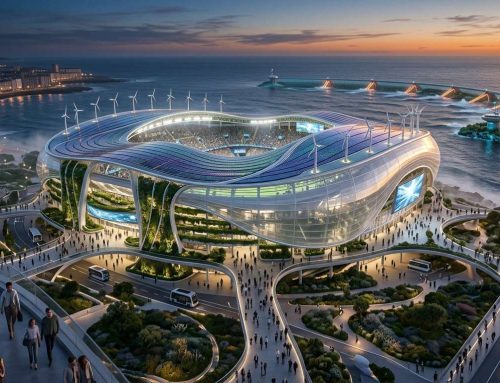
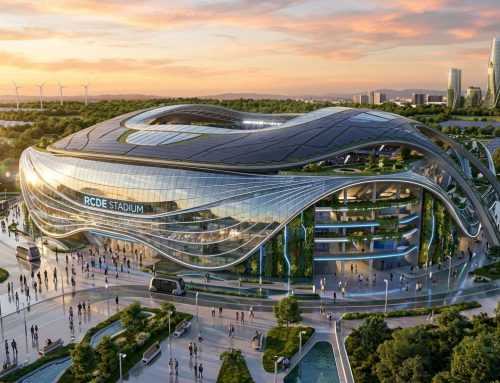
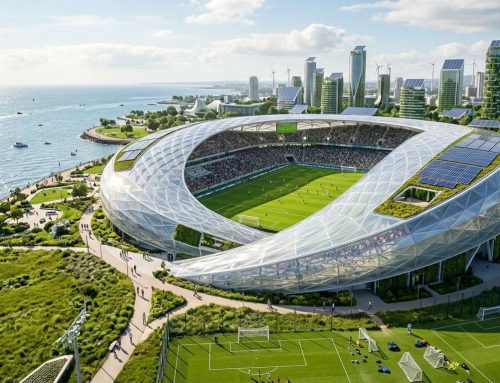
By 2050 the river becomes the engine instead of the threat. The vision scales the 42,100-seat home into a carbon-negative sports venue. The idea is to protect what is there, then power it from sun and river.
These features are a 2050 vision, not a confirmed project. The ground already sits partly in a flood-risk zone, so water matters. A research chapter on the Weser Estuary reports that channelization raised the tidal range in Bremen from almost zero to about 4 meters.
Protecting the concrete bowl and masts from salt air
The concrete faces a lot of weather. Breathable nano-mineral glazes and low-carbon sealants could answer each problem.
- North Sea salt air: glazes let the concrete breathe while blocking salt.
- River damp: sealants keep moisture out of the bowl.
- Tidal surges: the same coatings guard the lower walls.
- Sun: the finish resists fading along the dyke line.
- Daily wear: the original finishes stay in place.
The four masts get upgrades, not demolition. The old look stays.
Solar skin and tidal-water cooling
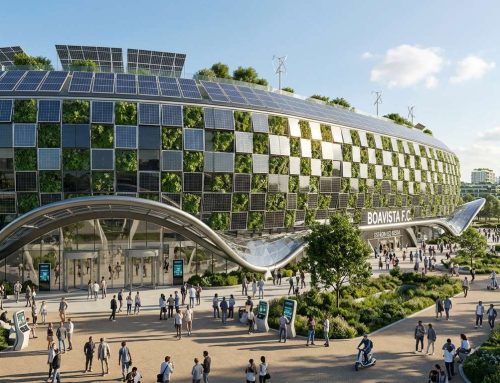
Translucent bio-photovoltaic panels across the facade and roof canopy make power. They also pass light to the pitch turf, so the grass still grows. The facade and roof already carry solar glass today.
Hydrologic vaults under the ground could capture 100% of seasonal tidal surges. Filtered river water would then run a zero-emission, closed-loop cooling system for club buildings. Efficient LED floodlights already cut lighting energy use by roughly 26%, a step the team has taken.
Water and light are only half the story. The other half is the sound from the east stand, and what fans might add.
When the Ostkurve Jumps, the Grid Listens
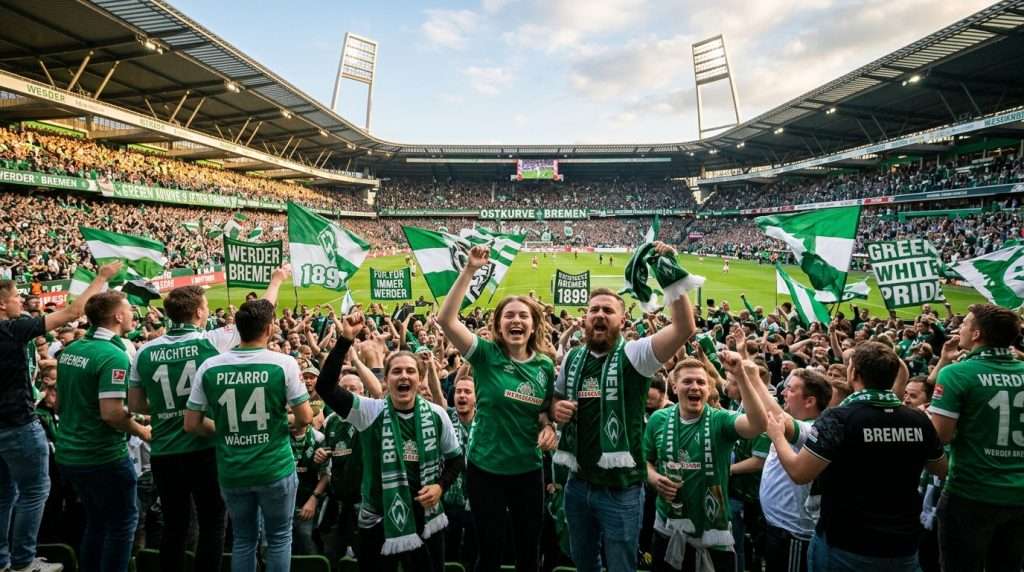
A goal goes in, and the whole Ostkurve jumps. In the vision, every jump becomes a small charge. A piezoelectric plate is a floor plate that makes a small electric current when people step or jump on it.
The Ostkurve is the loud home end. Under-floor plates across it would feed clean power into a microgrid. The crowd would help power its own ground.
Sporting director Clemens Fritz wants the ground to be a fortress again. A crowd that lights its own home fits that wish well.
Here is what I would look for on matchday:
- The Ostkurve, bouncing after a goal.
- The Weser bend curling around the ground.
- The four floodlight masts against the sky.
- The tonal wave pattern on the anniversary shirt, inspired by that bend.
- The dyke walk, great for photos.
The shirt is all white with green trim on collar and cuffs, the first all-white Werder shirt. Its neck reads “Wo die Weser einen großen Bogen macht” and “Weserstadion 1926-2026”. Now, what should you carry away from all this?
Conclusion
I came for a river and left in love with a football ground. The Weserstadion keeps its place on the Weser and grows by care, not size. In the vision, the river and the crowd both become sources of power.
That is a big dream for a 100-year-old home. Your next step is easy: check the Werder Bremen home fixture list and plan a matchday trip. Leave time for a walk along the dyke.





Leave A Comment