
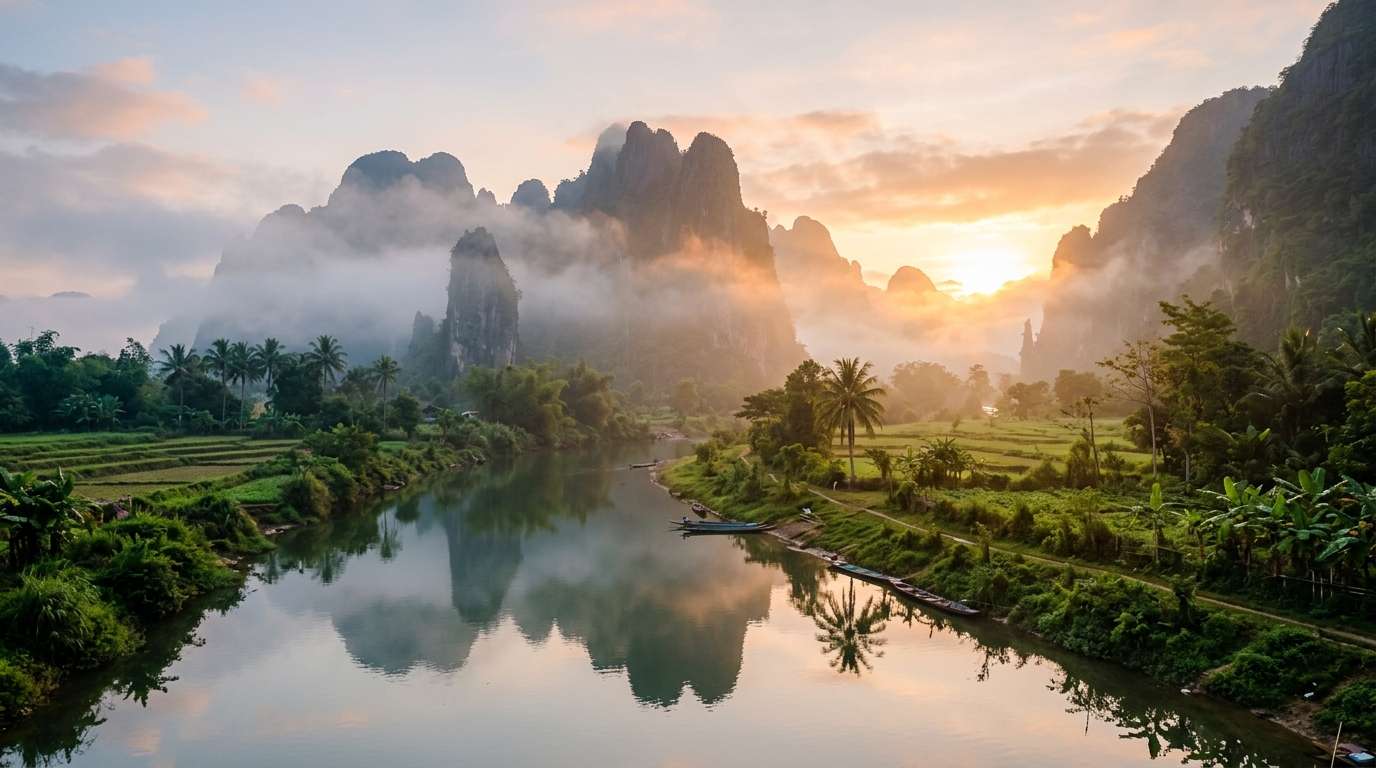
I like to sit above the Nam Song at sunrise and watch the mist pull off the karst spires. Vang Vieng future 2050 is a picture I carry from that view: a net-zero valley that shrugs off floods. Karst is a landscape of limestone that rain slowly dissolves, which creates the sharp spires, caves and sinkholes around Vang Vieng.
This is a vision, not a finished build, and I have not visited it. The valley is still a fine test for a flood-ready travel town, because the river, the stone and the crowds all meet in one place.
Here I walk through the stone, the water, the footsteps and the real steps taking place today. Let’s start with the stone itself.
Key Takeaways
- The Vang Vieng 2050 vision is a hope, not a confirmed plan.
- It rests on three ideas: shield the stone, store the water, harvest the footsteps.
- The AMUSE project already recycles about 108 tons of material a month.
- The old airstrip in the town center is the site to watch.
- The Laos-China Railway reaches town in about 52 minutes from Vientiane.
- Travelers can help by choosing certified guesthouses and sorting waste.
Vang Vieng Future 2050: Stone, Water and Footsteps
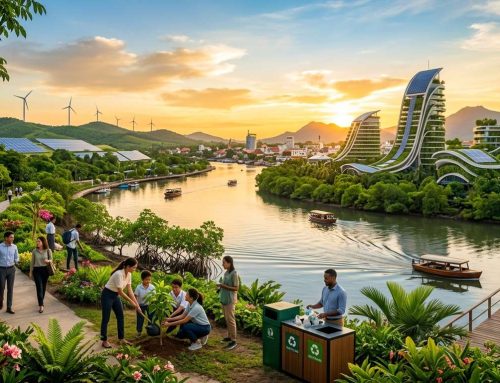
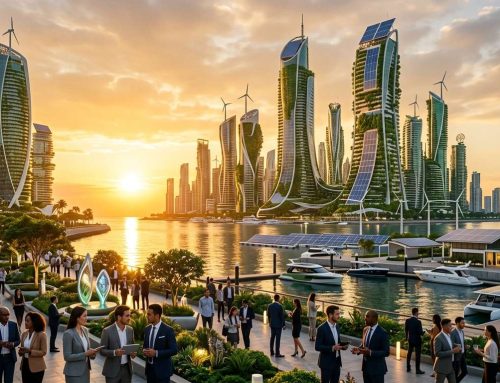
The Vang Vieng 2050 vision rests on three ideas: shield the stone, store the water, harvest the footsteps. By 2050 the valley is imagined as a carbon-neutral eco-sanctuary. Each idea protects the land that draws visitors, and together they set a model for sustainability in mountain tourism.
Nothing here is built yet. It is a picture of development I find worth chasing, and I describe it as a traveler, not an engineer.
The vision is simple: shield the stone, store the water, harvest the footsteps.
Nano-mineral glazes for the karst and Tham Chang
In the vision, a nano-mineral glaze is a protective stone coating that lets the limestone breathe. It slows the way rain dissolves the rock and cuts the risk of rockfall. It also keeps the natural patina, so a photographer would still see the same gray, gold and green streaks.
The glaze would shield the karst spires and the historic refuge caverns of Tham Chang from monsoon weathering.
Retention vaults under the riverbank and old airstrip
Retention vaults are underground flood storage. Automated vaults beneath the Nam Song riverbank and the old airstrip would capture 100% of seasonal flash floods.
The filtered mountain water would then cycle into zero-emission capillary cooling loops for eco-resorts. A monsoon surge becomes a cool room.
Piezoelectric pavers on bridges and summit stairs
Piezoelectric pavers are floor tiles that turn the pressure of footsteps into small amounts of electricity. Under river suspension bridges and steep karst summit stairways, every hiker would add clean power to a microgrid.
I climb those stairs for the view, and I love the idea that my tired legs could pay for the lights. Now to what is really happening in town today.
What Is Already Changing in Vang Vieng Today
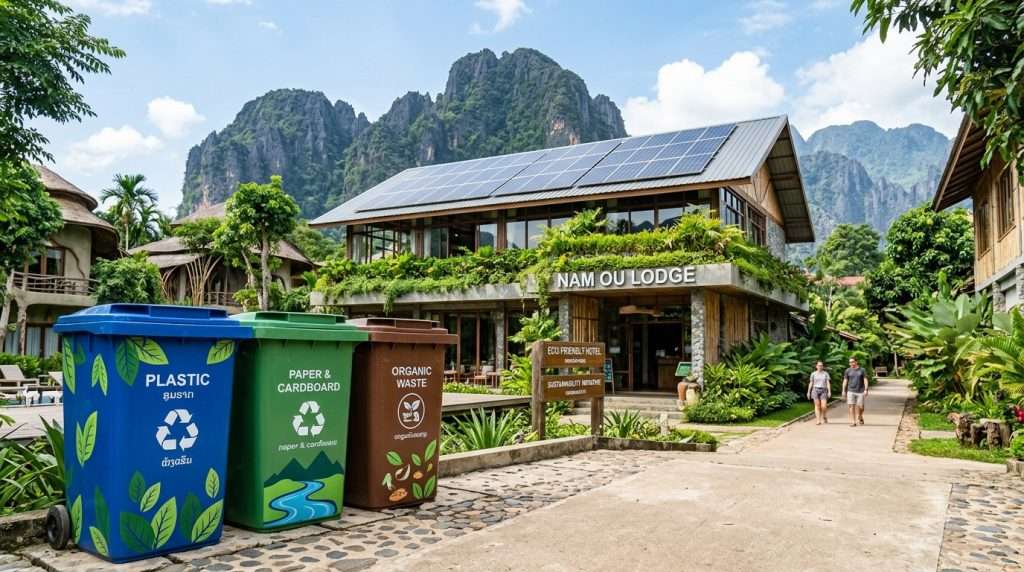
This small town recycles about 108 tons of material every month, thanks to the AMUSE project. The waste program ran two years and was completed in April 2025. The Global Green Growth Institute led it with Lao government bodies, and Germany paid for it.
It belongs to a four-country effort across Laos, Thailand, Vietnam and Cambodia. For tourism, it gives the 2050 vision a real base to stand on.
| Measure | Result |
|---|---|
| Recycling banks in businesses | 75 |
| Material recovered monthly | 108 tons |
| Hospitality providers and officials trained | 286 |
| Certified tourism businesses | 13 |
| Residents and tourists reached since 2023 | Up to 480,897 |
The capacity building went further. 26 informal waste workers and 15 women learned safer work and new ways to earn. Certified businesses earned Green, Clean and Beautiful certificates.
Here is what a visitor can notice:
- Sorted bins in hotels
- Certified guesthouses
- Recycled material sold locally
Clean, sorted waste is worth more to recyclers, and that gives businesses a reason to join. One local recycler says he now handles four times more material than in 2022. One resort owner sells sorted waste and sees it as a resource. Growth, though, can cut against these gains in a few places.
Where Growth and Culture Could Help or Hurt
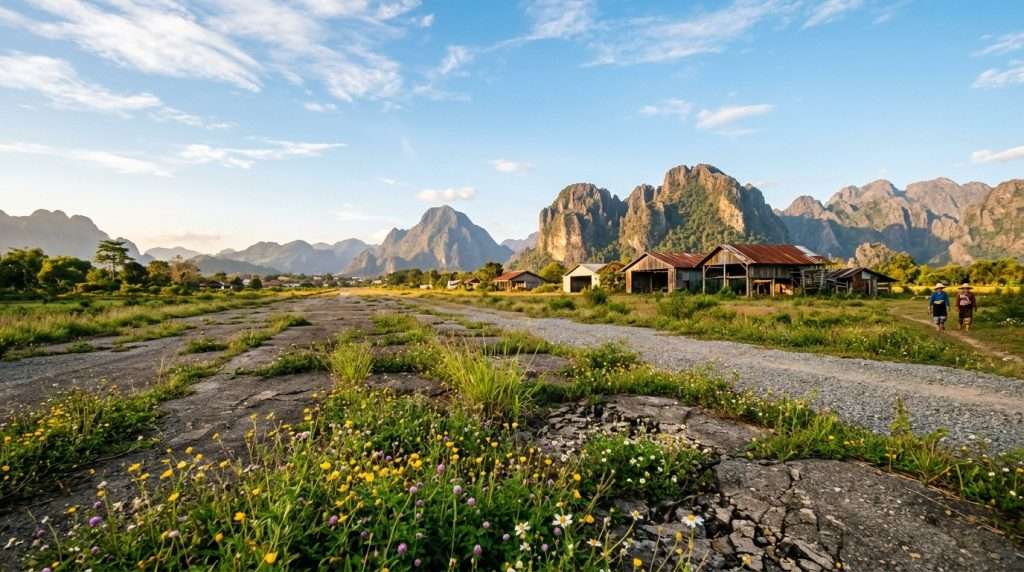
The old airstrip in the town center is the site to watch. It is a former CIA airstrip known as Lima Site 16. It was never a working civilian airport, so it cannot become one.
A Chinese-led tourism complex is planned there at about USD 216 million on 210,000 square meters, with a ground-breaking in June 2026. A casino is mentioned and awaits approval. The airstrip sits where the vision places its flood vaults, so water planning matters there.
Three forces will shape the valley:
- The airstrip redevelopment
- The Laos-China Railway, about 52 minutes from Vientiane
- The Vang Vieng Declaration, adopted by ASEAN members in March 2024 to help small cultural enterprises with green growth, skills and less waste and energy use
Whether the culture and the city grow together is what I will watch most. For now, an overland traveler has simple things to do.
Conclusion
When I return, I hope to see sorted bins, steady rivers and the same gold light on the limestone. The vision is bold, and the real work starts with waste and culture. Visitors shape the valley too, with every bag we leave and every room we book.
So pick a guesthouse with a Green, Clean and Beautiful certificate, sort your waste, and arrive by train from Vientiane.





Leave A Comment