
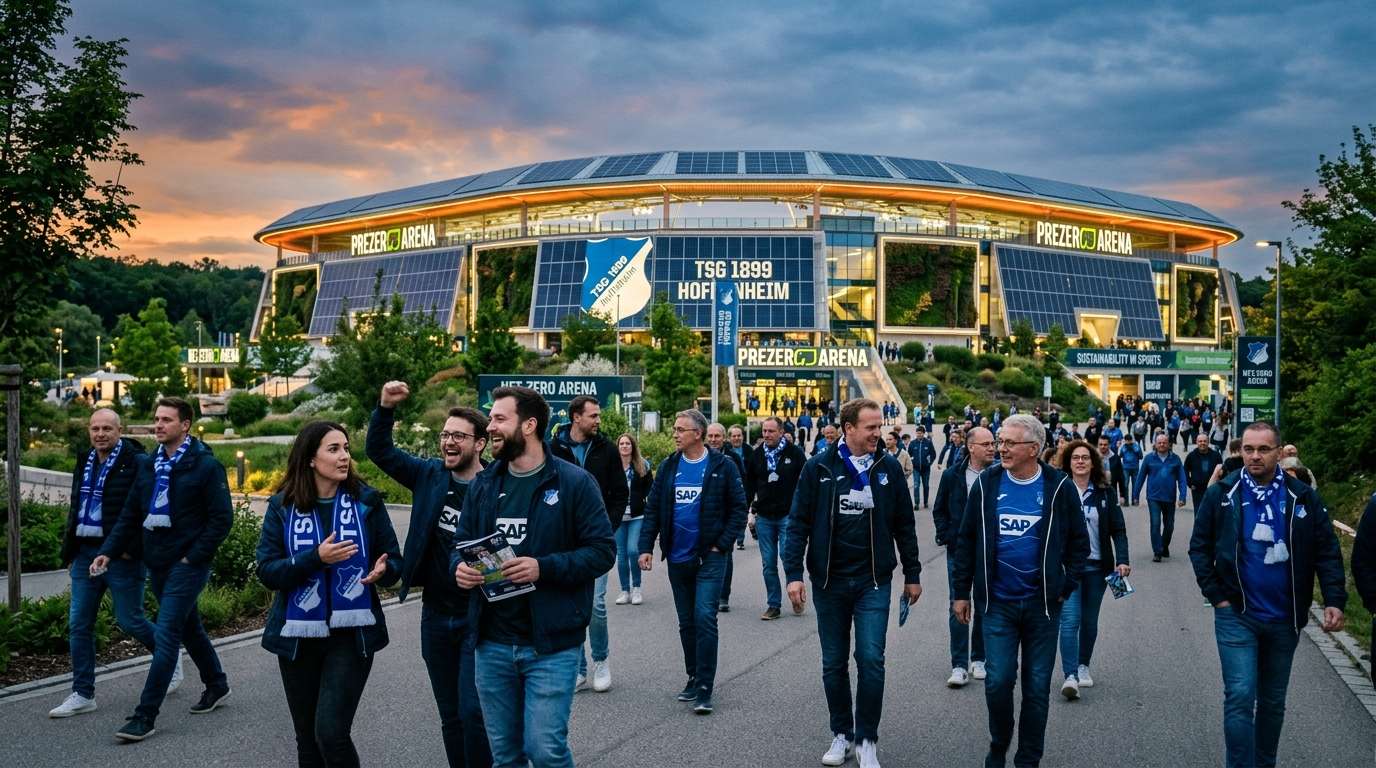
What could a football ground look like when it gives back more than it takes? I keep asking that about the PreZero Arena in Sinsheim, the home of TSG Hoffenheim.
The stadium already does real circular work today. I want to picture where it could go by 2050, and I will say plainly when I am dreaming: the 2050 pieces are a vision built on real work happening now, not finished buildings.
My path goes in four steps: what exists now, the loop of grass and cups, then the energy and water vision, and finally how the bowl could last. I will start with what the stadium really does today.
Key Takeaways
- The stadium is the first European football stadium certified zero-waste by TÜV Süd.
- Zero waste here means feeding waste back into the cycle, not making none.
- Pitch clippings become grass paper, and reusable cups replace about half a million throwaways a season.
- The 2050 energy and water ideas are a vision, not built fact.
- Breathable glazes and low-carbon sealants could help the bowl last.
- The club plans to certify more pillars next.
Where the Sinsheim Stadium Stands Today
Two days in April, the 11th and 12th, turned the stadium itself into the main attraction for inspectors from TÜV Süd. They checked how waste is separated, how it returns into the cycle, how it is recycled and how it is disposed of. The result: the first European football stadium certified as zero-waste.
Zero waste means avoiding waste as far as possible and feeding what remains back into the recycling cycle so it can be used again. Zero waste here does not mean no waste; it means reintegration into the cycle. Full zero waste is not possible at big events, so the focus stays on that return.
At this ground, zero waste does not mean making no waste. It means sending what is left back into the cycle.
The project started with a simple finding. An average home game creates about four tons of waste, and at least 60 percent of it could be recycled. It took about one and a half years of work to reach the certificate.
Managing director Denni Strich called the certification a milestone and a great vision shared with the partner. The partnership follows the club strategy “TSG is movement”, and its ecology field covers waste avoidance. Fans got an early taste on November 1, 2019, when the home match against SC Paderborn became the first Bundesliga match with 100% climate tickets.
On matchday, a fan meets this work in four ways:
- Three colored bins for separating waste
- Sorting instructions on each bin
- Slogans such as “Our back three for a clean game” and “You throw in, we transform”
- The three pillars: reduce, recycle and re-use
Two projects show the loop best: grass and cups.
Grass Paper and Returnable Cups: The Loop at Work

Picture mowed pitch grass spread out and drying on site, because that is where the loop begins. Pitch care creates about two tonnes of clippings per month, and the club turns them into useful products. The cups and the clippings are the two clearest proofs that waste can come back as something new.
I like how plain these ideas are. Nothing here needs a lab coat, only a plan and some patience.
From Pitch Clippings to Autograph Cards
The dried clippings are processed into grass paper. That paper becomes players’ autograph cards and matchday flyers. The process uses significantly less water and chemicals than usual paper making.
The clippings also become mobile phone cases, sold in the fan shop. I would happily carry a phone case that once was a penalty area.
The Returnable Cup System
A full house needs about 22,000 half-liter cups, 2,500 coffee cups and 5,000 mulled wine cups per match. The old single-use cups were made of PLA, a plant-based plastic, and Germany had no suitable composting or recycling route for them. With 17 home matches a season, about half a million cups used to end up in the bin.
| Feature | Old single-use cup | New returnable cup |
|---|---|---|
| Material | PLA | Polyethylene |
| Sizes | 0.5 l | 0.3 l and 0.5 l |
| Reuse | Single use | Up to 400 rinses |
| End of life | No route in Germany | Recycled into new products |
Here is my favorite surprise. The returnable cup system has no player or season motif, so fans have no reason to collect the cups. A plain cup was a design choice to keep souvenir hunters away, and the cups stay in use for their whole life.
The cups get rinsed at a restaurant near Neckarsulmer Stiftsberg, a one-way trip of about 30 kilometers. I wonder what happens when this same circular thinking meets sun, rain and crowd noise.
PreZero Arena Future 2050: Sun, Rain and Fan Power
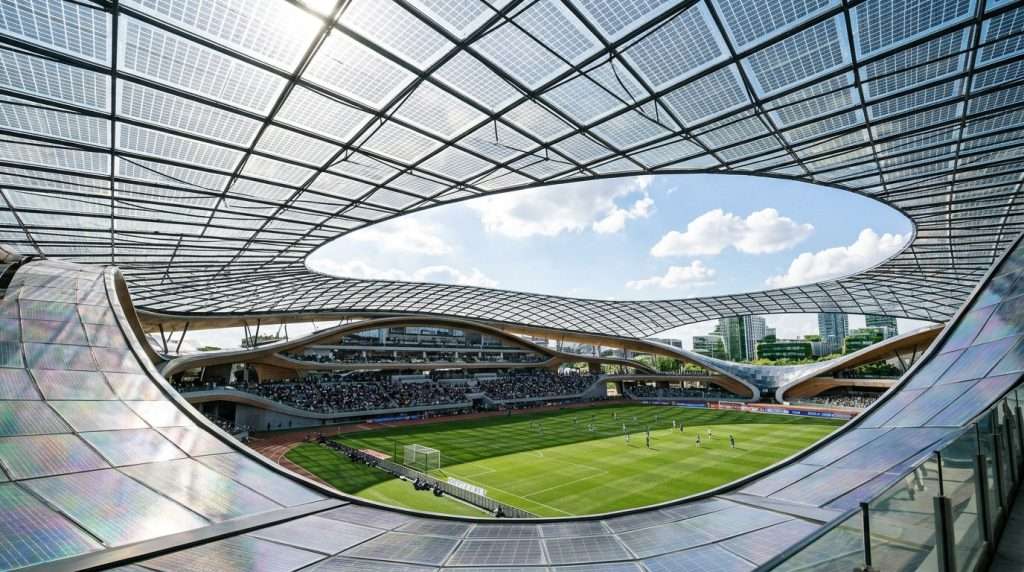
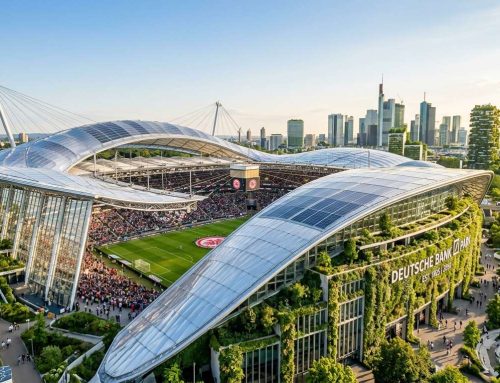
By 2050, sun, rain and fan jumping could all power this stadium. The vision scales the 30,150-seat home into a carbon-negative stadium, and none of it is built today. I treat every idea below as something I picture, not something I have seen.
One honest limit first: bio-photovoltaic materials work only in early tests. That makes this a vision, and I keep it that way.
Bio-Photovoltaic Roof Membranes
Think of a camping rainfly that also makes power. In the vision, translucent bio-photovoltaic membranes cover the roof canopy and make solar power. They also pass the wavelengths of light that plants use for photosynthesis down to the pitch turf.
So the roof feeds the grass with light while it feeds the grid with energy. I find that a lovely trade for a place where grass matters so much.
Elsenz Storm Vaults and Closed-Loop Cooling
Now think of a rain barrel that also cools your tent. In the vision, underground hydrologic vaults capture 100% of storm runoff from the Elsenz River basin. That keeps heavy rain from rushing away and turns it into a resource.
The filtered water then drives zero-emission closed-loop cooling through club facilities. The same water that fell on the roof helps keep the buildings comfortable.
Südkurve Piezoelectric Plates
Last, a stomp that lights a lamp. Under the floor of the vocal Südkurve, piezoelectric plates would turn fans’ jumping into power for the stadium’s microgrid, the local energy network.
The noisiest stand becomes a small power plant. The stadium is also described as growing its non-matchday use and solar generation toward European net-zero goals by 2050.
All that weather, though, hits a concrete and steel bowl for decades. How does it survive?
Making the Bowl Last: Glazes, Sealants and Next Steps
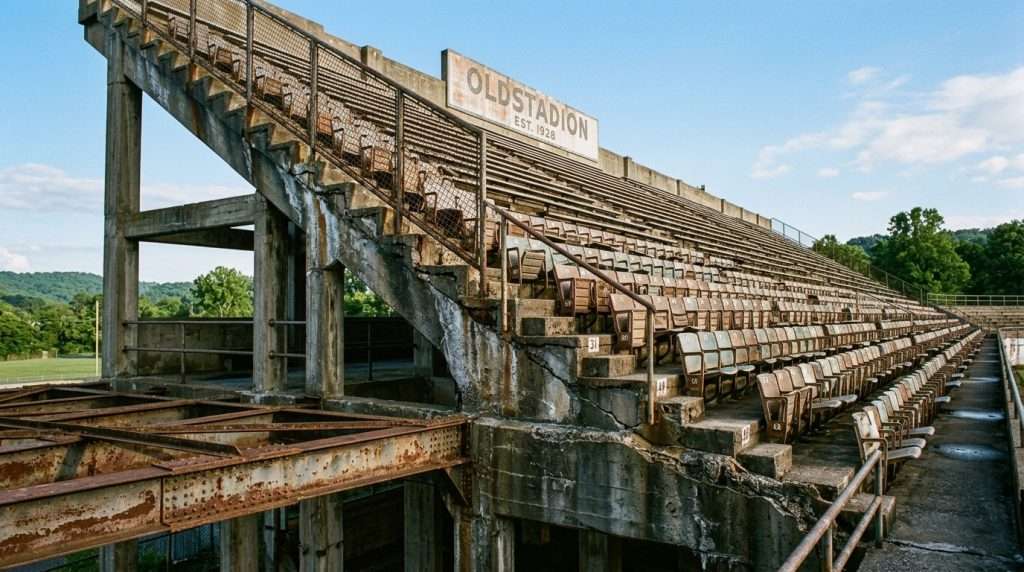
The cleanest stadium is the one that does not need replacing. Building to last is the cleanest material choice, and the vision protects the concrete bowl and the steel cantilevers with breathable nano-mineral glazes.
Breathable matters because concrete holds moisture. A glaze that lets that moisture escape does not trap water inside, where it can cause damage.
Low-carbon sealants add a second layer of protection. They resist weathering and keep authentic finishes visible against regional climate extremes. Original finishes staying in view is a quiet sign of longevity.
The cleanest stadium is the one that does not need replacing.
The work does not stop at the stadium. The sustainability partner’s marketing head said “You’re never finished,” and the focus is now on extending the concept to the entire club. Strich put it this way: “This was just the start.”
The club plans to certify these next:
- The stadium itself
- The club
- The offices
- The Dietmar-Hopp-Stadion
That list tells me where the project goes after the whistle. Next, I will say what I take away from this place.
Conclusion
What stuck with me is how ordinary the real work feels. Bins, cups and clippings already keep waste in the cycle, and that is the part no one has to imagine.
The 2050 ideas show where it can go: roofs that feed grass, vaults that catch rain, and a stand that powers lamps by jumping. I hold them as a vision, and the real work gives that vision its ground.
Pick a Bundesliga match day in Sinsheim and check the club’s calendar. Then watch where the cups and bins go. Come see a football ground the way an explorer would.



Leave A Comment