
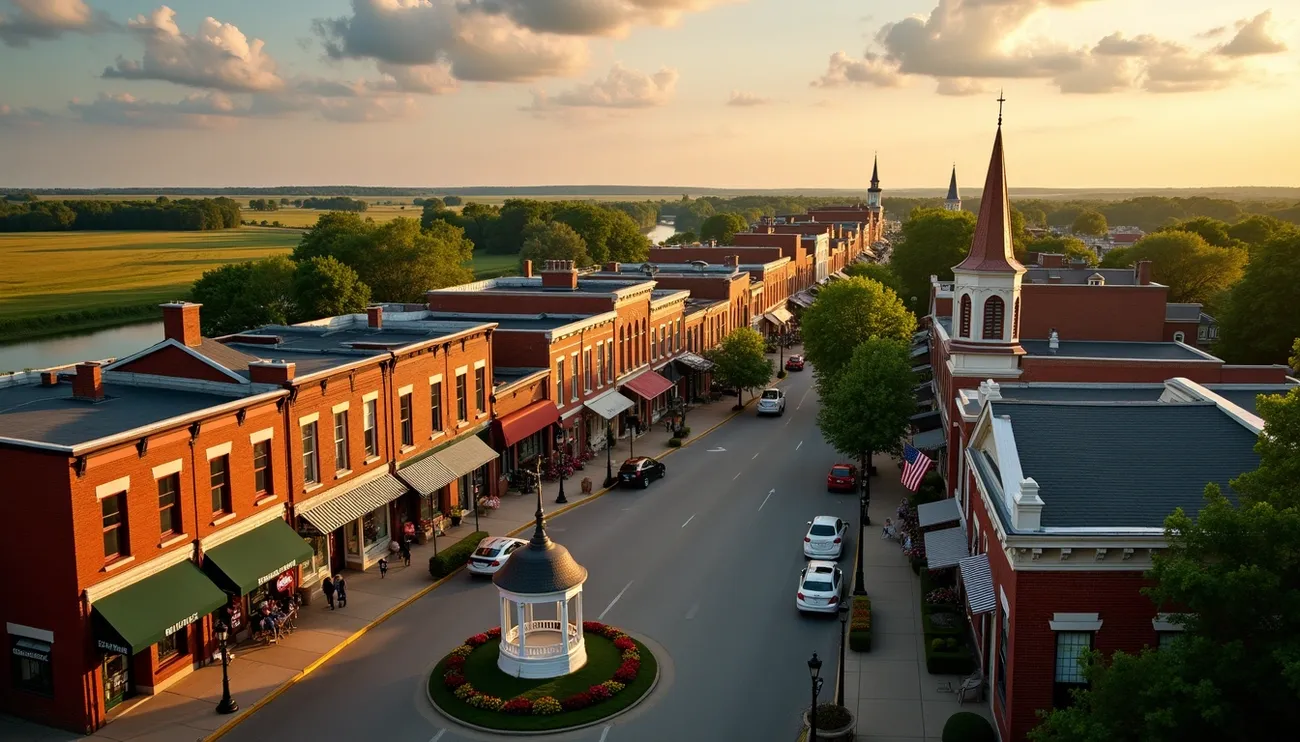
The best small towns in Illinois to visit pack attractions that rival big-city destinations. Casey boasts the world’s largest rocking chair, mailbox, barber pole, and golf tee. Arcola claims fame as the birthplace of Raggedy Ann, patented in 1915. Galena preserves history with most of the town listed on the National Register for Historic Places.
These small towns in Illinois provide diverse experiences for every traveler. You can learn about Abraham Lincoln’s legacy in Springfield or find out about Lizzie Magie’s Monopoly invention in Macomb (born here in 1866). Grafton offers Mississippi River views. Cute towns in Illinois deliver memorable adventures worth the trip.
Galena

Image Source: Galena, IL
Why Galena is One of the Best Small Towns in Illinois
Galena sits along the Mississippi River in northwest Illinois and preserves 19th-century architecture that transports visitors back in time. The rolling hills and well-maintained buildings create a setting where history meets outdoor recreation. Galena ranks among the best small towns in Illinois to visit. The town provides individual-specific experiences from Civil War heritage to Mississippi River adventures.
Historic Attractions and Museums
The Galena & U.S. Grant Museum has over 6,000 square feet of exhibit space in an 1858 Italianate mansion. Visitors encounter holograms of Ulysses and Julia Grant, the ‘Peace in Union’ painting, and artifacts from the Vicksburg Siege. The museum covers lead mining history, steamboating, and Grant’s leather store. The Ulysses S. Grant Home stands as a National Historic Landmark. It showcases the preserved residence where the 18th U.S. President lived from 1860 to 1861. The Old Blacksmith Shop operates as a working museum with vintage tools, anvils, and hammers. Guests can experiment with metalworking techniques there.
Outdoor Activities and Scenic Views
The Galena River Trail stretches 3.4 miles along the river. Walkers, bikers, and birdwatchers frequent this spot. Apple River Canyon State Park has limestone bluffs, deep ravines, and five distinct hiking trails. Chestnut Mountain Resort provides skiing and snowboarding on 19 different trails during winter. The resort becomes an adventure center with Alpine Slide, Segway tours, and zip-lining when temperatures rise. Horseshoe Mound Preserve and Long Hollow Scenic Overlook deliver panoramic views of the hilly terrain.
Shopping and Dining Experiences
Historic Main Street houses more than 125 shops and restaurants in original 1800s buildings. Root Beer Revelry stocks specialty sodas with a float bar. Galena Garlic Company offers tastings of olive oils and spice mixes. Galena Brewing Company serves craft beers on Main Street, and Blaum Bros. Distilling Co. produces bourbon, gin, vodka, and moonshine with tours available.
Arcola
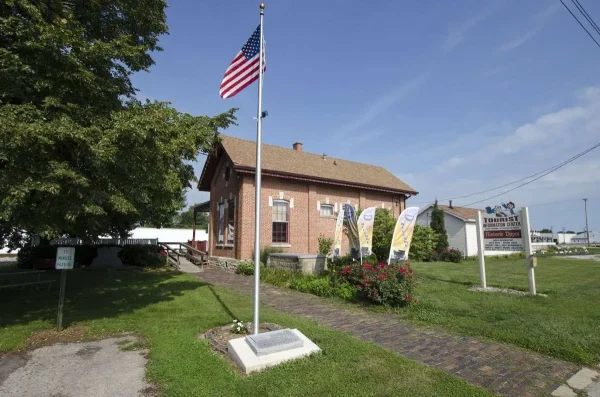
Image Source: Enjoy Illinois
The Raggedy Ann Birthplace
Johnny Gruelle created Raggedy Ann and Andy in Arcola and made this the characters’ official birthplace. The story began when Gruelle drew a face on an old rag doll and later gave it to his daughter in the early 1900s. He received a patent for Raggedy Ann in September 1915, though tragedy struck when his daughter died from an infection a vaccination caused. The first book of stories about Raggedy Ann reached the public in 1918 and introduced a cast of characters that would entertain generations. A monument that looks like a headstone commemorates Gruelle’s birthplace. It was shown in 2016 after the Raggedy Ann and Andy Museum closed in 2009. Joni Wannamaker, Gruelle’s granddaughter, operated the museum with her husband Tom for several years before donating historic family archives and Raggedy pieces to the Strong Museum of Play.
Historic Downtown and Murals
Arcola’s population of 3,000 residents takes pride in 15 murals spread throughout downtown. The Walldogs, a group of artists, created these murals to celebrate the town’s history and resident accomplishments. The project cost roughly $80,000. The Arcola Beautification Committee raised this amount through donations in less than a year through fundraisers and sponsorships. Seventy-five artists worked four days to complete the murals in June 2012. Subjects include Raggedy Ann, Joe Ernst feeding Ella Fitzgerald’s traveling group when people considered that taboo, the candy store and railroad, and a tribute to Obama with a toilet plunger after inviting the town’s lawnmower dance group to his presidential inauguration parade. The Tourist Information Center provides guides to all 17 murals painted downtown.
Best Time to Visit Arcola
Arcola experiences about 152 days or 5.0 months with comfortable weather each year. The best visiting window spans mid-April to June and mid-August to mid-October. Budget-conscious travelers find lower hotel prices between December and February.
Macomb
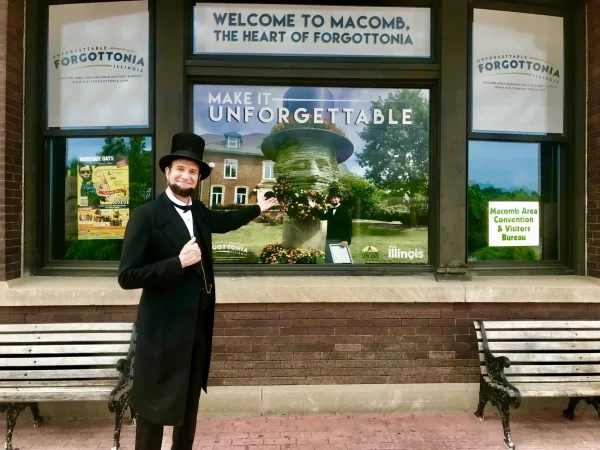
Image Source: Unforgettable Forgottonia
The World’s Largest Monopoly Game
Macombopoly stands as the world’s largest Monopoly game board, revealed on May 9, 2024, marking what would have been Lizzie Magie’s 158th birthday. Magie, born in Macomb in 1866, invented The Landlord’s Game in 1903. This game later became Monopoly. The interactive attraction spans 1 million square feet around the historic downtown Courthouse Square. Players download an app powered by eATLAS to circle the square and encounter classic Monopoly spaces that reveal themselves digitally. The jail square appears on the same corner where Macomb’s original jail once stood.
Four corners of the square display giant sculptures: a stovepipe hat on the southeast, a game board on the northeast, a Lizzie Magie statue on the northwest, and spinning dice on the southwest. Gabe Stevens of MasterPiece Customs crafted additional oversized game pieces that feature on the lawn. Players complete photo challenges and answer trivia questions. They earn points for the digital leaderboard and win coupons to local businesses. The attraction remains free and available 24/7 year-round.
Downtown Square Attractions
The Historic Courthouse Square functions as the hub of county activity. The centerpiece structure was erected in 1871. The square appears on the National Register of Historic Places and contains 10 sites that gave McDonough County Abraham Lincoln National Heritage Area status. Visitors can explore Macomb’s Looking For Lincoln Self-Guided Tour.
Local Shops and Restaurants
Chick’s On the Square ranks among top dining spots. Larry A’s Pizza (named one of America’s Best Restaurants) and Sports Corner @ 124 are other favorites. The square features specialty shops, antique stores, and the Macomb Food CO-OP.
Spring Lake Park and Nature Center
Spring Lake Park includes a 230-acre spring lake that serves as Macomb’s fresh water reservoir. The park offers camping areas, three bike trails, and a cross country running course. Bass fishing tournaments draw regional competitors annually.
Casey
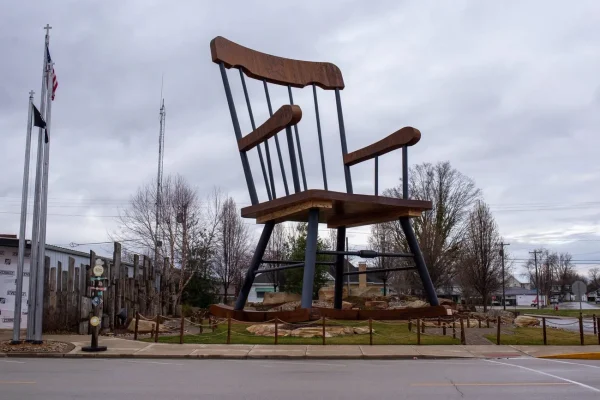
Image Source: Roadtrippers
World’s Largest Roadside Attractions
Jim Bolin transformed his hometown into a destination featuring 12 official Guinness World Records items within just 2.6 square miles. The collection began in 2011 with the World’s Largest Wind Chime. It stands 54 feet tall and has a longest chime of 42 feet. The World’s Largest Rocking Chair towers 56 feet high and weighs 46,200 pounds. Two years were needed to complete it. Visitors can climb stairs into the World’s Largest Mailbox at 5,743.41 cubic feet and mail postcards from its working slot.
The World’s Largest Golf Tee rises 30 feet tall at Casey Country Club. It weighs 6,659 pounds after five months of construction. Other Guinness-certified attractions include the World’s Largest Pitchfork at 60 feet long and 1,940 pounds. There’s also the 82-foot Teeter Totter that visitors can ride on select Saturdays and the World’s Largest Barbershop Pole. It spins outside Tina’s Barber Shop at 14 feet 7 inches tall. The town also displays over 20 big things. A giant pencil stretches 32 feet long, a massive birdcage works as a swing, and an oversized mousetrap sits on display.
What Makes Casey Special
Bolin used recycled and salvaged materials to create these attractions after Casey was bypassed by the interstate and lost major employers. The local builder wanted to refresh his community and give back to the town that supported his business. Residents welcome tourists with friendly waves and conversations about upcoming events like the annual Popcorn Festival held Labor Day Weekend.
Planning Your Visit
Most attractions cluster within three to five blocks of downtown. Visitors can see multiple records in one to two hours. The town provides maps at local businesses and the Chamber of Commerce. Optimal visiting times include the Fourth of July Celebration and Candy Canes on Main event in December.
Quincy
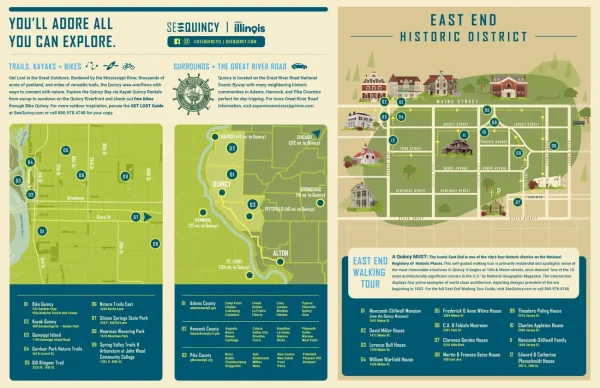
Image Source: See Quincy
Historic Homes and Architecture
Quincy features over 3,600 structures that contribute to the National Register of Historic Places in four National Register Historic Districts. The East End Historic District showcases homes representing every period and style since 1850. Restored properties feature sugar maples, tulip trees, flowering dogwood and redbud trees. Four stately mansions stand at the intersection of 16th and Maine. This corner ranks as one of the 10 most architecturally important in America. Villa Kathrine overlooks the river and serves as the city’s visitor center after decades of restoration efforts. The structure was built in 1900 in Moorish style.
Lincoln and Douglas Connection
Washington Park hosted the sixth Lincoln-Douglas debate on October 13, 1858. The event drew approximately 15,000 attendees. A bronze bas-relief sculpture by Lorado Taft depicts a standing Lincoln with his right hand planted on a pedestal while Douglas sits nearby. The sculpture was erected in 1936. The Lincoln-Douglas Debate Interpretive Center provides educational panels on the debate’s content and historical context.
Local Dining and Breweries
The dining scene includes 130+ selections, with half locally owned, plus 85 bars and seven area wineries. Summer Flavor Tours won The Best Event Award at the 2024 IL Governor’s Conference on Travel & Tourism. They will celebrate their 7th year in 2026. Quincy Brewing Company and The Ratskeller rank among popular local breweries. The Tri-County Catfish Trail features over 50 stops serving this regional specialty.
Museums and Cultural Sites
The Quincy Museum occupies the Newcomb-Stillwell Mansion and celebrates its 60th anniversary. Other museums include the Governor John Wood Mansion, History Museum on the Square and the Underground Railroad Museum in the Dr. Richard Eells House.
River Town Charm
Quincy was founded in 1825 and named for President John Quincy Adams. The city sits on rocky bluffs overlooking the Mississippi River with a population nearing 40,000 residents.
Grafton
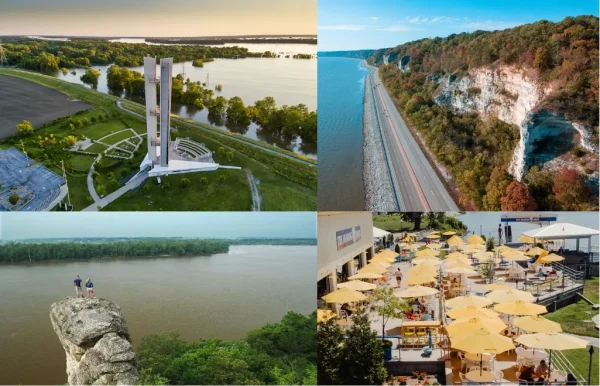
Image Source: I Like Illinois
Mississippi River Views and Dining
Waterfront restaurants shape Grafton’s culinary identity. Fresh fish dominates menus at venues positioned along the river. The Loading Dock serves Dock Salsa and Tilapia Fish Tacos while offering outdoor dining, live music and seasonal ice skating. Grafton Oyster Bar at Grafton Harbor provides seafood selections steps from boat slips and creates a marina atmosphere for visitors who share meals after days on the water. Drifters delivers river views even on overcast days and combines quality food with panoramic scenery.
Aerie’s Resort Activities
Aerie’s Resort sits perched on a bluff overlooking the confluence of the Mississippi and Illinois Rivers. The resort delivers adventure activities with striking backdrops. The Grafton Zipline course features seven zip lines and two suspension bridges that reach speeds up to 45 mph. Controlled braking systems provide smooth finishes. The Alpine Coaster, Illinois’ first of its kind, spans nearly 4,000 feet of track with seven hairpin turns and eight waves. The resort’s winery and terrace offers award-winning wines paired with views often called “The Best View in the Midwest”.
Pere Marquette State Park
This 8,050-acre protected area ranks as Illinois’ largest state park and sits at the confluence of the Mississippi and Illinois Rivers. Visitors explore 12 miles of marked trails through wooded ravines and riverside roadways. January and February turn the park into a hotspot for bald eagle watching. Hundreds of wintering eagles become visible along the river bluffs. The lodge, constructed in the 1930s by the Civilian Conservation Corps, contains 50 guest rooms and 22 stone cabin rooms.
Great River Road Experience
Illinois Route 100 hugs the shoreline for 159 miles in southwest Illinois. The 15-mile section from Alton to Grafton delivers one of the state’s most scenic drives. The 33-mile stretch from Hartford to Grafton carries designation as a national scenic byway.
Alton
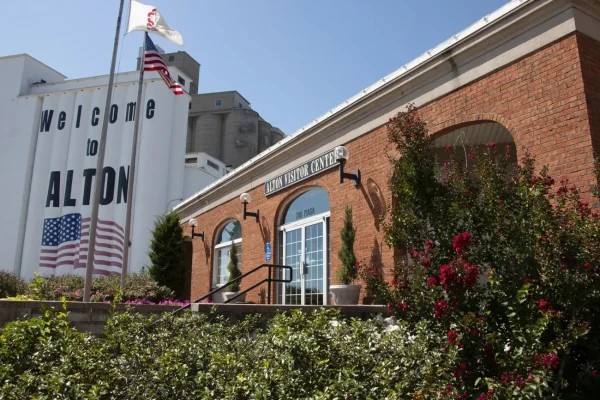
Image Source: Great Rivers and Routes Tourism Bureau
Restaurant Scene and Local Dining
More than 60 restaurants operate within Alton and ensure diverse culinary options for visitors. Old Bakery Beer Company earned certification as one of the select few organic craft breweries in the country. The former Colonial Bakery building houses it. The brewery serves rotating seasonal and specialty beers alongside sandwiches, soups and salads designed to complement cold beverages. Coffee shops owned by locals provide fresh java daily and often pair it with homemade breakfast quiche, sandwiches or sweet treats. European-style pastry shops, bakeries and restaurants serve cookies, pies and cake pops throughout the day.
Historic Figures and Statues
The Elijah P. Lovejoy Monument towers 93 feet tall and is topped with a 17-foot winged statue. It commemorates the abolitionist newspaper editor killed while defending his printing press on November 7, 1837. The memorial was dedicated in 1897. It features two side spires mounted by eagles and bronze lion chalice statues. A life-sized Miles Davis statue overlooks a pocket park on West 3rd Street. It was unveiled in September 2015 after raising over $120,000 through tailored brick sales and crowdfunding. The bronze sculpture celebrates the jazz legend born in Alton. Robert Wadlow’s life-size statue stands on College Avenue and allows visitors to measure themselves against Alton’s “Gentle Giant”.
Great River Road Sunsets
The Great River Road delivers breathtaking sunsets over the Mississippi River and creates unique experiences along this National Scenic Byway. The route passes through Alton, where travelers witness stunning river bluffs and wildlife while learning about historic sites.
Springfield
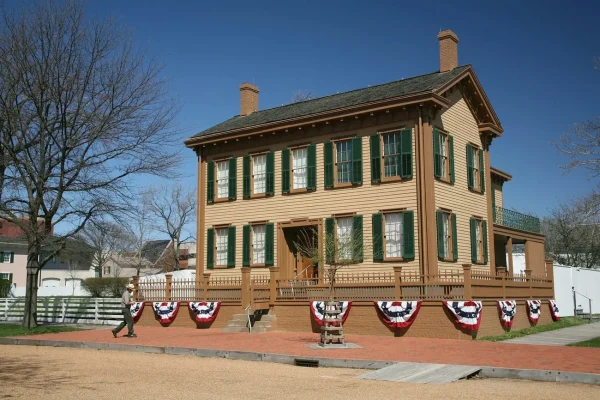
Image Source: National Park Foundation
Abraham Lincoln Historic Sites
Springfield served as Abraham Lincoln’s home from 1837 until 1861, at the time he departed for Washington, D.C. The Lincoln Home National Historic Site preserves the only residence Lincoln ever owned. He lived there from 1844 to 1861 with his family. National Park Service Rangers conduct free tours and guide visitors through the preserved neighborhood. The Abraham Lincoln Presidential Library & Museum opened in 2005. The 200,000-square-foot facility houses interactive exhibits, special effects theaters and original artifacts. The Lincoln Tomb State Historic Site marks the final resting place for Lincoln, his wife Mary and three of their four sons. It stands as the second most visited cemetery in the United States behind Arlington.
Route 66 Attractions
Cozy Dog Drive-In has served its original hot dog on a stick since 1949. The Giant Slide, a family attraction since 1968, was acquired in 2022. It now features a Route 66 emblem as part of the “Slide Down 66” campaign. The Illinois State Fairgrounds Route 66 Experience operates 365 days a year inside Gate 2. Vintage billboards, a drive-in movie theater replica and Legends Neon Sign Park showcase businesses from 92 communities along Route 66.
Museums and Cultural Experiences
The Illinois State Museum features a Route 66 exhibition. The exhibit draws from 100 oral histories conducted between 2024 and 2025 with people who lived, worked and traveled the Mother Road.
State Fairgrounds and Ace Sign Company
Ace Sign Company won the 2023 Signs of the Times Best of Show award for the Illinois State Fairgrounds Route 66 Experience. Their sign museum displays over 85 historic signs from Springfield and Route 66. The collection includes the restored Sonrise Donut sign.
Grand Rapids Christmas Market.
Monticello
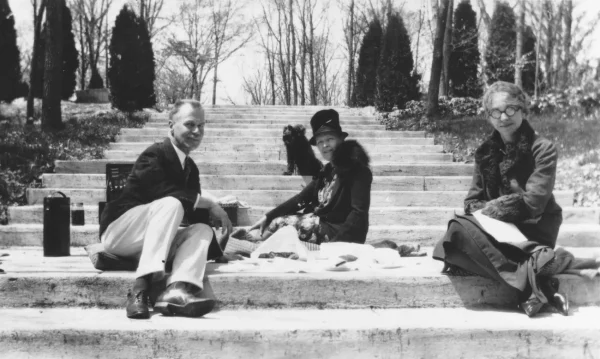
Image Source: Allerton Park & Retreat Center – University of Illinois
Allerton Park & Retreat Center
Robert Allerton’s former estate includes 1,500 acres with a 40-room mansion, formal gardens, statuary, natural prairie, forests and walking trails. The Georgian-style mansion was completed in 1900. It served as the artist and philanthropist’s residence before the University of Illinois acquired the property. The park opens to the public year-round until dusk. The mansion functions as a conference center and hosts annual events like the Allerton Music Barn Festival and monthly concerts.
Historic Mansion Tours
Public mansion tours run throughout the year and offer 60-minute guided experiences through the historic home. Tours cost $10 per person. Children 5 and under enter free. The first floor remains available for public viewing when the mansion isn’t reserved. Optional visits to the second and third floors happen during select tours. Robert Allerton created 14 formal gardens between 1899 and 1946. You can explore them during Third Saturday Garden Tours from April through October.
Hiking Trails and Outdoor Activities
Miles of marked trails wind through wooded areas and along the Sangamon River. They attract hikers and nature enthusiasts year-round. Guided hikes occur monthly and range from tree identification walks to full moon night excursions.
Downtown Charm
Monticello’s downtown centers around Main Street. Antique shops like There’s No Place Like Home and Mary, Maude & Me offer curated vintage wares. This community of 6,000 residents sits 30 minutes from Urbana-Champaign.
Champaign-Urbana
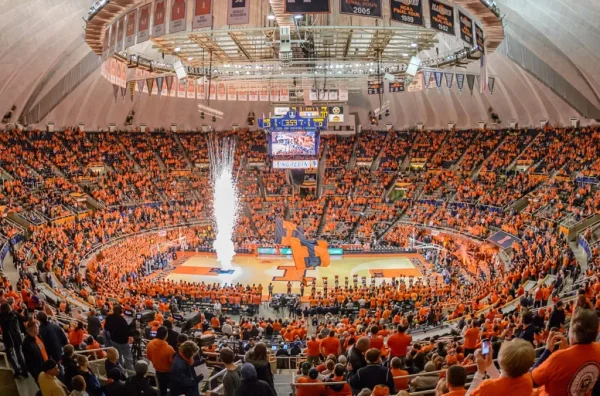
Image Source: City of Champaign
College Town Atmosphere
Home to the University of Illinois, Champaign-Urbana ranks among America’s top college towns. The community has the lowest unemployment rate compared to other college towns analyzed, among impressive nightlife and walkability scores. Students access Chicago within two hours north and Indianapolis two hours east. The twin cities offer local haunts that have won students’ and alumni’s hearts, going well past academics and campus landmarks.
Campus and Japan House Gardens
Traditional Japanese gardens surround Japan House on the University of Illinois campus, with a tea garden history dating back to the sixteenth century and Sen-no-Rikyu (1522-91). Western gardens focus on bright colors and symmetry, but these gardens emphasize green foliage and natural plant shapes. The design features lanterns and stepping stones with water basins. Visitors encounter a dry rock garden and an allée of fifty cherry trees. This creates a peaceful environment year-round.
Downtown Shops and Restaurants
Midwest Living recognized Champaign-Urbana as the Greatest Midwest Food Town. The culinary scene has 25+ local openings in recent months. Bentley’s Pub serves craft beer and house-infused cocktails, while Big Grove Tavern offers thoughtfully-crafted food inspired by local bounties.
Nearby Small Towns to Explore
Surrounding communities have Savoy, Mahomet with front-porch friendliness, St. Joseph with trailside access, and Monticello featuring grand gardens.
Small towns to visit in Florida.
Atlanta
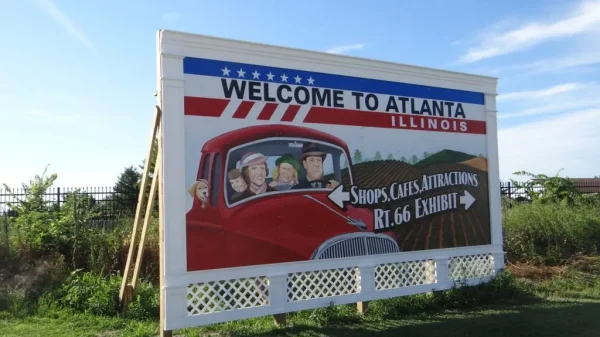
Image Source: Illinois Route 66 Scenic Byway
Route 66 Heritage
Route 66 received official designation in 1926. The original alignment passed through downtown Atlanta. The town of 1,600 residents became a welcome stop for travelers until the road was rerouted in 1947. Atlanta reclaimed its Mother Road legacy through preservation efforts and attractions. The 19-foot Bunyon Giant arrived in 2003 from Cicero. It holds a hotdog instead of the original ax these International Fiberglass creations held in the 1960s. This Paul Bunyan statue stands opposite the Palms Grill Café and ranks as one of the most photographed Route 66 landmarks.
Museum of the American Giants
The American Giants Museum houses the largest collection of Muffler Men in one place on Route 66. The museum resembles a vintage Texaco service station. Completed in October 2022, it tells the story of International Fiberglass, which produced hundreds of advertising figures during the 1960s. The outdoor exhibit features six concrete pads that display preserved giants. The 24-foot Texaco Big Friend is among them. Collector Joel Baker’s 15 years of research powers the displays, with plans to fill remaining spaces by Route 66’s centennial in 2026.
Downtown Attractions
The Downey Building has stood since 1867 and contains both the Atlanta Museum and Palms Grill Café. The museum preserves local history inside one of three Atlanta structures listed on the National Register of Historic Places. The J.H. Hawes Grain Elevator Museum was built in 1903. It operates as Illinois’ only fully restored wooden grain elevator. The octagonal Atlanta Public Library was erected in 1908 and features a Seth Thomas clock tower. Local residents hand-wind it three times weekly.
Nauvoo
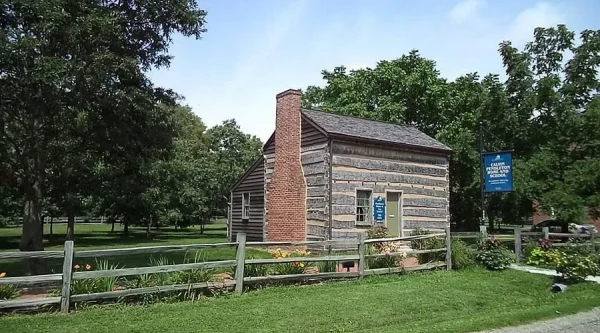
Image Source: Tripadvisor
Historic Sites and Preservation
Joseph Smith founded Nauvoo in 1839 after fleeing Missouri and changed the swampy Mississippi River settlement into one of Illinois’ largest cities with a population of 6,000. The original Nauvoo Temple was built between 1840 and 1846. Arson destroyed it in 1848, and a tornado finished the job in 1850. The Church of Jesus Christ of Latter-day Saints completed an exterior replica in 2002 that matched the original design. The pre-dedication open house drew 331,849 visitors. More than 40 historic homes and buildings operate as free public sites now. These include Brigham Young’s home and the Red Brick Store, along with the Cultural Hall.
Religious and Cultural Heritage
The Cultural Hall is one of few surviving original buildings. It hosted plays and concerts where Brigham Young performed. Church meetings were also held there. The Relief Society was founded in the Red Brick Store’s attic. Carthage Jail stands 20 miles from Nauvoo. Joseph and Hyrum Smith were martyred there.
Scenic River Location
Nauvoo sits on the western edge of Illinois along the Mississippi River. The Great River Road runs through town.
Family-Friendly Activities
The Family Living Center offers hands-on demonstrations in brick making and candle dipping, along with bread baking. The Trail of Hope recreates the path that pioneers took during their departure from Nauvoo in the 1840s.
Bishop Hill
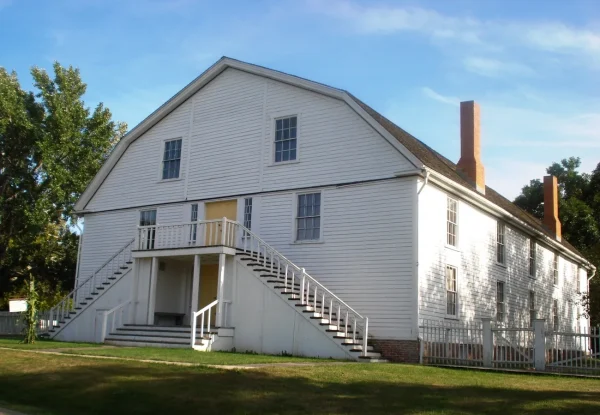
Image Source: I Like Illinois
Swedish Heritage and History
Religious dissenters seeking freedom from Sweden’s state church founded Bishop Hill in 1846 under Erik Janson’s leadership. About 1,000 immigrants walked 160 miles from Chicago and established this utopian communal colony on the Illinois prairie. The community prospered for 15 years before dissolving in 1861. It became the landmark Swedish settlement that led millions more Swedes to immigrate. The site earned National Historic Landmark designation in 1984. Bishop Hill is home to 130 residents, many descended from original settlers.
Art Galleries and Museums
Seven museums preserve the colony’s artifacts and original buildings. The 1854 Steeple Building, a three-story Greek Revival structure, serves as the museum and archive. The 1908 Albert Krans Livery Stable displays horse-related items from the early 1900s. The brick museum building houses folk art paintings by colonist Olof Krans. A dozen galleries showcase working artisans including potters, blacksmiths, weavers and quilters.
Annual Festivals and Events
Bishop Hill Civil War Day takes place May 16, 2026, featuring Union and Confederate encampments, artillery demonstrations and an evening ball. The Doodle Folk Music Festival fills the village park June 13, 2026, with free concerts. An ABBA tribute band performs July 12. Jordbruksdagarna harvest festival runs September 27-28 with 19th-century demonstrations.
Shopping and Dining
Six restaurants serve Swedish specialties including Swedish meatballs, mile-high pies and home-baked breads. The Colony Store stocks Swedish foods, pickled herring and cheese from Sweden. Local shops feature pottery, antiques and handcrafted items.
Grand Detour
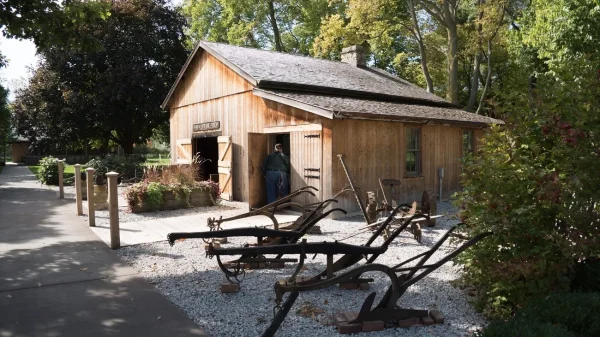
Image Source: Lee County
John Deere Historic Site
Vermont blacksmith John Deere settled in Grand Detour in 1837. He forged the first steel plow that achieved commercial success from a discarded saw blade. The John Deere Company operates this historic site and offers free admission to all attractions. Visitors tour the original 1836 Deere family home and see six rooms furnished with period household items. These displays show how pioneers cooked, cleaned and lived. The site earned National Historic Landmark status on July 19, 1964 and joined the National Register of Historic Places on October 15, 1966.
Blacksmith Shop and Museum
A replica blacksmith shop recreates Deere’s original workspace. Archeologists used magnetometers to locate the forge position and determined the exact interior dimensions. Live demonstrations show modern blacksmiths using antique tools and open furnaces. They craft items available to purchase in the gift shop. The archeological dig site from 1962 sits preserved beneath a pavilion. Students from the University of Illinois unearthed the original shop location, and excavated artifacts remain on display.
Scenic Rock River Setting
Grand Detour takes its name from an unusual northward turn in the Rock River. This unincorporated community of 424 residents retains its 19th-century atmosphere. Railroads bypassed the town and left it unchanged.
Outdoor Recreation
The site operates April through October. Tours are available Sunday through Saturday at varying hours.
Long Grove
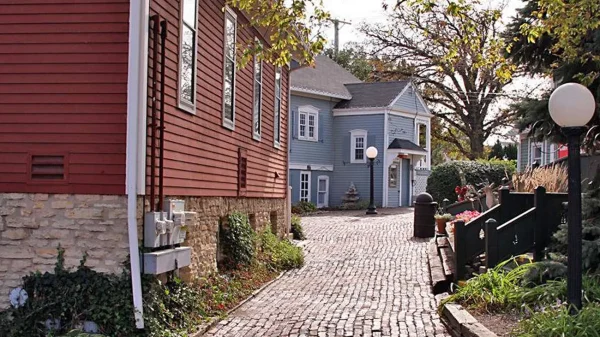
Image Source: Enjoy Illinois
Historic Village Atmosphere
Illinois’ first historic district preserves its charm through cobblestone-lined streets, a single-lane covered bridge, and relaxed pace. The village maintains storybook architecture among lush green spaces. This creates an atmosphere unlike anywhere else in the area.
Specialty Shops and Boutiques
Long Grove Confectionery has crafted creamy chocolates and copper kettle caramels for nearly half a century. Epilog curates handmade artwork by North American artisans. The shop features jewelry, ceramics, hand-blown glass, and Lyman Whitaker wind sculptures. Ma and Pa’s candy store has scooped nostalgic treats from bulk jars since 1966. The Irish Boutique is a family-owned shop for 49 years. It sells Irish jewelry, sweaters, and imported foods.
Dining and Sweet Treats
Sorelle serves Italian meals with ingredients imported from Italy. The restaurant features freshly baked bread, pastries, and 100% certified organic coffee. Buffalo Creek Brewing operates in Lake County’s only art studio transformed into a brewery and crafts German-style beer.
Seasonal Events and Festivals
Annual festivals include Chocolate Fest (May 19-21), Strawberry Fest (June 23-25), Apple Fest (September 22-24), and Craft Beer Fest (April 29).
Family Activities
The Sock Monkey Museum stands as the first and only of its kind. Families register for classes at Rivellino School of Art or explore Covered Bridge Park.
Comparison Table
| Town | Main Attraction/Claim to Fame | Population | Key Historic Features | Notable Activities | Annual Events/Best Time to Visit |
| Galena | 19th-century architecture along Mississippi River; most of town on National Register of Historic Places | – | Ulysses S. Grant Home (National Historic Landmark), 1858 Italianate mansion museum with 6,000+ sq ft | Galena River Trail (3.4 miles), Apple River Canyon State Park, Chestnut Mountain Resort (19 ski trails), 125+ shops on Main Street | – |
| Arcola | Birthplace of Raggedy Ann (patented 1915) | 3,000 | 15-17 murals downtown created by Walldogs artists in 2012, monument to Johnny Gruelle | Downtown mural tours, historic buildings | Mid-April to June and mid-August to mid-October (152 comfortable weather days each year) |
| Macomb | World’s Largest Monopoly Game (Macombopoly); birthplace of Lizzie Magie (Monopoly inventor, born 1866) | – | Historic Courthouse Square (1871), National Register of Historic Places, 10 Abraham Lincoln Heritage sites | 1 million sq ft interactive game board, Spring Lake Park (230 acres), bass fishing | Macombopoly shown May 9, 2024 |
| Casey | 12 Guinness World Records for largest roadside attractions in 2.6 square miles | – | World’s Largest Wind Chime (54 ft), Rocking Chair (56 ft), Mailbox, Golf Tee (30 ft), Pitchfork (60 ft), Barber Pole (14 ft 7 in) | Climbing into attractions, photo opportunities with 20+ big things | Popcorn Festival (Labor Day Weekend), Fourth of July, Candy Canes on Main (December) |
| Quincy | Over 3,600 structures in National Register in 4 historic districts | Nearly 40,000 | Villa Kathrine (1900 Moorish style), Lincoln-Douglas Debate site (October 13, 1858), founded 1825 | 130+ restaurants (half owned by locals), 85 bars, 7 wineries, Tri-County Catfish Trail (50+ stops) | Summer Flavor Tours (7th year in 2026, won Best Event Award 2024) |
| Grafton | Mississippi River views and waterfront dining | – | Pere Marquette State Park (8,050 acres, Illinois’ largest), CCC lodge from 1930s | Grafton Zipline (7 lines, up to 45 mph), Alpine Coaster (4,000 ft track), 12 miles of trails | January-February for bald eagle watching |
| Alton | Great River Road sunsets, historic figures | – | Elijah P. Lovejoy Monument (93 ft tall, 1897), Robert Wadlow statue, Miles Davis statue (2015) | 60+ restaurants, Old Bakery Beer Company (organic craft brewery), Mississippi River activities | – |
| Springfield | Abraham Lincoln’s home (1837-1861) | – | Lincoln Home National Historic Site, Lincoln Presidential Library & Museum (200,000 sq ft, opened 2005), Lincoln Tomb (2nd most visited cemetery in US) | Route 66 attractions, Cozy Dog Drive-In (since 1949), Giant Slide, Illinois State Museum | – |
| Monticello | Allerton Park & Retreat Center (1,500 acres) | 6,000 | 40-room Georgian mansion (completed 1900), 14 formal gardens (1899-1946), National Historic Landmark | Mansion tours ($10/person), hiking trails along Sangamon River, guided hikes each month | Allerton Music Barn Festival, Third Saturday Garden Tours (April-October) |
| Champaign-Urbana | University of Illinois college town; lowest unemployment rate among college towns | – | Japan House Gardens (16th century tea garden history), University of Illinois campus | Named Greatest Midwest Food Town, 25+ recent restaurant openings, 2 hours to Chicago/Indianapolis | – |
| Atlanta | Route 66 heritage; 19-foot Bunyon Giant statue | 1,600 | Downey Building (1867), J.H. Hawes Grain Elevator Museum (1903), octagonal library (1908), 3 National Register sites | American Giants Museum (largest Muffler Men collection), Palms Grill Café | Route 66 designation 1926, rerouted 1947 |
| Nauvoo | Mormon historic sites; Joseph Smith founded 1839 | 6,000 (historical peak) | Nauvoo Temple replica (2002), 40+ historic buildings, Brigham Young’s home, Red Brick Store, Cultural Hall | Family Living Center demonstrations (brick making and candle dipping), Trail of Hope, Carthage Jail (20 miles away) | – |
| Bishop Hill | Swedish utopian colony founded 1846 | 130 | National Historic Landmark (1984), 1854 Steeple Building, 7 museums, founded by 1,000+ Swedish immigrants | Art galleries (dozen+), blacksmith and pottery demonstrations, Swedish specialty dining | Civil War Day (May 16), Doodle Folk Music Festival (June 13), Jordbruksdagarna (Sept 27-28) |
| Grand Detour | John Deere Historic Site; birthplace of steel plow (1837) | 424 | National Historic Landmark (1964), 1836 Deere family home, replica blacksmith shop, archeological dig site | Live blacksmith demonstrations, free admission to all attractions, Rock River setting | Open April-October |
| Long Grove | Illinois’ first historic district; covered bridge | – | Cobblestone streets, single-lane covered bridge, storybook architecture | Long Grove Confectionery (nearly 50 years), specialty shops, Sock Monkey Museum (first and only) | Chocolate Fest (May 19-21), Strawberry Fest (June 23-25), Apple Fest (Sept 22-24), Craft Beer Fest (April 29) |
Enjoy Small Towns in Illinois
Illinois small towns deliver experiences that extend way beyond typical tourist destinations. Galena’s preserved 19th-century architecture stands alongside Casey’s collection of 12 Guinness World Records. Each community offers distinct attractions worth visiting. Travelers can trace Abraham Lincoln’s legacy in Springfield, find Route 66 heritage in Atlanta, or immerse themselves in Swedish culture at Bishop Hill. These destinations remain available year-round. Many offer free admission to major sites. Outdoor adventures along the Mississippi River await visitors. Historic mansions and museums dot the landscape. Quirky roadside attractions add character. Illinois small towns provide authentic Midwestern experiences that create lasting memories for travelers of all interests.
FAQs
Q1. What is the best small town to visit in Illinois for a weekend getaway? Galena consistently ranks as one of the top choices, featuring 19th-century architecture along the Mississippi River with most of the town listed on the National Register of Historic Places. Other excellent options include Lake Geneva for waterfront charm, Geneva for its walkable downtown with local shops and restaurants, and Bishop Hill for Swedish heritage and cultural experiences.
Q2. Which Illinois small towns are accessible by public transportation from Chicago? Geneva and St. Charles are accessible via Metra train service, making them convenient for visitors without cars. New Buffalo, Michigan and St. Joseph, Michigan can be reached by Amtrak. While Galena is highly recommended, it requires alternative transportation as it’s not directly served by train or bus from Chicago.
Q3. What makes Casey, Illinois unique among small towns? Casey holds 12 official Guinness World Records for the world’s largest roadside attractions, all within 2.6 square miles. These include the world’s largest rocking chair (56 feet tall), mailbox, golf tee, pitchfork, and barber pole, plus over 20 additional oversized items that visitors can photograph and interact with.
Q4. Are there small towns in Illinois with strong historical significance? Several towns offer rich historical experiences. Springfield preserves Abraham Lincoln’s only owned home and presidential library. Nauvoo features over 40 historic buildings from its founding by Joseph Smith in 1839. Grand Detour marks the birthplace of John Deere’s steel plow invention in 1837, while Atlanta showcases authentic Route 66 heritage.
Q5. What is the best time of year to visit small towns in Illinois? The optimal visiting window for most Illinois small towns spans mid-April to June and mid-August to mid-October when weather is most comfortable. Many towns host special events during these periods, such as Bishop Hill’s festivals in May and September, Casey’s Popcorn Festival on Labor Day Weekend, and Long Grove’s seasonal celebrations including Strawberry Fest in June and Apple Fest in September.


Leave A Comment