

Sedona, Arizona, is renowned for its stunning red rock formations. For this reason, it draws visitors from all over the world. In fact, these majestic rocks not only provide a breathtaking backdrop for outdoor adventures but also tell a fascinating geological story. Now, we’ll explore these unique rocks from Sedona, their formation, and the best ways to experience these natural wonders.
The Geological History of Sedona’s Rocks
Sedona’s iconic red rocks have a rich geological history that dates back hundreds of millions of years. Moreover, the story begins in the ancient seas and deserts that once covered the region. Over time, layers of sediment accumulated, forming the sandstone and limestone that dominate the landscape today.
The Red Rocks

The striking red color of Sedona’s rocks comes from iron oxide, commonly known as rust. Previously, this iron oxide was deposited in the sand and mud during the late Paleozoic and Mesozoic eras. Hence, giving the rocks their distinctive hue. The most notable formations, such as Cathedral Rock, Bell Rock, and the towering spires of the Chapel of the Holy Cross, owe their brilliant colors to this process.
The Sedimentary Layers
Sedona’s rocks are primarily composed of sedimentary layers that were deposited over millions of years. In fact, these layers include:
- Schnebly Hill Formation: This layer forms the red cliffs around Sedona. Ultimately, it consists of sandstone and siltstone deposited in ancient river and lake environments. Lastly, its red color is due to the presence of iron oxide.
- Coconino Sandstone: Above the Schnebly Hill Formation lies the Coconino Sandstone, characterized by its pale color and fine grains. This layer was formed from sand dunes that once covered the region.
- Toroweap Formation: This layer is composed of sandstone and limestone. For example, it marks the transition from a desert environment to a shallow sea that once covered the area.
- Kaibab Limestone: At the top of the sequence is the Kaibab Limestone which formed in the shallow seas that existed around 270 million years ago. Consequently, this layer is less visible in Sedona but can be seen in the Grand Canyon.
Iconic Rock Formations
Sedona is home to numerous iconic rock formations, each with its unique shape and story. Here are some of the most famous ones:
Cathedral Rock
One of the most photographed landmarks in Arizona, Cathedral Rock is a stunning formation that rises dramatically from the desert floor. As a result, it’s a popular spot for hiking, photography, and spiritual retreats. Indeed, the Cathedral Rock Trail offers a challenging hike with rewarding views of the surrounding landscape.
Bell Rock
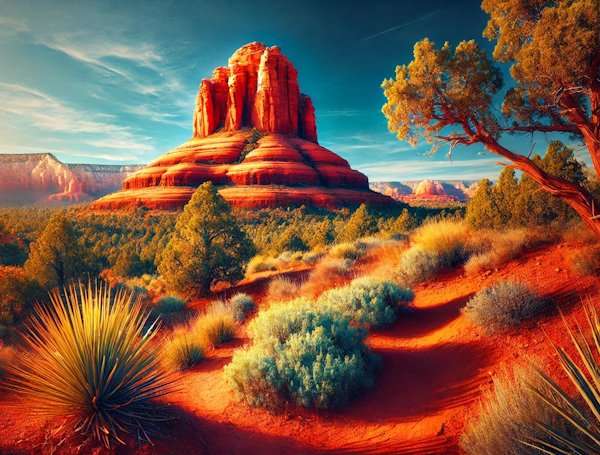
Bell Rock is another prominent formation that resembles a giant bell. In addition, it’s easily accessible and offers several hiking trails suitable for all skill levels. Finally, the Bell Rock Pathway provides a relatively easy hike with beautiful views of the rock and the surrounding desert.
Courthouse Butte – Rocks from Sedona

Adjacent to Bell Rock, Courthouse Butte is a massive formation that dominates the landscape. In this case, it’s named for its resemblance to a courthouse building. Moreover, the Courthouse Butte Loop Trail offers a moderate hike around the base of the formation. Providing excellent views and opportunities for wildlife spotting.
The Chapel of the Holy Cross

The Chapel of the Holy Cross is an architectural marvel built into the red rocks of Sedona. Indeed, the chapel is perched on a cliff with a 90-foot cross as its centerpiece. Consequently, visitors can enjoy stunning views of the surrounding rock formations and the Sedona valley from the chapel’s grounds.
Experiencing Sedona’s Rocks
There are many ways to experience the unique rocks of Sedona. Whether you prefer hiking, photography, or simply soaking in the natural beauty. Thus, here are some recommendations:
Hiking

Sedona offers a wide range of hiking trails that cater to all skill levels. Some popular hikes include:
- Cathedral Rock Trail: A challenging hike that rewards you with panoramic views from the top.
- Bell Rock Pathway: An easy trail suitable for families and beginners.
- Devil’s Bridge Trail: A moderate hike leading to a natural sandstone arch with stunning views.
- Boynton Canyon Trail: A longer hike through a scenic canyon with opportunities to see ancient ruins.
Photography

Sedona is a paradise for photographers, with its vibrant colors and dramatic landscapes. Of course, the best times for photography are during the golden hours of early morning and late afternoon. As a result of the sunlight casting a warm glow on the red rocks.
Jeep Tours
For those who prefer a guided experience, jeep tours are a popular way to explore Sedona’s rock formations. Undeniably, these tours offer a thrilling ride through rugged terrain. Coupled with knowledgeable guides providing insights into the geology and history of the area.
Vortex Sites – Rocks from Sedona

Sedona is also known for its vortex sites, which are believed to be centers of spiritual energy. These sites, such as Cathedral Rock, Bell Rock, and Boynton Canyon, attract visitors seeking meditation, healing, and spiritual experiences.
Rockhounding
While collecting rocks from Sedona’s protected areas is not allowed, rockhounding enthusiasts can explore nearby areas where it is permitted. Always check local regulations and obtain necessary permits before collecting rocks.
Enjoy the Rocks From Sedona
The unique rocks from Sedona are more than just a visual delight. In fact, they are a testament to the Earth’s geological history and a source of inspiration for countless visitors. Whether you are hiking up Cathedral Rock, photographing the vibrant landscapes, or simply marveling at the natural beauty. Sedona’s rocks offer an unforgettable experience. Plan your visit to this geological wonder and discover the timeless beauty of Sedona’s red rocks.


Leave A Comment