

The breathtaking tulip fields of Skagit Valley with Mount Baker in the background.
The Blooming History of Skagit Valley Tulip Festival
The story of tulips in Skagit Valley begins in the early 1900s when George Gibbs, an English immigrant, discovered that the region’s climate and soil conditions were remarkably similar to those in Holland. After successfully growing bulbs on Orcas Island, the commercial potential of bulb cultivation in the Pacific Northwest became apparent.
By the mid-20th century, Dutch immigrant William Roozen established what would become the Washington Bulb Company, now the largest tulip bulb grower in the United States. The company’s display garden, Roozengaarde, remains one of the festival’s centerpiece attractions today.
What began as a small community celebration has blossomed into an internationally recognized event that draws over one million visitors annually and generates an estimated $83 million in revenue for Skagit County. The festival’s growth reflects both the spectacular beauty of the tulip fields and the warm hospitality of the Skagit Valley community.

Early tulip farming in Skagit Valley during the mid-20th century.
Stay Updated on This Year’s Bloom
Timing is everything when visiting the tulip festival. Check the current bloom status to plan your visit during peak color.
Festival Highlights: Gardens, Events and Activities
The Skagit Valley Tulip Festival runs from April 1-30 each year, though Mother Nature ultimately determines when the tulips will reach peak bloom. The festival doesn’t take place in one specific location but rather throughout the valley, with two main garden attractions serving as focal points.
Featured Gardens
RoozenGaarde
Spanning 50 acres with approximately 1 million bulbs, RoozenGaarde features a meticulously designed 5-acre display garden alongside vast tulip fields. Visitors can explore the formal garden’s intricate plantings, including a windmill and themed garden areas that showcase over 150 tulip varieties.

Tulip Town
This family-friendly destination offers a different but equally enchanting experience with its indoor flower show, trolley rides through the fields and artistic flower displays. Tulip Town is known for its creative tulip mosaics—massive “living paintings” created with carefully planted tulip varieties.

Festival Events
Beyond the tulip fields, the festival offers a variety of events throughout April:
- Tulip Festival Street Fair in downtown Mount Vernon (second weekend of April)
- Annual Tulip Festival Parade featuring floats decorated with tulips
- Art shows showcasing local artists’ tulip-inspired works
- Tulip Run – a 2-mile or 5K race through the blooming fields
- Wine and craft beer tastings featuring local producers
- Photography and painting workshops
- Farm-to-table dining experiences highlighting local cuisine

The lively Tulip Festival Street Fair in downtown Mount Vernon.
Secure Your Festival Experience
Tickets to the main garden attractions often sell out during peak bloom weekends. Purchase yours in advance to guarantee entry.
Essential Visitor Tips: Making the Most of Your Trip
Timing Your Visit
The million-dollar question for any visitor: when exactly will the tulips bloom? While the festival runs throughout April, peak bloom typically occurs mid-month, though this can vary based on weather conditions. For the best experience:
- Check the official bloom map on the festival website before your trip
- Weekdays offer a more peaceful experience with fewer crowds
- Early morning (before 10am) or late afternoon (after 4pm) provide the best lighting for photography and smaller crowds
- Consider visiting during the first or last week of April if you prefer a quieter experience
Pro Tip: Daffodils typically bloom 2-3 weeks before tulips. If you arrive early in the season and find the tulips aren’t yet at peak, you can still enjoy beautiful yellow daffodil fields.
Weather Preparation
Spring in the Pacific Northwest is notoriously unpredictable. Come prepared for a variety of conditions:
- Dress in layers that can be added or removed as temperatures change
- Bring waterproof boots or shoes that can handle muddy fields
- Pack a rain jacket or umbrella, even if the forecast looks clear
- Don’t forget sun protection—sunscreen, hat and sunglasses
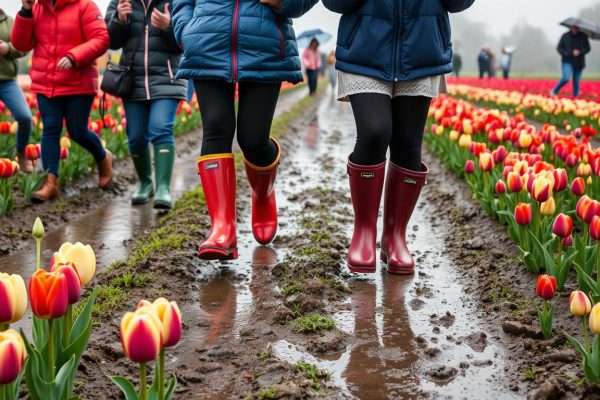
Waterproof footwear is essential for navigating between tulip fields.
Transportation and Parking
The festival attracts hundreds of thousands of visitors, which can create significant traffic congestion, especially on weekends. Plan your transportation strategy:
- Follow the designated tulip route marked with signs throughout the valley
- Arrive early (before 9am) or late (after 3pm) to avoid the heaviest traffic
- Consider using the festival shuttle service from Mount Vernon on peak weekends
- Parking fees at gardens typically range from $10-15 per vehicle
- Carpooling is strongly encouraged to reduce traffic and environmental impact
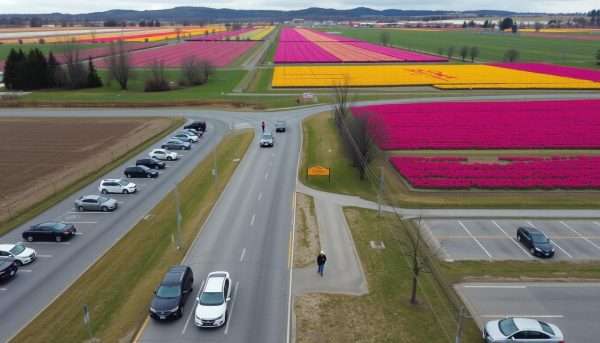
Expect significant traffic during peak bloom weekends.
Accommodations
Lodging in the Skagit Valley area fills up quickly during the festival. Book your stay well in advance, ideally several months before your visit. Popular options include:
La Conner
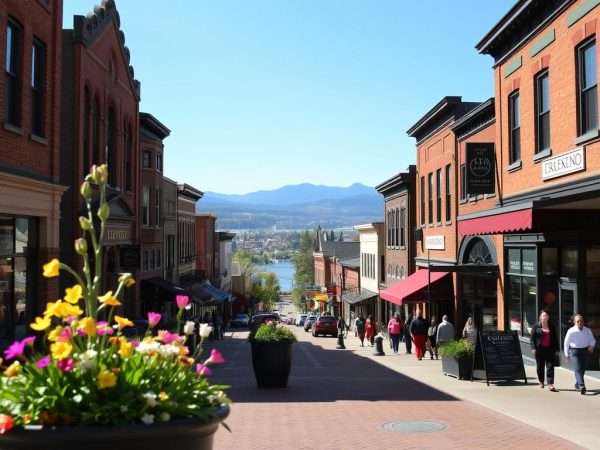
This charming waterfront town offers historic inns, boutique hotels and bed and breakfasts within a short drive of the tulip fields. The La Conner Channel Lodge and the Wild Iris Inn are popular choices.

Mount Vernon
The largest nearby city offers a range of chain hotels and motels with convenient access to both tulip fields and urban amenities. The Best Western Plus Skagit Valley Inn provides a central location.
Farm Stays
For a unique experience, consider booking a farm stay or vacation rental in the valley. Properties like the Skagit Valley Farmhouse offer the chance to stay right among the agricultural landscapes.

Book Your Stay
Accommodations fill quickly during the festival season. Secure your perfect home base for exploring the tulip fields.
Photography Guide: Capturing the Perfect Tulip Shots

The Skagit Valley Tulip Festival offers endless opportunities for stunning photography, from sweeping landscapes to intimate floral portraits. Here’s how to capture memorable images during your visit:
Top Photography Locations
- Roozengaarde’s Display Garden – Formal plantings with a Dutch windmill backdrop
- Tulip Town’s Flower Mosaics – Intricate designs created with thousands of tulips
- Field Edges with Mount Baker View – On clear days, capture tulips with the snow-capped mountain
- Skagit Valley Backroads – Rural scenes with barns, fields, and agricultural landscapes
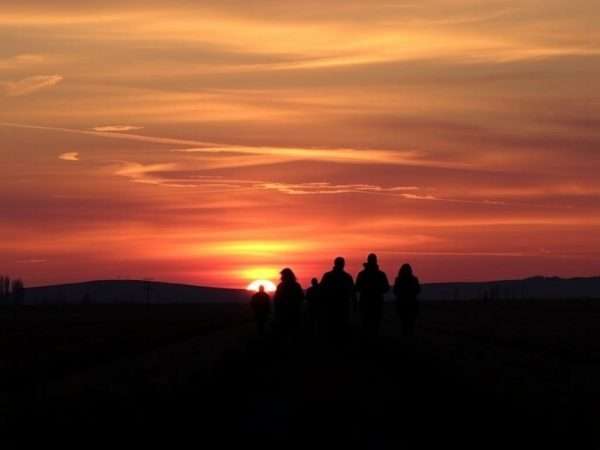
- Sunset Locations – Western-facing fields for dramatic golden hour lighting

The combination of tulip fields and Mount Baker creates iconic Skagit Valley images.
Photography Tips
- Golden Hours – Shoot during early morning or late afternoon for warm, directional light
- Weather Opportunities – Overcast days provide soft, even lighting for close-ups; sunny days are best for landscapes
- Perspectives – Try shooting from ground level, standing height, and elevated positions for variety
- Composition – Use leading lines of tulip rows to draw the eye through your image
- Details – Don’t forget to capture close-ups of individual blooms, water droplets, and textures
- People – Include friends or family for scale and to add human interest to your photos

Recommended Equipment
Essential Gear:
- Wide-angle lens for landscape shots (16-35mm range)
- Macro lens for close-up flower details (90-105mm range)
- Polarizing filter to reduce glare and enhance colors
- Tripod for low-light conditions and steady compositions
- Extra batteries and memory cards
- Lens cleaning cloth (fields can be dusty or misty)
Smartphone Photography:
- Use portrait mode for close-ups with blurred backgrounds
- Panorama mode for sweeping field views
- HDR setting for high-contrast scenes
- Consider a clip-on wide-angle or macro lens attachment
- Download a camera app with manual controls
- Bring a portable charger for all-day shooting

Beyond the Tulips: Exploring the Skagit Valley Region
While the tulip fields are undoubtedly the star attraction, the Skagit Valley region offers many other experiences worth exploring during your visit. Extend your stay to discover these nearby attractions:
La Conner
This picturesque waterfront town just minutes from the tulip fields is perfect for a half-day visit:
- Historic Waterfront – Stroll along the Swinomish Channel with views of boats and wildlife
- Museum of Northwest Art (MoNA) – Free admission to a collection featuring regional artists
- Boutique Shopping – Unique shops offering local crafts, art and specialty goods
- Dining – Seafood restaurants and cafes with water views

La Conner’s charming waterfront offers shopping, dining and scenic views.
Deception Pass State Park
Washington’s most-visited state park is just a 30-minute drive from the tulip fields:
- Deception Pass Bridge – Iconic 180-foot-high bridge with pedestrian walkway
- Hiking Trails – Over 40 miles of trails through forests and along beaches
- Tide Pools – Explore marine life at low tide on Rosario Beach
- Kayaking – Paddle through swirling waters beneath the bridge

The dramatic Deception Pass Bridge connects Fidalgo and Whidbey Islands.
Farm-to-Table Experiences
The Skagit Valley is one of the most agriculturally rich areas in Washington:
- Farmers Markets – Mount Vernon and Anacortes host weekly markets with local produce
- Farm Stands – Seasonal produce direct from local farms
- Skagit Valley Food Co-op – Grocery featuring local products in downtown Mount Vernon
- Farm-to-Table Restaurants – Venues like Tweets Cafe and Nell Thorn showcase local ingredients
Wineries and Breweries
The region has a growing craft beverage scene worth exploring:
Skagit Valley Wineries
Several wineries offer tastings of wines made from both local and eastern Washington grapes. Highlights include Glacier Peak Winery and Carpenter Creek Winery.
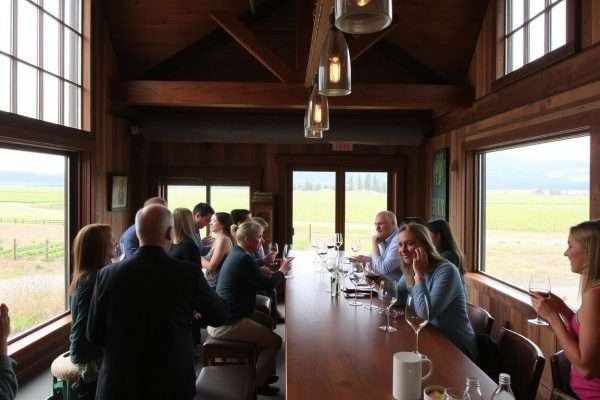
Craft Breweries
The area boasts excellent craft breweries including Skagit Valley Brewing, Chuckanut Brewery and North Sound Brewing, many using locally grown barley and hops.

Create Your Perfect Itinerary
Combine tulip viewing with these local attractions for a complete Skagit Valley experience.
Sustainability at the Skagit Valley Tulip Festival
The Skagit Valley Tulip Festival is committed to preserving the agricultural heritage and natural beauty of the region through sustainable practices:
Environmental Initiatives
- Crop Rotation – Tulip fields are rotated annually to maintain soil health
- Water Conservation – Efficient irrigation systems minimize water usage
- Waste Reduction – Composting programs and recycling at festival venues
- Transportation – Shuttle services help reduce individual vehicle traffic
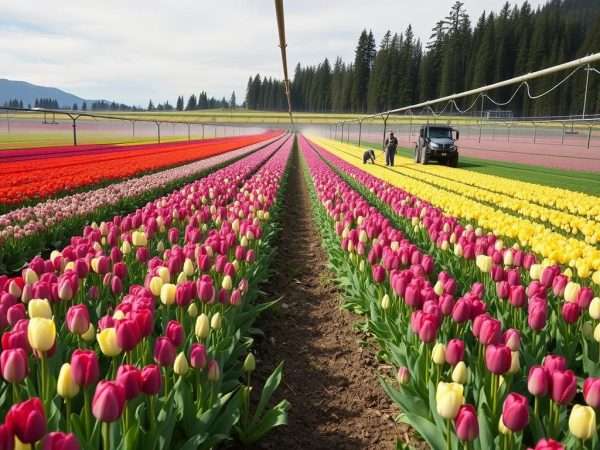
Sustainable farming practices help preserve Skagit Valley’s agricultural heritage.
Visitor Responsibility
As a visitor, you can help support these sustainability efforts:
- Stay on Designated Paths – Protect the tulips and farming equipment by remaining on marked walkways
- Carpool or Use Shuttles – Reduce traffic congestion and carbon emissions
- Pack Out Trash – Dispose of waste properly or take it with you
- Support Local Businesses – Purchase from local farms and shops to support the community
- Respect Private Property – Only enter fields that are officially part of the festival
Did You Know? After the blooming season ends, tulip heads are removed to direct energy back to the bulbs. These bulbs are later harvested, processed, and sold worldwide, continuing the cycle of beauty for years to come.
Plan Your Skagit Valley Tulip Festival Adventure
The Skagit Valley Tulip Festival offers a truly magical experience as millions of tulips transform the landscape into a living canvas of color. Whether you’re a photographer seeking the perfect shot, a nature lover enjoying spring’s renewal, or a family creating lasting memories, the festival provides a unique celebration of natural beauty and agricultural heritage.
By timing your visit thoughtfully, preparing for the Pacific Northwest weather, and exploring beyond the tulip fields, you’ll create an unforgettable Skagit Valley adventure. The tulips bloom for just a few weeks each year—don’t miss your chance to witness this spectacular display of nature’s artistry.

Create lasting family memories at the Skagit Valley Tulip Festival.
Ready to Experience the Tulip Magic?
Start planning your Skagit Valley Tulip Festival trip today. Check bloom status, purchase tickets and create memories that will last a lifetime.


Leave A Comment