
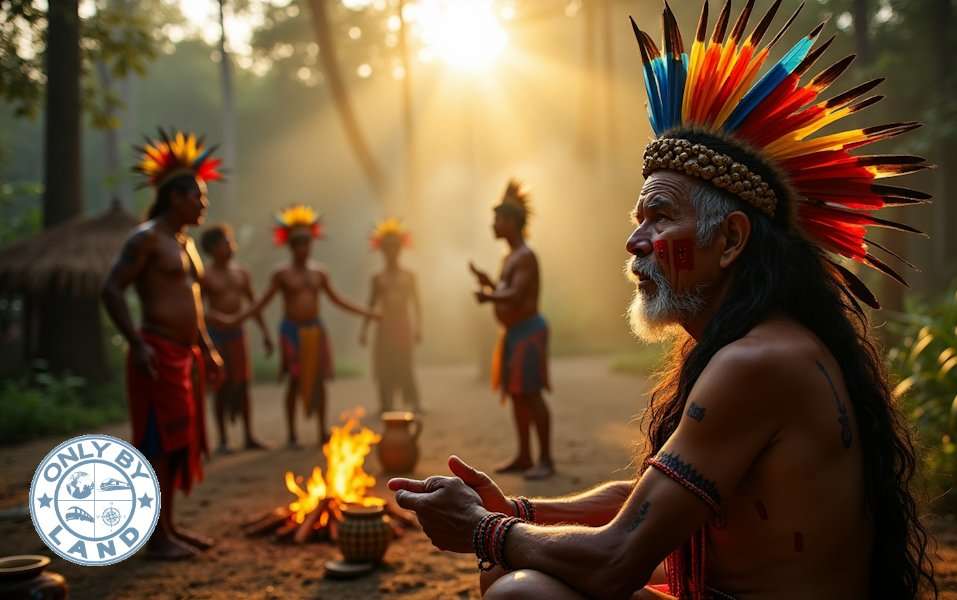
The Amazon rainforest houses 52 ethnic groups that speak 13 different languages. Their tribal festivals showcase ancient traditions that have survived into 2025. These celebrations reveal an array of the Loreto indigenous people’s rich cultural heritage.
Tribal rituals mean much more than just celebrations to these communities. The Kichwa, Waorani, Shuar and Achuar people come together for events like the Chonta Festival. Traditional music and dance breathe life into their ancient customs. These tribal gatherings help preserve century-old practices and remind us about indigenous communities’ deep bond with nature. The Yãkwa ritual stands out as one of the most important ceremonies. This four-month celebration by the Enawene Nawe tribe shows their lasting connection with the forest spirits.
The Sacred Calendar of Amazon Tribes
Amazonian tribes follow a sacred calendar guided by natural rhythms rather than conventional dates. The Huni Kuin and Yawanawá peoples recognize calendar transitions through environmental signals, such as specific tree flowerings and bird migrations.
Major Seasonal Celebrations
The Yãkwa ritual is the longest indigenous ceremony in Amazonia that spans four months during the wet season as clouds blanket the Serra de Norte. The Enawene Nawe tribe exchanges food with subterranean spirits during this period and offers salt, manioc and honey. The Tembe people celebrate their Wyra’whaw ritual, a six-day coming-of-age ceremony where adolescents participate in traditional dances and receive ceremonial body paintings.
Moon Phase Rituals
The Awá tribe conducts their sacred full moon ritual where men, adorned with king vulture feathers, begin a journey to iwa – the realm of earth spirits. They enter a chant-induced trance that continues until dawn. Indigenous women honor their connection to lunar cycles through:
- Ceremonial gatherings for singing and dancing
- Elder-guided contemplation sessions
- Sacred purification practices
Harvest Ceremonies
The agricultural calendar arranges closely with river patterns and seasonal changes. The Ashaninka people organize their yearly activities based on two major seasons: intense rains from December to mid-March and empty rivers from March to November. The communities celebrate the uwi (chonta harvest festival) between April and May, where the Kichwa, Shuar, Achuar, and Cofan ethnic groups gather for traditional meals, dances and spiritual ceremonies. The Baniwa people use ancient petroglyphs as markers for seasonal transitions, and the appearance of Pleiades constellation heralds the rainy season and forest-fruit ripening.
More wonders of the Amazon.
Inside Traditional Tribal Festival Wear
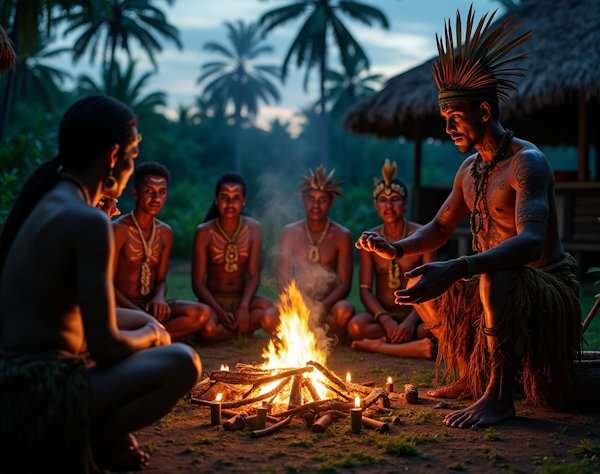
Amazonian tribal festivals showcase traditional attire that powerfully expresses cultural identity and spiritual beliefs. The Kichwa people keep their ancestral wisdom alive through their distinctive festival wear. They blend locally sourced materials with deep symbolic meanings.
Sacred Body Paint Meanings
Amazonian celebrations go beyond mere decoration with face and body painting. The Kayapo tribe’s paint designs show social hierarchy and achievement levels in their community. The colors carry distinct meanings:
- Black paint from Jenipapo tree marks adulthood transitions
- Red pigment from urucum seeds signals preparation for ceremonies
- Geometric patterns represent natural elements like tortoise shells
The Matses tribe creates an imposing look by combining black and red face paint. The Ashaninka people change their designs each day to show their emotional state. The Sarayaku women’s Wituk painting tradition symbolizes healing and their connection to forest spirits.
Ceremonial Headdress Symbols
Tribal craftsmen create magnificent feather headdresses that can reach nearly six feet in height. The forest canopy levels determine a strict hierarchical system for feather selection. Men wear ornaments made from middle-region birds like macaws and toucans, while eagle feathers show the highest prestige.
Specific feathers play a vital role in personal and social identity. Birds from higher canopy levels represent greater prestige and link men’s hunting activities with upper-region birds. Each ethnic group’s unique featherwork style reflects their mythological beliefs and legends.
Festival clothing comes from natural materials – women wear tree bark skirts and men sport pants made from deer leather. The Tembe warriors look striking in their colorful macaw feather headdresses. They carry bows and arrows that represent both hunting skills and territorial protection.
Key Rituals of Earth Festivals
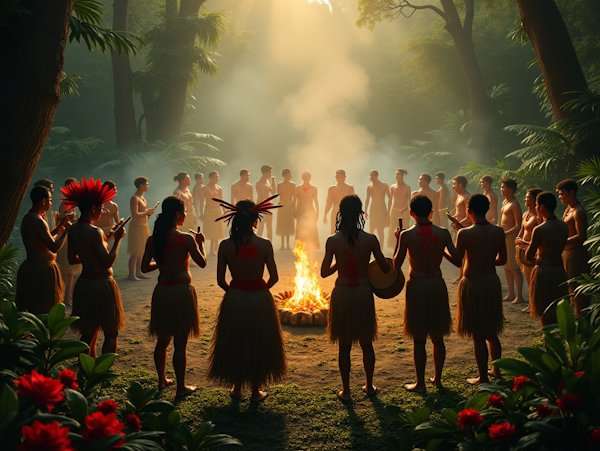
Sacred ceremonies are the life-blood of Amazonian tribal rituals that bind communities to their ancestral lands and spirits. These age-old practices shape the spiritual identity of forest-dwelling peoples.
River Purification Ceremonies
The San Juan Festival, celebrated from June 23 to 25, serves as a vital purification ritual where residents cleanse themselves in the Amazon, Itaya and Nanay rivers. These water-based ceremonies honor both the physical and spiritual aspects of purification. The ritual reflects ancient baptismal traditions and deepens the bond between people and their sacred waterways.
Forest Spirit Dances
The Yanomami shamans conduct intricate spirit dances to commune with the xapiripë spirits through dreams and trances. These mystical entities arrive with distinctive adornments:
- Heads covered in white hawk down
- Black bands made from monkey tails
- Turquoise cotinga feathers in their ears
- Bodies painted with bright colors and urucum
The xapiripë descend on threads as fine as spider webs and bring their unique songs – from macaw calls to tapir sounds. The Bushman trance dance gets more and thus encourages num, a powerful energy that emerges as dancers circle the fire with moth cocoons tied to their ankles.
Offering Traditions
Tribal earth festivals reach their peak with ceremonial exchanges with spirits. The Enawene Nawe people present salt, manioc and honey to the yakairiti spirits. These offerings mean more than simple gifts – they represent a sacred contract between the human and spirit realms. Communities prepare traditional foods like Moqueada, a game meat dish with both nutritional and spiritual significance during the ceremonies.
Discover traditional African religions.
Modern Changes in Ancient Celebrations

Amazon’s indigenous communities have seen their numbers grow remarkably, quadrupling since the 1970s. Young members of tribes like the Siekopai now blend ancient wisdom with modern tools to create something unique.
Youth Participation Today
This population boom has brought new life to tribal festivals, as youth make up more than 20% of the Amazon Biome countries’ population. Many young tribal members balance their time between city education and traditional practices. Siekopai youth understand they must save their heritage, so they’ve started advanced ways to record their ceremonial knowledge.
Technology Impact
Traditional practices now rely heavily on modern tools for preservation and protection. These communities have adopted several technical solutions:
- Solar-powered microgrids help document festivals longer
- Drones and GPS devices protect ceremonial grounds
- Social media platforms spread traditional knowledge
The Sarayaku community shows how tradition works with technology. They use satellite internet to share their festival activities on social media. Young indigenous experts analyze satellite data to defend their territories and protect sacred celebration sites.
Technology has proven its worth – one Peruvian community reduced deforestation rates from 5% per year to zero after using these monitoring systems. Young community members have created 15-volume video documentaries that capture their ancestral plant knowledge. These efforts ensure festival preparation traditions live on for future generations.
The long neck culture of Thailand.
Appreciate Tribal Festivals
Amazonian tribal festivals showcase indigenous communities’ strength and cultural heritage. These celebrations pulse with natural rhythms and spiritual connections that thrive today despite modern pressures. Sacred body paintings, ceremonial headdresses and spirit dances remain at the heart of these festivals, while indigenous communities embrace new technologies to enhance their practices.
The younger generation serves as a vital link between ancient wisdom and today’s tools. They document sacred traditions digitally, use satellite tracking and share their culture on social media platforms to preserve these practices for future generations. This beautiful mix of age-old customs and modern methods shows how indigenous groups keep their identity strong as they adapt to change.
These festivals mean much more than just celebrations. They capture the spirit of Amazonian tribes and their deep bond with the forest. River purification ceremonies, spirit dances, and sacred offerings help these communities protect their heritage as they navigate modern times. Their story shows us that traditional wisdom and progress can work together to keep indigenous cultures alive and thriving.
FAQs
Q1. Are there still uncontacted tribes in the Amazon rainforest?
Yes, there are still uncontacted tribes in the Amazon. For example, the Awá people in the eastern Amazon rainforest have approximately 100 members who have no contact with the outside world. These tribes are considered highly endangered due to conflicts with external interests in their territories.
Q2. How do Amazon tribes celebrate their festivals?
Amazon tribes celebrate their festivals through various rituals and ceremonies. These include river purification ceremonies, forest spirit dances and offering traditions. Many tribes follow a sacred calendar based on natural rhythms, with major seasonal celebrations, moon phase rituals and harvest ceremonies playing significant roles in their cultural practices.
Q3. What is the significance of traditional tribal festival wear?
Traditional tribal festival wear in the Amazon is rich in symbolism and cultural significance. It includes sacred body paintings with specific meanings, ceremonial headdresses made from carefully selected feathers and clothing crafted from natural materials. These elements serve as powerful expressions of cultural identity, social hierarchy and spiritual beliefs.
Q4. How are young tribal members participating in ancient celebrations today?
Young tribal members are actively bridging ancient wisdom with modern approaches. They participate in traditional practices while also using technology to document and preserve their heritage. Many young people split their time between urban education and tribal customs, initiating innovative ways to ensure the continuity of their cultural knowledge.
Q5. What impact has technology had on Amazonian tribal festivals?
Technology has had a significant impact on preserving and protecting Amazonian tribal festivals. Indigenous communities now use tools such as solar-powered microgrids for documentation, drones and GPS devices to protect ceremonial grounds, and social media platforms to share traditional knowledge. This integration of technology has helped in reducing deforestation and ensuring the longevity of cultural practices.


Leave A Comment