
The internet has transformed how we communicate, work, and yes, even how we joke around. Internet puns represent a unique intersection of technology and humor that connects millions of people across the globe. These clever wordplays have become the universal language of digital culture.
Whether you’re looking for the perfect caption for your next post or just need a good laugh during your lunch break, internet puns deliver. They range from simple WiFi jokes to complex plays on tech terminology. The beauty lies in their accessibility and shareability.
This collection explores over two hundred internet puns that span different eras and platforms. You’ll discover jokes about everything from routers to memes, from passwords to cloud storage. Get ready to upgrade your humor game.
What Are Internet Puns and Why Do They Matter?
Internet puns are wordplays that use technology terms, online platform names, or digital culture references to create humor. They’ve become a fundamental part of how people express themselves online. These jokes connect technical concepts with everyday experiences in ways that make people smile.

The power of internet puns lies in their relatability. Everyone who uses technology encounters the same frustrations and triumphs. A joke about slow WiFi resonates globally because we’ve all experienced that buffering wheel of doom. These shared experiences create instant connection.
Tech humor has evolved alongside the internet itself. Early jokes focused on dial-up modems and basic email. Today’s puns reference streaming services, social media platforms, and smartphone features. This evolution mirrors our changing relationship with technology.
Pro tip: Internet puns work great as social media captions. They’re instantly recognizable and highly shareable. Save your favorites for when you need that perfect Instagram or Twitter caption that’ll boost engagement.
The Psychology Behind Tech Humor
Humor helps us cope with technology’s complexities and frustrations. When your computer crashes or your signal drops, laughter provides relief. Internet puns transform annoying situations into moments of shared amusement. This psychological release explains their widespread appeal.
Studies show that people who use humor in digital communication build stronger connections. Puns serve as social lubricants in online interactions. They break the ice, lighten the mood, and create memorable moments. Understanding this makes you appreciate their cultural significance.
How Internet Culture Shaped Modern Puns
Memes and viral content have revolutionized how puns spread. A single clever joke can reach millions within hours. Platforms like Reddit, Twitter, and TikTok serve as incubators for new puns. What starts as someone’s random thought becomes global entertainment.
The democratization of content creation means anyone can contribute to the pun landscape. You don’t need to be a professional comedian. If your joke resonates with the community, it gains traction. This accessibility has enriched the diversity and quantity of internet puns.
Classic WiFi and Connection Puns That Never Get Old
WiFi jokes form the backbone of internet puns. These connection-related quips tap into universal experiences. Everyone has dealt with spotty signal or forgotten passwords. Here’s a collection that’ll make you want to share them faster than your download speed.
Signal Strength Jokes
- Why did the WiFi go to therapy? It had too many connection issues and needed better support.
- My WiFi signal is like my motivation. It comes and goes without warning, usually at the worst possible time.
- What do you call a WiFi signal at a wedding? The reception everyone actually cares about getting.
- Why don’t WiFi signals ever play hide and seek? Because good luck finding them when you need them most.
- My router has commitment issues. It keeps dropping our connection whenever things get serious.
Password and Security Puns
- What did the password say to the user? You complete me, but please don’t write me down on a sticky note.
- Why was the password feeling confident? Because it had uppercase, lowercase, numbers, and special characters. Talk about well-rounded.
- My password is like my jokes. Complex, hard to remember, and I change it too often.
- What do you call a forgetful hacker? Someone who needs a password manager more than anyone else.
- Why did the password break up with the username? It felt like it was doing all the security work in the relationship.
Router and Hardware Humor
Routers are the unsung heroes of modern life. They sit quietly in corners, providing the connection we take for granted. Until they don’t work, of course. Then they become the focus of all our frustration and these jokes.
- Why don’t routers ever win at poker? Everyone can see their blinking tells from across the room.
- What’s a router’s favorite type of music? Anything with good bandwidth and strong signal flow.
- My router is like a good friend. Always there when you need it, but sometimes needs a restart to function properly.
- Why did the router go to the gym? To improve its physical connection and boost its performance.
- What do you call a router at a LAN party? The most popular device in the room, for once.
- Why was the router feeling philosophical? It was pondering the meaning of connection in a wireless world.
- My router has better mood swings than a teenager. One minute it’s fine, the next it’s having a complete meltdown.
- What’s a router’s biggest fear? Being replaced by a newer model with better specs and range.
Looking for More Tech Humor?
These WiFi puns are just the beginning. Bookmark this page and return whenever you need the perfect caption for your next social media post. Share your favorites with friends who’ll appreciate the connection humor.
Computer and Laptop Puns for the Tech-Savvy Crowd

Computers have inspired countless jokes since their inception. From hardware failures to software glitches, tech provides endless material. These puns celebrate the machines we love to hate and hate to love.
Hardware and Component Jokes
The physical parts of computers offer rich opportunities for wordplay. Motherboards, RAM, and processors become characters in these technical tales. Understanding how computers work makes these jokes even funnier.
Memory and Storage
- Why did RAM break up with the hard drive? Their relationship had no long-term storage potential.
- What’s a computer’s favorite snack? Microchips with plenty of cache on the side.
- My computer’s memory is like mine. Limited, unreliable, and desperately needs an upgrade.
- Why don’t SSDs ever tell secrets? Because they have solid state security protocols.
Processor Puns
- Why was the CPU feeling overwhelmed? Too many processes running with not enough cores to handle the load.
- What do you call a lazy processor? Something that needs better clock speed and motivation.
- My processor is having an identity crisis. It can’t decide which thread to focus on first.
- Why did the dual-core processor go to couples therapy? It had multi-threading issues in the relationship.
Screen and Display
- Why did the monitor break up with the computer? It felt like their relationship was just for display.
- What’s a screen’s favorite time? High resolution moments when everything looks crystal clear.
- My laptop screen is like my personality. Bright when well-rested, dim when running low on energy.
- Why was the touchscreen feeling sensitive? Everyone kept pressing its buttons all day long.
Software and Operating System Humor
Software glitches provide some of the most relatable tech humor. We’ve all experienced the frustration of frozen programs or mysterious error messages. These puns transform that frustration into laughter and shared understanding.
- Why don’t programs ever go to therapy? They prefer to work through their bugs independently with debugging support.
- What did one application say to another? Let me cache you later when I’m not so busy processing.
- My operating system has commitment issues. It keeps asking if I’m sure about every single decision.
- Why was the software update feeling confident? It finally fixed all those annoying bugs from the previous version.
- What do you call a program that won’t close? Something that really needs a task manager intervention.
- Why did the antivirus break up with the firewall? They had different approaches to protecting the relationship.
- My computer runs like my life. Multiple programs open, none of them responding properly, frequent crashes imminent.
- What’s a programmer’s favorite breakfast? Java, with a side of Python scripts to start the day right.

Cloud Storage and Data Puns for the Digital Age

Cloud computing has revolutionized how we store and access information. These puns play with the contradiction between literal clouds and digital storage. They’re clever, current, and perfect for anyone who appreciates tech humor with intelligence.
Cloud Computing Jokes
The cloud sounds mystical but it’s just someone else’s computer. These jokes embrace that reality while celebrating the convenience. Whether you’re in tech or just use Dropbox, these puns will resonate with your digital life experience.
- Why did the file break up with local storage? It wanted a relationship with more space and better backup options in the cloud.
- What do you call skeptical cloud storage? Something with trust issues about uploading personal data to remote servers.
- My cloud storage is like my memory. I put things there and forget where I saved them until desperately needed.
- Why don’t clouds ever feel lonely? They’re always connected to the network with constant data flowing through their systems.
- What’s a cloud’s favorite weather? Anything that doesn’t interfere with the internet connection or server uptime metrics.
- Why was the cloud feeling generous? It offered unlimited storage space during a promotional period for new subscribers.
- My data is like my emotions. Stored in the cloud where I can access it from anywhere but sometimes question the security.
- What do you call a pessimistic backup system? Something that always expects the worst and stores multiple copies just in case.
- Why did the cloud get promoted? It showed excellent scalability and could handle increasing loads without performance degradation.
Data and Database Humor
Data drives the modern world. These puns celebrate the ones and zeros that make everything work. They’re slightly more technical but worth it for the clever wordplay and niche appeal to data enthusiasts.
- Why did the database go to therapy? It had too many relationship issues and needed help normalizing its structure.
- What do you call confused data? Information that hasn’t been properly structured or organized into meaningful categories yet.
- My database is like my social life. Complex relationships, occasional corruption, and desperately needs better indexing for efficiency.
- Why don’t data scientists ever get lonely? They’re always mining for new connections and patterns in massive datasets.
- What’s big data’s favorite exercise? Heavy lifting of massive information loads across distributed computing systems for analysis.
- Why was the spreadsheet feeling overwhelmed? Too many cells to fill with not enough coffee or motivation to complete.
Smartphone and Mobile Device Puns for On-the-Go Laughs
Smartphones have become extensions of ourselves. These puns reflect our complicated relationship with mobile devices. From battery anxiety to notification overload, these jokes capture the smartphone experience perfectly and relatably.
Battery Life and Charging Jokes
Battery anxiety is real. We’ve all watched that percentage drop with mounting concern. These puns transform that universal frustration into humor everyone with a phone can appreciate and share with their equally battery-anxious friends.
- Why did the phone battery break up with the charger? It felt their relationship was too draining and one-sided.
- What do you call an optimistic phone? One that thinks five percent battery will last through the entire commute home.
- My phone battery is like my patience. Depletes rapidly under stress and needs constant recharging throughout the day.
- Why don’t batteries ever play fair? They drop from fifty percent to fifteen percent faster than you can say power saving mode.
- What’s a phone’s biggest lie? The estimated time remaining until the battery dies completely in the middle of something important.
- Why was the wireless charger feeling satisfied? It finally found a phone that appreciated slow and steady power delivery.
App and Notification Humor
Apps control our lives more than we’d like to admit. These puns examine our relationship with notifications and updates. They’re perfect for anyone who’s ever ignored app update reminders for months on end.
- Why did the app go to therapy? It had abandonment issues from being installed once and never opened again on the home screen.
- What do you call a desperate notification? Something that sends multiple alerts per day hoping you’ll finally pay attention and engage.
- My notification settings are like my boundaries. Constantly being adjusted but never quite right for optimal peace of mind.
- Why don’t apps ever take hints? You ignore them for weeks but they still think you want updates about features nobody requested.
- What’s an app store’s favorite phrase? There’s an app for that, even if you didn’t know you needed it until right now.
- Why was the phone feeling cluttered? Too many apps installed with good intentions but zero actual usage or organization strategy.
- My home screen is like my desk. Organized chaos that only makes sense to me and desperately needs a cleaning session.
- What do you call a phone without notifications? A peaceful existence that most of us can only dream about achieving someday.
Autocorrect and Texting Puns
Autocorrect has created more problems than it’s solved. These puns celebrate the chaos of predictive text gone wrong. Anyone who’s sent an embarrassing autocorrect message will feel seen by this humor collection.
- Why did autocorrect go to therapy? It kept changing people’s words and ruining perfectly good sentences without permission or context.
- What do you call a rebellious phone? One whose autocorrect refuses to learn your actual vocabulary despite years of corrections.
- My autocorrect is like a bad friend. Always butting in uninvited and making situations more awkward than necessary.
- Why don’t texters trust autocorrect? It has a history of changing innocent messages into completely inappropriate suggestions at worst times.
- What’s autocorrect’s biggest flaw? Thinking it knows what you meant better than you do despite overwhelming evidence otherwise.
Gaming and Online Culture Puns for the Community

Gaming culture has contributed immensely to internet humor. These puns reference gameplay, online interactions, and gaming community inside jokes. Whether you’re a casual mobile gamer or hardcore PC enthusiast, there’s humor here for everyone.
Multiplayer and Online Gaming Jokes
Online gaming brings people together through shared experiences. These puns capture the joy, frustration, and camaraderie of multiplayer gaming. LAN parties, raid nights, and competitive matches all inspire these jokes that gamers immediately recognize and appreciate.
- Why did the gamer break up with their team? Too much lag in the relationship and communication issues during crucial moments.
- What do you call a polite online gamer? A rare spawn that appears once in a thousand matches and should be protected.
- My gaming skills are like my WiFi signal. Strong at home but terrible when it actually matters during competitive play.
- Why don’t gamers ever give up? They know success requires respawning after every failure and trying the same strategy repeatedly.
- What’s a gamer’s favorite excuse? Lag, low FPS, bad teammates, or literally anything except admitting they got outplayed fair and square.
- Why was the gaming PC feeling superior? It had RGB lighting which scientifically improves performance by at least thirty percent.
- My game backlog is like my to-do list. Constantly growing despite good intentions and zero progress on existing items.
- What do you call a peaceful online lobby? A glitch in the matrix that won’t last once everyone’s microphones actually start working.
Streaming and Content Creation Puns
Streaming has become a major part of internet culture. These puns reference the unique challenges and experiences of content creators. They work whether you’re streaming to millions or just your three loyal friends who always show up to support.
- Why did the streamer go to therapy? Chat was being toxic and the follower count wasn’t growing despite consistent quality content.
- What do you call an unlucky streamer? Someone whose best gameplay moments always happen when they forget to hit the record button.
- My streaming schedule is like my sleep schedule. Inconsistent, poorly planned, and constantly disappointing people who rely on it.
- Why don’t streamers ever relax? They’re always thinking about content, planning streams, or monitoring analytics for growth opportunities.
- What’s a content creator’s worst nightmare? Technical difficulties during the most important stream of their career with sponsors watching.
- Why was the YouTube video feeling insecure? It didn’t get enough views in the first hour and the algorithm already moved on.
Email and Digital Communication Puns That Hit Different
Email remains a cornerstone of digital communication. These puns explore inbox anxiety, spam folders, and the eternal struggle of email management. Anyone who’s ever had unread messages in the hundreds will feel personally attacked by this relatable humor.
Inbox Management Jokes
Inbox zero is a myth most of us have abandoned. These puns embrace the chaos of email overload. They’re perfect for sharing with coworkers who understand the daily battle against mounting unread messages and newsletter subscriptions you never remember signing up for.
- Why did the email go to therapy? It had attachment issues and felt like nobody ever opened it anymore.
- What do you call an organized inbox? A beautiful fantasy that exists only in productivity blog posts and stock photography images.
- My email response time is like my exercise routine. Full of good intentions but realistically measured in weeks not hours.
- Why don’t emails ever take hints? You mark them as spam but they keep coming back with slightly different sender names.
- What’s an inbox’s favorite game? Hide and seek where important messages disappear into folders you didn’t create or remember existing.
- Why was the spam filter feeling overworked? It couldn’t keep up with the creative new ways marketers bypass security measures daily.
Video Call and Remote Work Humor
Remote work has created entirely new categories of tech humor. These puns reference the unique awkwardness of video calls. From mute button mishaps to questionable backgrounds, these jokes capture modern work life in the digital era perfectly.
- Why did the video call go badly? Someone forgot they weren’t muted and the whole team heard things never meant for professional ears.
- What do you call a successful Zoom meeting? One where nobody asks “can you hear me” more than five times before giving up.
- My video call background is like my life. Carefully curated to hide the chaos happening just outside the camera frame.
- Why don’t video calls ever go smoothly? There’s always one person with connection issues who freezes at the most crucial moment.
- What’s a remote worker’s biggest fear? Their cat deciding to walk across the keyboard during an important client presentation meeting.
Meme Culture and Evolution of Internet Humor

Memes represent the purest form of internet culture. These puns examine how memes have evolved and shaped online communication. Understanding meme history helps you appreciate the sophistication of modern digital humor and its rapid evolution over just two decades.
Classic Meme Format Jokes
Early internet memes laid the foundation for today’s humor. These puns reference classic formats that veterans remember fondly. They’re nostalgic callbacks that show how far we’ve come from simple image macros to complex multilayered joke formats requiring extensive internet knowledge.
- Why did the rage comic go to therapy? It felt outdated and replaced by newer meme formats with better artistic quality.
- What do you call a vintage meme? Cultural artifacts from internet history that Gen Z doesn’t understand but millennials treasure deeply.
- My meme knowledge is like my age. Shows how long I’ve been online and dates me more than any other characteristic.
- Why don’t old memes ever retire? They keep getting referenced ironically by new generations discovering internet archeology and history.
- What’s a meme’s lifecycle? Viral explosion, oversaturation, death, then eventual ironic resurrection months later when someone brings it back.
- Why was the advice animal feeling nostalgic? It remembered simpler times when memes were just images with impact font text.
- My humor is like internet Explorer. Several years behind current trends and desperately trying to catch up to relevance again.
- What do you call someone who explains memes? The person who ruins jokes by over-analyzing what should be intuitive internet humor.
- Why did the meme go mainstream? It lost its edge but gained accessibility and recognition from people outside niche communities.
Modern Meme and Viral Content Puns
Today’s memes move faster than ever before. These puns capture the speed and chaos of modern meme culture. By the time you read this, there’s probably a new format trending that’s already peaked and entered the decline phase of popularity.
- Why did the TikTok sound go viral? Perfect timing, relatable content, and mysterious algorithm magic nobody fully understands or can replicate.
- What do you call a dead meme? Something that was funny last week but now marks you as hopelessly behind current internet trends.
- My meme folder is like my brain. Chaotic organization system that somehow works despite making zero logical sense to outsiders.
- Why don’t memes ever stay fresh? The internet moves too fast and overuses good jokes until they become stale within days.
- What’s a content creator’s dream? Making the meme that defines a moment and gets referenced for years across all platforms universally.
- Why was the viral tweet feeling anxious? Fame is fleeting on the internet and relevance only lasts until the next big thing happens.
Tech Support and Troubleshooting Puns That IT Professionals Feel
Tech support has inspired generations of jokes. These puns come from real experiences fixing technology issues. Whether you work in IT or just help family members with their devices, these jokes will resonate deeply and possibly trigger some support flashbacks.
Customer Service and Help Desk Humor
Tech support requires infinite patience. These puns capture the unique challenges of helping users solve problems. They’re therapeutic for anyone who’s ever asked “have you tried turning it off and on again” while maintaining professional composure and a friendly demeanor.
- Why did the IT professional go to therapy? Too many tickets with vague descriptions like “computer broken please fix ASAP.”
- What do you call a patient tech support person? A saint who deserves recognition and significantly better compensation for their emotional labor.
- My troubleshooting process is like detective work. Asking questions until I figure out what users actually mean versus what they said.
- Why don’t users ever google solutions first? They prefer calling support even when the answer appears in the first search result available.
- What’s tech support’s favorite phrase? “Have you tried restarting” which solves problems more often than anyone wants to admit honestly.
- Why was the help desk feeling defeated? Another day of explaining that caps lock affects password entry despite multiple previous explanations.
Error Messages and Bug Jokes
Error messages are cryptic poetry. These puns decode the frustration of troubleshooting unexplained issues. They work for developers and users alike because everyone has experienced the confusion of unclear error messages that provide zero helpful information.
- Why did the error message go to therapy? It felt like nobody understood what it was trying to communicate clearly.
- What do you call a helpful error message? Mythical creatures rarely seen in production environments but spoken about in legends.
- My code is like my life. Full of bugs I don’t understand and error messages that make no sense whatsoever.
- Why don’t bugs ever get fixed? Fixing one creates three more in completely unrelated parts of the system somehow.
- What’s a developer’s worst nightmare? Error messages that only appear in production but never in testing environments no matter what.
- Why was the software feeling guilty? It crashed at the worst possible moment and lost hours of unsaved work forever.
- My debugging process is like my cooking. Trying random things until something works then forgetting exactly what I did right.
- What do you call successful troubleshooting? When the problem mysteriously disappears without explanation and never returns again.
Internet Security and Privacy Puns for the Cautious

Cybersecurity is serious business wrapped in humor. These puns address security concerns while keeping things light. They remind us that protection matters but we can still laugh about the absurdity of managing dozens of complex passwords for every single online account.
Password Security Jokes
Passwords are the bane of modern existence. These puns explore the impossible task of creating memorable yet secure passwords. Every security expert agrees we should use unique passwords everywhere, yet somehow we all end up recycling variations of the same base password with minor modifications.
- Why did the password go to therapy? It felt too much pressure being the only thing protecting someone’s entire digital life from hackers.
- What do you call a realistic password requirement? One that doesn’t require uppercase, lowercase, numbers, symbols, your firstborn, and a blood sample to create successfully.
- My password security is like my diet. Full of good intentions that crumble when faced with the reality of implementation and convenience.
- Why don’t users ever follow password best practices? Creating unique strong passwords for every site is technically correct but practically impossible to remember.
- What’s a password manager’s sales pitch? Remember one password instead of fifty. Ignore the fact that forgetting that one locks you out forever.
- Why was the password feeling confident? It had twelve characters, mixed case, numbers, and symbols that nobody could guess or remember including the owner.
Privacy and Data Protection Humor
Privacy concerns grow daily. These puns examine our complicated relationship with data collection. We know we’re being tracked but accept it for convenience. This cognitive dissonance creates perfect comedic material for observational humor about modern digital life compromises.
- Why did the cookie policy go to therapy? Nobody actually reads it but everyone clicks accept anyway without understanding implications.
- What do you call internet privacy? A comforting illusion we maintain despite knowing better about how data collection actually works everywhere.
- My privacy settings are like my boundaries. Constantly being adjusted but somehow companies still know everything about me anyway.
- Why don’t users care about privacy? They’ve accepted that convenience wins over security every single time in the modern digital age.
- What’s a VPN’s favorite phrase? Browse privately, which provides security theater more than actual anonymity in most cases realistically speaking.
Browser and Search Engine Puns for Digital Navigators
Web browsers are our windows to the internet. These puns celebrate the tools we use daily. From browser wars to search engine quirks, this humor recognizes the gatekeepers of online information and our love-hate relationship with their quirks and features.
Browser Competition Jokes
Browser loyalty runs deep. These puns examine the rivalry between Chrome, Firefox, Safari, and Edge. Users have strong opinions about their browser choice and these jokes playfully acknowledge those preferences while roasting each option’s particular weaknesses and strengths.
- Why did Chrome eat all the RAM? It was hungry for resources and didn’t care about other programs needing memory too.
- What do you call Firefox users? People who care about privacy and performance enough to resist Chrome’s overwhelming market dominance successfully.
- My browser tabs are like my thoughts. Too many open simultaneously, none actually getting proper attention or closure anytime soon.
- Why don’t people use Edge? Old Microsoft reputation plus habit means even great improvements can’t overcome initial perceptions easily.
- What’s Safari’s biggest advantage? It’s already there on Apple devices and removing it from the dock feels somehow wrong and incomplete.
- Why was Chrome feeling bloated? Extensions, tabs, and memory usage that rivals entire operating systems from just ten years ago.
- My browsing history is like my diary. Private, embarrassing, and definitely shouldn’t be shared publicly or examined too closely by others.
Search Engine and SEO Humor
Search engines answer our questions. These puns explore how we interact with Google and alternatives. They also touch on SEO struggles because ranking well requires understanding algorithms that constantly change and never fully reveal their mysterious inner workings to anyone.
- Why did the website go to therapy? Google changed the algorithm again and its rankings dropped overnight for no clear reason.
- What do you call the second page of search results? The place where websites go to die because nobody ever clicks that far down.
- My SEO strategy is like my life plan. Constantly changing based on factors outside my control that I barely understand anyway.
- Why don’t people use search operators? They prefer typing full questions naturally even though boolean operators give better more precise results.
- What’s a website’s dream? Ranking first for competitive keywords and staying there despite competitors and algorithm updates constantly threatening position.
- Why was the search query feeling misunderstood? Autocorrect changed the meaning completely and returned results for something totally different than intended.
Why Internet Puns Have Become So Popular Across Generations
Internet puns thrive because they unite people through shared experiences. Technology frustrations are universal. When someone makes a joke about slow WiFi, millions instantly relate. This collective understanding creates powerful connections across geographical and cultural boundaries that traditional humor rarely achieves.

The shareable nature of puns amplifies their popularity. A good joke spreads instantly across platforms. Someone tweets a pun, it gets screenshot for Instagram, shared on Facebook, and referenced in TikTok videos. This cross-platform movement creates cultural moments that transcend individual social networks completely.
The Social Function of Tech Humor
Humor builds communities online. Laughing together strengthens bonds between strangers. Internet puns serve as icebreakers in digital spaces. They signal shared knowledge and values. Using the right joke at the right time demonstrates cultural fluency and belonging within online communities and subcultures.
Tech anxiety affects everyone differently. Puns provide coping mechanisms for digital stress. Laughing about slow connections or crashed computers releases tension. Instead of screaming at malfunctioning technology, we make jokes. This emotional regulation through humor improves our relationship with devices we depend on daily for basically everything.
Generational Differences in Internet Humor
Different generations engage with internet puns uniquely. Millennials grew up with evolving internet technology. Their humor references dial-up modems and early social media. Gen Z natives create puns assuming high-speed connectivity and smartphone ubiquity. These generational markers appear in joke structures and reference points used for maximum comedic impact.
Older internet users appreciate nostalgia in tech jokes. Younger users focus on current platforms and trends. Both groups find value in puns but from different perspectives. This diversity enriches internet humor culture. Multiple generations contributing creates layered comedy that works on various levels depending on audience experience and background knowledge.
Share your favorites: Internet puns work best when shared with others who’ll appreciate them. Send your top picks to friends, use them as captions, or just enjoy knowing you’re part of a global community that finds humor in our shared digital experiences and frustrations.
Cultural Impact of Digital Wordplay
Internet puns have influenced mainstream language. Terms like “going viral” or “sliding into DMs” started online but entered everyday vocabulary. Puns accelerate this linguistic evolution by making technical terms accessible and entertaining. They serve as educational tools wrapped in humor packaging that makes learning enjoyable and memorable for everyone.
The global nature of internet culture means puns cross language barriers. Visual humor translates easily. Text-based puns get adapted and localized. A WiFi joke works in any language because the frustration is universal. This international appeal contributes to the unstoppable spread of tech humor across borders and cultures worldwide.
How to Create Your Own Internet Puns and Join the Fun
Creating internet puns isn’t rocket science. It requires observation and wordplay skills. Start by noticing frustrating or funny aspects of technology. Then find words that sound similar or have double meanings. The best puns feel obvious once you hear them but require creativity to invent originally.

Techniques for Effective Tech Wordplay
Strong puns use familiar technology terms in unexpected ways. Look for words with multiple meanings. “Cache” sounds like “cash” allowing money jokes. “Cloud” has literal and technical meanings enabling weather puns. These linguistic accidents create opportunities for clever wordplay that tech-savvy audiences immediately recognize and appreciate with knowing laughter.
Wordplay Strategies
- Find homophones in tech terminology that sound like common words for substitution puns.
- Use technical terms metaphorically to describe human relationships or emotional states creatively.
- Combine unrelated concepts for unexpected juxtaposition that creates surprise and humor.
- Reference popular culture while incorporating technology terms for broader appeal and recognition.
Testing Your Puns
- Share with friends who understand tech to gauge immediate reaction and reception.
- Post on social media and monitor engagement levels through likes and shares.
- Refine wording for better flow and clearer punchline delivery for maximum impact.
- Stay current with trending topics to increase relevance and timeliness of jokes.
Understanding Your Audience for Maximum Impact
Different audiences appreciate different humor styles. Developers enjoy code jokes. General users prefer relatable frustration humor. Match your puns to audience knowledge. Technical jokes work for IT professionals but confuse others. Universal experiences like slow WiFi work for everyone regardless of technical background or expertise level.
Timing matters in humor delivery. Post WiFi jokes when internet outages make news. Share work-from-home puns during Monday mornings. Relevance increases engagement dramatically. People share jokes that reflect their current mood or situation. Strategic timing transforms good puns into viral content that spreads rapidly across networks and platforms.
Common Mistakes to Avoid
Overexplaining kills puns instantly. Trust your audience to understand the joke. If it needs explanation, it probably isn’t working effectively. Similarly, forcing puns where they don’t fit naturally makes them painful rather than funny. Let wordplay emerge organically from genuine observations about technology and human behavior patterns.
Avoid outdated references unless going for nostalgia specifically. Jokes about floppy disks only work in vintage tech contexts. Stay current with terminology and platforms. Nothing dates content faster than referencing defunct social networks or obsolete technology that younger audiences have never encountered or experienced firsthand in their lives.
Using Internet Puns to Boost Your Social Media Engagement

Internet puns serve practical purposes beyond entertainment. They increase social media engagement significantly. Posts with humor get more likes, shares, and comments than straightforward content. Puns make your feed memorable. Followers remember accounts that consistently deliver laughs alongside valuable information and useful content they can share with their networks.
Crafting Captions That Connect
Captions make or break social posts. Internet puns create instant connection with audiences. They show personality and cultural awareness. A clever tech joke positions you as someone who understands internet culture. This relatability builds trust faster than promotional content ever could achieve through traditional marketing approaches alone.
- Match puns to image content for cohesive posts that reinforce your message.
- Keep captions concise letting the pun punch without excessive explanation.
- Ask questions inviting followers to share their own experiences.
- Use relevant hashtags to increase discoverability beyond existing followers.
- Test different pun styles to learn what resonates with your specific audience.
- Maintain consistent voice while varying joke types to prevent predictability.
Building Community Through Shared Humor
Humor creates belonging. When followers laugh at your puns, they feel connected to your brand. This emotional bond translates to loyalty. People support accounts that entertain them consistently. Regular humor posts keep your content appearing in feeds because social algorithms favor engagement which funny content naturally generates through shares and reactions.
Encourage user-generated content by asking followers to share their favorite puns. Create hashtag campaigns around tech humor themes. Feature the best submissions in your content. This participation deepens community investment. Followers become active contributors rather than passive consumers. This transformation increases retention rates and organic reach through network effects and genuine enthusiasm.
Ready to Level Up Your Social Media Game?
You now have a comprehensive collection of internet puns at your fingertips. Use them strategically across your social platforms. Watch engagement grow as followers appreciate your humor and shareability. Save this resource and return whenever you need caption inspiration or just want to spread some digital joy through laughter.
The Evolution of Internet Humor Across Different Eras
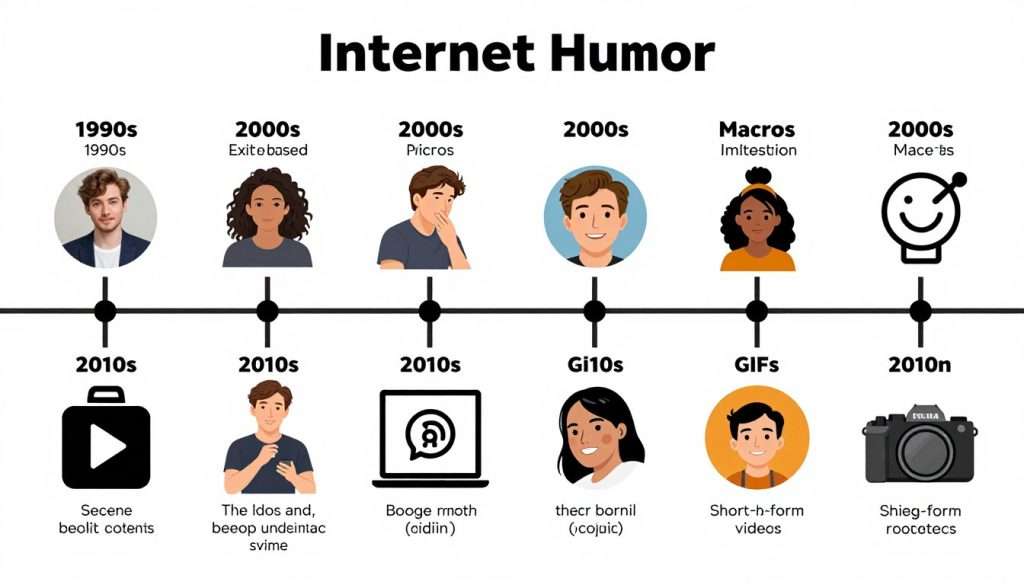
Internet humor has transformed dramatically since the early days. Understanding this evolution provides context for current trends. Early jokes relied on text because bandwidth limited images. As technology improved, memes became visual. Now video dominates. This progression reflects broader technological advancement and changing user behavior patterns across platforms.
Early Internet Era – The Dial-Up Days
Dial-up internet shaped early humor. Jokes about connection speed dominated. The sound of modems connecting became iconic. Email forwards were entertainment primary delivery method. These limitations forced creativity. Text-based puns flourished because they loaded quickly. This era established foundations that modern internet humor still builds upon today despite massive technological advancement since then.
Forums and message boards cultivated niche communities. Inside jokes developed within these groups. Emoticons conveyed tone before emojis existed. ASCII art represented creative expression within text constraints. These early innovations demonstrated human desire to inject personality and humor into digital communication regardless of technical limitations or platform restrictions.
Social Media Rise – The Meme Explosion
Facebook and Twitter revolutionized humor sharing. Content spread faster than ever before. Image macros with Impact font became standard. Advice animals and rage comics dominated. Virality became measurable. Humor evolved from niche to mainstream as platforms democratized content creation and distribution completely.
Instagram shifted focus to visual aesthetics. Puns adapted to image-first formats. Twitter’s character limit forced conciseness. Each platform developed unique humor styles. Cross-posting became common but successful content adapted to platform-specific conventions. Understanding these differences separated effective humor from generic attempts that failed to resonate with platform native audiences properly.
Modern Era – Short-Form Video Dominance
TikTok changed everything again recently. Video humor requires different skills than text or images. Timing, editing, and audio matter enormously. Trends move faster than ever before. A format popular Monday feels outdated by Friday. This acceleration challenges creators to stay current constantly while maintaining authenticity that audiences value and seek in the overwhelming flood of available content.
Despite changes, core principles remain constant. Relatable content works. Shared experiences connect people. Technology frustrations unite users. Whether expressed through text, image, or video, these fundamental truths drive successful internet humor. Understanding this continuity helps navigate rapid platform changes while maintaining effective communication that resonates with audiences regardless of current trending format preferences.
How Brands Use Internet Puns in Their Marketing Strategies
Smart brands incorporate internet puns into marketing. Humor humanizes companies. It makes them approachable and relatable. Tech companies especially benefit from showing they understand user frustrations. A well-placed pun demonstrates cultural awareness and creates positive associations that traditional advertising struggles to achieve through standard promotional messaging alone.
Successful Brand Humor Examples
Wendy’s Twitter account famously uses humor and roasts competitors playfully. MoonPie creates absurdist content that resonates with younger audiences. These brands understand their voice and audience perfectly. Their humor feels authentic rather than forced. This authenticity separates successful brand humor from embarrassing attempts that miss cultural marks badly.
Tech companies have natural advantages in this space. They can make insider jokes their audience understands. Software updates, feature releases, and bug fixes all provide pun opportunities. When executed well, this approach builds community around products. Users become brand advocates who share content organically because they genuinely enjoy it rather than for incentives or rewards.
Risks and Rewards of Humor Marketing
Humor carries risks. Jokes can offend or fall flat publicly. Brands must understand their audience deeply. What’s funny to some alienates others. Cultural sensitivity matters enormously. A pun that works domestically might translate poorly internationally. Testing content with diverse groups prevents costly mistakes before public launch.
Rewards justify risks when done correctly. Viral humor provides massive exposure cheaply. Organic shares beat paid advertising for credibility and reach. Users trust content from friends more than brands. A funny post shared by followers reaches new audiences with implicit endorsement. This word-of-mouth marketing remains most valuable despite digital transformation and new platform emergence.
Implementing Humor in Your Brand Voice
Start small with humor integration. Test puns in social media rather than major campaigns initially. Monitor response carefully and adjust based on feedback. Find your brand’s humor style through experimentation. Not every brand should try Wendy’s approach. Authenticity matters more than following trends blindly without strategic consideration of brand identity and audience expectations.
Create guidelines for humor use. Define what’s on-brand versus off-limits clearly. Train social media teams properly. Empower them to be creative within boundaries. Review analytics to identify what resonates. Successful humor requires iteration and refinement. The brands that do it best treat humor as core communication strategy rather than occasional tactic deployed randomly without purpose or consistency.
The Future of Internet Puns and Digital Humor
Internet humor will continue evolving with technology. New platforms will emerge creating fresh pun opportunities. AI and virtual reality might change how we consume and create jokes. But fundamental human needs for connection and laughter remain constant. Whatever form future internet takes, puns will adapt and thrive alongside technological advancement.

Emerging Platforms and Humor Trends
New social platforms appear regularly. Each develops unique humor culture. Early adopters establish norms others follow. Being present during platform emergence offers advantages. Your content helps shape community standards. This influence creates opportunities for brands and creators willing to experiment with new spaces before they become oversaturated with competition and established voices.
Short-form video continues dominating but formats change. Vertical video became standard. Interactive content gains traction. Choose-your-own-adventure style humor shows promise. These innovations expand possibilities for pun delivery. Creators who adapt quickly gain audiences before spaces become crowded with similar content fighting for limited attention spans.
Technology’s Impact on Humor Creation
AI tools help generate and refine jokes now. They analyze what works and suggest improvements. Some worry about automation replacing human creativity. More likely, AI becomes tool enhancing human humor rather than replacing it entirely. The best content will always combine technological capabilities with genuine human insight and emotional intelligence that machines currently lack completely.
Translation technology improves constantly. Puns traditionally don’t translate well across languages. Better AI might solve this challenge. Imagine jokes that work multilingually automatically. This capability could unite global audiences through shared humor despite language barriers that currently limit cross-cultural comedy effectiveness significantly.
Enduring Appeal of Simple Wordplay
Despite technological advances, basic puns remain effective. Clever wordplay needs no special effects. Text-based jokes work across any platform. This simplicity ensures longevity. Even as formats change, fundamental humor principles persist. Understanding these basics prepares you for whatever comes next in digital communication evolution and platform development.
Human psychology doesn’t change as fast as technology advances. We still enjoy surprise, recognition, and connection that good puns provide. These emotional responses transcend platforms. Whether consuming humor through brain-computer interfaces or holographic displays someday, the satisfaction of a well-crafted pun will endure because it taps into timeless aspects of human cognition and social bonding.
Wrapping Up Your Journey Through Internet Puns and Digital Humor
Internet puns represent more than simple jokes. They’re cultural artifacts reflecting our relationship with technology. These puns document frustrations, celebrations, and everyday experiences in the digital age. By understanding and using them, you participate in global conversation that transcends geographical boundaries and connects millions through shared laughter.
This collection provided tools for appreciating and creating tech humor. You’ve explored WiFi jokes, computer puns, social media humor, and gaming references. You’ve learned about meme evolution and marketing applications. Most importantly, you’ve gained insight into why these jokes matter for human connection in increasingly digital world.
Remember that humor serves purposes beyond entertainment. It builds communities, relieves stress, and humanizes technology. The next time your WiFi drops or computer crashes, try making a joke instead of screaming. Share these puns with friends. Use them as captions. Contribute to the ongoing evolution of internet humor culture.
Technology will keep advancing. New platforms will emerge. Humor will adapt and evolve. But the core truth remains unchanged – people love to laugh together. Internet puns facilitate that laughter across distances and differences. They remind us that despite our digital devices, human connection through shared joy remains what matters most in online and offline life alike.

Your humor journey doesn’t end here. Keep exploring, creating, and sharing. The internet needs more laughter. Every pun you share brightens someone’s day. Every joke you create adds to collective cultural knowledge. You’re now equipped to contribute meaningfully to this ongoing global conversation one clever wordplay at a time.


Social Media Puns That’ll Boost Your Online Presence
Social media platforms have created their own vocabulary and culture. These puns play with platform-specific features and user behaviors. They’re perfect for captions, comments, or just making your followers smile.
Instagram and Photo-Sharing Jokes
Instagram culture revolves around perfect photos and clever captions. These puns embrace the platform’s visual nature while poking fun at its quirks. Use them to add personality to your feed and increase engagement with your audience.
Twitter and Microblogging Humor
Twitter’s character limit challenges users to be concise and clever. These puns capture the platform’s quick-witted nature. They work great for actual tweets or just appreciating the art of brevity in humor.
TikTok and Short Video Puns
TikTok represents the newest evolution in social media humor. These puns reference trends, sounds, and the platform’s unique culture. Even if you’re not on TikTok, these jokes capture the zeitgeist of modern internet humor and viral content.
Perfect Social Media Captions Await
These social media puns make excellent captions for your next post. They’re tested, relatable, and designed to increase engagement. Save this collection and never struggle with caption writer’s block again. Your followers will thank you for the laughs.