

Math doesn’t have to be serious all the time. Behind every equation and formula lies a world of clever wordplay waiting to make people laugh. Math puns combine numerical concepts with linguistic creativity to produce jokes that are both smart and silly.
These jokes work because they play with mathematical terms in unexpected ways. They take familiar concepts and twist them into something surprising. Whether you’re a teacher looking to energize your class or someone who just loves a good pun, math jokes offer something special.
This collection brings together the funniest math-related humor across different mathematical disciplines. From basic arithmetic to advanced calculus, you’ll find jokes that range from groan-worthy to genuinely clever. Get ready to explore why mathematicians, students, and teachers can’t resist these numerical nuggets of comedy.
Why Math Jokes Matter in Education and Beyond
Math jokes serve a greater purpose than just getting laughs. They make abstract concepts more memorable and approachable. When students hear a clever pun about polynomials, they’re more likely to remember that mathematical term later.
Educational Benefits
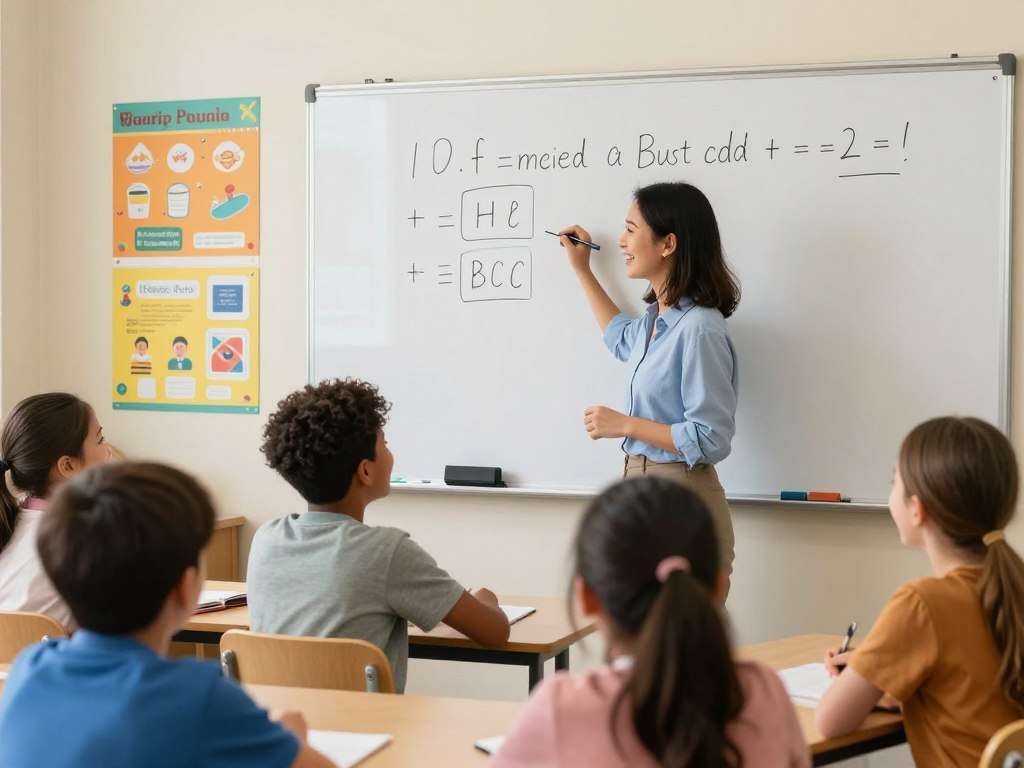
Teachers who use humor in math class create a more relaxed learning environment. Students who might feel intimidated by numbers start to see math as less threatening. A well-timed joke can break tension before a difficult test or help explain a complex concept.
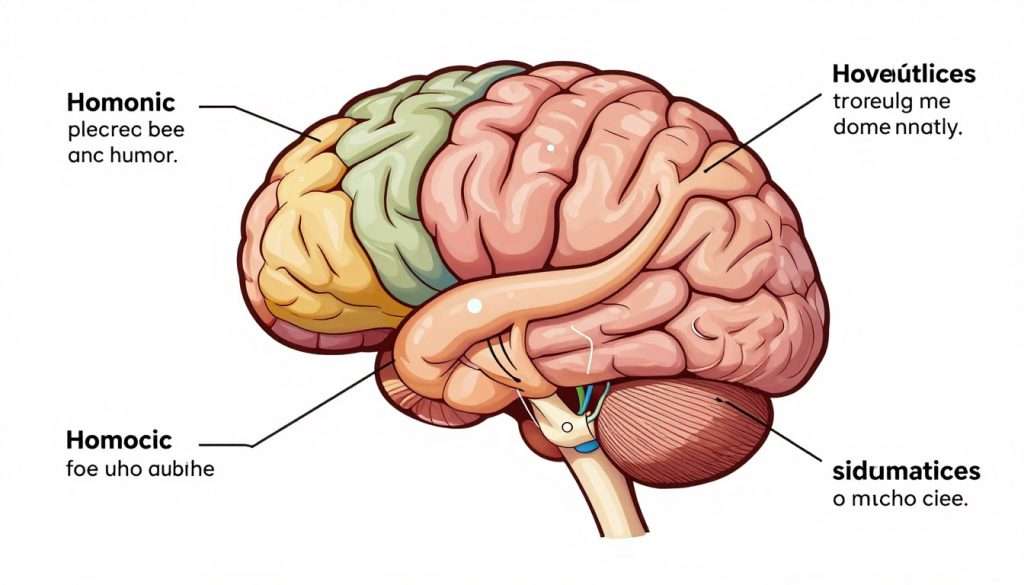
Research shows that humor activates different parts of the brain than standard learning. This dual activation helps information stick better. When a student laughs at a joke about fractions, they’re forming stronger neural connections to that concept.
Social Connection Through Humor
Math puns create common ground between people who love numbers. They’re conversation starters at academic conferences and ice breakers at school events. Sharing a joke about statistics or geometry helps build community among those who appreciate mathematical thinking.
These jokes also help non-mathematicians feel included in mathematical culture. You don’t need an advanced degree to appreciate why six was afraid of seven. The accessibility of math humor bridges the gap between experts and beginners.
Fun Fact: The most shared math joke online involves the punchline “because seven eight nine” – proving that simple wordplay often beats complex mathematical references for viral appeal.
Classic Number Jokes That Never Get Old
Some math jokes have stood the test of time because they work on multiple levels. These classics use basic numbers but create unexpected punchlines that surprise even repeat listeners.
The Fear Factor
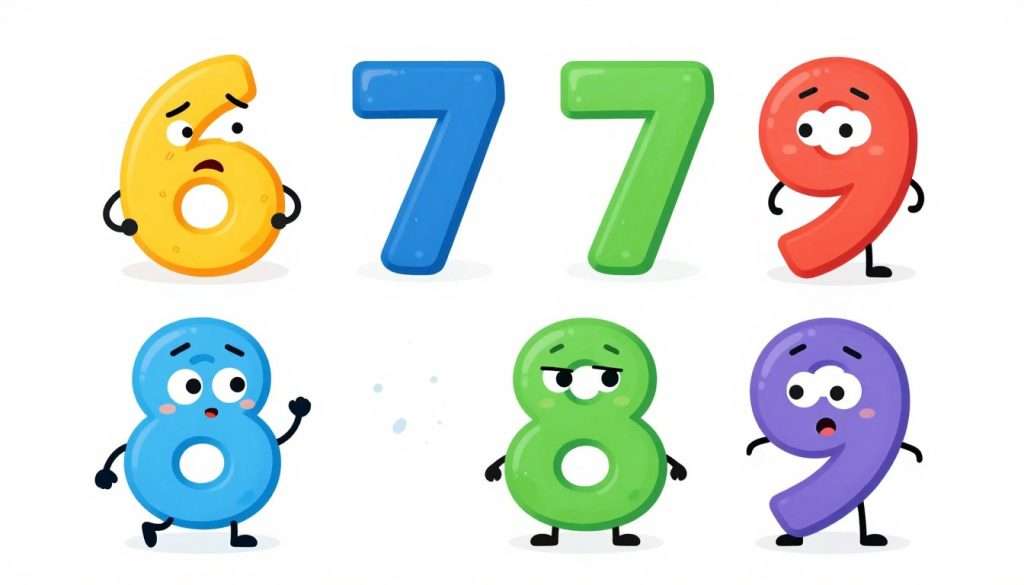
Why was six afraid of seven? Because seven eight nine! This joke plays on the homophones “ate” and “eight” to create a scenario where numbers have personalities and fears. It’s simple enough for young children yet clever enough to make adults smile.
The beauty of this joke lies in its anthropomorphization of numbers. We give them emotions and motivations, turning abstract symbols into relatable characters. This technique appears throughout math humor, making cold mathematics feel warm and human.
More Number Wordplay
- What do you call a number that can’t stay in one place? A roamin’ numeral
- Why is the number six so scary? Because seven eight nine, and ten is next
- What’s the best way to serve pi? A la mode (á la mode)
- Why should you never talk to pi? Because it’ll go on forever
- What do you get when you divide the circumference by diameter? Pi, naturally
These jokes work because they take mathematical facts and inject personality into them. Pi really does go on forever, which becomes the setup for a joke about boring conversations. The number six becomes vulnerable, and Roman numerals become wanderers.
Don’t Let These Jokes Divide You – Multiply Your Collection!
Get a fresh math joke delivered to your inbox every week. Join teachers, students, and math lovers who start their Monday with a smile.
Algebra Puns That Solve for Funny
Algebra introduces variables, equations, and abstract thinking. It also introduces countless opportunities for clever wordplay. These algebra jokes appeal to students currently struggling with X and Y, as well as adults who remember those struggles fondly.
Variable Humor
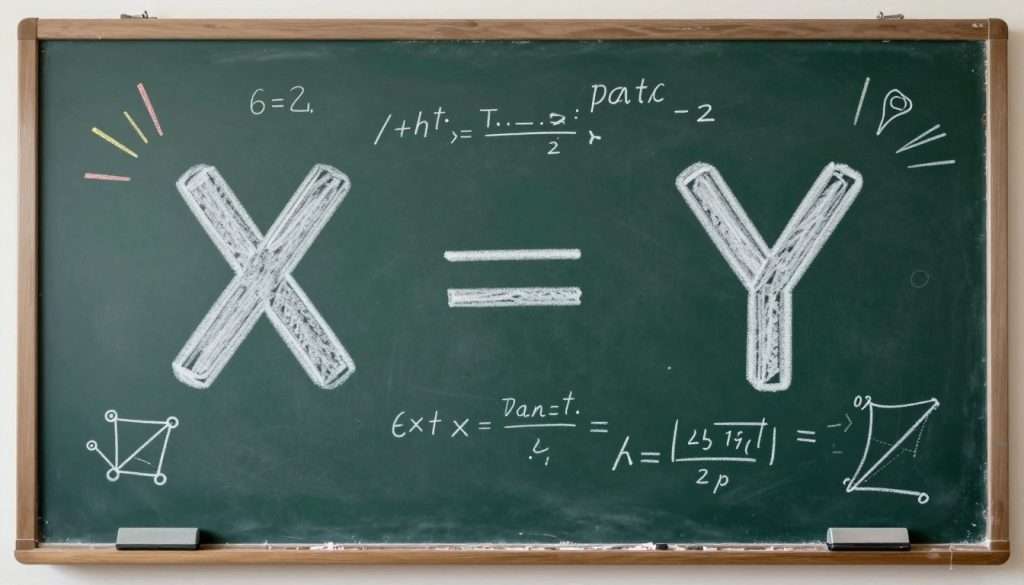
Why was the equal sign so humble? Because it knew it wasn’t greater than or less than anyone else. This joke personifies mathematical symbols, giving them emotional characteristics based on their function. The equal sign’s “humility” comes from its role in showing equivalence rather than comparison.
Algebra jokes often play with the frustration students feel when solving equations. Why do plants hate math? Because it gives them square roots! This combines botanical terms with mathematical ones, creating a pun that works on two levels.
Equation Comedy
- What did the student say about solving X? “I’ve found my X – no need to figure out Y”
- Why did the two fours skip lunch? They already eight (ate)
- What do you call an empty parrot cage? Polynomial (poly-no-meal)
- How do you make seven even? Remove the S
- What’s a math teacher favorite dessert? Pi with ice cream
The polynomial joke demonstrates sophisticated wordplay. It takes a complex mathematical term and breaks it down phonetically to create an entirely different meaning. Students who understand polynomials get an extra layer of appreciation for this type of humor.
For Teachers
Use these algebra puns to introduce new concepts. Start a lesson on variables by asking students why X was lonely. The answer: because Y was always asking questions about it. This creates a memorable association between the letters and their mathematical roles.
For Students
Create your own algebra jokes to help remember formulas. Making up a pun about quadratic equations forces you to think deeply about what those equations do. The creative process reinforces learning in unexpected ways.
Algebra humor becomes more sophisticated as the mathematics gets more complex. Jokes about matrices, systems of equations, and factoring require specific knowledge to understand. This creates an insider feeling among those who get the reference.
Geometry Jokes With All the Right Angles
Geometry brings visual elements into math, which means geometry jokes can be equally visual and verbal. These puns play with shapes, angles, and spatial relationships to create humor that’s both clever and groan-inducing.
Shape-Based Humor
What shape is usually waiting inside a Starbucks? A line! This joke works because “line” refers both to a geometric shape and the queue of customers. The dual meaning creates the surprise that makes people laugh.
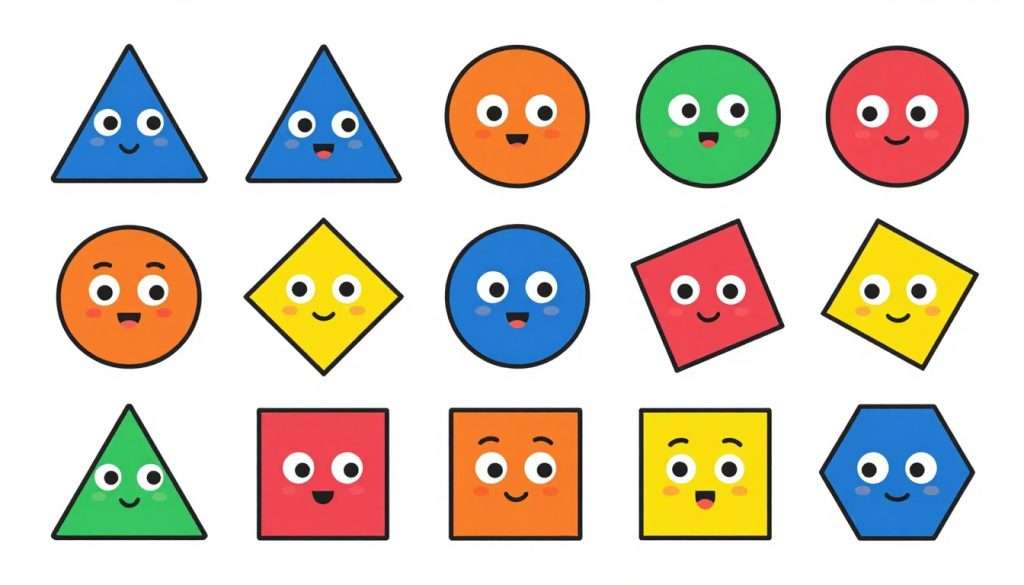
Geometry jokes often anthropomorphize shapes, giving them personalities based on their characteristics. Circles are well-rounded individuals. Triangles are edgy. Squares are conventional. These stereotypes create a framework for endless variations.
Angle Jokes
- Why was the obtuse angle always upset? Because it was never right
- What did the triangle say to the circle? You’re pointless
- Why did the circle break up with the tangent? It could only touch one point
- What do you call a crushed angle? A rectangle (wrecked angle)
- How does a mathematician plow fields? With a pro-tractor
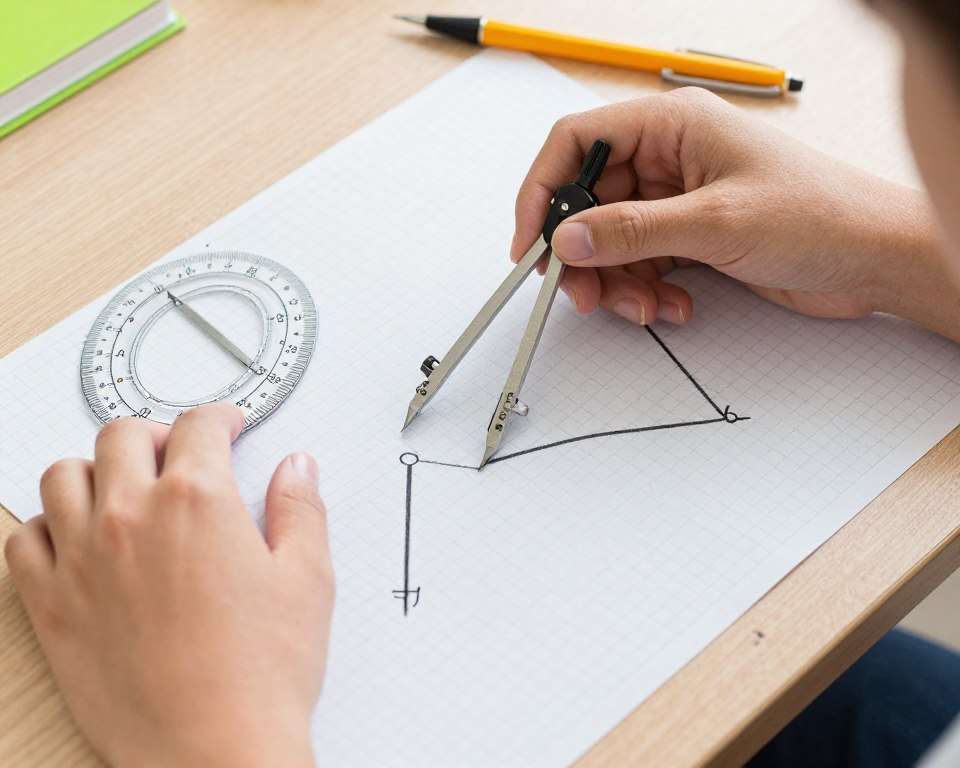
The obtuse angle joke is particularly clever because it uses mathematical terminology (obtuse means greater than ninety degrees but also means slow to understand) and plays on the phrase “being right.” An obtuse angle is literally never a right angle, creating multiple layers of meaning.
Circle and Pi Wordplay
Why should you never start a conversation with pi? Because it goes on and on forever. This references the mathematical property of pi being an irrational number with infinite decimal places. The joke translates this mathematical fact into a personality trait.
What do you get when you divide the circumference of a jack-o-lantern by its diameter? Pumpkin pi! This seasonal variation shows how mathematical formulas can be adapted to different contexts while maintaining their humor.
Right Triangles
These triangles are always correct. They follow the Pythagorean theorem religiously and never cut corners. When two right triangles get together, they form a perfect square.
Circles
Circles are the most well-rounded shapes. They have infinite sides and no angles, making them the diplomats of the geometry world. Every point on a circle is equally important.
Parallel Lines
These lines have so much in common. It’s a shame they’ll never meet. They maintain the same distance forever, making them the ultimate long-distance relationship that never quite connects.
Calculus Humor That Reaches the Limit
Calculus jokes require more mathematical sophistication to understand. They reference limits, derivatives, and integrals in ways that only students who’ve studied advanced math will fully appreciate. This creates a special bond among those who get the references.
Limit Jokes
What’s the limit as X approaches infinity? Your patience with math homework! This joke plays on the double meaning of “limit” – both as a mathematical concept and as a boundary of tolerance. Students grinding through calculus problems late at night particularly appreciate this one.
A mathematician walks into a bar. The bartender says, “What’ll it be?” The mathematician responds, “I’ll have a beer… but only as X approaches one.” This references the concept of limits approaching but never quite reaching a value, translated into a ridiculous real-world scenario.
Derivative Comedy
- What’s the derivative of a cow? Beef jerky (a jerky motion)
- What’s the integral of 1/cabin? Natural log cabin (plus C, of course)
- Why did the derivative go to therapy? It had too many problems with change
- What did one calculus book say to the other? Don’t bother me, I’ve got my own problems
The derivative of a cow joke is particularly beloved among math students because it uses the technical term “derivative” in a completely non-mathematical way. The reference to “jerky” motion connects to the mathematical concept of instantaneous rate of change while creating absurd imagery.
Integration Humor
Why did the student fail calculus? They couldn’t integrate into the class! This plays on the mathematical process of integration while using the social meaning of the same word. It’s a perfect example of how mathematical terminology often has everyday equivalents.
Mathematician Fact: When calculus students tell these jokes, they often add excessive mathematical detail to the punchline, making the joke longer but funnier to fellow math enthusiasts who appreciate the precision.
Statistics and Probability Jokes That Beat the Odds
Statistics jokes often play with the gap between mathematical probability and real-world expectations. They highlight how people misunderstand chance, averages, and correlation in everyday life.
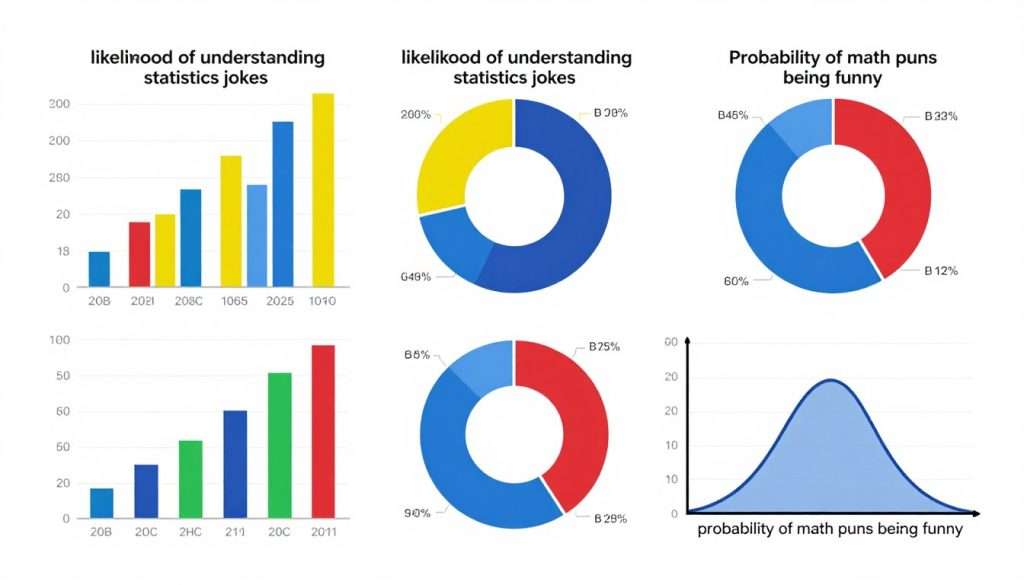
Average Jokes
Why was the student upset when the teacher called them average? Because it was a mean thing to say! This joke works because “mean” is both a statistical term (the average of a set of numbers) and a descriptor for unkind behavior. The double meaning creates perfect mathematical wordplay.
Three statisticians go hunting. They spot a deer. The first shoots and misses one foot to the left. The second shoots and misses one foot to the right. The third statistician yells, “We got it!” This joke illustrates how statisticians think about averages versus reality, highlighting the absurdity of purely mathematical thinking in practical situations.
Probability Humor
- There are three kinds of people in the world – those who can count and those who can’t
- Statistics show that teen pregnancy drops dramatically after age 25
- Five out of four people struggle with math
- Eighty-three percent of statistics are made up on the spot
The “three kinds of people” joke is brilliant because it’s self-referential. It claims there are three kinds but only lists two, demonstrating the very counting problem it describes. This meta-humor appeals to people who enjoy logical paradoxes.
Correlation Confusion
Did you hear about the statistician who drowned in a river? It was only three feet deep on average. This dark humor points out the danger of relying on averages without considering variation. A river might average three feet but have sections ten feet deep – information that would be very relevant to someone trying to cross it.
These statistics jokes often contain actual mathematical education within the humor. They teach important concepts about how statistics can be misleading when misapplied or misunderstood. Teachers use them to illustrate why context matters in data analysis.
Math Teacher and Student Jokes for the Classroom
The relationship between math teachers and students provides endless material for jokes. These scenarios capture the universal experience of math class, from confusing homework to test anxiety.
Classic Classroom Exchanges
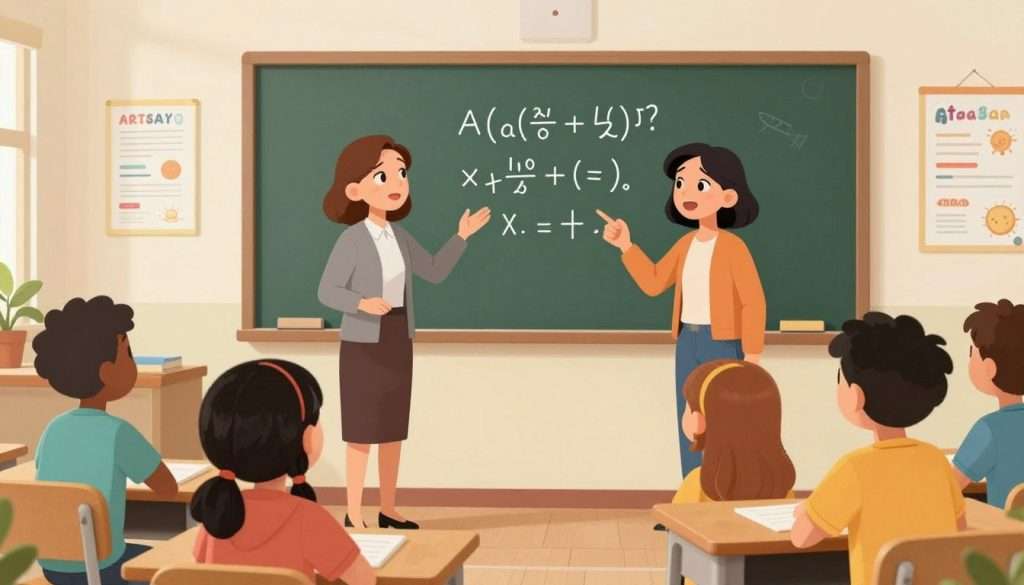
Teacher: “Why are you doing your multiplication problems on the floor?” Student: “You told me not to use tables!” This joke plays on the double meaning of “tables” – both furniture and multiplication charts. It creates a scenario where literal interpretation leads to absurd behavior.
Why did the student get upset when the teacher called them average? Because it was a mean thing to say! This returns to the mean/average wordplay but in a classroom context, making it particularly relevant for teachers looking to lighten the mood during statistics lessons.
Homework Humor
- Teacher: “Why didn’t you complete your homework?” Student: “My dog eight (ate) it, which is why six is afraid of seven”
- What’s a math teacher favorite season? Sum-mer
- Why do math teachers love parks? Because of all the natural logs
- What did the zero say to the eight? Nice belt!
- Why was the math book sad? It had too many problems
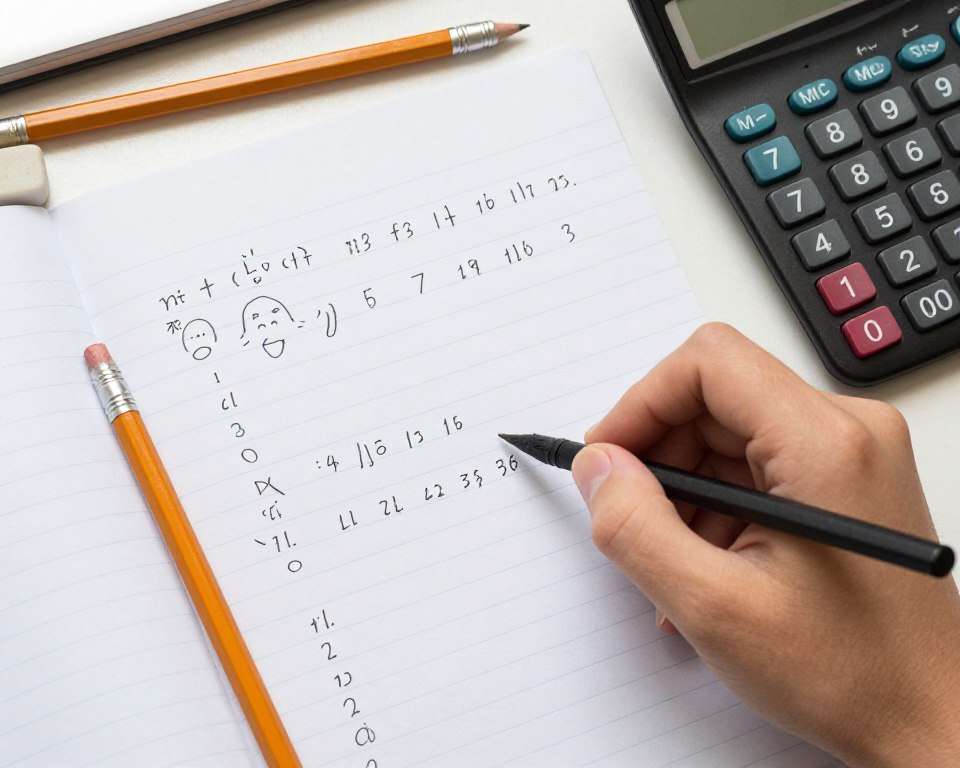
The math book joke resonates because every student has felt overwhelmed by pages of problems. By personifying the book and giving it emotional responses to its own content, the joke creates sympathy for an inanimate object while acknowledging student frustration.
Test Time Jokes
What do you call a person who loves math? A mathomaniac! This portmanteau combines “math” with “maniac” to describe someone whose passion for numbers seems excessive to others. Teachers often self-identify with this term, embracing their reputation for loving what students sometimes dread.
Why did the student bring a ladder to math class? Because it was a high school! This simple pun works by taking the compound word “high school” and interpreting it literally. While groan-worthy, it’s the kind of joke that makes students roll their eyes while secretly smiling.
For Elementary Teachers
Why do monsters enjoy math? Because it gives them square meals a day! This combines the concept of square numbers with the phrase “square meals,” creating wordplay appropriate for younger students learning basic geometry.
For Middle School Teachers
Why did the obtuse angle go to the beach? Because it was over ninety degrees! This joke requires understanding of angle measurement while playing on temperature, making it perfect for students learning geometry.
For High School Teachers
Why do mathematicians never argue? Because they always find common denominators. This sophisticated wordplay uses fraction terminology metaphorically to describe conflict resolution, appealing to older students’ abstract thinking.
Jokes About Mathematicians and Their World
Mathematicians have developed a cultural reputation for being quirky, logical to a fault, and thinking differently than other people. These jokes play with stereotypes while celebrating the unique perspectives mathematicians bring to everyday situations.
Mathematician Stereotypes
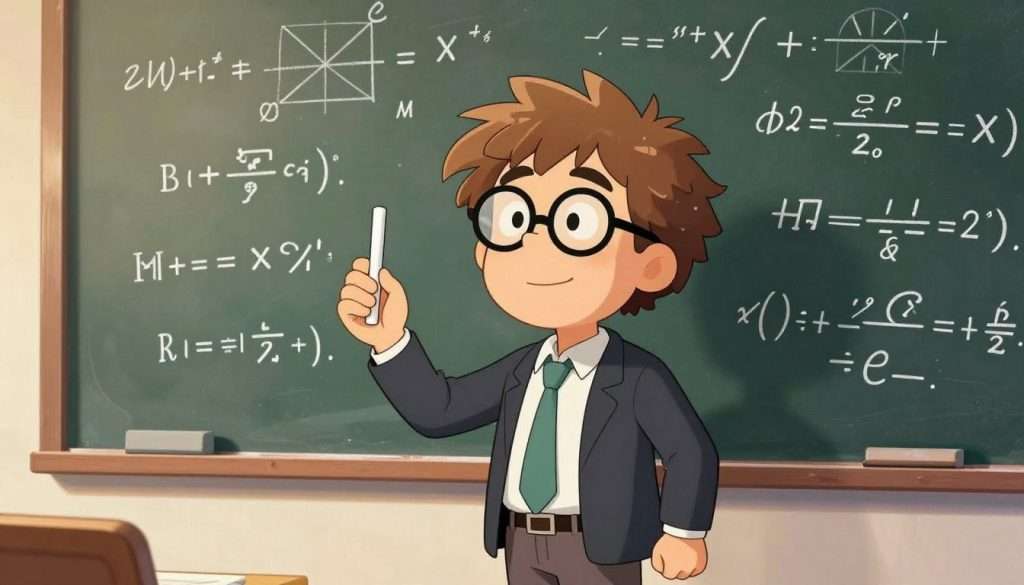
Why should you never argue with a mathematician? They always have their points proven. This joke references geometric points while playing on the phrase “making your point” in an argument. It suggests mathematicians approach debates with the same rigor they apply to proofs.
Did you hear about the mathematician who’s afraid of negative numbers? They’ll stop at nothing to avoid them! This plays on the phrase “stop at nothing” by making it literal – negative numbers are less than zero (nothing), so avoiding them means stopping exactly at zero. The joke captures mathematical precision applied absurdly to fear.
Mathematical Thinking in Real Life
- A mathematician walks into a bar. The next one ducks
- What do you get when you cross a mountain climber with a mathematician? Nothing – you can’t cross a scalar with a vector
- How do mathematicians scold their children? “If I’ve told you once, I’ve told you N times…”
- Why do mathematicians hate the beach? Because they have sine and cosine to get a tan
Professional Mathematician Humor
Three mathematicians walk into a bar. The bartender asks, “Do all of you want a drink?” The first mathematician says, “I don’t know.” The second says, “I don’t know.” The third says, “Yes!” This joke demonstrates logical reasoning – the third mathematician could only answer yes with certainty after learning the first two wanted drinks.
Social Situations
How do you know someone is a mathematician? Don’t worry, they’ll tell you – right after they correct your estimation of the probability they would mention it. This plays on the stereotype of mathematicians being pedantic about precision while also being proud of their field.
Famous Mathematician References
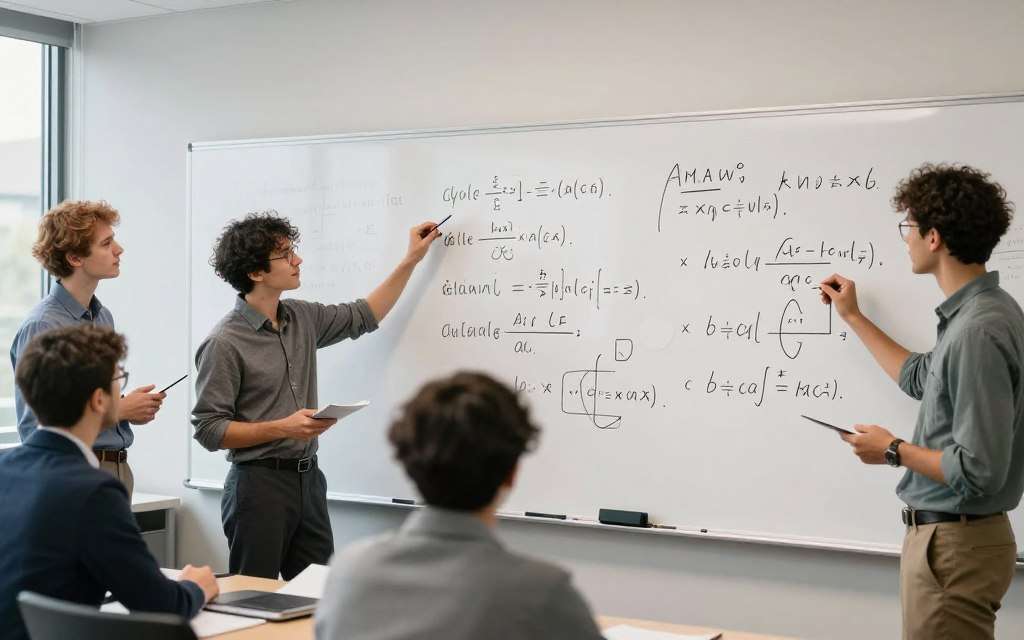
What’s Fibonacci’s favorite music genre? Baroque – because of all the natural sequences! This references the famous Fibonacci sequence while making a pun on “Baroque” (which sounds like “broke”) and the mathematical sequences found in Baroque music composition. It requires knowledge of both math history and music to fully appreciate.
Mathematicians are creatures of habit. They have their routines, their preferred notation systems, and their mathematical prejudices. These jokes celebrate that dedication while gently mocking the intensity with which mathematicians approach their craft and daily life.
Specialized Math Puns for Advanced Topics
As mathematics becomes more specialized, so do the jokes. These puns require knowledge of specific mathematical subfields, making them particularly satisfying for experts who encounter them.
Topology Jokes
What’s a topologist’s favorite breakfast? A torus (doughnut)! Topologists study shapes and spaces, and a torus is the mathematical term for a doughnut shape. This simple joke connects abstract mathematical concepts to everyday breakfast items, making topology feel more accessible.
A topologist is someone who can’t tell the difference between a coffee mug and a doughnut. This references a famous topology principle – both objects have one hole and can be continuously deformed into each other without cutting or gluing. To a topologist, they’re topologically equivalent, which seems absurd from a practical perspective.
Number Theory Humor
- What do you call a number that can’t sit still? An irrational number that must be plotting something
- Why are prime numbers so lonely? They can only be divided by themselves and one
- What did the number theorist say at the party? “This gathering has reached critical mass!”
- How do you organize a space party? You planet (using complex number planes)
The prime number joke touches on a real mathematical property – primes are divisible only by one and themselves – and translates it into social isolation. This anthropomorphization helps students remember what makes primes special while adding emotional resonance to a dry mathematical definition.
Abstract Algebra
What’s a group theorist’s favorite band? The Symmetry Group! Group theory studies algebraic structures called groups, and symmetry groups are a fundamental concept. This joke works only for those who’ve studied abstract algebra, creating an insider reference that builds community among group theory students.
Did You Know: The more specialized the mathematics, the smaller the audience for the jokes – but the bigger the laughs from those who understand them. Math conference comedy shows draw surprisingly large crowds of mathematicians eager to hear field-specific humor.
Everyday Math Wordplay Everyone Can Enjoy
Not all math jokes require advanced degrees. The best mathematical humor often comes from applying mathematical thinking to mundane situations, creating observations that are both funny and insightful.
Food and Math
What does a mathematician eat for breakfast? A bowl of cereal with milk in a rational proportion. While simple, this joke introduces the concept of rational numbers (numbers that can be expressed as fractions) in a breakfast context. It suggests mathematicians even approach their meals with numerical precision.
Why do mathematicians make terrible cooks? They always reduce fractions before adding them. This plays on the cooking technique of reducing sauces while referencing the mathematical process of simplifying fractions. It suggests mathematical instincts can interfere with practical cooking where you need actual quantities.
Daily Life Applications
- How does a mathematician plow fields? With a pro-tractor (protractor)
- What do you call a gym for mathematicians? A “squared” circle
- Why are mathematicians always calm? Because they know how to work out their problems
- What’s a mathematician’s favorite exercise? Quadratic squats
These everyday math puns help normalize mathematical thinking by showing how mathematical concepts appear in common activities. When you notice mathematical patterns in nature, architecture, or daily routines, you’re thinking like a mathematician – and these jokes celebrate that perspective.
The beauty of everyday math wordplay is its accessibility. You don’t need to understand calculus to appreciate a pun about shapes or counting. This makes mathematical humor a gateway that can spark interest in deeper mathematical concepts.

Seasonal Math Jokes
What do mathematicians do on Halloween? They pumpkin pi! This seasonal variation of the pi joke shows how mathematical humor adapts to different contexts. The same wordplay structure (mathematical term plus homophones) works across various situations.
Mathematical holidays also spawn specific jokes. On Pi Day (March 14th, written as 3/14), people celebrate with circular desserts and circumference-related puns. These celebrations combine mathematical appreciation with social fun, proving that numbers can be party themes.
The Psychology Behind Why Math Puns Work
Understanding why math puns make us laugh reveals something about how our brains process humor and mathematics. The cognitive science behind these jokes is fascinating and explains their enduring appeal across generations.
The Surprise Factor
All humor relies on surprise and incongruity. Math puns work by setting up expectations based on mathematical contexts, then delivering punchlines that twist those expectations. When you hear “Why was six afraid of seven,” your brain expects a mathematical explanation. Getting “because seven eight nine” instead creates cognitive surprise that manifests as laughter.
This surprise is particularly potent with mathematical jokes because we typically think of math as serious and precise. Humor introduces chaos and ambiguity into a field built on exactness. That contrast amplifies the comedic effect.
Pattern Recognition
Mathematics is fundamentally about recognizing and working with patterns. So is humor. When you understand a math joke, you’re recognizing the pattern of the wordplay or logical twist. This dual pattern recognition activates reward centers in your brain, making mathematical humor particularly satisfying for people who enjoy puzzles and logic.
Linguistic Processing
Math puns often exploit homophones (words that sound alike) or words with multiple meanings. Processing these requires your brain to hold multiple interpretations simultaneously, then resolve them when the punchline arrives. This cognitive work makes the payoff more rewarding.
Social Bonding
Sharing inside jokes creates group identity. When mathematicians laugh at specialized humor, they’re reinforcing their membership in a community of people who think similarly. This social dimension makes math jokes more than just entertainment – they’re cultural touchstones.
Educational Benefits
Research shows that humor aids memory retention. When students learn a mathematical concept through a joke, they create multiple neural pathways to that information. They remember the emotional response (laughter), the linguistic structure (the pun), and the mathematical content. This redundancy makes the concept easier to recall later.
Teachers who use mathematical humor also reduce math anxiety. When students see their teacher laughing about math, it signals that mistakes and confusion are normal parts of the learning process. This psychological safety encourages risk-taking and deeper engagement with challenging material.
Creating Your Own Math Puns
Making original math jokes requires understanding both mathematical concepts and comedic structure. With practice, anyone can develop their own mathematical wordplay that makes friends and colleagues groan with delight.
Start With Mathematical Terms
List mathematical vocabulary words that sound like or could be parts of other words. “Sine” sounds like “sign.” “Tangent” relates to “going off on a tangent.” “Acute” sounds like “a cute.” These homophones and near-homophones become the foundation of your puns.
Look for mathematical terms with multiple meanings. “Rational” means both “expressible as a fraction” and “sensible.” “Negative” describes numbers less than zero and pessimistic attitudes. “Function” is both a mathematical relationship and a social event. These dual meanings create natural joke opportunities.
Combine Math With Other Topics
- Take a math concept and apply it to food, sports, relationships, or pop culture
- Use mathematical phrases literally instead of metaphorically (“parallel relationship” becomes about lines)
- Anthropomorphize numbers and shapes, giving them personalities based on their properties
- Create scenarios where mathematical thinking leads to absurd conclusions
Exercise: Choose three mathematical terms you learned recently. For each term, write down five non-mathematical words that sound similar or have related meanings. Use these associations to construct at least one joke.
Test Your Material
The best test of a math joke is whether it makes math people laugh while also being understandable to your target audience. Try your jokes on friends, classmates, or online communities dedicated to mathematical humor. Pay attention to which ones get genuine laughs versus polite groans.
Remember that groan-worthy puns are still successful jokes. If someone groans and says “that’s terrible” while smiling, you’ve achieved peak mathematical humor. The groan acknowledges both the cleverness and the painfulness of the wordplay.
Beginner Level
Start with simple number puns and basic shape jokes. These require minimal mathematical knowledge and work for general audiences. Think homophones and visual similarities between numbers and objects.
Intermediate Level
Progress to algebra and geometry puns that require understanding of equations and spatial relationships. Your audience needs at least middle school math knowledge to appreciate these jokes fully.
Advanced Level
Create jokes about calculus, statistics, or specialized mathematical fields. These work best for academic audiences who have deep mathematical knowledge and appreciate insider references to specific theorems or mathematicians.
Using Math Jokes Effectively in Different Settings
Knowing when and how to deploy mathematical humor maximizes its impact. Different contexts require different approaches to ensure your jokes land successfully and serve their intended purpose.
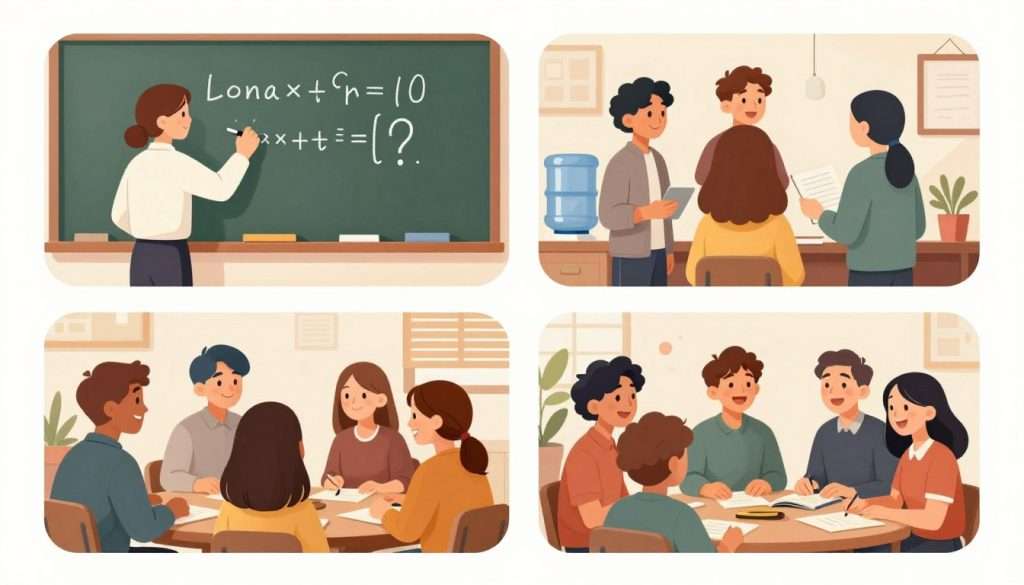
In the Classroom
Teachers should match joke sophistication to student knowledge level. Don’t tell calculus jokes to pre-algebra students – they’ll feel excluded rather than entertained. Instead, use jokes that review concepts students have already learned or preview upcoming topics to generate curiosity.
Timing matters significantly in educational settings. Open a lesson with a joke to capture attention and set a positive tone. Use jokes during transitions between topics to maintain energy. Deploy strategic humor before tests to reduce anxiety and boost confidence.
Classroom Strategies
- Write a “joke of the week” on the board that relates to current curriculum topics
- Encourage students to find or create math jokes as homework assignments
- Use jokes as memory devices for formulas and theorems
- Create inside jokes with your class that reference shared mathematical experiences
- End challenging lessons with humor to leave students on a positive note
In Professional Settings
Mathematical humor works wonderfully at academic conferences, STEM workplace meetings, and professional networking events. These jokes signal shared expertise and create bonds among colleagues who speak the same mathematical language.
When presenting research or technical information, a well-placed math joke can make dense material more digestible. It gives audiences a mental break while reinforcing that you don’t take yourself too seriously despite working with serious content.
Be cautious about using overly specialized jokes with mixed audiences. If half your listeners won’t understand the reference, the joke creates divisions rather than connections. Save the topology humor for topologists and use broader mathematical puns for general STEM audiences.
In Social Settings
Math jokes work surprisingly well at parties and social gatherings, especially among people who identify as “nerdy” or intellectually curious. These jokes become conversation starters and help math enthusiasts find each other in crowded rooms.
When sharing math humor socially, be prepared to explain the mathematical concepts behind your jokes. Many people genuinely want to understand why something is funny, and your explanation becomes an opportunity for informal math education. This transforms a simple joke into a teaching moment.
Math Puns Around the World
Mathematical humor transcends language barriers because mathematics itself is universal. However, different cultures approach mathematical wordplay in unique ways that reflect their linguistic structures and educational traditions.
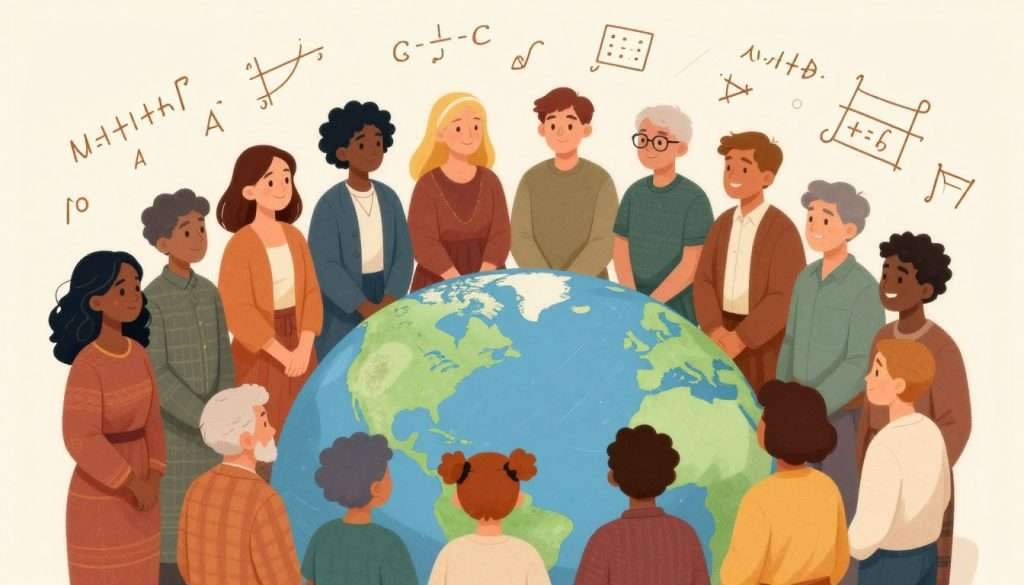
Language-Specific Math Humor
Some math jokes only work in specific languages because they depend on particular homophones or grammatical structures. The English joke “Why was six afraid of seven? Because seven eight nine” doesn’t translate directly to languages where number words sound different or where grammar changes the sentence structure.
However, mathematical concepts like pi, infinity, and zero create universal joke opportunities. Visual puns about shapes work across language barriers. The geometric relationships that make triangles edgy or circles well-rounded remain funny regardless of what language you speak.
Cultural Mathematical Traditions
Different educational systems emphasize different mathematical approaches, which influences their mathematical humor. Countries with strong mental math traditions might have more jokes about calculation speed. Cultures that emphasize geometric proofs develop different joke patterns than those focused on algebraic manipulation.
Global Perspective: International mathematics competitions have spawned a universal joke culture among competitors worldwide. These students share math memes and puns in English as a common language, creating a global community of mathematical humor enthusiasts.
Online communities have accelerated the spread of mathematical jokes across borders. A clever pun developed by a student in one country can circulate worldwide within hours through social media and mathematics forums. This global exchange enriches the overall pool of mathematical humor available to everyone.
Final Thoughts on Math Puns
Math puns do more than generate laughs. They make mathematics more approachable, memorable, and human. Behind every clever wordplay lies genuine mathematical concepts presented in ways that engage different parts of our brains than traditional instruction.

Whether you’re a teacher seeking to energize your class, a student looking to make math less intimidating, or simply someone who appreciates clever wordplay, mathematical humor offers something valuable. These jokes bridge the gap between abstract concepts and concrete experiences, proving that numbers and formulas can be sources of joy rather than just challenges to overcome.
The best part about math puns is their infinite potential for variation and creation. Every new mathematical concept learned opens doors to new joke possibilities. Every conversation about mathematics becomes an opportunity to inject humor and humanity into what people often perceive as cold and mechanical.
So share these jokes liberally. Use them to start conversations, break ice, reduce anxiety, and celebrate the beautiful patterns that mathematics reveals in our world. Make people laugh while making them think. That’s the true power of mathematical wordplay.
Remember, in a world full of problems, math jokes help us solve at least one – the problem of taking ourselves too seriously. And that might just be the most important calculation we can make.


Leave A Comment