
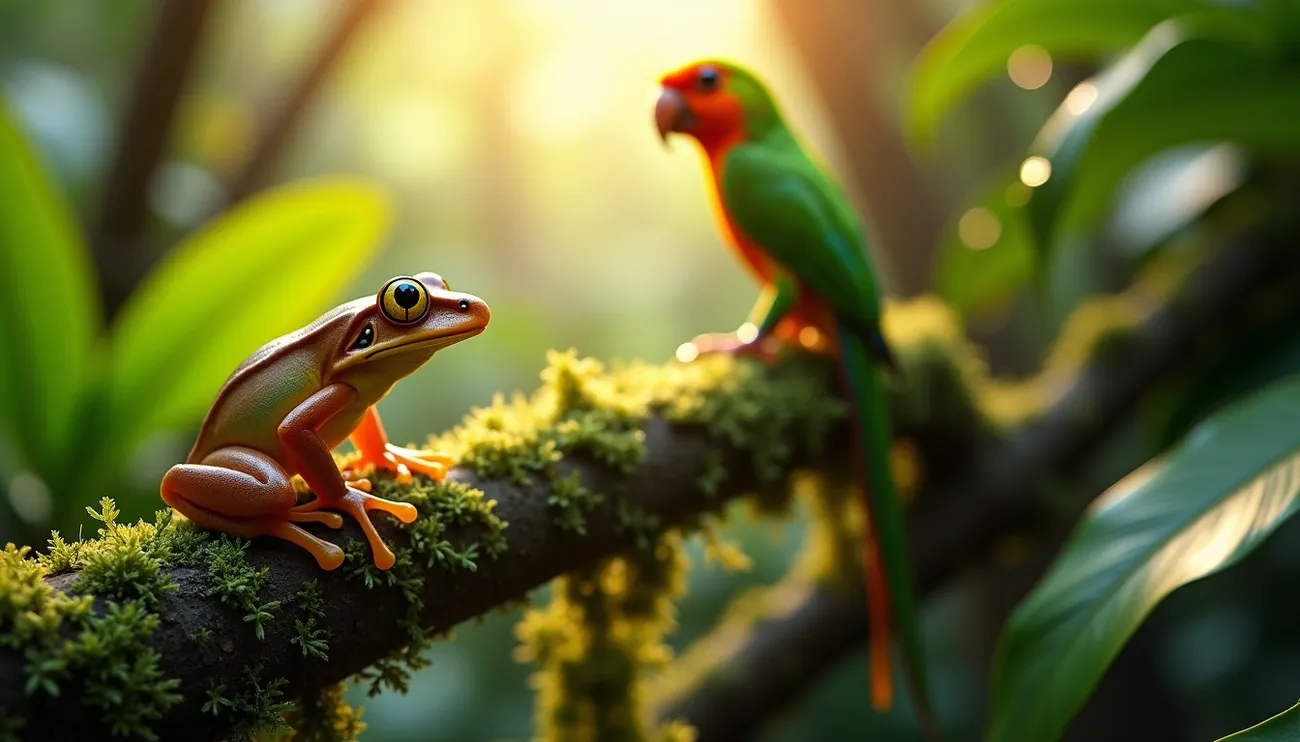
Puerto Rico is home to an incredible 239 endemic plant species and 39 unique amphibians and reptiles. This tropical island paradise stands out as a biodiversity hotspot that you won’t find anywhere else on Earth.
The island’s wildlife flourishes in three distinct terrestrial ecoregions: moist forests, dry forests, and mangroves. These diverse geographical features create ideal conditions for Puerto Rican native animals to evolve in isolation. Many Puerto Rican animals face extinction risks today, but dedicated conservation efforts protect these irreplaceable species.
Among Puerto Rico’s wildlife, the common coquí frog has earned its place as an unofficial national symbol. This tiny amphibian’s distinctive call fills the night air and has become a cherished cultural icon. The island boasts 17 species of coquí, and all but three of these species live exclusively on the island. The Puerto Rican parrot’s situation is particularly critical – with fewer than 200 individuals left in the wild, it ranks among the world’s rarest parrot species.
El Yunque National Forest, the only rainforest in the U.S. National Forest Service, and the coastal dry forests provide sanctuary to species found nowhere else. Let’s take a closer look at 21 amazing animals that make this Caribbean island truly one of a kind.
Common Coquí
The common coquí (Eleutherodactylus coqui) stands as Puerto Rico’s most abundant native amphibian. These tiny creatures pack quite a punch in numbers, with populations reaching up to 20,000 frogs per hectare. At just 1-2 inches long, this small tree-dwelling frog has special toe pads that help it climb trees and other surfaces vertically.
Common Coquí habitat
These amazing frogs thrive all over Puerto Rico, from the coastline up to heights of 1,200 meters. You’ll find them almost everywhere – in lush broadleaf forests, mountain regions, cities, and even people’s homes. The only places you won’t see many coquís are in the island’s driest spots.
Most amphibians need water bodies to reproduce, but not the coquí. These adaptable creatures can live at any height as long as there’s enough moisture. Age and size determine where you’ll find them – young ones stick to the forest floor’s leaf litter while adults climb higher into the tree canopy.
Common Coquí call and behavior
The male coquí’s distinctive nighttime “co-quí” call gave these frogs their name. Each part of the call serves a purpose – the “co” warns other males to stay away while the “quí” catches female attention. Their group calls get incredibly loud, reaching 90-100 decibels – as noisy as motorcycles or ATVs.
These nocturnal creatures come alive after dark when humidity rises. They climb trees and hunt insects, eating about 114,000 invertebrates per hectare each night. During daylight hours, they move down to lower forest areas where moisture stays high. While males do most of the calling, females make soft rasping sounds to defend their feeding spots.
Common Coquí cultural significance
The common coquí exceeds its role as just another species – it has become an unofficial symbol deeply rooted in Puerto Rican identity. This little frog’s story goes back to pre-Columbian Taíno culture. Now you’ll see its image everywhere, from t-shirts and coffee mugs to artwork and tattoos.
The evening chorus of coquís means something special to Puerto Ricans. It’s more than just background noise – it represents a cultural legacy that passes down through families. These nighttime songs create a unique island atmosphere that has become a treasured part of Puerto Rican culture.
Puerto Rican Parrot
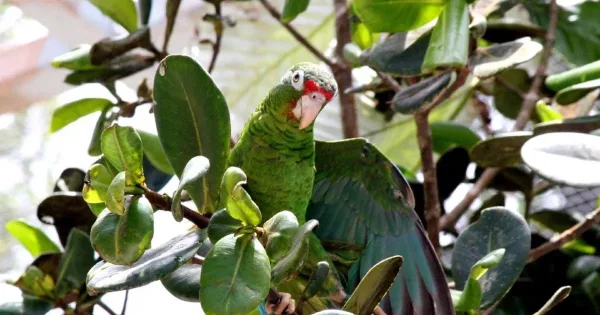
Image Source: U.S. Fish and Wildlife Service
The Puerto Rican parrot (Amazona vittata) stands as the only endemic parrot species in the United States and its territories. This remarkable bird, native to Puerto Rico, goes by the name “iguaca” in Taíno language and proves to be one of nature’s most resilient survivors.
Puerto Rican Parrot appearance
A vibrant green plumage covers most of this parrot’s body, with a striking red forehead and blue primary wing feathers that make it truly distinctive. These beautiful creatures reach 28-30 cm (11-11.8 inches) in length and tip the scales at 250-300 grams (8.8-10.6 oz). The parrot’s features include white rings around its eyes along with flesh-colored bills and feet. Male and female parrots share similar coloration patterns with no visible differences between sexes.
Puerto Rican Parrot conservation status
The species faced near extinction when its numbers dropped to just 13 individuals in 1975. Conservation teams launched captive breeding programs in 1968, which helped the population grow steadily. Recent counts show about 250 wild parrots living in three locations: Maricao, El Yunque, and Río Abajo State Forest. The captive population stands at 469 birds spread between two aviaries.
Puerto Rican Parrot habitat
These magnificent birds once flourished in Puerto Rico’s diverse forests, from the coastal lowlands to the mountains. Their range covered eight major old-growth forest types across the main island, possibly extending to nearby islands like Culebra, Mona, and Vieques. The 1960s saw their habitat shrink drastically to just 16 km² (6.2 sq mi)—a mere 0.2% of their original territory. Today’s wild populations live in protected forests at elevations between 200-600 meters. They make their nests in large tree cavities and survive mainly on wild fruits, with sierra palm and tabonuco fruit sustaining them during food-scarce periods.
Puerto Rican Boa
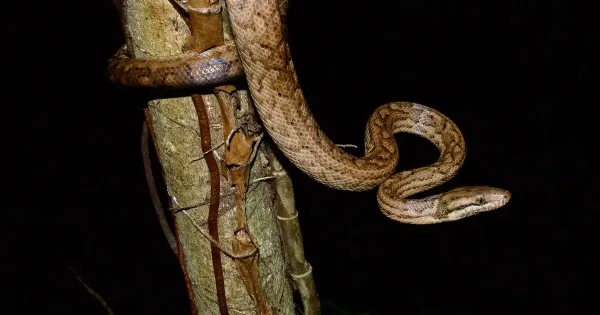
Image Source: U.S. Fish and Wildlife Service
The Puerto Rican boa (Chilabothrus inornatus) stands as the largest snake on the island and represents an iconic serpent in Puerto Rico’s rich ecosystem. Locals call it “culebrón” (big snake), and this gentle giant has adapted remarkably to its Caribbean environment.
Puerto Rican Boa size and appearance
These boas showcase a spectrum of colors from pale to dark brown, sometimes with grayish tints, and their bodies feature 70-80 darker blotches along their backs. Young snakes display more prominent markings that slowly fade as they age. Their belly scales range from gray to dark brown.
The snake’s scientific name inornatus means “unadorned,” yet nature gave these creatures distinctive irregular parietal scales that help identify them. Most adults stretch between 3.3-6.6 feet (1-2 meters), while the biggest ones reach about 6.6 feet (2 meters). Female boas grow bulkier than their male counterparts of the same age.
Puerto Rican Boa diet
These skilled hunters feast on birds, rodents, bats, and lizards. They demonstrate remarkable hunting prowess by dangling at cave entrances to snatch bats in mid-flight during dusk. The boa grabs its prey with powerful jaws, wraps several coils around it, and constricts until the prey suffocates before swallowing it headfirst.
Mature boas prefer rats as their main food source. Black Rats (Rattus rattus) make up 61.8% of their diet based on stomach content studies. Younger snakes hunt smaller prey such as anoles and other lizards.
Puerto Rican Boa ecological role
These snakes act as nature’s pest control experts by keeping rodent populations in check. They target unwanted guests like rats, mice, and green iguanas. The island would face a surge in pest populations without these efficient predators.
Puerto Rican boas serve as a vital link in local food chains and provide sustenance to predatory birds like the Puerto Rican lizard cuckoo and red-tailed hawk. Their role supports biodiversity at multiple levels, making their preservation vital to Puerto Rico’s natural heritage.
Mona Island Iguana

Image Source: U.S. Fish and Wildlife Service
The Mona Island Iguana (Cyclura stejnegeri) lives only on a single island off Puerto Rico’s coast. These remarkable creatures can grow up to three feet in length and live for 40 years. Their bodies show gray coloration with dark mottling and a yellowish-orange tail.
Mona Island Iguana habitat
These daytime reptiles make their home in Mona Island’s limestone terrain. The island’s undulating tableland covers 95% of its 13,600 acres. They spend most of their time underground at depths of 1.5 meters. You’ll find them in talus slopes, caves, and sinkhole depressions. They spread across the island but choose the southwestern region for nesting.
Mona Island Iguana threats
Invasive species now present the biggest threat to these reptiles. Feral pigs destroy the places where iguanas nest together. Cats hunt the hatchlings so effectively that young iguanas make up just 5-10% of the population. Wild goats eat the same food and remove plants that provide cover. The situation gets worse as Australian Pine and Limeberry Shrub take over prime nesting areas. These plants create thick needle mats that stop females from digging their nests.
Mona Island Iguana conservation efforts
The restoration work has led to a soaring win. The team removed Australian Pines in 2018, which added 3,000m² of nesting sites. This change resulted in 35 nests and 420 successful hatchlings in areas that were empty before. A headstarting program that’s 24 years old protects young iguanas until they grow large enough to survive better. Conservation teams also fence nesting areas to keep predators out. The complete recovery needs about $8.2 million to remove all invasive species.
Puerto Rican Spindalis
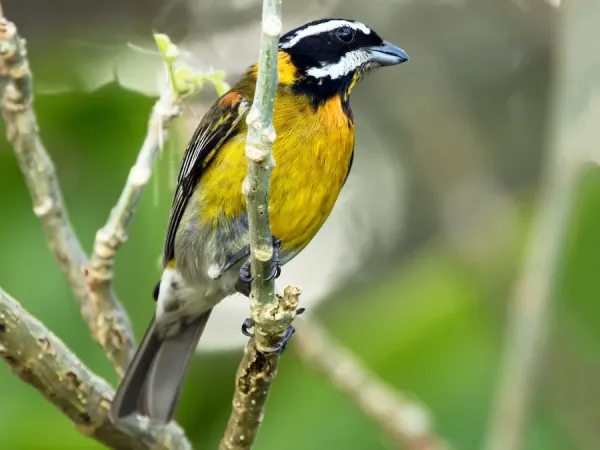
Image Source: eBird
The Puerto Rican Spindalis (Spindalis portoricensis) has earned its status as a unique allospecies native to Puerto Rico, though scientists initially classified it as a subspecies of the Stripe-headed Tanager. Local residents call it “reina mora,” and this bird serves as a crucial seed disperser throughout the island’s ecosystems.
Puerto Rican Spindalis plumage
Males and females of this species look strikingly different. The male’s plumage features a vibrant green back complemented by orange neck and chest coloring. His black head stands out with two white stripes—one above and one below his eyes—while his tail and wings show gray to black coloring with white-tipped edges. The female’s appearance remains subtle with dull olive-green feathers and faint white stripes. Research shows that females tend to be heavier than males [link_1] (28.0-41.1g vs. 22.5-37.0g) but have shorter wings (82.6mm vs. 85.2mm average length) and tails (60.6mm vs. 63.3mm average length).
Puerto Rican Spindalis song
Male birds produce distinctive sounds that reach above 8kHz from high in the treetops. Their signature call consists of “a continuing series of high-pitched, thin, sibilant notes in a rhythmic pattern”. The song creates a repeated three-note sequence: “seet-see-seee, seet-see-seee”. Female birds produce unique “whisper songs” from thick vegetation close to the ground. The species’ vocal range includes quick tweets and brief “chi chi chi” calls.
Puerto Rican Spindalis range
This bird lives exclusively on Puerto Rico’s main island and doesn’t venture to surrounding islands. The species adapts well to various environments—from seaside forests to mountain summits reaching 1,338 meters. Modern observations show these birds prefer plantations over their traditional forest homes in Maricao and El Yunque. The IUCN Red List classifies them as “Least Concern,” indicating a stable population.
Puerto Rican Woodpecker
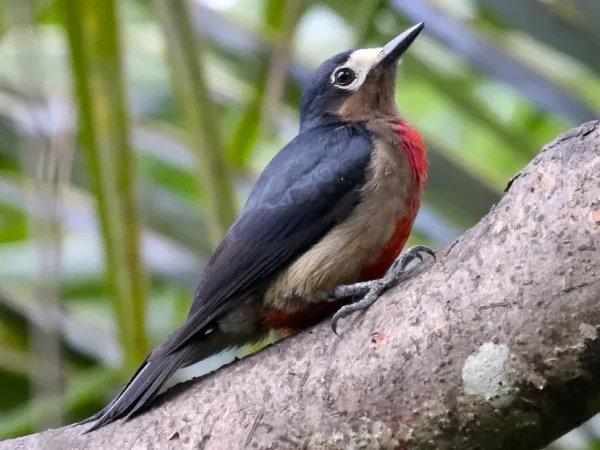
Image Source: eBird
The Melanerpes portoricensis, Puerto Rico’s only endemic woodpecker species, displays a steel-blue glossy back and distinctive red-splotched brownish underparts. This omnivorous bird plays a significant ecological role by creating nest cavities that benefit other native species.
Puerto Rican Woodpecker diet
These birds feed mainly on beetle larvae, ants, and various arthropods they find in tree bark. Fruits constitute about one-quarter of their diet. They supplement their meals with dragonflies, worms, and spiders. Some birds catch scorpions, geckos, and coquí frogs. The woodpecker’s diverse diet makes them effective insect controllers and seed dispersers in island ecosystems.
Puerto Rican Woodpecker nesting habits
The nesting season begins between January and February when these woodpeckers start excavating cavities. Males create nests in live and dead trees, including coconut palms and almond trees, while both parents share childcare duties. The female lays 1-6 glossy white eggs in these cavities. The woodpecker’s abandoned nests become vital habitats for other endemic birds, particularly the Puerto Rican Flycatcher and Yellow-shouldered Blackbird.
Puerto Rican Woodpecker sightings
These woodpeckers thrive throughout Puerto Rico, making their homes in all treed habitats on the main island and Vieques. Birdwatchers can spot them easily in forest reserves, woodlots, gardens, and urban parks. The species acts as a skilled “forest engineer” and its protection helps sustain cavity-nesting bird populations across the island.
Puerto Rican Tody
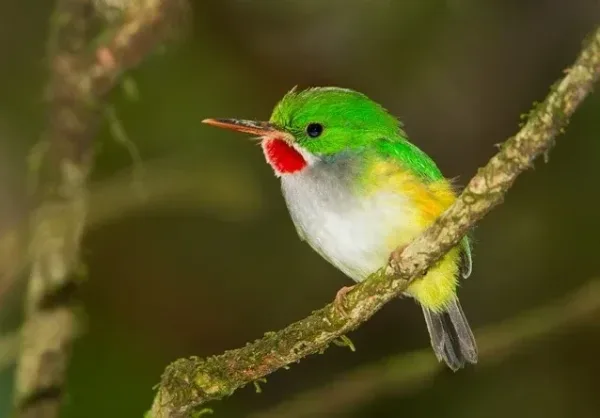
Image Source: Animal Database – Fandom
The Puerto Rican Tody (Todus mexicanus) engages bird enthusiasts with its distinctive appearance and behavior. This species belongs to the Todidae family, which exists only in the Greater Antilles islands of the Caribbean.
Puerto Rican Tody size and color
This small bird Measuring merely 4 inches in length packs extraordinary visual appeal into its compact frame. Its plumage showcases bright green upperparts against a white underbelly. The bird’s vivid red throat and chin patch go together with one another with white malar stripes. Its long, flat bill—black on top and red underneath—works perfectly as a tool for catching insects.
Puerto Rican Tody behavior
Local people named this bird “San Pedrito” (Little Saint Peter) because it perches motionlessly with its bill tilted upward in a prayer-like posture. The bird springs into action and snatches insects from leaf undersides during brief flights. We consumed beetles, flies, spiders, and occasional small Anolis lizards, making these birds natural pest controllers. The bird’s ability to lower its body temperature by up to 11 degrees Celsius helps conserve energy during cold weather.
Puerto Rican Tody endemic range
These birds live exclusively throughout Puerto Rico’s main island and thrive in a variety of habitats including humid forests, woodlands, and coffee plantations. They adapt well to environments from lowland forests to mountainous regions but prefer areas with dense vegetation that provide plenty of insect prey.
Puerto Rican Crested Toad
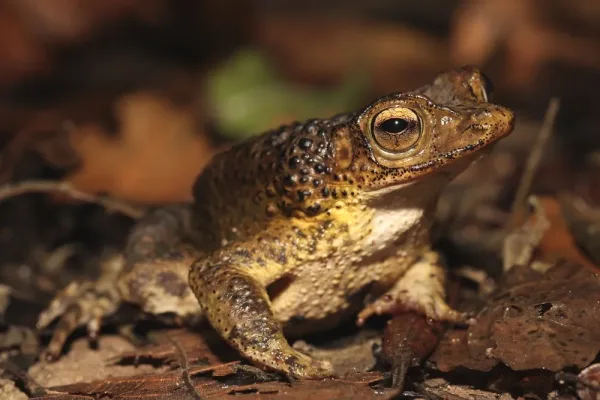
Image Source: crestedtoadssp.org
The Puerto Rican Crested Toad (Peltophryne lemur) stands as Puerto Rico’s only native toad species. Anyone can spot this amphibian by its unique snout and bony head crest, though its survival faces serious challenges in its homeland.
Puerto Rican Crested Toad rarity
The International Union for Conservation of Nature lists this species as Critically Endangered, with just one wild population left that ranges from 1,000 to 3,000 adult toads. Scientists thought the species went extinct between 1931 and 1967 until they found it again, yet it remained rare. The population dropped fast when marine toads invaded in the 1920s, while habitat loss from construction and agriculture made things worse.
Puerto Rican Crested Toad breeding
These toads need major rainfall to breed and might wait two years between breeding cycles based on rain patterns. Each female can lay long black strands with up to 15,000 eggs that hatch within 24 hours. The tadpoles need 18-24 days to change into toads, but sadly, 99% die from predators and limited habitat before reaching adulthood.
Puerto Rican Crested Toad conservation
This toad became the first amphibian to get a Species Survival Plan in 1984, which led to many conservation efforts. More than 20 zoos now run breeding programs that have released over 650,000 tadpoles into Puerto Rico. The work continues with habitat protection, teaching local citizens, and building breeding ponds at higher ground to protect against rising sea levels.
Emerald Anole
The Puerto Rican Emerald Anole (Anolis evermanni) fascinates observers with its trunk-crown lifestyle and remarkable color-changing abilities. This medium-sized lizard lives only in Puerto Rico’s forests and shows striking adaptations to its environment.
Emerald Anole color change
Some people call it the “Puerto Rican chameleon,” but this anole doesn’t match background colors. The lizard’s vibrant emerald green color changes to dark brown under stress or arousal. This change happens as melanin pigments move within specialized cells. Male territorial fights show an interesting pattern – winners stay green while losers turn brown.
Emerald Anole habitat
These lizards make their home in Puerto Rico’s wet forests, including El Yunque rainforest, Luquillo mountains, and the Cordillera Central range. They spend most of their time in trees’ upper parts, usually more than 2 meters above ground. The lizard’s short legs and large toe-pads help it move quickly along thin branches high in the canopy.
Emerald Anole behavior
Both male and female Emerald Anoles defend their territory fiercely. They use displays that include dewlaps, tails, and tongues. Physical fights break out if these visual warnings fail. The species competes with other native lizards, especially A. gundlachi which lives in lower tree areas. The Emerald Anole population grows when these competing lizards leave an area.
Puerto Rican Racer
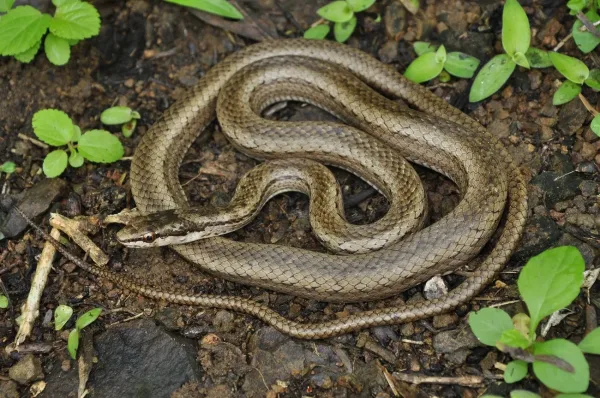
Image Source: iNaturalist
The Puerto Rican Racer (Borikenophis portoricensis), known to locals as “culebra corredora,” stands out among native Puerto Rican wildlife due to its unique venom capabilities. This snake makes its home in Puerto Rico and the Virgin Islands, growing up to 3 feet (1 meter) in length.
Puerto Rican Racer venom
Many people wrongly classify this colubrid as non-venomous, yet it produces toxins through specialized Duvernoy’s glands. The snake’s venom contains high metalloproteinase activity among other low acetylcholinesterase and phosphodiesterase components. Humans bitten by this snake experience effects ranging from mild swelling to severe numbness that can last up to a month, based on their susceptibility. The venom is nowhere near as dangerous to humans but completely paralyzes small reptiles and rodents. The snake’s bite record shows no human fatalities.
Puerto Rican Racer appearance
A solid brown body with darker brown-edged scales distinguishes this racer. The snake’s head features a pointed snout that widens at the upper jaw where venom glands reside. The snake’s most remarkable feature is its narrow, cobra-like hood, which it displays by raising its front quarter when threatened. Unlike cobras, the racer only shows this defensive display under provocation rather than as an intimidation tactic.
Puerto Rican Racer behavior
The snake hunts actively during daylight hours. Threats trigger a defensive response where it compresses its neck to form a narrow hood before striking boldly. The racer has a unique habit of moving its captured prey before eating. The snake shows stronger resistance to parasites than other local snakes, despite being prone to infection, which allows it to maintain a diet consisting mostly of lizards.
Puerto Rican Broad-Winged Hawk
The Puerto Rican Broad-winged Hawk (Buteo platypterus brunnescens) faces a dire threat to its survival. This unique subspecies, which never leaves the island, looks darker and measures about 20% smaller than hawks found on the mainland.
Broad-Winged Hawk flight
Mainland Broad-winged Hawks create spectacular sights when they migrate in massive groups called “kettles” with thousands of birds. Their Puerto Rican cousins stay put on the island throughout the year. These hawks spend most of their time under the forest canopy. They occasionally soar above the trees while making their distinctive “peee-uurr” whistle. When breeding season arrives, they perform soaring displays to mark and defend their territories.
Broad-Winged Hawk diet
These skilled hunters watch for prey from carefully chosen perches. They eat insects, amphibians, reptiles, small mammals, and birds. The hawks wait patiently under forest canopies before diving down to catch prey on the ground. During nesting season, they feed heavily on chipmunks, shrews, and voles, along with frogs, lizards, and nesting birds. This hunting behavior helps keep pest populations in check.
Broad-Winged Hawk conservation
The U.S. government listed these hawks as endangered in 1994. Recent studies paint a grim picture – their numbers have dropped by 80% compared to just ten years ago. Conservation teams now conduct island-wide surveys, watch breeding pairs, and protect critical habitats as of 2022. Some hope exists though – Puerto Rico’s forests show signs of recovery seven years after Hurricane Maria’s destruction. This recovery could mean more suitable homes for these endangered raptors.
Puerto Rican Nightjar
The Puerto Rican Nightjar (Antrostomus noctitherus) stands as one of Puerto Rico’s most mysterious native creatures. You might hear this elusive nocturnal ground-nesting bird more often than you see it. The bird’s body stretches 22-23 cm long, and its mottled, cryptic plumage blends perfectly with its surroundings.
Puerto Rican Nightjar call
Male nightjars create distinct vocalizations that sound like quick “whip” notes or repeat “weep, weep, weep, weep…”. These birds sing year-round like other nightjars, but their vocal activity peaks during April and May. Their songs echo through the forests after sunset, making them easier to detect by ear than by sight.
Puerto Rican Nightjar habitat
These endemic birds live only in southwestern Puerto Rico’s dry coastal and lower montane forests. The nightjar population now mainly resides in protected areas such as Guánica Forest and Susúa Forest, with some birds also living in Guayanilla Hills. The birds prefer nesting sites above 100 meters elevation where abundant leaf litter covers the ground and an open midstory sits beneath a closed canopy. This specific forest structure proves essential to their ground nesting behavior.
Puerto Rican Nightjar rarity
The species faces significant challenges with only 1,400-2,000 mature individuals remaining. Recent habitat restoration work has helped improve their status from Critically Endangered to Endangered. Small Indian mongooses and feral cats threaten their limited breeding sites, while urban development continues to shrink their remaining habitat across southwestern Puerto Rico.
Giant Anole
The Giant Anole (Anolis cuvieri) is Puerto Rico’s largest native lizard. This amazing reptile shows a big difference in size between males and females, which makes it even more fascinating.
Giant Anole size
Male Giant Anoles grow really big, reaching 3.9-7.5 inches (10-19 cm) from snout to vent. Female lizards are a bit smaller at 3.5-6.3 inches (9-16 cm). These creatures can stretch out to 13-20 inches (33-51 cm) when you include their tails, which are longer than their bodies. Their weight ranges from 0.56-4.83 oz (16-137 g). Male lizards pack more muscle and bulk, with some growing up to 160 millimeters in body length.
Giant Anole diet
Baby Giant Anoles start out eating insects. As they grow up, they expand their menu by a lot. They hunt various invertebrates, especially big beetles, moths, butterflies, and snails. Adult lizards love eating fruits too, which helps spread seeds throughout the forest. These powerful hunters sometimes catch bigger prey like other anoles, their own young ones, small birds, and even other reptiles.
Giant Anole threats
Conservation experts list this species as “Least Concern”. The lizards almost vanished when Puerto Rico’s forests were cut down in the early 1900s. Many scientists thought they went extinct until Puerto Rico’s farming declined in the late 1950s, which stopped the widespread tree cutting. The species bounced back amazingly well. The lizards now have stable populations in Puerto Rico’s remaining rainforests, though they live in limited areas.
Puerto Rican Vireo
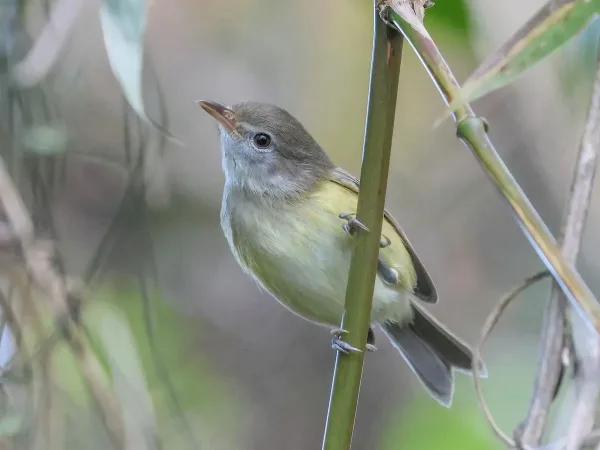
Image Source: Birds of the World
Locals affectionately call the Puerto Rican Vireo (Vireo latimeri) “bien-te-veo” – a name that matches its distinctive call. This small endemic songbird has a gray head, white breast, and yellowish belly. It measures about 12 cm and weighs between 11-12 grams.
Puerto Rican Vireo song
The bird’s most striking feature is its clear, repeated whistled phrases that locals hear as “bien-te-veo”. Male birds create a distinct three- to four-syllable song that sounds like “chuwee-chuweech-you” or “chewee-wit-weee”. Their vocal range has sharp scolds and chatters during moments of alarm. Female birds make unique “whisper songs” from thick vegetation near the ground.
Puerto Rican Vireo nesting
The birds create lasting pairs and build delicate cup nests that hang from forked branches. They breed from March through July to match seasonal rainfall patterns. Each nest usually contains 2-3 light pink eggs with brown spots. Shiny Cowbirds pose a serious threat through brood parasitism, affecting 83% of nests and reducing fledgling numbers by 82%.
Puerto Rican Vireo range
The species lives in western and central Puerto Rico. These adaptable birds thrive in various habitats from dry coastal scrub to wet montane forests, and sometimes mangroves. Their territory covers the main island and extends to nearby Vieques, Culebra, and Mona islands. The birds show remarkable survival rates, with some living up to 13 years.
Puerto Rican Bullfinch
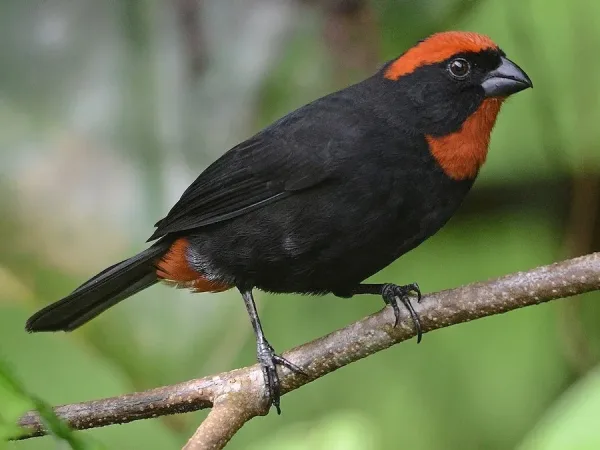
Image Source: eBird
The Puerto Rican Bullfinch (Melopyrrha portoricensis), known locally as the “comeñame,” adds striking color contrast to the island’s forests. This endemic tanager’s distinctive appearance makes it stand out among Puerto Rico’s native animals.
Puerto Rican Bullfinch appearance
These birds measure about 7.5 inches (19 cm) long and weigh 32-33 grams. Male bullfinches show off glossy black bodies with vibrant reddish-orange patches on their crown, throat, and under their tail. The females share the same pattern but have paler black feathers and less intense red markings. Young birds look completely different, with olive-green to olive-brown plumage and pale reddish-brown undertail coverts. Each bird has a characteristic thick, conical bill that works perfectly for cracking seeds.
Puerto Rican Bullfinch diet
These birds love eating fruits from genera like Piper and Rubus. Their regular meals consist of seeds, flower buds, and various insects. They search for food both in vegetation and on the ground, which shows their adaptable feeding habits. The birds also eat spiders and small mollusks, proving how versatile they can be.
Puerto Rican Bullfinch habitat
The bullfinch lives in forests of all types across Puerto Rico—both humid and dry forests at every elevation. Though widespread, these shy and secretive birds are heard more often than seen. They prefer to live in woodlands, coffee plantations, and areas where dense understory vegetation grows.
Puerto Rican Harlequin Butterfly
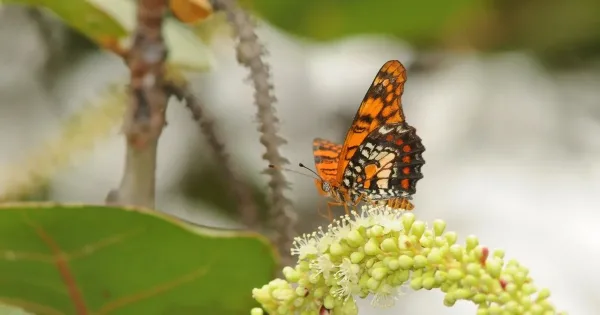
Image Source: U.S. Fish and Wildlife Service
The Puerto Rican harlequin butterfly (Atlantea tulita) is a medium-sized butterfly with striking patterns. This rare species belongs to the brush-footed butterfly family Nymphalidae and plays a vital role in pollinating Puerto Rico’s unique ecosystems.
Harlequin Butterfly colors
This beautiful creature has a wingspan of 5.1-6 centimeters (2-2.5 inches). Its wings display a vibrant brownish-black dorsal area with deep orange markings. Both males and females share similar patterns and size, with a wide black border on the posterior wing that contains reddish-bronze submarginal points. Males stand out with their gray, wide costa (leading wing edge). The ventral side shows orange basal spots, beige bands, and distinctive white half-moon markings. The main difference between sexes appears in their abdominal colors – males have orange and brown ventral bands, while females display white bands.
Harlequin Butterfly habitat
These butterflies thrive in subtropical moist forests on limestone-derived soil throughout Puerto Rico’s northern karst region. You can spot them in forested coastal cliffs of Quebradillas and sclerophyllous forests in Maricao. The species has a unique relationship with the prickly bush (Oplonia spinosa) – their only host plant. They lay eggs on green stems at the most tender new growth points.
Harlequin Butterfly rarity
The butterfly faces a real threat of extinction. Scientists estimate fewer than 250 adults exist across all habitats. The situation became critical when only 75 butterflies remained, split between two areas. The mystery deepens as their host plant grows abundantly throughout Puerto Rico, yet the butterfly’s population stays remarkably small.
Puerto Rican Ground Lizard
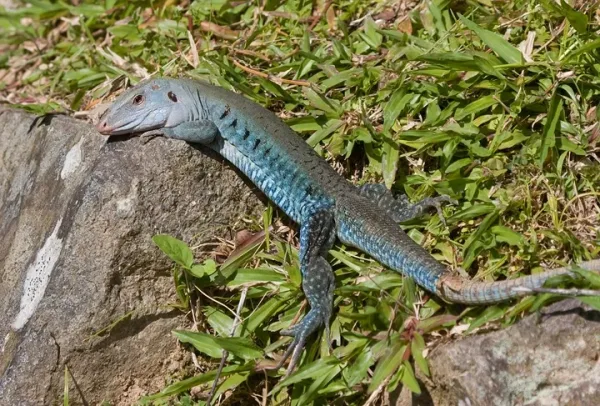
Image Source: The BioFiles
The adaptable Puerto Rican ground lizard (Pholidoscelis exsul) plays a vital role in the island’s terrestrial ecosystem. This versatile reptile shows remarkable survival strategies against many ecological challenges.
Ground Lizard behavior
These lizards start their day at dawn and stay active until dusk. They are most active during morning (0800–1200 h) and afternoon hours (1200–1600 h). The lizards display heliothermic behavior and bask in direct sunlight to warm their bodies before they start foraging. While insects and small fruits make up most of their diet, they also scavenge dead animals and trash scraps in urban areas. When they catch prey like smaller lizards and eggs, they move to a different spot to eat.
Ground Lizard habitat
These resilient reptiles thrive in areas with open canopy structure and loose sandy soil from sea level up to 600 meters. They need environments where temperatures stay above 24°C (75°F) throughout the year. Their ecological flexibility lets them live in coastal scrub, dry forests, and even disturbed grasslands or pasturelands that have sparse vegetation. They spend their nights under leaf litter, rocks, or inside burrows.
Ground Lizard threats
Invasive mammals like feral cats, dogs, and small Indian mongooses are their main predators. Native birds that hunt them cover American kestrels, Greater Antillean grackles, and pearly-eyed thrashers. Their populations face threats beyond predation as urban development reduces the sun-exposed areas they need for temperature regulation.
Puerto Rican Cave Cricket
Image Source: Kingsnake.com
Cave crickets (Rhaphidophoridae) remain mysterious yet essential to Puerto Rico’s underground ecosystems. These flightless insects stand out with their large hind legs, featuring “drumstick-shaped” femora and long, thin tibiae.
Cave Cricket habitat
Puerto Rico’s karst regions offer these crickets diverse homes – from caves to rotting logs and boulder fields where light barely reaches. Most species make caves their primary residence and only step out to find food every few days. The most specialized species never leave their underground sanctuary. These creatures thrive in places with steady temperature and humidity, which explains why they prefer living underground.
Cave Cricket adaptations
These nocturnal creatures have evolved remarkably long antennae and appendages to direct themselves in total darkness through touch instead of sight. Their distinctive humpbacked shape has earned them the nickname “camel cricket”. These versatile feeders eat whatever they find – plants, fungi, meat, and even leftover human food. Their survival skills are impressive. They can venture this is a big deal as it means that 100 meters from cave entrances during their nightly food hunts.
Cave Cricket uniqueness
These insects serve as vital “trogloxenes” in Puerto Rico’s ecosystem – creatures that employ caves but don’t live there permanently. They act as nature’s delivery service by transporting nutrients into resource-poor cave environments through their droppings, molted shells, eggs, and eventually their bodies. Many cave-dwelling species would face survival challenges without this nutrient transport.
Comparison Table
| Species Name | Scientific Name | Size/Physical Description | Primary Habitat | Diet/Feeding Habits | Conservation Status/Threats |
| Common Coquí | Eleutherodactylus coqui | 1-2 inches long | Mesic broadleaf forests, mountains, urban areas | Insects (114,000 invertebrates per hectare nightly) | Abundant (20,000 per hectare) |
| Puerto Rican Parrot | Amazona vittata | 28-30 cm length, 250-300g | Protected forests at 200-600m elevation | Wild fruits, sierra palm, tabonuco fruit | Critically endangered (<200 wild individuals) |
| Puerto Rican Boa | Chilabothrus inornatus | 3.3-6.6 feet (1-2 meters) | Island habitats of all types | Birds, rodents, bats, lizards | – |
| Mona Island Iguana | Cyclura stejnegeri | Up to 3 feet length | Limestone terrain, underground at 1.5m depth | – | Critically endangered |
| Puerto Rican Spindalis | Spindalis portoricensis | Males: 22.5-37.0g, Females: 28.0-41.1g | Coastal forests to mountain peaks (up to 1,338m) | – | Least Concern |
| Puerto Rican Woodpecker | Melanerpes portoricensis | – | Treed habitats on main island and Vieques | 75% insects, 25% fruits | Abundant |
| Puerto Rican Tody | Todus mexicanus | 4 inches length | Humid forests, woodlands, coffee plantations | Beetles, flies, spiders, small Anolis lizards | – |
| Puerto Rican Crested Toad | Peltophryne lemur | – | Breeding ponds at higher elevations | – | Critically Endangered (1,000-3,000 adults) |
| Emerald Anole | Anolis evermanni | – | Wet forests above 2m height | – | – |
| Puerto Rican Racer | Borikenophis portoricensis | Up to 3 feet (1 meter) | – | Small reptiles, rodents | – |
| Puerto Rican Broad-Winged Hawk | Buteo platypterus brunnescens | 20% smaller than mainland subspecies | Forest canopy | Insects, amphibians, reptiles, small mammals, birds | Federally endangered |
| Puerto Rican Nightjar | Antrostomus noctitherus | 22-23 cm length | Dry coastal and lower montane forests | – | Endangered (1,400-2,000 mature individuals) |
| Giant Anole | Anolis cuvieri | Males: 10-19 cm, Females: 9-16 cm | Natural rainforests | Insects, invertebrates, fruits, small vertebrates | Least Concern |
| Puerto Rican Vireo | Vireo latimeri | 12 cm length, 11-12g | Western and central Puerto Rico | – | – |
| Puerto Rican Bullfinch | Melopyrrha portoricensis | 7.5 inches (19 cm), 32-33g | Multiple forest types at all elevations | Fruits, seeds, flower buds, insects | – |
| Puerto Rican Harlequin Butterfly | Atlantea tulita | 5.1-6 cm wingspan | Subtropical moist forests on limestone soil | – | Critically endangered (<250 adults) |
| Puerto Rican Ground Lizard | Pholidoscelis exsul | – | Open canopy areas, sea level to 600m | Insects, small fruits, carrion | – |
| Puerto Rican Cave Cricket | – | – | Caves, rotting logs, boulder fields | Omnivorous – plants, fungi, meat | – |
Appreciate Animals Native to Puerto Rico
Puerto Rico stands out as a remarkable biodiversity hotspot in the Caribbean. The 21 endemic species mentioned earlier show just a glimpse of the island’s unique wildlife heritage. The iconic coquí frog’s evening chorus defines Puerto Rican nights, while the critically endangered Puerto Rican parrot fights for survival. These animals create an array of irreplaceable ecological wonders.
The island’s isolation has without doubt shaped these distinct species. Over thousands of years, creatures like the Puerto Rican racer developed specialized venom, and the Mona Island iguana adapted its behaviors – traits you won’t find anywhere else on Earth.
Many species face their most important conservation challenges yet. Habitat loss, invasive predators, and climate change put treasures like the Puerto Rican harlequin butterfly and nightjar at risk. Several species struggle with critically low numbers, especially the Puerto Rican parrot and crested toad, despite ongoing protection efforts.
All the same, successful conservation stories bring hope. The common coquí flourishes even in urban areas, and the Puerto Rican woodpecker adapts well to different habitats across the island. These resilient species show how wildlife can thrive alongside human development with proper protection.
These animals mean more than just ecological value to Puerto Ricans. The coquí frog surpasses its biological role to become a national symbol in art, literature, and daily life. Birds like the Puerto Rican tody and spindalis add their vibrant colors and songs to the island’s natural music.
Puerto Rico’s wildlife needs steadfast dedication to conservation to survive. Protecting remaining habitats, removing invasive species, and expanding captive breeding programs will help ensure these unique creatures survive for future generations. These 21 amazing animals showcase nature’s marvels that we can never replace once lost.
FAQs
Q1. What are some unique animals found only in Puerto Rico? Puerto Rico is home to several endemic species, including the Puerto Rican parrot, Puerto Rican boa, and Puerto Rican broad-winged hawk. The island also hosts unique amphibians like the common coquí frog and the Puerto Rican crested toad.
Q2. Is there a mythical creature associated with Puerto Rico? While not native wildlife, the chupacabra is a mythical creature first reported in Puerto Rico in the mid-1990s. This legendary blood-sucking monster has since become part of folklore across Latin America and beyond.
Q3. What is special about the Puerto Rican coquí frog? The coquí is a small arboreal frog endemic to Puerto Rico. It’s known for its distinctive “co-quí” call and ability to thrive in various habitats from sea level to mountains. Unlike many frogs, it has free toes instead of webbed feet, which allows it to climb trees easily.
Q4. How diverse is the wildlife in Puerto Rico? Puerto Rico boasts a rich biodiversity, with animals ranging from colorful birds like the Puerto Rican tody and spindalis to unique reptiles such as the Mona Island iguana. The island also supports diverse marine life, including coral reefs and sea turtles.
Q5. What conservation efforts are in place for Puerto Rican wildlife? Several conservation programs aim to protect Puerto Rico’s unique fauna. These include captive breeding programs for the critically endangered Puerto Rican parrot, habitat protection for species like the Puerto Rican nightjar, and efforts to control invasive species that threaten native wildlife.


Leave A Comment