
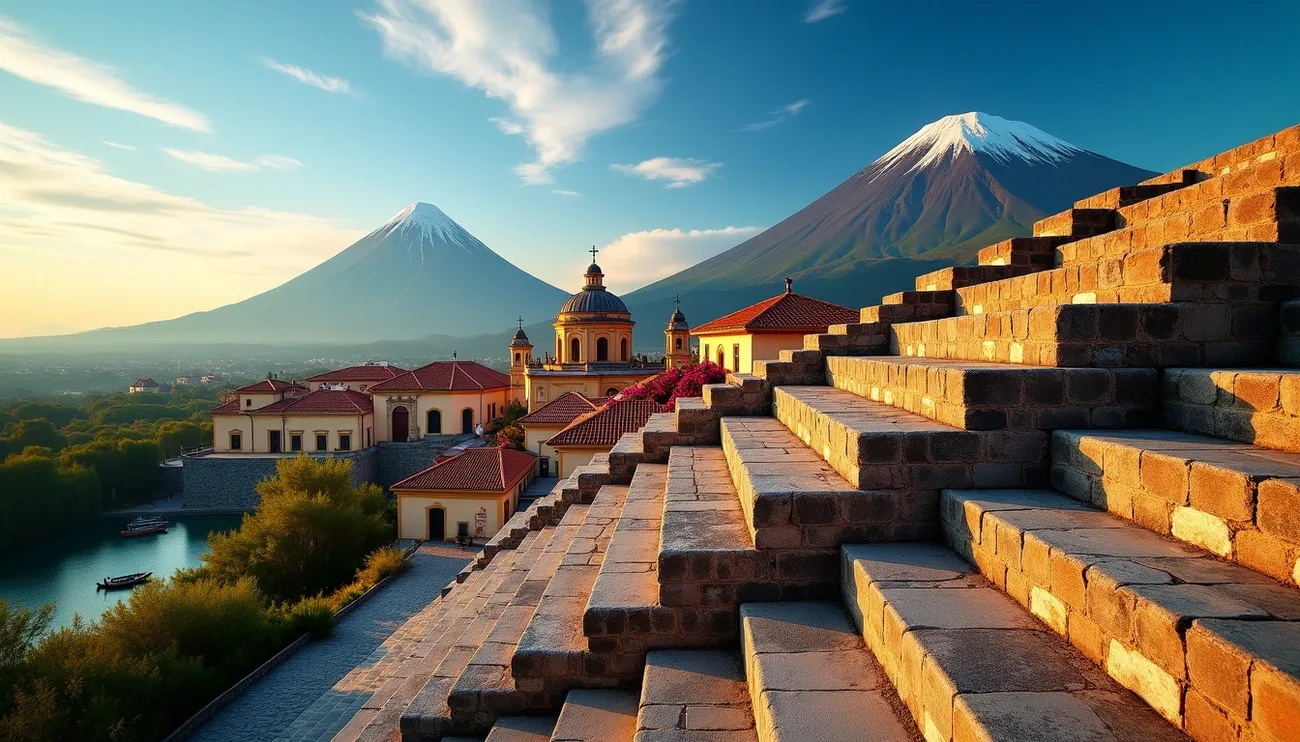
Day trips from Mexico City open up some of the most remarkable destinations in central Mexico. Travelers can explore Teotihuacan, once the largest city in the Americas with an estimated population of about 250,000. They can visit Cholula, home to the largest pyramid ever built with a base of 450 by 450 meters. Ancient ruins, colonial architecture, volcanic landscapes, and lakeside retreats await. These excursions from Mexico City offer incredible variety. This piece covers the best day trips from Mexico City and includes practical tips on transportation, timing, and what to see at each destination for unforgettable weekend trips from Mexico City.
Teotihuacan: Ancient Pyramids and Aztec History
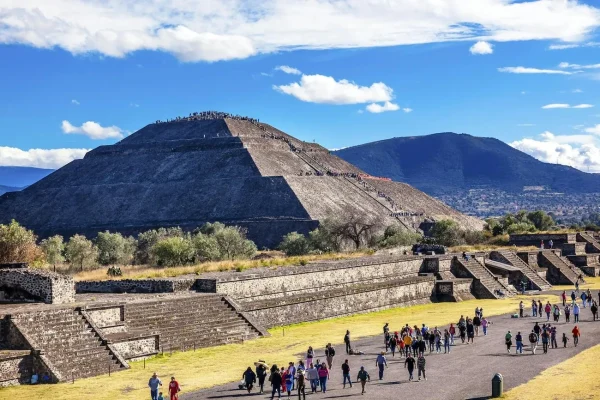
Image Source: World Monuments Fund
Teotihuacan stands as one of Mexico’s most important archeological destinations and a UNESCO World Heritage Site. The ancient city sits 50 kilometers northeast of Mexico City. It reached its peak around 1,400 years ago and covered 21 square kilometers. Preservation rules now prevent visitors from climbing to the tops of the main pyramids. Ground-level exploration and hot air balloon experiences remain the primary ways to view the complex.
What to See at Teotihuacan
The Pyramid of the Sun dominates the site. It rises 216 feet above ground level with a base measuring approximately 720 by 760 feet. About 1,000,000 cubic yards of volcanic rock form the pyramid, which features 248 uneven steps on its west side. The Pyramid of the Moon stands 43 meters high and anchors the northern end of the Avenue of the Dead. It once hosted rituals visible to the entire city.
The Avenue of the Dead stretches 2.5 kilometers through the complex and connects major structures. The Temple of Quetzalcoatl displays intricate carvings of feathered serpents at the southern section. The on-site Museo de la Cultura Teotihuacána showcases artifacts found during excavations. General admission includes entrance to the museum.
How to Get to Teotihuacan
Busses depart from Terminal Central de Autobuses del Norte every 15-20 minutes starting at 6:00 AM. Find the Autobuses Teotihuacan booth near Puerta 8. Signs reading “Piramides” mark the location. Round-trip tickets cost 150 pesos as of December 2025. The journey takes 45 minutes to one hour depending on traffic. Busses stop at Gate 2 and provide access to the Pyramid of the Sun.
General admission costs 210 pesos per person as of January 2026. This represents a recent fee increase that applies to all Mexican archeological sites. Gates open daily from 8:00 AM to 5:00 PM. Ticket sales end at 4:30 PM.
Best Time to Visit Teotihuacan
November through April offers the most comfortable visiting conditions during Mexico’s dry season. Cooler temperatures and lighter crowds await visitors who arrive between 8:00-10:00 AM. Tuesdays through Thursdays see the fewest visitors. Sundays bring the largest crowds because Mexican citizens receive free entry.
Tips for Your Teotihuacan Visit
Expect to spend 4-5 hours exploring the expansive site. Visitors can exit and re-enter without paying again. This allows lunch breaks outside the complex. Bring cash to pay entrance fees and make purchases since card payments aren’t accepted widely. The site offers minimal shade, so hats, sunscreen and water are essential. Light-colored clothing reduces heat absorption from the volcanic rock.
Puebla: Colonial Architecture and Culinary Delights
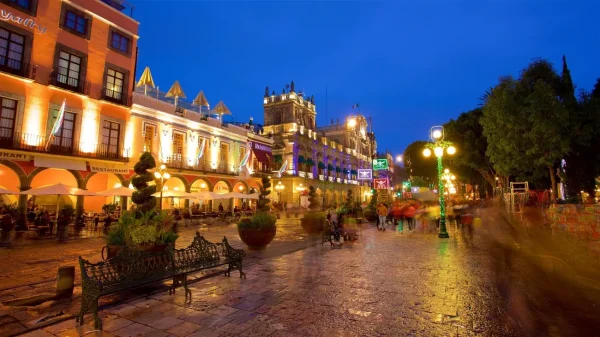
Image Source: Expedia
Puebla ranks as Mexico’s fourth largest city with approximately 2 million residents. It became a UNESCO World Heritage Site in 1987 for its colonial architecture. The city was founded in 1531 as the first planned city in the Americas designed for Spanish settlers exclusively. The historic center features over 70 churches and 1,000 colonial buildings adorned with Talavera tiles.
What to See in Puebla
The Cathedral of the Immaculate Conception dominates the central plaza. It was constructed between 1575 and 1649 with bell towers reaching 69 meters high, making them the tallest cathedral towers in Mexico. Sixteen marble columns support the main altar inside, alongside gold leaf chapels and a 300-ton bronze Virgin Mary statue. The Rosary Chapel sits adjacent to the Santo Domingo Church and showcases 17th-century New Spanish baroque architecture with every surface covered in gold-plated sculptures.
The Ex-Convento de Santa Rosa kitchen displays Talavera tilework across its multi-domed interior, completed in 1740 at a cost of 400 pesos donated by bishops. The Museo Amparo houses pre-Hispanic and colonial artifacts within two connected colonial buildings. Callejón de los Sapos offers antique shops and art galleries along a colorful cobblestone street. The Biblioteca Palafoxiana, founded in 1646, preserves more than 4,500 books dating to the 15th century as the oldest public library in the Americas.
Puebla’s culinary heritage centers on mole poblano and chiles en nogada. The latter features poblano chilies stuffed with meat and fruit, topped with walnut cream sauce and pomegranate seeds in the colors of Mexico’s flag. You can find it from July through September during pomegranate season.
How to Get to Puebla
ADO busses depart from Mexico City’s TAPO terminal near San Lázaro metro station, with service as frequent as every 15 minutes. The trip takes 2 hours and costs 130 pesos. Estrella Roja operates busses from Mexico City airport every 30 minutes from 6:00 AM to 2:00 AM. Busses arrive at Puebla’s CAPU terminal, located 5 kilometers from the historic center.
Best Time to Visit Puebla
May 5th, September 15, and Christmas Eve coincide with the city’s most vibrant celebrations. The rainy season runs from mid-June through October with brief late afternoon storms. Late April brings the hottest temperatures.
Tips for Your Puebla Visit
The historic center remains walkable and safe until late evening. Three days allows complete exploration of the city and day trips to nearby Cholula. Authorized taxi booths at CAPU charge fixed rates of 60 pesos to downtown destinations.
Cholula: The Great Pyramid and Church on the Hill
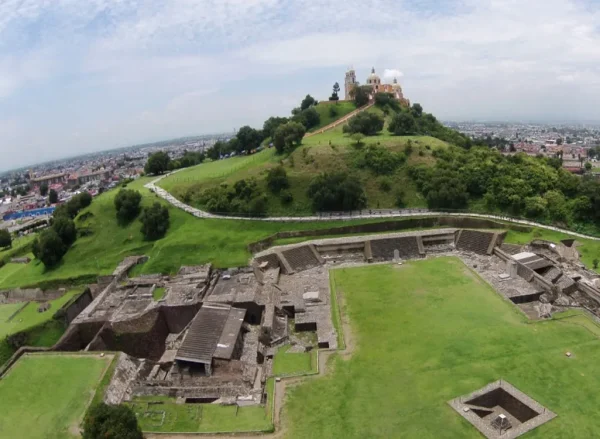
Image Source: Yucatán Magazine
The Great Pyramid of Cholula is the world’s largest pyramid by volume at 4.45 million cubic meters, over twice the size of Egypt’s Great Pyramid of Giza. The base measures 450 meters on each side and rises 54 meters high. Construction began in the 3rd century BC and continued through the 9th century AD. This resulted in seven superimposed pyramids built over six centuries.
What to See in Cholula
The Iglesia de Nuestra Señora de los Remedios crowns the pyramid summit. Spanish colonists built it between 1574 and 1629 with carved stone and 24-carat gilded panels. The church features a neoclassical altar and houses a 27-centimeter statue of Our Lady of the Remedies that arrived in Mexico in 1519. Spanish colonists constructed the church atop the indigenous temple and created a symbolic blend of conquest and religious transformation.
Eight kilometers of tunnels run beneath the pyramid. Approximately half a mile is open for exploration. The entrance to the archeological zone costs 85 pesos for non-Mexican nationals as of 2026. The tunnels reveal murals including “Bebedores” depicting figures drinking pulque and “Chapulines” showing grasshoppers surrounding a skull. The site museum displays excavation artifacts and a detailed model of the pyramid’s construction phases.
How to Get to Cholula
Busses from Puebla’s Autobuses Puebla-Cholula & Anexas station depart every 10-15 minutes. The trip takes 30-40 minutes and costs 10 pesos per person, paid to the driver in cash. A tourist train connects Puebla’s historic center to Cholula’s archeological zone in 40 minutes and makes two stops at Hidalgo Market and Momoxpan. Take an ADO or Estrella Roja bus to Puebla from Mexico City, then transfer to local busses heading to Cholula. The distance between Puebla and Cholula spans 10 kilometers.
Best Time to Visit Cholula
February offers the lowest rainfall and humidity levels. This makes it the optimal month for outdoor exploration. November through April provides pleasant weather during the dry season. Morning visits before 10:00 AM offer clearer views of Popocatépetl and Iztaccíhuatl volcanoes before afternoon mist develops.
Tips for Your Cholula Visit
The archeological zone opens Tuesday through Saturday from 10:00 AM to 5:30 PM. Retain entrance tickets for free access to the tunnel section after visiting the main pyramid area. Comfortable shoes prove essential for climbing the steep stairs to the church summit.
Tepoztlán: Mystical Mountain Town and Aztec Temple
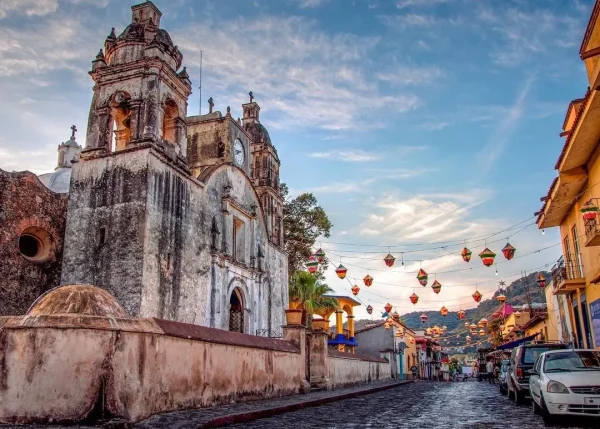
Image Source: Visit Mexico
Tepoztlán holds pueblo mágico designation because of its breathtaking mountain scenery and legendary status as the birthplace of Quetzalcoatl, the top Aztec god. The town attracts practitioners of alternative therapies, healers and mystics who believe true magic pervades the air. Chakra lining up, tarot readings and aura photography operate among traditional activities and create a unique spiritual atmosphere.
What to See in Tepoztlán
El Tepozteco sits 6,000 feet above sea level, a temple dedicated to Tepoztecatl, the god of pulque. The archeological site dates to the 13th century and once attracted pilgrims from as far as Guatemala. The hike covers just over a mile in distance but climbs 2,000 feet in elevation, with the peak reaching 7,500 feet above sea level. The steep, uneven path requires good fitness levels. Entrance costs 90 pesos, though Sundays offer free admission and larger crowds. The site opens Wednesday through Sunday from 9:00 AM to 5:30 PM.
The Church and Former Friary of La Natividad, constructed between 1555 and 1580, received UNESCO Heritage of Humanity recognition in 1994. The complex features original mural paintings within the friary and a Plateresque facade. The Carlos Pellicer Prehispanic Art Museum houses over 1,200 pieces from Maya, Totonaca, Mexica, Teotihuacan, Zapotec and Olmec cultures. Weekend markets fill with handicrafts, pottery, wooden sculptures and street food vendors.
How to Get to Tepoztlán
Pullman de Morelos operates busses from Terminal Central del Sur at Taxqueña station to Tepoztlán every 15-30 minutes. The trip takes one hour and costs 164 pesos per person. ADO and OCC also service this route with departures several times hourly. The distance from Mexico City spans 75 kilometers.
Best Time to Visit Tepoztlán
Spring provides pleasant humidity and temperature levels. The climate maintains daytime temperatures from 70°F to 80°F year-round at an elevation of 5,400 feet. Carnaval occurs four days before Ash Wednesday and brings chaos and color to the streets. October through April represents the dry season with minimal rainfall.
Tips for Your Tepoztlán Visit
Weekends bring crowds of Mexico City residents and raise prices and activity levels. Weekdays offer quieter streets and a more spiritual atmosphere. Comfortable hiking shoes prove essential to climb El Tepozteco, as flip-flops lack adequate traction. Coatimundis at the pyramid summit may attempt to steal food.
Valle de Bravo: Lake Activities and Monarch Butterflies
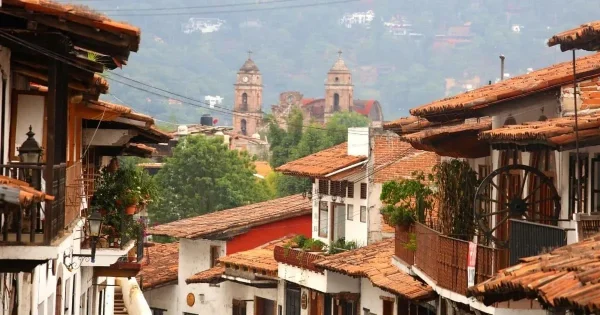
Image Source: Travel Mexico Solo
Valle de Bravo blends lakeside recreation with access to one of Mexico’s premier monarch butterfly sanctuaries. The town sits 131 kilometers from Mexico City at an elevation that provides mild temperatures year-round. Lake Avándaro, created in 1937 at the time the government flooded 2,900 hectares to build a hydroelectric reservoir, serves as the centerpiece for water sports and weekend escapes.
What to See in Valle de Bravo
Lake Avándaro is a great way to get kayaking, paddleboarding, sailing, windsurfing, and fishing activities. The man-made lake provides hydroelectric power and part of Mexico City’s water supply. Piedra Herrada Monarch Butterfly Sanctuary, located 30 kilometers from town, hosts millions of monarch butterflies migrating from as far as Canada between November and March. The butterflies travel about 4,800 kilometers to reach central Mexico.
Sanctuary entrance costs 100 pesos per person. The steep trail takes at least one hour to climb. Horseback rides are available for 300 pesos and cover most of the distance. Visitors must hike the final 15-20 minutes whatever the case. Butterflies create orange clouds in the sky when warm, sunny days rise above 15°C. January and February are peak viewing periods.
How to Get to Valle de Bravo
Autobuses Zina operates busses from Terminal Poniente – Observatorio every two hours. The trip takes two hours and costs 11-15 euros. Purchase “Excelencia Plus” tickets for direct service without stops. A drive from Mexico City takes 1 hour 51 minutes and covers 135.5 kilometers.
Best Time to Visit Valle de Bravo
November through April provides dry weather. December through February coincides with butterfly season, and January and February show the highest butterfly populations. Check weather forecasts before visiting the sanctuary, as cold or cloudy days keep butterflies clustered in trees.
Tips for Your Valle de Bravo Visit
Weekdays have smaller crowds at the butterfly sanctuary compared to weekends. Bring cash, as card payments remain unavailable. Wear hiking shoes and layers to trek the sanctuary. Most tours include visits to Velo de Novia waterfall and time in Valle de Bravo’s town center.
Taxco: Silver Mining Town with Colonial Charm
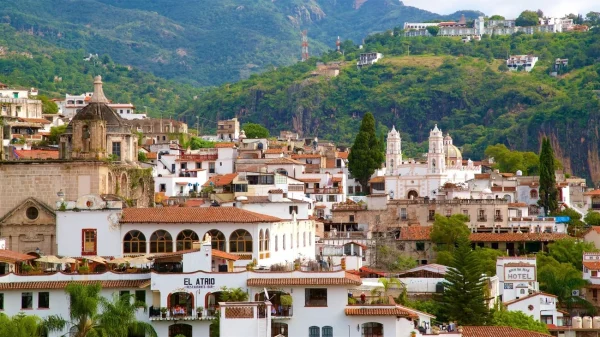
Image Source: Expedia
Nestled in Guerrero state’s mountains between Mexico City and Acapulco, Taxco earned pueblo mágico status for its winding cobblestone streets, whitewashed houses with red tile roofs, and rich silver mining heritage. The town sits 5,000 feet above sea level, about 100 miles southwest of Mexico City.
What to See in Taxco
The Parroquia de Santa Prisca dominates the town center. José de la Borda built it between 1751 and 1759. The baroque masterpiece features twin churrigueresque towers and nine floor-to-ceiling altarpieces covered in gold leaf. Paintings by Miguel Cabrera hang inside, including Martyrdom of St. Sebastian and Martyrdom of St. Prisca.
Silver shopping defines the Taxco experience, and the Museo de la Plateria is a great way to learn about the craft. The Tianguis de la Plata street market offers affordable silverware. The Spratling workshop in Taxco Viejo provides high-end pieces. Check for the .925 stamp that proves 92.5% silver content. A cable car ascends to Monte Taxco Hotel to get panoramic photos. The Cristo Monumental stands 18 meters high atop Cerro del Atache and provides sweeping town views.
How to Get to Taxco
Estrella de Oro busses depart from Terminal Central del Sur at Taxqueña station. The trip takes 2.5-3 hours and costs USD 12-14 each way. You can purchase tickets online or at the terminal.
Best Time to Visit Taxco
January through April, October, November, and December provide the best conditions. Temperatures range from 68°F to 93°F year-round. The rainy season runs June through September.
Tips for Your Taxco Visit
Bargaining works better away from the Zócalo tourist center. Keep valuables in hotel safes and carry only cash you need. White Volkswagen Beetle taxis navigate the steep streets well.
Toluca: Cosmovitral and Cultural Museums
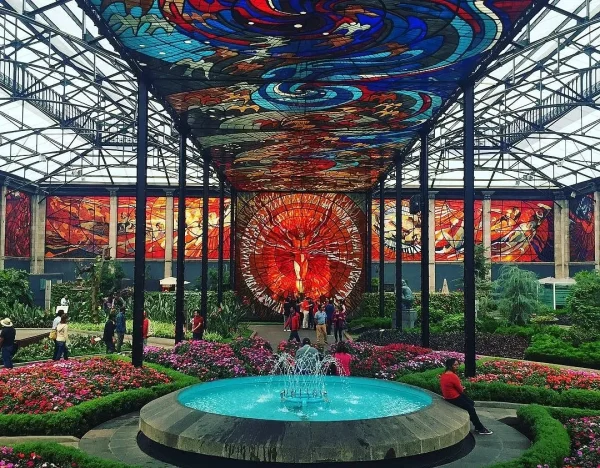
Image Source: Tripadvisor
Toluca, the capital of Mexico State, houses more museums than any Mexican city except Mexico City. The Cosmovitral stands as the crown jewel among these cultural attractions and draws visitors to this industrial hub located 70 kilometers from the capital.
What to See in Toluca
The Cosmovitral Jardín Botánico occupies a building constructed in 1909 as the 16 de Septiembre Market. Tolucan artist Leopoldo Flores designed the stained glass installation with assistance from 60 artisans. The structure contains 3,500 square meters of botanical gardens lit up by 48 stained-glass panels. These windows comprise 500,000 pieces of glass in 28 different colors sourced from seven countries, including Japan, Belgium and Italy. The artwork depicts humanity’s development and relationship with the cosmos. It shows dualities of creation and destruction, life and death, day and night. Entry costs 10 pesos for adults and 5 pesos for children. Guided tours run at scheduled times and explain the symbolism in the windows.
Museo de Bellas Artes de Toluca, formerly a convent, displays Egyptian artifacts and colonial-era paintings. Centro Cultural Mexiquense, located 4.5 kilometers west of downtown, features three museums covering natural history, colonial heritage and modern art.
How to Get to Toluca
Busses depart from Terminal Poniente – Observatorio every 10-15 minutes. The trip takes 1 hour 15 minutes and costs 850-3,900 pesos. Alternatively, Tren El Insurgente operates from Estación Santa Fe to Estación Toluca Centro every 30 minutes, taking 48 minutes for 24 pesos.
Best Time to Visit Toluca
November through April provides dry conditions and clear skies. March through May offers ideal temperatures.
Tips for Your Toluca Visit
Toluca’s specialty, green chorizo, receives its color from green chiles and herbs. Mercado de Toluca sells this regional delicacy.
Nevado de Toluca: Crater Lakes and High-Altitude Hiking
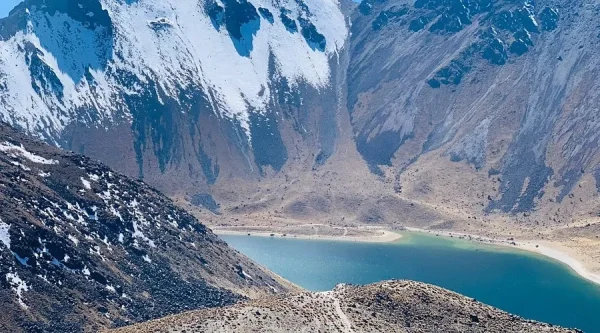
Image Source: Tripadvisor
Nevado de Toluca, also known as Xinantécatl, stands at 4,680 meters as Mexico’s fourth highest peak and the only major volcano located west of Mexico City. This extinct volcano last erupted 10,500 years ago and created a 1.5-kilometer crater that shelters two stunning alpine lakes at 4,200 meters elevation.
What to See at Nevado de Toluca
Laguna del Sol and Laguna de la Luna sit within the massive crater. Their deep blue and green waters contrast against volcanic rock. The crater-rim loop hike spans 8 kilometers with 750 meters of elevation gain and takes 6-7 hours to complete. The route passes through Paso del Quetzal before climbing to Pico del Fraile, the official summit at 4,680 meters. The Class 2-3 scramble has scree, snowfields and boulder-hopping. Entry costs 58 pesos per person as of 2024.
How to Get to Nevado de Toluca
The drive from Mexico City takes 4 hours. The final half-hour runs on rough dirt road that any car can manage. Busses run from Terminal Poniente – Observatorio to Raices every 2 hours and cost 9-13 USD for the 1 hour 50 minute journey. Taxis reach the park entrance from Raices. You can also take a bus to Toluca and then hire a taxi for the remaining distance.
Best Time to Visit Nevado de Toluca
November through March provides the clearest weather and best visibility. Snow can occur anytime but increases from November through April. The park may close during heavy storms temporarily.
Tips for Your Nevado de Toluca Visit
Camping at the 4,000-meter trailhead costs 150 pesos per tent and helps with acclimatization. Temperatures drop below freezing at night and require warm layers. The whole hike stays above 4,000 meters, which makes prior acclimatization critical.
Cuernavaca: City of Eternal Spring
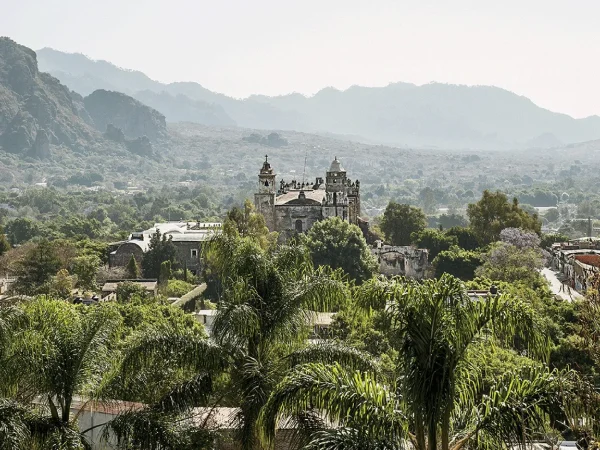
Image Source: Conde Nast Traveler
German naturalist Alexander von Humboldt coined Cuernavaca as the “City of Eternal Spring” for its year-round temperate climate. The capital of Morelos state sits 50 miles from Mexico City and serves as a favorite weekend retreat.
What to See in Cuernavaca
The Palacio de Cortés, built in 1526, stands as the oldest colonial building in the Americas. Diego Rivera murals depicting Morelos state’s history fill the palace. The Cathedral belongs to the Earliest 16th-Century Monasteries on the Slopes of Popocatepetl UNESCO World Heritage Site. The Robert Brady Museum displays folk art within a preserved colonial residence. Teopanzolco Archeological Zone features a pyramid dedicated to Tláloc and Huitzilopochtli.
How to Get to Cuernavaca
Pullman de Morelos busses depart from Taxqueña terminal every 15-30 minutes and take 1.5-2 hours for 190 pesos. Airport busses cost 380 pesos and run throughout the day. Uber rides average 712 pesos, covering 84 kilometers in 1.6 hours.
Best Time to Visit Cuernavaca
November through February brings cool weather. March through May offers warm conditions before the rainy season. Rainfall occurs June through September.
Tips for Your Cuernavaca Visit
Taxis charge fixed zone rates of 30-50 pesos rather than using meters. Uber gives you reliable transportation within the city.
Tepotzotlán: Colonial Baroque Art and Historic Aqueduct
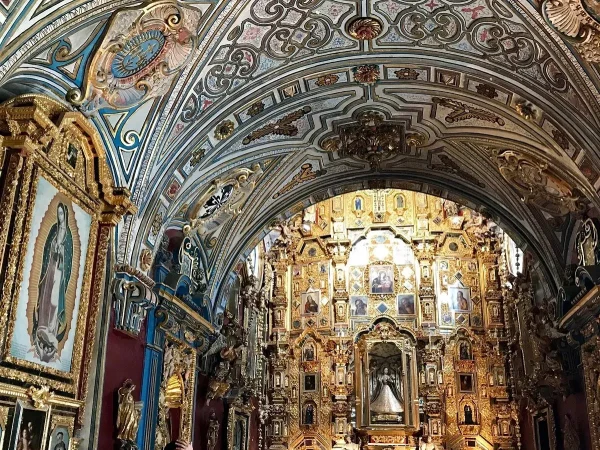
Image Source: Tripadvisor
This UNESCO World Heritage Site along the Camino Real de Tierra Adentro showcases exceptional Churrigueresque architecture. Tepotzotlán sits 45 kilometers north of Mexico City and earned pueblo mágico recognition for its colonial artistic treasures.
What to See in Tepotzotlán
The Church of San Francisco Javier features intricate gold-leaf altarpieces that represent the finest examples of high baroque artwork in Mexico. The adjacent Museo Nacional del Virreinato occupies the former Jesuit college founded in the 1580s. Entry costs 90 pesos as of 2026. The museum houses ivory sculptures and crowned nun paintings. A library contains 4,000 volumes dating from the 16th century. The complex has charming courtyards and the Fuente Del Salto Del Agua fountain.
Arcos del Sitio stands 61 meters tall across 42 kilometers and ranks as Latin America’s tallest aqueduct. The Jesuits began construction in the 1700s to transport water from the Oro River. Their expulsion left it unfinished. Entry costs 35 pesos. The site sits 30 kilometers from town. You’ll need a 45-minute drive each way.
How to Get to Tepotzotlán
Busses depart Terminal del Norte hourly and take about one hour. You can also take the suburban train from Buenavista Station to Cuautitlan Station, then transfer to a collective. The drive takes one hour via Autopiste Mexico City-Queretaro. Exit at kilometer 41.
Best Time to Visit Tepotzotlán
November through April provides pleasant dry weather. December offers festive celebrations with traditional pastorelas.
Tips for Your Tepotzotlán Visit
You’ll need careful planning to visit both the museum complex and Arcos del Sitio due to distance. Stay overnight to see both attractions without rushing.
Hire a private driver in Mexico City.
Malinalco: Archeological Wonders and Wellness Retreats
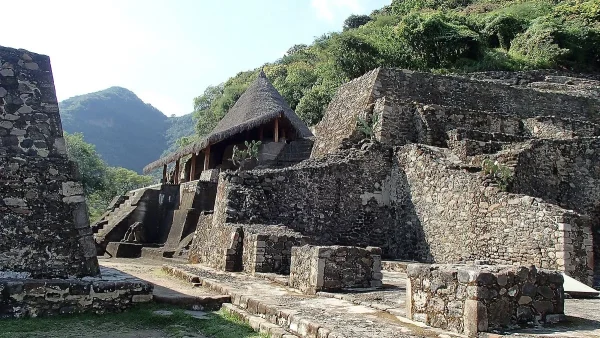
Image Source: Tripadvisor
Originally a Matlatzinca city conquered by the Mexica around 1476, Malinalco combines archeological significance with wellness tourism. This pueblo mágico sits 115 kilometers southwest of Mexico City and offers a distinct blend of ancient history and modern retreat experiences.
What to See in Malinalco
The Cuauhcalli (House of Eagles) represents the only temple in Mesoamerica carved directly into a mountainside. Over 400 stone steps wind up to the ceremonial center. Elite Eagle and Jaguar warriors went through sacred initiation rituals here. The serpent-jaw doorway guides you to a circular chamber. Eagle and ocelot carvings served as fine rugs inside. The archeological zone opens Tuesday through Sunday, 9:00 AM to 4:30 PM. Entry costs 65 pesos. Wellness retreats are a great way to get yoga, massage and temazcal ceremonies.
How to Get to Malinalco
Autotransportes Flecha Roja operates hourly busses from Terminal Poniente – Observatorio. The experience takes 1 hour 50 minutes and costs USD 8-13. You can cover 93.2 kilometers in 1 hour 34 minutes by car.
Best Time to Visit Malinalco
February through May and October through November provide optimal conditions during the dry season.
Tips for Your Malinalco Visit
Allow 1.5 to 2 hours to explore. The steep climb requires comfortable hiking shoes.
Iztaccíhuatl and Popocatépetl: Volcanic Adventures
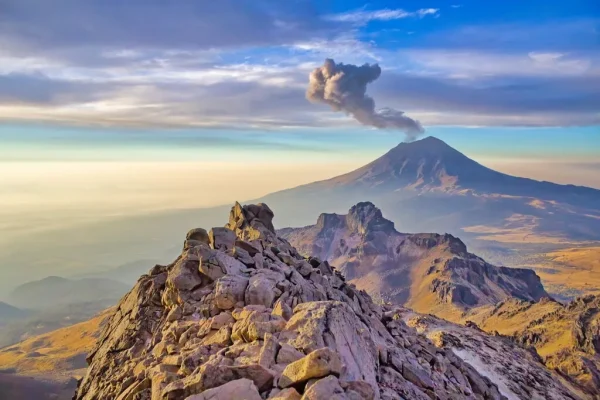
Image Source: PeakVisor
Mexico’s second and third highest peaks, Popocatépetl at 5,426 meters and Iztaccíhuatl at 5,230 meters, dominate Izta-Popo Zoquiapan National Park, 89 years old as Mexico’s oldest protected area. UNESCO designated it a Biosphere Reserve in 2010. Legend says the warrior Popocatépetl and princess Iztaccíhuatl were transformed into mountains by the gods. This allowed them to remain together for eternity.
What to See at Izta-Popo National Park
Paso de Cortés visitor center sits at 3,800 meters between both volcanoes. You can register here and see Pico de Orizaba, La Malinche, and surrounding valleys. The park features 84 trails with an average 4.7-star rating. Paso de Cortés – Primer Portillo ranks as the most popular. It spans 9.8 miles with 3,333 feet elevation gain. Popocatépetl remains active and closed to climbers. Iztaccíhuatl, a dormant volcano, permits summit attempts that start from La Joyita base camp at 4,000 meters. The challenging route takes 12-15 hours for the round trip.
How to Get to Izta-Popo National Park
Busses depart TAPO terminal to Amecameca every 15 minutes for 35 pesos and take 1.5 hours. Taxis reach Paso de Cortés in 45 minutes for 450 pesos from Amecameca’s main square. Entry costs 120 pesos per person. Weekend road access to La Joyita requires advance reservations made 5 days prior through CONANP’s website.
Best Time to Visit Izta-Popo National Park
December through March provides optimal climbing conditions with minimal rainfall. Check Popocatépetl’s volcanic activity on CENAPRED or Webcamsdemexico.com before visiting. Eruptions close park access. Morning arrivals before 10:00 AM offer clearest volcano views before afternoon clouds develop.
Tips for Your Izta-Popo Visit
The park opens 9:00 AM to 6:00 PM Monday-Friday, 7:00 AM to 6:00 PM Saturday, and 7:00 AM to 4:00 PM Sunday. You can camp at La Joyita to help acclimatization before summit attempts. Bring all necessary water since none exists on trails. Mountaineering equipment including helmets and ice axes is essential for summit climbs.
Comparison Table
| Destination | Distance from Mexico City | Travel Time | Transportation Cost | Entry Fee | Biggest Attraction(s) | Best Time to Visit | Notable Feature |
| Teotihuacan | 50 km northeast | 45 min – 1 hour | 150 pesos (round-trip bus) | 210 pesos | Pyramid of the Sun, Pyramid of the Moon, Avenue of the Dead | November – April; 8:00-10:00 AM arrival | UNESCO World Heritage Site; ancient city that once housed 250,000 people |
| Puebla | – | 2 hours | 130 pesos (bus) | – | Cathedral of the Immaculate Conception, Rosary Chapel, Biblioteca Palafoxiana | May 5th, September 15th, Christmas Eve | Mexico’s 4th largest city; UNESCO World Heritage Site with 70+ churches |
| Cholula | 10 km from Puebla | 30-40 min from Puebla | 10 pesos (from Puebla) | 85 pesos | Great Pyramid (world’s largest by volume), Iglesia de Nuestra Señora de los Remedios | February; November – April | World’s largest pyramid by volume at 4.45 million cubic meters |
| Tepoztlán | 75 km | 1 hour | 164 pesos | 90 pesos (El Tepozteco; free on Sundays) | El Tepozteco temple, Church and Former Friary of La Natividad | Spring; October – April | Pueblo mágico; legendary birthplace of Quetzalcoatl |
| Valle de Bravo | 131-135.5 km | 2 hours | 11-15 euros (bus) | 100 pesos (butterfly sanctuary) | Lake Avándaro, Piedra Herrada Monarch Butterfly Sanctuary | November – April; January – February for butterflies | Lakeside recreation and monarch butterfly migration (4,800 km experience) |
| Taxco | ~100 miles southwest | 2.5-3 hours | USD 12-14 | – | Parroquia de Santa Prisca, silver markets, Cristo Monumental | January – April, October – December | Pueblo mágico; silver mining heritage at 5,000 feet elevation |
| Toluca | 70 km | 1 hour 15 min (bus); 48 min (train) | 850-3,900 pesos (bus); 24 pesos (train) | 10 pesos adults, 5 pesos children (Cosmovitral) | Cosmovitral Jardín Botánico, Museo de Bellas Artes | November – April; March – May | Cosmovitral features 500,000 glass pieces from 7 countries |
| Nevado de Toluca | – | 4 hours (drive) | 9-13 USD (bus to Raices) | 58 pesos | Laguna del Sol, Laguna de la Luna, crater-rim hike | November – March | Mexico’s 4th highest peak at 4,680 meters; extinct volcano |
| Cuernavaca | 50 miles (84 km) | 1.5-2 hours | 190 pesos (bus); 380 pesos (airport bus) | – | Palacio de Cortés, Cathedral, Robert Brady Museum | November – February (cool); March – May (warm) | “City of Eternal Spring”; oldest colonial building in Americas (1526) |
| Tepotzotlán | 45 km north | ~1 hour | – | 90 pesos (museum); 35 pesos (aqueduct) | Church of San Francisco Javier, Museo Nacional del Virreinato, Arcos del Sitio | November – April | UNESCO World Heritage Site; Latin America’s tallest aqueduct (61 meters) |
| Malinalco | 115 km southwest (93.2 km drive) | 1 hour 50 min (bus); 1 hour 34 min (drive) | USD 8-13 | 65 pesos | Cuauhcalli (House of Eagles), wellness retreats | February – May; October – November | Only Mesoamerican temple carved directly into mountainside |
| Iztaccíhuatl and Popocatépetl | – | 1.5 hours to Amecameca + 45 min taxi | 35 pesos (bus to Amecameca); 450 pesos (taxi); 120 pesos (entry) | 120 pesos | Paso de Cortés, Iztaccíhuatl summit climb, hiking trails | December – March | Mexico’s 2nd and 3rd highest peaks; UNESCO Biosphere Reserve; oldest national park (1935) |
Enjoy Day Trips from Mexico City
Mexico City serves as an ideal base to explore central Mexico’s best destinations. Travelers can access ancient pyramids, colonial masterpieces, volcanic landscapes and serene lakeside retreats within a few hours. Each destination offers different experiences. You can climb Teotihuacan’s iconic pyramids or witness millions of monarch butterflies in Valle de Bravo.
The variety will give a traveler something appealing, whether they seek archeological wonders or outdoor adventures. Planning these excursions becomes straightforward with the transportation details, costs and timing recommendations provided. These weekend escapes change a Mexico City visit into a complete exploration of the region’s heritage and natural beauty.
FAQs
Q1. What are the top day trip destinations from Mexico City? The best day trips include Teotihuacan (45-60 minutes away), featuring ancient pyramids; Puebla (2 hours), known for colonial architecture; Tepoztlán (90 minutes), a mystical mountain town; Valle de Bravo (2 hours), offering lake activities and monarch butterflies; and Taxco (2.5-3 hours), famous for silver mining heritage. Each destination provides unique experiences ranging from archeological sites to natural landscapes.
Q2. How far can you travel from Mexico City for a weekend escape? Most popular weekend destinations lie within 2-3 hours of Mexico City. Nearby options include Tepoztlán and Cuernavaca in Morelos (under 2 hours), Puebla and Cholula (2 hours), Taxco in Guerrero (2.5-3 hours), and Valle de Bravo (2 hours). These distances make them perfect for day trips or overnight stays while offering diverse attractions from colonial towns to volcanic landscapes.
Q3. Which charming towns near Mexico City are worth visiting? Several picturesque towns surround Mexico City, each with distinct character. Puebla showcases colonial architecture and culinary traditions, Cuernavaca offers year-round spring weather, Taxco features silver markets and baroque churches, Toluca houses the stunning Cosmovitral, and Tepoztlán provides mystical mountain scenery. All these destinations sit within three hours of the capital and offer authentic Mexican cultural experiences.
Q4. What are the best weekend getaway options from Mexico City? Popular weekend escapes include Valle de Bravo for lakeside relaxation, Tepoztlán for hiking and spiritual experiences, Malinalco for archeological wonders and wellness retreats, Taxco for colonial charm and silver shopping, Cuernavaca for pleasant weather, and Cholula to see the world’s largest pyramid. These destinations combine natural beauty, historical significance, and cultural richness for memorable short trips.
Q5. How much do day trips from Mexico City typically cost? Transportation costs vary by destination: Teotihuacan busses cost 150 pesos round-trip, Puebla busses run 130 pesos, Tepoztlán costs 164 pesos, and Taxco ranges from USD 12-14. Entry fees typically range from 58-210 pesos for archeological sites. Budget approximately 300-500 pesos per person for transportation and entrance fees, plus additional costs for meals and activities at each destination.


Leave A Comment