

Cologne Cathedral is a UNESCO World Heritage Site. It draws about 20,000 visitors every day. This makes it Germany’s top attraction. The cathedral’s Gothic architecture has stood for over 623 years, starting in 1248.
The Cologne Cathedral history shows human creativity and hard work.
The cathedral’s design is known for its Gothic elements. These include pointed arches, flying buttresses and stunning stained glass windows. It’s one of Germany’s largest churches and a world-famous Gothic architecture example. Cologne Cathedral is a key spot for travelers and architecture fans.
Key Takeaways
- Cologne Cathedral is a UNESCO World Heritage Site and one of the world’s most famous examples of Gothic architecture.
- The cathedral attracts an average of 20,000 visitors daily, making it Germany’s most visited landmark.
- Cologne Cathedral took about 623 years to build, with its construction starting in 1248 and lasting several hundred years.
- The cathedral’s architectural style is characterized by Gothic features such as pointed arches, flying buttresses and stained glass windows.
- Cologne Cathedral is a renowned monument of German Catholicism and Gothic architecture, with a rich history and cultural significance.
- Visitors can climb 533 steps to the top of the cathedral, reaching a viewing platform about 300 feet above the ground, offering stunning views of Cologne.
The Magnificent History of Cologne Cathedral
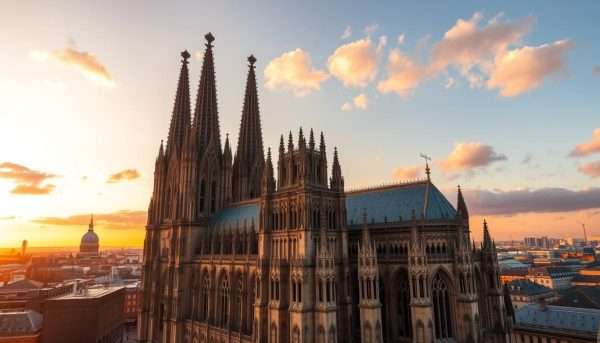
Cologne Cathedral’s story began in 1248 and ended in 1880. Its Cologne Cathedral history shows the power of Christian faith. The first stone was laid on August 15, 1248 and the eastern part was blessed in 1322.
The building work wasn’t always steady. But, by 1880, it was finished just as the old plans said. The Cologne Cathedral restoration has kept it standing strong. Now, it’s a UNESCO World Heritage Site and a top spot in Germany, with over 6 million visitors every year.
The cathedral’s tale is one of overcoming odds and repair. In World War II, it was hit hard by air raids in 1944. But, thanks to quick thinking, the medieval windows were saved and the choir was fixed by 1948. By 1956, the whole inside was back to its former glory. The Cologne Cathedral restoration keeps going, making sure this amazing piece of history stays with us.
| Year | Event |
|---|---|
| 1248 | Foundation stone laid |
| 1322 | Eastern arm consecrated |
| 1880 | Construction completed |
| 1944 | Severe damage from Allied air raids |
| 1948 | Choir restored |
| 1956 | Full interior restored |
Architectural Marvel: Understanding Gothic Masterpiece
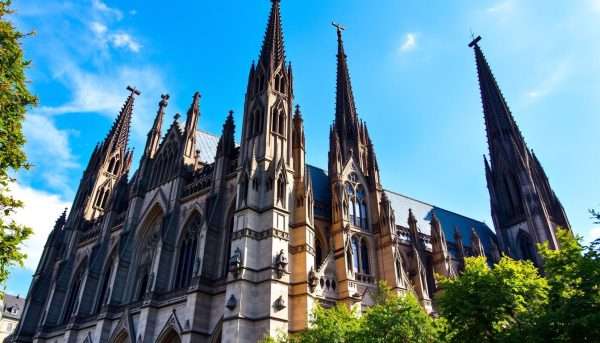
The Cologne Cathedral architecture shows the skill of Gothic design. It has tall vertical lines and detailed designs. The cathedral’s size, with a length of 144.5 meters and a height of 157.22 meters, is truly impressive.
The Cologne Cathedral architecture is known for its use of natural light. The stunning stained glass windows let in light, creating a colorful inside. This design lets sunlight reach deep inside, reducing the need for artificial light. It’s a great example of eco-friendly design.
- Pointed arches and ribbed vaults that provide structural support and create a sense of airiness
- Flying buttresses that aid in structural stability and facilitate the entry of natural light
- Stunning stained glass windows that play a pivotal role in diffusing sunlight and creating vibrant hues within the interior
The Cologne Cathedral architecture is a true Gothic masterpiece. Its design has inspired many buildings across Europe and beyond.
The Twin Spires: Defining Germany’s Skyline

Cologne Cathedral’s twin spires are a key part of the city’s skyline, reaching 157 meters high. These spires are a wonder of Gothic architecture and show the cathedral’s long history. Visitors can climb 533 stone steps to see a stunning view of the Rhine. It’s a top spot for anyone wanting to learn more about Cologne Cathedral facts.
The cathedral’s spires were once the world’s tallest, until the Washington Monument was built. Today, they are the tallest twin-spired church globally, with the northern tower a bit taller. The story of their historical development is captivating, with the south tower unfinished from 1473 to 1842.
Photographers will love the cathedral, with many spots to capture amazing photos. Whether you’re a pro or just starting, the cathedral’s beauty and architecture are perfect subjects. Some top spots for photos include:
- The Rhine River promenade
- The cathedral’s rooftop platform
- The streets and alleys of Cologne’s old town
These spots give a unique view of the cathedral’s spires, showing their grandeur and beauty. With its history, architecture, and setting, Cologne Cathedral is a key place to visit for anyone interested in Cologne Cathedral facts.
| Feature | Description |
|---|---|
| Twin Spires | Standing at 157 meters tall, the tallest twin-spired church in the world |
| Construction | Spanned over 600 years, from 1248 to 1880 |
| Viewing Points | Numerous points around the city, including the Rhine River promenade and the cathedral’s rooftop platform |
Visit Cologne Christmas Market.
Sacred Treasures Within Cologne Cathedral

Cologne Cathedral is famous for its stunning architecture and history. It also has many sacred treasures and artworks. The Shrine of the Three Kings is a highlight, housing the remains of the Three Magi.
This shrine is huge, measuring 110 cm wide, 153 cm high and 220 cm long. It’s covered in over 1,000 jewels and beads. It’s one of the biggest reliquaries in the Western world.
Some Cologne Cathedral facts include the shrine’s detailed decoration. It has figures of prophets, apostles, and evangelists, making up 74 high relief images in silver-gilt. The shrine shows the cathedral’s rich history and its role as a medieval and Renaissance art repository.
Visitors can see the shrine’s beauty and learn about its importance. This is part of the Cologne Cathedral facts.
Other artworks in the cathedral include the Gero Crucifix and the altarpieces of St. Clare and the City Patrons by Stephan Lochner. These pieces are important for their religious and artistic value. They show the skill of the artists who made them.
The cathedral’s Treasury also has many treasures. These include glittering chalices, crosses, and reliquaries, as well as fine bishops’ garb.
- The Shrine of the Three Kings, a large reliquary containing the remains of the Three Magi
- The Gero Crucifix, the oldest surviving monumental crucifix north of the Alps
- The altarpiece of St. Clare and the altarpiece of the City Patrons by Stephan Lochner
- The cathedral’s Treasury, containing a variety of glittering chalices, crosses, and reliquaries
These treasures show the cathedral’s rich history and its role as an art repository. Visitors can learn about these pieces and their significance. They can also appreciate their beauty and craftsmanship.
More Cologne attractions.
Artistic Heritage: Stained Glass and Sculptures

The Cologne Cathedral architecture is famous for its stunning stained glass windows. These windows cover over 10,000 square meters, making it the largest in any church worldwide. They show biblical stories, adding to the cathedral’s spiritual feel.
The south transept window, known as the Richter window, is a standout. It has 11,263 color squares in 72 colors. Visitors can see the detailed stained glass windows, including both colored surfaces and picture windows.
The cathedral’s treasury and western portal are also must-sees. They feature an impressive collection of artworks and sculptures. For more on the cathedral’s history and architecture, visit this website.
The cathedral’s artistic heritage goes beyond its stained glass. The Shrine of the Three Kings is a large gilded sarcophagus. It’s believed to hold the remains of the Three Wise Men’s bones and clothes, making Cologne a major pilgrimage site.
The cathedral’s sculptures, like the choir stalls and statues on the pillars, are also noteworthy.
Medieval Stained Glass Windows
The medieval stained glass windows in the cathedral showcase the artists’ skill and craftsmanship. These windows tell stories from the Bible and historical events, giving a glimpse into the past. Their beauty inspires visitors from all over the world.
Famous Sculptures and Artworks
The cathedral houses many famous sculptures and artworks, including the Shrine of the Three Kings and the choir stalls. These pieces are not just beautiful but also historically significant. They offer insight into the cathedral’s rich history.
Visitors can explore the cathedral’s treasury and western portal to see these artworks up close. They can learn more about their significance.
Planning Your Visit to Cologne Cathedral
When planning a cologne cathedral visit, knowing the Cologne Cathedral opening hours is key. The cathedral welcomes tourists from 10 a.m. to 5 p.m. on weekdays. On Sundays, it’s open from 1 p.m. to 4 p.m.
To avoid the crowds, visit early in the morning or late in the evening. You can also time your cologne cathedral tour around the masses. These happen often on weekdays and Sundays at different times. The Cologne Cathedral entrance fee is free, but tickets are needed for the Treasury or Tower. Adult tickets cost €6, while children, students and concessions pay €3.
Guided tours are available for €8 to €20 and last 60 to 90 minutes. The DOMFORUM offers tours in English for €10 for adults and €8 for kids and students. Climbing the tower offers stunning views of Köln for a fee.
| Attraction | Price | Duration |
|---|---|---|
| Cologne Cathedral Treasury | €6 (adult), €3 (concession) | Self-guided |
| Guided Tour | €8-€20 | 60-90 minutes |
| Tower Climb | €6 (adult), €3 (concession) | Self-guided |
Always check the Cologne Cathedral opening hours before your visit. This way, you can plan your Cologne Cathedral tour for the best experience.
In contrast, visit St Denis Basilica.
UNESCO World Heritage Status and Preservation
The Cologne Cathedral, a Gothic architecture marvel, was named a UNESCO World Heritage Site in 1996. This honor shows its cultural and architectural value, placing it among the world’s most protected sites. The Cologne Cathedral UNESCO status highlights the need for careful Cologne Cathedral restoration and conservation.
Some key facts about the Cologne Cathedral’s UNESCO status and preservation include:
- The cathedral was declared a World Heritage Site for its lasting impact on European Christianity over six centuries.
- Its construction and completion show the strength of Christian belief in medieval and modern Europe.
- The cathedral’s treasury boasts impressive artwork, with visitors having mixed opinions on its interior and ambiance.
A visual impact study is underway to see how nearby high-rise buildings affect the cathedral’s look. The urgent need for a clear buffer zone to protect the cathedral’s visual integrity was emphasized. The State Party was asked to review current building plans to ensure they respect the cathedral’s visual integrity.
The following table highlights some key statistics related to the Cologne Cathedral’s UNESCO World Heritage Status and Preservation:
| Category | Description | Statistics |
|---|---|---|
| Construction | Time to complete | Over 600 years |
| UNESCO Status | Year declared | 1996 |
| Preservation | Current efforts | Ongoing restoration and conservation |
The UNESCO status and ongoing restoration efforts show the importance of preserving this iconic structure for future generations.
Hidden Gems and Lesser-Known Features
Exploring the cologne cathedral reveals many hidden treasures. These show the cathedral’s deep history and architectural beauty. Below the cathedral, ancient Roman ruins and early Christian artifacts await discovery.
Excavations have uncovered a wealth of historical finds. These go back to the Roman Empire, linking the site to centuries of history. Some key discoveries include:
- Ancient Roman ruins, showcasing the city’s rich past
- Early Christian artifacts, highlighting the cathedral’s significance in the Christian faith
- Underground crypts, containing notable burials and relics
Visitors can also learn about the bell towers. They find out about the cathedral’s bells and hidden chambers or passageways. The Cologne Cathedral facts highlight its lasting legacy, with its detailed architecture and beautiful stained-glass windows.
By exploring these hidden gems, visitors can understand the cathedral’s history and importance. This makes their visit truly memorable.
Modern Role in German Culture and Society
The Cologne Cathedral is a big deal in modern German culture and society. It draws in millions of visitors every year. As a famous landmark in Germany, it’s a center of cultural events and festivals. Cologne Cathedral facts show its importance as a cultural and historical gem, with over six million tourists visiting annually.
The cathedral is more than just a religious site. Its amazing architecture and stunning stained-glass windows attract art lovers and historians. Here are some key Cologne Cathedral facts that show its role in German culture and society today:
- Attracts over six million visitors each year
- Hosts various cultural events and festivals
- Features stunning architecture and beautiful stained-glass windows
- Is a significant cultural and historical landmark in Germany
The Cologne Cathedral also boosts the local economy. It brings in a lot of money from tourism and souvenir sales. As a symbol of German identity and culture, it inspires modern art, literature and music.
| Category | Description |
|---|---|
| Cultural Significance | Attracts millions of visitors each year, hosts cultural events and festivals |
| Economic Impact | Generates significant revenue from tourism and souvenir sales |
| Architectural Importance | Features stunning architecture and beautiful stained-glass windows |
Experiencing the Timeless Wonder of Cologne Cathedral
The Cologne Cathedral is a marvel that draws people from everywhere. Its grand Gothic design, with high spires and detailed carvings, shows the lasting impact of human imagination and faith. Every visit uncovers new wonders, from its massive architecture to the precious items inside.
The cathedral’s story is as deep as its beauty, having made it through centuries, including World War II. Its ability to survive and be preserved adds to the feeling of awe when you walk through it. The Cologne Cathedral is more than a building; it’s a living symbol of the human spirit. It’s a place where heaven and earth meet, inviting everyone to pause, think and be amazed.
Whether you’re deeply religious or just love old art and architecture, seeing the Cologne Cathedral is essential. Its timeless beauty and importance make it a top spot for Cologne cathedral visit. As you look at its fine details and feel its grandeur, you’ll gain a greater respect for human creativity. And you’ll see how sacred places can inspire and lift our spirits.











Leave A Comment