
Weekend trips from Seoul reveal natural beauty, cultural heritage and adventure just beyond South Korea’s bustling capital. Nami Island sits just 63 kilometers east of Seoul and ranks among Korea’s most iconic sights. You can reach it on a Seoul day trip. Travelers seeking UNESCO World Heritage sites such as Suwon Hwaseong Fortress, stunning mountain landscapes or coastal escapes will find that cities near Seoul offer varied experiences. The best day trips from Seoul range from quick getaways to overnight adventures and include everything from ski resorts to historic villages. This piece covers 13 best weekend trips from Seoul, complete with travel times and practical tips for each destination.
Nami Island and Garden of Morning Calm
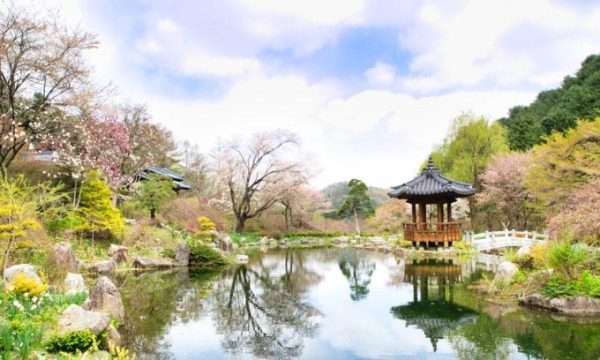
Image Source: Trazy Blog
Two stunning destinations combine to create one of the best day trips from Seoul. Nami Island, a half-moon-shaped isle on the Bukhangang River, sits 63 kilometers northeast of the capital. The Garden of Morning Calm in Gapyeong spans 330,000 square meters and houses over 5,000 plant species.
Travel Time from Seoul
Travel time to Nami Island ranges from 1 to 2 hours depending on transportation method. A car trip takes about 1 hour in light traffic. You can reach the Garden of Morning Calm within 2 hours by car. Tours that visit both locations on a single day trip run 11 to 12 hours total. They depart Seoul around 8:00 AM and return by 7:30 PM.
How to Get There
The ITX-Cheongchun train offers the most budget-friendly route. The trip from Yongsan Station to Gapyeong Station takes 50 minutes and costs around ₩6,900. Travelers reach Gapyeong in 40 minutes from Cheongnyangni Station and pay ₩5,700. The City Tour Bus provides access to both destinations from Gapyeong Station and costs ₩8,000.
Visitors to the Garden of Morning Calm can take the subway to Cheongpyeong Station on the Gyeongchun Line. A 20-minute taxi ride from there costs about ₩18,000. Local busses also operate from the station.
Nami Island requires a ferry crossing from Gapyeong Wharf. Ferries depart every 10 to 20 minutes between 9 AM and 6 PM, with reduced frequency to every 30 minutes before 9 AM and after 6 PM. The first ferry leaves at 8:00 AM and the last at 9:00 PM. Admission tickets cost ₩19,000 for adults and include the round-trip ferry. Thrill-seekers can zipline onto the island at 80 kilometers per hour.
What to See and Do
Nami Island features iconic tree-lined paths that include Central Red Pine Road, Metasequoia Lane and Songpa Ginkgo Road. Bike rentals start at ₩4,000, with options ranging from single bikes to electric tricycles.
The Garden of Morning Calm showcases 22 distinctive themed gardens. Notable areas include the Millennium Juniper, estimated at 1,000 years old, and the Moonlight Garden with spring tulips. J’s Cottage Garden features English-style perennial plants. The garden attracts 600,000 tourists each year.
Best Time to Visit
Both destinations shine year-round. Autumn draws crowds for spectacular foliage, especially from mid-October through early November. Spring brings cherry blossoms and tulips from April through May. Summer features hydrangea exhibitions that showcase five different varieties. Winter transforms the Garden of Morning Calm into a glowing wonderland during the Lighting Festival from December through mid-March.
Suwon Hwaseong Fortress
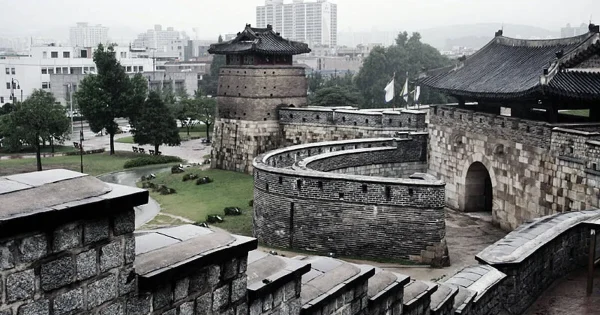
Image Source: UNESCO World Heritage Center
Built in the late 1700s during the Joseon Dynasty, this UNESCO World Heritage site stretches 5.74 kilometers around Suwon’s city center. The fortress sits 30 kilometers south of central Seoul and blends historical architecture with modern city life.
Travel Time from Seoul
The fastest route takes 30 to 35 minutes via train from Seoul Station. ITX trains complete the trip in 31 minutes for ₩4,800, while Mugunghwa trains take 35 minutes at ₩2,700. KTX trains offer another 35-minute option at ₩8,400. Seoul Subway Line 1 reaches Suwon Station in 1 hour and 4 minutes for ₩2,150.
How to Get There
Travelers head to Exit 1 at Seoul Station for the KTX station and check departure boards to find platform assignments. You can purchase tickets online in advance or at the station.
Line 1 offers the most budget-friendly option for subway riders at ₩2,100 for the 53-minute trip. Express trains marked with the letter ‘E’ reduce travel time by skipping nine stations.
Multiple busses serve the fortress from Suwon Station. Bus routes 66, 66-4, 60, 5, 7-1, 7-2, and 82-1 depart near Exit 7 and reach Hwaseomun Gate in 9 minutes for ₩1,450. Premium busses 1007, 2007, and 7770 cost ₩2,800 for the same route. The Hwaseong Fortress Tourist Trolley, modeled after royal palanquins, follows a 20-minute circular route that connects major gates.
What to See and Do
The complete fortress circuit takes 3 hours to walk. The structure features four main gates, with illuminated night views that create stunning photo opportunities. Hwaseong Haenggung Palace, a temporary royal shelter during wartime, hosts traditional performances and costs ₩2,000 for adults and ₩1,000 for children. A combination ticket covering the fortress, palace, Hwaseong Museum, and Suwon Museum costs ₩4,000 for adults. Nearby Haenggung-dong Mural Village offers colorful street art. Jidong Market serves authentic Korean street food.
Best Time to Visit
April ranks as the optimal month. Temperatures range between 10°C and 20°C, and cherry blossoms line fortress paths in early to mid-April. May offers mild weather with occasional cultural festivals. October provides clear autumn air and colorful foliage, which is appealing after summer humidity drops. The fortress operates March through October from 9:00 AM to 6:00 PM and November through February from 9:00 AM to 5:00 PM.
Gangnam Style filming locations.
Seoraksan National Park and Sokcho
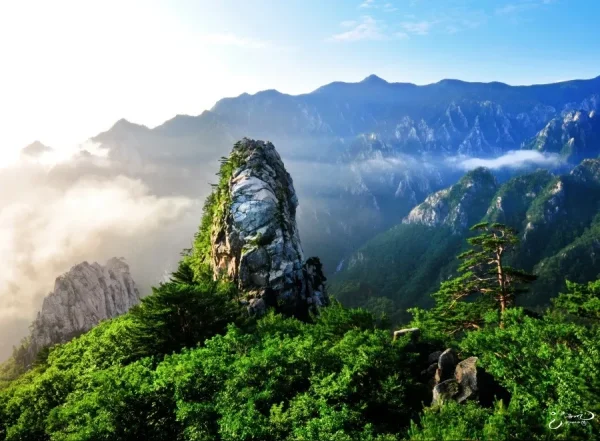
Image Source: Visit Korea
Seoraksan National Park ranks among South Korea’s most spectacular natural destinations. The park sits in the northeast near Sokcho city. This UNESCO Biosphere Protection site spans 163 square kilometers and features 30 imposing peaks, with Daecheongbong reaching 1,708 meters. Rare Korean musk deer, Asian black bears, and Siberian flying squirrels call the park home.
Travel Time from Seoul
The trip requires about 2 hours and 20 minutes by express bus to Sokcho. A local bus then takes 30 to 45 minutes to the park entrance. Total travel time ranges from 3 to 3.5 hours depending on traffic.
How to Get There
Express busses depart every 30 minutes from Seoul Express Bus Terminal and Dong Seoul Bus Terminal. Ko Bus and TxBus operate this route. Tickets cost $9 to $20 USD. Premium busses take the highway with a 15-minute rest stop, while regular busses follow national road 44 and take 40 to 50 minutes longer but cost $4.50 less.
Local bus routes 7 or 7-1 reach Seorak-dong Sogongwon bus stop in about 30 to 45 minutes from Sokcho Express Bus Terminal. Taxis from Sokcho cost around ₩13,000 to ₩15,000.
What to See and Do
Sinheungsa Temple sits just 15 minutes by foot from the park entrance on a flat path. The temple has a bronze Buddha statue and a seventh-century main hall. The Ulsanbawi hike covers 4 kilometers each way and requires 60 to 90 minutes. Hundreds of stairs lead to views of Sokcho and the East Sea. The Seoraksan Cable Car ascends to Gwongeumseong Fortress ruins. Adults pay ₩10,000 for panoramic views. Towangseong Falls towers 320 meters across three tiers.
Best Time to Visit
Spring (April) and autumn (September to November) provide mild temperatures and optimal hiking conditions. October draws peak crowds for fall foliage, especially during public holidays. The park operates year-round from 6:00 AM to 8:00 PM.
Jeonju Hanok Village
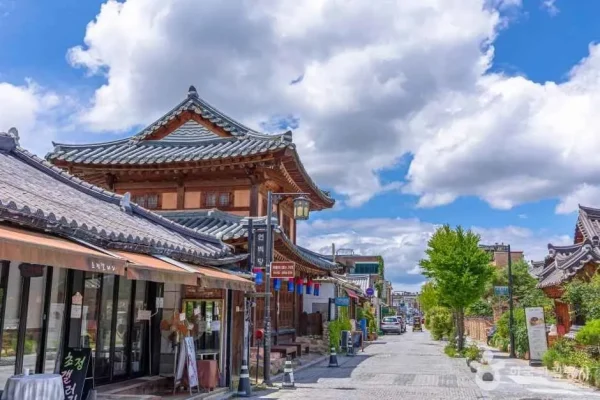
Image Source: Visit Korea
Home to over 700 traditional hanok houses preserved from the Joseon era, Jeonju Hanok Village represents one of Korea’s largest heritage districts. This cultural hub sits 240 kilometers south of Seoul and attracts visitors with its architectural beauty and reputation as the culinary capital of South Korea.
Travel Time from Seoul
The KTX train completes the trip in 1 hour and 48 minutes. Express busses require 2 hours and 50 minutes from Dongseoul Station. The drive takes around 2 hours and 23 minutes by car.
How to Get There
KTX trains depart from Seoul Station multiple times daily, with economy class tickets priced at ₩34,600. The Mugunghwa train offers a slower alternative at nearly 4 hours. Express busses from Dongseoul Station cost ₩22,400 one-way. Taxis to the village run around ₩6,000 from Jeonju Station or Bus Terminal.
Day tours from Seoul last 14 hours and include transport, with options for traditional dessert making or cooking classes.
What to See and Do
Gyeonggijeon Shrine houses the portrait of King Taejo, surrounded by bamboo forests that serve as popular photo locations. Jeondong Catholic Cathedral, built between 1908 and 1914, stands as the oldest Romanesque building in the Honam region. Omokdae offers elevated views over the tightly clustered hanok rooftops. Pungnammun Gate remains the sole surviving entrance of four original city gates from the Joseon Dynasty.
The village features sidewalks that make walking convenient. Hanbok rental shops allow visitors to experience traditional Korean garments while exploring historic streets.
Best Time to Visit
Autumn, especially late October through early November, showcases spectacular ginkgo and maple foliage throughout the village. Spring and summer offer charm as well, though the vibrant fall colors create exceptional photo opportunities.
Busan
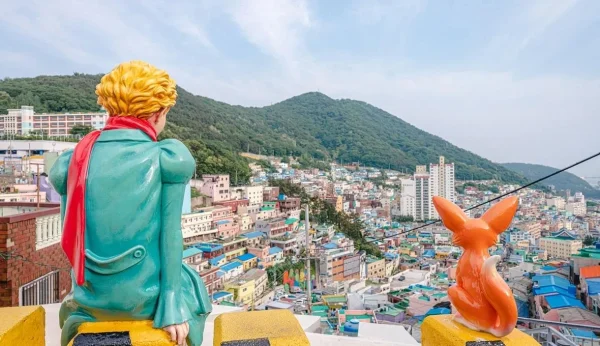
Image Source: Visit Busan
South Korea’s second-largest city blends coastal charm with urban energy, positioned 330 kilometers south of the capital along the southeastern shore. Busan serves as a major port destination with beaches, mountains and vibrant markets.
Travel Time from Seoul
The KTX high-speed train completes the trip in under 2.5 hours, with the fastest travel time at 2 hours and 15 minutes. The ITX-Saemaeul train takes about 4 hours as an alternative, while the Mugunghwa train requires up to 5.5 hours. Express busses need 4 hours between Seoul Express Bus Terminal and Busan Central Bus Terminal. You can drive and cover around 330 kilometers in 4 to 5 hours, though traffic will affect your time.
How to Get There
KTX trains depart from Seoul Station or Suseo Station with 71 daily services. Economy class tickets range from $43 to $70 USD, with departures running from 5:13 AM to 10:28 PM. The ITX-Saemaeul costs between $24 and $33, while Mugunghwa fares span $17 to $26. You should book at least one month ahead to secure availability during peak periods.
Express busses provide budget-friendly transport starting at $18 USD and depart every 30 minutes throughout the day. Flights from Gimpo International Airport to Gimhae International Airport take 1 hour and 5 minutes, though airport transit negates time savings compared to trains.
What to See and Do
Haeundae Beach and Gwangalli Beach draw visitors for swimming and waterfront dining. Gamcheon Culture Village features colorful hillside houses and street art. Haedong Yonggungsa Temple sits on coastal cliffs, while Jagalchi Market offers South Korea’s largest seafood selection. BIFF Square and Changseon-dong Food Alley showcase local street food specialties.
Best Time to Visit
October provides optimal conditions with temperatures between 15°C and 25°C, clear skies and minimal crowds. April brings cherry blossoms along Dalmaji Hill and Oncheoncheon Stream, with temperatures ranging from 10°C to 20°C. August peaks for beach activities despite heat reaching 25°C to 30°C and high humidity. Winter remains mild at 0°C to 10°C compared to other Korean regions.
Gangchon Rail Park and Chuncheon
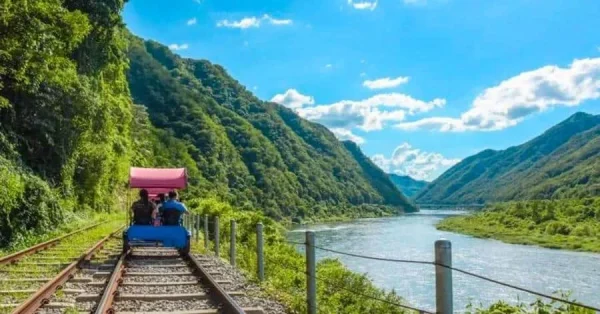
Image Source: IVisitKorea
The Gangchon Rail Park experience is one of the most unique Seoul day trips. You pedal along converted railway tracks through mountainous countryside near Chuncheon city. This attraction turns discontinued Gyeongchun Line tracks into an 8.5-kilometer rail bike adventure.
Travel Time from Seoul
The ITX-Cheongchun train reaches Chuncheon in 1 hour and 8 minutes from Oksu Station. Travelers heading to Gangchon Rail Park reach Gimyujeong Station in 1 hour and 47 minutes via subway and train combination. Busses from Seoul Express Bus Terminal complete the journey in 1 hour and 30 minutes for $4 to $7 USD as an alternative. The drive covers 52.8 miles in 1 hour and 13 minutes.
How to Get There
The ITX-Cheongchun departs from Yongsan and Cheongnyangni stations. Some trains stop at Wangsimni or Oksu. Tickets cost around ₩5,500 and cannot be purchased with T-money cards. The Gyeongchun Line subway from Cheongnyangni Station reaches Gimyujeong Station in 2 hours and 42 minutes for $1 to $3 USD.
Budget travelers can take the Seoul Metro for ₩2,850, though transfers are required and the journey takes about 2 hours. Busses from Dongseoul Bus Terminal depart every 15 minutes between 6 AM and midnight and take 70 minutes at ₩8,000.
What to See and Do
Rail bike options include 2-person carriages at ₩40,000 and 4-person carriages at ₩56,000. The 6-kilometer pedaling section features themed tunnels with music and dancing lights. Riders reach a rest stop in a scenic valley after 45 minutes before boarding the Romance Train for the remaining 2.5 kilometers. A free shuttle bus returns visitors to Gimyujeong Station.
Soyanggang Skywalk has panoramic river views near Chuncheon. It’s described as South Korea’s longest glass walkway.
Best Time to Visit
Spring (April to July) and autumn provide optimal weather conditions. The rail park closes between November and February. Departures run hourly and require advance reservations, especially for 2-person carriages.
Gyeongju Historic Areas
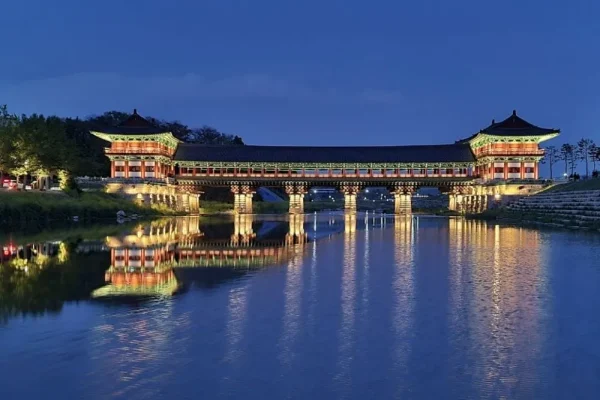
Image Source: World Heritage Travel
Often called “the museum without walls,” Gyeongju preserves over a millennium of Korean history as the ancient capital of the Silla Kingdom (57 BC-AD 935). This UNESCO World Heritage destination includes 52 designated cultural assets spread across five distinct historic areas.
Travel Time from Seoul
High-speed KTX trains cover the 276-kilometer distance in about 2 hours. The SRT from Suseo Station completes the trip in 2 hours and 1 minute. Express busses require 3 hours and 30 minutes.
How to Get There
KTX trains depart from Seoul Station to Gyeongju Station, with tickets costing $28 to $35 USD. The fastest services take 1 hour and 59 minutes. SRT trains from Suseo Station operate hourly at the same price range. Economy class tickets cost $53, while first class runs about $105.
Ko Bus operates express busses from Seoul Express Bus Terminal every 2 hours, priced at $15 to $25 USD. The bus takes 3.5 hours, making it budget-friendly but less ideal for same-day returns.
What to See and Do
The five historic areas include Namsan Area with Buddhist art masterpieces and Wolseong Area featuring Cheomseongdae Observatory (Asia’s oldest) and Donggung Palace & Wolji Pond. Daereungwon Ancient Tomb Complex houses royal graves with golden crowns and the famous Cheonmachong painting. Hwangnyongsa Temple Site contains Bunhwangsa Stone Pagoda, while Sanseong Area holds the 400-year-old Myeonghwalsanseong Fortress.
Bulguksa Temple, an eighth-century UNESCO site, showcases balanced wooden halls and stone pagodas. Seokguram Grotto houses a granite Buddha overlooking the East Sea. Gyeongju National Museum displays Silla artifacts including gold crowns and Buddhist sculptures.
Best Time to Visit
April stands out with mild weather and cherry blossoms that create ideal sightseeing conditions. May and October follow closely, offering spring flowers or autumn colors.
Incheon Chinatown and Wolmido Island
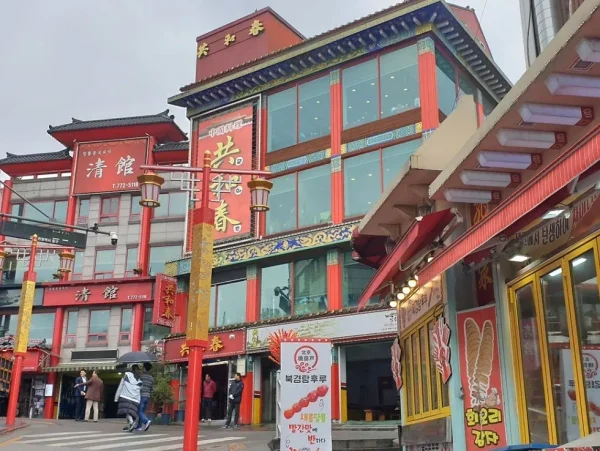
Image Source: KoreaToDo
Korea’s only official Chinatown paired with a coastal theme park island creates an easy-to-reach cultural escape just 47 kilometers from the capital. Dating back to 1883 following Incheon’s designation as Qing territory, this historic neighborhood now houses over 50,000 Chinese residents among descendants of original settlers.
Travel Time from Seoul
Subway travel takes 1 hour and 7 minutes from Yongsan Station to Incheon Station. Driving takes only 32 minutes. City Hall Station requires 1 hour and 14 minutes by subway.
How to Get There
Line 1 subway reaches Incheon Station every 10 minutes and costs $1 to $3 USD. Exit 1, 2, or 3 places visitors at Chinatown’s entrance gate. Busses 2, 10, 23, and 45 connect Chinatown to Wolmido Island. The Wolmi Sea Train runs a 6.1-kilometer loop in 42 minutes for 8,000 Won, operating 10 AM to 6 PM weekdays and until 9 PM weekends, closed Mondays.
What to See and Do
Four ornate Paifangs gates mark Chinatown’s boundaries. The Jjajangmyeon Museum occupies the original Gonghwachun restaurant where black bean noodles originated in 1912. Jayu Park, Korea’s first Western-style park built in 1888, features a MacArthur statue and harbor views. Wolmido Culture Street has seafood restaurants and a free-admission theme park.
Best Time to Visit
The best weather is April 23 through July 8 or September 3 through November 4. Cherry blossoms arrive at Jayu Park in spring.
Korean Folk Village in Yongin

Image Source: IVisitKorea
This living museum replicates traditional Korean life through 260+ reconstructed houses relocated from different parts of the country. The village sits in Yongin and immerses visitors in Joseon-era architecture with artisan workshops and folk performances.
Travel Time from Seoul
Multiple routes reach the village within 40 minutes to 1 hour. Express bus 1560 from Gangnam Station completes the trip in around 40 minutes. You can also take Seoul Subway Line 2 to Gangnam Station and then board bus 5001-1, which requires about 1 hour total. Direct taxi rides span 45 minutes to 1 hour based on traffic conditions.
How to Get There
Board express bus 1560 from Gangnam Station for the fastest route. The subway and bus combination involves Line 2 to Gangnam, then bus 5001-1 straight to the village entrance. A free shuttle bus operates from Suwon Station Exit 4 and departs at 10:30, 12:30, and 14:30. The 30-minute ride is available on a first-come basis. Return shuttles leave the village at 13:50 and 16:00.
What to See and Do
Live performances feature tightrope walking, equestrian stunts, and traditional farmer’s music during the day. Visitors explore artisan workshops, join folk games, and witness seasonal festivals. Admission costs ₩32,000 for adults and ₩26,000 for children. Plan 4 to 6 hours to experience performances, workshops, and historic houses.
Best Time to Visit
Autumn delivers peak conditions with crimson maples and persimmons, especially in late October. Spring and autumn provide the most pleasant weather.
Yongpyong Ski Resort

Image Source: Klook Travel
Recognized as South Korea’s largest ski resort, Yongpyong served as the alpine skiing venue for the 2018 Winter Olympics. The resort spreads across 4,300 acres on Mount Balwangsan in Gangwon Province, about 200 kilometers from Seoul.
Travel Time from Seoul
A drive takes 2.5 to 3 hours via the Gyeongbu and Yeongdong Expressways. The KTX train from Seoul Station to Jinbu Station completes the trip in 1 hour 30 minutes to 1 hour 45 minutes. Express busses from Dong Seoul Bus Terminal require 2.5 to 3 hours.
How to Get There
KTX passengers transfer to a free shuttle bus from Jinbu Station. The shuttle runs twice a day at 11:00 AM and 3:00 PM. Resort shuttles operate from Seoul Station in about 2.5 hours during ski season. Intercity busses reach Hoenggye or Jinbu. You’ll need a taxi connection from there. Resort guests who drive can use free parking.
What to See and Do
The resort features 28 slopes in four zones and 14 lifts, with a vertical drop of 740 meters. Rainbow Paradise extends 5.6 kilometers as Korea’s second-longest run. The Rainbow Gondola spans 7.4 kilometers and provides summit access with mountain views. Night skiing operates during winter months.
Best Time to Visit
The ski season runs mid-November through late March. Peak conditions occur from late December to mid-February.
Paju Art Villages and DMZ

Image Source: Daegu MWR – Army MWR
Paju merges contemporary art with Cold War history and positions both creative communities and military heritage 40 kilometers northwest of Seoul. Heyri Art Village houses over 500 writers, artists and musicians in uniquely designed studios, galleries and museums, while the DMZ lies 50 to 60 kilometers north of the capital.
Travel Time from Seoul
Heyri Art Village needs 1.5 to 2 hours by public transportation. The DMZ sits about 45 minutes from Myeongdong by vehicle, though total tour duration spans 4 hours plus transit time.
How to Get There
Bus 2200 departs from Hongik University Station every 20 minutes for Heyri. It costs $1 to $3 and takes 1 hour 17 minutes. Subway Line 2 to Hapjeong Station connects to the same bus route.
DMZ access needs registered tour operators only. Tours include passport checks at multiple military checkpoints. The DMZ closes Mondays, and the Joint Security Area remains unavailable to tourists.
What to See and Do
Heyri features the Museum of Modern History with 70,000 artifacts, Han Hyang Lim Onggi Museum and pottery workshops. DMZ tours stop at Imjingak Park and the Third Infiltration Tunnel 73 meters underground. Dora Observatory offers binoculars facing North Korea, and Gamaksan Suspension Bridge stretches 150 meters.
Best Time to Visit
April through June and September through November offer mild weather and clear visibility for both destinations.
Daecheon Beach and Boryeong
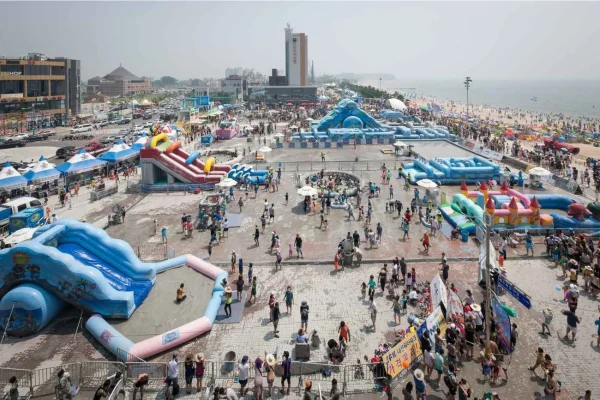
Image Source: VISITKOREA
Stretching 3.5 kilometers along Korea’s west coast, Daecheon Beach ranks as the region’s largest seaside destination. This coastal escape in Boryeong pairs white sand composed of tiny shells with shallow, calm waters ideal for families.
Travel Time from Seoul
The KTX train reaches Daecheon Station in 2 hours. Mugunghwa trains complete the trip in 2 hours and 42 minutes. Express busses from Seoul’s Central City Bus Terminal require 2 hours and 10 minutes. Driving via Seohaean Expressway takes around 2.5 hours.
How to Get There
Mugunghwa trains depart Yongsan Station every 3 hours and cost $7 to $8. KTX passengers can transfer at Cheonan-Asan to the ITX for onward travel. Express busses from Central City Bus Terminal cost $7 to $13. Local busses or taxis reach the beach from Daecheon Station within minutes.
What to See and Do
Visitors enjoy jet skiing, banana boating and beach volleyball in addition to swimming and sunbathing. The Boryeong Mud Festival runs July 25 through August 10, 2025. The festival includes mud wrestling, slides and K-pop performances with drone light shows.
Best Time to Visit
Late June through early September offers warm sea temperatures suitable for swimming. The mud festival occurs mid-to-late July. June and September provide pleasant conditions with fewer crowds.
Gapyeong County Adventures
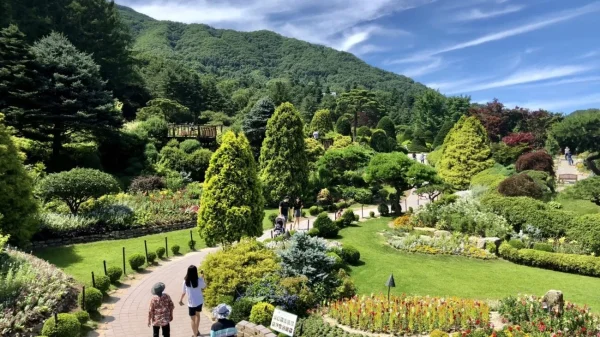
Image Source: Chris Travels the World
Beyond Nami Island and the Garden of Morning Calm lies a broader recreational county packed with French-themed villages and riverside attractions. Gapyeong County extends northeast of Seoul and is available through multiple transport networks that connect the capital to this popular leisure destination.
Travel Time from Seoul
The ITX-Cheongchun train reaches Gapyeong Station in 45 to 60 minutes depending on the departure point. Yongsan Station requires approximately 60 minutes for the trip, while Cheongnyangni Station reduces travel to 45 minutes. The Gyeongchun Line subway offers a slower alternative at roughly 1 hour. Bus services from Dong Seoul Bus Terminal complete the trip in 1 hour and 10 minutes.
How to Get There
ITX-Cheongchun trains depart from Yongsan or Cheongnyangni stations and cost ₩6,900 and ₩5,700. The subway from Cheongnyangni costs ₩2,300. Korail operates hourly train services priced between $5 and $10 USD. The Gapyeong City Tour Bus runs 9 AM to 7 PM from Gapyeong Station for ₩8,000 and provides unlimited rides.
What to See and Do
Petite France recreates a French village along the Han River. Gapyeong Station features a museum that displays construction artifacts.
Best Time to Visit
Cherry blossoms appear from March through May, while autumn foliage arrives from September through November.
Comparison Table
| Destination | Distance from Seoul | Travel Time | Main Transportation | Approximate Cost | Key Attractions | Best Time to Visit |
| Nami Island and Garden of Morning Calm | 63 km northeast | 1-2 hours | ITX-Cheongchun train to Gapyeong Station | ₩5,700-₩6,900 (train); ₩19,000 (Nami Island admission with ferry) | Tree-lined paths, 22 themed gardens, Millennium Juniper, bike rentals | Mid-October to early November (autumn foliage); April-May (cherry blossoms); December-mid-March (Lighting Festival) |
| Suwon Hwaseong Fortress | 30 km south | 30-35 minutes (train); 1 hour 4 minutes (subway) | KTX/ITX/Mugunghwa train or Seoul Subway Line 1 | ₩2,150-₩8,400 (train); ₩2,000-₩4,000 (admission) | 5.74 km fortress wall, four main gates, Hwaseong Haenggung Palace, Jidong Market | April (cherry blossoms, 10-20°C); May; October (autumn foliage) |
| Seoraksan National Park and Sokcho | – | 3-3.5 hours total (2h 20min bus + 30-45min local bus) | Express bus to Sokcho, then local bus 7 or 7-1 | $9-$20 USD (express bus); ₩10,000 (cable car) | 163 sq km park, Sinheungsa Temple, Ulsanbawi hike, Seoraksan Cable Car, Towangseong Falls | April and September-November (spring/autumn); October peak for foliage |
| Jeonju Hanok Village | 240 km south | 1 hour 48 minutes (KTX); 2 hours 50 minutes (bus) | KTX train from Seoul Station | ₩34,600 (KTX economy); ₩22,400 (express bus) | 700+ traditional hanok houses, Gyeonggijeon Shrine, Jeondong Catholic Cathedral, Omokdae, Pungnammun Gate | Late October to early November (autumn foliage); spring and summer also charming |
| Busan | 330 km south | 2 hours 15 minutes (fastest KTX); 4 hours (bus) | KTX high-speed train from Seoul/Suseo Station | $43-$70 USD (KTX economy); $18 USD (express bus) | Haeundae Beach, Gwangalli Beach, Gamcheon Culture Village, Haedong Yonggungsa Temple, Jagalchi Market | October (15-25°C, clear skies); April (cherry blossoms, 10-20°C); August (beach season) |
| Gangchon Rail Park and Chuncheon | 52.8 miles | 1 hour 8 minutes (ITX to Chuncheon); 1 hour 47 minutes (to Gimyujeong) | ITX-Cheongchun train or bus from Seoul Express Bus Terminal | ₩5,500 (train); $4-$7 USD (bus); ₩40,000-₩56,000 (rail bike) | 8.5 km rail bike adventure, themed tunnels, Romance Train, Soyanggang Skywalk | April-July and autumn (closed November-February) |
| Gyeongju Historic Areas | 276 km | 2 hours (KTX); 3.5 hours (bus) | KTX train from Seoul Station or SRT from Suseo Station | $28-$35 USD (KTX/SRT economy); $15-$25 USD (express bus) | 52 cultural assets in 5 historic areas, Bulguksa Temple, Seokguram Grotto, Cheomseongdae Observatory, Gyeongju National Museum | April (cherry blossoms); May and October (spring flowers/autumn colors) |
| Incheon Chinatown and Wolmido Island | 47 km | 1 hour 7 minutes (subway); 32 minutes (driving) | Seoul Subway Line 1 to Incheon Station | $1-$3 USD (subway); 8,000 Won (Wolmi Sea Train) | Four Paifangs gates, Jjajangmyeon Museum, Jayu Park, Wolmido Culture Street, theme park | April 23-July 8 or September 3-November 4; spring for cherry blossoms |
| Korean Folk Village in Yongin | – | 40 minutes to 1 hour | Express bus 1560 from Gangnam Station or subway + bus combination | ₩32,000 (adults); ₩26,000 (children) admission | 260+ reconstructed traditional houses, live performances (tightrope and equestrian), artisan workshops, folk games | Late October (autumn foliage); spring and autumn |
| Yongpyong Ski Resort | 200 km | 1.5-1.75 hours (KTX); 2.5-3 hours (driving/bus) | KTX train to Jinbu Station with shuttle, or resort shuttle from Seoul Station | – | 28 slopes in 4 zones, 14 lifts, 5.6 km Rainbow Paradise run, 7.4 km Rainbow Gondola, night skiing | Mid-November to late March (ski season); peak: late December to mid-February |
| Paju Art Villages and DMZ | 40 km northwest (Paju); 50-60 km north (DMZ) | 1.5-2 hours (Heyri); 45 minutes + 4 hour tour (DMZ) | Bus 2200 from Hongik University Station (Heyri); registered tour operators only (DMZ) | $1-$3 USD (bus to Heyri) | Heyri Art Village (500+ artists and museums), Third Infiltration Tunnel, Dora Observatory, Imjingak Park, Gamaksan Suspension Bridge | April-June and September-November (mild weather and clear visibility) |
| Daecheon Beach and Boryeong | – | 2 hours (KTX); 2 hours 10 minutes (bus); 2.5 hours (driving) | KTX train to Daecheon Station or express bus from Central City Bus Terminal | $7-$13 USD (bus/train) | 3.5 km beach, water sports (jet skiing and banana boating), Boryeong Mud Festival (July 25-August 10, 2025) | Late June to early September (swimming); mid-to-late July (Mud Festival); June and September (fewer crowds) |
| Gapyeong County Adventures | Northeast of Seoul | 45-60 minutes (ITX train); 1 hour 10 minutes (bus) | ITX-Cheongchun train from Yongsan/Cheongnyangni or bus from Dong Seoul Bus Terminal | ₩5,700-₩6,900 (train); ₩2,300 (subway); ₩8,000 (City Tour Bus) | Petite France, Gapyeong Station museum, has Nami Island and Garden of Morning Calm | March-May (cherry blossoms); September-November (autumn foliage) |
Enjoy Weekend Getaways from Seoul
Whether travelers seek ancient temples, coastal escapes, or mountain adventures, these 13 destinations demonstrate the remarkable diversity available from South Korea’s capital. Most locations require just two hours or less by train, making overnight stays optional rather than mandatory. Combination tickets, express trains, and hosted tours simplify logistics. These getaways showcase Korea’s natural beauty at its finest during spring and autumn. Visitors can explore multiple destinations on different weekends without hesitation. Each location offers distinct cultural experiences, from Gyeongju’s millennium-old heritage to Busan’s vibrant coastal energy, and every trip feels fresh and rewarding.
FAQs
Q1. What are the top destinations to visit near Seoul for a weekend trip? Some of the best weekend getaways include Nami Island and Garden of Morning Calm (1-2 hours away), Suwon Hwaseong Fortress (30-35 minutes), Busan (2.5 hours by KTX), Jeonju Hanok Village (under 2 hours), and Seoraksan National Park (3-3.5 hours). Each destination offers unique experiences ranging from UNESCO World Heritage sites to coastal beaches and mountain landscapes.
Q2. How long does it take to reach Busan from Seoul? The fastest KTX high-speed train reaches Busan in approximately 2 hours and 15 minutes from Seoul Station. Alternative options include the ITX-Saemaeul train (4 hours), Mugunghwa train (5.5 hours), or express busses (4 hours). Flights take about 1 hour and 5 minutes but require additional airport transit time.
Q3. Which Korean cities are worth visiting besides Seoul? Beyond Seoul, travelers should consider Busan for beaches and coastal culture, Jeonju for traditional hanok villages and cuisine, Gyeongju for ancient Silla Kingdom heritage, Sokcho near Seoraksan National Park for mountain scenery, and Incheon for its historic Chinatown. Each city offers distinct cultural experiences and attractions.
Q4. What is the best time of year to visit destinations around Seoul? Spring (April-May) and autumn (September-November) are ideal for most destinations, offering mild weather, cherry blossoms in spring, and vibrant foliage in fall. October is particularly popular for autumn colors at locations like Nami Island and Seoraksan National Park. Winter (mid-November to March) is perfect for ski resorts like Yongpyong.
Q5. Can you visit the DMZ from Seoul as a day trip? Yes, the DMZ is accessible as a day trip from Seoul, located approximately 50-60 kilometers north of the capital. The journey takes about 45 minutes by vehicle, though total tour duration spans around 4 hours plus transit time. Access requires booking through registered tour operators only, and the DMZ is closed on Mondays.

Leave A Comment