
Most travelers burn half their day haggling with station tuk-tuk drivers in 38°C heat before even reaching their first Ayutthaya ruin, leaving zero energy for Bangkok’s evening street food circuit. Pairing a structured morning trek through the former Siamese capital with a targeted, high-protein night feast on Yaowarat Road turns a grueling 20,000-step marathon into a seamless study in contrasts.
Destination Reality Check
- Best Overall Booking Window: Lock in air-conditioned Ayutthaya minivan tours 48 to 72 hours ahead to guarantee early morning departures before the midday thermal spike.
- Peak Crowd Hours to Avoid: 10:30 AM to 2:00 PM at Wat Mahathat (when mega-buses unload at the Bodhi tree roots) and 7:30 PM to 9:00 PM at the main Yaowarat Road intersections.
- Primary Transit Tip: Skip surface gridlock entirely when returning to Bangkok; transfer straight onto the MRT Blue Line and exit at Wat Mangkon Station to drop directly into the heart of Chinatown.
The Ayutthaya Historical Park: Navigating the Sun-Baked Ruins
The Breakdown
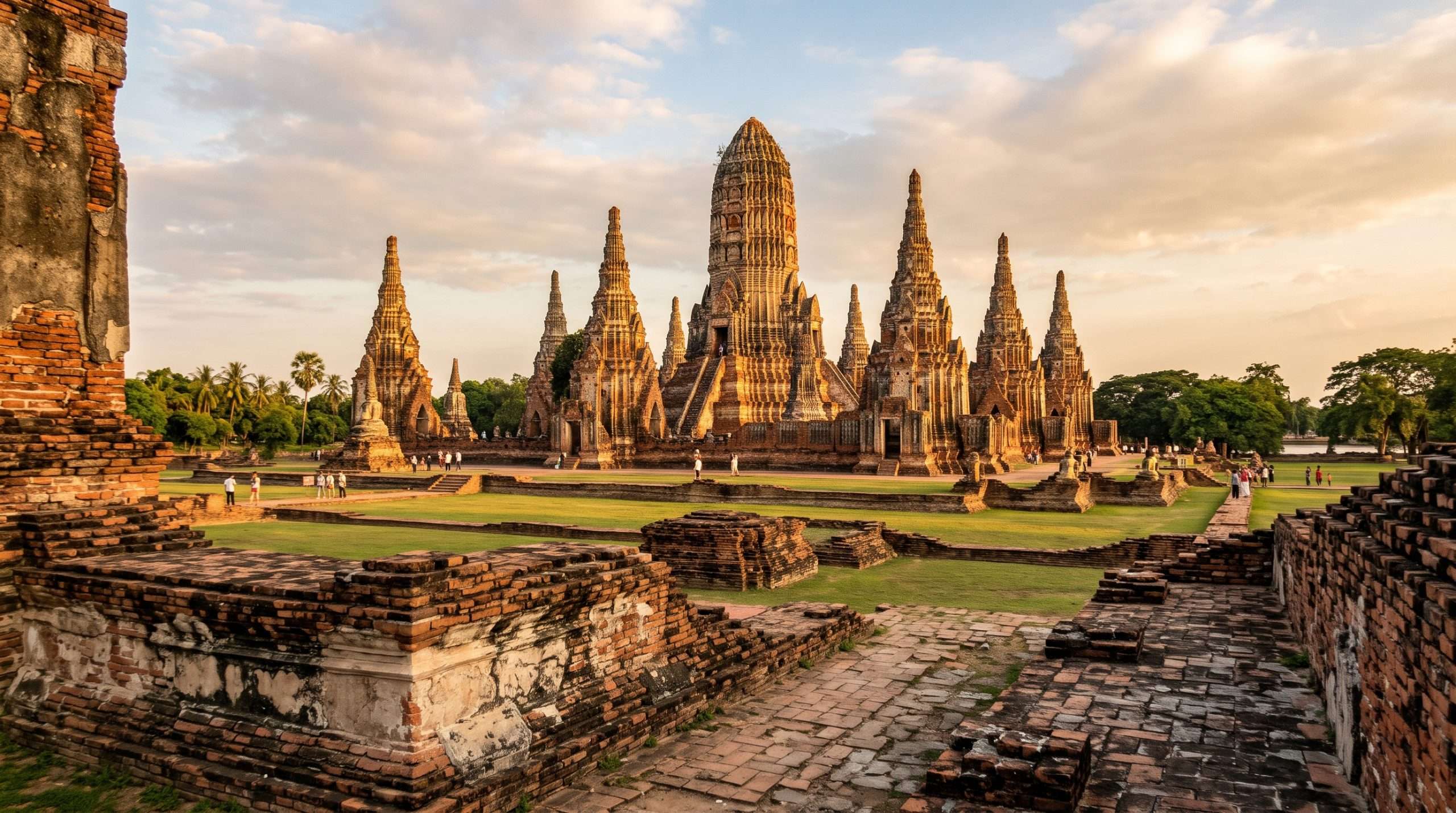
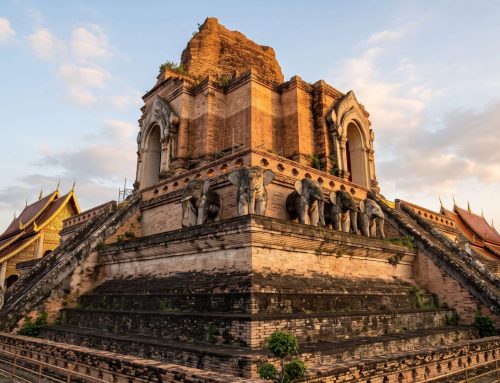
Building directly on the kinetic urban pace of Thailand Day 1 (The Bangkok Hustle), heading 80 kilometers north to the island city of Ayutthaya introduces a stark architectural shift. Founded in 1350 and sacked by the Burmese army in 1767, the historical park is a sprawling archaeological zone of charred brick reliquary towers (prangs), headless sandstone Buddhas, and towering monastic halls. Because the core temples are spread across several square kilometers of unshaded plains, the operational priority is managing your thermal load while hitting the marquee sites: Wat Mahathat, where a sandstone Buddha head sits locked inside creeping Bodhi tree roots, and Wat Chaiwatthanaram, an expansive riverside complex modeled after Angkor Wat. Executing this leg on a strict morning intermittent fasting window works remarkably well—skip the sluggish hotel breakfast, carry two liters of electrolyte-spiked water, and rely on constant hydration to stay sharp while walking the baked terracotta grounds.
Why Book This Tour vs. Going Solo
You can board a third-class local train from Krung Thep Aphiwat Central Terminal for 20 THB ($0.60 USD), which offers raw local character along a 90-minute rail corridor. However, the train drops you on the eastern bank of the Pa Sak River, forcing you to ferry across and immediately negotiate day rates with aggressive local tuk-tuk drivers (typically 300–400 THB per hour) or rent a single-speed bicycle under punishing equatorial sun.
Booking a dedicated, small-group minivan tour eliminates three major friction points: point-to-point transit between scattered temple zones, ticket queue bottlenecks at four separate archaeological gates, and cumulative heat exhaustion. Having a dedicated, chilled cabin waiting outside each complex lets you bring your core body temperature down between stops, preserving your legs for the evening march through Chinatown.
Logistics & Mobile Photo Pro-Tips
- Best Time & Lighting: Target the 7:30 AM to 10:00 AM window. Once the sun climbs past 11:00 AM, the overhead glare washes out the red brick tones and turns the unshaded courtyards into solar ovens.
- The Money Shot: At Wat Mahathat, you are legally required to kneel or crouch when photographing the Buddha head in the tree roots so your head remains lower than the sacred image. If you are carrying a dedicated mirrorless rig like the Canon EOS R5 Mark II, leave the heavy 500mm super-telephoto lens packed—it is far too tight for the cramped courtyard perimeters. Mount a standard 24-70mm zoom or a fast 35mm/50mm prime to isolate the intricate sandstone facial contours against the gnarled bark. On a smartphone, engage the 3x optical telephoto lens from a low crouch to compress the roots around the face while cropping out the wooden security rope and surrounding tourists. Over at Wat Chaiwatthanaram, switch your phone to the 0.5x ultra-wide lens and step back into the eastern grass courtyard to frame the central 35-meter prang flanked by its satellite towers.
- Mobile Pro-Tip: Humidity and sunscreen transfer will smear your phone’s sapphire lens glass within twenty minutes of walking the ruins, causing hazy flare in harsh sun. Wipe your camera array with a dry microfiber cloth before every sequence, and tap-to-expose on the bright sky before sliding the exposure sun icon down slightly to retain shadow texture in the dark brick mortar.
- Footwear & What to Wear: Pack technical, moisture-wicking activewear in neutral grey, olive, or black tones that hide sweat and contrast sharply against the terracotta brick. While Ayutthaya is an outdoor ruin site, strictly enforced temple modesty applies: shorts and skirts must cover the knees, and shoulders must be covered (no tank tops or sports bras without a breathable overshirt). Wear broken-in trail runners or cushioned walking sneakers with high-traction soles for uneven brick staircases.
Booking Details: Ayutthaya Historical Park Small-Group Day Tour via GetYourGuide | Duration: 7–8 hours | Cancellation: Free up to 24 hours before | Ayutthaya Day Tour from Bangkok
Yaowarat Road (Chinatown): High-Protein Night Market Feasting
The Breakdown
Once the minivan drops you back in central Bangkok in the late afternoon, bypass the gridlocked surface avenues by descending into the air-conditioned MRT Blue Line and riding straight to Wat Mangkon Station. Taking Exit 1 drops you directly onto the narrow side alleys feeding Yaowarat Road just as the overhead neon signs flicker on. After clocking nearly 20,000 steps across Ayutthaya in a fasted state, the objective here is not grazing on deep-fried dough sticks or mango sticky rice—it is systematic, high-protein refueling.
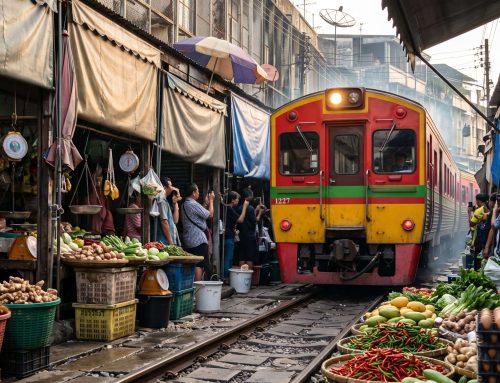
Skip the viral dessert queues and lock onto the heavy-hitting protein stations operating along the curb and inside the open-air shophouses of Soi Texas and Plaeng Nam Road. Look for stainless-steel carts displaying whole roasted ducks slick with five-spice glaze, cast-iron pans searing massive mounds of minced pork with holy basil (Pad Kra Pao) topped with crispy duck eggs, and charcoal grills turning out giant river prawns and whole salt-crusted sea bass. You can work the strip independently with a stack of 100-Baht notes or join an evening street food walking tour to bypass the seating waitlists at Michelin Bib Gourmand stalls.
Why Book This Tour vs. Going Solo
Walking Yaowarat Road solo costs nothing beyond what you hand over to the stall vendors, making it entirely viable if you already know how to read Thai menu boards and spot high-turnover seafood carts. However, first-time visitors arriving fatigued after a day trip often get paralyzed by the wall-to-wall human traffic, deafening tuk-tuk exhaust, and chaotic stool-seating systems where five different vendors share a single patch of sidewalk.
Booking a curated night market food tour solves the ordering and seating friction immediately. A local guide cuts past the tourist-trap mango stalls, secures plastic tables in packed back-alley shophouses while you photograph the street action, and orders family-style platters of roasted meats, wok-fried crab, and braised pork knuckle without language barriers or portion guesswork.
Logistics & Mobile Photo Pro-Tips
- Best Time & Lighting: Arrive at 6:00 PM sharp. This captures the transition from deep blue twilight to full neon saturation while allowing you to grab your first heavy meal before the 7:30 PM gridlock peaks.
- The Money Shot: Leave the heavy Canon body locked in the hotel safe and shoot Chinatown exclusively on your smartphone. Stand on the curb edge near the intersection of Yaowarat Road and Plaeng Nam Road, plant your elbows against your ribs for stability, and select your 1x main lens (which has the widest aperture and largest sensor for low light). Frame a curbside chef tossing flames in a seasoned wok in the lower-right foreground while the stacked red, yellow, and cyan Chinese neon billboards fill the upper third.
- Mobile Pro-Tip: Do not let your phone’s automatic Night Mode over-brighten the scene into looking like midday—that ruins the cyberpunk contrast and blurs the chef’s hands. Instead, use Live Photo (iOS) set to Long Exposure afterward, or switch to a manual camera app at 1/15s shutter speed, locking focus on the static sizzling wok so passing tuk-tuks and pedestrian crowds streak into dynamic motion blur beneath the signs. Always wipe cooking grease mist off your lens every 15 minutes.
- Footwear & What to Wear: Ditch anything white or loose-fitting; flying chili oil, soy splashes, and charcoal soot are guaranteed along the narrow curb lanes. Wear dark, ultra-lightweight shorts and a breathable tee, paired with closed-toe sneakers to protect your feet from curbside dishwater runoff and rolling food cart wheels.
Booking Details: Bangkok Chinatown Midnight Food Tour by Tuk-Tuk or Foot via GetYourGuide | Duration: 4 hours | Cancellation: Free up to 24 hours before | Bangkok Chinatown Night Food Tour
Frequently Asked Questions
Are breathable athletic shorts allowed inside the Ayutthaya historical ruins? Only if the hem falls completely below your kneecap. Guards at the entrance kiosks of Wat Mahathat and Wat Chaiwatthanaram strictly enforce knee and shoulder coverage for all visitors, and they will turn you back to buy a 100-Baht wrap-around sarong if your athletic shorts ride above the knee.
How much physical stair climbing is required at the Ayutthaya temples? Expect steep, high-riser brick steps with no handrails if you climb the elevated central prangs at Wat Chaiwatthanaram or Wat Ratchaburana. Each step is roughly 30 centimeters tall and worn smooth in the center, requiring stable footwear and dry hands.
Do the high-protein street food stalls on Yaowarat Road accept credit cards? No, curbside carts and open-air shophouses along Yaowarat operate exclusively on physical Thai Baht cash or local Thai bank QR-code scans (PromptPay). Hit an ATM before exiting Wat Mangkon MRT station and break 1,000-Baht notes at a 7-Eleven so you have 20, 50, and 100-Baht bills ready for individual plates.
Can you store a full-frame camera backpack at the Ayutthaya ruins or Chinatown stations? Neither the Ayutthaya archaeological gates nor the Wat Mangkon MRT station offer luggage lockers. If you carry a full-frame mirrorless rig like the Canon R5 Mark II for the morning ruins, use a van tour that returns you to your hotel by 3:30 PM so you can drop the heavy glass before heading underground to Chinatown with just your phone.
Strategic Itinerary Sequencing
To execute this high-contrast day without wasting two hours in Bangkok traffic, lock into this exact chronological flow:
- 07:00 AM – Fasted Departure: Drink 1 liter of water with electrolytes and board your air-conditioned minivan pickup in central Bangkok before commuter traffic clogs the Vibhavadi Rangsit Highway.
- 08:30 AM – Wat Chaiwatthanaram & Wat Phra Si Sanphet: Hit the most exposed riverside complexes first while the sun angle is low and directional, shooting your wide-angle architectural frames and brick textures with the Canon R5 Mark II.
- 10:30 AM – Wat Mahathat: Move into the shaded inner courtyards to capture the Buddha head in the Bodhi tree roots, then retreat to the chilled van cabin with cold water to lower your core temperature.
- 03:00 PM – Hotel Drop & Gear Swap: Return to your Bangkok base, shower off the brick dust, lock the heavy camera kit in the safe, and rest your legs for 90 minutes.
- 05:30 PM – MRT Blue Line to Wat Mangkon: Ride the underground rail directly into Chinatown, bypassing evening surface gridlock completely.
- 06:00 PM – Break Fast on Yaowarat Road: Exit at Soi Plaeng Nam and go straight for whole roasted duck, crispy pork belly, and wok-seared minced pork plates to replenish protein and sodium after 20,000 steps.
- 07:30 PM – Neon Motion Walk & Wrap-Up: Shoot long-exposure mobile frames of the tuk-tuk blur along the main artery before taking the MRT back to pack your bags for Thailand Day 3 (Bangkok Departure / City Wrap-up) and the transit north.

Leave A Comment