
I’ve seen many American cities, from tech hubs in California to forgotten towns in Appalachia. The American Dream seems hard to reach for many. That’s why Marc Lore’s $400 billion plan for Telosa caught my eye.
This isn’t just another real estate project. Lore sold two startups for $550 million and $3.3 billion. He then led Walmart’s e-commerce division. In September 2021, he announced a radical plan: a desert city for 5 million residents by 2050.
The idea is based on Equitism, inspired by economist Henry George’s 19th-century ideas. It’s simple yet groundbreaking: community-owned land instead of private ownership. As property values go up, the profits fund healthcare, education, and social services for all.
The city’s name, Telosa, comes from the Greek word for highest purpose. But can this vision succeed? I’m both intrigued and unsure. After looking into economic experiments worldwide, I wanted to learn more about Equitism. Is it a real solution or just a dream in the desert?
Key Takeaways
- Marc Lore, former Walmart executive and serial entrepreneur, announced the Telosa project in September 2021 with a $400 billion budget
- The planned city aims to house 5 million residents by 2050 in a desert location
- Equitism replaces private land ownership with community trust ownership, directing land appreciation to public services
- The concept draws inspiration from 19th-century economist Henry George’s theories on economic inequality
- Telosa’s name derives from Greek “telos,” reflecting its mission as a city built for highest purpose
- Revenue from rising land values would fund universal healthcare, education, and infrastructure instead of enriching private owners
A Utopian Vision Rising From the Desert
America’s deserts stretch for thousands of miles, mostly empty and forgotten. They wait for someone brave enough to try something new. I’ve driven through these landscapes many times, seeing the alkali flats of Nevada and the red rocks between Phoenix and El Paso.
These places have endless horizons where land costs almost nothing. But now, they’re being considered for something new.
When Marc Lore left Walmart in January 2021, he didn’t retire quietly. He announced plans to build a city of the future based on a new capitalism. It’s not just another tech campus or luxury development. It’s a new way for Americans to live together.
Marc Lore’s Audacious Bet on Rethinking American Cities
Lore saw something different from other smart city developers. There are about 150 smart city projects worldwide, from Songdo in South Korea to Neom in Saudi Arabia. They focus on sensors, efficiency, and technology.
But none of them tackle the wealth divide that’s tearing communities apart.
That’s where Telosa stands out. Lore wants to make cities not just smarter but fairer from the start. His vision is called Equitism, which changes how land ownership and wealth work in cities.
The project is looking for a location across several states for this desert city. They’re searching for about 200,000 acres of land in:
- Nevada’s open desert regions
- Utah’s southern expanses
- Idaho’s less populated zones
- Arizona’s available territories
- Texas rangeland
- Appalachian rural areas
These places offer cheap land and endless possibilities. I’ve camped in many of these areas, feeling the freedom of blank slates.
Why Now? The Timing of America’s Urban Reset
Lore’s timing is not a coincidence. The pandemic changed how Americans view cities and work. Remote work became common, and people started leaving expensive cities.
Now, people are questioning how we live. They wonder why we didn’t change sooner.
This is the perfect time for new ideas about capitalism. When everyone is questioning the status quo, radical solutions seem more possible.
The first phase aims for 50,000 residents by 2030 on 1,500 acres. It’s a $25 billion investment for a new neighborhood. If it succeeds, it could house 5 million people in the future.
I remember standing in Nevada’s Black Rock Desert after Burning Man. It was empty, yet 70,000 people had built a temporary city. Humans can create communities when given a blank slate and a shared goal.
But a question keeps bothering me: Why should we trust a billionaire to build a fairer system?
Lore made his fortune through traditional capitalism. He sold startups to Amazon and Walmart. Yet, he’s trying to reform the system he made his money from.
Maybe this could work because someone with nothing to prove is taking risks. Not because billionaires are kind, but because they can do things others can’t.
The desert doesn’t care about credentials or contradictions. It only cares if you can build something that lasts and thrives. That’s what Telosa must prove.
What is Equitism and Can It Actually Deliver Economic Fairness?
Equitism is about creating an economic system based on fairness. It challenges our old ways of thinking about land ownership. Marc Lore wants to build cities where everyone benefits, not just the early investors.
I had to read about it a few times before I got it. The idea is simple but the details are fascinating.
How Community Land Endowment Replaces Traditional Ownership
Telosa is different from any city you’ve lived in. Instead of private ownership, all land belongs to a community endowment. This is like a private foundation that manages everything for the residents.
You can own a house, renovate it, and sell it. But the land itself stays with the community forever through ground leases.
This idea comes from Henry George’s book “Progress and Poverty” from 1879. George said land value increases because of community efforts, not just the owners’ skills.
In traditional capitalism, early land buyers get rich while others pay high prices. Telosa’s model aims to share that wealth with everyone. You still profit from your work, but the land value goes back to the community.
Ground leases replace property taxes. Citizens pay for land use rights, funding public services instead of taxes.
From Land Appreciation to Public Services: The Revenue Model
Can Telosa grow into a huge city and still work? If it does, the land value could be huge. This value funds public services.
The community endowment gets richer as the city grows. Ground lease payments and fees from property sales help. New residents and businesses also contribute.
It’s not just about the wealthy; it’s about giving back to everyone. The wealth created is for the community.
This wealth funds social services like healthcare and education. There are no income or property taxes. The community benefits from its growth.
The foundation could be worth a trillion dollars. It’s not Lore’s money; it’s a shared resource for the city.
Citizens help decide how to spend the money. They use town halls and digital platforms to make choices. But can this system really work with so much wealth?
Equitism vs. Capitalism vs. Socialism: Where Does It Actually Fit?
Is Equitism just a new way to market capitalism, or is it something different? It’s a bit of both, which makes it intriguing.
Capitalism focuses on individual ownership, while socialism emphasizes state control. Equitism combines these, allowing private enterprise but socializing land value increases.
You can start a business and become wealthy in Telosa. You can also own a home and sell it. But you can’t speculate on land and profit from community value.
| Economic System | Land Ownership | Wealth Creation | Public Services Funding |
|---|---|---|---|
| Traditional Capitalism | Private individuals/corporations | Owners capture all appreciation | Income and property taxes |
| Democratic Socialism | State/government control | Collective ownership, limited private wealth | Progressive taxation and state revenue |
| Equitism (Telosa Model) | Community endowment/foundation | Private wealth from labor/innovation, shared land appreciation | Ground leases and land value capture |
| Pure Georgism | Private use, community value capture | Untaxed labor and capital, taxed land value | Land value tax replacing other taxes |
Equitism has historical examples. Singapore and community land trusts in places like Vermont use similar ideas. They keep housing affordable and fund development.
Georgist economics is based on taxing land value, not income. This is efficient because land supply is fixed. It doesn’t distort behavior like income taxes do.
But, can a billionaire’s vision really lead to fair wealth distribution? The details of governance are crucial. Who controls the foundation? How are decisions made? What stops insiders from exploiting the system?
Lore promises transparency and democracy. I hope it’s possible. But, history shows power can concentrate unless systems prevent it.
The idea of an equity-based system is exciting. But, can it really bring economic fairness? Or will it just create new winners and losers with better branding? I’m hopeful and curious to see how it turns out.
Bjarke Ingels Group’s Architectural Blueprint for 5 Million Lives
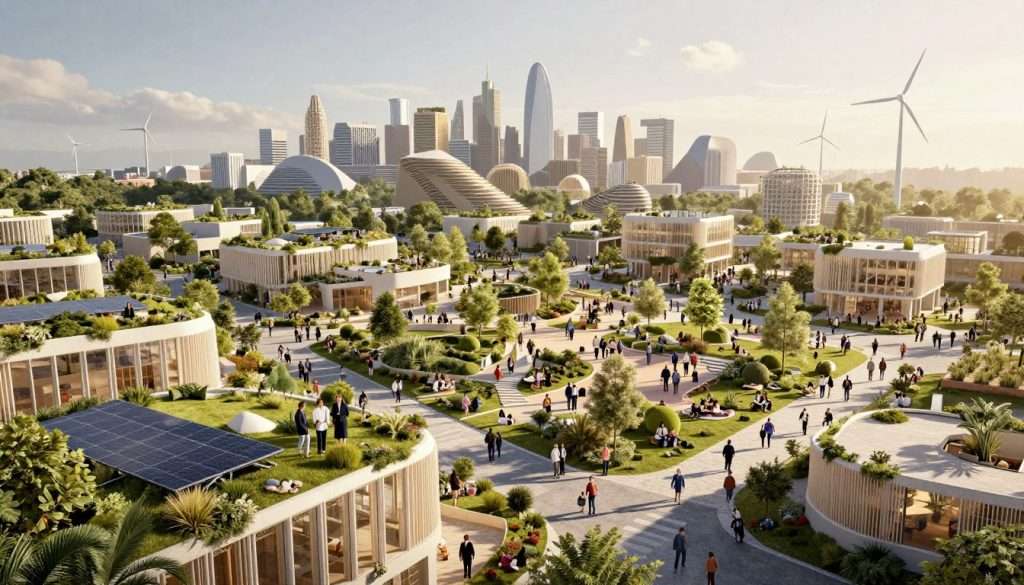
Most American cities grew around cars. But Bjarke Ingels Group is designing Telosa from scratch. Marc Lore hired them to create a city based on equitism.
I’ve seen BIG architects‘ work in Copenhagen and New York. Their buildings focus on people. Telosa will be their biggest project yet, with 5 million residents and 36 districts.
Each district will have its own feel but share infrastructure. The plan includes mixed-income housing. This brings people from different backgrounds together.
The 15-Minute City Grid: Convenience or Control?
The design is based on the 15-minute city idea. Residents can reach everything they need in 15 minutes. I experienced this in Paris and it changed my view of cities.
Here’s what you could access within 15 minutes in Telosa:
- Your workplace and coworkers
- Schools and educational facilities
- Grocery stores and retail shops
- Healthcare services and medical centers
- Parks and recreational spaces
- Restaurants and community gathering spots
The streets are designed for bikes and pedestrians. Autonomous cars move slowly, sharing space. It’s a big change from being stuck in traffic.
But does this design limit your interactions? Does Telosa become 36 mini-cities with little connection?
American suburbs make you rely on cars. But they also lead to unexpected meetings. The 15-minute model might reduce these interactions.
Equitism Tower: More Than Symbolic Architecture
The Equitism Tower is a key part of Telosa. It’s not just a symbol. BIG architects designed it to be a resource hub.
The tower stands in the central park. It’s made of timber, a sustainable choice. It has systems for growing food, making energy, and storing water.
- Aeroponic farms growing fresh food without soil, using 95% less water than traditional agriculture
- Photovoltaic roof generating clean solar energy for surrounding districts
- Elevated water storage ensuring reliable resource distribution across the city
- Civic gathering spaces and observation areas inviting residents to experience the shared resource model
The tower is designed to produce and distribute resources. It’s a direct example of architecture serving equitism.
I believe buildings should serve people, not the other way around. The Equitism Tower takes this idea further than anywhere else. It’s both a symbol and a utility, reminding residents of the power of shared resources.
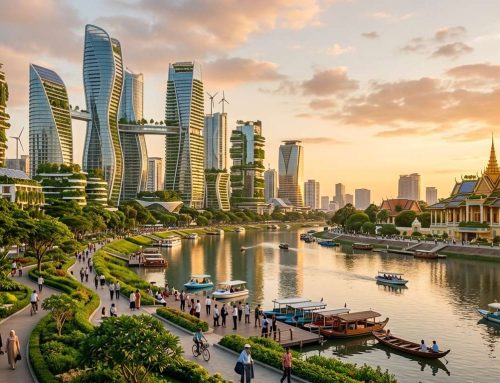
The Bjarke Ingels Group renderings show beautiful parks and diverse housing. The streets are designed for walking. The aesthetics are stunning.
But can architecture alone solve economic problems? Or does it need social and political change? The design is visionary, but it needs more than blueprints to become real.
Biophilic Urbanism and the Green Infrastructure Gamble
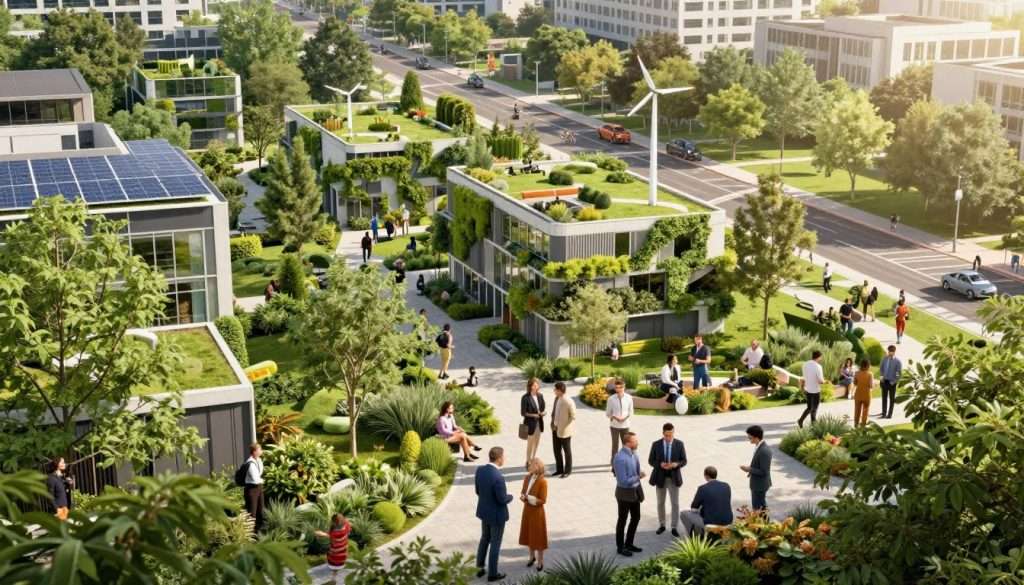
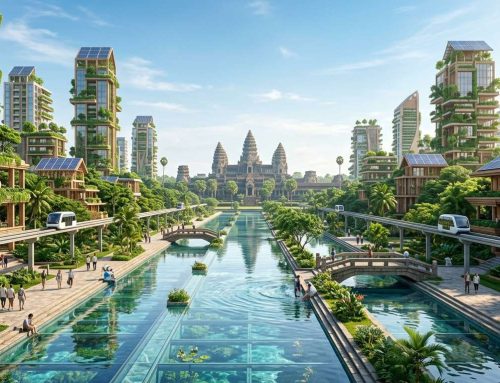
Watching desert sunrises, I know creating green spaces in dry areas is tough. Telosa aims to make a city where people can easily connect with nature. It plans to have lush parks and green areas for 5 million people in a harsh climate.
This isn’t just a technical challenge. It’s about whether the project can succeed.
For the 15-minute city idea to work, walking or biking must be pleasant. In Telosa’s desert, this is hard due to extreme heat. The city’s design tries to make it comfortable with shade and green corridors.
The Connected Network Threading Through Urban Life
Unlike traditional cities, Telosa has a spinal park system that connects all areas. This ensures everyone is close to nature, not just those near big parks.
Places like Singapore and Copenhagen show how green spaces improve mental health. But they have more water.
The spinal parks also store water for the city. They’re not just for looks but also for practical uses.
Streets are designed for people, not cars. Trees provide shade, and public spaces encourage community. This makes the city feel welcoming and connected.
To make the 15-minute city usa model work, the environment must support it. Telosa’s design tries to make walking or biking pleasant all year.
Desert Reality Versus Green Dreams
The American Southwest gets little rain, making lush green spaces hard to achieve. Telosa plans to use drought-resistant plants to save water.
Desert plants can be beautiful, but covering a whole city is a big challenge. The city’s water management is key to its success.
Telosa aims to protect natural areas and balance green spaces with the environment. But, creating water is a big problem.
The goal is to make a city that’s both green and sustainable. But, can it be done in a desert?
| City | Annual Rainfall | Green Space Per Capita | Primary Water Source | Sustainability Approach |
|---|---|---|---|---|
| Phoenix, AZ | 8 inches | 3.2 acres | Colorado River, groundwater | Xeriscaping, drought-tolerant landscaping |
| Las Vegas, NV | 4 inches | 2.8 acres | Lake Mead (Colorado River) | Water reclamation, desert landscaping |
| Dubai, UAE | 3 inches | 5.1 acres | Desalination plants | Desalination, treated wastewater irrigation |
| Telosa (Planned) | 7-12 inches (varies by site) | Target: 6+ acres | Atmospheric water generation, reclamation | Native planting, reservoir management, 92% water reduction |
Telosa aims to have more green space than other desert cities but use less water. Phoenix and Las Vegas struggle with water despite their size and access to the Colorado River.
Dubai shows that building in the desert is possible but comes with environmental costs. Telosa wants to avoid these costs but using untested technologies.
Is Telosa’s green vision sustainable, or will it be a costly burden? The answer could make or break the city’s future.
I hope desert landscaping can bring benefits without wasting resources. The plants I’ve seen are resilient and beautiful. But, can a whole city be green and sustainable?
Zero-Emission Transportation: G2A Pods and Hyperloop Dreams
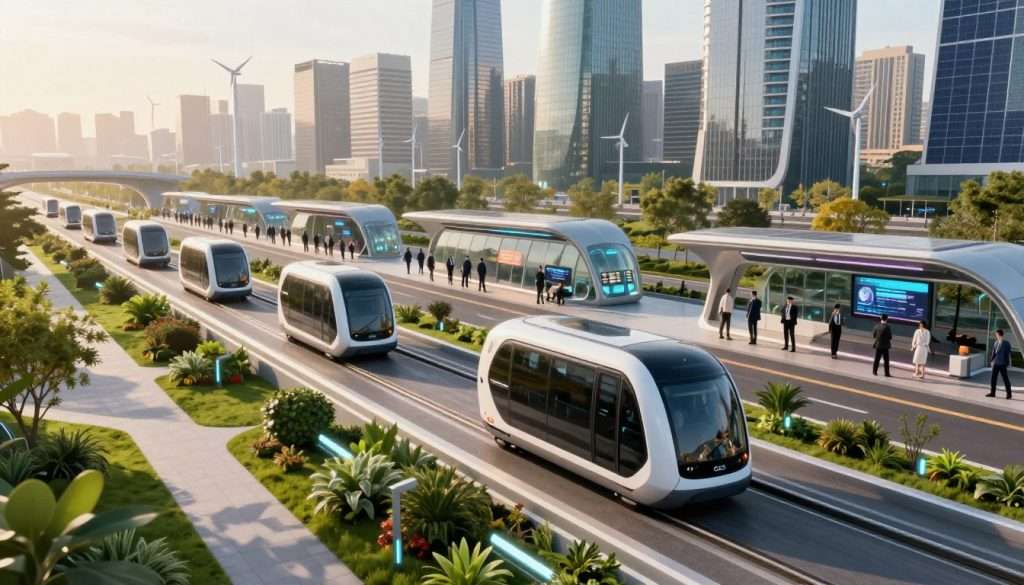
Every overlander knows that how we move defines freedom. Telosa’s zero carbon emissions transportation gamble could either liberate or limit residents. The vision eliminates private fossil fuel vehicles, replacing them with a layered network of pedestrian paths, autonomous electric shuttles, underground hyperloops, and even flying taxis. It sounds transformative because it is—if the technology actually works at city scale.
I’ve spent years photographing transportation innovations at tech expos and testing prototypes in controlled environments. The gap between demonstration models and functional urban systems is massive. Telosa’s transportation infrastructure plan assumes multiple unproven technologies will mature simultaneously and integrate seamlessly by 2050.
Ground to Air Autonomous Pods Replacing Private Vehicles
The G2A pod system—Ground to Air autonomous vehicles—represents Telosa’s core mobility solution. These electric pods would pick you up at street level, navigate shared pedestrian spaces at low speeds, then transition to underground high-speed corridors for longer trips across the city. No personal car ownership. No parking lots consuming valuable land.
The concept solves real urban problems. I’ve explored Barcelona’s superblock experiments where cars take secondary priority to people, bikes, and nature. When executed well, shared streets transform neighborhood life completely.
But Barcelona serves 1.6 million people with conventional vehicles, not 5 million relying entirely on autonomous vehicles. The difference matters enormously.
Telosa’s street design prioritizes walkability with scooters, bicycles, and slow-moving electric shuttles sharing space safely with pedestrians. The Next Gen Infrastructure Management System would coordinate all movement through artificial intelligence, optimizing routes in real-time and preventing conflicts. I’ve tested current autonomous vehicles in limited settings—they’re impressive but struggle with unpredictable human behavior, weather conditions, and complex urban scenarios.
Scaling that technology to handle millions of daily trips requires breakthroughs that haven’t happened yet. The city plan includes separated transportation networks with dedicated elevators, drone delivery ports, and underground tunnels for maintenance vehicles, garbage collection, and resource recovery. This keeps surface streets clean and pedestrian-friendly, which actually makes practical sense.
Similar underground logistics systems operate successfully in smaller developments and hospital campuses. Extending that concept city-wide would cost billions but could genuinely improve urban life by removing delivery trucks, waste haulers, and utility vehicles from residential areas.
Underground Hyperloop Networks: Infrastructure Reality Check
Here’s where Telosa’s transportation vision enters science fiction territory. The proposal includes underground hyperloop networks for high-speed transit connecting districts across 150,000 acres of desert terrain. Hyperloop technology promises near-supersonic speeds through low-pressure tubes, but no functioning city-scale system exists anywhere on Earth.
I’ve followed hyperloop development for over a decade. It’s perpetually “five years away” from viability.
Building 150,000 acres of underground transportation infrastructure for unproven technology would consume tens of billions of dollars before transporting a single passenger. The engineering challenges include maintaining vacuum pressure across vast distances, ensuring passenger safety during emergencies, creating access points throughout the city, and integrating with surface transportation seamlessly.
The vertical mobility component adds another layer of complexity. Telosa plans to deploy eVTOL aircraft—electric vertical take-off and landing vehicles functioning as flying taxis—to rapidly connect neighborhoods, mobility centers, and airports. I’ve photographed eVTOL prototypes at aviation shows. They’re real, functional, and genuinely exciting for short-distance flights.
But no city has integrated them into daily transportation networks. The requirements are staggering:
- Vertiports on rooftops and ground stations across all 36 districts
- Air traffic control systems managing thousands of simultaneous flights
- Charging infrastructure supporting continuous operations
- Maintenance facilities and trained technicians citywide
- Weather backup systems when flight conditions deteriorate
The contrast between Telosa’s vision and current transportation reality becomes clearer when you compare proven and experimental technologies:
| Transportation Element | Technology Status | Implementation Risk | Cost Range |
|---|---|---|---|
| Pedestrian and bike infrastructure | Proven globally | Low | Millions |
| Autonomous electric shuttles | Limited deployment | Medium | Hundreds of millions |
| Underground hyperloop system | Experimental only | Very high | Tens of billions |
| eVTOL urban air mobility | Prototype stage | High | Billions |
My concern isn’t whether these technologies could eventually work—they probably will given enough time and investment. The question is whether betting an entire city’s functionality on simultaneous breakthroughs in autonomous vehicles, hyperloop systems, and urban air mobility represents wise planning or reckless optimism.
Cities require reliable transportation from day one. Residents can’t wait for experimental technology to mature while commuting to work or accessing essential services. A more prudent approach would build Telosa around proven sustainable transit—light rail, electric buses, protected bike lanes, pedestrian prioritization—then layer futuristic systems as they actually become viable.
The zero carbon emissions goal doesn’t require unproven technology. Electric buses and trains deliver emission-free transit today. Protected bike infrastructure encourages active transportation immediately. Dense, walkable neighborhoods reduce trip distances naturally.
Telosa could achieve its environmental and mobility goals with existing technology, then innovate from a functional foundation. Instead, the plan stakes everything on a transportation revolution that may or may not arrive on schedule. That’s the gamble residents would be taking by moving to a city where getting to work depends on technologies that don’t fully exist yet.
The Sustainability Promises: Ambitious Goals or Impossible Targets?
When I first heard about Telosa’s sustainability targets, I had to read them twice. 92% less water usage sounds almost too good to be true. These aren’t just small improvements over traditional cities. They represent a complete reimagining of how cities consume resources.
Sustainability claims can make a project seem visionary or unrealistic. Telosa’s environmental commitments need serious examination, not just enthusiastic acceptance. I want to believe these goals are achievable, but my inner skeptic demands we look at the numbers closely.
92% Less Water Usage Than Traditional Cities
Traditional American cities waste a lot of water. Leaky pipes, inefficient fixtures, and decorative landscaping drain resources that desert environments simply cannot afford. Telosa proposes something radically different: closed-loop water systems where every drop gets captured, cleaned, and reused multiple times.
I’ve seen greywater systems work beautifully in small ecovillages across the Southwest. But scaling water conservation to 5 million residents is exponentially more complex. The concept involves ultra-efficient fixtures, xeriscaping with native plants, and those multi-functional reservoir parks that store and treat water on-site.
Here’s where my enthusiasm meets reality. Even with maximum efficiency, where does the source water actually come from in a desert? Colorado River allocations are already over-subscribed by existing cities. Groundwater beneath the basin is depleting faster than rainfall can replenish it.
Cities like Las Vegas and Phoenix already employ significant water conservation measures. Telosa claims to go far beyond their achievements. But the initial water supply question remains unanswered in most cities from scratch proposals, and it’s a detail that matters enormously.
Zero Waste to Landfill and 20% Local Food Production
The zero waste to landfill commitment feels more achievable than the water targets. San Francisco already diverts 80% of waste through aggressive composting and recycling programs. Several European cities approach 90% diversion rates with comprehensive resource recovery systems.
Telosa’s underground logistics networks could streamline waste separation at the source. Pneumatic tubes and automated sorting facilities make the circular economy more practical. But true zero waste requires products designed for complete circularity—something Telosa cannot control when residents purchase goods manufactured elsewhere.
The 20% local food production target through urban agriculture actually strikes me as modest and realistic. Aeroponic and hydroponic systems can produce significant vegetables, herbs, and even some fruits in remarkably small spaces. The Equitism Tower’s integrated farms serve functional purposes, not just aesthetic ones.
I appreciate that Telosa acknowledges 80% of food will still come from outside the city. That honesty about limitations builds more credibility than claiming complete food self-sufficiency. Urban agriculture reduces transportation emissions and provides fresh produce, but it won’t feed 5 million people entirely.
| Sustainability Metric | Traditional U.S. City | Phoenix (Desert City) | San Francisco (Leader) | Telosa (Target) |
|---|---|---|---|---|
| Water Use Reduction | Baseline (100%) | 25% reduction | 35% reduction | 92% reduction |
| Waste Diversion Rate | 32% recycled | 45% diverted | 80% diverted | 100% diverted |
| Renewable Energy | 15% renewable | 28% renewable | 42% renewable | 100% renewable |
| Local Food Production | Less than 1% | 2% urban farms | 5% urban farms | 20% integrated agriculture |
The Carbon Paradox of Building a Sustainable Desert City
Here’s my biggest concern with sustainable city planning for projects like Telosa: the carbon paradox. Building a city for 5 million people from scratch requires staggering amounts of concrete, steel, and construction energy. Even using timber and sustainably produced materials, the embodied carbon might take decades to offset through operational efficiency.
I keep asking myself whether renovating and densifying existing cities might be more sustainable overall. Los Angeles, Phoenix, and Las Vegas already have infrastructure, housing, and transportation networks. Improving what exists could deliver environmental benefits faster and with less carbon output.
Telosa plans to use renewable resources to power the entire city through distributed solar arrays and battery storage. The Southwest desert has abundant solar potential—arguably the best in North America. But manufacturing millions of solar panels and lithium batteries also carries environmental costs that need honest accounting.
The construction phase environmental impact deserves transparent calculation. How many years of ultra-efficient operation does it take to offset building 150 square miles of urban infrastructure from bare desert? This calculation matters for fair resource allocation and genuine climate responsibility.
I genuinely want Telosa to succeed in proving cities can be radically more sustainable. The ambition inspires me. But I also want honest accounting of the full environmental costs, including the massive carbon footprint of construction itself. Sustainability isn’t just about operational efficiency—it’s about lifecycle environmental impact from groundbreaking to eventual decommissioning.
The greenest building is the one already built. Every new construction project, no matter how efficient, carries an environmental debt that must be repaid through decades of operation.
Telosa’s sustainability promises represent either the future of American urban development or an expensive lesson in unrealistic expectations. The truth likely falls somewhere between revolutionary achievement and instructive failure. What matters most is whether the project can deliver transparent progress reports showing real data against these ambitious targets.
The Hard Questions No One’s Answering
Every utopian dream seems perfect at first. But when we ask about money, gatekeepers, and power, things get tricky. Telosa promises a fairer future, but the details are unclear.
The gap between big promises and real plans is huge. These aren’t small details to fix later. They’re key questions that decide if Telosa will truly be fair or just another exclusive place.
Where Will $400 Billion Actually Come From?
The big question is $400 billion. That’s more than Norway or Israel’s GDP. The funding sources are still a mystery.
Marc Lore’s team talks about grants, private investors, and philanthropists. Grants might cover some costs, but they won’t cover the whole bill. Private investors expect returns, which might clash with Telosa’s goal of fairness.
The first phase needs $25 billion for 50,000 residents. That’s $500,000 per person before anyone moves in. It’s a lot of money for a city that’s supposed to be fair.
Philanthropists with billions are rare. They usually fund many causes, not just one city. There’s no clear list of funders or a timeline for the money.
Who Gets to Live in Telosa and Who Gets Left Out?
The marketing talks about inclusivity and accessibility. But who gets to live in Telosa first? The selection process is unclear.
Is there an application? Do you need a background check or good credit? These are practical questions for any community. If Telosa is truly fair, does it exclude people with criminal records?
What about those with mental health issues or not enough money? Moving to Telosa requires a lot of personal resources. This might exclude many people who need a fair place to live.
Without clear rules for who gets in, Telosa might not be as inclusive as promised. It could become a place for the wealthy and educated, leaving others behind.
Governance, Power, and the Illusion of Equity
The governance issue worries me the most. The marketing talks about democracy and transparency. But who decides these rules? Marc Lore and his team will have a lot of power.
History shows that those who create the system keep most of the power. Telosa might let residents have a say, but the founders’ values will shape the city.
The community land endowment might own the land. But who controls it? Who picks the board members? Can residents vote them out?
These are real questions about governance. They decide if Telosa is truly fair or just a show. I want to see the real documents, not just promises.
Learning From Failed Utopian City Experiments
Utopian cities have a bad history. I’ve seen many fail. They promise a lot but can’t deliver.
Consider examples like Fordlândia, Celebration, Masdar City, and Songdo. They all had big dreams but failed. They faced money problems and didn’t live up to their ideals.
| Project | Location | Original Vision | Actual Outcome |
|---|---|---|---|
| Fordlândia | Brazil | Self-sufficient rubber town with American values | Abandoned after massive losses; cultural clash and agricultural failure |
| Celebration | Florida, USA | Perfect planned community with Disney ideals | Became expensive suburb with normal urban problems; Disney sold control |
| Masdar City | Abu Dhabi, UAE | Zero-carbon eco-city for 50,000 residents by 2016 | Massively scaled back; fewer than 2,000 residents; heavily subsidized |
| Songdo | South Korea | Smart city with cutting-edge technology and sustainability | Expensive ghost town struggling to attract residents; compromised vision |
These cities shared Telosa’s big goals and funding. But they all fell short. They faced money problems and didn’t meet their ideals.
What makes Telosa different? I don’t see clear answers yet. The developers need to show how they’ll avoid past failures.
I want to believe Telosa can succeed. The idea of fairness and good governance is inspiring. But we need real answers, not just dreams.
Until we get clear answers on funding, who gets in, and governance, Telosa is just an idea. The hardest questions need the clearest answers. But for now, those answers are missing.
Conclusion
As I look at Telosa, I feel both excited and unsure. This $400 billion project aims to change how cities work. It’s a big step towards solving America’s urban problems.
The goal is to house 5 million people by 2050. The first phase will start with 50,000 residents by 2030. They will live on 150,000 acres of desert land. But, no construction has begun yet, and no location is set.
Many failed utopian projects have shown us that looks aren’t everything. Marc Lore’s vision needs more than just good designs. It needs real action, money, and a working system.
We need to try new things in cities. Telosa might fail, but it will still teach us a lot. It makes us think about fairness, green living, and community.
By 2030, we’ll see if Telosa starts building. By 2050, we’ll know if it worked or not. Either way, it will help us move forward in urban planning.




Leave A Comment