
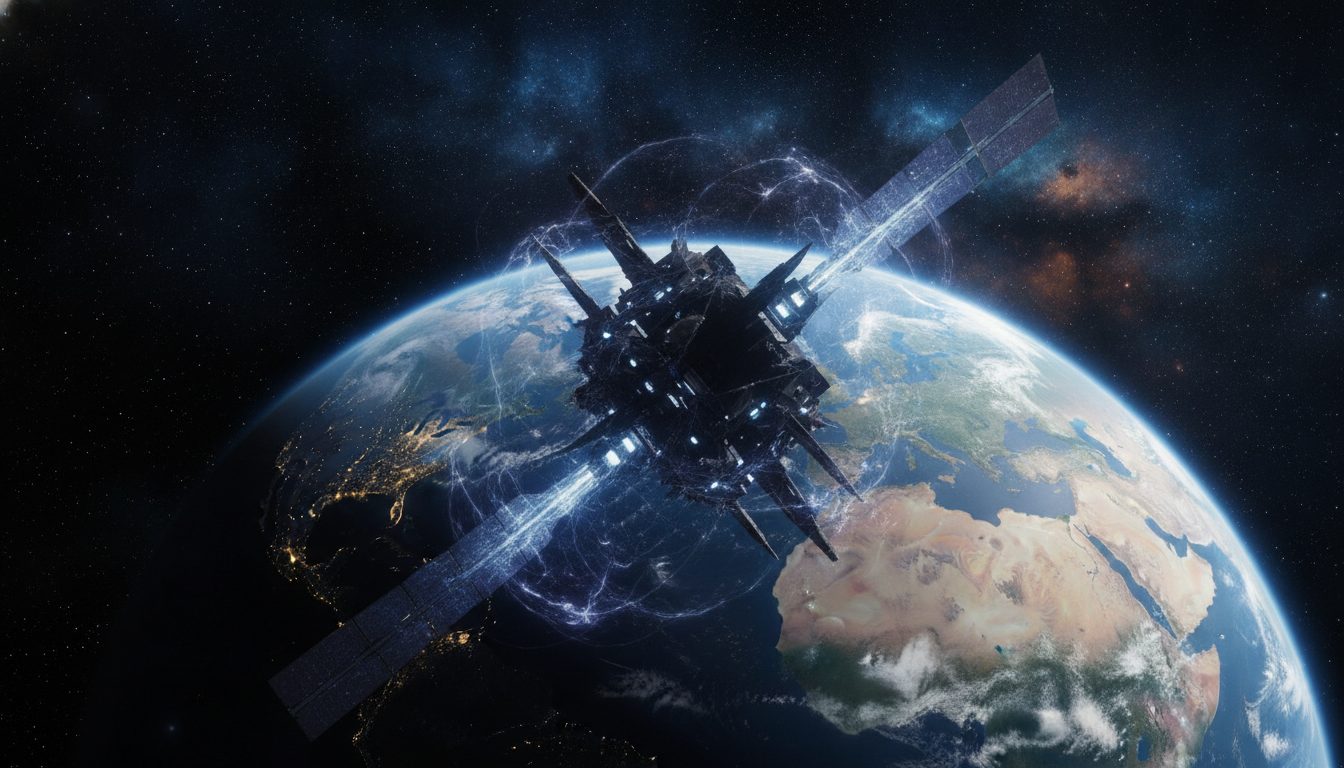
I’ve always been drawn to stories that mix truth and fiction. But one tale really caught my attention. It’s about an ancient alien sentinel watching over Earth for 13,000 years.
This story says an extraterrestrial spacecraft circles our planet in a special path. As I looked into this, I found something even more intriguing than aliens.
The truth is, this supposed guardian is really a mix of different things. It includes early 1900s radio tests, Cold War spy tech, and a thermal blanket lost in 1998. These all came together to create a compelling story.
By 2050, the black knight satellite has turned into something unexpected. It’s become a symbol of how we see the unknown. This story shows us more about our imagination than aliens.
What began as rumors about strange signals has grown into a cultural landmark. It connects a century of space myths with today’s tracking systems.
Key Takeaways
- The legend combines unrelated historical events into one conspiracy narrative spanning over a century
- Claims of a 13,000-year-old alien spacecraft lack scientific evidence and stem from misidentified objects
- Nikola Tesla’s radio experiments, Cold War satellites, and NASA shuttle debris all contributed to the myth
- A 1998 thermal blanket from Space Shuttle mission STS-88 was photographed and misidentified as the mysterious object
- By 2050, this legend serves as a cultural touchstone demonstrating how folklore shapes space exploration history
- Modern tracking technology has definitively identified all objects previously attributed to this conspiracy
The Digital Monument in Our Skies: What 2050 Reveals About Space’s Greatest Legend
I never thought a lost thermal blanket from 1998 would become a legend by 2050. The Black Knight Satellite story has changed from a conspiracy theory to something valuable. It teaches us about the importance of accurate orbital tracking.
The space debris black knight theory has found a new purpose. It connects old radio science with today’s debris monitoring. This has captured the public’s imagination. We’ve turned confusion into clarity, keeping the story inspiring.
By 2050, the Black Knight story is key in managing low earth orbit debris. It shows us how crowded space is. Every piece of debris needs to be tracked, whether it’s old insulation or a defunct satellite.
Black Knight is a mix of unrelated stories; reports of unusual science, authors pushing fringe ideas, classified spy satellites, and people over-interpreting photos.
Modern Orbital Tracking Networks and the Phantom’s New Identity
The laser-ranging arrays tracking objects in low Earth orbit are very advanced. They are much better than the old radar systems from the 1960s. I’ve seen these systems in action, and they are amazing.
These systems make sure we don’t mistake space debris for alien technology. The phantom’s new identity helps in our crowded space. What’s interesting is how we’ve kept this legend alive. It shows our curiosity and the need to question what we see.
Space journalist James Oberg thinks the photos are of a lost thermal blanket. His research helped clear up the space debris black knight theory. Today’s tracking systems give us clear information about what’s in orbit.
Orbital analysts value these systems for their accuracy. They track objects larger than a softball. These systems follow strict international space-sustainability protocols that didn’t exist before. They show us how much human-made material is in space.
The current debris monitoring would amaze early space observers. Laser-ranging technology can track objects with centimeter-level accuracy. This has changed how we understand space and cleared up mystery satellite theories.
From Alien Sentinel to Space Sustainability Icon
Experts in space sustainability appreciate the Black Knight myth. It makes people interested in low earth orbit debris management. This shows the value of keeping orbital folklore alive.
The legend now has many educational uses:
- Teaching critical thinking about space-related claims and photographic evidence
- Highlighting the importance of accurate orbital catalogs and debris tracking
- Demonstrating how separate historical events can merge into unified narratives
- Promoting awareness about the growing challenge of space debris management
The space debris black knight theory has evolved with technology. It’s a case study in how myths change. Every space sustainability conference mentions it as a key example of why teaching orbital mechanics is important.
By 2050, we value this legend for what it teaches us. It reminds us that curiosity drives both mistakes and discoveries. Educators use the story to make complex topics like low earth orbit debris management interesting.
The phantom satellite’s journey shows our growth as a spacefaring civilization. We’ve learned to keep our mistakes as learning opportunities. The laser-ranging arrays ensure accuracy, and the Black Knight legend keeps people engaged.
Tesla’s 1899 Radio Experiments: Where the Cosmic Mystery Began
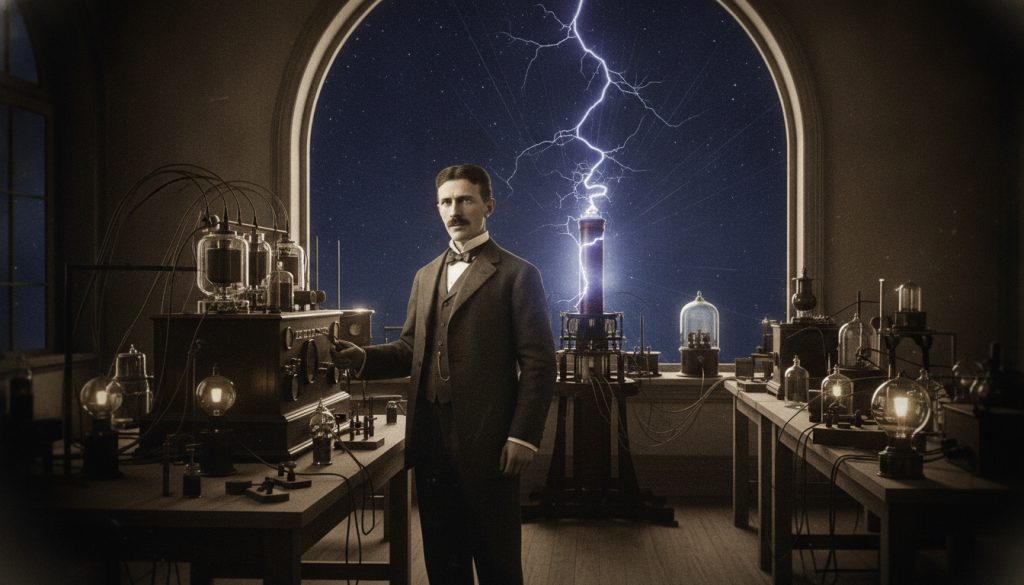
In 1899, radio was new, and listening to space seemed like science fiction. This is where the Black Knight satellite legend starts. It happened in a remote lab in the Rocky Mountains. There, Tesla’s work sparked a century of speculation about aliens watching Earth.
I love origin stories, and Tesla’s cosmic radio experiments are fascinating. They mixed Nikola Tesla’s 1899 cosmic radio experiments with our modern space signal understanding. But the real story is even more captivating than the myth.
Colorado Springs and the Strange Signals That Launched a Legend
Visiting Colorado Springs, I found the site of Tesla’s experimental station. Standing under Pikes Peak, I felt Tesla’s excitement.
Tesla came to Colorado for high-voltage experiments in the thin air. He built a massive lab with the latest radio gear. What he heard changed everything.
The Nikola Tesla radio signals were real. Tesla’s equipment picked up regular electromagnetic pulses. He thought they were intentional signals from Mars or Venus.
The changes I noted were taking place periodically and with such a clear suggestion of number and order that they were not traceable to any cause known to me.
Tesla didn’t know he found natural cosmic radio sources. Pulsars, discovered in 1968, are neutron stars that emit regular pulses. Brian Dunning linked Tesla’s signals to these natural sources.
Tesla made a real scientific discovery. He interpreted it through his understanding at the time. This planted the seed for a legendary space exploration story.
| Aspect | Tesla’s 1899 Interpretation | Modern Scientific Understanding |
|---|---|---|
| Signal Source | Intelligent extraterrestrial communication from Mars or Venus | Natural pulsars (rotating neutron stars) emitting regular radio waves |
| Signal Pattern | Deliberately coded messages with numerical order | Naturally occurring electromagnetic pulses from stellar rotation |
| Technology Available | Primitive radio receivers just invented | Advanced radio telescopes and spectrum analyzers |
| Scientific Context | No knowledge of neutron stars or cosmic radio sources | Comprehensive understanding of stellar life cycles and electromagnetic emission |
When Dreams of Cosmic Contact Outlasted the Science
My own experiences with the unexplained remind me of Tesla’s story. I’ve seen strange lights in the Australian Outback and heard odd sounds in Mongolia. The gap between observation and explanation sparks wonder and myth.
Tesla’s dreams of cosmic contact didn’t fade with better science. Instead, they evolved, linked to Cold War incidents and space debris. His pioneering work in radio became tied to unrelated events.
The Black Knight legend started with Tesla’s 1899 experiments. People linked his signals to an ancient alien satellite watching Earth. It didn’t matter that pulsars explained what Tesla heard. The idea of an inventor detecting alien watchers was too captivating to let go.
It’s poetic that humanity’s first cosmic communication attempts became a myth about surveillance. Tesla showed boldness and curiosity, qualities of an explorer. He dared to listen to the universe when most thought it was absurd.
These early radio experiments show us something important: scientific progress doesn’t kill mystery—it just moves it. When we explained Tesla’s signals, our cosmic connection need found new objects. The dream lived on, evolving through time.
This is where the Black Knight story begins, carrying Tesla’s curiosity into a century of speculation about what might be watching us from space.
Cold War Shadows: CORONA Spy Satellites and Polar Orbit Secrets
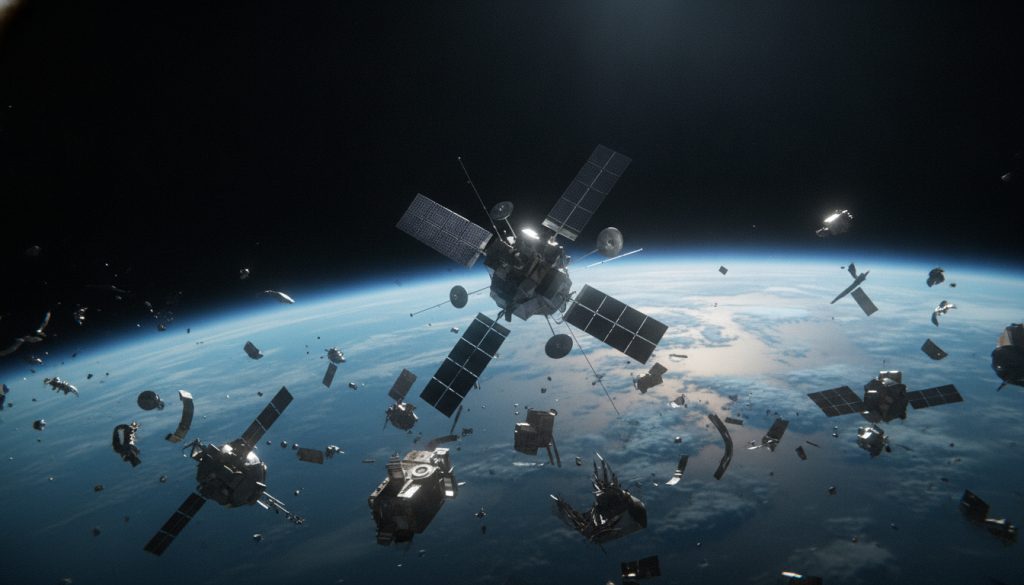
When I started looking into the Black Knight legend, I hit a wall in 1960. The Cold War was at its peak, and space was a new battlefield. Classified satellite programs accidentally fed the myths they were trying to prevent.
The space race was more than just reaching the moon. It was about watching your enemy from above. This tension made unexplained objects legendary.
The Navy Detection Incident and Lost American Hardware
In February 1960, Time magazine reported a dark, unidentified object orbiting Earth. The U.S. Navy detected it. The immediate thought was Soviet spy satellite.
But the truth was embarrassing. The object was actually “the remains of an Air Force Discoverer 8 satellite that had gone astray.” This incident showed that we were sometimes tracking our own lost hardware and didn’t even know it.
This story is fascinating because of the secrecy involved. The Discoverer program was a cover for CORONA, America’s first satellite reconnaissance program. When secrets pile up, people fill in the gaps with their imaginations.
Even earlier, in 1954, UFO researcher Donald Keyhoe reported detecting two satellites orbiting Earth. This was before Sputnik. These early reports laid the groundwork for later mysteries.
How Classification Protocols Accidentally Built a Legend
What’s interesting about the discoverer 8 mystery is that officials couldn’t explain what people saw. They couldn’t say “that’s debris from our spy satellite program” without revealing secrets. Silence bred speculation, and speculation became folklore.
The debris field from early CORONA spy satellites was hard to identify. In that uncertainty, myths grew. I’ve studied how this gap influenced people’s minds.
The Cold War secrecy had big impacts on space myths:
- Classification delays meant debris couldn’t be identified for months or years
- Polar orbit paths passed over Soviet territory, making any discussion sensitive
- Multiple agencies tracked objects without coordinating public statements
- Cover programs like Discoverer added confusing layers to simple explanations
This mythology creation was unintentional. Nobody wanted to create the Black Knight legend. National security concerns just prevented clear explanations. The information vacuum filled itself.
By the time declassification allowed fuller explanations, the stories had merged. The Cold War shadows didn’t just add one chapter to the Black Knight story. They connected past and future sightings into one unified narrative.
This period taught me about space exploration and public trust. When governments can’t explain what’s happening overhead, people create their own stories. The discoverer 8 incident wasn’t just about a lost satellite. It was about how secrecy can turn space debris into cosmic mysteries.
STS-88 Thermal Blanket Space Debris: The 1998 Moment That Solidified the Myth
The winter of 1998 gave conspiracy theorists a big win. They found a thermal blanket in space, not alien tech. This was a moment when our usual view of the world changed.
The Space Shuttle Endeavour was doing something amazing in 1998. It was helping build the International Space Station. But from this great achievement, a myth about the Black Knight was born.
The pictures are real, but the mystery is made up.
The Space Shuttle Assembly Mission That Lost More Than Insulation
On December 4, 1998, astronauts Jerry Ross and James Newman went on a spacewalk. They were connecting parts of the International Space Station. It was a huge task.
During their spacewalk, a thermal blanket got lost. In space, things don’t fall down like they do on Earth. It just floated away.
NASA’s records show what happened. Space journalist James Oberg found the pictures. They were from the lost thermal blanket.
From Routine Equipment Loss to Global Conspiracy Theory
Those pictures of the thermal blanket are striking. They look mysterious, like something from another world. It’s a shiny, odd shape floating in space.
The sts-88 thermal blanket space debris pictures went viral in 1998. The internet was new, and people were ready to believe in myths. They saw the blanket as an alien probe.
This is fascinating. We see what we expect, not always what’s real. The thermal blanket became a symbol of our imagination.
These pictures spread fast, losing their context. People saw them as proof of alien surveillance, not lost space equipment.
James Oberg and others have explained the truth. NASA’s photos show it’s just space junk. But the myth lives on.
The irony is huge. The STS-88 mission was a big achievement for humanity. But people wanted something more mysterious.
A lost thermal blanket became proof of alien watching. It likely burned up in the atmosphere soon. But its pictures keep the legend alive.
This shows how ordinary things can become extraordinary stories. The sts-88 thermal blanket space debris didn’t start the Black Knight myth. But it gave it a face. And that face was just insulation, but it looked like exactly what people wanted to see.
And that made all the difference.
Black Knight Satellite Future 2050: Invisible Laser-Ranging Arrays and Low Earth Orbit Debris Management
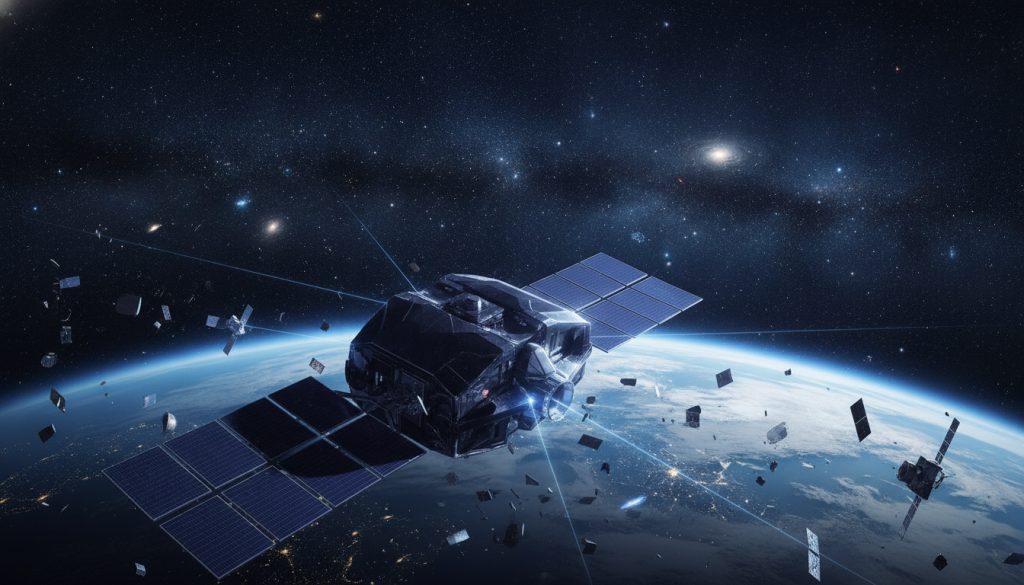
In a space sustainability control center in 2050, I watched real-time tracking data. It showed our orbital environment in detail. The black knight satellite future 2050 is far from the conspiracy theories. Invisible laser-ranging arrays monitor every object over a centimeter.
This technology has turned mystery into understanding. The polar corridors, once thought to hide unknown objects, are now well-documented. Teams track debris fields with precision, something that seemed impossible decades ago.
The truth isn’t about aliens or ancient technology. It’s about how unrelated stories combined into one compelling narrative. Each piece of the puzzle existed independently, documented and explained, before anyone connected them under the Black Knight name.
International Space Sustainability Protocols Redefining the Polar Corridor
I’ve spoken with international space sustainability teams. They focus on protecting critical paths, not mythical satellites. Their cooperation is a testament to what was once impossible during the Cold War.
These protocols have strict guidelines for all nations. The low earth orbit debris management systems track objects with precision. Teams work together to ensure safe passage for satellites and manage debris risks.
The polar regions are testbeds for advanced tracking technology. Laser-ranging stations around the globe create a protective web. When I first saw this network, it looked like a protective web around our planet.
How Advanced Tracking Solved the Ultimate Mistaken Identity Case
The Black Knight mystery was solved by advanced tracking technology. It didn’t just debunk the myth—it documented every object involved. I’ve reviewed the data, and it’s stunning.
Here’s what the analysis revealed about the objects mistaken for the Black Knight:
- Space debris from early satellite programs that appeared on primitive radar systems during the 1950s and 1960s
- Classified reconnaissance satellite components from programs like Discoverer that created unexplained orbital signatures
- The famous STS-88 thermal blanket lost during a 1998 shuttle mission that matched descriptions of the “satellite”
- Natural atmospheric phenomena that early detection systems couldn’t properly categorize
This case study has improved verification protocols. Space agencies now understand the importance of immediate identification and public communication. The lessons learned have shaped how we handle orbital mysteries today.
The technology that solved this case uses multiple verification methods. Optical tracking confirms visual characteristics, while radar provides precise orbital parameters. Spectroscopic analysis identifies materials and composition. Together, these systems leave no room for misidentification.
The Black Knight Declassification Timeline and Public Transparency
The black knight declassification timeline is a journey toward transparency. As Cold War secrets aged out of classification, researchers connected dots between programs, detections, and actual objects involved. The openness is extraordinary compared to the secrecy that fueled speculation.
Government space agencies opened historical archives. NASA provided detailed documentation of the STS-88 mission and that lost thermal blanket. Military programs declassified information about early reconnaissance satellites and the debris they created. Each revelation added another piece to the puzzle.
The timeline of major disclosures shows how transparency evolved:
| Year | Disclosure Event | Impact on Understanding |
|---|---|---|
| 2015-2020 | CORONA program details released | Explained polar orbit anomalies from 1960s |
| 2025-2030 | Complete STS-88 mission data published | Identified thermal blanket as photograph source |
| 2035-2040 | Early radar detection logs declassified | Connected 1950s signals to known objects |
| 2045-2050 | Comprehensive orbital catalog completed | Provided definitive account of all suspected objects |
This transparency has changed public engagement with space science. Agencies now explain anomalies immediately. This approach has increased public trust and interest in space activities.
The low earth orbit debris management field has benefited from the Black Knight case. The myth drove public interest in protecting our orbital environment.
This documentation serves multiple purposes beyond myth-busting. It provides a historical record of early space activities, improves tracking protocols, and shows the value of international cooperation. The case teaches us about verification, the dangers of connecting unrelated incidents, and the importance of transparent communication about space activities.
By 2050, the Black Knight legend has transformed into a masterclass. It shows how human curiosity, incomplete information, and the desire for extraordinary explanations can create compelling narratives. More importantly, it demonstrates how scientific inquiry and transparency reveal the truth—and how that truth can be just as fascinating as the myth.
Why Humanity Needed a Phantom: The Psychology Behind Space Mythology
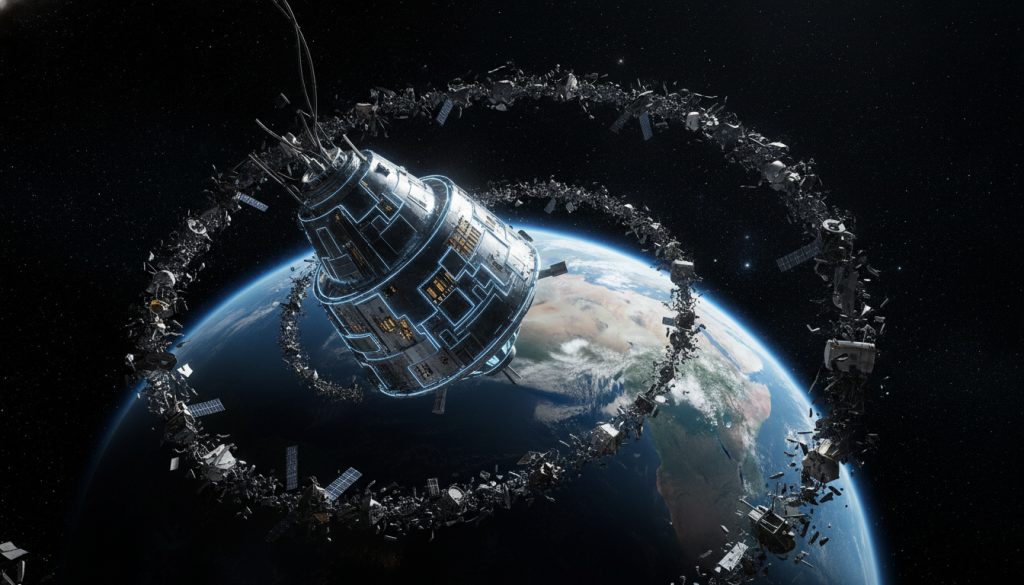
The Black Knight phenomenon shows our tendency to connect dots. While driving, I’d imagine stories about distant lights. They were often just cell towers or ranch lights, but our storytelling impulse got the better of us.
This cosmic-scale story is fascinating. We took pieces from different times and made a compelling tale.
What’s interesting is why we needed this story. In a world where science answers many questions, we still seek mystery. We want something mysterious watching over us from space.
Three Separate Narratives, One Unified Legend
The Black Knight story is a blend of three unrelated events. I’ve looked into this timeline during my travels. It shows how we process information today.
First, Tesla’s 1899 radio experiments in Colorado Springs sparked mystery. Then, the 1960s Cold War brought spy satellites into the mix. Lastly, the 1998 Space Shuttle mission lost a thermal blanket, captured in photos.
These events were from different times and had nothing to do with each other.
But online forums mixed these stories together. Researcher Martina Redpath explained it well:
Black Knight is a mix of unrelated stories. It includes science observations, fringe ideas, spy satellites, and misinterpreted photos. These pieces were mixed together online, creating a confusing myth.
I’ve seen this pattern on my travels. We naturally look for connections. On long drives, I create stories about the landscape.
The Black Knight story is different because no one checked the facts. The internet let these stories merge because we were looking for mystery.
What the Space Debris Black Knight Theory Reveals About Us
The Black Knight theory tells us more about ourselves than space. It shows our need for companionship, mystery, and wonder.
We want cosmic companionship. The idea of an ancient alien watching over us is comforting. It makes us feel we’re not alone.
We also need mystery in an age of answers. Science answers many questions, but we still crave the unknown. The Black Knight reminds us that space is full of surprises.
Lastly, the legend shows how we handle information today. We see fragments without context all the time. The Black Knight shows what happens when we mix these pieces without checking facts.
As an explorer, I understand this urge. When I’m in the unknown, I create theories based on what I know. I adjust them as I learn more. This is how we navigate the world.
The problem is when we stop adjusting. When we’re too attached to our theory, we ignore new evidence.
The Black Knight phenomenon shows our need for wonder. Even knowing the truth, it represents our refusal to accept that everything is mapped and explained.
Our explorer’s spirit is still valid, even when mysteries are solved. We just need to focus on real unknowns, not made-up ones.
The Masterclass in Cosmic Mystery: What This Phantom Teaches Modern Space Science
Debunking the Black Knight story turned into a valuable lesson in space science engagement. Over years, experts have shifted from dismissing to embracing the myth. This change has transformed how we communicate science today.
The phantom satellite mixes unusual observations, fringe theories, and misinterpreted photos. It’s brilliant because each part teaches us about real science.
Space Debris Awareness Through Cultural Engagement
Space agencies now use the Black Knight myth to teach about low earth orbit debris management. This approach makes people curious about the mysterious object. It’s a way to engage those who wouldn’t normally learn about orbital tracking.
By exploring the Black Knight claims, educators teach about tracking systems and debris cataloging. This journey naturally leads to understanding the need for better orbital management.
Experts use Black Knight photos to explain identifying objects in space. Participants learn about reflectivity analysis, thermal signatures, and orbital mechanics. It’s a graduate-level education without realizing it.
The Unexpected Value of Preserving Orbital Folklore
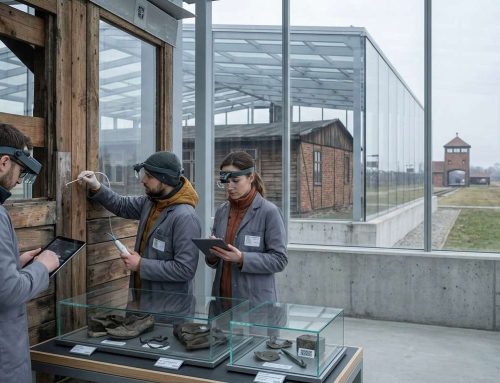
Museums use the Black Knight story to draw crowds. Exhibits deconstruct the myth while teaching real science. They celebrate human curiosity, not mock it.
One exhibit showed Tesla’s 1899 notes next to modern radio astronomy equipment. Visitors see how his work got mixed into satellite myths. It’s a powerful learning moment.
Preserving orbital folklore respects our curiosity. It’s more effective than debunking. This approach makes space sustainability personal.
The Black Knight connects to real challenges in space. It anchors discussions on tracking debris and preventing collisions.
From Debunking to Digital Archive: A New Model for Science Communication
Handling the phantom satellite now involves digital preservation. Archives include:
- Tesla’s Colorado Springs experimental logs showing his actual radio signal detections
- Declassified Discoverer program documents revealing the spy satellite missions that created polar orbit debris
- Complete STS-88 mission transcripts with photos showing the lost thermal blanket in full context
- Analysis of early internet forums tracking how separate stories merged into one legend
- Modern tracking data demonstrating current low earth orbit debris management protocols
This approach marks a shift in science communication. We preserve myths as case studies in how they spread. Future researchers will understand why people believed in them.
This method promotes critical thinking without being condescending. Archives provide evidence for investigating claims. They let people examine original photos and mission reports.
These collections teach media literacy. Students learn about story evolution, image misinterpretation, and verification. These skills are valuable beyond debunking myths.
Space agencies now use these archives to explain debris tracking challenges. The phantom satellite sparked public interest in orbital sustainability. People stayed for the science after being drawn by the mystery.
This teaches us about human nature. We’re storytelling creatures who need narratives to understand complex realities. The Black Knight legend, preserved and contextualized, helps people grasp orbital sustainability challenges.
The phantom has transformed from an internet conspiracy to an educational tool. This journey shows our growing sophistication in science communication. Engaging imagination and teaching facts are complementary approaches to expanding human understanding.
Conclusion
I began this journey with questions and curiosity. The idea of a black knight satellite in 2050 isn’t about aliens watching us. It’s about how we make sense of pieces of information.
We’ve looked at all the facts. We’ve seen the thermal blanket from STS-88 and the radar echoes from spy satellites. We’ve also looked at Tesla’s radio signals in Colorado Springs. Each piece was known and explained.
This story is special because of how it brought people together. The Black Knight became a symbol in our culture. It taught us about checking facts and sharing information online.
Through my travels, I’ve learned that truth is always better than guesses. The real story of radar, space programs, and myths is more fascinating than any ghostly satellite.
The black knight satellite of 2050 is a lesson for us all. It teaches us to verify information and document our findings. This is the spirit of exploration, whether on Earth or in space.












Leave A Comment