
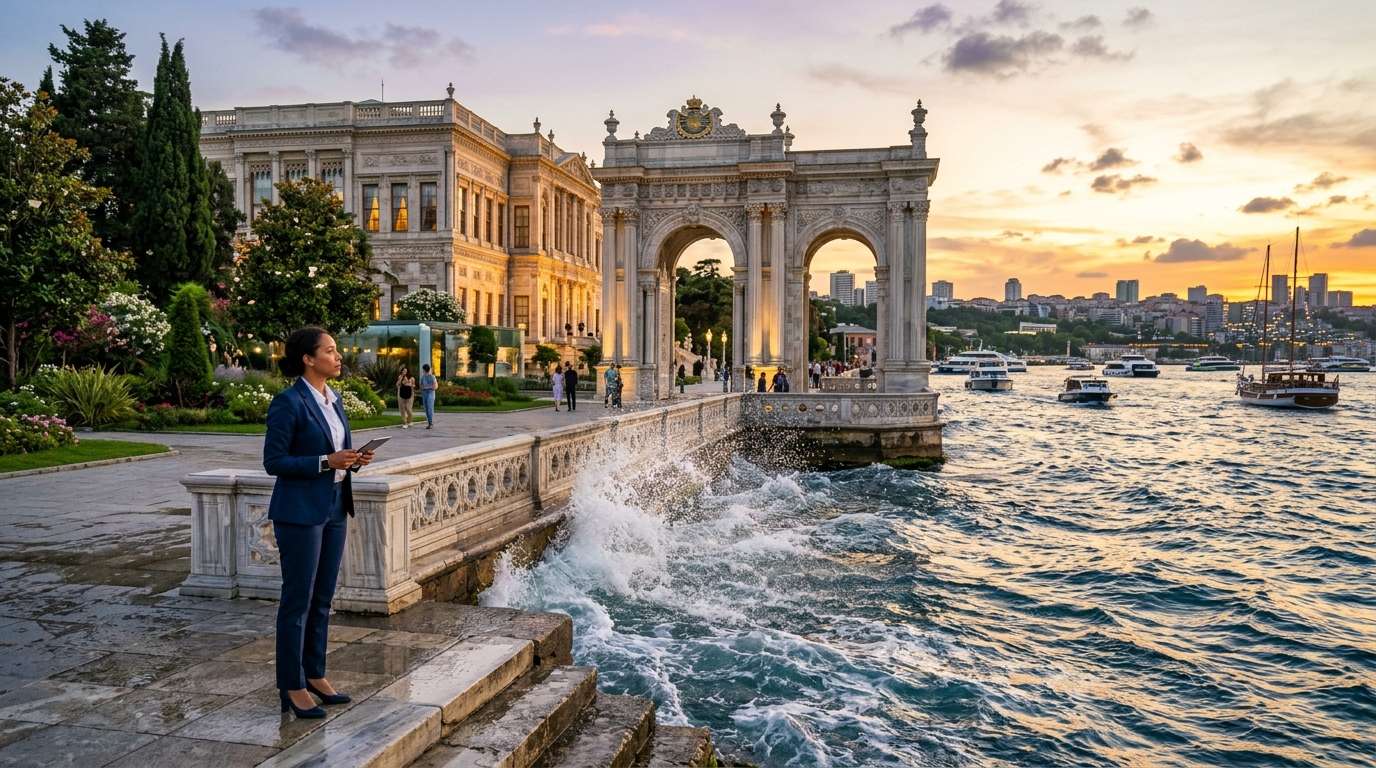
I stood at the gate of Dolmabahçe Palace with sea air on my face and watched the Bosphorus lap at the quay. How does a 19th-century marble palace survive salt spray, gilded ceilings that hate damp, and millions of footsteps by 2050? The palace sits right at the water’s edge on the European shore, so the question feels real the moment you arrive.
In my 2050 vision, the palace becomes a carbon-neutral waterfront sanctuary. Its marble is shielded by breathable glazes, storm-surge vaults hold back the sea, and pavers turn footsteps into power. I also give you a practical visit guide, so you can see the real palace today.
Key Takeaways
- The palace was finished in 1856 on land that was once a bay.
- Salt spray, storm surges, damp and crowds are the main threats.
- Breathable glazes could protect stone while keeping its aged look.
- Underground vaults and closed-loop cooling are part of the 2050 vision.
- Footstep power helps, but it cannot run a palace alone.
- Visit Tuesday to Sunday, arrive early, and shoot the gardens, not the halls.
We start with who built the palace and why it sits on water.
Who Built Dolmabahçe Palace and Who Lived There
The palace was finished in 1856, and its name tells you the site was once open water. Dolmabahçe means filled-in garden, because builders turned a bay into land. Sultan Abdülmecid I ordered it, and the architects Garabet Balyan and Nigoğayos Balyan designed it in a mix of Ottoman Baroque and Neoclassical styles.
So who used to live in Dolmabahçe Palace? Six Ottoman sultans and a Caliph lived there until 1924. After the Republic it became a museum, and Atatürk used it as a presidential residence.
The ground under this palace was once a bay, so the sea is never a distant neighbor here. It is part of the building’s story.
The move from Topkapı Palace, the old residence of the sultans, was a step toward the West. The new palace replaced it as the administrative center of the Ottoman Empire. That also explains why the ground is wet and the sea matters so much.
Mustafa Kemal Atatürk died in the palace on November 10, 1938, at 9:05 A.M. The clock in his room still shows 9:05. I found that small detail more moving than any chandelier.
Now let’s step inside and see what the building holds.
Inside the Halls: What the Palace Holds Today

The first thing I noticed was how much gold hides in the ceilings. About 14 tons of gold decorate the ceilings and structures. The palace has about 285 rooms and 46 halls, plus 6 baths and 68 washrooms, spread over more than eleven acres.
Visitors see a blend of traditional Ottoman layout and European decoration. The southern wings were public and male quarters. The northern wings were the Harem, with eight connected apartments.
| Space | What stands out | Detail worth noticing |
|---|---|---|
| Ceremonial Hall | Over 2,000 square meters | 36-meter ceiling, 56 columns |
| Red Room | Monogram of Abdülmecid | World atlas motifs |
| Blue Hall | Part of the Harem | Sits beside the Pink Hall |
| Clock Tower | Commissioned by Abdülhamid II | Designed by Sarkis Balyan |
The Ceremonial Hall and the Crystal Chandelier
The Ceremonial Hall (Muayede) is the big reception room. Its ceiling rises 36 meters over 56 columns. A 4.5-ton crystal chandelier hangs there, said to be a gift from Queen Victoria.
The Harem, the Red Room and Atatürk’s Room
The Harem and the ceremonial wing split the palace in two. The Red Room carries Abdülmecid’s monogram, and the Blue and Pink Halls sit in the Harem. Atatürk’s room, with its 9:05 clock, was a quiet stop for me.
Gardens, Clock Tower and Mosque
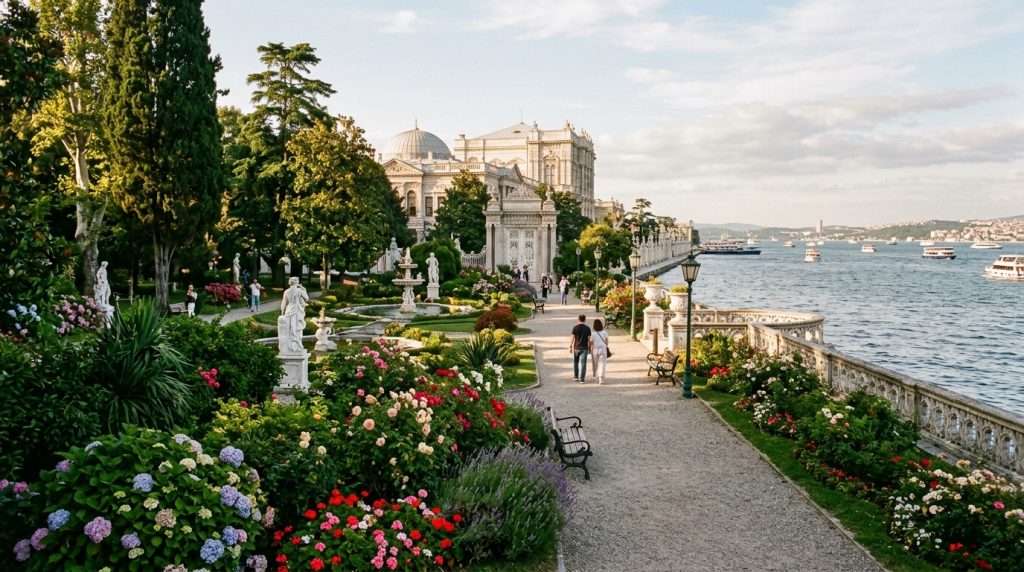
There are four gardens, including Hasbahçe with its swan-shaped fountain. The Dolmabahçe Mosque was finished in 1855. Photographers get the best Bosphorus views out here. The ticket also covers the National Painting Museum next door, with around 200 paintings.
All that stone and gilding faces a patient enemy in the salt air.
Why Salt Spray, Storm Surges and Crowds Threaten the Palace
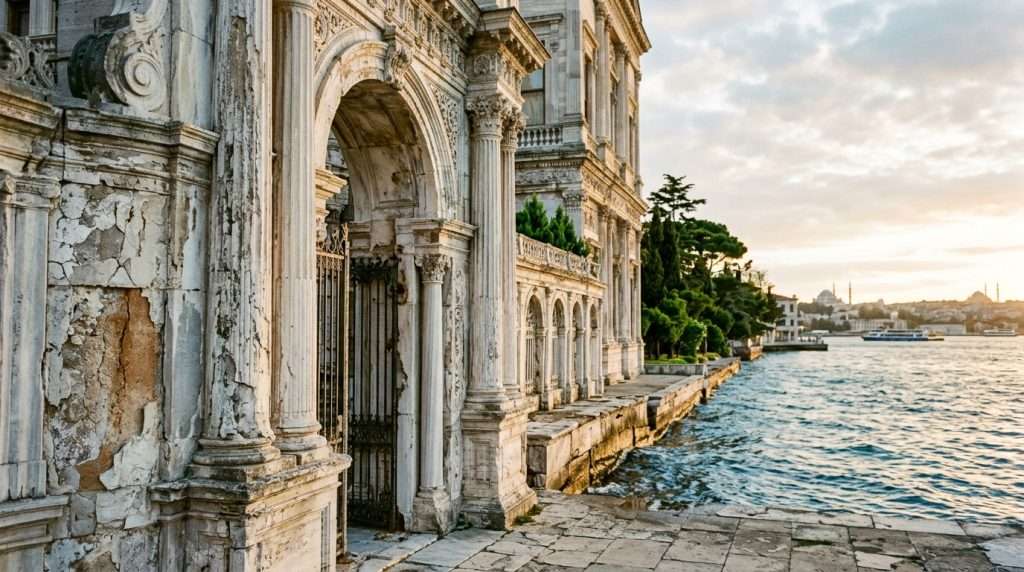
Salt is quiet, and that is what makes it dangerous to stone. The palace stands at the Bosphorus edge on filled land, with facades of white Marmara marble and Küfeki stone. Sea spray carries salt that crystallizes inside stone pores and pushes the surface apart.
That damage has a name, delamination. In plain words, the stone flakes off in layers.
Here are the four threats I would watch in a world of rising seas and bigger crowds:
- Salt spray on marble and stone
- Storm surge reaching quays and gardens
- Damp and temperature swings inside gilded halls
- Footsteps wearing floors and fragile stairs
One point matters here: gilding fails differently from stone, so one fix cannot serve both. Humidity and heat swings hurt gold leaf, while salt hurts rock.
Earthquakes are a separate risk. Conservators in Istanbul always plan for them, since the region is seismically active.
The first defense I picture is a glaze for the stone.
Breathable Nano-Mineral Glazes for Marble and Küfeki Stone
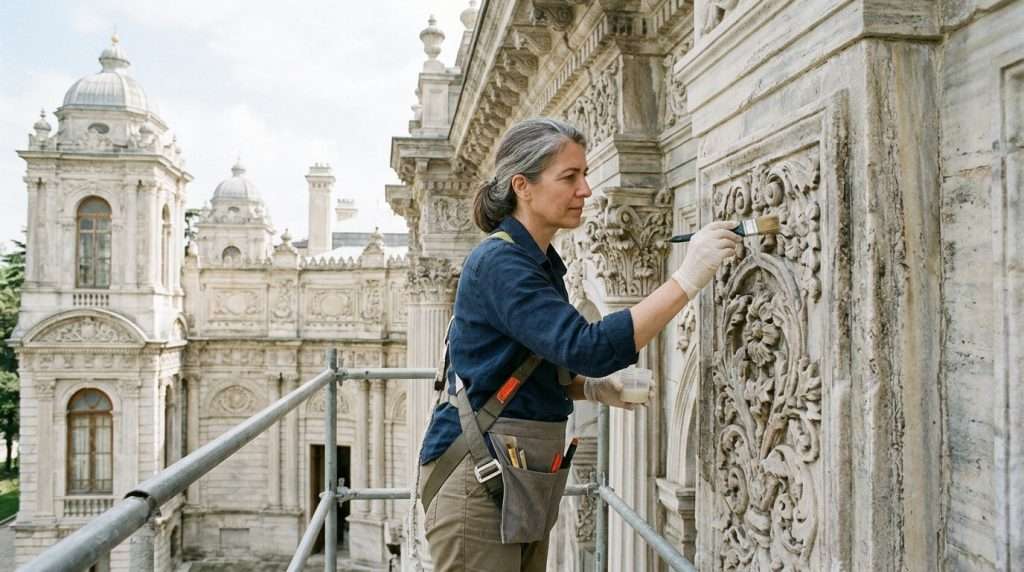
The best repair is the one you cannot see. In the 2050 vision, a nano-mineral glaze lets moisture vapor leave the stone while it blocks liquid water and salt. The key word is breathable.
A coating that traps moisture can make stone damage worse. A sealed stone holds water inside and flakes from within. The mistake to avoid is a shiny waterproof coat that looks clean but ruins old stone.
| Material | Main risk | What the glaze does |
|---|---|---|
| Marmara marble facade | Salt flaking | Blocks salt, lets vapor out |
| Küfeki stone | Trapped moisture | Breathes so water can leave |
| Gilded surfaces | Damp and heat swings | No glaze; indoor climate control |
| Stone near the quays | Direct spray and splash | Repels liquid water and salt |
The vision keeps the authentic patina instead of making the stone look new. That soft, aged tone is what I love in my photos of the facade. Protection should not erase the past.
But glaze cannot help when the sea itself rises into the gardens.
Dolmabahce Palace Future 2050: Storm-Surge Vaults and Geothermal Cooling
Imagine the sea rising and the palace simply taking a drink. In the 2050 vision, automated underground storm-surge vaults capture 100 percent of marine storm surges. They sit beneath reclaimed gardens and coastal quays.
The same water then helps cool the grandest halls, with no fossil fuel. It is a plan for the whole city shore, not just one building.
Subterranean Vaults Under the Gardens and Quays
Picture vaults under the gardens that fill when a surge arrives and hold the water. Gates open, the sea flows in, and the lawns stay dry. Afterward the stored water drains out slowly.
A photographer would notice what does not happen. The gardens stay green and the quay stays open, even in a storm.
Seawater Turned Into Cooling for the Chandelier Halls
The stored seawater is filtered and cycled through zero-emission, closed-loop geothermal cooling. That keeps the chandelier halls cool and dry. A closed loop means the seawater runs through sealed pipes and never touches the historic walls.
The vaults protect the grounds, and the people walking them could help power it all.
Piezoelectric Pavers and a Net-Zero Waterfront
Every visitor, me included, adds a few steps to the day. A piezoelectric paver is a floor tile that turns the pressure of a footstep into a small amount of electricity. In the 2050 vision, they sit under the imperial quays and Clock Tower plazas.
Each step makes only a tiny amount of power, so the value comes from crowds, not single footsteps. The tiles work best where people walk in dense streams.
Footstep Power Across the Quays and Clock Tower Plazas
The pavers feed a clean microgrid. I picture it doing four jobs:
- Lighting for paths
- Quay lamps at night
- Sensors in the vaults
- Charging points for visitors
What Net-Zero Means for the Palace Grounds
The goal is a carbon-neutral palace. The honest limit is that pavers help but cannot run a whole palace alone. That is why cooling comes from the geothermal loops.
The vision only pays off if people can still visit, so let’s talk about going now.
Is Dolmabahçe Palace Worth Visiting Today?
Yes, I think it is worth it, with two caveats. The palace suits you if you like grand interiors and Ottoman and European design together. It suits you less if you dislike guided pacing, since some travelers find the tours rushed.
| Item | Detail | Tip |
|---|---|---|
| Hours | Tuesday to Sunday, 9 a.m. to 6 p.m. | Closed Mondays |
| Ticket | About 650 Turkish liras (about $24) | Includes the painting museum; prices change |
| Time needed | 2 hours to half a day | Allow extra for gardens |
| Getting there | Kabataş tram stop, Beşiktaş ferry port | About a mile northeast of Taksim Square |
Arrive early, because the ticket office can close once the day’s passes are gone. Interior photography is restricted, so shoot the gardens and waterfront. I wish photos were allowed inside, and some travelers say the same.
The site has a gift shop, restrooms and a cafe. Guides run the tours, and the pace is set for you.
Arrive early and take photos outside. The ticket office can close once the day’s passes run out, and the best pictures are in the gardens.
Once you have your ticket, see what else sits close by.
Nearby Stops to Pair With Your Visit
Plan the afternoon before you buy the ticket. Four stops fit neatly around the palace and keep a day on a budget. Eat in Beşiktaş Bazaar rather than near the palace gate to save money.
- Istanbul Naval Museum: right next door, with Ottoman maritime history
- Beşiktaş Bazaar: local restaurants, Turkish breakfast, döner and fish bread
- Ortaköy Square and Mosque: street food by the water
- Galataport: restaurants and shops
Which is better, Topkapı Palace or Dolmabahçe? They are different eras and a different kind of visit. Topkapı is the older sultans’ residence in the historic peninsula, so many travelers do both on separate days.
With the day planned, I can share what stayed with me.
Conclusion
I left the palace gate thinking about how long a place like this can last. Dolmabahçe is a living lesson in protecting heritage by the sea. Visiting now is the best way to appreciate what the 2050 vision would protect.
My advice is simple. Pick a weekday morning for your visit, and plan a sunrise walk along the quay for photos. Go see it for yourself.











Leave A Comment