
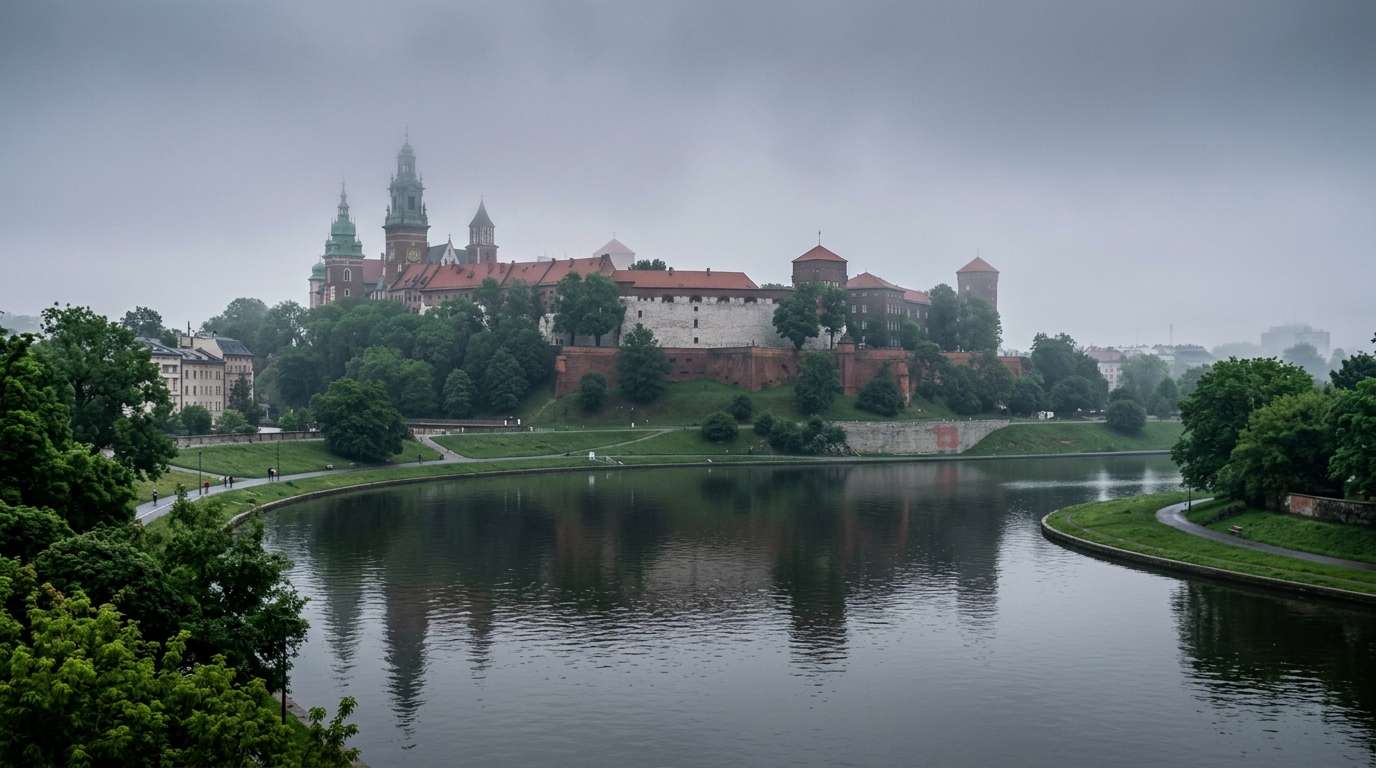
I stood on the ramp of Wawel Royal Castle one gray morning, with the Vistula sliding past far below, and wondered what this hill will face in 25 years. Wawel Castle future 2050 is the question I now carry on every trip back. The castle has been a royal residence for more than 700 years in its main form and a museum since 1930.
Wawel Hill is a limestone rise above the river in central Kraków. Cold winters, high water and huge crowds all press on it at once.
Here is my promise. The 2050 vision in this piece is imagined: a carbon-neutral heritage sanctuary built on three pillars. Those are nano-mineral glaze for the stone, retention vaults for storm water, and piezoelectric pavers that turn footsteps into power. I will keep what exists today apart from what I picture, so you always know which is which. First, I want to show why this hill deserves the effort.
Key Takeaways
- Everything about 2050 here is a vision, not a fact on the ground today.
- Wawel Hill faces weather, floods and crowds at the same time.
- Muon imaging could find hidden weak spots without touching the walls.
- A breathable nano-mineral glaze would fight freeze-thaw damage and keep the patina.
- Retention vaults would turn river surges into cooling water.
- A basic visit takes about an hour, and one exhibition costs roughly 18-20 zloty.
Why Wawel Castle Future 2050 Starts With the Hill Itself
Wawel is Kraków’s acropolis, and a fortress hill has to be tough to last. It matters to Kraków as the Acropolis did to Athens and the Capitoline Hill did to Rome. A site that has stood for centuries can be hit by weather, floods and crowds all in the same year.
A hill that carries a nation’s story must also carry its storms, its floods and its crowds, all at once.
People lived here in the Palaeolithic. Mieszko I, who reigned about 960-992, was the first historical ruler to make Wawel his seat, and a bishopric followed on the hill in the year 1000.
The royal court moved to Warsaw around 1609-1611. Austria used the castle as barracks after 1795 and handed it back in 1905. Since 1930 it has been a museum.
The historic centre of Kraków landed on the first UNESCO World Heritage List in 1978, as a UNESCO heritage report on Kraków records. Today more than one million people visit the castle each year. That is the pressure this history must carry. To see how it carries it, you have to read the stone layers that make up the castle.
What Makes Wawel Castle Special Today
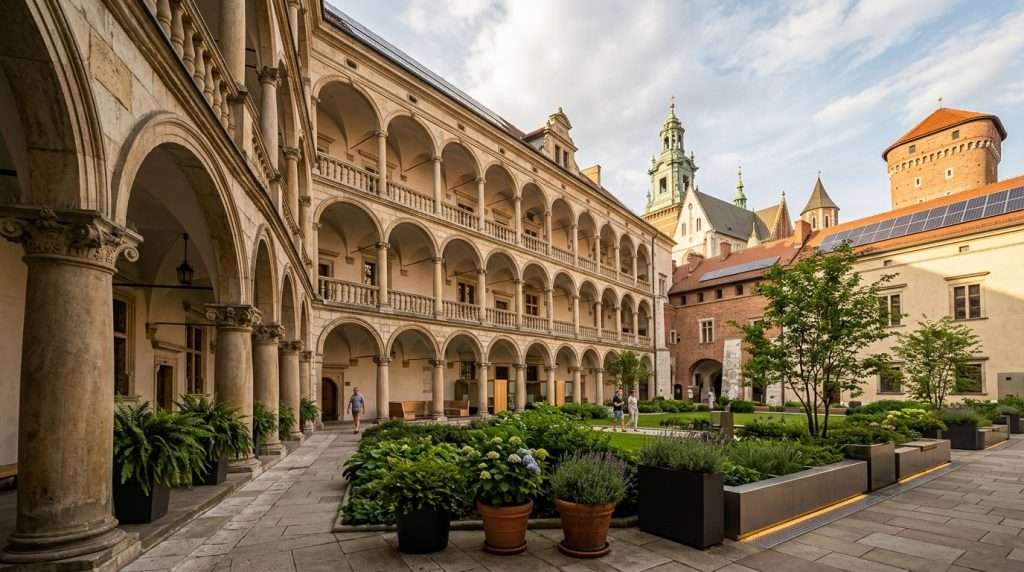
Wawel Castle is special because four building styles share one structure. Romanesque foundations, Gothic towers, Renaissance cloisters and Baroque chapels sit together in a single complex. The Renaissance arcaded courtyard is modeled on Florentine palaces.
| Style | Period or ruler | What survives |
|---|---|---|
| Romanesque | Early castle, 11th century | Foundations |
| Gothic | Casimir the Great, 14th century | Towers |
| Renaissance | King Alexander, from 1504 | Arcaded courtyard, cloisters |
| Baroque | Sigismund III Vasa, after the 1595 fire | Chapels |
Four Styles in One Castle
King Alexander began the Renaissance rebuild in 1504. A fire in 1595 led to Baroque work under Sigismund III Vasa. Casimir the Great had already expanded the Gothic castle in the 14th century.
Rooms and Collections Worth Seeing
The Crown Treasury and Armoury holds the szczerbiec, the coronation sword. The Sigismund Augustus tapestries hang here, along with a tent collection unique in Europe. Casimir the Great’s Room is the last remaining 14th-century formal apartment, so it is one important stop.
The Dragon’s Den
The Dragon’s Cave on the western slope formed about 12 million years ago. It is 270 metres long, and 81 metres are open to visitors. At the exit by the river, Bronisław Chromy’s dragon sculpture from 1972 waits for you. Behind all these walls, scientists now have a way to look inside.
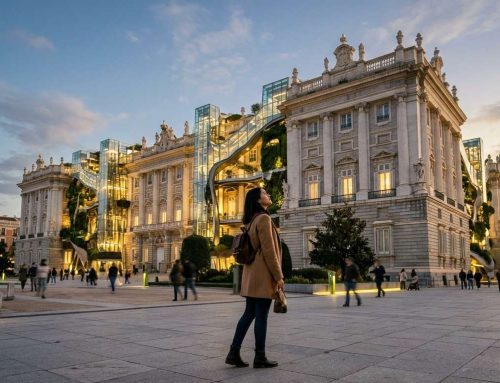
Royal Palace of Madrid future.
How Muon Imaging Looks Inside Wawel’s Walls
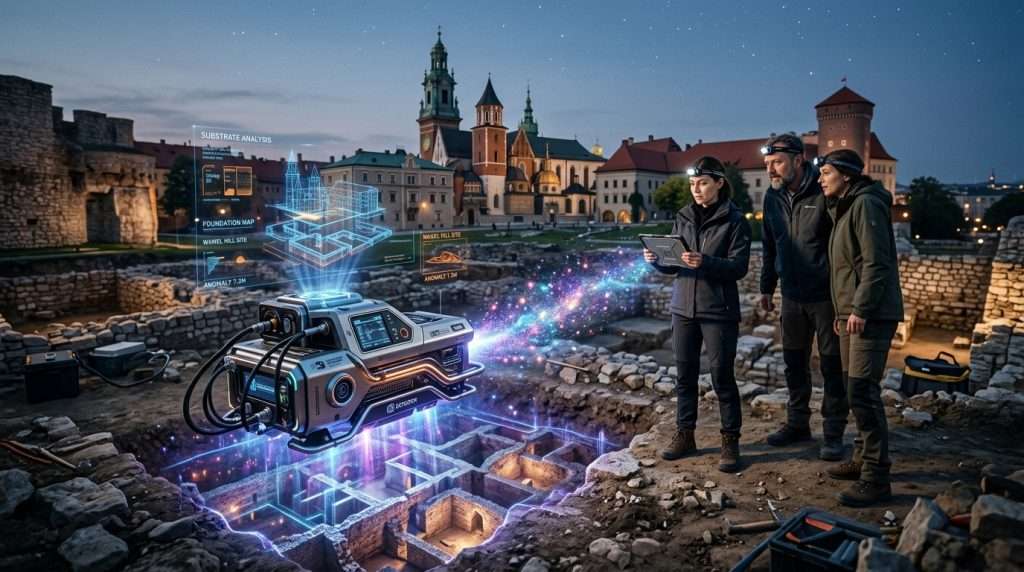
Cosmic particles pass through stone every second, and a detector can read them. Muon imaging is a passive scan that uses natural cosmic particles to map the density inside walls and rock without touching them. The method needs no intervention in the historic fabric and no closure of the museum.
Wawel is planned to be the first site in Poland, and the second castle hill in Europe, imaged this way. The VIEW project, short for Visualizing the Interior and Exploring Wawel, runs with MUOTECH and the Royal Castle. The European Union co-funds it, and Buda Castle hill in Budapest has also been studied.
The scan maps density and finds voids and anomalies. In 2017 the same idea found a previously unknown void above the Grand Gallery of the Great Pyramid. A density map alone does not explain a void. It points to places that need further checks.
That matters under old foundations, where a hidden gap can stay quiet for centuries. Once you know the weak spots, the stone still needs protection from weather.
Nano-Mineral Glazes Against Freeze-Thaw Damage
On a freezing morning the damp limestone of the courtyard looks calm, but the damage is happening inside the pores. In the 2050 vision, breathable nano-mineral glazes stop spalling and cracking on the Renaissance arcaded courtyard, the Gothic towers and the Jurassic limestone cliffs. They keep the authentic historic patina.
Why Limestone Cracks in Winter
The steps are simple. Water enters the pores, freezes and expands. The surface then flakes off, and this is called spalling.
Researchers already watch this process in other stone. One study of freeze-thaw damage in tuff monuments found that certain acoustic signals may show microcracks before any surface crack appears. It covered tuff, not Wawel’s limestone.
How a Breathable Glaze Would Work
Stone must breathe. A glaze that lets vapor escape would keep the pores open, while a hard seal would trap moisture behind the surface. Sealing too tightly is the mistake to avoid, since trapped water freezes and pushes the face off.
A traveler would see the difference at the arcaded courtyard and the tower bases. The stone would still look old and warm, just without fresh flakes on the ground. Water is also a bigger threat when it comes from the river.
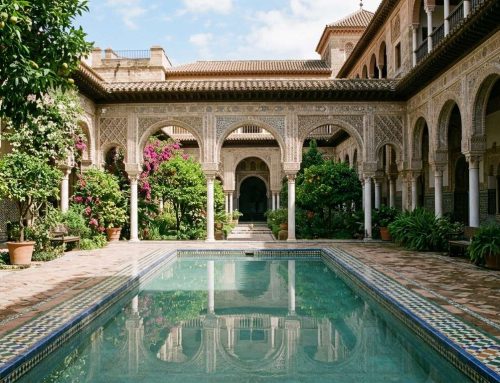
Royal Alcázar of Seville future.
Can Retention Vaults Tame the Vistula?
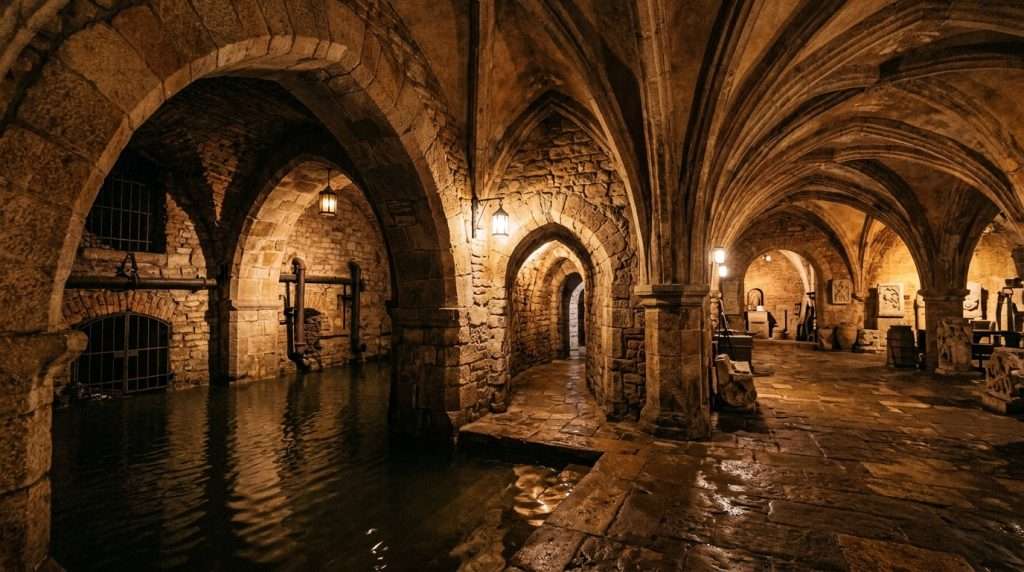
Yes, in the vision, the river’s worst days feed the castle’s cooling. Automated retention vaults beneath the outer courtyards and the Vistula embankments capture 100% of river basin storm surges. That full capture is the goal of the 2050 vision, not a measured result.
The flow runs in order. A surge arrives, the vaults store it, filters clean it, and the filtered water feeds closed-loop capillary cooling loops. These loops serve the royal state rooms and the tapestries.
Gentle cooling protects old wool and silk from heat swings, which stress the fibers over the years. It also works quietly, so no loud machines hum in a room where a king once sat. Visitors would hear only their own steps.
Something could still fail. A clogged filter or a stuck valve might leave a room warm or a vault full. That is why the system would need constant monitoring. Above it all, the people crossing the courtyards could make power of their own.
Piezoelectric Pavers on the Ramp and Courtyard
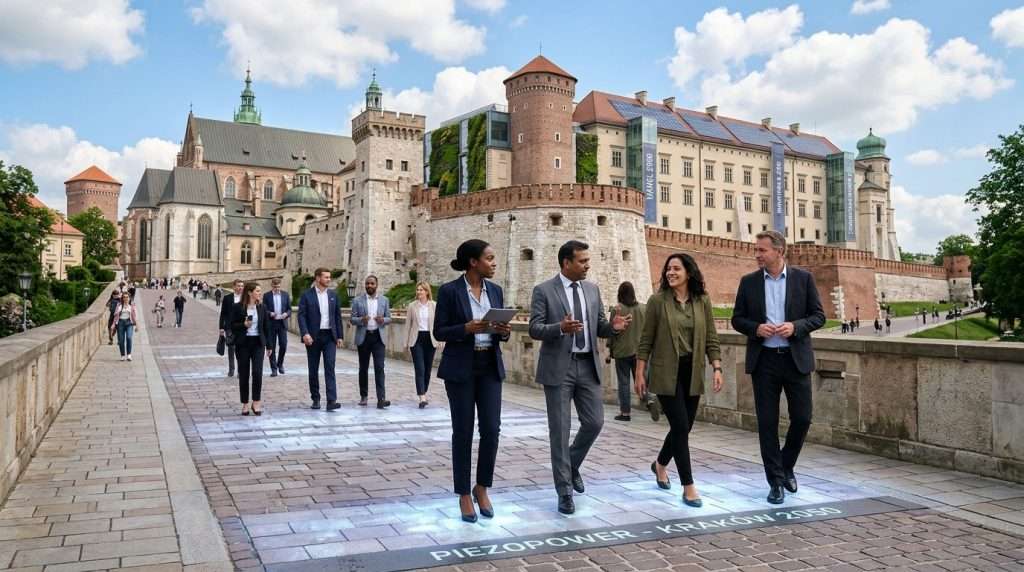
A million pairs of footsteps could power a small, steady stream of clean energy. In the vision, under-floor piezoelectric pavers across the grand entrance ramp and the arcaded courtyard turn steps into microgrid power. The castle gets more than one million visitors a year, and about as many again explore the hill.
The microgrid could run four things:
- Courtyard lighting
- Sensors for stone and air
- Information displays
- Pumps for the vaults
Busy paths matter most, so the pavers would sit where crowds actually walk. The power is small and works only as a top-up to other clean sources.
The surface must also stay step-free. The castle already runs an accessibility setup with ramps, lifts and adapted toilets, and wheelchairs and strollers use the same ramp and courtyard. Any paver would need to feel like plain, even stone underfoot. Before any of that arrives, a visit to Wawel is easy to plan right now.
Visiting Wawel Castle Now: Tickets, Hours and Getting There
A basic visit takes about an hour, and entry to a single exhibition costs roughly 18-20 zloty. The Representative Royal Chambers cost 18 zloty normal and 11 zloty concession. The Treasury and Armoury cost about 20 zloty. A basic visit covers the courtyard and one exhibition only.
The address is Wawel 5, 31-001 Kraków, a 10-minute walk from the Main Market Square. Check the official website for current prices. These five checks help:
- Tram stops: Wawel and Stradom are nearest; trams 76, 3 and 8 serve the station route.
- Tickets: book online in the busy season, or buy at the box office.
- Hours: usual spring and summer hours are 9:30am to 5pm, Tuesday to Sunday, shorter in autumn and winter.
- Time: a multi-exhibition tour takes 2-3 hours.
- November: the Free November campaign gives free entry to many permanent exhibitions.
Who lives in Wawel Castle? Nobody does. It is a museum. The nearest car park is Plac na Groblach, a 5-minute walk away.
Conclusion
In 2050 I would want to stand on the hill and see old stone that still looks old. The best protection keeps the patina and the story, and it quietly saves the water and the footsteps along the way.
Plan a trip to Wawel Castle. Book a morning slot online, then walk the arcaded courtyard with fresh eyes.







Leave A Comment