
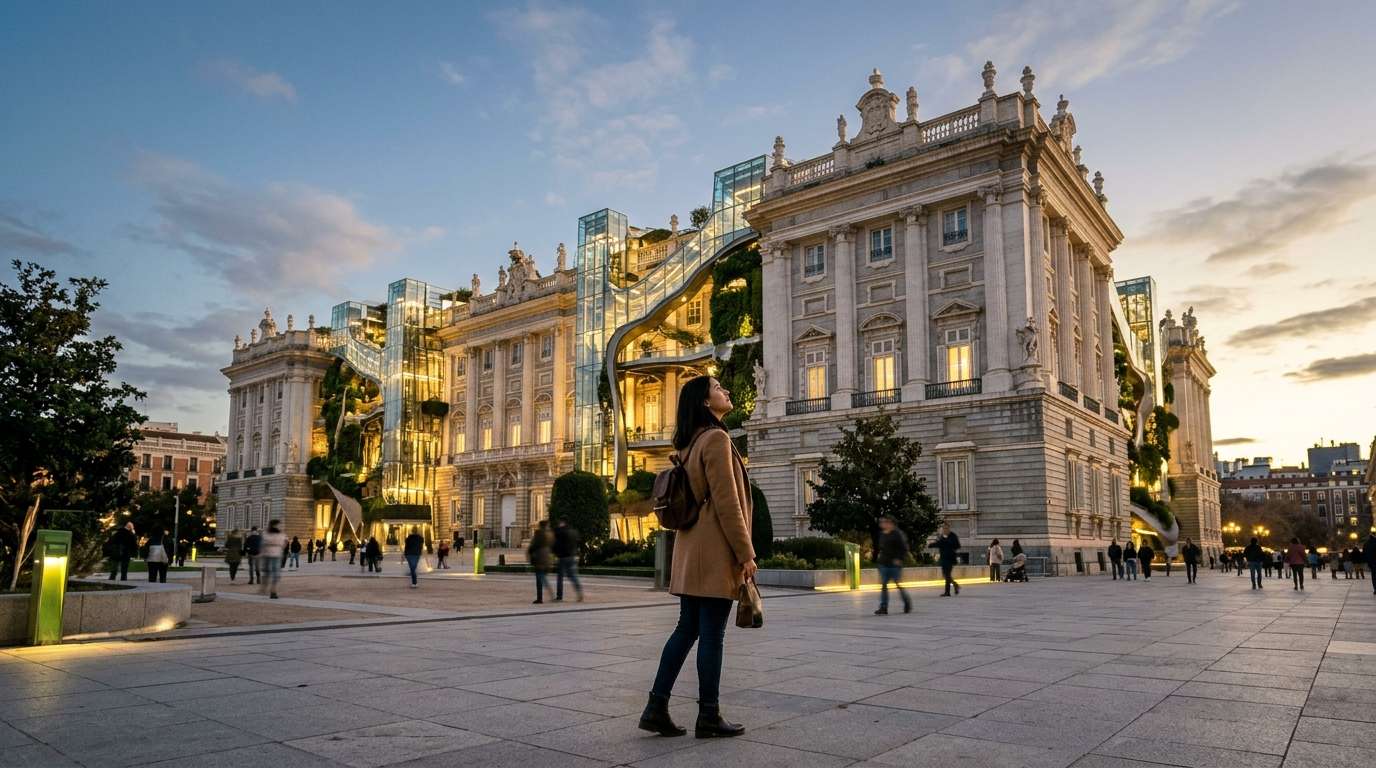
I stand in Plaza de la Armería, tip my head back, and watch pale limestone and gray granite glow against a hard blue sky. The Royal Palace of Madrid future 2050 is the story I want to tell here, and it starts with this view. The palace is the largest royal residence in Western Europe, and it was built in the 1700s.
That age is exactly why it fits a 2050 story. I picture a carbon-neutral sanctuary built on stone protection, stormwater capture and footstep power.
Please read this as a vision. It rests on the real palace of today, but the scenes set in 2050 are things I imagine, not things I saw. I will start with what the palace is today.
Key Takeaways
- The palace has 3,418 rooms but serves mainly as a stage for state ceremonies.
- Its long life, from fire to rebuild, shows why stone care matters.
- In my 2050 vision, breathable glazes protect the stone and keep its patina.
- Piezoelectric pavers could turn footsteps in the plazas into power.
- Underground vaults could catch storm water and feed cooling loops.
- Spain 2050 is a national plan, and it does not mention the palace.
What the Palace Is Today
The Royal Palace of Madrid has 3,418 rooms and still is not a home. It covers 135,000 m2 (1,450,000 sq ft) of floor space, which makes it the largest palace in Western Europe and the largest royal palace in Europe. The king lives at Zarzuela Palace.
The Spanish state owns the palace, and the heritage agency, Patrimonio Nacional, runs it. It is used mainly for state ceremonies, and it is open to visitors except during state functions.
The palace is a working stage for the Spanish state, not a family home, so some rooms close when a ceremony begins.
Here is a tip for planning. Only a selection of rooms is on the visitor route at any time, and it changes every few months. Two trips a year apart can feel like two different palaces.
A photographer has plenty to chase. The Royal Armoury, the Royal Pharmacy and the Royal Library each have their own mood. The ceilings carry frescoes by Tiepolo, Giaquinto and Mengs. The palace also holds the only complete Stradivarius string quintet in the world.
Spain has listed the palace as a monument since 1931. So how did this giant come to be?
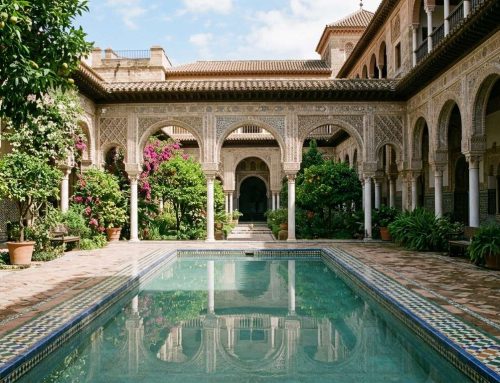
Royal Alcazar of Seville future.
From Burned Alcázar to Baroque Giant
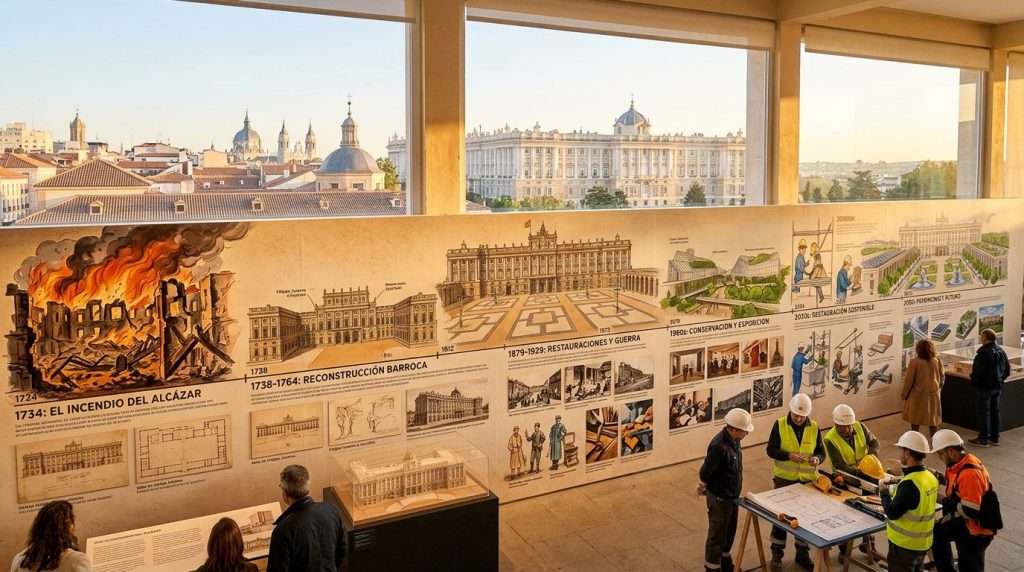
The old Alcázar of Madrid burned for four days at Christmas 1734, and that fire is why the current palace exists. The site began as a Muslim-era fortress in the 9th century. The fire was so fierce that the painting Las Meninas was saved only by being thrown out of a window.
The walls came down in 1738, and Philip V ordered a new palace. Filippo Juvarra began the design, and Giovanni Battista Sacchetti carried it on. Work ran from 1738 to 1755, and the start is recorded on 7 April 1735.
| Date | Event | What it means for preservation |
|---|---|---|
| 1734 | Alcázar fire | Fire drove the choice of stone over timber |
| 1738-1755 | Rebuild | Set the stone shell that still stands |
| 1764 | Charles III first lives there | Daily use began to wear the building |
| 1892 | Plaza de Armería laid out | Created the open space I stand in now |
| 1973 | Main façade restored | Showed that old stone needs repair in every era |
The lesson is simple: a stone building must survive fire, war and repairs. Each repair also adds a new layer to the building.
Some layers are hidden. The foundations of Sabatini’s northern wing lie buried beneath what became the Sabatini Gardens. The Almudena Cathedral next door took from 1878 to 1992 to finish. That stone has stood for nearly three centuries, and it now needs defending.
Royal Palace of Madrid Future 2050: Stone Shielded Against Heat
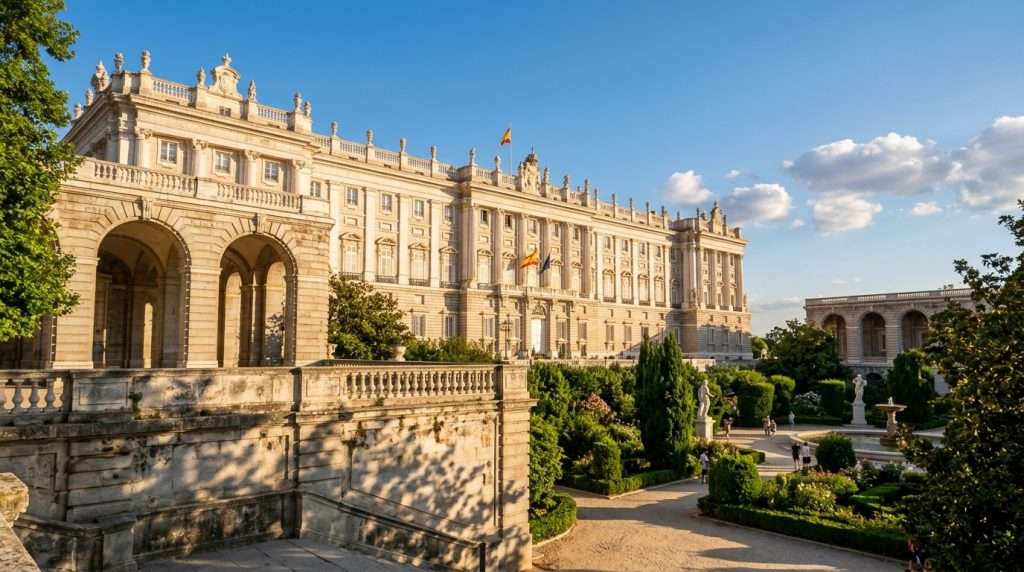
In my vision, the stone of the palace survives 2050 because a breathable glaze shields it from heat and polluted air. I picture a summer afternoon when the sun bakes the white limestone until the plaza shimmers. Climate change makes such days longer and hotter, and the stone feels every one.
Stone sulfation is the slow chemical reaction in which polluted air turns the surface of limestone into a crumbly gypsum crust. Heat and swings between wet and dry make it worse.
Limestone, Granite and Frescoes Under Heat
The façade pairs white Colmenar limestone with gray Guadarrama granite pilasters. Inside, Tiepolo frescoes fill the vaults. Both face heat, one from the sun outside and one from warm air within.
Limestone is the softer partner. Granite shrugs off a lot, but the limestone flakes, a damage called spalling. Frescoes dislike swings in temperature and damp.
Breathable Glazes That Keep the Patina
In the 2050 vision, a nano-mineral glaze coats the stone. It stops sulfation and spalling, and it lets moisture escape from inside the wall. A coating that traps water would split the stone, so breathing is the key.
As a photographer, I care about the patina. The warm, aged tone of the Baroque surface is the palace’s face. The glaze keeps that look and does not turn the building into a shiny copy.
Pavers That Turn Footsteps Into Power
I also imagine piezoelectric pavers in Plaza de la Armería and Plaza de Oriente. They turn each step into a small burst of electricity for a microgrid.
- Every visitor adds a little power by walking.
- Crowds on busy days make the most energy.
- The power feeds the palace’s own grid.
Heat is only half the story, because storms bring the other half. Beneath my feet, I picture a second system waiting for the rain.
Underground Vaults and Cool Water Loops
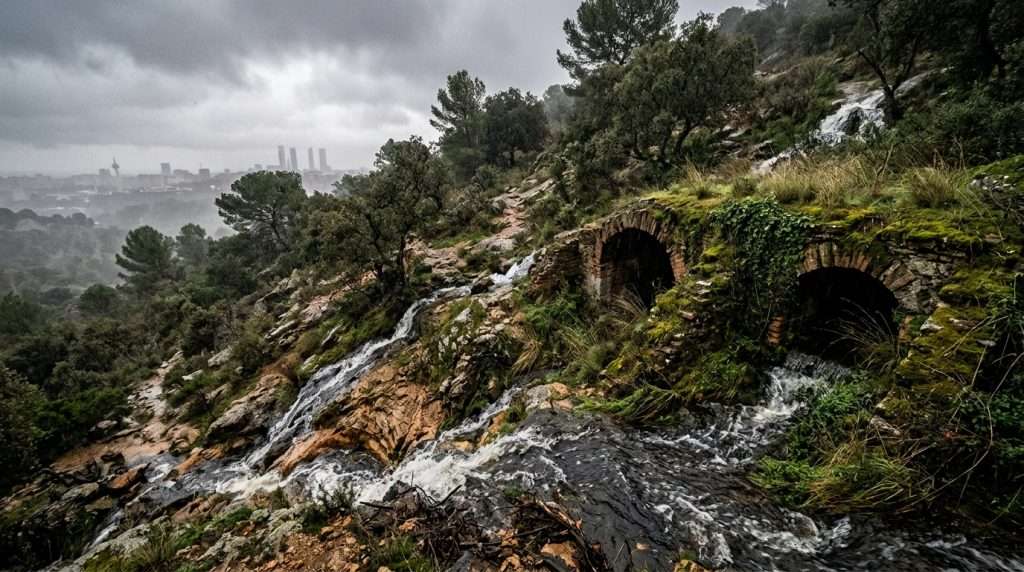
In my vision, retention vaults beneath the palace grounds catch every drop of a storm and turn it into cooling. I picture a summer cloudburst running fast down the Manzanares bluffs, loud and brown. Madrid gets sudden storms, so catching that water is worth far more than letting it rush away.
The automated vaults sit under the Campo del Moro gardens and the river bluffs. They capture 100% of storm downpours in this vision. A national water strategy from Spain’s government warns of more frequent floods and droughts, so storing storm water makes sense.
Rain water is not clean enough to use right away. Filters remove grit and dirt before the water moves on. Then it feeds zero-emission capillary cooling loops.
Capillary cooling works like a web of thin tubes in walls or ceilings. Cool water flows through them and soaks up heat from the room. There are no loud fans and no blasts of cold air.
That gentle cooling suits the staterooms and the armories. Steel armor and old frescoes both suffer from sharp swings in heat and damp. A steady, cool room is the best design for both.
This is local engineering for one hill in Madrid. It also echoes a bigger plan for the whole country.
How Spain 2050 Frames the Palace’s Future
The national plan pictures a greener, more digital and fairer Spain by 2050, and a more efficient one too. Spain 2050 is a foresight exercise with nine major challenges, 50 quantitative goals and 200 policy actions. About one hundred researchers worked on it. It never mentions the palace, so the link I draw is my own.
A national dialogue followed, with more than 180 institutions. That gave the long-term national strategy a shared vision across society.
Three of the nine challenges fit the palace best:
- Becoming a carbon neutral society resilient to climate change.
- Preserving and building up the country’s shared assets.
- Strengthening public institutions.
I see the palace as a showcase for the first one. A building that cuts its own carbon and shields its own stone shows what the country wants to be. Walking through such a place, a visitor would feel that plan in person.
Visiting the Palace Now and in 2050
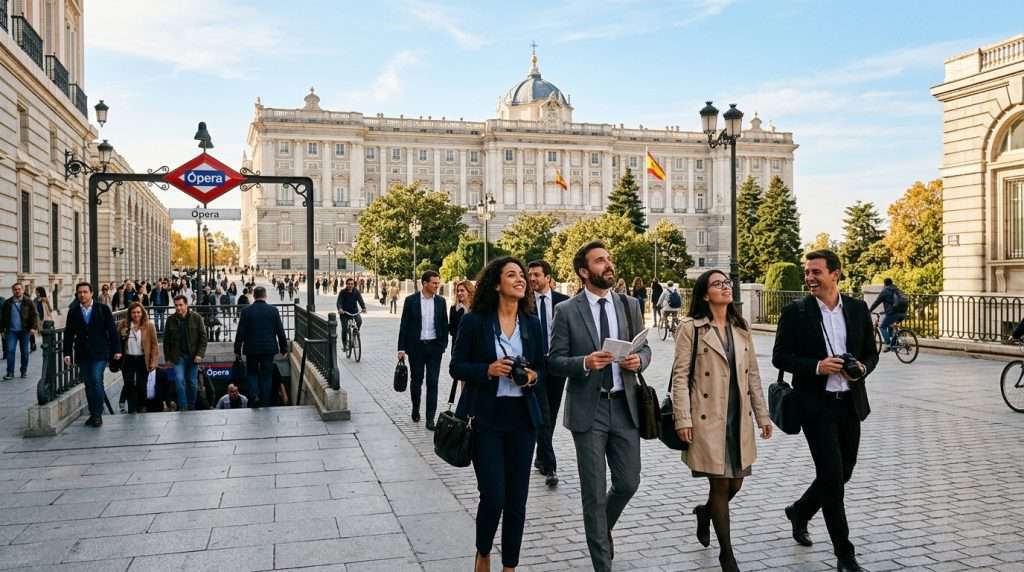
Arrive by Ópera metro and walk up to the plaza, because that route brings you to the palace on Bailén Street in minutes. Today the visit is simple, and in 2050 I imagine it feels cooler and quieter. The palace is also part of a public debate about how old places should meet the future.
These are the stops I would plan:
- Ópera metro station, for easy access.
- Plaza de Armería, for the best view of the façade.
- Plaza de Oriente, which links the palace to Teatro Real.
- Sabatini Gardens, open to the public since 1978.
- Campo del Moro gardens, west of the palace.
The visitor route changes every few months, so check what is open before you go. For photos, aim for morning light on the façade, when the limestone glows warm.
In my 2050 picture, the pavers hum under each step, and cool air drifts from the walls. Those are thoughts I carry out of the gates as I leave.
Conclusion
What stays with me is the glow of that limestone and the idea that it could last another three centuries. Heritage and net zero can live together. A protected stone patina and captured storm water could make the palace resilient to the heat ahead.
Planning ahead is how old landmarks survive. The palace has outlived a fire, and with care it can outlive a warming climate. Before you go, check the current visitor route and plan a morning visit.



Leave A Comment