
I remember standing on a Sacred Valley terrace, my lungs burning at 2,430 meters, while fog covered ancient stone walls. That first view of Machu Picchu stays with every traveler who makes the climb. Built in the 15th century as a royal retreat for Inca nobility, it is a UNESCO World Heritage Site.
It is also a New Seven Wonders landmark that survived earthquakes, rainstorms, and five centuries of silence.
Now I want to ask a bigger question, like one you might share around a campfire with fellow hikers. Could this mountain sanctuary still stand strong by 2050? Could it avoid millions of footsteps and changing mountain weather while becoming a self-sufficient, carbon-neutral biome?
That question shapes the Machu Picchu future 2050 vision in this piece. I’ll cover real engineering already protecting these walls and bold ideas that could make this citadel cleaner and sturdier in coming decades.
Think of it as part travel story, part engineering dream. Let’s climb those terraces together and imagine what comes next.
Key Takeaways
- Machu Picchu remains a UNESCO World Heritage Site and New Seven Wonders landmark built in the 15th century as a royal estate.
- Heavy Andean rainfall and growing visitor numbers put constant pressure on the citadel’s ancient stonework.
- Engineers and researchers are exploring net-zero, carbon-neutral strategies to protect the site for generations to come.
- Original Inca terrace systems already manage rainwater and prevent erosion through clever natural design.
- Kinetic energy from hiker footsteps on the Inca Trail could one day help power sustainable site infrastructure.
- Breathable nano-mineral coatings may offer new protection for exposed granite surfaces against weather damage.
- The vision for Machu Picchu’s next century blends ancient hydraulic wisdom with modern civil engineering.
1. Machu Picchu Future 2050: A Living Monument Reimagined
When I asked a guide in Cusco what Machu Picchu might look like in thirty years, he laughed. He said the Inca had already solved most of the future. That answer stayed with me.
During each walk through the citadel, I see water channels, terraced slopes, and stone joints that resist earthquakes.
I began wondering what a Machu Picchu future 2050 could look like if modern engineers continued the Inca’s work.
From Inca Sanctuary to Autonomous Heritage Biome
The Inca built something extraordinary 2,430 meters above sea level. This was more than a scenic retreat. It was Tawantinsuyu’s beating heart, the largest pre-Columbian American empire.
They managed the empire with quipus, knotted cords for records, and Qhapaq Ñan, a road network across mountains and deserts. Andenes, their famous stepped terraces, made steep slopes into farmland and solved erosion problems engineers still face.
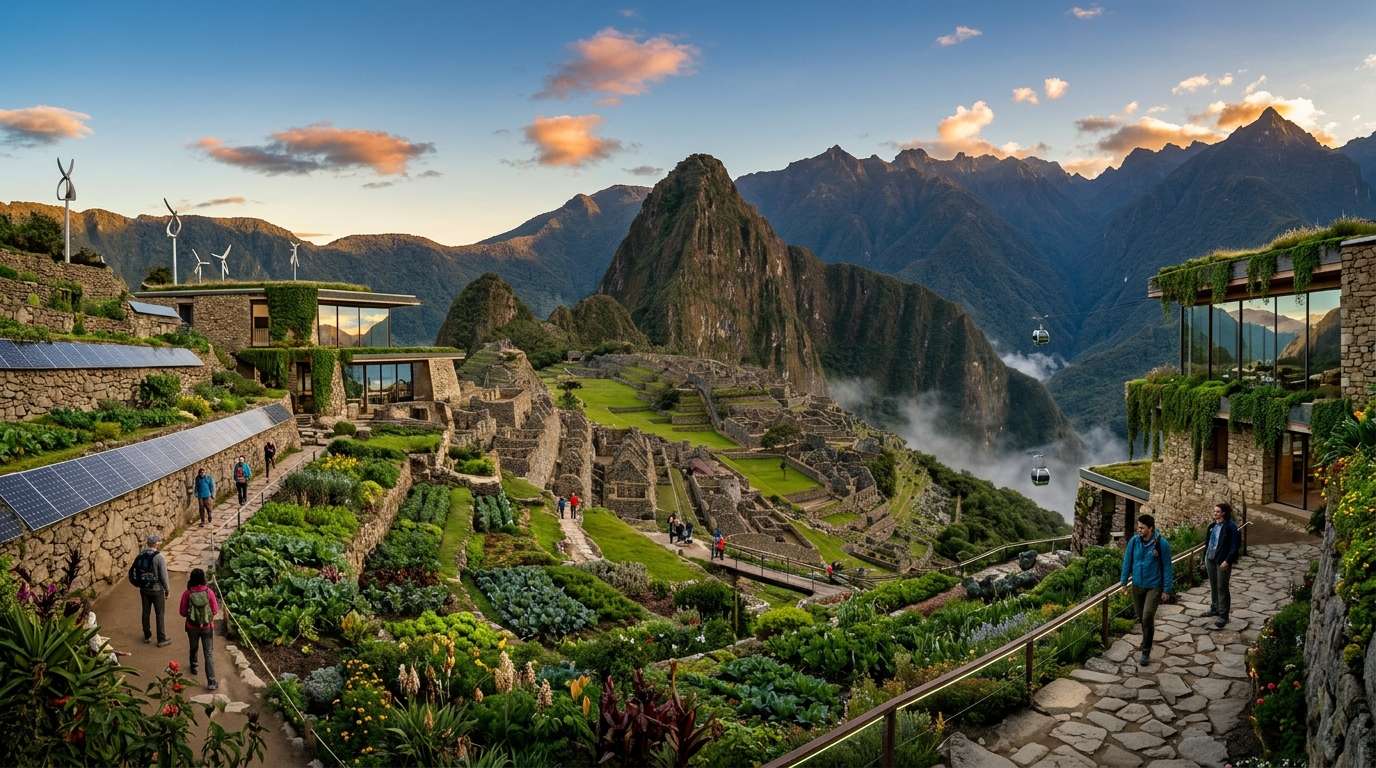
This administrative and farming genius makes a modern reinvention of the site seem worthwhile. I can picture Machu Picchu becoming an autonomous heritage biome. Sensors would monitor stone stress, native cloud forest plants would filter runoff, and renewable microgrids would power everything quietly.
This is not science fiction. Every technology needed already exists somewhere, but combining it must not disturb one stone laid by the Inca.
| Inca-Era Innovation | Original Purpose | 2050 Heritage Equivalent | Core Benefit |
|---|---|---|---|
| Andenes Terraces | Farming and erosion control | Smart terraces with soil sensors | Real-time stability monitoring |
| Qhapaq Ñan Roads | Empire-wide transport network | Piezoelectric walking paths | Clean energy from foot traffic |
| Dry-Stone Masonry | Earthquake-resistant walls | Nano-mineral protective coatings | Non-invasive stone preservation |
| Quipu Record Systems | Tracking resources and labor | Digital twin monitoring software | Predictive maintenance alerts |
Why Net-Zero Preservation Is the Next Frontier for World Heritage Sites
I have seen crowds and climate shifts pressure ancient sites across Peru and South America. Machu Picchu is not alone, so heritage groups are rethinking the meaning of preservation.
UNESCO global cultural policy reports now treat heritage conservation as part of sustainability, linking historic sites to development goals.
“Culture must be placed at the heart of development policies, as it represents a missing piece of the sustainable development puzzle.”
That shift changes everything. A net-zero approach helps Machu Picchu withstand tourism and climate pressure while powering its own protection. It uses closed-loop systems instead of diesel generators or imported energy.
If this model works here, other ancient sites could copy it, including Angkor Wat, Petra, and ruins across the Andes. I have hiked past some Andean ruins on quieter trails, far from glass cases. The Machu Picchu future 2050 I imagine is a living system where old stones and new technology coexist.
Castillo San Felipe del Morro future.
2. Guarding Mortarless Granite: Non-Invasive Mineral Masonry Glazes
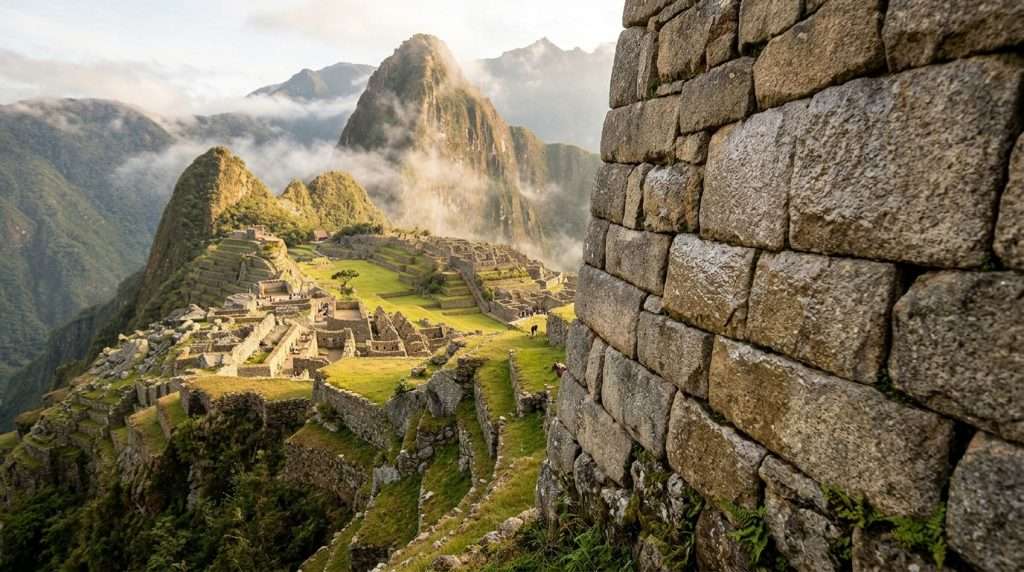
For over 500 years, stone has rested on stone without mortar, cement, or glue. At Sacsayhuamán, stones weighing over 100 tons fit so tightly that a knife blade cannot pass between them. Machu Picchu temples, including the Intihuatana, use the same mortarless technique.
This precision is beautiful, but it is fragile in unexpected ways. Without mortar to seal gaps, rain and humidity enter the granite, and trapped moisture breaks it down from inside.
Conservation teams now test non-invasive mineral masonry glazes to protect the surface without changing the stone’s look, feel, or movement.
How Breathable Nano-Mineral Coatings Halt Stone Spalling and Biological Erosion
Cloud-forest humidity is relentless. It enters microscopic cracks in granite and rarely leaves. Over time, trapped moisture causes spalling, when the outer stone layer flakes and crumbles.
Moss, lichen, and algae worsen the damage. They thrive in the damp, shaded corners of Machu Picchu’s walls, and their roots slowly pry the stone apart. It’s a slow, quiet kind of destruction—you won’t notice it happening, but you’ll definitely notice the damage years later.
Nano-mineral glazes differ from old sealants. They let water vapor escape while blocking liquid water and biological growth. This breathability protects the stone:
- Stone can still release trapped humidity naturally
- Lichen and moss lose their foothold on the surface
- The granite’s original color and texture stay untouched
- No glossy film or sheen forms over the rock
Researchers across Peru have begun small trials, watching for discoloration or changes in water absorption. So far, breathable mineral layers seem to slow decay without smothering the stone.
Safeguarding the Intihuatana and the Temple of the Sun
Some Machu Picchu structures carry greater literal and symbolic weight than others. The Intihuatana stone, believed to have served as an astronomical marker, is among the site’s most irreplaceable carvings.
The Temple of the Sun ranks close behind it in importance. Its curved granite walls show some of the finest stonework in the Inca world. That shape makes them vulnerable to pooling water and uneven weathering.
Applying mineral glazes near these landmarks demands extra caution. Conservators test coatings on less sensitive stone first and check for reactions before treating sacred surfaces. The goal is simple: stop unseen decay without touching visible history.
“You don’t get a second chance with a stone that’s survived 500 years. Every treatment has to be reversible, or you don’t do it at all.”
Preserving Seismic Joints in Inca Dry Stone Ashlar
Here’s what makes Inca stonework different from almost anything else on Earth: it was built to move. Mortarless joints between blocks allow tiny shifts during earthquakes, so the structure flexes instead of cracking.
That flexibility helps explain why much of Machu Picchu still stands in an active seismic zone. Any coating on these walls must fully respect that movement.
Successful Inca dry stone ashlar preservation treats each joint as a living structural part, not a flaw to seal. Rigid fillers would lock stones in place and defeat the engineering concept the Incas perfected centuries ago.
| Method | Moisture Control | Seismic Flexibility | Visual Impact |
|---|---|---|---|
| Traditional cement sealant | Blocks moisture but traps vapor inside | Rigid, restricts natural movement | Noticeable sheen, color change |
| Synthetic resin coating | Moderate, can yellow over time | Limited flexibility | Glossy finish, altered texture |
| Non-invasive mineral masonry glaze | Breathable, releases trapped vapor | Preserves joint movement | Invisible, matches natural stone |
I return to the same thought whenever I read about this project: the Incas solved the hard problem. They built something that bends instead of breaks. Our job is to help it keep doing so without getting in the way.
3. Subsurface Hydrologic Heritage Engineering Beneath 700 Terraces
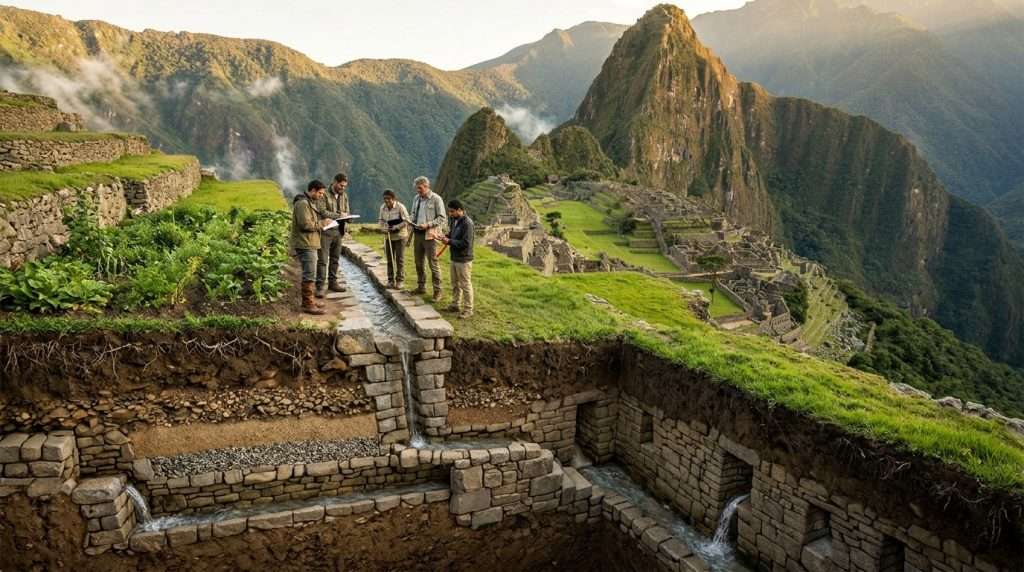
More than 700 terraces hide a drainage system so clever that modern engineers borrow its design. I have hiked past those stacked stone andenes many times, always wondering what lay beneath my boots. The Incas built water management into every layer of soil and rock before anyone used the word “sustainability.”
Machu Picchu’s terraces were never just farmland. They were engineered to stop erosion, manage runoff, and keep the mountain from sliding apart during heavy rain. Modern subsurface hydrologic heritage engineering uses that same logic and adds sensors, automation, and zero-emission technology underground.
Reviving Ancient Inca Drainage Through Automated Retention Vaults
Picture a network of retention vaults buried quietly beneath the terrace system. These vaults would follow the original Inca drainage channels instead of replacing them. That is the real innovation: working with centuries-old engineering, not against it.
During the cloud forest’s intense rainy season, vaults could capture nearly every drop of runoff. They would prevent erosion and flooding across the lower terraces while protecting the stonework. Sensors would track soil moisture and water pressure in real time, automatically opening or closing channels to control flow.
- Protects ancient stonework from water damage and soil shift
- Reduces erosion risk on steep terrace walls
- Works silently underground, leaving the surface untouched
- Extends the life of Inca drainage channels by centuries
Closed-Loop Reservoir Stormwater Harvesting in Action
Once water is captured, it would not simply sit there. A closed loop reservoir stormwater harvesting system would filter and store it, then cycle it through the site. This water could support irrigation, cooling, and drinking water for staff facilities.
Nothing gets wasted. Nothing runs off into the valley without control. Water moves in a loop, as Inca engineers directed it through carved stone channels and fountains.
| Feature | Traditional Inca Drainage | 2050 Hybrid System |
|---|---|---|
| Water Capture Method | Carved stone channels and terrace slopes | Automated vaults layered beneath channels |
| Storage | Natural seepage into soil layers | Closed-loop reservoirs with filtration |
| Monitoring | Manual observation by Inca engineers | Real-time sensors and automated controls |
| Water Reuse | Direct irrigation for crops | Irrigation, cooling loops, and facility use |
Zero-Emission Cooling Loops for Archaeological Zones
Harvested stormwater could do more than support irrigation. It could also feed zero-emission cooling loops beneath the most fragile archaeological zones, including areas near the Intihuatana stone.
These loops would regulate humidity and temperature without burning a watt of fossil-fuel energy. This matters because moisture swings threaten mortarless granite walls. I learned how sensitive this site was when I first studied it.
Think of it as climate control for a 15th-century citadel, powered entirely by rain that falls on the mountain. It is a simple idea, honestly. Use what nature gives you, store it wisely, and let it do double duty protecting stones that have survived 500 years.
4. The Intihuatana Kinetic Microgrid: Power from Every Footstep
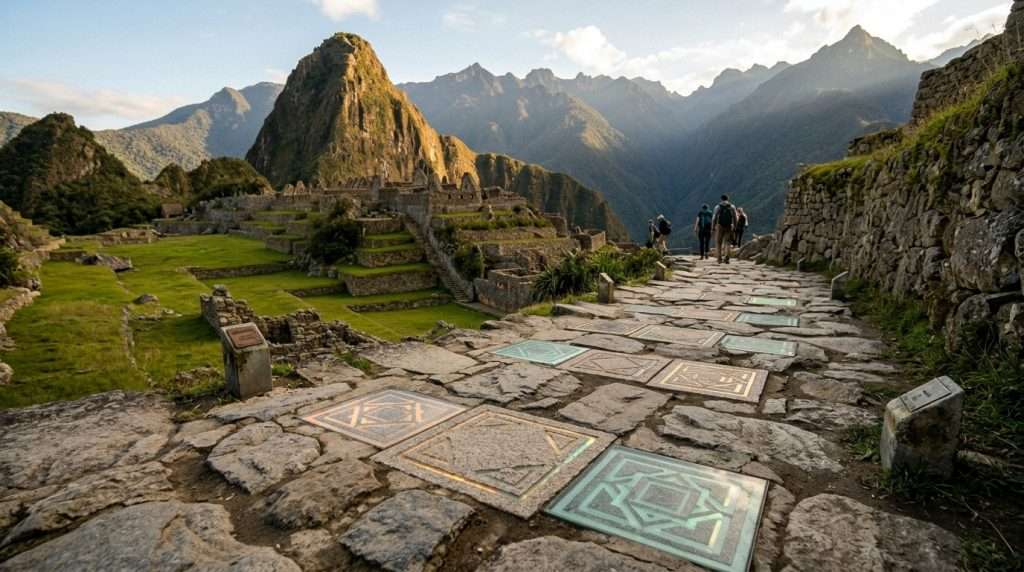
Imagine each footfall on Machu Picchu’s worn stone stairs feeding a power grid instead of wearing down rock. The Intihuatana kinetic microgrid turns hundreds of thousands of annual hikers into a clean energy source. Tourism often causes wear and tear at ancient sites, but here it helps protect them.
The science is real, too. Piezoelectric materials have been used for years in dance floors and train stations, converting pressure into electricity. Applying that principle to one of Earth’s busiest archaeological trails feels like a natural next step.
Piezoelectric Pavers Along the Inca Trail and Stone Stairways
Picture thin, durable piezoelectric pavers tucked beneath the Inca Trail and ancient stone stairways. Hikers like me would not notice them underfoot. They would not disrupt the centuries-old stonework with wires or blinking lights.
Below the surface, each step creates a small electrical charge. Multiply that charge by Machu Picchu’s yearly foot traffic, and the numbers quickly grow.
Here is what that energy could realistically support:
- Low-voltage LED trail lighting for early morning or dusk hikers
- Environmental sensors tracking humidity, erosion, and seismic shifts
- Small-scale monitoring stations for conservation teams
- Battery storage for emergency communication equipment along remote trail sections
It cannot replace a full power plant. That is not the point. This distributed, decentralized system reduces energy needs by using people who already walk there.
Building a Self-Sufficient Andean Cloud Forest Net-Zero Sanctuary
The kinetic microgrid is one part of a larger plan. The long-term vision is an Andean cloud forest net-zero sanctuary.
Machu Picchu would produce and manage its own power without diesel generators grinding up the mountain road. It would also avoid heavy fuel trucks rattling along narrow switchbacks.
Pair the kinetic pavers with solar panels in less visible terraces. Add the micro-hydro systems already discussed for the site’s water infrastructure. Together, they create a layered renewable approach.
No single source carries the whole load. That backup matters in this remote, sensitive cloud forest above the Urubamba River.
“The path to carbon neutrality for heritage sites isn’t one giant solution. It’s dozens of small, smart systems working together.”
Machu Picchu has earned recognition in global talks about sustainable tourism recovery. These talks include initiatives highlighted in discussions about the world’s first carbon-neutral wonder. A kinetic microgrid powered by hikers’ footsteps would fit that progress.
This reframes the visitor experience. I’m not just a tourist walking a trail anymore. That is meaningful travel: seeing something ancient while helping protect it for the next traveler climbing those same worn stone steps.
Mosque Cathedral of Cordoba future.
5. Peru’s Blueprint for Citadel Longevity: A Global Comparison
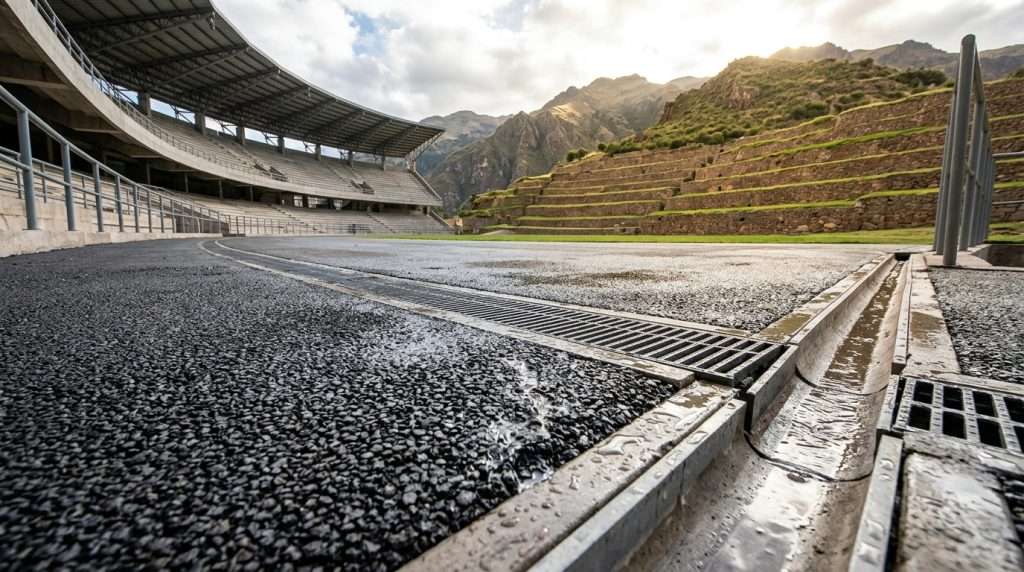
Years ago, during a Midwest road trip, I watched a stadium parking lot swallow a torrential rainstorm within minutes. Water vanished through the pavement like magic. Years later, on Machu Picchu’s terraces, I realized I had seen this trick before.
Peru redefines citadel longevity by proving ancient engineering and modern sustainability technology can work together. They are partners, not opposites. UNESCO’s global cultural policy framework now treats heritage preservation and sustainable development as inseparable, making Machu Picchu a test case watched closely by other countries.
From Stadium Porous Asphalt Stormwater Drainage to Ancient Andean Terraces
A stadium’s porous asphalt stormwater drainage system handles flash floods during major games. The surface looks solid, but tiny gaps let water pass into gravel layers below. The water is filtered, stored for reuse, or released slowly.
Inca engineers solved this problem 500 years earlier, without asphalt or pumps. Each Machu Picchu terrace has layered soil, sand, and gravel, like a modern drainage bed. Rainwater seeps through instead of pooling, protecting stone structures from erosion and pressure damage.
This comparison is more than clever trivia. It’s proof that good drainage design follows the same physics no matter the century. Engineers now study these ancient terraces to improve stormwater management in flood-prone cities.
| Feature | Modern Stadium Drainage | Inca Terrace Drainage |
|---|---|---|
| Material | Porous asphalt and gravel beds | Layered soil, sand, and stone |
| Purpose | Manage rainfall during events | Protect terraces from erosion |
| Water Fate | Filtered, stored, or released slowly | Absorbed and redirected underground |
| Lifespan | 20-30 years before resurfacing | 500+ years and still functioning |
That final row tells the story. A stadium parking lot needs maintenance every couple of decades. Machu Picchu’s terraces have worked quietly since before Columbus set sail.
What Other World Heritage Sites Can Learn from the Andean Model
I think about this whenever I read about flooding at Angkor Wat or erosion in the Roman Forum. Both sites face water problems that Machu Picchu solved centuries ago. The lesson is not copying the method; it is copying the mindset.
“Heritage preservation can no longer be separated from sustainable development goals. Sites that integrate both will outlast those that treat them as separate missions.”
That is the core of UNESCO’s current approach, and Peru proves it works. Other sites could borrow several ideas:
- Study existing ancient drainage before building new infrastructure on top of it.
- Pair old materials with new monitoring tech, like sensors that track moisture and erosion in real time.
- Treat sustainability as preservation, not a separate budget line item.
- Involve local communities who often understand terrain and weather patterns better than outside engineers.
Angkor Wat’s moat system and the Roman Forum’s ancient sewers show similar ingenuity. What is missing is Peru’s modern layer: automation, nano-coatings, and closed-loop water systems beside stone proven for centuries.
I have visited many ruins that feel frozen in time, slowly losing battles against weather and foot traffic. Machu Picchu feels different; it seems still under construction, using quieter tools. That is the blueprint worth exporting.
Royal Palace of Madrid future.
Conclusion
I return to one thought whenever I leave those stone terraces. Machu Picchu has survived 500 years of earthquakes, empires, and tourists carrying cameras. Giving it a net-zero future no longer feels like science fiction. It feels overdue.
We covered mineral glazes that let granite breathe while blocking decay. Inca engineers designed hidden water vaults beneath terraces centuries before anyone used “stormwater management.” A microgrid could use hikers’ footsteps on stairs once climbed by porters and priests.
Quipus, andenes, and precise stonework fitted without mortar still teach us today. Machu Picchu future 2050 is not about replacing Inca work. It means matching their patience with ours.
Peru redefines citadel longevity with each effort like this, and that matters far beyond its borders.
If you get the chance, see it yourself. Walk slowly, stay on marked paths, and leave it exactly as you found it. If any ancient site on Earth can achieve a net-zero future, I would bet on this one first.




Leave A Comment