
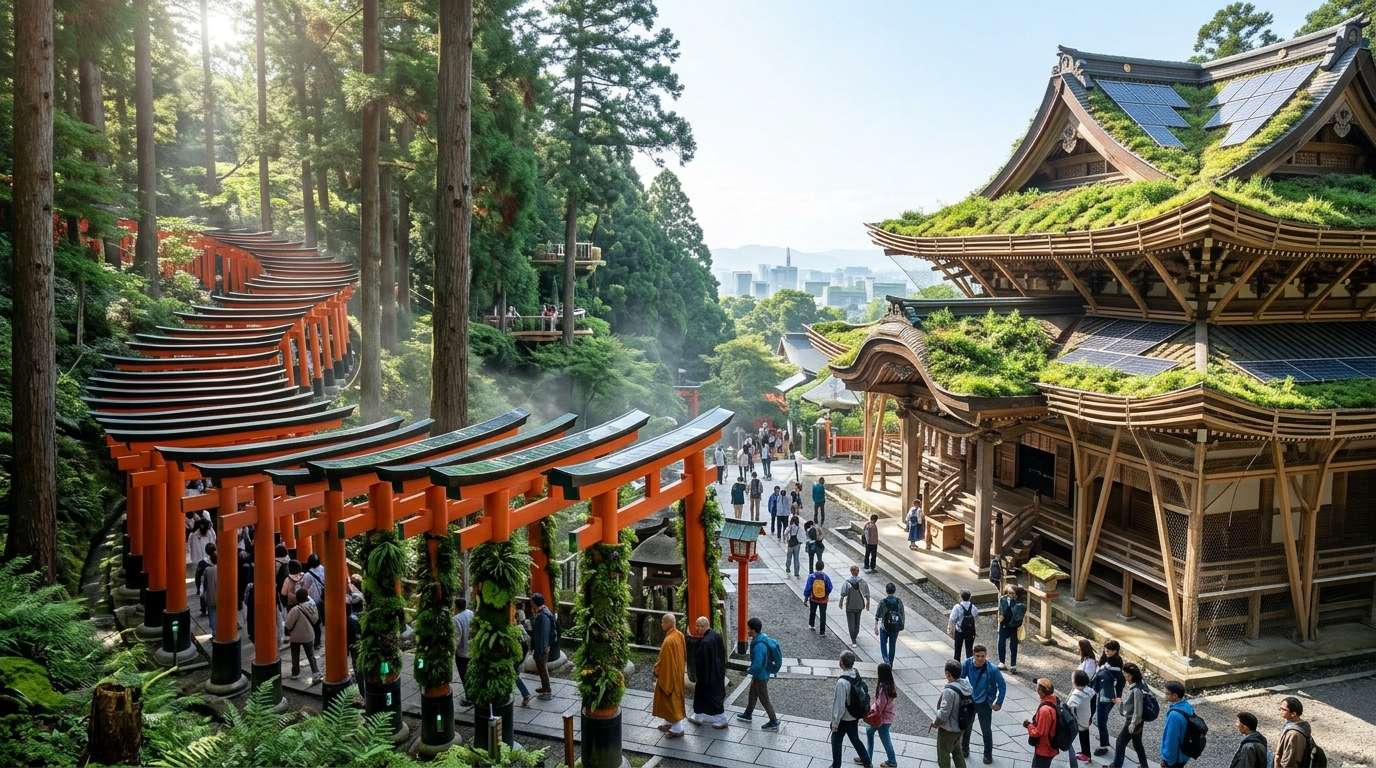
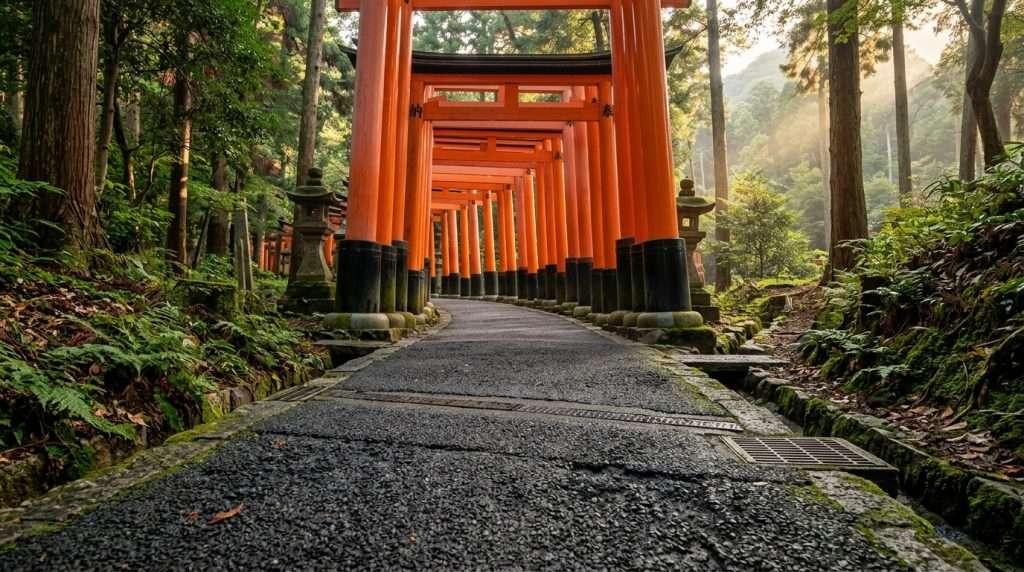
At dawn, I climbed the stone steps and watched mist curl around thousands of vermilion gates. Each torii glowed like fresh paint, though some beams have stood here since feudal Japan.
Mount Inari felt alive, both spiritually and mechanically. The whole mountain seemed to breathe quietly beneath my feet, suggesting a possible Fushimi Inari Taisha future.
Locals call this place the shrine that learned to heal itself. I believed them after seeing hidden water channels cut into granite rock and cypress wood resisting moisture instead of rotting.
This 1,300-year-old sanctuary helps shape the Fushimi Inari Taisha future 2050: a working model for carbon-neutral heritage engineering. Nano-mineral glazes protect ancient timber, while underground vaults capture typhoon rainfall before it floods trails. Pilgrim footsteps even generate tiny bursts of clean electricity.
None of this technology hides behind flashy designs. It works within centuries-old craftsmanship, passed quietly from one generation to the next.
I found a working blueprint for how sacred places might survive future decades without losing what makes them holy. This religious landmark shows how tradition and careful engineering can protect the future.
Key Takeaways
- Fushimi Inari Taisha blends 1,300-year-old Shinto craftsmanship with modern sustainability engineering.
- Nano-mineral glazes protect the shrine’s cypress wood from moisture and decay.
- Hidden granite vaults on Mount Inari capture and manage heavy typhoon rainfall.
- Pilgrim footsteps along the Senbon Torii trails help generate small amounts of clean energy.
- The shrine serves as a real-world model for net-zero, carbon-neutral heritage preservation.
- Sacred tradition and quiet technology work together, not against each other.
1. Fushimi Inari Taisha Future 2050: A Mountain Shrine Reborn as a Living Biome
On every mountain trail, the forest can stop feeling like scenery and start feeling alive. I felt that change while walking through the vermilion gates of Fushimi Inari Taisha in 2050. By then, the mountain breathes, thinks, and cares for itself.
Ten thousand torii gates still climb Mount Inari’s slopes, as they did centuries ago. Look closer, and you will notice a change. Every gate, trail, and sub-shrine now works as one connected system.
Locals call it the mount inari net zero sanctuary. I like the name because it explains something you understand after walking these paths.
This is not a museum piece frozen in time. It is a working mountain.
It generates its own electricity, manages its own rainfall, and protects its wooden bones from rot and storms. The machinery stays hidden.
You will not see solar panels bolted to shrine roofs or pipes snaking along sacred paths. Technology works within the mountain’s natural rhythm.
- Timber gates protected by breathable mineral coatings
- Underground vaults that capture and store monsoon rainfall
- Walking paths that turn pilgrim footsteps into usable energy
- Drainage systems borrowed from modern stadium engineering
Each piece helps keep this mount inari net zero sanctuary running without fossil fuels or outside power grids. I will explain each system in detail as we go.
Near the summit, I thought about the thousands of pilgrims who climbed these same steps over the centuries. Now their footsteps have a new purpose. Every visitor who walks this mountain helps power it, whether they know it or not.
“The forest is not scenery. It’s infrastructure.”
That line stayed with me during the walk down. Fushimi Inari in 2050 does not separate the sacred from the practical. It fuses them into one quiet, self-sustaining whole, making this mountain worth exploring.
2. Breathable Nano-Mineral Glazes: Safeguarding Hinoki Cypress and Vermilion Pigment
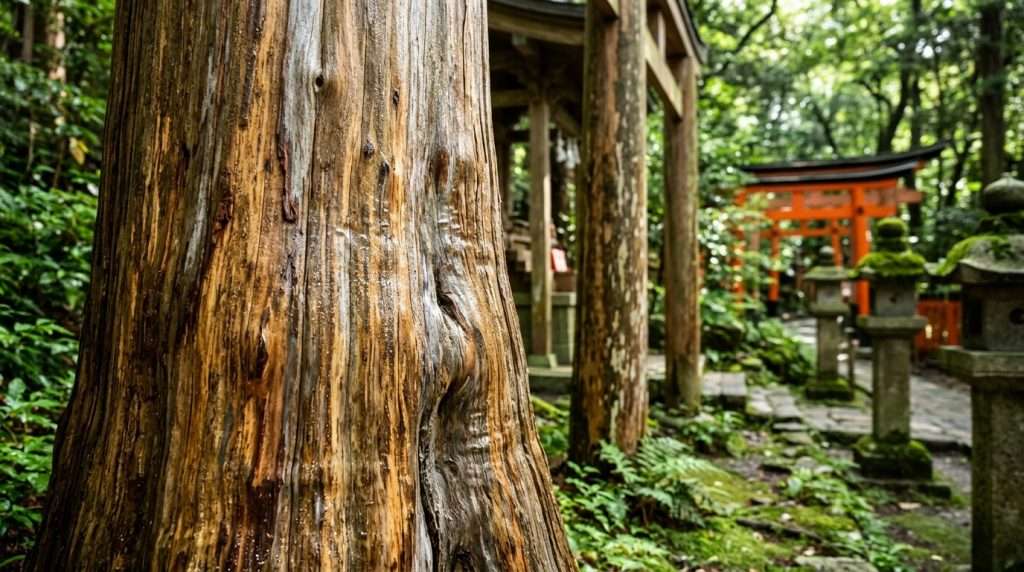
During a sudden downpour beneath the Rōmon gate, I noticed something odd: the wood wasn’t swelling or darkening. Rain beaded off the vermilion surface and rolled away, yet the grain underneath still looked alive, almost breathing.
That’s when a restoration engineer told me about the breathable nano-mineral glazes now coating much of Mount Inari’s sacred architecture. These ultra-thin mineral layers lock out water while letting the hinoki cypress pillars release trapped humidity from the inside out.
Hinoki cypress is prized for natural oils and decay resistance, but Kyoto’s humid summers still take a toll. The restoration plan treats each pillar, beam, and vermilion-painted surface as living material that must exhale, not stay sealed.
Protecting Rōmon Gate Brackets and Kitsune Plinths from Typhoon Dampness and Rot
The wooden brackets supporting the Rōmon gate carry great weight and suffer during monsoon season. Wind-driven rain forces moisture into every joint and crevice, creating ideal conditions for fungal decay.
I watched a conservation team apply the mineral glaze directly to weathered bracket joints without removing the original wood grain. The coating fills microscopic pores with silicate minerals, blocking liquid water while letting water vapor escape.
Kitsune plinths are stone bases for fox statues, but rising damp from mountain soil threatens them. This glaze technology protects these bases, stopping salt crystallization and surface flaking that chipped away at centuries-old carvings.
According to the lead conservator on site, the goal was never cosmetic:
“We’re not painting over problems. We’re giving the stone and timber a way to defend themselves against moisture without losing a single detail of the original craftsmanship.”
Pigment fading has long plagued the vermilion finish, especially where sun and rain hit the wood hardest. The nano-mineral layer reflects UV light while locking the iron-oxide pigment in place, so the color stays vivid season after season.
Non-Invasive Mineral Masonry Glazes vs. Traditional Lacquer Finishes
Traditional Japanese lacquer, or urushi, has coated shrine wood for over a thousand years. I admit its deep, glassy shine is beautiful. Lacquer seals wood completely, and trapped moisture speeds rot once cracks form.
Non invasive mineral masonry glazes work on an entirely different principle. Instead of forming an impermeable shell, they create a breathable barrier that lets wood regulate its moisture content naturally.
I put together a quick comparison based on what conservators explained during the site visit:
| Feature | Traditional Lacquer | Non-Invasive Mineral Glaze |
|---|---|---|
| Moisture Handling | Seals surface completely | Blocks liquid, allows vapor to escape |
| Rot Risk After Cracking | High, traps internal moisture | Low, wood continues breathing |
| Pigment Longevity | Fades under prolonged UV exposure | UV-reflective, slows fading |
| Application Impact | Requires surface stripping for reapplication | Applies directly over original wood grain |
| Maintenance Cycle | Every 5-10 years | Every 15-20 years |
This difference matters most when you’re trying to preserve something authentic rather than just make it look new. Lacquer often requires sanding old layers before reapplication, stripping original surface texture built up over generations.
Mineral glazes skip that step entirely. They bond at a molecular level with existing wood and stone, meaning restoration never erases history; it simply reinforces it.
That distinction between restoration and renovation shapes everything happening on this mountain right now. Each glaze brush stroke protects what’s already there, rather than replacing it with something shinier.
3. Subsurface Hydrologic Heritage Engineering Beneath Mount Inari
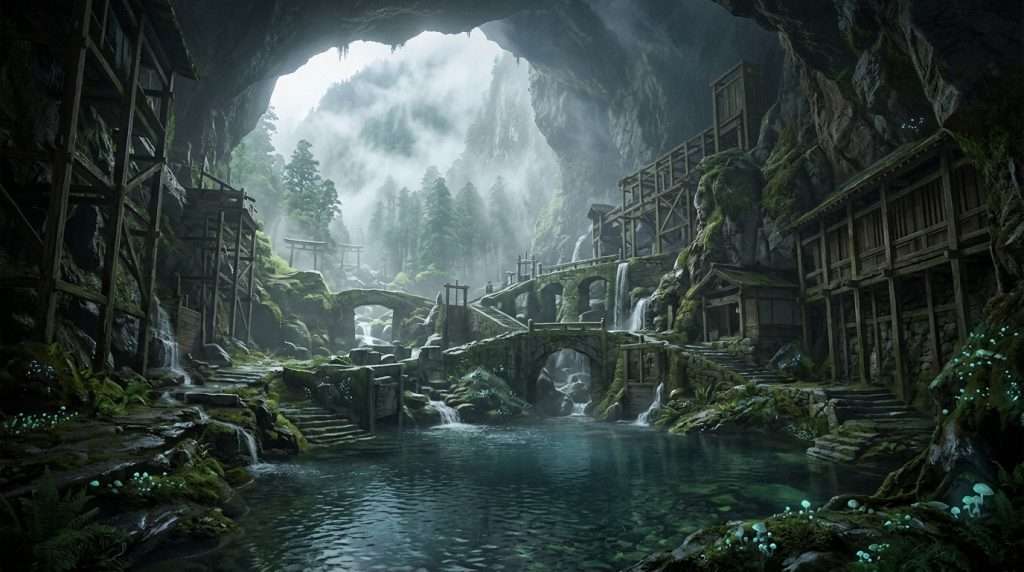
What fascinated me most about Mount Inari was hidden from view. It lay deep inside the mountain.
I spent an afternoon hiking the upper trails near Fushimi Inari Taisha, but the forest floor looked ordinary. Moss, cedar roots, and silence hid the system below. Engineers call it subsurface hydrologic heritage engineering.
In plain terms, this means building hidden infrastructure inside a sacred mountain. It protects centuries-old shrine buildings from Kyoto’s brutal monsoon season. It also leaves every trail, torii gate, and stone step unchanged for pilgrims.
Automated Retention Vaults Capturing 100% of Monsoon Cloudbursts
Here’s what surprised me most. Beneath Mount Inari’s forested slopes, engineers installed automated underground vaults. They can capture 100% of monsoon cloudbursts before water reaches surface trails.
Kyoto summers bring sudden, heavy downpours. Without help, this water could carve hillside paths, destabilize the famous Senbon Torii steps, and flood lower shrine halls. Instead, sensors detect rising rainfall and redirect it into storage chambers carved into the mountain’s natural rock.
- Prevents trail erosion during peak typhoon season
- Protects timber foundations from sudden flooding
- Reduces soil runoff that once threatened shrine stonework
- Operates automatically, with no visible machinery on the surface
I love finding details like this on a trip. You may see only dirt and stone, while an invisible system keeps the ground beneath your boots stable.
Closed-Loop Reservoir Stormwater Harvesting for Zero-Emission Shrine Cooling
The story continues beyond storage. Captured rainwater gets a second life through closed loop reservoir stormwater harvesting. This system recycles chilled spring water to cool shrine pavilions during Kyoto’s humid summers.
The system avoids air conditioners that burn fossil fuels. It pumps naturally cool mountain water through pipes beneath pavilion floors. The water absorbs heat, cycles back to the reservoir, cools again, and repeats the loop.
Nothing is wasted, and no emissions enter the air.
It’s almost poetic, honestly. Rain that once threatened to erode sacred ground now keeps the shrine comfortable without harming the planet. That innovation surprised me beneath a thousand-year-old mountain, and it’s exactly why I keep coming back to places like this.
Castillo San Felipe del Morro future.
4. Kyoto Shrine Kinetic Microgrid: Powering Sacred Ground with Every Step
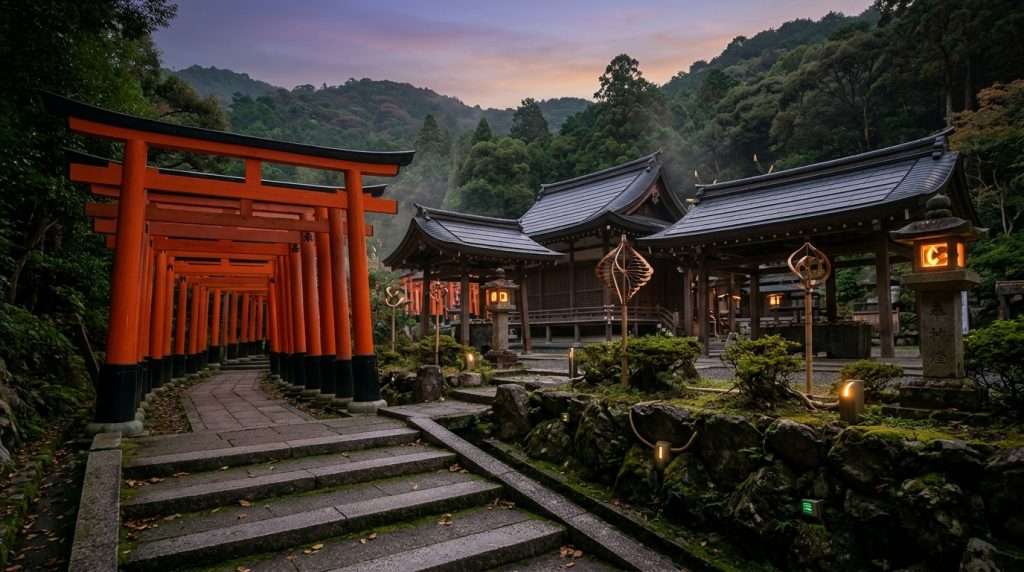
Halfway up the thousand torii gates, I noticed my hiking boots did more than carry me forward. Each step pressed on something hidden beneath the worn stone path. I never imagined walking could become part of something much bigger.
That discovery became one of the cleverest parts of this renewal story.
Piezoelectric Pavers Beneath the Senbon Torii Stone Steps
A hidden layer of piezoelectric pavers lies beneath the Senbon Torii stone steps. These pavers capture energy from footsteps and turn it into usable electricity.
Think about the many people who climb this mountain each day. Thousands of visitors pass through the vermilion gates. Each visitor adds a tiny pulse of power without knowing it.
That energy does not disappear into the stone. It flows into a dedicated kyoto shrine kinetic microgrid. This system captures, stores, and redistributes the foot-powered current.
The system works silently beneath your feet. You would never guess your climb helps light a lantern or power a nearby sign.
From Pilgrim Footsteps to a Self-Sustaining Mount Inari Net-Zero Sanctuary
This kinetic microgrid supports Mount Inari’s larger vision as a living, breathing biome. Each footstep adds a small contribution beyond one visit.
The electricity from foot traffic powers several small operations around the shrine grounds. These include:
- Pathway lighting along darker stretches of the trail
- Informational signage for visitors and pilgrims
- Small-scale maintenance equipment used by shrine staff
What strikes me most is how natural this process feels. Visitors do not change how they walk. They follow centuries-old pilgrim paths while the mountain turns their motion into clean, usable power.
It is a beautifully simple idea. More visitors mean more power for the shrine microgrid system. Popularity and preservation finally work together instead of against each other.
At a higher viewpoint, I looked back at the gates I had climbed. I smiled because every footstep behind me helped keep the lights ahead.
5. Borrowed Blueprints: What Stadium Porous Asphalt Drainage Teaches Sacred Terrain
I never expected a stadium parking lot to teach us about shrine preservation. Yet engineers found its lesson while protecting Mount Inari’s busy trails.
That same technology keeps arena grounds dry during downpours and works on a sacred mountainside. Stadium porous asphalt stormwater drainage was built to prevent flooding in parking lots and stadium concourses. It was never designed with shrines in mind.
Water does not care whether it falls on concrete or a dirt trail. It only needs somewhere to go.
Adapting Stadium-Grade Porous Drainage Principles to Mountain Trail Durability
Stadium drainage systems use layered, porous materials that let water sink through instead of pooling. Engineers reshaped that idea for steep, foot-worn mountain paths.
Crews installed a similar porous base beneath trails under the Senbon Torii gates. It lets monsoon rain pass through the soil instead of carving it away. This matters because erosion has long threatened these paths.
Heavy rain once washed soil from beneath the gate foundations. Over decades, this slow damage added up.
“Water finds the weakest point in any structure. The goal isn’t to stop it. It’s to guide it somewhere safe.”
Hikers now find steadier footing after downpours. The torii foundations stay solid instead of slowly tilting after years of soil loss.
Setting New Senbon Torii Kyoto Preservation Standards for the Next Century
I love moments like this: a fix built for parking lots helps save a UNESCO-listed trail thousands of miles away. This kind of cross-industry thinking surprised me in such an old place.
This borrowed engineering is quietly reshaping senbon torii kyoto preservation standards for the next hundred years. It shows that heritage protection does not always need heritage-specific solutions.
Sometimes, the answer already exists, waiting in a place nobody thought to search. For other historic sites facing similar erosion, this may be the next blueprint worth borrowing.
Conclusion
Standing beneath the vermilion gates again, I cannot unsee what I now know. Every glazed beam, hidden drainage vault, and paver underfoot tells a quiet story of patience and care.
Fushimi Inari Taisha future 2050 was never about turning sacred ground into a gadget showroom. It proves cypress wood, hand-laid stone, and centuries of ritual can survive another hundred years with their soul intact. Kyoto redefines shrine longevity through quiet engineering, letting tradition breathe without flashy changes.
Japan’s tourism numbers keep climbing, and places like Mount Inari will welcome more footsteps than ever. That pressure makes thoughtful preservation less like an upgrade and more like a necessity. To understand why Japan invests heavily in infrastructure, read this breakdown of reasons travelers are heading to Japan.
Next time you climb those thousand gates, slow down. Notice the joints, stones, and light falling on treated wood. That is the real souvenir: a closer look at a place you thought you already knew.




Leave A Comment