

The Brandenburg Gate is a top spot in Berlin, welcoming over a million visitors each year. It stands as a symbol of German unity after the Cold War. Built from 1788 to 1791, it was Berlin’s first Greek revival building, showcasing the city’s rich history.
As a key landmark, the Brandenburg Gate is a major draw for tourists. It invites people from all over to see its beautiful architecture and learn about its historical importance.
Key Takeaways
- The Brandenburg Gate is a symbol of German history and unity, attracting millions of tourists each year.
- It was built between 1788 and 1791 as Berlin’s first Greek revival building, reflecting the city’s rich cultural heritage.
- The gate is a prominent Berlin landmark, offering a glimpse into the city’s complex past and its significance in German history.
- Visitors can explore the gate’s stunning architecture, including its 12 Doric columns and the Quadriga on top, featuring the statue of the goddess of victory.
- The Brandenburg Gate is open to visitors for free, with a “Room of Silence” open from 11 am to 6 pm, providing a unique experience for those interested in German history and culture.
- Surrounding attractions near the gate include the Reichstag Building, the Holocaust Memorial, and the Berlin Wall Memorial, making it a central location for exploring Berlin’s historical sites.
- Guided tours of the Brandenburg Gate are available, offering insights into the gate’s history and significance, as well as the city’s vibrant art, music and food scenes.
The Historical Significance of Brandenburg Gate
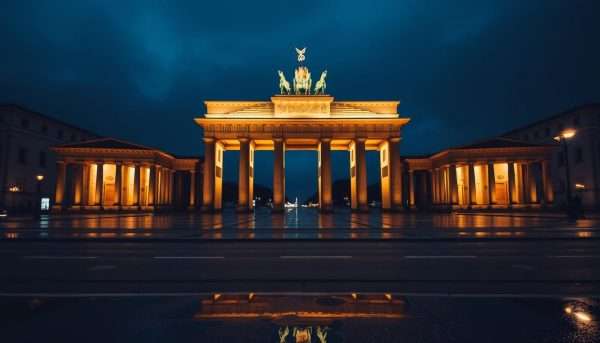
The Brandenburg Gate is a symbol of German history. It shows the country’s complex past and its journey to unity. Built in Prussian heritage, it highlights German engineering and design.
Origins in Prussian History
Frederick William II commissioned the gate as an entrance to Unter den Linden. It was built between 1788 and 1791. The design was inspired by the Acropolis of Athens, with twelve Doric columns and a bronze quadriga by Johann Gottfried Schadow.
Symbol of German Division and Reunification
The gate symbolized divided Germany during the Cold War. The Berlin Wall blocked it. But with the wall’s fall in 1989, it became a symbol of German unity and freedom. Now, it stands for European unity and peace, showing Germany’s role in shaping Europe’s future.
Role in Modern German Identity
Today, the Brandenburg Gate is key to German identity. It reflects the country’s rich history and culture. The gate has hosted world leaders and cultural events, showing its lasting impact on Germany’s future.
- The gate is 26 meters high, 65.5 meters long, and 11 meters deep, showcasing its grand architectural scale.
- The Quadriga statue, which crowns the gate, was designed in 1793 by Johann Gottfried Schadow.
- In 1806, the Quadriga was taken to Paris by Napoleon’s army but returned to Berlin in 1814 after Napoleon’s fall.
Architectural Marvel: Design and Construction
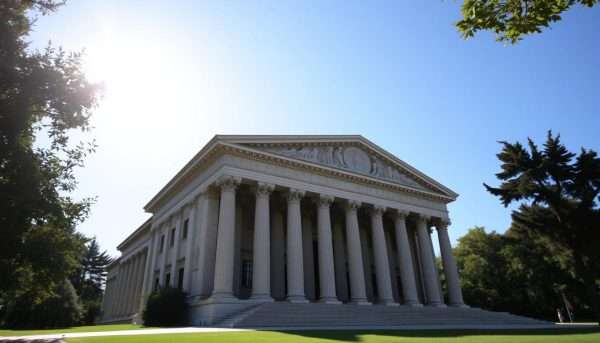
The Brandenburg Gate is a stunning example of Neoclassical architecture. It was built from 1788 to 1791. Designed by Carl Gotthard Langhans, it was inspired by ancient Greek architecture.
The gate is huge, standing at 66 feet high, 213 feet wide, and 36 feet deep. Its design features classical elements like Doric columns and a pediment. These elements show the influence of ancient Greece.
The construction of the Brandenburg Gate showcases the skill of European architects and builders. It is a masterpiece of European architecture. Today, it is a symbol of Berlin and a favorite spot for tourists.
Some notable features of the Brandenburg Gate include:
- Its Neoclassical design, which reflects the cultural and artistic values of 18th-century Europe
- Its Impressive dimensions, which make it a prominent landmark in the city of Berlin
- Its Historical significance, which is reflected in its role as a symbol of German reunification and democracy
The Brandenburg Gate is not just a historical landmark but also a key example of European architecture. Its design and construction show the cultural and artistic values of the time. As a Neoclassical monument, it continues to inspire wonder and admiration globally.
| Feature | Description |
|---|---|
| Design | Neoclassical, inspired by the Propylaea of the Athenian Acropolis |
| Dimensions | 66 feet high, 213 feet wide, and 36 feet deep |
| Construction | Built between 1788 and 1791, designed by Carl Gotthard Langhans |
Furthermore, visit Checkpoint Charlie.
The Brandenburg Gate Through Different Eras

The Brandenburg Gate is a key landmark in Berlin, seen through many eras of German history. It was built in 1791 and has seen many changes. The original gate, finished in 1795, was 26 meters high and 65.5 meters long. It had 12 Doric columns.
It has been a symbol of German history, touched by the Napoleonic Wars, World War II and the Cold War. Its design, inspired by the Acropolis in Athens, has stayed the same. But its importance has grown over time. German history is deeply tied to the gate’s story, showing the country’s highs and lows.
The gate has seen many restorations. It was fixed after World War II in 1957-58 and again in 2000-2002. These repairs show Berlin’s dedication to keeping its cultural heritage alive. Today, it symbolizes a unified Germany, drawing many visitors.
Some key events in the gate’s history include:
- 1806: The Quadriga sculpture was taken to Paris by Napoleon’s troops
- 1814: The Quadriga was returned to Berlin
- 1933: The Nazis marched through the Brandenburg Gate in a torchlight parade
- 1987: Ronald Reagan delivered his famous speech at the Brandenburg Gate, calling for the dismantling of the Berlin Wall
- 2000-2002: The gate was restored by the Berlin Monument Conservation Foundation
The Brandenburg Gate’s story is a rich tapestry of German history. It shows the country’s complex past and its journey towards unity. As a landmark in Berlin, it inspires and educates visitors, offering a glimpse into the city’s fascinating history and culture.
Symbolic Elements and Artistic Features
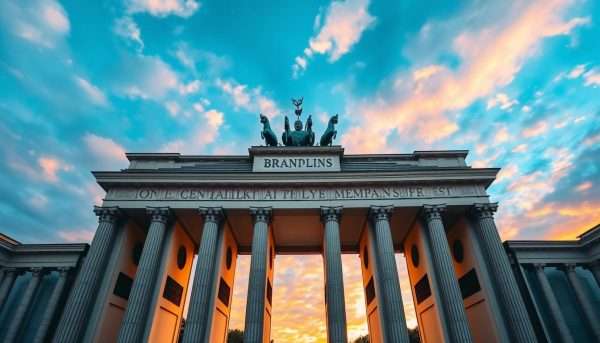
The Brandenburg Gate is a stunning example of Neoclassical architecture. It stands out with its simple yet elegant design. The Quadriga statue, created by Johann Gottfried Schadow in 1793, crowns the gate, adding elegance.
The gate’s design features six Doric columns on each side. These columns bring balance and harmony. The columns are adorned with reliefs and sculptures inspired by Heracles, adding a mythological flair.
The Quadriga Statue
The Quadriga statue is a key symbol of the Brandenburg Gate. It represents victory and peace. The statue shows a chariot with four horses, driven by Victoria, the goddess of peace.
Doric Columns and Classical Design
The Doric columns are a defining feature of the Brandenburg Gate. They are simple yet elegant, creating balance and proportion. The use of classical design elements makes the gate a unique architectural masterpiece.
Relief Panels and Decorative Elements
The relief panels and decorative elements enhance the gate’s beauty. They depict scenes from mythology and history, adding depth and meaning. These elements showcase the gate’s status as a Neoclassical architectural wonder.
| Feature | Description |
|---|---|
| Quadriga Statue | Designed by Johann Gottfried Schadow in 1793 |
| Doric Columns | Six columns on each side, creating a sense of balance and harmony |
| Relief Panels | Depict scenes from mythology and history, adding depth and meaning to the gate’s design |
Additionally, watch an FC Union Berlin football match.
Planning Your Visit to Brandenburg Gate
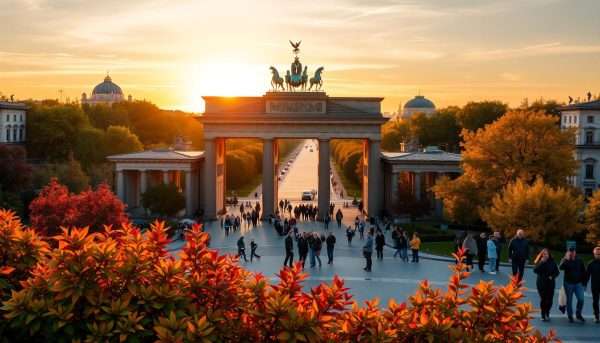
The Brandenburg Gate is a top Berlin attraction for those into Berlin tourism. It’s at Pariser Platz 1, 10117 Berlin. It’s open all the time and free to see. Its history and cultural value draw 12 million visitors every year.
Don’t miss the nearby spots like Pariser Platz, the Reichstag and Tiergarten Park. They add to the experience. You can reach the gate by U-Bahn lines S1, S2, S5, S7, S25, S75, U6 and MetroTram line M1. For easier travel, there are airport transfer services to the gate.
Here are some tips for your visit:
- Guided tours offer a deeper look into the gate’s past
- The gate is open 24/7, so you can visit anytime
- There are many places to stay nearby, from budget to luxury
The Brandenburg Gate is perfect for history lovers, culture fans or curious travelers. It’s a key spot for Berlin tourism and Berlin attractions. A visit here will surely make a memorable impression.
The Brandenburg Gate in Modern Culture
The Brandenburg Gate is a famous Berlin landmark. It symbolizes German history and unity. As a Berlin landmark, it draws millions of visitors yearly. It hosts many events and celebrations.
The gate’s history goes back to the 18th century. It has seen big events like Napoleon’s conquest and the fall of the Berlin Wall.
The gate’s cultural impact is huge. It has been in films, literature and media. Famous events, like Ronald Reagan’s 1987 speech, have taken place here. It has also been in many artworks.
The Brandenburg Gate’s importance in German history is clear. Its influence goes beyond Germany. It stands for freedom and unity, inspiring people worldwide.
Some interesting facts about the Brandenburg Gate are:
- It was built between 1788 and 1791
- The Quadriga sculpture at the top was designed by Johann Gottfried Schadow
- It was restored after being damaged during World War II and the annual New Year’s Eve fireworks
The Brandenburg Gate’s role in modern culture shows its lasting legacy. As a beloved Berlin landmark, it keeps attracting visitors and inspiring new generations.
Surrounding Attractions and Points of Interest
The Brandenburg Gate is in the heart of Berlin. It’s surrounded by famous buildings and attractions. This makes it a top spot for Berlin tourism. The gate looks out onto Pariser Platz, a beautiful square. It’s where you’ll find the luxury hotel Adlon Kempinski and the US Embassy.
There’s more to see near the Brandenburg Gate. The Holocaust Memorial honors the six million Jewish victims of the Nazi Holocaust. The Victory Column, a sign of Prussian military wins, is also a hit with tourists.
Other Berlin attractions close to the Brandenburg Gate include:
- The Museum Island ensemble, with five museums and a UNESCO World Heritage site
- The East Side Gallery, the biggest open-air gallery in the world, made by artists after German reunification
- The Berlin Palace, rebuilt to be a hub for art, culture and science in the city center
The Brandenburg Gate is a key spot for anyone into Berlin tourism. It’s rich in history and culture. Plus, it’s near other famous landmarks. Whether you love history, art or just want to see a lively city, the Brandenburg Gate and its area will impress you.
| Attraction | Description |
|---|---|
| Brandenburg Gate | A symbol of German unity and one of the most important monuments in Berlin |
| Holocaust Memorial | A memorial to the six million Jewish victims of the Nazi Holocaust |
| Victory Column | A symbol of Prussian military victory and a popular tourist spot |
Photography Tips and Best Viewing Times
Getting the perfect shot of the Brandenburg Gate, a famous Berlin landmark, is all about timing. The gate shines brightly at night, perfect for Berlin tourism fans. Visit during sunset or early morning to avoid the crowds and capture unique moments.
Look around the gate for the best photo spots. The architecture and street performers add to the lively scene. Tiergarten park and Pariser Platz are great places to start.
Lighting Conditions
The best light for photos is during the shoulder seasons. In September, for example, you can take sunrise shots around 6 am and sunset shots around 7 pm. This light gives the gate and its surroundings a warm, golden glow.
Seasonal Considerations
You can visit and photograph the Brandenburg Gate all year. But spring to autumn has the best weather, with July and August being the hottest. Spring and autumn are perfect for photos because of the nice weather and fewer people.
Berlin hosts many events like Christmas Markets and the Festival of Lights. These festivals offer a chance to see the gate in a new light and capture the city’s vibrant culture.
Cultural Events and Annual Celebrations
Berlin is full of cultural events and celebrations. The Brandenburg Gate is at the heart of many. The New Year’s Eve party is a big event, drawing thousands from all over.
In 2023, it welcomed about 65,000 people. Tickets were 20 euros. The area between the Victory Column and the Brandenburg Gate is huge, with 90 food trucks and more.
The 2024 New Year’s Eve will have great music. Nemo, Peter Schilling, Maite Kelly and Sarah Engels will perform. The show “Welcome 2025” will be on ZDF from the Brandenburg Gate at 8:15 p.m.
Some key events in Berlin include:
- Christmas events and exhibitions in December
- New Year’s Eve celebrations
- Concerts and festivals in January and February
- The Berlinale Film Festival
- Interactive exhibitions and shows
These events highlight Berlin’s rich history and culture. The Brandenburg Gate is perfect for experiencing Berlin’s best.
Berlin has something for everyone. From history to entertainment, it’s a top destination. The city’s landmarks, events and celebrations make it unforgettable.
| Month | Event | Description |
|---|---|---|
| December | Christmas events | Exhibitions, concerts, and New Year’s Eve celebrations |
| January | Concerts and festivals | Featuring national and international artists |
| February | Berlinale Film Festival | Showcasing the latest films from around the world |
Essential Travel Information and Tips
Planning a visit to the Brandenburg Gate? Know the best times and how to get there. The gate is open 24/7 and has its own S- & U-Bahn station. This makes it easy for Berlin tourism visitors.
Arrive around 9am or 4pm for a quieter visit. Afternoons can be busy, with events or protests. For a less crowded time, try 9:00. But, it gets busier by 11:00. By 13:00, it’s very crowded. But, it calms down by 15:00, making 16:00 a great time to visit.
Here are some tips to keep in mind:
- Book your tickets in advance for major sights like the Reichstag to avoid long wait times.
- Use public transport options like the FEX Airport Express train and S-Bahn 9 train to get to the city center from Berlin Brandenburg Airport.
- Download the BVG Tickets app for easy ticket purchases and to navigate the city’s public transport system.
Follow these tips for a stress-free visit to the Brandenburg Gate and other Berlin attractions. Enjoy your Berlin tourism experience.
| Time | Crowd Level |
|---|---|
| 9:00 | Low |
| 11:00 | Moderate |
| 13:00 | High |
| 15:00 | Moderate |
| 16:00 | Low |
The Enduring Legacy of Berlin’s Most Famous Landmark
The Brandenburg Gate is a key symbol of Berlin’s most iconic landmarks. It stands for German unity and European peace. This architectural wonder has seen many challenges in German history. It shows the strength and will of the German people.
The Brandenburg Gate has changed from a sign of Prussian power to a symbol of Germany’s division and reunification. It has seen crucial moments in Germany’s history. Its lasting presence reminds us of the freedoms and democratic values that shape modern Germany.
Now, the Brandenburg Gate attracts visitors from all over. They come to see its stunning neoclassical design and to think about the history it represents. It hosts big events and is a key part of Berlin’s culture. It’s a place everyone should visit to learn about Germany’s rich and complex history.











Leave A Comment